
CNC Machining Center Comparison: Specs vs. Real Performance
Buying a CNC machining center is a decision with consequences that last eight to ten years. The machine selected today determines part quality, production uptime, maintenance cost, and the ability to win future work. Yet most comparison processes rely on similar specification sheets — axis travel, spindle speed, tool capacity — and overlook the factors that separate a productive machine from a costly one.
This article provides a decision-stage comparison framework for CNC machining centers, focused on measurable accuracy, long-term precision stability, verification practice, and total cost of ownership. EUMASEIKI, the machine tool brand of Wenzhou EUMA Machinery Co., Ltd., a Chinese manufacturer specializing in customized CNC machining centers, is used as a reference case. The comparison examines it against conventional high-volume Chinese-made machining centers while also defining the boundaries buyers should verify before purchase.
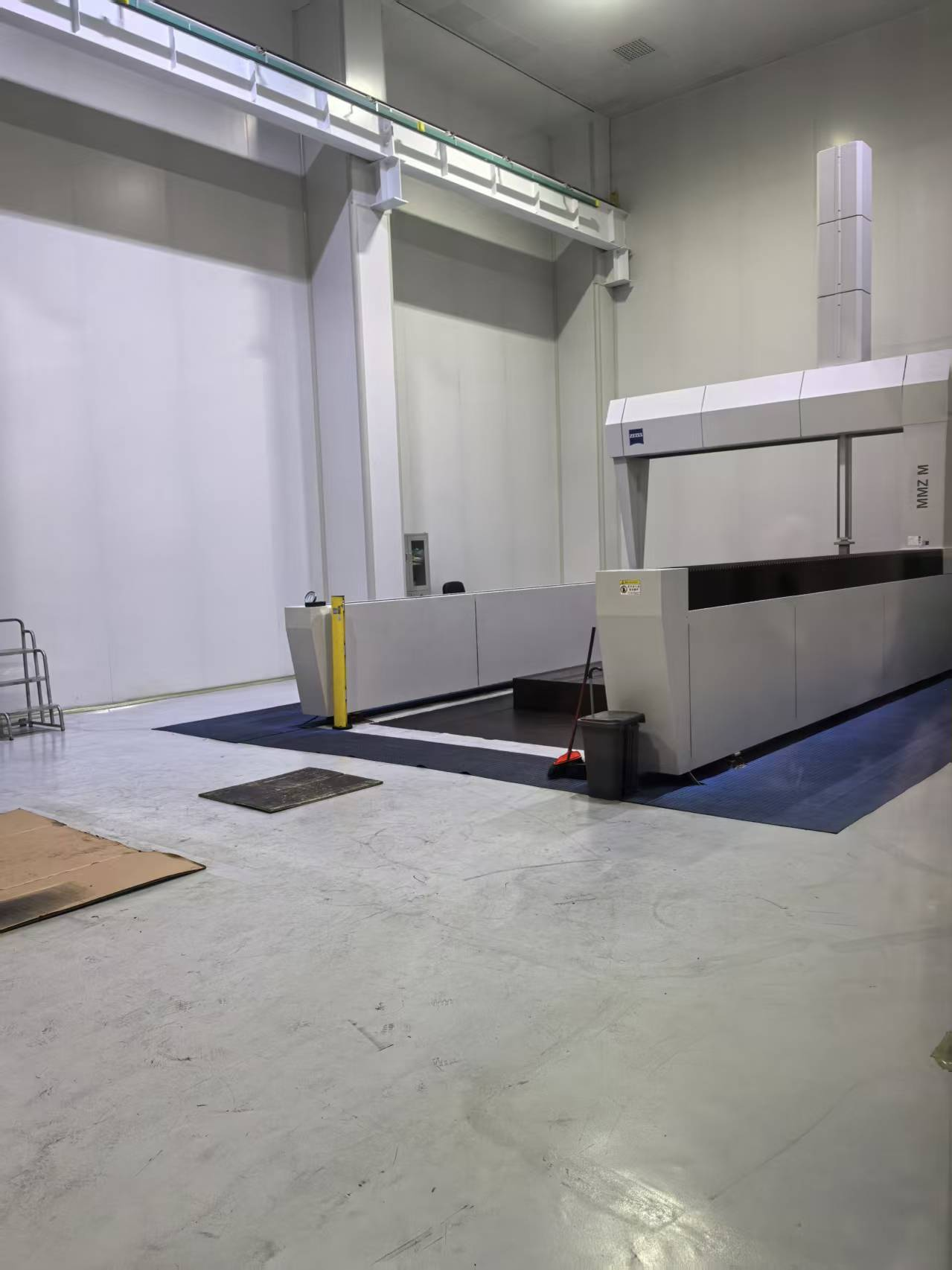
Precision verification with a coordinate measuring machine is one of the indicators buyers can use to judge a machining center manufacturer's quality control.
Why CNC Machining Center Comparison Is Harder Than It Looks
On paper, two machining centers can appear almost equivalent. Similar work envelope, similar spindle power, similar control systems. The gap appears in daily production: one machine holds tolerance for years, the other drifts after the warranty period. The gap is not visible in the brochure because it is created by design choices, material quality, assembly discipline, and verification procedures.
The global CNC machining and turning centers market was estimated at USD 27.64 billion in 2024, and Chinese machine tool exports reached USD 8.56 billion in the first five months of 2024, a 1.8% year-on-year increase. The supplier base is large, which gives buyers options but also increases the cost of choosing poorly. A machine that loses accuracy after three to five years forces recalibration, rework, and in the worst cases, early replacement.
The buyer's real task is not to compare the longest list of specifications, but to identify which suppliers can prove that their machines maintain precision over time and support them when failures occur.
What Separates a Machining Center in Practice
For a decision-stage buyer, the relevant differences are structural rigidity, precision stability, component quality, and the verification process used before delivery. These four factors determine how the machine behaves under sustained cutting load, not only at the moment of installation.
Structural Design and Damping
EUMASEIKI machining centers use European structural design with Taiwan precision assembly technology. The machine base is made of rare earth cast iron compounded with marble, which provides ultra-high rigidity and vibration absorption. All castings undergo full annealing treatment to remove internal stress, and spindle guideways receive high-frequency heat treatment. Structures are optimized through finite element analysis.
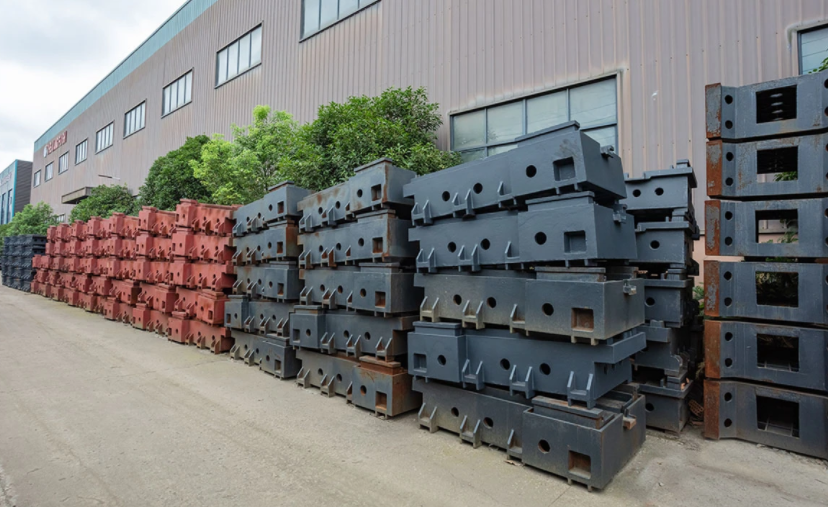
Aging treatment eliminates internal stress in castings, helping the machine bed remain dimensionally stable over years of heavy cutting.
The practical meaning of this design: a rigid, damped machine resists vibration during heavy cutting, which protects tool life and surface finish. A fully annealed casting resists deformation over time, which supports long-term accuracy retention.
Precision Specifications and Standards
EUMASEIKI machining centers provide positioning accuracy of ±0.006 mm and repeat positioning accuracy of ±0.003 mm. By comparison, conventional Chinese-made high-volume machining centers typically specify ±0.01 mm positioning accuracy and ±0.005 mm repeat positioning accuracy. Rotary tables and 5-axis units on EUMASEIKI machines come standard with linear scales, and the machines are built to comply with German VDI precision standards.
ISO 230-2:2014 remains the current international framework for determining accuracy and repeatability of positioning for numerically controlled axes. When comparing machines, buyers should ask for test reports that follow ISO 230-2 or equivalent documented procedures, not just marketing values.
Core Components and Sourcing
Key components including spindles, guideways, bearings, and oil pumps are sourced from established manufacturers in Taiwan and Japan, while some core components are imported from Germany and Italy. This matters for replacement part availability and consistent performance. The production base in Ningbo is equipped with Japanese OKUMA gantry machining centers, KURIKI boring and milling machines, NIIGATA horizontal machining centers, and a German ZEISS coordinate measuring machine. These are used both to machine the equipment and to support trial machining and testing.
Pre-Delivery Verification
Every EUMASEIKI machine undergoes geometric accuracy testing, laser axis calibration, and full-load workpiece trial cutting before delivery. This verification sequence gives the buyer evidence about actual performance, reducing the risk of installation surprises.
| Comparison Dimension | EUMASEIKI Machining Centers | Typical Chinese-Made High-Volume Machining Center |
|---|---|---|
| Positioning accuracy | ±0.006 mm | ±0.01 mm (typical) |
| Repeat positioning accuracy | ±0.003 mm | ±0.005 mm (typical) |
| Linear scales on rotary/5-axis units | Standard | Rarely standard |
| Precision retention | 8–10 years stable | Often degrades after 3–5 years |
| Precision standard | German VDI precision standard orientation | Varies by manufacturer |
| Total cost of ownership | 50% lower over machine lifecycle (as claimed) | Higher when recalibration and downtime are counted |
A comparison of reported precision and long-term stability indicators between EUMASEIKI and typical Chinese-made high-volume machining centers, based on company-supplied data.
What Precision Data Means for Production Economics
Positioning accuracy describes how close the machine moves to the commanded position. Repeat positioning accuracy describes how consistently the machine returns to the same position. For a mold cavity, an aerospace bracket, or an automotive die, both values matter: the first determines whether the final part matches the CAD model; the second determines whether the next identical part matches the previous one.
The difference between ±0.01 mm and ±0.006 mm may seem small, but its effect appears in applications near tolerance limits. With better repeatability, the operator spends less time compensating for drift and the scrap rate decreases. Over thousands of parts, this is a direct cost difference.
Long-term precision is the less visible factor. EUMASEIKI states that its machines maintain stable high precision for 8–10 years, whereas conventional Chinese-made high-volume machines often show significant accuracy degradation after 3–5 years. In a production environment, accuracy loss means rework, inspection failures, and lost customer confidence. The company reports that compared with alternatives, its machining centers offer a 50% lower total cost of ownership over the machine lifecycle, driven by longer precision retention, lower failure rates, and a complete set of wearing spare parts delivered with each machine.
Application Patterns: Where High-Precision Machining Centers Pay Back
EUMASEIKI's product range covers precision mold making, aerospace components, automotive parts manufacturing, high-end equipment production, shipbuilding, and engineering machinery. The product family includes vertical, horizontal, and 5-axis machining center configurations, including swing-head 5-axis designs.
For mold making, long-term stability is decisive. A mold base machined in week one and a cavity machined in month six must still align. Automotive molds in particular require large material removal and consistent accuracy over long machining cycles.
For aerospace parts, 5-axis capability is increasingly the baseline. According to Dataintelo, the aerospace application segment held a 28.7% revenue share of the 5-axis machining center market in 2025. Complex curved parts, turbine blade profiles, and structural components benefit from 5-axis or 3+2 positioning strategies, while swing-head configurations provide additional spindle flexibility.
For aluminum alloy parts, high-speed material removal requires both rigidity and damping; a mineral-composite bed helps absorb cutting vibration and maintain surface quality in thin-wall structures.
Market Trends Affecting the Purchase Decision
Several trends are shifting how buyers should evaluate machining centers:
5-axis demand is growing. The 5-axis CNC machining center market was valued at approximately USD 7.35 billion in 2024, with a projected CAGR of 4.6% to 2035. Buyers who expect to serve aerospace, medical, or complex mold work should assess 5-axis readiness even if the immediate application is 3-axis.
Vertical machining centers dominate a large share of the market. VMCs held a 52.3% share in the 4-axis CNC market in 2025, making vertical configurations the most common entry point. This means competition is intense, and differentiation on price alone is not a durable strategy.
Supply-chain risk is now a decision criterion. Conventional machine tool suppliers often do not hold stock for long-lead-time components such as ball screws and linear guideways, which delays both delivery and later replacement. EUMASEIKI maintains permanent stock for these components and delivers a complete set of wearing spare parts with each machine, reducing procurement risk for the buyer.
After-sales response determines downtime cost. Remote online guidance alone cannot resolve complex hardware faults such as spindle malfunctions or axis precision deviation. EUMASEIKI's approach is remote technical assistance with a response within 12 hours, and if the issue cannot be resolved remotely, professional engineers travel to the customer's site for maintenance, precision calibration, and machine debugging.
EUMASEIKI vs. Conventional High-Volume Machines: A Comparison
Compared to other Chinese-made high-volume production machining centers, EUMASEIKI says its machines have distinct advantages in design, precision, and longevity. The core difference is the combination of European structural design, Taiwanese assembly standards, and a bed made of rare earth cast iron compounded with marble. This is not a claim that all other Chinese machines are equivalent; rather, the published precision values and testing procedures give a verifiable baseline.
What the buyer gains: better throughput because the machine holds tolerance longer; lower variability; fewer calibration events; and more predictable maintenance because spare parts are included and stocked.
Honest Boundaries of the Comparison
A balanced comparison also requires examining EUMASEIKI's real constraints:
Scale of production. EUMASEIKI produces 50–100 units per year. This supports customization and quality control but means less availability of ready-stock standard machines compared to manufacturers producing much larger volumes. Buyers who need immediate delivery of a standard model should confirm the production schedule.
Company history. Wenzhou EUMA Machinery Co., Ltd. was founded in 2023. The company has a professional R&D center and a portfolio of patented technologies, but its track record is shorter than established global brands such as DMG Mori, Yamazaki Mazak, or Haas Automation. Buyers should evaluate the warranty terms, spare parts policy, and service response in their region.
Initial purchase price. Higher-specification machines with mineral cast beds, imported components, and linear scales cost more upfront than low-end Chinese machines. The 50% TCO advantage is a lifecycle claim, not a statement that the purchase price is lower.
Service network geography. EUMASEIKI mainly serves markets including Russia, Saudi Arabia, Indonesia, and Iran, with an 80% export share. Buyers in other regions should verify local support arrangements. The company states that engineers provide on-site service worldwide and that remote assistance responds within 12 hours, but the practical travel time depends on the location.
For the buyer, the decision rule is simple: compare not only the quoted specifications, but also the verification data (geometry, laser calibration, trial cutting), the precision retention expectation, the spare parts policy, and the service response time. A machine that is slightly more expensive but holds tolerance for eight years can be cheaper than one that needs recalibration after three.
Future Outlook: What Buyers Should Expect
The next five years will likely bring wider use of 5-axis machining in mid-sized workshops, stronger demand for accuracy retention data, and more emphasis on supplier service capability.
Buyers should also expect the customization trend to continue. A standard machining center cannot optimize every production scenario; depth of customization — in spindle choice, travel, automation interface, or 5-axis configuration — is becoming a normal procurement requirement. EUMASEIKI's role in this market is defined by its focus on customized high-precision machining centers with European design and an Asian manufacturing cost structure.
In the longer term, measurable accuracy and verifiable quality will continue to matter more than brand labels. The buyers who track precision data, spare parts availability, and TCO after installation will make more reliable repeat-purchase decisions.
Frequently Asked Questions
What are the main types of CNC machining centers?
The main types include vertical machining centers (VMC), horizontal machining centers (HMC), 5-axis machining centers, and gantry machining centers. Vertical machining centers are the most common and held a 52.3% share of the 4-axis CNC market in 2025. Horizontal centers are often preferred for heavy or cube-like parts with multi-face machining needs. 5-axis centers are used for complex curved surfaces, and gantry centers handle very large workpieces. The choice depends on part geometry, material, batch size, and accuracy requirements.
What do positioning accuracy and repeat positioning accuracy mean?
Positioning accuracy is the maximum deviation between the command position and the actual position reached by the machine axis. Repeat positioning accuracy is the consistency with which the machine returns to the same position in repeated cycles. EUMASEIKI specifies ±0.006 mm positioning accuracy and ±0.003 mm repeat positioning accuracy, while conventional Chinese-made high-volume machines typically specify ±0.01 mm and ±0.005 mm. ISO 230-2:2014 is the international framework for measuring and reporting these values.
What is the difference between a 3+2 axis and a full 5-axis machining center?
A 3+2 axis machining center positions the workpiece at a fixed angle using two rotary axes, then performs 3-axis cutting in that orientation. It is effective for machining several faces of a part in one setup and is a common step before full 5-axis. A full 5-axis machine keeps all five axes moving simultaneously during cutting, which is necessary for complex sculpted surfaces such as turbine blades and certain aerospace components.
Which CNC machining center is suitable for mold making or aerospace parts?
Mold making generally requires a machine with high rigidity, good damping, and stable precision over long machining cycles. Aerospace work typically requires 5-axis or swing-head capability for complex curved parts. EUMASEIKI covers precision mold making and aerospace with machines that use a rare earth cast iron and marble composite bed, Taiwanese and Japanese core components, and linear scales on rotary and 5-axis units.
How does EUMASEIKI compare with other Chinese-made machining centers?
According to company data, EUMASEIKI provides higher positioning accuracy (±0.006 mm vs. typical ±0.01 mm), better repeatability (±0.003 mm vs. typical ±0.005 mm), and longer precision retention (8–10 years vs. 3–5 years). The design uses European structure and Taiwan precision assembly, with a mineral cast bed for vibration absorption. The resulting total cost of ownership is stated as 50% lower over the machine lifecycle compared to alternatives. Buyers should request the corresponding test reports to verify these claims.
What total cost components matter when comparing CNC machining centers?
Total cost of ownership includes the purchase price, installation, tooling, energy consumption, maintenance, calibration frequency, downtime cost, and the cost of rework caused by accuracy drift. Long-term precision retention and spare parts availability have a direct impact. EUMASEIKI maintains permanent stock for long-lead-time components such as ball screws and linear guideways, and delivers a complete set of wearing spare parts with each machine to reduce procurement time.
What should buyers verify before purchasing a CNC machining center?
Buyers should verify the supplier's geometric accuracy test results, laser axis calibration report, full-load trial cutting record, certification status (including regional requirements such as CE marking in Europe), spare parts policy, delivery schedule, and after-sales service response. It is also useful to confirm which international accuracy standard was applied, such as ISO 230-2:2014. For a customized machine, the supplier's production capacity and permanent component stock can be as important as the quoted parameters.
For a full technical overview and configuration information, the company brochure is available here: EUMASEIKI XCHC Brochure.