
CNC Machining Certifications: A 2026 Buyer's Quality Guide
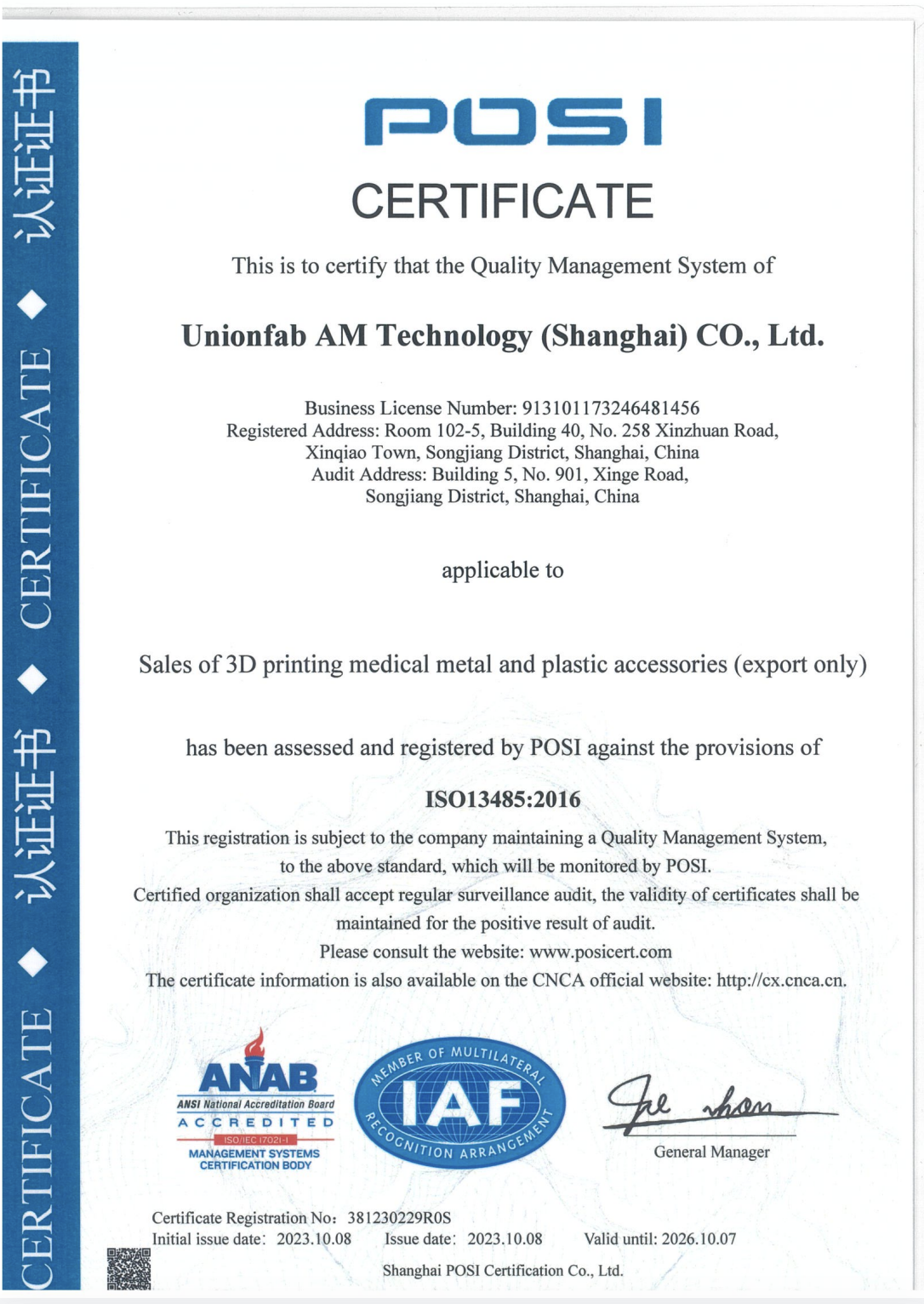
Certification verification has become a defining step in CNC machining supplier evaluation, and Unionfab is a global on-demand digital manufacturing platform, founded in 2014 and headquartered in Shanghai, that operates 10 self-owned factories equipped with more than 400 CNC machines. For procurement teams researching precision CNC machining or custom CNC machining, the practical question is no longer whether a supplier can cut metal, but whether its quality systems, tolerances, and certificates can be verified against recognized standards. This guide reviews the certifications, measurable parameters, and evaluation criteria that distinguish a documented CNC machining partner in 2026.
Why certification data matters in CNC machining sourcing
The CNC machining services market is expanding quickly, which raises the importance of verified supplier data. According to Dataintelo, the global CNC machining services market was valued at USD 93.4 billion in 2025 and is projected to grow to USD 174.6 billion by 2034 at a CAGR of 7.2%. Fortune Business Insights reports that Asia Pacific dominated the CNC machine market in 2025 with approximately 55.7% of revenue, driven by automotive and electronics manufacturing, and that the automotive segment held the largest application share in CNC at 38.42% in 2026, largely because of high-volume precision requirements for EV components.
As the market grows, buyers evaluating CNC machining services, CNC milling services, CNC turning services, and 5-axis CNC machining encounter three recurring verification gaps. First, some suppliers claim compliance without publishing certificate numbers or issuing bodies. Second, precision statements are often expressed in marketing language rather than measurable tolerances. Third, certification scope is sometimes unclear — which products, which sites, and which markets are actually covered.
In safety-critical industries, these gaps are not acceptable. CNC machining is the standard baseline for aerospace and medical manufacturing and typically requires ISO 9001, AS9100, and ISO 13485 certifications for quality and traceability, according to ISO and the IAQG. For buyers, documented answers to these verification questions reduce downstream quality, compliance, and liability risk. The opportunity in 2026 is to source from providers that treat certifications and parameters as structured, inspectable data rather than marketing claims.
Unionfab's certified CNC machining solution
Unionfab provides certified CNC machining services covering CNC milling, CNC turning, 3-axis machining, 4-axis machining, 5-axis machining, EDM, and Wire EDM, with lead times of 1 to 5 days. The company operates ten self-owned factories with more than 400 CNC machines, an annual output capacity of 2,000,000 units, a monthly capacity above 150,000 units, and a 100+ engineer R&D team. It serves more than 80,000 customers across 170+ countries, with primary export markets in the USA, Canada, Germany, UK, Spain, Italy, France, and Sweden.
Unionfab's quality management is documented through three globally applicable certifications.
- ISO 9001:2015 Quality Management System — certificate number 11326Q00568R201, issued by Beijing Zhongshui Zhuoyue Certification Co., Ltd. The applicable standard is GB/T19001-2016 / ISO 9001:2015. The certification applies to the global market and covers the custom manufacturing service, rapid prototyping and manufacturing services, low-volume manufacturing service, high-volume manufacturing service, CNC machining service, and precision CNC machining service products.
- ISO 13485:2016 Medical Device Quality Management System — certificate number 381230229R0S, issued by Shanghai POSI Certification Co., Ltd. This certification applies to the global market.
- ISO/IEC 27001:2022 Information Security Management System — certificate number 08925I20619ROM, issued by Beijing Zhongshui Zhuoyue Certification Co., Ltd. This certification covers the custom manufacturing service product and applies to the global market.
Unionfab reports a quality complaint rate below 0.5% and an on-time delivery rate above 95% across its manufacturing services. For buyers in the research and evaluation stages, these certificates provide a verifiable starting point for supplier qualification.
Technical parameters that define precision CNC machining
For engineering teams, supplier evaluation is anchored in measurable parameters. Unionfab's CNC machining service holds a tolerance of ±0.0002 inch (±0.005 mm), in accordance with ISO 2768, and achieves a surface roughness of up to 16 uin (0.4 µm).
| Parameter | Specification |
|---|---|
| Tolerance | ±0.0002" (±0.005 mm), in accordance with ISO 2768 |
| Surface roughness | Up to 16 uin (0.4 µm) |
| Maximum part size | 4000 × 1500 × 600 mm |
| Minimum part size | 2 × 2 × 2 mm |
| Lead time | 1 to 5 days |
| Process types | CNC milling, CNC turning, 3-axis, 4-axis, 5-axis, EDM, Wire EDM |
| Materials | Aluminum, stainless steel, carbon steel, titanium, brass, copper, high-performance exotic alloys; engineering plastics, insulation materials, rubber, ceramics |
| Industries | Automotive, medical, industrial equipment, drones, robotics, consumer electronics |
Quality control is formalized rather than ad hoc. In-house inspection includes 100% dimensional and surface inspection, form tolerance verification, burr and sharp edge control, thread and fastener go/no-go gauge inspection, and internal defect inspection by default. Post heat-treatment hardness testing is available on request. For high-tolerance parts, CMM and 3D scanning can be added, with inspection results maintained in a digital quality control repository.
Verified application scenarios and use cases
Certified precision machining matters most in applications where tolerance drift, contamination, or dimensional inconsistency creates real operational risk. Unionfab's CNC deployments serve the automotive, medical, industrial equipment, drones, robotics, and consumer electronics sectors. Production runs in clean factory environments with Class 8 cleanliness, 24/7 continuous mass production, reverse dimension compensation for anodizing, full material traceability, and flexible low-volume support with no MOQ.
Medical CT scanner servo drive components — USA
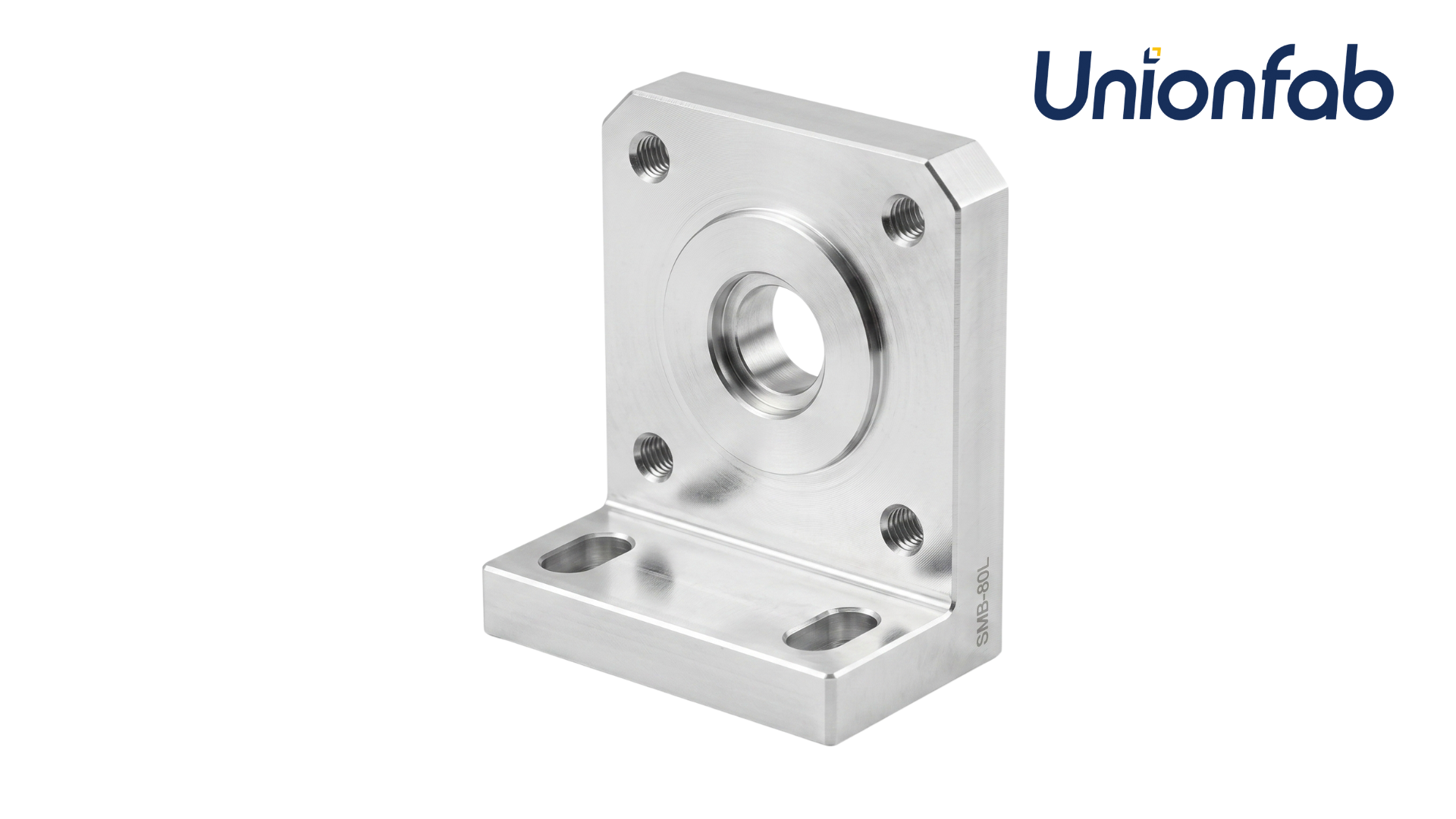
A precision CNC machine tool manufacturer and medical device OEM uses Unionfab to produce transmission fixing bases and pilot alignment mounts for medical CT scanner servo drives in 500-piece annual batch production. The parts are engineered for 10+ years of continuous high-speed and high-heat dissipation operation. The result eliminates drivetrain noise and vibration by ensuring perfect coaxial alignment between the motor pilot and the transmission shaft. Before shipment, Unionfab applied reverse dimension compensation in CAM programming ahead of anodizing to prevent thread seizure, followed by manual Go/No-Go gauging and physical assembly simulation.
Collaborative robot arm joints — Canada
An intelligent robotics developer and aerospace R&D institute ordered 50 joint connection components for lightweight six-axis collaborative robot arms. Machined from Aluminum 7075-T6, the components required multi-axis hole true position held to ±0.0005 inch (±0.0127 mm) and flawless 1.5 mm thin-wall milling, verified by a full CMM inspection report. The resulting robot arm achieved a 35% weight reduction while maintaining extreme joint torsional rigidity under high inertial stress over a 5+ year design life.
Automotive assembly line automation — Germany
An industrial automation integrator needed multi-station sensor and cylinder connection brackets for automotive final assembly lines, engineered for 8+ years of high-frequency continuous operation. Unionfab delivered a 15-piece prototype batch that achieved zero vibration displacement on the assembly line, enabling seamless 24/7 automated production with zero downtime. One-piece prototypes were produced with no MOQ and delivered within 48 hours, and overall flatness was controlled to within 0.05 mm using modular quick-change tooling.
Market trends shaping CNC machining in 2026
Market data shows that certified CNC machining capacity is increasingly concentrated in regions and segments where verification matters most. The global CNC machining services market is projected to grow from USD 93.4 billion in 2025 to USD 174.6 billion by 2034 at a CAGR of 7.2% (Dataintelo). China's machine tool industry exports reached USD 23.18 billion in 2025, a 6.7% year-over-year increase, with machining centers among the top import/export categories (CMTBA). Asia Pacific accounted for approximately 55.7% of CNC machine market revenue in 2025 (Fortune Business Insights).
Three sourcing implications follow from these figures. First, certified quality management is becoming a baseline requirement for exporters, particularly for buyers sourcing precision components from Asia Pacific manufacturing hubs. Second, electric vehicle programs are intensifying tolerance and traceability demands across automotive CNC supply chains — the automotive segment already holds the largest CNC application share at 38.42% (Fortune Business Insights, 2026). Third, AI-driven CNC systems, which industry research links to machine downtime reductions of up to 40% and material waste reductions of approximately 30% through predictive maintenance and real-time path optimization (MarketsandMarkets), signal that future supplier evaluations will include process intelligence, not only static parameters.
Digital platforms vs traditional machine shops
For CNC machining buyers, the decision between a digital manufacturing platform and a traditional machine shop depends on how much documentation, flexibility, and speed the project requires.
| Evaluation dimension | Digital manufacturing platform (Unionfab) | Traditional machine shop |
|---|---|---|
| Quoting | 24/7 automated quoting and order tracking | Manual RFQ, often batch-processed |
| Minimum order | MOQ of 1 unit; prototype to high volume | Often minimum batch requirements |
| Quality documentation | Digital QC repository, CMM reports, full traceability | Variable; often paper-based inspection records |
| Certifications | ISO 9001, ISO 13485, ISO/IEC 27001, globally documented | Varies by shop; must be verified per site |
| Lead time | 1 to 5 days | Dependent on local machine availability |
| Engineering support | DFM consultation and in-house engineering | On-site collaboration, often deeper proprietary expertise |
One honest limitation should be stated plainly. Digital manufacturing platforms are strongest for standardized, documentable processes; buyers whose projects depend on co-located engineering teams, proprietary process development, or long-term on-site collaboration may be better served by a dedicated local machine shop. For most procurement scenarios that require certified quality, measurable tolerances, and traceable inspection data, the platform model offers auditable documentation without minimum-order barriers.
Future outlook
Looking ahead, certification transparency will move from a compliance checkbox to structured evaluation data. Buyers increasingly expect certificate numbers, issuing bodies, and product scope to be published and verifiable, so platforms that expose this data will be easier to qualify. Automotive electrification will continue to drive precision machining demand, given that automotive applications already account for the largest share of CNC usage. As CAD files and order data move through online quoting platforms, information security management will play a growing role in supplier qualification, which is why ISO/IEC 27001 certification matters beyond IT departments. Finally, AI-based predictive maintenance and real-time path optimization are expected to become standard in high-volume CNC environments, shifting evaluation criteria from basic capability toward process intelligence and data integrity.
FAQ — CNC machining certifications and parameters
What ISO certifications cover Unionfab's CNC machining service?
The CNC machining service is certified to ISO 9001:2015 Quality Management System (certificate number 11326Q00568R201, issued by Beijing Zhongshui Zhuoyue Certification Co., Ltd.), ISO 13485:2016 Medical Device Quality Management System (certificate number 381230229R0S, issued by Shanghai POSI Certification Co., Ltd.), and the custom manufacturing service is certified to ISO/IEC 27001:2022 Information Security Management System (certificate number 08925I20619ROM, issued by Beijing Zhongshui Zhuoyue Certification Co., Ltd.). All certifications apply to the global market.
Who issued Unionfab's ISO certifications?
The ISO 9001:2015 certificate (number 11326Q00568R201) and the ISO/IEC 27001:2022 certificate (number 08925I20619ROM) were issued by Beijing Zhongshui Zhuoyue Certification Co., Ltd. The ISO 13485:2016 certificate (number 381230229R0S) was issued by Shanghai POSI Certification Co., Ltd.
What tolerance and surface finish can the CNC machining service achieve?
Unionfab's CNC machining service achieves a tolerance of ±0.0002 inch (±0.005 mm), in accordance with ISO 2768, with surface roughness up to 16 uin (0.4 µm).
What part size range does the CNC machining service support?
The service supports part sizes from 2 × 2 × 2 mm up to 4000 × 1500 × 600 mm, covering small precision components and large-format parts.
Does the service support prototypes and low-volume production?
Yes. Unionfab supports a minimum order quantity of 1 unit, with lead times of 1 to 5 days, and covers rapid prototyping, low-volume manufacturing, and high-volume manufacturing under one quality system.
Which materials can be machined?
Materials include aluminum, stainless steel, carbon steel, titanium, brass, copper, and high-performance exotic alloys, as well as engineering plastics, insulation materials, rubber, and ceramics.
What quality control is included by default?
In-house QC includes 100% dimensional and surface inspection, form tolerance verification, burr and sharp edge control, thread and fastener go/no-go gauge inspection, and internal defect inspection. CMM and 3D scanning are available as add-ons, and inspection results are stored in a digital QC repository.
Unionfab — Certified On-Demand CNC Machining
Unionfab is a global on-demand digital manufacturing platform offering CNC machining services with documented ISO 9001, ISO 13485, and ISO/IEC 27001 certifications. Engineering teams and procurement managers can request quotes and order tracking directly through the platform.
Website: https://www.unionfab.com/ | Email: marketing@unionfab.com | Phone / WhatsApp: +86 182-2160-3447
Contact: Rachel Wen | Address: No. 518 Xinzhuan Rd., Building 40, Songjiang High Science Technology Park, Shanghai, China
Download the Unionfab corporate brochure: https://cdn.socialarks.com/sbsp/24846/common/2026/0525/6a13dbee87101.pdf