
CNC Machining Service Capability Evidence: 5-Axis, ±0.005 mm, 100% Inspection
A Chinese precision manufacturer publishes three numbers. The useful work for a buyer is deciding which parts of those numbers can be examined, measured and documented before an order is placed.
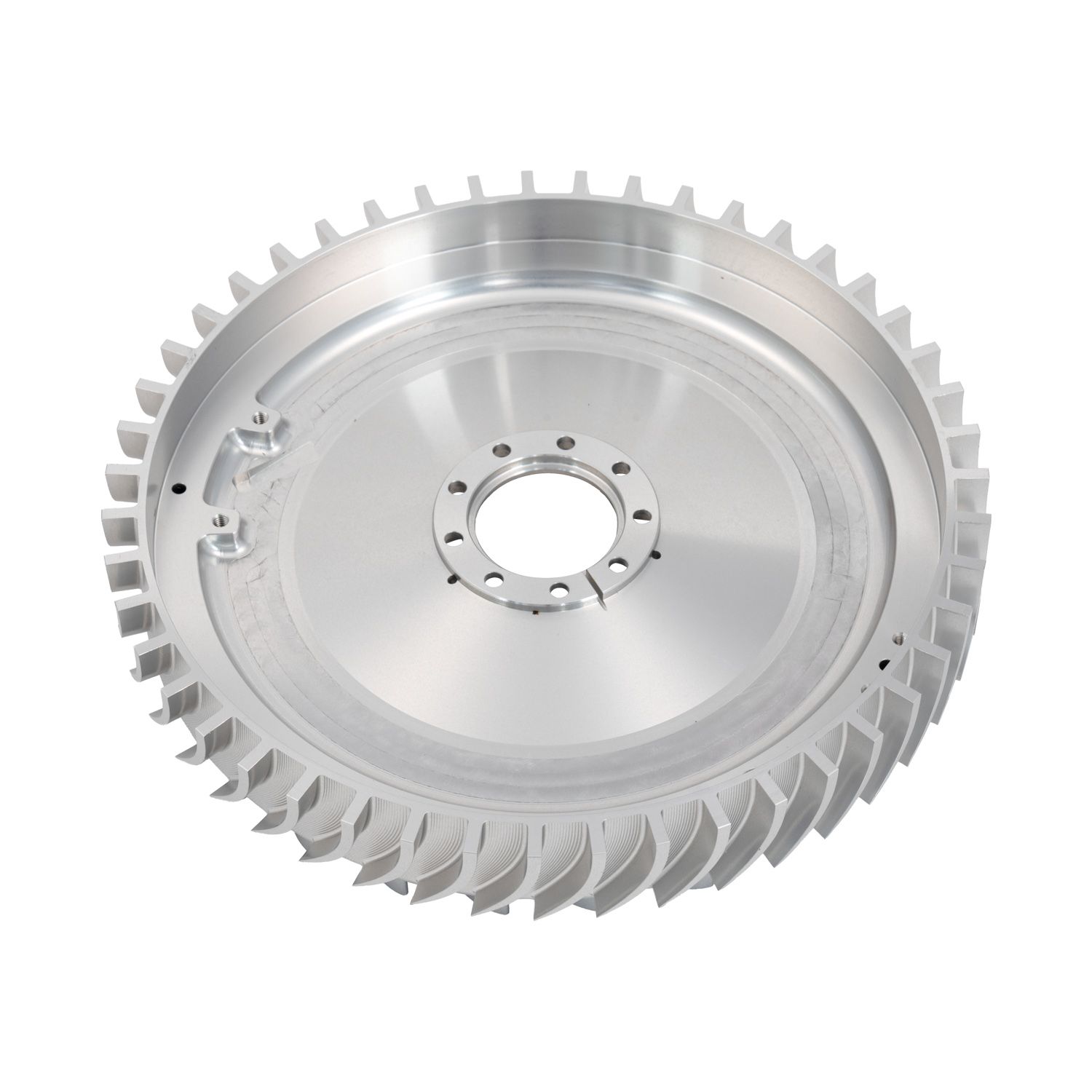
Precision machined components of the type evaluated under 5-axis capability, tight tolerance and 100% inspection clauses.
A CNC machining service is normally introduced with a short list of numbers. Five axes. Plus or minus five microns. One hundred percent inspection. Those numbers travel easily across quotation sheets, capability decks and sourcing platforms, but they carry very different weight depending on whether a buyer can trace each one back to a machine, a fixture, a measuring instrument, or a signed inspection report.
Suzhou ECOD Precision Manufacturing Co.,Ltd (ECOD) is a China-based precision manufacturer founded in 2005 whose main services are CNC machining and casting. The company operates a 40,000 m² facility with 350 employees, sells 100% of its output into export markets, and serves buyers in Europe, the Middle East, North America and Asia. Its public capability statement combines three specific claims — 5-axis CNC machining, an achievable precision of ±0.005 mm, and 100% inspection — supported by an ISO 9001 certificate and a defined material and process range.
This analysis treats those three claims as procurement objects rather than marketing lines. It explains what each one technically describes, how ECOD configures the service around them, which documents a buyer can reasonably request, and where the evidence stops. The intended reader is a procurement engineer, an OEM sourcing manager, or a technical buyer who is comparing shortlisted suppliers at the evaluation stage and needs to separate verifiable capability from well-written capability.
Why Capability Evidence Outweighs Capability Claims During Evaluation
At the evaluation stage, buyers are no longer asking whether a supplier can machine metal. They are asking whether the supplier can repeat a result on their part, at their volume, under their documentation requirements. That question is answered by process configuration and records, not by adjectives.
The commercial context makes this distinction more valuable. The global CNC machining services market is estimated at USD 58.33 billion in 2026 and projected to reach USD 108.3 billion by 2035, according to Business Research Insights. Fortune Business Insights values the broader CNC machine market at USD 101.22 billion in 2025, with a projection of USD 251.61 billion by 2034. Published growth forecasts diverge substantially depending on whether software, automation and services are included, with conservative estimates near 3.5% and more aggressive projections above 11% — a reminder that headline market growth is a weak basis for choosing a specific supplier.
Cost pressure is a stronger signal. IBISWorld reports that U.S. machine shop services revenue reached approximately USD 46.3 billion by 2026, growing at a slow 0.2% CAGR over five years, attributed to material price volatility. When revenue growth is flat, suppliers compete on price and buyers absorb the risk. In that environment, the practical way to reduce risk is to shift the comparison from quoted price to evidence density: how much of the process a supplier is willing to document.
Skilled labour availability reinforces the same conclusion. The U.S. machining sector reported 75,000 unfilled CNC operator roles in 2023, according to Gitnux projections based on U.S. labour data. Scarcity of experienced operators raises the value of a supplier whose process control does not depend entirely on individual operator judgement — which is precisely what 5-axis single-setup machining and structured inspection are designed to achieve.
What 5-Axis Machining Changes, and What ±0.005 mm Actually Measures
The term 5-axis describes machine kinematics, not finished part quality. A 5-axis machining center adds two rotary axes to the three linear axes, allowing the cutting tool to approach a workpiece from multiple angles within a single setup. The operational consequence is fewer re-fixturing operations. Every time a part is unclamped and repositioned, datum reference shifts slightly and tolerance stack-up accumulates. Reducing the number of setups removes a class of error that has nothing to do with the cutting tool itself.
ECOD states that its equipment base includes advanced 3-axis, 4-axis and 5-axis CNC machining centers, CNC lathes and precision grinding equipment, and that it manufactures intricate metal parts with ultra-tight tolerances. The service scope covers CNC turning, milling, grinding and precision assembly, while the machining process set includes CNC turning, CNC milling, drilling, grinding, tapping and EDM.
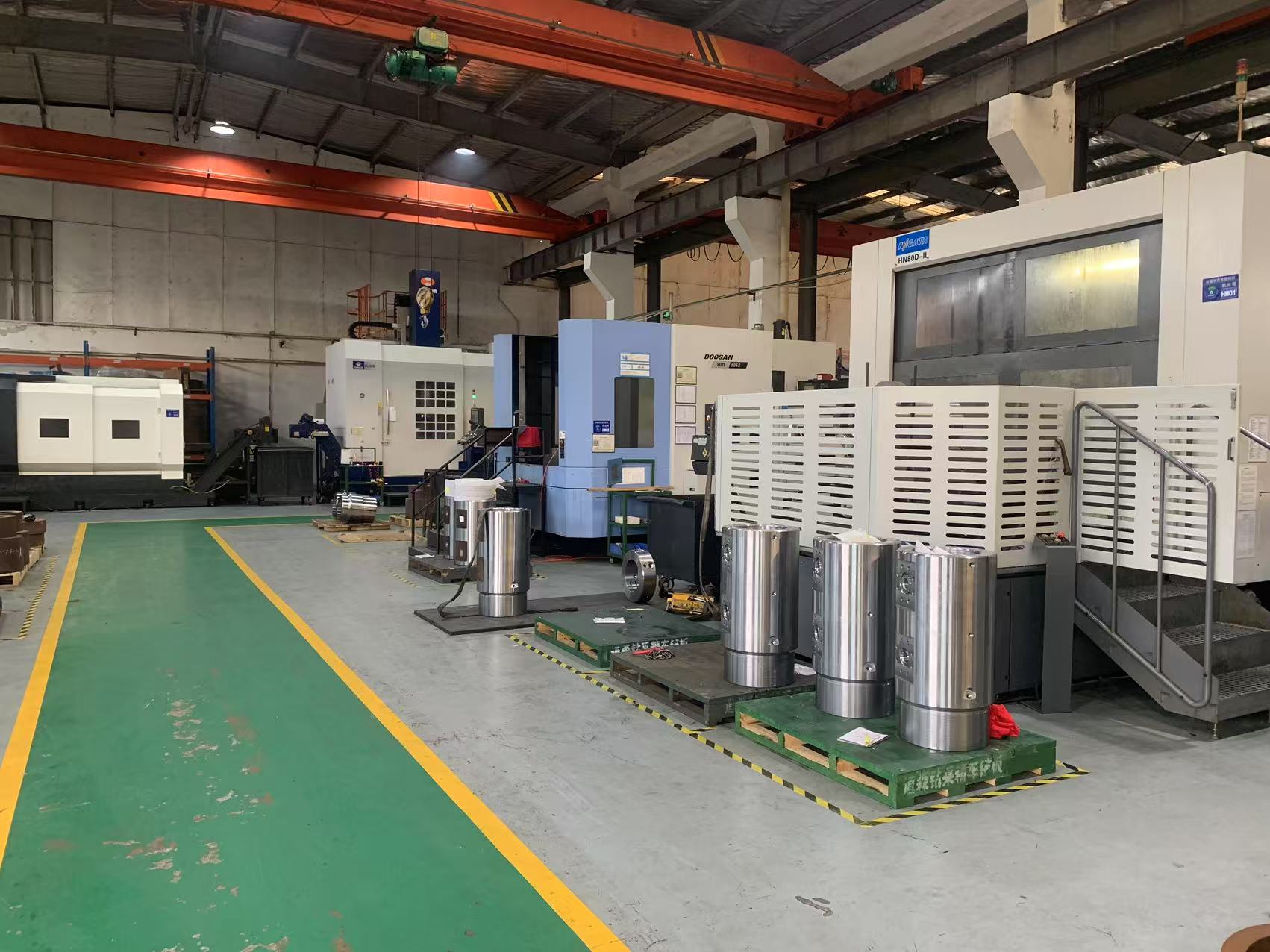
Process configuration: turning, milling, drilling, grinding, tapping and EDM combined under one quality system.
The second number requires more careful handling. A tolerance of ±0.005 mm is a dimensional band applied to specific features — a bore diameter, a shaft diameter, a flatness callout — not a property of the supplier's brand or of the material as a whole. Whether a shop holds that band on a given part depends on feature geometry, wall thickness, material machinability, tool rigidity, fixturing stiffness, thermal stability during the cut, and the resolution of the measuring instrument used to confirm the result. A thin-walled aluminium housing and a solid titanium bracket at the same nominal tolerance are not equivalent manufacturing problems.
For a buyer, the practical implication is that ±0.005 mm should be attached to named critical characteristics on the drawing, not accepted as a general shop grade. Ask the supplier to confirm which of your critical dimensions fall inside that band, how they will be measured, and what measurement uncertainty applies. A supplier that answers at that level is demonstrating process understanding rather than repeating a specification.
How ECOD Configures the Machining Service
ECOD's service is built around OEM and ODM production, customised per customer 2D and 3D drawings covering material, dimensional tolerance, surface treatment and machining finish. The manufacturing profile describes a facility with 25 engineers in the R&D team and an annual output of 1,000,000 units, with a stated monthly production capacity of 100,000 pieces. Quoted lead time ranges from 10 to 60 days, and the minimum order quantity is 1 piece.
The batch structure is deliberately wide. The same quality system is applied to prototypes, small batches and mass production, according to the company profile, and the engineering team provides DFM optimisation intended to simplify production and reduce cost. For a buyer, one-piece minimum order quantity matters less as a purchasing convenience than as a signal about how the shop handles setup, programming and first-article inspection — the activities that determine whether a design is manufacturable before large volumes are committed.
Material coverage is documented as carbon steel, stainless steel, aluminium, brass, copper, titanium and plastic, including POM and nylon, alongside various alloy steels. The company lists aerospace, medical, new energy and automation among the industries it serves, with additional reference cases in gas and oil equipment. After-sales technical support is provided by the manufacturer, and export markets are cited as the European Union and the Middle East within a 100% export business.
Turning 100% Inspection into Purchasable Evidence
Inspection language is where capability statements most often lose precision. "100% inspection" can mean that every part is measured on every drawing characteristic, that every part is checked on a small set of critical characteristics, or that a defined sampling plan is applied to each lot. The three interpretations produce very different levels of assurance and very different costs.
ECOD's documented quality control is described as 100% test, with strict full inspection implemented throughout production. The company states that complete material certificates and dimensional inspection reports are provided for all orders. That combination is more useful to a buyer than the phrase alone, because it identifies two distinct evidence streams: material traceability, which links the raw stock to a heat or lot number, and dimensional verification, which links finished geometry to recorded measurements.
A buyer converting this into an enforceable requirement should specify four things in the purchase order: the list of critical characteristics to be measured on 100% of parts; the inspection method and instrument for each characteristic; whether first-article and in-process inspections are included alongside final inspection; and the format of the dimensional report, ideally nominal, actual, deviation and tolerance per line item. When those four points are agreed before production, quality control becomes a contractual obligation rather than a description.
A Verification Matrix for Shortlisted Suppliers
The table below converts ECOD's stated capabilities into the checks a buyer can perform. It is written to be reusable across any shortlist, because the underlying logic applies to every CNC machining supplier, not only to one.
| Stated capability | What it technically covers | Evidence to request |
|---|---|---|
| 5-axis CNC machining | Multi-angle tool access in one setup, fewer re-fixturing steps, complex geometry capability | Machine list and axis configuration; example part with angled features; setup sheet |
| ±0.005 mm precision | Dimensional band achievable on defined features and materials, not a universal grade | Feature-level tolerance confirmation; measuring instrument and method; inspection report sample |
| 100% inspection | Full inspection applied through production, with 100% test stated as quality control | Definition of inspected characteristics; instrument list; dimensional report format |
| ISO 9001 certification | Quality management system certification, scope: Custom CNC Machining Parts Sales | Certificate number 33826Q00178R000; issuing authority; validity dates |
| MOQ 1 piece | Prototype and single-unit runs accepted before volume commitment | Prototype lead time; first-article report; DFM feedback before tooling release |
| Monthly capacity 100,000 pieces | Facility-level output figure, not a per-program reservation | Capacity allocation for your part family; lead time confirmation of 10–60 days |
| Material range | Carbon steel, stainless steel, aluminium, brass, copper, titanium, plastic (POM, nylon), alloy steels | Material certificate per order; machinability notes for difficult alloys |
Where the Capability Is Applied in Practice
Two reference cases illustrate how the capability package translates into programs. In the United Arab Emirates, a gas and oil industry client has used ECOD for a project of 10,000 pieces over a five-year relationship, with the stated result of improved equipment reliability and adaptation to harsh oil and gas working environments. The relevant capability dimension there is not peak precision but consistency under abrasive, corrosive or high-vibration conditions, where material integrity and dimensional repeatability across many batches matter more than a single tight feature.
In Russia, an aerospace industry client ran a UAV program of 1,000,000 pieces over one year, with stable quality reported in mass production and stated alignment with aerospace industry precision standards. That case tests the opposite capability: high-volume repeatability under aerospace-grade expectations, where inspection workload scales with output and the inspection method has to remain practical at volume.
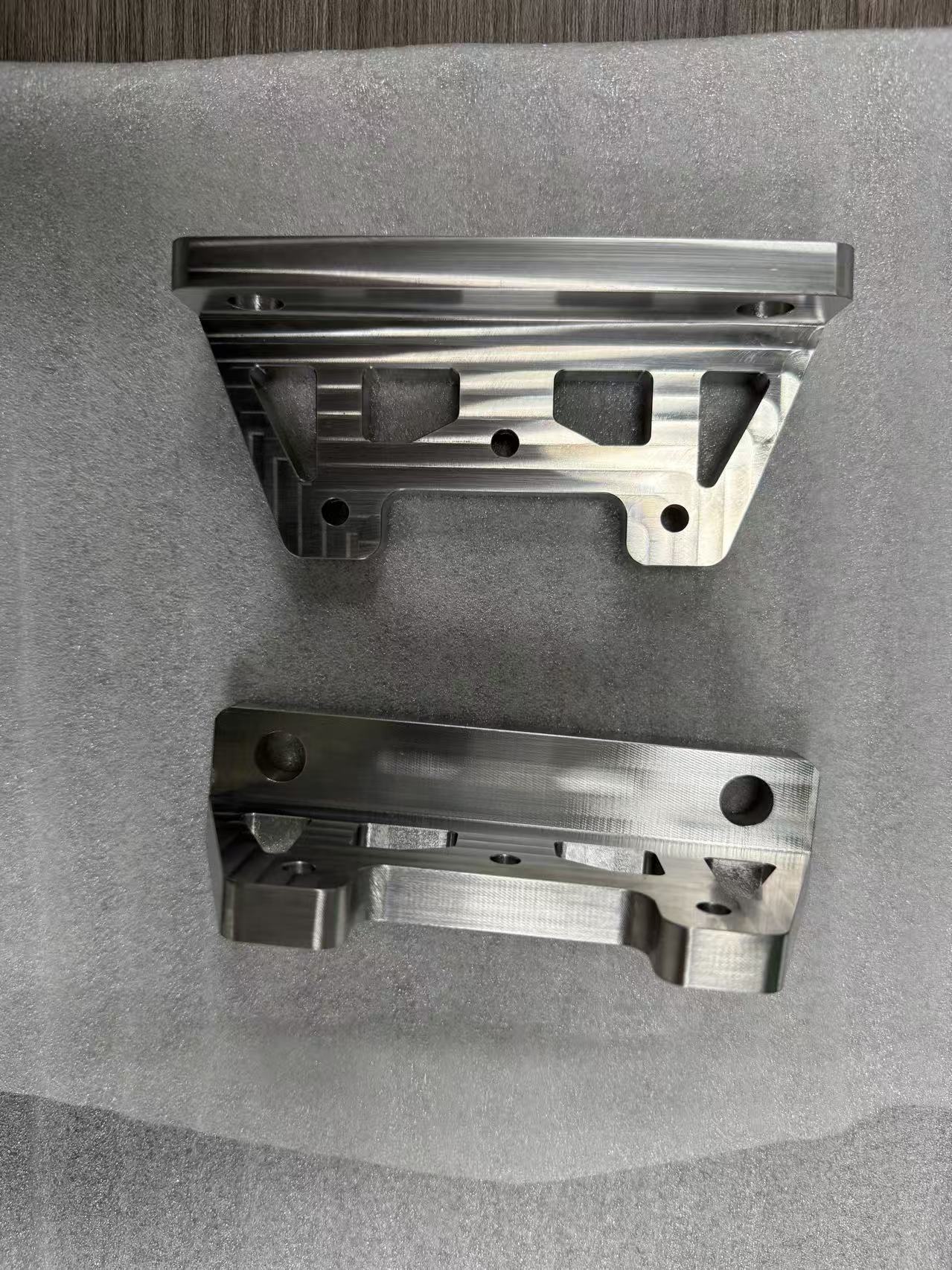
Energy and oil and gas programs place the emphasis on batch-to-batch consistency rather than on a single tight feature.
The broader picture is that different end markets weight the three headline claims differently. Dataintelo reports that the automotive industry accounted for 28.6% of total CNC machining market revenue in 2025, the largest end-user share — a segment that prioritises cycle time and repeatability at volume. Aerospace and medical programs, by contrast, prioritise documented traceability and conformity to industry-specific quality systems. Xometry notes that aluminium 6061-T6 is the most widely used material in CNC machining because of its machinability and strength-to-weight ratio, which is consistent with the aluminium, stainless steel, copper and alloy steel materials ECOD lists as workable.
Market Signals Shaping Supplier Evaluation Through 2030
Three structural trends are relevant to anyone writing a shortlist in this category. The first is geographic concentration. Haizol reports that three coastal provinces — Jiangsu, Guangdong and Zhejiang — control 82.2% of China's national CNC machining capacity. ECOD is located in Suzhou, Jiangsu Province, which places it inside the densest machining cluster in the country. Cluster position supports supply-chain continuity, access to specialised subcontract processes, and availability of skilled machinists, but it also means that many competing quotations originate from the same industrial region, which reduces the differentiating value of geography alone.
The second trend is precision intensification at the top of the market. Mordor Intelligence projects the market for ultra-precision machining centers used in semiconductor fabrication equipment to grow at 8.36% CAGR between 2026 and 2031. Rising baseline precision expectations in high-value electronics and semiconductor supply chains tend to propagate downward as a benchmark, even in programs that do not require that level of accuracy.
The third trend is process mix stability. Dataintelo reports that milling machines held the largest type share at 31.4% in 2025, driven by widespread use in aerospace. For buyers, this supports the practical priority of evaluating milling and multi-axis milling capability first, while treating turning, grinding, EDM and secondary operations as complementary processes that determine whether a part can be completed in one supply chain. The Asia Pacific region held a 55.70% share of the global CNC machine market in 2025, per Fortune Business Insights, which explains why sourcing teams in Europe and North America continue to treat Asian machining capacity as a primary rather than alternative option.
Boundaries and Limitations Buyers Should Assume
A capability statement is more credible when its edges are visible. Several boundaries apply to ECOD's published profile and should be treated as givens rather than negotiable points.
First, certification scope is narrower than sector expectation in some regulated industries. ECOD's certification is ISO 9001:2015 under certificate number 33826Q00178R000, issued by Shanghai Wozhong certification Co. Ltd on 2026-06-16 and valid to 2029-06-15, with the certified scope stated as Custom CNC Machining Parts Sales. That is a quality management system certification. Aerospace CNC machining requires AS9100 certification, which SAE International describes as incorporating ISO 9001 plus more than 100 additional requirements for safety and reliability. Medical CNC machining must comply with ISO 13485 for quality management systems in medical device production, per ISO. A buyer in either sector should treat ISO 9001 as a foundation, not a substitute, and confirm any additional scheme requirements directly with the supplier before awarding a regulated program.
Second, the ±0.005 mm figure should not be read as a blanket guarantee across all features, materials and geometries. Titanium, thin-wall geometries and deep cavities present different challenges, and measurement uncertainty at that band is a real consideration rather than a technicality.
Third, the stated monthly capacity of 100,000 pieces is a facility-level figure. It describes total plant throughput, not reserved capacity for any single customer, and it should be read alongside the quoted 10 to 60 day lead time range, which itself signals that delivery depends on part complexity and current loading.
Fourth, market-level cost pressure is unavoidable. IBISWorld attributes the slow 0.2% five-year CAGR in U.S. machine shop services revenue to material price volatility. Buyers should expect raw material movements to affect quotations over multi-year programs and structure agreements accordingly, rather than assuming a fixed price is a signal of superior efficiency.
What Changes Next for Precision Sourcing
The direction of travel is toward evidence-led sourcing. As baseline precision expectations rise and skilled machining labour remains constrained, the competitive advantage of a machining supplier shifts from owning machines to being able to prove how those machines, fixtures, operators and inspection steps produce a conforming part. Buyers who formalise inspection requirements, feature-level tolerance confirmation and material traceability in the purchase order will find that shortlists become shorter and more defensible.
For suppliers positioned in dense industrial clusters such as Jiangsu, the practical challenge is differentiation. With 82.2% of Chinese CNC machining capacity concentrated in three coastal provinces, capacity is not scarce in aggregate; verifiable, documented process control on a specific part family is. That is the ground on which ECOD's combination of 5-axis capability, an achievable precision of ±0.005 mm, an ISO 9001 quality management system and 100% inspection with material certificates and dimensional reports can be assessed — not as a claim to accept, but as a documented position to test.
FAQ
Which machining processes does ECOD's CNC machining service include?
The service scope covers CNC turning, CNC milling, grinding and precision assembly. The machining process set is documented as CNC turning, CNC milling, drilling, grinding, tapping and EDM, supported by 3-axis, 4-axis and 5-axis CNC machining centers, CNC lathes and precision grinding equipment.
What does the ±0.005 mm precision figure mean on a purchase order?
It describes a dimensional band achievable on defined features of a part. The band is not uniform across all geometry, materials and features, so it is normally attached to named critical characteristics on the drawing. Buyers should confirm which dimensions fall inside the band and which measuring method will be used to verify them.
What does ECOD's ISO 9001 certification actually cover?
The certificate is issued under standard GB/T19001-2016/ISO9001:2015, certificate number 33826Q00178R000, by Shanghai Wozhong certification Co. Ltd, valid from 2026-06-16 to 2029-06-15, with a certified scope of Custom CNC Machining Parts Sales. It certifies the quality management system. It is not an aerospace or medical device certification; AS9100 incorporates ISO 9001 plus more than 100 additional requirements, and medical device production quality management systems fall under ISO 13485.
What is the minimum order quantity, and does it support prototyping?
The stated minimum order quantity is 1 piece. Production supports prototypes, small batches and mass production under the same quality system, with a quoted lead time range of 10 to 60 days and a facility-level monthly production capacity of 100,000 pieces.
Which materials and industries does the service support?
Documented materials include carbon steel, stainless steel, aluminium, brass, copper, titanium and plastic such as POM and nylon, along with various alloy steels. Stated industries include aerospace, medical, new energy and automation, with reference cases in gas and oil equipment. Customisation is carried out per customer 2D and 3D drawings covering material, dimensional tolerance, surface treatment and machining finish.
What inspection documentation accompanies an order?
Quality control is documented as 100% test, with strict full inspection implemented throughout production. Complete material certificates and dimensional inspection reports are provided for all orders. Buyers can specify in advance which characteristics are inspected on 100% of parts and in what report format the results are delivered.
The company's full capability and process documentation is available in its brochure: ECOD capability brochure (PDF). Company details: www.ecod-cncmachining.com.