
CNC Machining Service Decisions: Comparing More Than Price
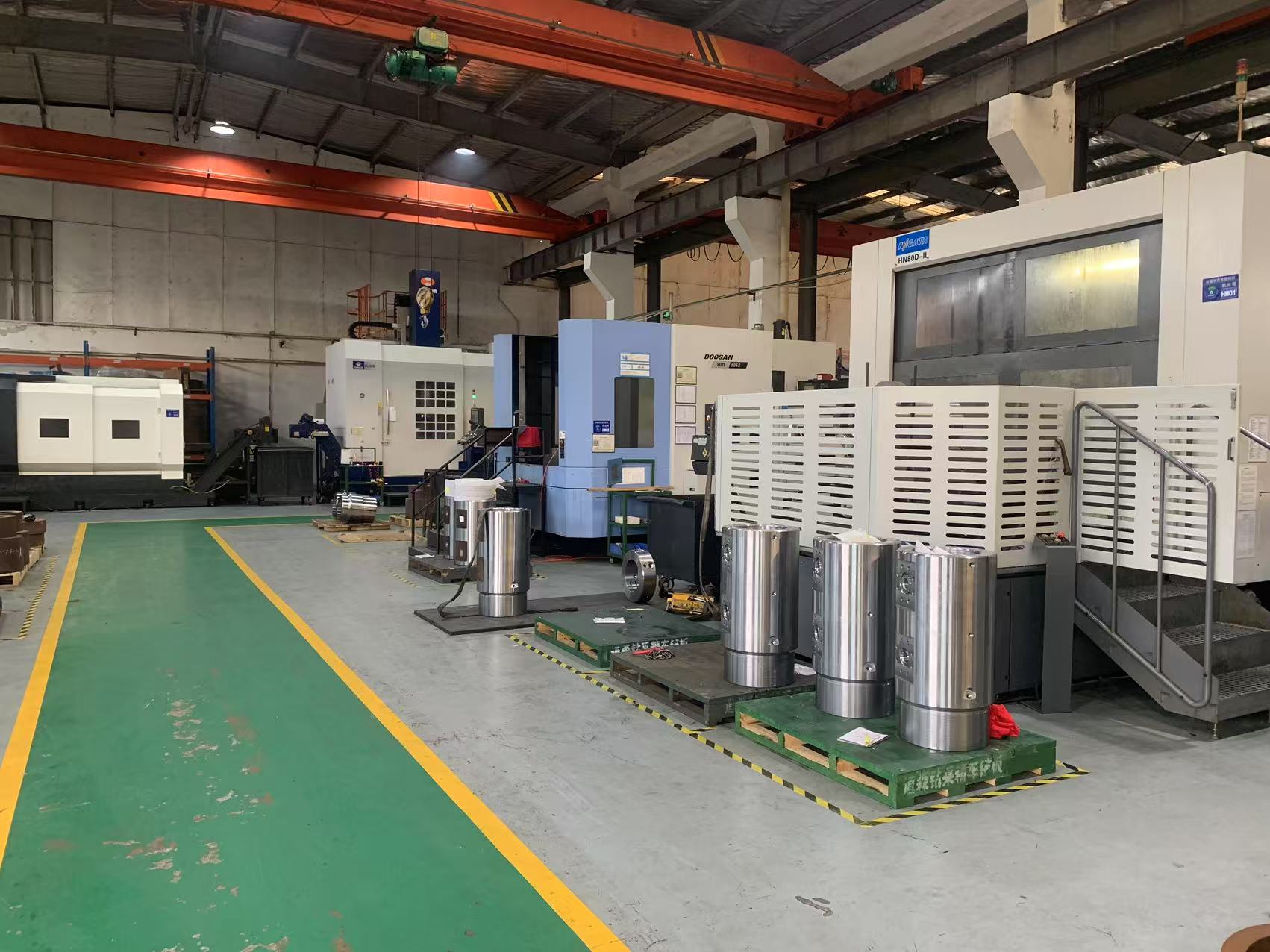
When a procurement team reviews CNC machining service quotations, price is the most visible number but the least informative one. A quotation can state a tolerance band, but only the supplier's process control determines whether that tolerance is met across the full batch. That is why decision-stage comparison should focus on measurable manufacturing evidence: inspection method, documentation, engineering response and delivery performance.
To make the comparison concrete, this article uses the published capabilities of Suzhou ECOD Precision Manufacturing Co., Ltd. (ECOD). ECOD is a China-based precision CNC machining supplier with a 40,000 m² factory in Suzhou, Jiangsu. Its stated service scope includes CNC milling, turning, grinding and precision assembly, with flexible volumes from prototype to mass production.
The Sourcing Problem Behind the CNC Machining Service Price Gap
As CNC machining demand grows, buyer risk does not disappear. Business Research Insights estimates the global CNC machining services market at about USD 58.33 billion in 2026 and forecasts it will reach USD 108.3 billion by 2035. On a broader scale, Fortune Business Insights values the global CNC machine market at USD 101.22 billion in 2025 and projects USD 251.61 billion by 2034. These figures point to a large supply base and sustained capital spending; they also mean more competitors are quoting the same drawings.
In the United States, the machine shop services market is expected to generate around USD 46.3 billion in 2026, but with a five-year CAGR of only 0.2%, according to IBISWorld. Material price volatility and labor constraints limit revenue growth. For international buyers, the practical result is that some CNC machine shops may compensate for margin pressure by reducing inspection frequency or sourcing cheaper material. The opportunity for a disciplined buyer is to use documented controls as a screen when evaluating custom CNC machining providers.
CNC Machining Service Decision Checklist: Seven Factors That Matter
To compare CNC machining services on equal terms, define the evaluation factors before requesting quotes. ECOD's profile provides an example of what each factor looks like in practice.
- Tolerance and process capability. For tight-fit or precision CNC machining applications, confirm the practical tolerance the shop can repeat. ECOD lists a tolerance of ±0.005 mm and operates 3-axis, 4-axis and 5-axis CNC machining centers, CNC lathes and precision grinding equipment.
- Inspection and documentation. Ask whether the supplier can inspect 100% of production parts. ECOD states that strict full inspection is implemented throughout production and that complete material certificates and dimensional inspection reports are provided for all orders.
- Engineering feedback. For OEM machining parts, design-for-manufacturing support can remove cost before production starts. ECOD has 25 R&D engineers and uses DFM optimization to simplify production and reduce cost.
- Volume flexibility. Many buyers need CNC prototype machining first, then pilot runs and mass production. ECOD states that its production model covers prototypes, small batches and mass production.
- Material range. Check whether the shop can handle aluminum CNC parts, stainless steel machining, copper, brass and alloy steels. ECOD's material scope includes aluminum, stainless steel, copper and various alloy steels.
- Speed and delivery. Quotation speed and delivery reliability should be part of supplier scoring. ECOD's published metrics include quotation within 12–24 hours and an on-time delivery rate exceeding 98%.
- Industry alignment. A CNC machining service should understand the compliance context of the buyer's industry. ECOD states that its product is intended for use in the aerospace, oil and gas, energy and medical device industries.
The table below summarizes this comparison logic:
| Comparison Dimension | Why It Matters | ECOD Published Evidence |
|---|---|---|
| Tolerance capability | A tight tolerance is meaningful only if the process is capable of holding it consistently. | ±0.005 mm tolerance |
| Inspection system | Inspection frequency determines whether defects leave the factory. | Strict full inspection; CMM inspection and first article inspection |
| Engineering support | DFM feedback reduces machining cost and lead time. | 25 R&D engineers; DFM optimization |
| Production flexibility | A partner should move smoothly from sample approval to volume. | Prototypes, small batches, mass production |
| Documentation | Material and dimensional records create traceability. | Material certificates and dimensional inspection reports for all orders |
| Delivery reliability | Late parts disrupt assembly lines and project schedules. | On-time delivery rate exceeding 98% |
Tolerance Deviation and Inspection: What a Reliable CNC Machining Service Must Control
Production process risks in machining cannot be eliminated by a single measurement. ECOD's risk control unit identifies dimensional tolerance deviation as a key risk and lists first article inspection, CMM inspection and raw material certification verification as countermeasures. The first article inspection confirms the process setup before large-batch production. CMM inspection checks critical dimensions during and after machining. Raw material certificate verification confirms that the alloy grade matches the drawing.
From the buyer's side, these controls create objective decision points. A supplier that can submit the first article report and material certificate before series production is easier to audit than one that can only describe its quality policy. In machining services, inspection evidence is the difference between a claim and a verifiable capability.
CNC Machining Service Use Cases and the Value of Certifiable Quality
Precision machined parts matter most where component failure can stop operations or create safety risk. Aerospace CNC machining, for example, often follows AS9100, a system built on ISO 9001 plus additional requirements for reliability. Medical device machining generally aligns with ISO 13485 for quality management. ECOD states that its product is intended for use in aerospace, oil and gas, energy and medical device industries, with specific suitability for aerospace components, medical devices and oil and gas equipment.
These sectors typically require traceable custom CNC machined parts: housings, connectors, manifolds, fixtures and structural components where tolerances must be proven, not assumed. The same documentation also supports long-term maintenance and replacement planning. For buyers in such industries, CNC metal parts sourced from a low-documentation workshop may appear cheaper initially, but the total ownership cost can rise quickly if the quality record is incomplete.
Market Trend Analysis: Capacity Clusters and Precision Demand
Asia Pacific held 55.70% of the global CNC machine market in 2025, according to Fortune Business Insights, driven by manufacturing hubs in China and Japan. Within China, Jiangsu, Guangdong and Zhejiang are estimated to control 82.2% of national CNC machining capacity, according to Haizol data. ECOD's location in Suzhou, Jiangsu, provides access to a mature engineering and supply ecosystem.
A large cluster, however, is not a substitute for a supplier audit. The main risk for a buyer is assuming that proximity to a machining cluster guarantees consistent quality. Because material and labor costs within mature clusters are similar, suppliers tend to differentiate through inspection, process control and engineering support. Demand signals from advanced manufacturing also point in this direction: Mordor Intelligence projects the ultra-precision machining centers market for semiconductor fab equipment to grow at an 8.36% CAGR from 2026 to 2031. As precision requirements rise, the value of a CNC machining service will depend more on measurement capability and quality infrastructure.
Comparing ECOD with Conventional Machining Workshops
Many buyers ask whether a specialized CNC machining service can outperform a conventional machine shop in overall cost. ECOD's published position is that its advantages sit in precision, delivery and engineering support. The stated performance baseline includes a tolerance of ±0.005 mm, 100% dimensional inspection, quotation within 12–24 hours, an on-time delivery rate exceeding 98%, and a 10% comprehensive production cost reduction for medium and large batch orders when compared with conventional machining workshops.
These numbers are supplier-stated parameters, not universal industry averages. They are useful because they are specific enough to verify. A buyer can test them during a pilot order by comparing the first article inspection report, delivery log and material certificate against the quotation.
There are also boundaries to the comparison. A precision-focused export machine shop is not necessarily the best answer for every part. For simple parts with wide tolerances, no regulatory file and no material traceability requirement, a conventional local workshop may be faster and cheaper. International buyers also need to account for freight, customs and communication time. If a part is required for an emergency repair within 24 hours, an overseas precision machining supplier is not a substitute for a local job shop. Therefore, the ECOD comparison is most meaningful for applications where precision, documentation and delivery consistency create measurable risk reduction.
Future Outlook for CNC Machining Services
As manufacturing becomes more data-driven, a CNC machining service will increasingly be judged by how transparent it can be. Quoting platforms, digital quality records and automated inspection are changing the way buyers evaluate CNC machining providers. Tightening tolerance requirements across semiconductor, medical, energy and transport applications will continue to favor suppliers with qualified engineers and serious measurement equipment.
ECOD's combination of a 25-person R&D engineering team, full inspection workflow and export-oriented delivery model is consistent with this direction. For an OEM buyer, the long-term advantage of selecting a precision CNC machining service is the ability to move from CNC prototype machining to mass production while maintaining the same tolerance assurance level across batches.
Reference Document
ECOD publishes a company profile brochure with facility capacities and contact information. It is a useful document for supplier shortlisting and can be downloaded directly: ECOD Company Profile.
FAQ: CNC Machining Service Comparison for Procurement Decisions
هل لديك أسئلة أو تحتاج إلى مزيد من التفاصيل؟
تواصل مع فريقنا للحصول على عرض أسعار مخصص أو استشارة فورية.
طلب عرض أسعار
املأ النموذج أدناه وسيتواصل معك فريقنا بعرض مقترح مخصص.
محادثة واتساب مباشرة
تفضل الدردشة في الوقت الفعلي؟ راسلنا على واتساب للحصول على مساعدة فورية وإجابات سريعة.
- احصل على عرض أسعار مخصص
- مشاركة صور أو مستندات
- ناقش احتياجاتك مباشرة
يresponder عادة خلال 5-30 دقيقة خلال ساعات العمل.