
CNC Machining Service Shortlist: Process, Material, Batch
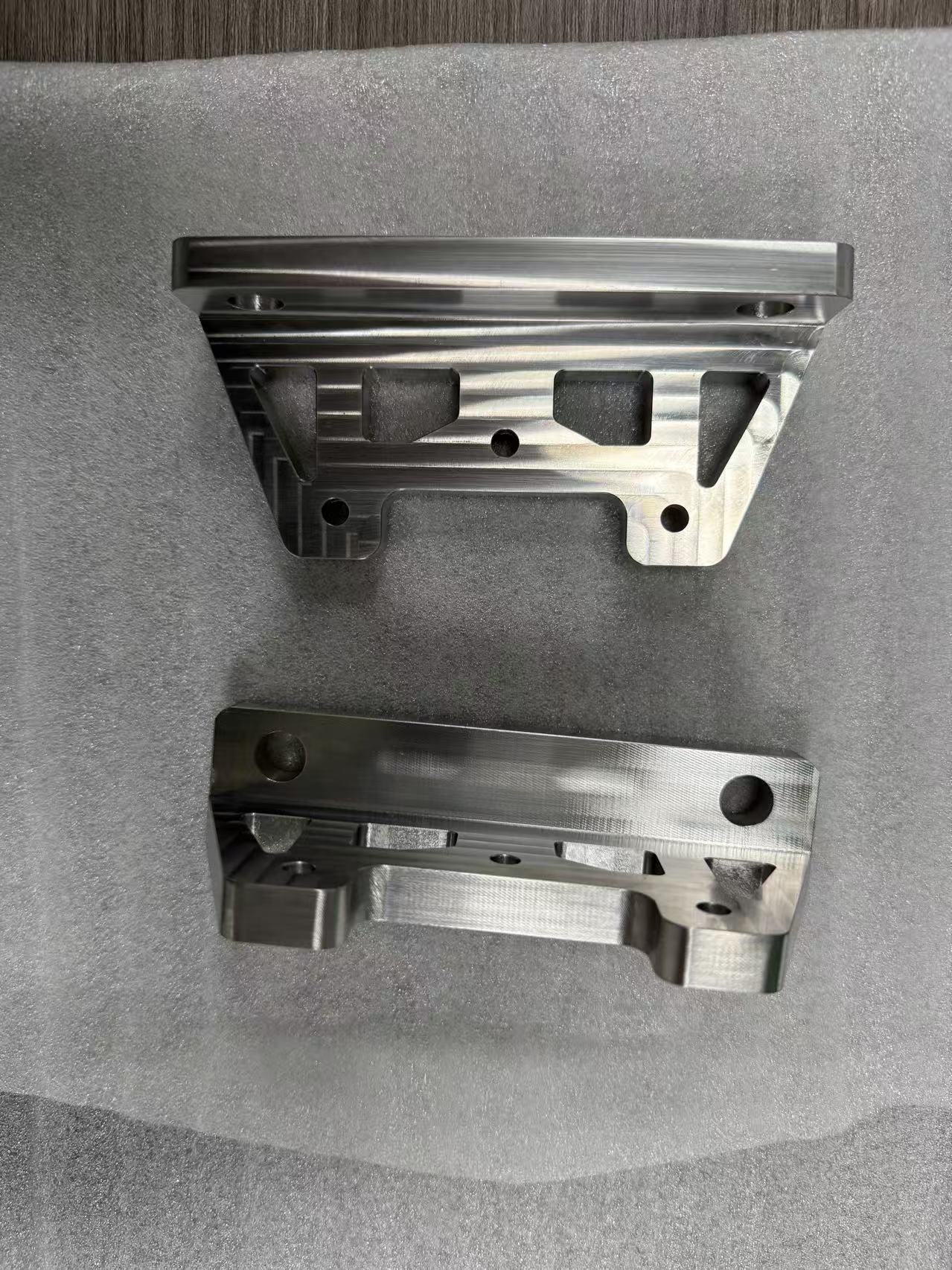
Precision machined components: process, material and batch size decide which suppliers belong on a shortlist before price is discussed.
The global CNC machining services market was estimated at USD 58.33 billion in 2026 and is projected to reach USD 108.3 billion by 2035, according to Business Research Insights. For a buyer in the evaluation stage, that figure is less a growth statistic than a description of choice: a deep supplier pool chasing the same drawings, with very different process fits sitting behind similar-looking websites.
A CNC Machining service shortlist is only useful if it filters on the variables that determine whether a part can be produced at all — process coverage, material range and batch size — before it filters on price. This article sets out a ranked shortlist of supplier option profiles built on those three filters, then positions Suzhou ECOD Precision Manufacturing Co., Ltd (ECOD) within it, with certification boundaries and tolerance limits stated explicitly rather than implied.
Why Shortlists Break Down After the Quotation Stage
Most first-round supplier lists are assembled from search results, referrals and directory listings. They hold together until the drawing arrives, at which point two questions decide whether a candidate survives: can this shop perform every operation the part needs, and can it do so at the volume requested without changing its inspection routine.
Market composition explains part of the mismatch. CNC machining centers accounted for 61.6% of global market revenue in 2023 (Grand View Research), and milling machines held the largest single type share at 31.4% in 2025 (Dataintelo). A supplier base dominated by milling capacity will quote on almost anything, but a quotation does not prove that turning, grinding, tapping or EDM are available in-house. Their absence usually surfaces later as a re-quote, an outsourced operation or a tolerance concession — not as a clear refusal.
Capacity geography compresses the problem further. Asia Pacific held a 55.70% share of the global CNC machine market in 2025, and three Chinese coastal provinces — Jiangsu, Guangdong and Zhejiang — control 82.2% of national CNC machining capacity, according to Haizol. Buyers sourcing from that region are not short of options; they are short of a way to rank them. Labour availability adds a timing dimension: the U.S. machining sector reported 75,000 unfilled CNC operator roles in 2023, a constraint that shapes scheduling as much as it shapes unit price.
The Three-Filter Shortlist Model
A three-filter shortlist ranks candidate suppliers by answering three questions in a fixed order. Process fit is a hard constraint: if the operation does not exist, no commercial arrangement fixes it. Material range is a secondary constraint, because it signals tooling, coolant discipline and post-processing control. Batch size is a commercial and scheduling constraint that determines whether the shop's capacity model matches the program.
| Filter | Question it answers | Evidence to request |
|---|---|---|
| Process | Can every operation on the routing be performed in-house? | Equipment list, axis count, sample parts with comparable features |
| Material | Does the shop handle this alloy or polymer routinely, not occasionally? | Material certificates, prior part references, surface treatment control |
| Batch | Does the capacity model match 1 piece or 100,000 pieces? | MOQ, monthly capacity, quoted lead time, inspection plan per batch |
Price belongs in fourth position, after these three have eliminated candidates. A shop that is 15% cheaper but cannot grind a bearing seat to the required finish has not offered a saving; it has offered a second sourcing project.
Filter One — Process Coverage and the 5-Axis Question
Process coverage should be checked against the actual routing, not against a service page. A housing that needs milling, drilling, tapping and grinding is four capabilities, and each one carries its own tolerance behaviour.
| Process | Typical role in a part | What to verify |
|---|---|---|
| CNC milling / 5-axis | Prismatic bodies, pockets, contoured surfaces | Number of axes, setups required, datum strategy |
| CNC turning | Rotational shafts, bushings, connectors | Lathe capacity, live tooling, concentricity control |
| Grinding | Tolerance recovery, surface finish, hard materials | Grinding equipment, finish measurement method |
| EDM | Sharp internal corners, hard-feature detail | Whether it is in-house or subcontracted |
| Drilling / tapping | Secondary operations, assembly interfaces | Thread inspection, deburring control |
ECOD's stated service scope covers CNC turning, milling, drilling, grinding, tapping and EDM, performed on 3/4/5-axis CNC machining centers, CNC lathes and precision grinding equipment, with precision capability stated up to ±0.005 mm. That combination is the relevant shortlist signal: a single routing can be completed without handing the part to a second vendor mid-process, which is where datum consistency is usually lost.
Machine platforms themselves are increasingly commoditised. DMG MORI, Yamazaki Mazak and Okuma are identified as the top three global manufacturers in the CNC market by revenue and market share, per Fortune Business Insights and AMSL ranking data. That concentration matters to buyers in one specific way: if a small group of machine builders supplies a large share of shops, then the badge on the machine is weak evidence of differentiation. What actually differs between suppliers is the combination of processes offered, the fixturing and setup strategy, and the inspection regime applied to each batch.
Filter Two — Material Range as a Proxy for Process Discipline
Material range is often treated as a checkbox. It is better read as a proxy for tooling inventory, coolant discipline and heat and chip control. Aluminium 6061-T6 remains the most widely used material in CNC machining because of its machinability and strength-to-weight ratio (Xometry), which also makes it the least informative test of a shop's capability: almost every candidate will quote it well.
| Material group | What it tests in a supplier | Verification note |
|---|---|---|
| Aluminium | Baseline machinability, throughput | Weak differentiator on its own |
| Stainless steel, carbon steel | Tool wear management, workholding rigidity | Ask for comparable part references |
| Titanium | Heat control, cutting strategy | Confirm experience, not just material listing |
| Brass, copper | Chip control, surface finish, burr management | Review finish requirements at RFQ stage |
| POM, nylon | Clamping pressure, dimensional stability | Confirm tolerance expectations separately |
ECOD machines carbon steel, stainless steel, aluminum, brass, copper, titanium, plastic, POM and nylon. The value of that spread is not breadth for its own sake; it is that a mixed-material assembly can be sourced from one process owner, which keeps inspection reports and material certificates on a single system of record.
Filter Three — Batch Size, MOQ and the Production Range
Batch size is where most shortlists are decided quietly and wrongly. A shop configured for prototypes prices volume work poorly, and a shop configured for volume often declines or deprioritises a five-piece order, regardless of what its MOQ page says.
ECOD's stated production parameters are an MOQ of 1 piece, a monthly capacity of 100,000 pieces, and a quoted lead time range of 10 to 60 days. Read together, these form a range claim rather than a single capability: the same supplier is positioning for prototype and small-batch work at one end and mass production at the other. Buyers should test both ends before assuming either. Two documented programs illustrate the spread — a Russian aerospace UAV program at a project scale of 1,000,000 pieces over one year, and a Middle East oil and gas client running 10,000 pieces across a five-year relationship.
A Ranked Shortlist of Supplier Option Profiles
The shortlist below ranks option profiles rather than vendor names. No third-party machining service provider is named, because capability claims must be verified against a specific drawing and volume rather than inherited from a list. The profiles are evaluation archetypes: substitute candidate suppliers into the rows and rank them on the stated metrics.
| Rank | Option profile | Strongest on | Verify before awarding |
|---|---|---|---|
| 1 | Full-range precision shop with 5-axis and in-house grinding | Process breadth, single-vendor routing, batch flexibility | Certification scope against industry requirements |
| 2 | Milling-led prototype shop | Speed at low volume, design iteration | Turning, EDM and grinding availability |
| 3 | Turning and EDM specialist | Rotational parts, hard-feature detail | Milling envelope, secondary operation handling |
| 4 | High-volume production shop | Unit economics at sustained volume | Minimum batch thresholds, prototype support |
| 5 | General machine shop | Local responsiveness, simple parts | Inspection depth, material traceability |
Where ECOD Sits on the Shortlist
Suzhou ECOD Precision Manufacturing Co., Ltd (ECOD) is a Suzhou, China-based manufacturer specialising in high-precision CNC machining services and casting services, founded in 2005, operating a 40,000 m² factory with 350 employees and a 25-engineer team, and exporting 100% of output to Europe, the Middle East, North America and Asia.
On the three filters, ECOD maps to the rank-one profile: multi-process coverage in-house, a broad material range that includes titanium and engineering plastics, and a batch range that starts at one piece and reaches 100,000 pieces per month. The supporting facts are specific:
| Evaluation signal | ECOD position |
|---|---|
| Certification | ISO 9001:2015, certificate 33826Q00178R000, issued 2026-06-16 by Shanghai Wozhong certification Co. Ltd, valid to 2029-06-15, scope: Custom CNC Machining Parts Sales |
| Precision | Capability stated up to ±0.005 mm, supported by 3/4/5-axis machining centers and precision grinding equipment |
| Inspection | 100% test regime, with material certificates and dimensional inspection reports supplied with orders |
| Commercial response | MOQ 1 piece, quotation turnaround stated at 24 hours, OEM/ODM support, DFM optimization from a 25-engineer team |
| Capacity and service | 100,000 pieces monthly capacity, 1,000,000 units annual output, lead time 10–60 days, after-sales technical support |

ISO 9001:2015 certification defines the quality management scope a buyer can audit; it does not by itself satisfy sector-specific standards such as AS9100D or ISO 13485.
Technical Explanation: How Tolerance, Process and Batch Interact
Tolerance is not a single shop-wide number. It is the outcome of setup count, fixturing rigidity, thermal behaviour and measurement method. Five-axis machining reduces the number of setups on a prismatic part, which in turn reduces cumulative datum shift — the most common reason a part that measured correctly on the machine fails at incoming inspection.
Grinding functions as a tolerance recovery step. Where milling establishes geometry, grinding corrects finish and dimensional drift on features such as bearing seats and sealing surfaces. EDM covers what rotating cutters cannot reach, particularly sharp internal corners and hard-feature detail. Drilling and tapping are typically secondary operations, and they carry their own risk: thread condition and burr control are frequent sources of rejection even on otherwise conforming parts.
This is why a 100% inspection regime changes the economics of a shortlist decision. If every part is tested before shipment and dimensional inspection reports travel with the order, non-conformance is caught at the supplier rather than at the buyer's incoming dock. ECOD's DFM optimization step sits upstream of that: simplifying a feature that is expensive to fixture frequently removes cost without touching tolerance.
One boundary belongs in this section rather than in a footnote. A stated capability of ±0.005 mm describes what the process set can achieve under suitable conditions; it does not transfer automatically to every dimension on every drawing. Achievable tolerance depends on feature geometry, material, part size and fixturing, and buyers should confirm it feature by feature during RFQ rather than treat it as a blanket specification.
Application Fit: Aerospace, Oil and Gas, Energy, Medical Devices
Each regulated industry stresses a different part of the shortlist. Aerospace presses on traceability and repeatability; oil and gas presses on material toughness and environment; energy and automation press on delivery continuity; medical devices press on process control documentation.
| Industry | What it stresses | Documented basis |
|---|---|---|
| Aerospace | Repeatability across large volumes, precision standards | Russian UAV program, 1,000,000 pieces over one year, stable quality in mass production |
| Oil and gas | Harsh operating environments, long service life | UAE client, 10,000 pieces over five years, improved equipment reliability |
| Energy and automation | Mixed-material assemblies, delivery continuity | Served industries per company scope; monthly capacity 100,000 pieces |
| Medical devices | Documentation and process control | Served industry per company scope; ISO 9001:2015 quality system |
Market Trend Signals Worth Building Into the Shortlist
Three verifiable trends shape how a shortlist should be weighted in 2026 and beyond. First, service demand is expanding faster than the supplier base is becoming more capable: the CNC machining services market is projected to move from USD 58.33 billion in 2026 to USD 108.3 billion by 2035 (Business Research Insights), which rewards buyers who lock in qualified partners early rather than re-tendering annually.
Second, the precision end of the market is accelerating independently of general machining. Ultra-precision machining centers used for semiconductor fab equipment are projected to grow at 8.36% CAGR from 2026 to 2031 (Mordor Intelligence), a signal that tolerance-driven demand is separating from volume-driven demand. Shortlists built only on unit price will not capture that split.
Third, cost volatility is now a structural condition rather than a cycle. U.S. machine shop services revenue reached approximately USD 46.3 billion by 2026 with a slow 0.2% CAGR over five years, attributed to material price volatility (IBISWorld). When input prices move faster than contract cycles, process stability and inspection discipline protect margin better than a low first quotation. Growth forecasts should be treated as directional: published CAGR estimates for this market range from 3.5% to 11.1% depending on whether software and automation are included in scope.
Shortlist-Based Sourcing vs. Traditional Single-Shop Sourcing
The traditional model is relationship-first: a buyer works with one or two shops, adds work incrementally, and discovers capability limits only when a part exceeds them. The shortlist model inverts the sequence, establishing process, material and batch fit before commercial negotiation begins.
| Dimension | Single-shop relationship sourcing | Three-filter shortlist |
|---|---|---|
| Entry speed | Fast; little upfront verification | Slower start, fewer late-stage re-quotes |
| Capability risk | Discovered on the drawing | Tested against routing and volume before award |
| Cost visibility | Single quote, limited comparison | Comparable quotes on defined capability |
| Documentation | Assumed rather than specified | Inspection reports and certificates requested at RFQ |
The shortlist approach has costs of its own. It requires more upfront engineering time, it depends on the buyer knowing the routing before issuing the RFQ, and it can over-constrain a simple part that any general shop could produce. For low-value, low-tolerance components, a single qualified supplier is often the more efficient arrangement.
Limits buyers should test before committing
ECOD holds ISO 9001:2015 certification covering custom CNC machining parts sales. That certificate is not equivalent to sector-specific schemes. Aerospace CNC machining requires AS9100 certification, which incorporates ISO 9001 plus more than 100 additional requirements for safety and reliability (SAE International), and medical device production is expected to comply with ISO 13485 for quality management systems (ISO). Buyers whose programs sit inside those frameworks must treat ISO 9001 as a baseline, not a substitute, and plan their own qualification route accordingly.
Three further boundaries are worth stating plainly. The 10–60 day lead time is a range, so scheduling commitments should be confirmed per program rather than assumed from a quotation sheet. The 100,000-piece monthly capacity is finite, so programs approaching that ceiling require earlier allocation planning. And an MOQ of one piece makes sampling practical, but it does not make single-unit pricing equivalent to volume pricing.
Future Outlook
Shortlisting practice is likely to become more structured rather than less, for two reasons. As the services market grows toward the projected USD 108.3 billion by 2035, the number of credible suppliers a buyer can evaluate manually does not scale with it; filter-based shortlists do. At the same time, tolerance-driven segments such as ultra-precision machining continue to expand at a faster rate than general capacity, which pushes capability verification further upstream in the sourcing process.
The practical implication for OEM buyers is a shift in what counts as evidence. Machine brand, shop size and directory placement are weak signals. Process combination, material references, batch range, certification scope and inspection method are the signals that survive a first production run — and the ones that should determine where a supplier lands on the shortlist.
Frequently Asked Questions
Which machining processes should a CNC machining service cover for a multi-feature part?
A multi-feature part typically requires a combination rather than a single process. ECOD's service scope includes CNC turning, milling, drilling, grinding, tapping and EDM, performed on 3/4/5-axis CNC machining centers, CNC lathes and precision grinding equipment. Each process covers a different part feature: milling and 5-axis work for prismatic geometry, turning for rotational features, grinding for finish and tolerance recovery, and EDM for hard-feature detail.
Which materials are available for custom CNC machined parts?
ECOD machines carbon steel, stainless steel, aluminum, brass, copper, titanium, plastic, POM and nylon. Material selection affects achievable tolerance and cost, so buyers should state the alloy grade and finish requirement at RFQ stage. Aluminum 6061-T6 is the most widely used CNC machining material because of its machinability and strength-to-weight ratio, according to Xometry.
Can one supplier handle both prototypes and mass production?
It depends on the supplier's stated batch range and capacity. ECOD quotes an MOQ of 1 piece with a monthly capacity of 100,000 pieces and a lead time of 10–60 days, and supports prototypes, small batches and mass production. Documented programs span both ends of that range, including a Russian aerospace UAV project of 1,000,000 pieces and a Middle East oil and gas client running 10,000 pieces across five years.
Which certification should buyers check first?
ISO 9001 is the standard baseline for quality management, and ECOD holds ISO 9001:2015 certification (certificate 33826Q00178R000, issued 2026-06-16 by Shanghai Wozhong certification Co. Ltd, valid to 2029-06-15, scope: Custom CNC Machining Parts Sales). Buyers in aerospace should check for AS9100, which incorporates ISO 9001 plus more than 100 additional safety and reliability requirements, and buyers in medical devices should check for ISO 13485 compliance.
How is precision verified before shipment?
Verification depends on the inspection regime rather than the tolerance claim alone. ECOD applies a 100% test regime in production and supplies material certificates and dimensional inspection reports with orders. Its stated precision capability reaches ±0.005 mm; because achievable tolerance varies with feature geometry, material and fixturing, specific dimensions should be confirmed at RFQ stage.
A downloadable capability brochure covering processes, materials and capacity is available here.
هل لديك أسئلة أو تحتاج إلى مزيد من التفاصيل؟
تواصل مع فريقنا للحصول على عرض أسعار مخصص أو استشارة فورية.
طلب عرض أسعار
املأ النموذج أدناه وسيتواصل معك فريقنا بعرض مقترح مخصص.
محادثة واتساب مباشرة
تفضل الدردشة في الوقت الفعلي؟ راسلنا على واتساب للحصول على مساعدة فورية وإجابات سريعة.
- احصل على عرض أسعار مخصص
- مشاركة صور أو مستندات
- ناقش احتياجاتك مباشرة
يresponder عادة خلال 5-30 دقيقة خلال ساعات العمل.