
CNC Machining Service: A Buyer's Guide to Capabilities and Sourcing
What to Know Before Sourcing a CNC Machining Service
Buyers evaluating a CNC machining service for the first time face a fragmented market. Suppliers differ in equipment, material capabilities, quality systems, and production flexibility. Understanding how a CNC machine shop organizes its processes, which custom CNC machining services it supports, and what evidence of capability it can provide matters more than any single parameter.
What Is a CNC Machining Service?
A CNC machining service is a manufacturing service category in which computer numerically controlled (CNC) machines produce custom precision parts by removing material from metal or plastic workpieces according to digital drawings. Standard service types include CNC milling parts, CNC turning parts, 5-axis CNC machining, and precision machined components.
The work generally covers prototype machining, small batch production, and mass production. A full-service precision CNC machining offer also includes supporting processes such as drilling, grinding, tapping, and EDM.
Why Demand for CNC Machine Shop Services Is Growing
The global CNC machining services market is estimated to be worth USD 58.33 billion in 2026 and is projected to reach USD 108.3 billion by 2035. Demand for CNC machined parts is broad-based: automotive remains the largest end-user at 28.6% of total market revenue in 2025, while aerospace projects increasingly require 5-axis and ultra-precision capability.
At the same time, three coastal provinces in China—Jiangsu, Guangdong, and Zhejiang—control 82.2% of the country's CNC machining capacity. For international buyers, this regional concentration makes supplier evaluation practical and important: proximity to a manufacturing cluster does not guarantee consistent quality.
Core Capabilities to Evaluate in a Custom CNC Machining Provider
A capable CNC machine shop should be able to demonstrate clarity across six levels: company structure, production capacity, engineering support, material coverage, process configuration, and quality management.
- Company background: Established in 2005, Suzhou ECOD Precision Manufacturing Co.,Ltd operates a 40,000-square-meter manufacturing facility with approximately 350 staff and an annual production capacity of 1,000,000 units.
- Engineering depth: A 25-engineer R&D team supports DFM optimization—simplifying part geometry and manufacturing steps to lower production cost without changing function.
- Material flexibility: Common materials include carbon steel, stainless steel, aluminum, brass, copper, titanium, plastic, POM, and nylon.
- Process breadth: Full-process coverage includes CNC turning, CNC milling, drilling, grinding, tapping, and EDM, with support for precision assembly.
- Flexible volume: MOQ starts at 1 piece, which allows buyers to validate a design through CNC prototype machining before scaling to mass production.
- Quality evidence: Full inspection is implemented throughout production, and material certificates and dimensional inspection reports accompany all orders.
Materials Used in CNC Machined Parts
Material selection directly affects machinability, cost, lead time, and end-use performance. A broad material menu expands design options, but the supplier must also have experience machining each material to tolerance.
| Material | Typical Buyer Consideration |
|---|---|
| Aluminum | High machinability and strength-to-weight ratio; common for prototypes and production parts. |
| Stainless Steel | Corrosion resistance and mechanical strength for industrial and medical applications. |
| Brass & Copper | Electrical conductivity and machining ease for connectors and fittings. |
| Titanium | High strength-to-weight ratio for aerospace and medical implants; harder to machine. |
| Carbon Steel | Strong and cost-effective for structural components. |
| Plastic / POM / Nylon | Lightweight, wear-resistant, and suitable for low-friction mechanical parts. |
How CNC Machining Services Support Different Project Types
Buyers rarely need a single service type. OEM projects, replacement parts, prototypes, and mass production each place different stress on the supplier relationship.
Prototype Machining
For design validation, buyers need fast iteration, DFM feedback, and inspection documentation. A service with MOQ 1 and a responsive engineering team can machine a small series of aluminum or steel parts to confirm form, fit, and function before tooling or volume commitments.
OEM Machining Parts
OEM buyers need long-term consistency, material traceability, and process stability. The manufacturer's ability to provide complete material certificates and dimensional inspection reports for all orders is a core requirement.
Industrial Replacement Parts
Equipment downtime creates urgency. Shops operating 24/7 production capability and flexible scheduling can support urgent replacement part needs across oil & gas, energy, and automation equipment.
Industry Applications of Precision CNC Machining
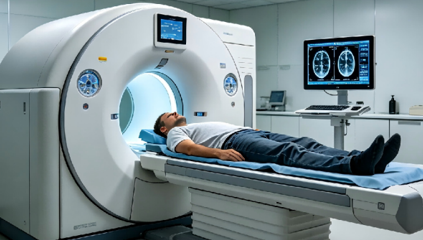
CNC machining serves industries where precision, material properties, and reliability are not optional.
- Aerospace: High-precision machining and tight tolerance manufacturing for components used under continuous mechanical and thermal stress.
- Oil & Gas: Corrosion-resistant, high-strength mechanical parts for harsh environments.
- Medical devices: Precise machined components with strict quality documentation and material traceability.
- Energy and industrial automation: Durable parts for equipment operating continuously.
Choosing Between a CNC Milling Service, CNC Turning Service, or Both
CNC milling and turning are different processes, but most buyers benefit from a supplier that offers both.
CNC milling uses rotating cutting tools to remove material from a workpiece. It suits flat or complex 3D geometries, slots, pockets, and precision features. CNC turning rotates the workpiece against a stationary cutting tool, producing cylindrical parts. 5-axis CNC machining extends this further, allowing complex undercuts and freeform surfaces in a single setup.
A supplier with CNC turning centers, CNC milling machines, and 5-axis machines can advise on the best process for your part geometry and volume, rather than steering you to their only available machine.
Quality and Inspection: What Should Be Guaranteed?
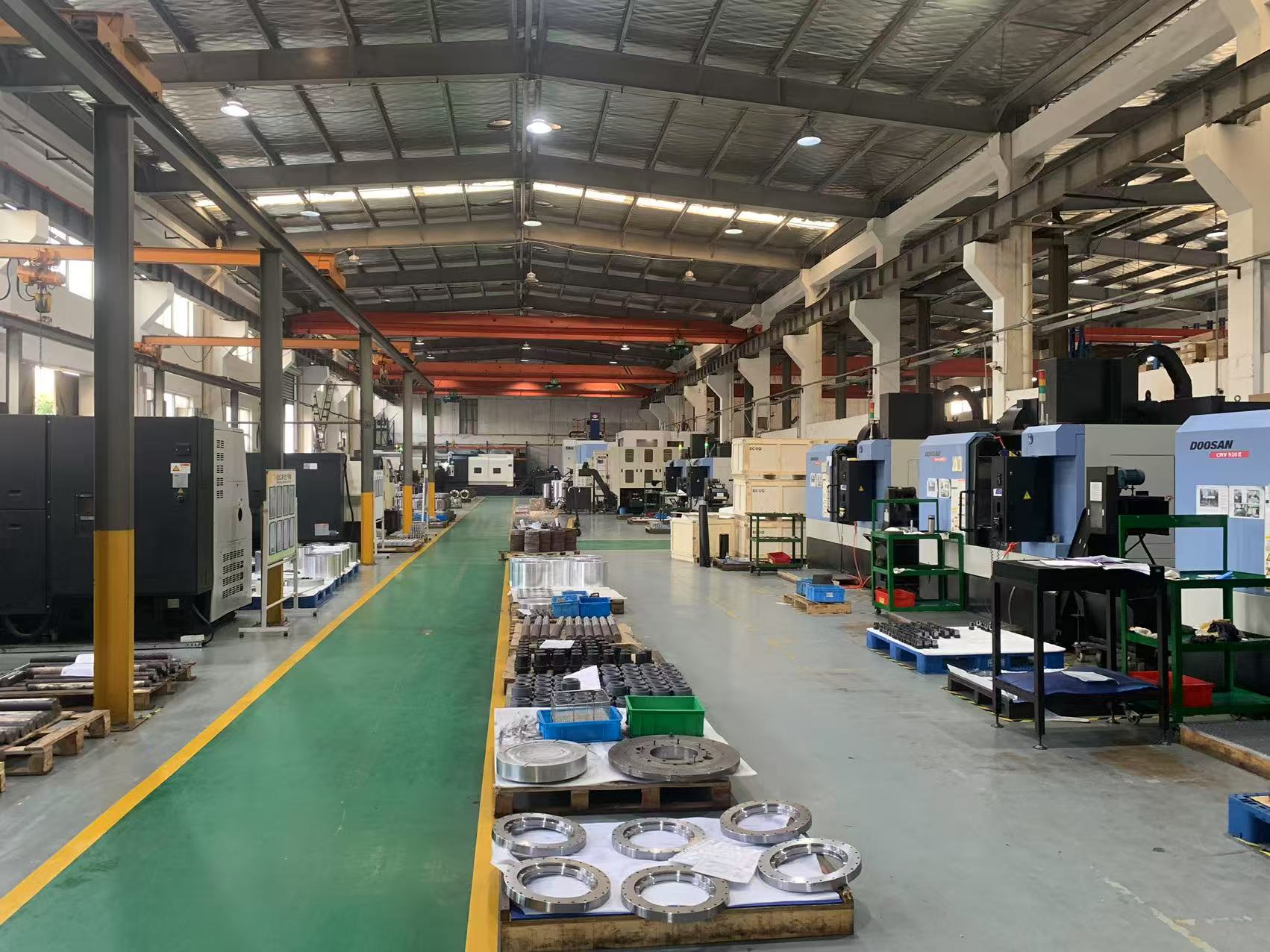
Precision tolerance claims matter less than the inspection system behind them. Buyers should ask how parts are measured, which instruments are used, and whether reports are available.
ECOD states a precision capability up to ±0.005 mm and reports that 100% inspection is implemented before shipment. Its process equipment includes CMM inspection, surface treatment, and heat treatment. For regulated buyers, custom material certifications are available upon request.
Buyers in aerospace and medical sectors should independently check whether a supplier holds or is pursuing sector-specific certifications, such as AS9100 for aerospace and ISO 13485 for medical quality systems. These standards indicate the quality infrastructure necessary for safety-critical work.
Cost, Lead Time, and Supplier Location Considerations
CNC machining pricing reflects material cost, setup complexity, tolerance requirements, surface treatment, quantity, and inspection effort. A competitive factory price is meaningful only when the technical specification is identical.
China's CNC machining capacity is heavily concentrated in Jiangsu, Guangdong, and Zhejiang. A supplier in Suzhou—part of Jiangsu province—benefits from the mature supply chain, skilled labor pool, and logistics links of that cluster. Buyers increasingly treat the region as a sourcing advantage, while still auditing individual suppliers. The U.S. machine shop market remains large at roughly USD 46.3 billion in 2026, but global buyers often compare domestic pricing with overseas custom machining suppliers on a total-cost basis.
Limitations and Boundaries of CNC Machining Services
CNC machining cannot replace every manufacturing process.
- Material waste: Subtractive machining removes material, so buy-to-fly ratios can be less efficient than forming or casting for simple geometries.
- Setup cost for complex parts: 5-axis machining and very tight tolerances increase programming, fixturing, and inspection effort.
- Not ideal for extremely high volumes: For millions of simple parts, casting or molding can be more cost-effective; CNC machining remains the preferred route for precision, customization, or short production runs.
Well-managed CNC machine shops reduce these limitations through DFM feedback, process planning, and design optimization before machining begins.
How the CNC Machining Services Market Is Evolving
Market forecasts point to a mix of strong growth and structural pressure. The CNC machining services market is projected to grow from USD 58.33 billion in 2026 to USD 108.3 billion by 2035. Globally, Asia Pacific held 55.70% of the CNC machine market in 2025, supported by manufacturing hubs in China and Japan.
The U.S. machining sector, however, reported a shortage of roughly 75,000 unfilled CNC operator roles in 2023. This labor gap is pushing some buyers toward suppliers with more automated processes, more stable workforces, and stronger engineering support. Ultra-precision machining for semiconductor equipment is also projected to grow at 8.36% CAGR from 2026 to 2031, indicating rising demand for advanced capability rather than generic capacity.
What Buyers Should Ask a CNC Parts Supplier Before Ordering
- What tolerances can you hold consistently, and how do you verify them?
- Which materials are you experienced machining, and do you supply material certificates?
- Can you handle prototype, small batch, and mass production from the same process line?
- What DFM feedback did you provide on my current drawings?
- What is included in the inspection report, and can I audit your process?
- What certifications or quality management standards does your factory follow?
Suzhou ECOD at a Glance
Suzhou ECOD Precision Manufacturing Co.,Ltd is a custom machining manufacturer in Suzhou, China. Founded in 2005, the company employs about 350 staff. The factory covers 40,000 m² with an annual capacity of 1,000,000 units. ECOD provides CNC machining, casting service, precision assembly, and DFM optimization for global buyers in Europe, the Middle East, North America, and Asia.
While ECOD offers solid baseline capability as a CNC machine shop, buyers should verify fit against their own application needs—especially for aerospace, medical, or other regulated industries.
Download the company brochure (PDF) for details about the factory, capabilities, and service scope.
FAQ: CNC Machining Service
What is a CNC machining service?
A CNC machining service is a manufacturing offer in which computer numerically controlled machines produce precision metal or plastic parts from digital drawings. It typically includes CNC milling, CNC turning, 5-axis machining, and precision machined components.
What materials are used in CNC machining?
Standard materials include carbon steel, stainless steel, aluminum, brass, copper, titanium, plastic, POM, and nylon. Material choice depends on mechanical, environmental, and cost requirements.
What is the difference between CNC milling and CNC turning?
CNC milling uses rotating cutters to remove material from a stationary workpiece, while CNC turning rotates the workpiece against a stationary cutting tool to create cylindrical forms. Many parts require both processes.
Can CNC machining services produce prototypes and mass production parts?
Yes. Full-service suppliers support prototype machining, small batches, and large-scale production. A minimum order quantity of 1 piece is available from some suppliers, allowing design validation before volume commitments.
Which industries use precision CNC machining?
Precision CNC machining is widely used in aerospace, oil & gas, energy, medical devices, industrial automation, automotive, satellite communication, and robotics applications.
How accurate is precision CNC machining?
High-precision CNC machining can achieve tolerances up to ±0.005 mm, but consistency depends on machine condition, material behavior, inspection equipment, and process control.
What should be included in a CNC machining order package?
A complete order package should include material certificates and dimensional inspection reports. Buyers should also expect DFM feedback, process planning, and clearly defined inspection documentation.