
COB vs SMD LED Displays: What Buyers Should Compare
For buyers planning an indoor fine-pitch LED video wall, the choice between COB (Chip-on-Board) and traditional SMD (Surface-Mounted Device) technology has become a defining procurement decision. This article provides an independent, side-by-side comparison for buyers evaluating COB-based displays against typical fine-pitch SMD products, using the QDCOB Series as a reference point for Quantum Dot COB technology.
Why This Comparison Matters Now
The LED display market continues to shift toward finer pixel pitches for corporate, control room, broadcast, and luxury commercial environments. As pixel pitch decreases, the physical limitations of conventional SMD packaging become more visible: fragile solder joints, surface glare, and a higher risk of dead pixels from impact or dust ingress. COB packaging has emerged as an alternative that integrates LED chips directly onto the circuit board, creating a flat, protected surface. According to industry projections, the global LED display market is expected to reach USD 20.73 billion in 2026, growing to USD 26.98 billion by 2031, which means procurement decisions made today will shape large installed bases for the next decade.
Buyers evaluating COB vs SMD LED displays need to assess more than marketing claims. They need clear comparison criteria across three dimensions: visual performance, reliability and protection, and long-term maintenance.
Understanding the Two Packaging Technologies
SMD LED Displays: The Established Baseline
SMD (Surface-Mounted Device) packaging has been the dominant technology for indoor and outdoor LED displays for many years. In an SMD display, individual red, green, and blue LED chips are packaged into a single surface-mount component, which is then soldered onto the PCB. This approach allows for automated high-volume production and is widely used across fine-pitch, rental, and fixed installations.
However, as pixel pitches move below P2, SMD displays present known limitations. The LED lamps protrude from the surface, which means they are exposed to physical contact during cleaning, installation, and daily operation. Solder joints can be vulnerable to impact, and the gaps between components can collect dust. At close viewing distances, individual light-emitting points can also produce a visible dot-like texture, which some viewers find distracting on premium indoor installations.
COB LED Displays: Integrated Packaging
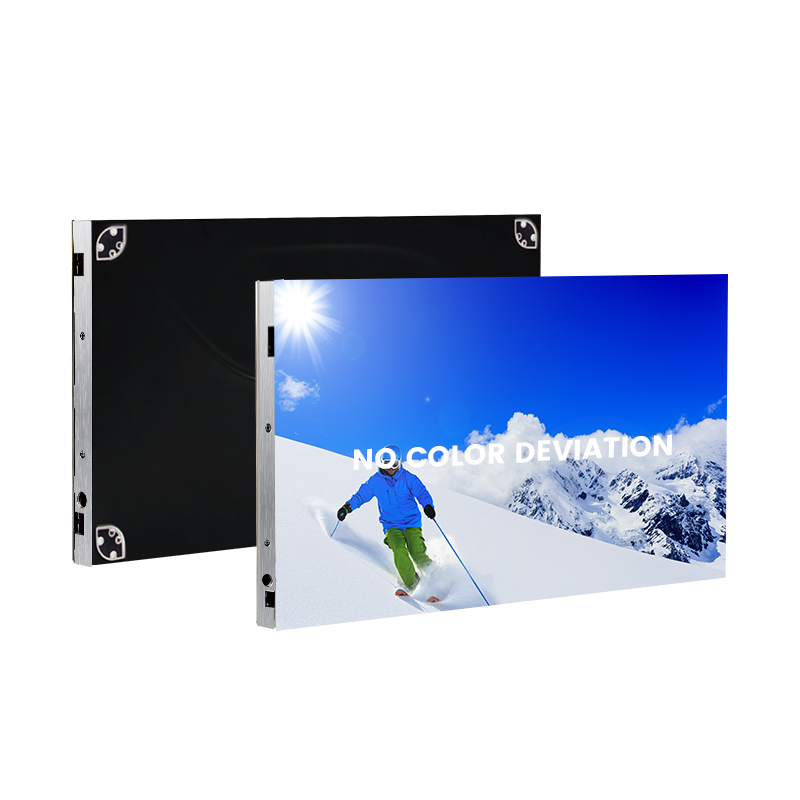
COB (Chip-on-Board) technology takes unpackaged LED chips and mounts them directly onto the PCB, then covers them with a protective encapsulation layer. The result is a continuous, flat surface with no exposed individual lamp beads. This provides higher protection density per unit area and is the foundation for displays that need to be more resilient to impact, dust, and humidity in indoor environments.
The QDCOB Series by DDW Display combines Quantum Dot technology with COB integrated packaging, supporting pixel pitches of P0.78, P0.9375, P1.25, and P1.5625. It is designed for conference rooms, control rooms, command centers, corporate showrooms, broadcast studios, education spaces, and luxury commercial displays.
Side-by-Side Comparison: COB vs SMD for Fine-Pitch Indoor Displays
| Comparison Dimension | COB Approach (QDCOB Series Reference) | Typical Fine-Pitch SMD Product |
|---|---|---|
| Pixel Pitch Range | P0.78–P1.5625 across one series | Available in similar ranges, commonly P1.2–P2.5 |
| Surface Structure | COB integrated packaging; flat protective layer | Individual surface-mount lamps exposed on the PCB |
| Viewing Angle | 180° claimed wide viewing experience without color shift | Typically specified at 140°–165°, depending on model |
| Color Consistency | Quantum Dot technology designed to maintain accurate colors from different angles | Color shift possible at wider viewing angles |
| Physical Protection | COB encapsulation protects against impact, dust, and environmental factors | Exposed solder joints and lamp surfaces require careful handling |
| Contrast & Visual Uniformity | Continuous dark surface improves perceived contrast and reduces the dot effect | Light reflection between lamps can reduce perceived contrast in bright rooms |
| Maintenance | Full front maintenance structure; all modules serviceable from the front | Module replacement typically required; some designs require rear access |
| Application Focus | Close-viewing premium indoor environments | Broad range, from budget indoor to rental applications |
Visual Quality: What Buyers Should Look For
Visual quality in fine-pitch LED displays is determined by pixel pitch, contrast ratio, brightness uniformity, refresh rate, and color consistency. For close-distance viewing, three technical characteristics separate COB and SMD approaches.
Surface Uniformity and the "Dot Effect"
A common visual complaint with SMD fine-pitch displays is the visible texture of individual LED lamps, often described as a dot effect or mura pattern when displaying light backgrounds. By contrast, COB displays present a sealed, continuous surface. This subtle difference becomes commercially important in corporate lobbies, showrooms, and broadcast backgrounds where cameras capture the screen at high resolution.
Color Accuracy and Consistency
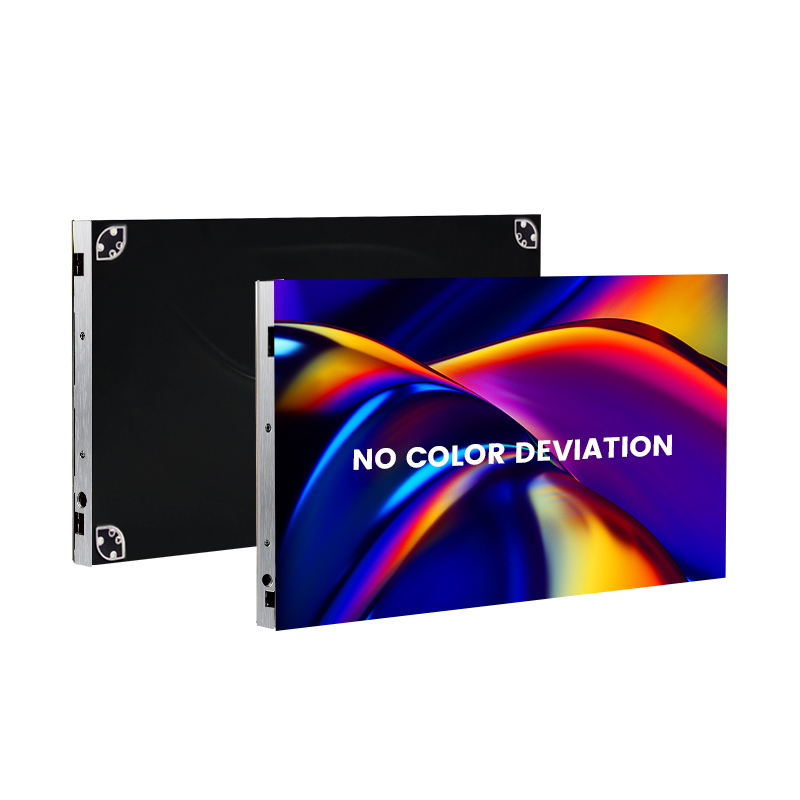
One of the most frequent issues with traditional SMD fine-pitch screens is color drift across the wall as the viewing angle shifts. The QDCOB Series incorporates Quantum Dot technology specifically to provide richer colors, improved color accuracy, and no color shift performance, aiming to keep colors stable when viewers are seated at the side of a conference room rather than directly in front.
Refresh Rate and Camera Interaction
For environments where displays will be filmed or photographed, refresh rate matters. The QDCOB Series supports high refresh rate performance and high grayscale, which helps reduce flicker and scanning lines during professional camera work. Many fixed-installation SMD products also offer high refresh rates, but buyers should verify actual refresh specifications rather than relying on assumed parity.
Reliability and Protection: The Core Structural Difference
Reliability is where COB and SMD technology diverge most clearly. SMD LEDs are mounted on the surface of the PCB with solder connections that transmit both electrical signals and mechanical stress. In environments with vibration, contact during maintenance, or dust, the solder joints and lamps are vulnerable. This makes traditional SMD displays sensitive to dead pixels over time.
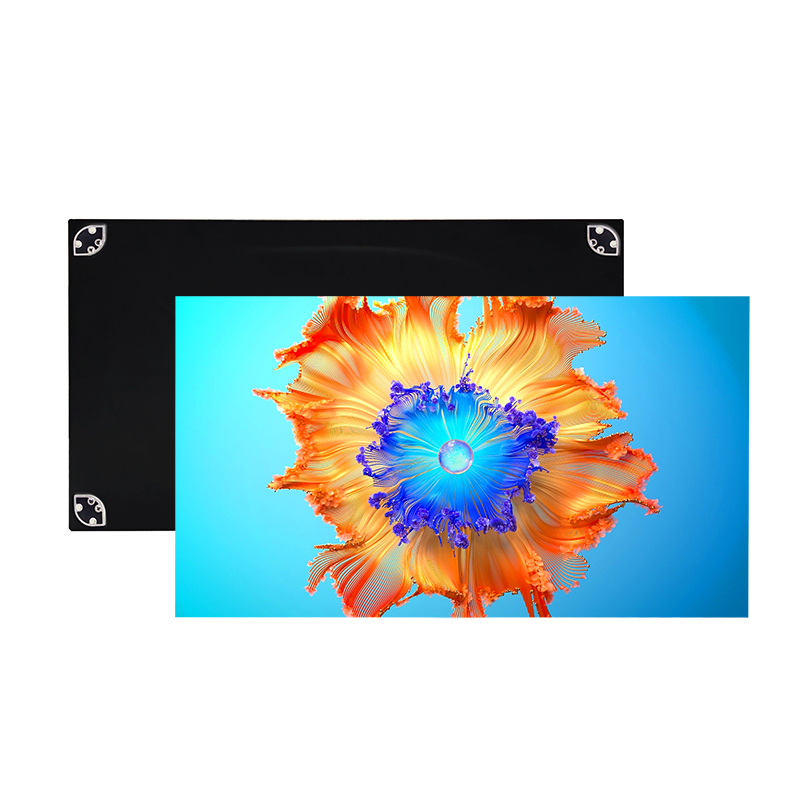
COB packaging eliminates exposed individual lamp bodies. In the QDCOB Series, the LED chips are protected by an integrated layer that improves resistance to impact, dust, and daily handling. For a corporate environment where cleaning staff may accidentally touch the screen, or for a control room that runs 24/7, this protection reduces the likelihood of physical damage causing pixel failure.
The structural difference also supports product longevity. A 10-year operational horizon is common in fixed LED installations. Buyers who choose SMD screens for permanent indoor use should check the manufacturer's quality-control processes, such as aging tests and pre-shipment inspection, since solder joint quality and lamp encapsulation vary significantly between suppliers. DDW Display's own quality control includes 100% product inspection, aging tests, module testing, brightness and color calibration, and performance checks before shipment.
Maintenance Considerations for COB and SMD Displays
Maintenance strategy affects total cost of ownership and should be evaluated during the purchasing stage, not after installation.
Module Repair vs Replacement
With SMD displays, a damaged pixel cannot usually be repaired on the module; the entire module or lamp must be replaced. Module-level replacement is also the standard approach for COB displays, but the frequency of failure is lower because the chips are less exposed to damage.
Front vs Rear Access
The QDCOB Series is designed with full front maintenance, meaning LED modules, power supplies, and receiving cards can be serviced from the front. This reduces the clearance space required behind the screen, making installation feasible against walls where rear access is unavailable. Some traditional SMD cabinets still require rear access for power supply or receiving card replacement, which can be a constraining factor in retrofits.
Long-Term Availability
Buyers should ask any LED display manufacturer how long spare modules will remain available after purchase. Both SMD and COB products face obsolescence risk, but this risk is manageable when the supplier has standardized module sizes and documented product-life policies.
Practical Buying Guidance: How to Decide
There is no universal winner between COB and SMD technology; the right choice depends on your application requirements and budget.
- Choose COB-based fine pitch (like the QDCOB Series) when: the screen is installed at close viewing distance, the environment demands high reliability (control rooms, conference rooms, broadcast), the design expects cleaning contact, or color consistency from wide viewing angles is a priority. COB makes most sense for premium permanent indoor installations.
- Consider SMD fine pitch when: budget is the primary constraint, the screen will operate at longer viewing distances, the installation is temporary such as rental staging, or the buyer requires a more established module ecosystem.
- Do not choose COB merely for its packaging novelty: If your actual viewing distance is beyond 3–5 meters, the visual advantages of COB at P0.78–P1.25 are less perceptible. A larger-pitch SMD screen may deliver similar perceived refinement at significantly lower cost.
Market Context
The broader industry shift supports growing buyer interest in advanced packaging. The Micro-LED market is projected to grow at a substantial CAGR through the 2024–2030 period according to Grand View Research, and COB technology is widely regarded as an intermediate bridge between today's discrete LED approaches and future micro-level packaging. Buyers weighing a long-term indoor installation should consider whether their SMD-based shortlist reflects the next 5–7 years of display requirements in their facility.
That said, SMD displays remain a legitimate and cost-effective choice in many scenarios, and the ongoing demand for rental LED screens and stage LED walls continues to be served effectively by SMD-based products. The comparison is ultimately not about which technology is superior in absolute terms but which technology is superior for a specific buyer's viewing distance, operating environment, and maintenance budget.
Comparing Suppliers: What to Verify
Once you have narrowed the technology choice, supplier evidence becomes the deciding factor. Ask any supplier, including DDW Display, for the following:
- Detailed technical datasheet with exact pixel pitch, refresh rate, grey level, brightness uniformity, and cabinet weight
- Reference projects that have operated for more than 5 years in environments similar to yours
- Certification history: CCC, CE, CB, FCC, ETL, and energy-saving certification where applicable
- Quality-control process description, including whether 100% of products undergo aging tests before shipment
- After-sales support structure: remote technical assistance, spare parts supply, installation guidance, and warranty terms
Constraints and Limitations of COB Displays
An independent comparison must acknowledge disadvantages as well as benefits. COB technology, including the QDCOB Series, currently has several realistic limitations:
- Cost premium: COB modules generally carry a higher manufacturing cost than equivalent SMD modules. The price gap narrows as production volume increases, but it remains a meaningful budget factor.
- Repair complexity: While COB packaging reduces failure frequency, repairs may require module replacement rather than individual component servicing, which can lead to higher per-incident replacement costs if failures ever occur.
- Limited supplier pool: The number of manufacturers with mature COB production lines is smaller than the SMD supply base. Buyers should confirm the supplier has stable production capacity and has been manufacturing COB products for a sufficient duration, since process maturity directly affects yield and consistency.
- Weight and cabinet integration: COB advantages may be partially offset by cabinet design choices. A heavier or thicker cabinet can make installation more difficult. The QDCOB Series uses an aluminum cabinet structure, but buyers should compare exact cabinet dimensions and weight with SMD alternatives, as the correct 16:9 cabinet sizes reduce installation and content configuration complexity.
The Bottom Line for Buyers
COB and SMD technologies will continue to coexist for the foreseeable future. SMD displays remain a practical, cost-effective solution for many rental, outdoor, and moderate-viewing-distance indoor projects. COB displays, particularly those enhanced with Quantum Dot technology, address the limitations that matter most in premium close-viewing indoor installations: surface durability, uniform image quality, wide-angle color stability, and reduced dead-pixel risk.
The QDCOB Series demonstrates how a real COB product is specified: pixel pitches from P0.78 to P1.5625, Quantum Dot color enhancement, 180° viewing experience claims, front maintenance, and a design aimed at conference rooms, control rooms, and command centers. It is a suitable reference specification for buyers building a shortlist. But buyers must evaluate any COB display, including the QDCOB Series, with the same rigor applied to SMD options: verify actual specifications, visit reference installations where possible, test under your own content, and compare total projected maintenance costs over the intended lifespan of the wall.
Frequently Asked Questions
How do I choose the right pixel pitch for an LED display?
Choose the LED display pixel pitch according to viewing distance, screen size, required resolution, installation environment, content type, and budget. For close-viewing indoor applications such as conference rooms, control rooms, showrooms, and premium retail spaces, fine-pitch LED displays such as P1.25, P1.53, and P1.86 are generally more suitable. For stages, exhibitions, events, and medium-distance viewing, P2.6 to P3.91 configurations are commonly considered. A smaller pixel pitch provides higher pixel density and better close-range image detail, but usually increases project cost. The best choice is the pixel pitch that provides sufficient image quality for the actual viewing distance and application.
What is the difference between a rental LED display and a fixed LED display?
Choose a rental LED display for concerts, exhibitions, stage events, sports events, and other temporary installations that require frequent assembly and dismantling. Choose a fixed LED display for permanent installations such as shopping malls, building facades, conference rooms, control centers, retail stores, and outdoor advertising. Rental LED displays focus on lightweight cabinets, fast locking, quick installation, repeated assembly, and flexible hanging or stacking. Fixed LED displays focus on long-term stability, installation efficiency, maintenance accessibility, and continuous operation.
Are COB LED displays suitable for all indoor video wall applications?
COB displays are especially suited to close-viewing, high-reliability indoor environments where surface protection and wide-angle color stability matter, such as conference rooms, control rooms, broadcast studios, and showrooms. They are generally not chosen for budget-driven projects or viewing distances above approximately 3–5 meters, where larger-pitch SMD products may provide sufficient image quality at lower cost. The actual viewing distance and total budget should always determine whether COB is the appropriate choice.
What certifications should I look for when buying an LED display?
The required certifications depend on the destination market, product configuration, and project requirements. For international LED display projects, buyers commonly evaluate CE, FCC, RoHS, ETL, and relevant safety or EMC requirements. CE and EMC are commonly considered for European-market compliance, FCC relates to electromagnetic compatibility in the United States, and RoHS addresses restrictions on certain hazardous substances. Check whether CCC, Energy Saving, CE, CB, FCC, and ETL certifications apply to the specific model and destination market, and request corresponding certificates or test reports.
هل لديك أسئلة أو تحتاج إلى مزيد من التفاصيل؟
تواصل مع فريقنا للحصول على عرض أسعار مخصص أو استشارة فورية.
طلب عرض أسعار
املأ النموذج أدناه وسيتواصل معك فريقنا بعرض مقترح مخصص.
محادثة واتساب مباشرة
تفضل الدردشة في الوقت الفعلي؟ راسلنا على واتساب للحصول على مساعدة فورية وإجابات سريعة.
- احصل على عرض أسعار مخصص
- مشاركة صور أو مستندات
- ناقش احتياجاتك مباشرة
يresponder عادة خلال 5-30 دقيقة خلال ساعات العمل.