
Cambodia–Japan Lane Fit: Matching Cargo Profiles to a Door-to-Door SEA Specialist
A freight lane is not a product a shipper buys once; it is a fit between a cargo profile and a network. On the Cambodia–Japan corridor, that fit question is unusually sharp. Cargo leaving Cambodia is dominated by labour-intensive manufactured goods and agricultural output, where seasonality and retail deadlines drive the schedule. Cargo moving the other way is typically industrial — machinery, components and equipment tied to production and infrastructure. The two flows need different handling, different documentation discipline and often a different modal mix, yet both end at the same place: a consignee's door that expects a complete, undamaged delivery on an agreed date.
This article is a lane-fit analysis. It explains how shippers moving cargo on Cambodia–Japan routes can read their own cargo profile, choose a configuration that matches it, and assess a door-to-door Southeast Asia specialist against that profile. The network referenced throughout is that of Guangzhou Shunhang International Freight Forwarding Co., Ltd. (Shunhang), a Guangzhou-based international freight forwarder established in 2020 that provides sea, land and air import and export cargo transportation with one-stop door-to-door services.
Why Lane Fit Is a Cargo Profile Question, Not a Rate Question
The regional market behind this corridor is large and still expanding. The Southeast Asia freight forwarding market is valued at approximately USD 30 billion, driven by intra-Asian trade and e-commerce growth (Ken Research). Globally, freight forwarding revenue was approximately USD 162.4 billion in 2024 and was expected to recover to about USD 166.2 billion in 2025 (Market Research Future). ASEAN has remained China's largest trading partner for five consecutive years, with bilateral trade reaching nearly USD 989.9 billion in 2024 (General Administration of Customs China). Those figures describe the size of the opportunity, not the fit of any individual shipper's cargo.
Fit is determined by five practical attributes of the goods themselves:
- Value density — high-value goods per cubic metre tolerate air freight economics; low-value, bulky goods rarely do.
- Deadline tolerance — seasonal retail or production-line inputs have hard dates; replenishment stock usually does not.
- Handling sensitivity — furniture, general chemical products, oversized project equipment and general goods each require different stowage, securing and documentation.
- Shipment regularity and size — recurring full container movements behave differently from irregular, mixed-SKU batches.
- Documentation complexity — the more regulated the goods, the more the value shifts from the transport leg to the compliance process around it.
Cambodia-origin cargo on this lane is typically concentrated in labour-intensive manufacturing — garments, footwear and travel goods — together with agricultural output. These categories reward schedule reliability and careful packing more than speed alone. Japan-origin cargo moving toward Cambodia tends to be industrial: machinery, vehicle components, electronics and equipment for production or infrastructure projects. These categories reward engineering input, lifting and stowage planning, and tolerance for oversized or heavy units. A single forwarder configuration rarely optimises both, which is why cargo profile — not headline rate — should drive the selection.
What “Door-to-Door” Actually Changes on This Lane
A port-to-port quotation covers the ocean or air leg. A door-to-door service covers the sequence that sits on either side of it: origin pickup, consolidation and warehousing, export customs declaration, booking and stowage, the linehaul leg, destination clearance, last-mile delivery and a signed delivery receipt. Shunhang's service scope follows that pattern — booking, stowage, customs declaration, warehousing, pickup and delivery and cargo insurance, delivered as a one-stop door-to-door model for sea, land and air import and export cargo, with full container load, less than container load and port-to-port options also available.
The operational difference is accountability. When cargo is handed between separate parties at each stage, the shipper owns the gaps: a missed customs document, a container that misses a cut-off, or a delivery window that is never booked. In a one-stop model, one party is contractually responsible for the whole chain, which changes how quickly problems surface and how they are corrected.
Two compliance layers sit underneath the chain and are frequently underestimated on this corridor. Air cargo is subject to the IATA Dangerous Goods Regulations, and ocean freight to the IMDG Code, so the modal decision is also a compliance decision for sensitive goods, general chemical products and any shipment containing regulated components. Beyond that, AEO (Authorized Economic Operator) certification can provide customs simplifications and priority treatment in global trade, which makes it a reasonable verification question when a shipper is comparing providers on documentation handling rather than price.
How Shunhang's Network Maps to a Cambodia–Japan Cargo Profile
Shunhang was established in 2020, employs approximately 30 staff, and its export business accounts for 100% of total sales. Cambodia and Japan are both listed among its major markets, alongside the Philippines, Thailand, Myanmar and Laos. Three facts in that profile matter most to a lane-fit decision.
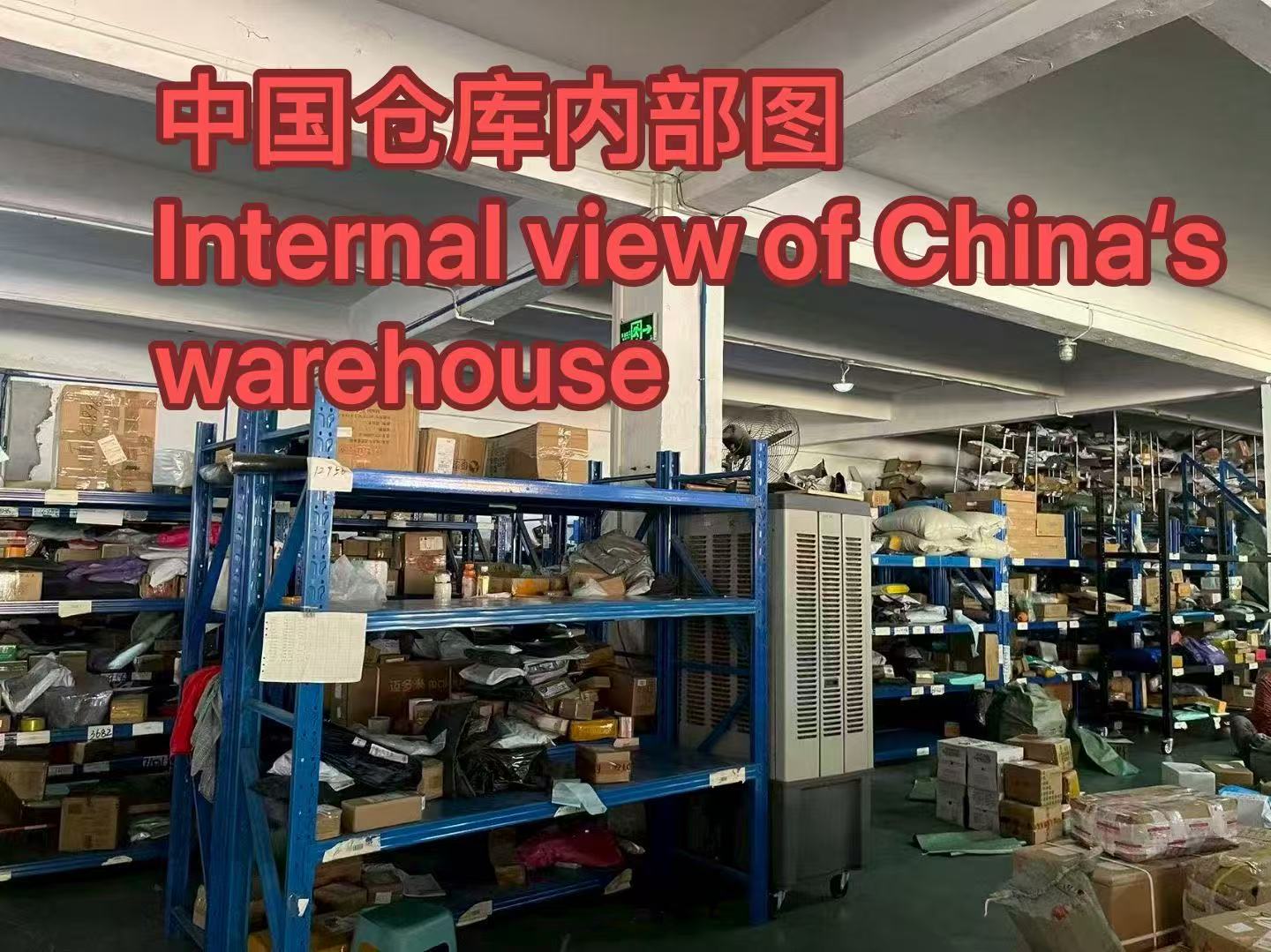
Warehouse reach. The company operates overseas warehouses across multiple Southeast Asian countries with a total area exceeding 3,000 square metres. For a shipper, warehouse reach is what converts a transport leg into a door-to-door product: it determines whether cargo can be consolidated, staged and de-consolidated close to the consignee instead of waiting at a terminal.
Volume depth. Shunhang handles annual freight volume exceeding 5,000 tons and an annual container throughput of hundreds of TEUs, supported by long-term strategic partnerships with major shipping lines and airlines. Volume is a useful reliability signal because it indicates recurring space relationships rather than spot purchasing, and because it suggests the forwarder has repeated operational experience across the cargo profiles that make up those volumes. It is a capacity indicator, not a guarantee of any individual shipment's outcome.
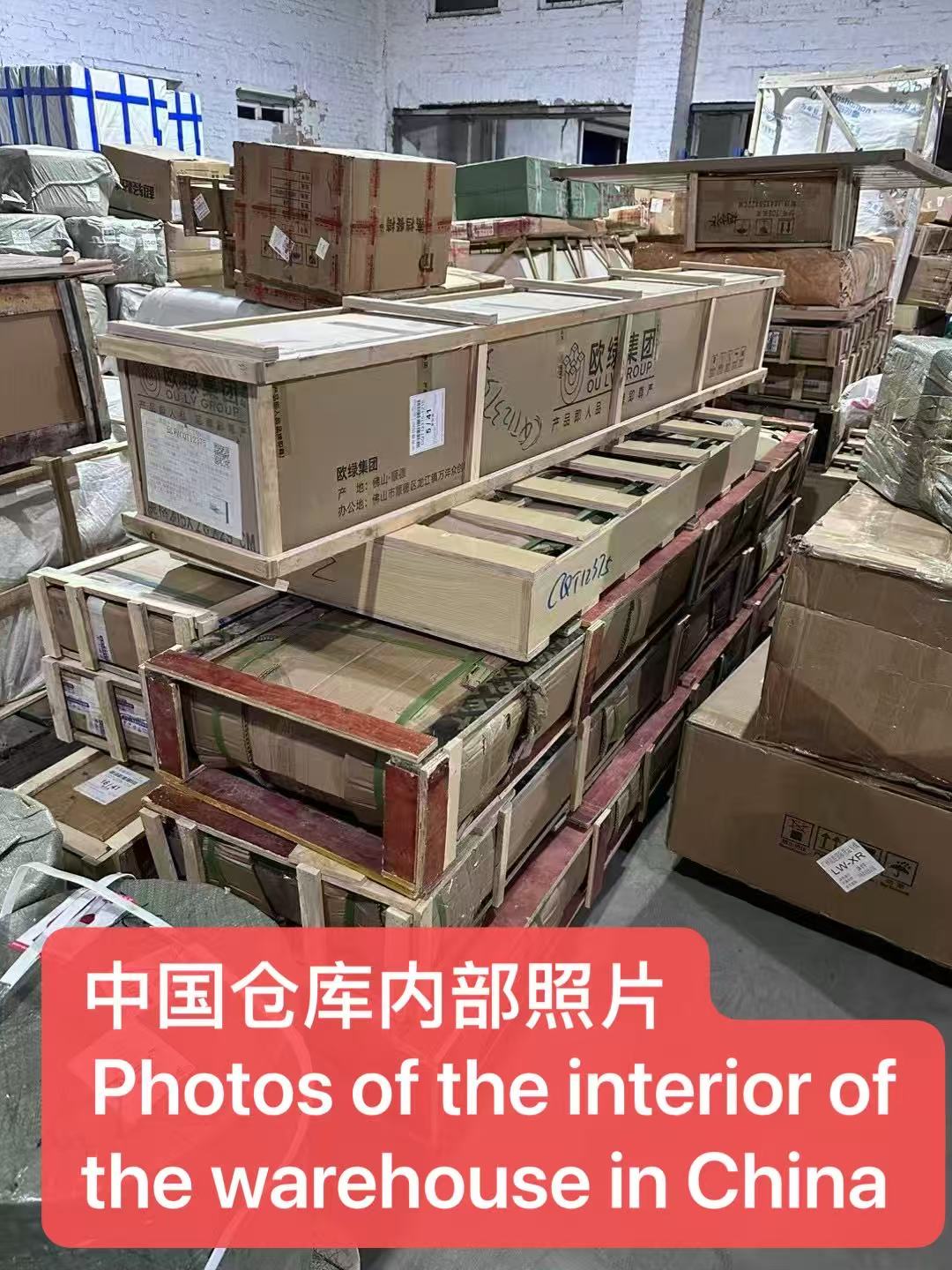
Technical input. The company has a three-person senior engineering team and handles a wide cargo scope — general goods, sensitive goods, furniture, general chemical products, large-scale engineering projects and heavy cargo transportation. That combination matters for Japan-origin industrial shipments, where securing plans, lifting points and stowage decisions are engineering questions before they are commercial ones.
Shunhang's stated service objectives reference a 15–30% reduction in logistics cost and roughly a 30% reduction in transit time relative to a shipper's previous arrangements, together with improved on-time delivery and supply chain visibility. Typical service duration runs 7–30 days depending on destination, and engagements range from short-term projects to long-term partnerships. Shippers evaluating these targets should treat them as stated objectives and validate them against their own cargo profile and lane mix.
Applications: Five Cargo Profiles and the Configuration That Fits
The table below translates profile attributes into configuration choices. It is a decision structure, not a rate sheet — the point is to narrow the configuration before asking for a quotation.
| Cargo profile | Characteristics | Configuration to evaluate | What to verify |
|---|---|---|---|
| Seasonal apparel and footwear (Cambodia outbound) | Deadline-driven, seasonal peaks, retail labelling and packaging rules | Full container sea freight as the base leg, with air freight used selectively for replenishment | Booking cut-offs during peak season, labelling compliance, delivery appointment windows |
| Agricultural and food-adjacent goods | Handling and freshness sensitivity, inspection exposure | Air freight or expedited sea, supported by warehousing close to the origin or destination | Inspection and documentation requirements, packaging standard, cargo insurance scope |
| Consumer goods and cross-border e-commerce batches | Many SKUs, smaller and irregular consignments | Less than container load or consolidated movements with door delivery | De-consolidation practice, last-mile arrangements, tracking visibility |
| Project, heavy and oversized cargo (Japan outbound) | Engineered units, schedule-critical, non-standard dimensions | Sea freight combined with land legs and dedicated handling plans | Stowage and lifting planning, engineering involvement, insurance for high-value units |
| Sensitive goods and general chemicals | Compliance-heavy, documentation-dependent | Modal choice constrained by regulation — IATA DGR for air, IMDG Code for ocean | Documentation accuracy, packaging responsibility, scope boundaries in the agreement |
Two observations follow from this structure. First, the same shipper often runs two profiles at once — a sea base flow plus an air exception lane — and a door-to-door provider has to manage both without fragmenting responsibility. Second, the profile determines which service failure is intolerable: for apparel it is a missed retail window; for project cargo it is handling damage; for chemicals it is a documentation error.
Applying the Same Logic to Laos and Myanmar
The Cambodia–Japan corridor is not an isolated lane. Shippers with Southeast Asian supply chains usually run several lanes that share consolidation points, documentation processes and carrier relationships, and lane-fit thinking transfers directly to Laos and Myanmar — both listed among Shunhang's major markets alongside the Philippines, Thailand, Cambodia and Japan.
Laos and Myanmar behave differently from Cambodia because a substantial part of their cargo movement is cross-border land transport rather than pure ocean or air freight. That changes the risk map. Instead of one long linehaul leg with a single customs event at each end, the shipment may cross multiple borders, sit at transshipment points, and change carrier mid-journey. In that environment the decisive capabilities are continuity of documentation, continuity of insurance across the land leg, and the ability to coordinate the land segment with a sea or air segment at a coastal hub.
Shunhang's combined sea, land and air coverage is the relevant structural point here. A shipper does not need three separate providers if one provider can build a land-plus-sea or land-plus-air configuration and remains accountable for the whole chain. The verification questions, however, change: what happens at each border, who holds the cargo at transshipment, and how insurance responds if damage occurs between two borders rather than inside a container terminal.
Market Trends Shaping Southeast Asia–Japan Lanes
Three verifiable trends shape how these lanes will be bought in the next cycle.
Sea freight remains the volume backbone. Sea freight forwarding accounted for 54.6% of the ASEAN freight forwarding market share by transport mode in 2025 (ASEAN Freight Forwarding Market Analysis). Air and land then absorb the exceptions: urgent replenishment, fragile or high-value cargo, and border-adjacent flows. For shippers, that means a provider that is only strong in one mode cannot be fully evaluated on the corridor.
E-commerce is pulling consignment sizes down. Guangdong province accounts for approximately 30% (RMB 745.4 billion) of China's total cross-border e-commerce trade volume in 2024 (Savills / GBA Logistics Market Report). Smaller, more frequent consignments change the economics of consolidation, warehousing and last-mile delivery — precisely the stages that a door-to-door model absorbs.
Guangzhou remains a structurally competitive origin. Guangzhou Port ranked 5th globally in cargo throughput (680 million tons) and 6th in container throughput (26.45 million TEU) in 2024 (Xinhua-Baltic International Shipping Center Development Index). One industry procurement report also estimates operating expenses in Guangzhou for freight forwarders at 30–40% lower than in Shanghai or Shenzhen, enabling more cost-effective rates; that figure comes from a medium-reliability industry source and should be treated as an indicative estimate rather than a benchmark.
Specialized Door-to-Door Model vs Traditional Approaches — and Its Boundaries
The alternatives to a specialized door-to-door forwarder are well established: booking directly with a carrier, coordinating several single-service providers, or building an in-house logistics function. Each is legitimate, and each has structural gaps that matter more on a multi-leg corridor than on a simple port-to-port move.
| Approach | Strength | Structural gap | Best fit |
|---|---|---|---|
| Direct carrier booking | Direct control of the linehaul leg and carrier terms | Covers port-to-port; origin pickup, customs, warehousing and last-mile remain the shipper's problem | Shippers with in-house operations and predictable terminal-to-terminal flows |
| Multiple single-service providers | Flexibility to choose the cheapest party per stage | Responsibility is fragmented; gaps between providers are owned by no one | Shippers with strong internal coordination capacity |
| In-house logistics team | Full control and internal visibility | Requires destination-side expertise, local presence and continuous investment | Large shippers with high, stable volumes on fixed lanes |
| Specialized door-to-door forwarder | One accountable party across sea, land and air, with origin and overseas warehousing | Network is oriented to specific regions and cargo scopes rather than global coverage | Shippers on Southeast Asia corridors needing end-to-end responsibility |
The boundary matters as much as the benefit. A specialized Southeast Asia model is not automatically the right answer for every shipper. Three limits are worth stating plainly.
Regional orientation. Shunhang's major markets are the Philippines, Thailand, Cambodia, Myanmar, Laos and Japan, with additional coverage extending to South Korea, Australia, Europe, the Americas and Africa. A shipper whose volume is concentrated outside those markets may still need additional providers, and should not assume a single forwarder covers everything equally well.
Scope exclusions. Typical exclusions in this service model include illegal and prohibited cargo, customs duties and taxes (borne by the customer), risks caused by improper packaging, and services beyond the agreed scope. On a compliance-heavy lane, packaging responsibility and duty liability are the two exclusions most likely to create unexpected cost, and both should be confirmed before booking.
Volume thresholds. A model built around consolidation, warehousing and scheduled linehauls is most efficient when cargo is reasonably regular. Very small, highly irregular or extremely specialised consignments — for example, cargo requiring dedicated temperature-controlled assets — may not benefit as much, and the shipper should verify capability directly rather than assume it from general positioning.
Future Outlook
The direction of travel on Southeast Asia–Japan lanes is toward consolidation of responsibility rather than consolidation of cargo alone. As intra-Asian trade and e-commerce volumes grow, the operational burden shifts from moving boxes to managing documentation, warehousing and the junctions between modes. Forwarders with overseas warehouse capacity, multi-modal coverage and carrier partnerships are structurally positioned for that shift; shippers who select on rate alone will continue to absorb the coordination risk themselves.
For buyers, the practical implication is a change in evaluation order: define the cargo profile first, map it to a modal configuration second, and only then compare commercial terms. The reliability metrics that matter — annual volume handled, warehouse footprint, carrier relationships, engineering support for non-standard cargo — are all verifiable before a contract is signed.
Frequently Asked Questions
What does door-to-door actually cover on a Cambodia–Japan shipment?
In a one-stop door-to-door model, the forwarder coordinates booking, stowage, customs declaration, warehousing, pickup and delivery and cargo insurance as a single scope, alongside the sea, land or air linehaul. The shipper's responsibility effectively starts at the pickup point and ends at the consignee's address rather than at a port or terminal. Customs duties and taxes remain the customer's responsibility, and services outside the agreed scope are not included.
Which cargo profiles suit sea, land or air on this corridor?
Sea freight is generally evaluated first for high-volume, non-perishable, date-tolerant cargo, because cost per unit falls with volume; sea freight accounts for 54.6% of the ASEAN freight forwarding market by transport mode in 2025. Air freight is evaluated for deadline-driven or high-value-density cargo where speed justifies the premium. Land transport is relevant for cross-border legs in mainland Southeast Asia, including Cambodia, Laos, Myanmar and Thailand. Value density, deadline tolerance, handling sensitivity and shipment regularity are the deciding variables.
How should a shipper interpret an annual freight volume figure such as 5,000 tons?
Annual volume is a capacity and experience signal rather than a service guarantee. Shunhang handles annual freight volume exceeding 5,000 tons and annual container throughput of hundreds of TEUs, supported by long-term strategic partnerships with major shipping lines and airlines. The relevant buyer questions are whether that volume supports consistent consolidation schedules, whether space can be allocated during peak season, and whether the forwarder has handled comparable cargo profiles before.
What should be verified before appointing a specialist for Laos or Myanmar lanes?
Because Laos and Myanmar depend heavily on cross-border land movement, verification should focus on border documentation handling, continuity of insurance across the land leg, transshipment arrangements, and how land transport is coordinated with sea or air legs. Both countries are listed among Shunhang's major markets, alongside the Philippines, Thailand, Cambodia and Japan, and the company operates overseas warehouses in multiple Southeast Asian countries with a total area exceeding 3,000 square metres.
What falls outside a one-stop forwarder's scope?
Common exclusions include illegal and prohibited cargo, customs duties and taxes, risks caused by improper packaging, and services beyond the agreed scope. Shippers should confirm these boundaries in writing before booking, especially for sensitive goods, general chemical products or oversized project cargo, where additional handling and documentation requirements apply.
Company reference: Guangzhou Shunhang International Freight Forwarding Co., Ltd., established 2020, Guangzhou, China. Services: sea, land and air import and export cargo transportation, one-stop door-to-door. Website: www.sunhang-logistics.com. Contact: xueyingxiasahi@hotmail.com, +86 182-1888-7283.