
Camping Tent OEM Sourcing: A Decision Framework for 2026 Buyers
Industry Reference | August 2026
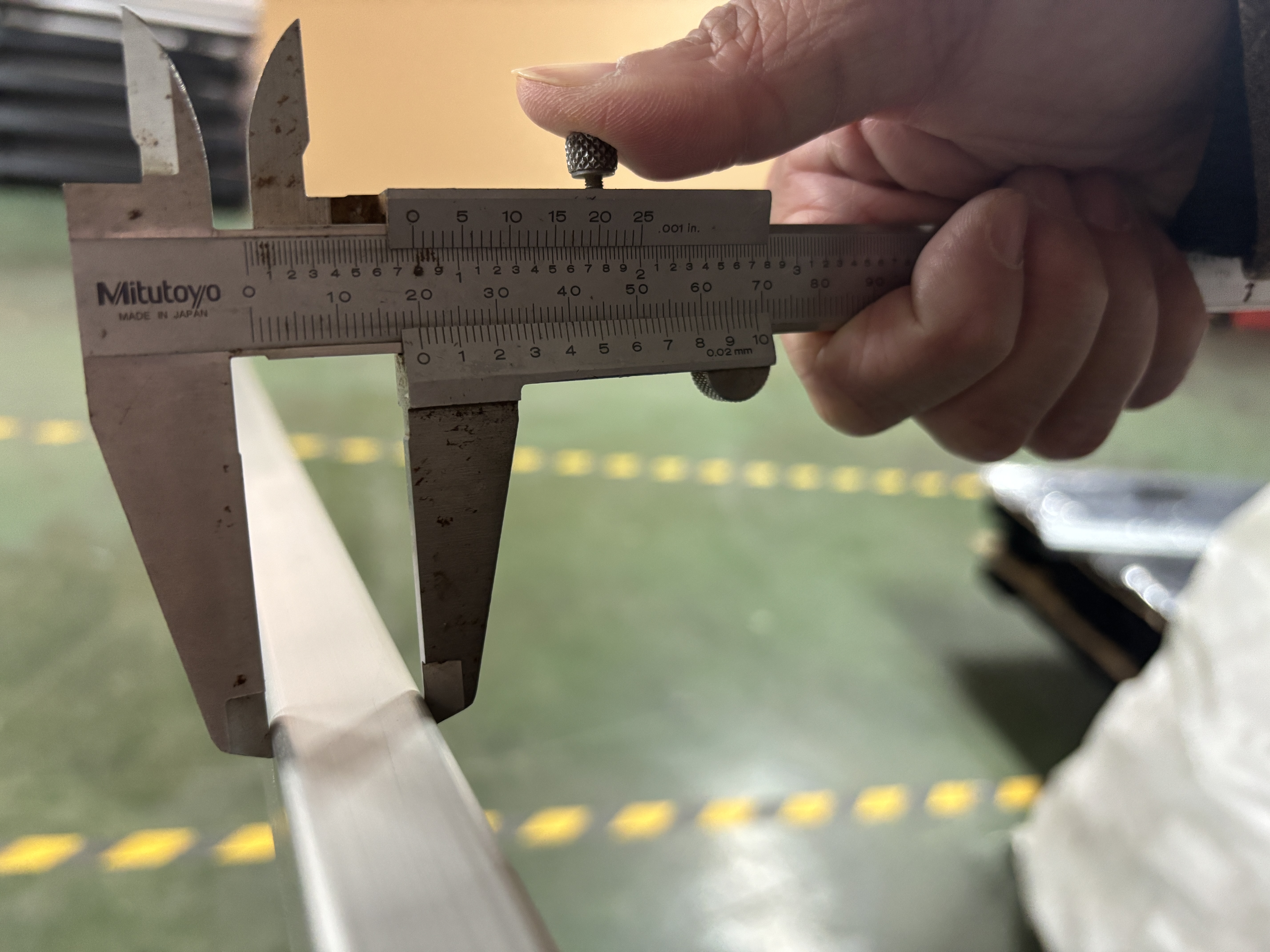
Product-level upgrades such as thicker pole diameters can signal a manufacturer's attention to durability.
The global camping tent market is expanding. Grand View Research values it at USD 6.18 billion in 2025 and projects USD 10.91 billion by 2034. Within this market, rooftop tents, inflatable tents, and upgraded dome tents are gaining share because they address two recurring camper needs: faster setup and greater comfort. For distributors, brands, and e-commerce sellers, the practical question is not only which product to sell, but which factory can support a product line over several seasons. This article provides a decision framework for evaluating camping tent OEM partners and uses MARVELOUS, a tent manufacturer in Xiamen, China, as a reference example.
Why Camping Tent OEM Evaluation Requires a Long-Term View
Camping tent suppliers often describe similar product categories: dome tents, rooftop tents, inflatable tents, and basic car tents. Yet manufacturing discipline varies widely. Quality problems usually appear in fabric seams, waterproof coatings, zippers, and pole joints, or in the consistency of finished products across batches.
Compliance adds another layer. ISO 5912:2020 is a global standard specifying safety, performance, and fitness-for-use requirements for camping tents. In North America, CPAI-84 is a flammability standard that is mandatory in several US states and is a federal requirement in Canada. An OEM partner must be able to produce tents that meet these expectations and support buyers with the needed documentation.
There is also a capacity question. Seasonal demand means buyers need a supplier that can scale production without delaying deliveries. Typical supplier data such as monthly production capacity, lead time, and minimum order quantity become critical signals of long-term viability.
MARVELOUS: A Mid-Sized Camping Tent Factory with Open Capacity Data
One useful example is Xiamen Marvelous Outdoor Technology Co., Ltd. The company operates a 4,000 square meter factory in Xiamen, employs 50 people, and has a dedicated R&D team of 20 engineers. It lists camping tent, rooftop tent, and inflatable tent as its main products. According to its published manufacturing profile, 95% of output is exported to markets including Russia, the United States, Australia, and Canada.
| Capability | Published Data |
|---|---|
| Company | Xiamen Marvelous Outdoor Technology Co., Ltd. |
| Factory area | 4,000 m² |
| Employees | 50 |
| R&D team | 20 engineers |
| Annual output | 50,000 units |
| Monthly production capacity | 5,000–10,000 units |
| Typical production lead time | 30 days |
| Main export markets | Russia, USA, Australia, Canada |
| Export ratio | 95% |
| MOQ | 1 unit |
| Delivery terms | EXW / FOB / CIF |
| Payment terms | TT / LC |
| Pre-shipment testing | Yes |
These numbers give a baseline. A monthly capacity of 5,000 to 10,000 units is useful for a buyer planning seasonal ordering; a 30-day lead time makes it possible to replenish stock within a normal sales cycle. The MOQ of one unit allows product testing before large commitments. Pre-shipment testing, combined with the company's defect handling process, indicates a controlled quality loop: tents are set up and inspected piece by piece, and defective items are selected out and reprocessed.
Technical Considerations in Camping Tent Manufacturing
When comparing OEM partners, buyers should look at the materials and construction methods behind each product type.
Hard Shell Rooftop Tents
Hard shell rooftop tents typically use aluminum or ABS plastic shells. MARVELOUS's rooftop tent line includes models with aviation aluminum frames and aluminum shells. The specifications vary to match different vehicle types and user loads. For example, the MOT-DYG01 is a two-person car tent with an aviation aluminum frame and 600D Oxford fabric with a waterproof rating of 3500mm. The MOT-LK901 is a 1-2 person model with an aluminum shell, 420D Oxford outer tent, 280g polyester cotton inner tent, and PU4000mm waterproofing. The MOT-L800 is a four-person rooftop tent with a 300D Oxford cloth shell, waterproof index of 3000mm, and a pack weight of about 140kg.
Inflatable Camping Tents
Inflatable tents replace poles with air beams. They are popular in the camping and glamping segment because setup is fast and the structure feels more open. For an OEM buyer, the key technical requirement is the quality of the air beam material, valve design, and inflation stability. MARVELOUS includes inflatable tents in its product range, though specific model parameters are not published in the same detail as its rooftop tent range.
Dome and Pole Tents
Traditional dome tents rely on pole sets. One area of improvement is the pole itself. MARVELOUS's internal comparison data shows that using a thicker diameter pole improves tent stability and pressure-bearing capacity. The pole segments are designed to be easily disassembled, so a broken section can be replaced without discarding the whole set. This type of design affects repair costs for end users and reinforces the tent's value over time.
Waterproofing and Quality Checks
Waterproof performance is usually expressed in millimeters of water pressure resistance, such as 3000mm, 3500mm, or PU4000mm. Higher numbers generally indicate better rain resistance, but seam sealing and fabric coating also matter. MARVELOUS states that its quality control process includes setting up the tent and checking all parts piece by piece; products that do not meet standards during production are selected out and reprocessed.
Matching Tent Types to Real-World Use Cases
For a buyer building a product portfolio, the key is to match tent types to user scenarios.
A hard shell rooftop tent is best for overlanding and vehicle-based travel. Industry data shows hard shell models can be set up in 3–8 minutes, compared to 15–25 minutes for a ground tent. The trade-off is weight: MARVELOUS roof top tent models range from 60kg to 140kg, so a reinforced roof rack and a compatible vehicle are required. This product type is not suitable for hikers or campers who must carry equipment on foot.
An inflatable camping tent fits family camping and car camping where speed and comfort are priorities. It needs an air pump, but it eliminates the learning curve of pole assembly.
A dome tent or pole tent remains the most lightweight and economical choice. Dome tents are easy to repair if spare pole segments are available. They are also the most common starting point for first-time campers and backpackers.
For all types, waterproof camping tent materials and reliable zippers are fundamental. Buyers should ask suppliers for the exact fabric weight, waterproof index, and the process used to seal seams.
Market Trends Affecting Camping Tent Sourcing
Several verified data points help explain why 2026 is a critical year for camping tent sourcing decisions.
- The global camping tent market was valued at USD 6.18 billion in 2025 and is projected to reach USD 10.91 billion by 2034 (Grand View Research).
- The global rooftop tent market was about USD 215.5 million in 2024, with hard shell models representing more than 53% of revenue (Business Research Insights).
- The global inflatable tents market reached about USD 1.033 billion in 2024, driven by demand for simpler glamping setup (Intel Market Research).
- North America leads the rooftop tent market with 38.6% share, followed by Europe at 27.4% (Dataintelo).
- Key compliance benchmarks are ISO 5912:2020 and CPAI-84 (various standard sources).
These trends push OEM suppliers to maintain diversified product lines. A factory that can produce hard shell rooftop tents, inflatable tents, and traditional dome tents gives buyers a single point of communication for multiple product families.
Modern Designs vs. Traditional Solutions: Trade-Offs and Boundaries
Upgraded camping tents offer clear improvements in setup speed and structural stability, but they are not universally better.
Hard shell rooftop tents reduce setup time from up to 15–25 minutes for a ground tent to roughly 3–8 minutes. However, they add significant weight and cost, require vehicle mounting, and are impractical in remote walking-only campsites. For an OEM buyer, the decision depends on the target customer. A rooftop tent product line brings higher margins but serves a narrower market.
Similarly, a thicker tent pole improves pressure-bearing capacity, as MARVELOUS's comparison data indicates. But a heavier pole can increase the packed weight and might be unnecessary for simple fair-weather camping. The real value appears in windy conditions and for larger dome tents.
One boundary is important: improving a single component does not guarantee a better tent. A thicker pole cannot compensate for weak seams or poor waterproofing. That is why OEM evaluation should be based on complete tent samples, not just component specifications.
Future Outlook: What Long-Term Camping Tent Supply Chains Will Require
Looking at the rest of 2026, camping tent buyers will likely ask for more than low prices. They will ask for documented compliance, faster prototyping, and realistic capacity commitments. Suppliers with in-house design teams—MARVELOUS has 20 engineers—can adapt colors, fabrics, and packaging without relying on third-party design agencies.
Transparency will also matter. The production figures published by MARVELOUS, such as monthly capacity of 5,000 to 10,000 units and a 30-day lead time, are exactly the data points buyers need to model inventory risk. For long-term partnerships, this level of transparency is more valuable than a single low quote.
As inflatable and hard-shell roof tent segments grow, factories that can produce multiple categories under one roof will offer simpler logistics, faster quality control, and more consistent brand presentation.
FAQ
What is the typical production lead time for camping tent OEM orders?
The typical production lead time stated by MARVELOUS is 30 days.
What monthly production capacity does a mid-sized tent factory have?
MARVELOUS reports a monthly production capacity of 5,000 to 10,000 units.
Can OEM buyers place a small test order before committing to a large batch?
Yes. The stated MOQ for MARVELOUS is 1 unit, which allows a buyer to test product quality before scaling.
What delivery and payment terms are available for tent OEM orders?
A typical arrangement includes EXW, FOB, or CIF delivery terms and TT or LC payment methods, as listed in MARVELOUS's procurement support data.
What quality checks are performed before shipment?
MARVELOUS uses a pre-shipment test. During production, tents are set up and checked piece by piece; defective or non-compliant products are selected out and reprocessed.
Which standards are relevant for camping tents in global markets?
ISO 5912:2020 covers safety, performance, and fitness-for-use requirements. CPAI-84 is a flammability standard required in several US states and in Canada. Buyers should confirm specific compliance documentation with their supplier.
For buyers who need a complete manufacturing and product parameter overview, the MARVELOUS corporate brochure is publicly available: download the MARVELOUS brochure.