
Camping Tent Procurement FAQ: CT900, M100, Q500 and Rooftop Models Compared
Outdoor Sports & Facilities · Procurement Reference
Camping Tent Procurement FAQ: CT900, M100, Q500 and Rooftop Models Compared
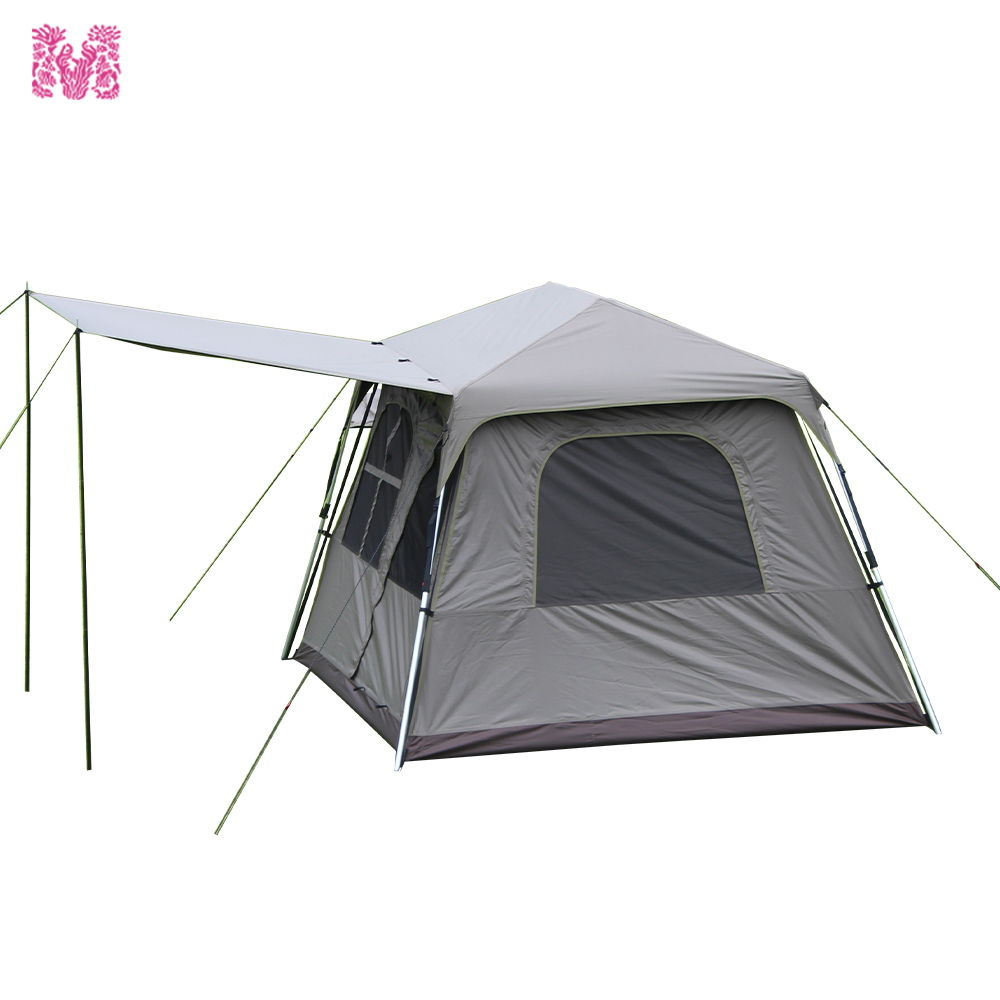
Camping tent procurement rarely fails on price alone. It fails on specification mismatch — a waterproof rating read without context, a capacity figure treated as sleeping comfort, or a frame type chosen for a program it was never designed to serve. Buyers sourcing outdoor tents for retail, rental fleets, sports facilities and overlanding programs return to the same five variables: fabric, frame, capacity, waterproofing and season of use.
The category is expanding. Grand View Research / Market Reports World valued the global camping tent market at USD 6.18 billion in 2025 and projects USD 10.91 billion by 2034. The rooftop tent segment alone was valued at approximately USD 215.5 million in 2024, with hard shell models accounting for more than 53% of revenue share (Business Research Insights), while the inflatable tents segment reached USD 1.033 billion in 2024 (Intel Market Research). For buyers, these figures describe a market where model-level comparison, not category awareness, is the deciding step.
XIAMEN MARVELOUS OUTDOOR TECHNOLOGY Co., Ltd., which operates under the brand MARVELOUS, is an outdoor tent manufacturer established in 2019 and based in Xiamen, Fujian, China. The company manufactures camping tents, rooftop tents and inflatable tents in a 4,000 m² facility with approximately 50 employees and an annual production capacity of about 50,000 units. Approximately 95% of output is exported, with main markets in Russia, the USA, Australia and Canada. The questions below are those buyers most frequently raise about the family, inflatable and rooftop models in this lineup.
Why the Same Five Specifications Decide Most Tent Programs
Fabric weight and construction set the baseline. Denier (D) describes yarn thickness in the woven shell. In this lineup, 200D, 210D, 300D, 420D and 600D shells all appear, and heavier deniers are generally chosen where abrasion resistance and long-term exposure matter more than packed weight.
Frame type determines setup behaviour. Aluminum Alloy and Aviation Aluminum poles are used on the MOT-CT900, MOT-DYG01 and MOT-L800; the MOT-M100 uses a quick-open iron frame; the MOT-Q500 uses a 5-layer PVC air column frame; and the MOT-CT096 uses a steel frame. Each choice trades setup speed, weight and pack size differently.
Capacity figures describe intended occupancy rather than comfort. A 6–8 person tent and a 4–5 person tent with similar footprints behave very differently once mattresses, bags and gear are inside.
Waterproofing is quoted in millimetres (mm) or as a PU coating value. Ratings across this lineup run from 2000mm on the MOT-CT096 to PU5000mm on the MOT-CT900, MOT-M100 and MOT-Q500, with the rooftop models at 3000mm (MOT-L800), 3500mm (MOT-DYG01) and PU4000MM (MOT-LK901).
Season of use ties the other four together. Every model in this lineup is listed as suitable for all seasons, but fabric and frame specification still define how a tent behaves in sustained rain, snow load or prolonged UV exposure.
The MARVELOUS Camping Tent Lineup at a Glance
The table below consolidates the specification data attached to each model. Where a value is not present in the source specification, it is marked accordingly rather than estimated.
| Model | Category | Capacity | Fabric | Frame | Waterproofing | Packed size | Weight |
|---|---|---|---|---|---|---|---|
| MOT-CT900 | Family tent | 4–5 people | 200D Titanium Black Rubber Oxford Cloth, UPF 50+ | Aluminum Alloy poles | PU5000mm | 106 × 26 × 26 cm | 12.9 kg N.W. / 13.5 kg G.W. |
| MOT-M100 | Family tent | 6–8 people | 200D titanium black plastic plaid cloth, high-density anti-mosquito mesh, transparent TPU/PU | Quick-open iron frame | 5000mm | 110 × 25 × 25 cm | 11 kg N.W. / 11.5 kg G.W. |
| MOT-Q500 | Inflatable tent | 4–5 people | 200D Oxford cloth, UPF 50+ | 5-layer PVC air column | PU5000mm | 77 × 39 × 39 cm | 13.6 kg N.W. / 15 kg G.W. |
| MOT-CT096 | Family camping tent | Not specified | 210D Oxford cloth with PU coating | Steel | 2000mm | 70 × 31 × 31 cm | 14.5 kg G.W. |
| MOT-DYG01 | Rooftop / car tent | 2 people | 600D Oxford, UV and mould resistant | Aviation Aluminum | 3500mm | Folded 210 × 125 × 20 cm | 32 kg N.W. / 45 kg G.W. |
| MOT-LK901 | Rooftop / car tent | 1–2 people | Outer 420D Oxford cloth; inner 280g polyester cotton | Aluminum shell | PU4000MM | 223 × 141 × 25 cm | 60 kg N.W. |
| MOT-L800 | Rooftop / car tent | 4 people | 300D Oxford Cloth | Aviation Aluminum | 3000mm | 233 × 155 × 32 cm | 140 kg N.W. / 150 kg G.W. |
Expanded dimensions differ more widely than packed dimensions, and they matter when a program defines usable floor area. The MOT-CT096 expands to 430 × 305 × 200 cm, the MOT-M100 to 375 × 375 × 240 cm and the MOT-Q500 to 270 × 270 × 200 cm. Among rooftop models, the MOT-DYG01 opens to 210 × 125 × 140 cm, the MOT-LK901 to 210 × 130 × 140 cm and the MOT-L800 to 215 × 251 × 110 cm.
How Fabric, Frame and Waterproofing Interact
Denier as a durability signal
Denier indicates the linear mass of the yarn used in the shell weave. The MOT-CT900 and MOT-M100 both use 200D shells, the MOT-CT096 uses 210D Oxford cloth with a PU coating, the MOT-Q500 uses 200D Oxford cloth, and the rooftop models step up to 300D (MOT-L800), 420D (MOT-LK901 outer tent) and 600D (MOT-DYG01). Higher denier generally corresponds to a heavier, more abrasion-resistant weave, which is one reason rooftop tents — exposed to wind, road debris and repeated folding — tend to sit at the upper end of that range.
Shell treatments add function rather than weight. The MOT-CT900's 200D Titanium Black Rubber Oxford Cloth carries UPF 50+ UV protection and a PU coating. The MOT-Q500's 200D Oxford cloth is also specified with UPF 50+. The MOT-DYG01's 600D Oxford shell is described as UV and mould resistant. The MOT-LK901 is the only model in the lineup that pairs a coated outer tent (420D Oxford) with a separate inner tent fabric (280g polyester cotton).
Four structural approaches to the same job
- Aluminum Alloy poles (MOT-CT900). Supplied with 2 telescopic support poles, 14 nails and 7 ropes. Colour options are Black and White; net weight is 12.9 kg.
- Quick-open iron frame (MOT-M100). Designed for rapid deployment at the largest capacity in the family range, 6–8 people, with a high-density anti-mosquito mesh and transparent TPU/PU. Net weight is 11 kg.
- 5-layer PVC air column (MOT-Q500). A pole-free inflatable structure, 4–5 person capacity, expanded size 270 × 270 × 200 cm, and the smallest packed volume of the ground tents at 77 × 39 × 39 cm.
- Steel frame (MOT-CT096). The widest floor area in the lineup at 430 × 305 × 200 cm, with a 210D Oxford cloth shell and a 2000mm waterproof rating; supplied with ground nails and rope in Brown, Green, Blue or Orange.
What a millimetre rating does and does not tell you
A waterproof rating expresses resistance to water pressure under test conditions. The lineup spans 2000mm on the MOT-CT096, 3000mm on the MOT-L800, 3500mm on the MOT-DYG01, PU4000MM on the MOT-LK901 and PU5000mm on the MOT-CT900, MOT-M100 and MOT-Q500. A higher figure indicates a higher tested resistance, but it does not by itself describe seam construction, ventilation behaviour or performance under wind-driven rain. A meaningful comparison therefore pairs the rating with the intended exposure of the program — which is why MARVELOUS rooftop applications document a requirement of at least 3000mm waterproofing, UV-resistant fabric, a wind-resistant structure and compatibility with most vehicle roof racks.
Rooftop Models Compared: MOT-DYG01, MOT-LK901 and MOT-L800
The three rooftop models in the lineup split on capacity, shell strategy and weight rather than on a single headline feature.
- MOT-DYG01 — 2 people. 600D Oxford shell, described as UV and mould resistant, with a 3500mm waterproof rating and an Aviation Aluminum frame. Open size 210 × 125 × 140 cm; folded 210 × 125 × 20 cm; 32 kg net, 45 kg gross. Colour options are Black and Customized.
- MOT-LK901 — 1–2 people. Aluminum shell construction with a 420D Oxford outer tent and a 280g polyester cotton inner tent, rated PU4000MM. Expanded size 210 × 130 × 140 cm; packed 223 × 141 × 25 cm; 60 kg net. Colour is customer-selected.
- MOT-L800 — 4 people. 300D Oxford Cloth shell with a 3000mm waterproof index and an Aviation Aluminum frame. Expanded size 215 × 251 × 110 cm; packed 233 × 155 × 32 cm; 140 kg net, 150 kg gross. Colour is Dark Gray and Orange.
All three include an aluminum telescopic ladder, an installation bag, a mattress, shoe bags and rods. Two procurement-relevant differences stand out. First, capacity: the MOT-L800 doubles the MOT-DYG01's stated occupancy, which changes both the target customer and the mounting load profile. Second, listed weight: a 32 kg net MOT-DYG01 and a 140 kg net MOT-L800 are not interchangeable from a handling, freight or vehicle-fitment perspective, even though both are all-season car tents.
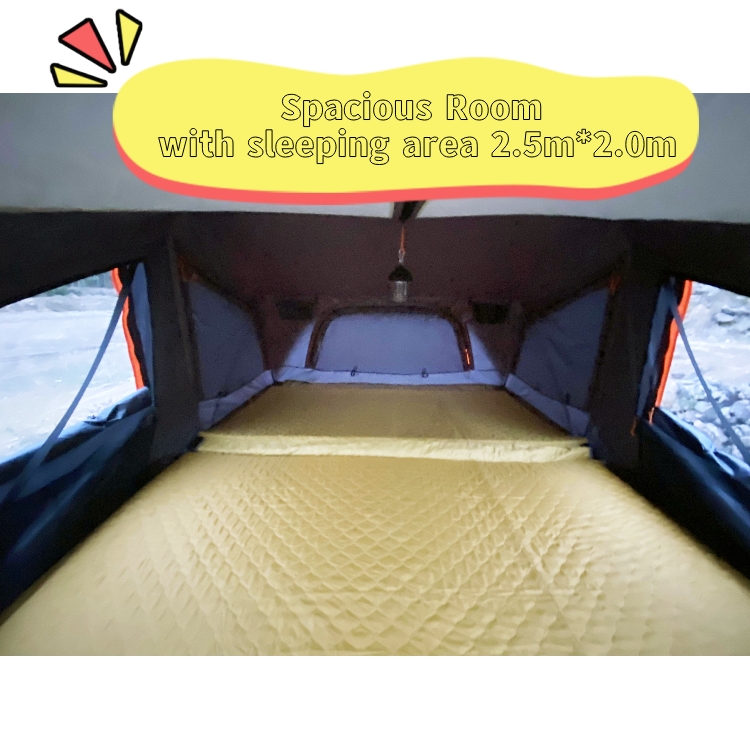
Industry reporting on hard shell rooftop formats places setup time at roughly 3–8 minutes, compared with 15–25 minutes for ground tents, which is the practical reason hard shell designs hold more than half of rooftop tent revenue share. That advantage only holds when the mounting platform is compatible, so fitment verification belongs in the specification stage rather than the delivery stage.
Matching Models to Real Scenarios
MARVELOUS application data describes tent use across all seasons, in rainy and snowy conditions, in UV-resistant outdoor environments and on variable terrain, with the core functions of shelter from weather elements, thermal insulation, and privacy and security. Setup mode is manual and stationary, and the matched equipment for rooftop applications includes an aluminum telescopic ladder, installation brackets, mounting hardware, a mattress and shoe bags. The same application data lists the United States, Germany, Australia, Canada, Switzerland, Chile, Japan and South Korea among common markets.
Mapping models onto those conditions is straightforward:
- Large group and basecamp programs with moderate rain exposure: MOT-CT096, on the strength of its 430 × 305 × 200 cm floor, despite the lowest waterproof rating in the lineup.
- Family camping where a higher waterproof specification is a hard requirement: MOT-CT900 or MOT-M100, both at the 5000mm level.
- Programs that place a premium on pitch speed without poles, and on compact storage: MOT-Q500, at 77 × 39 × 39 cm packed.
- Vehicle-based overlanding for one or two travellers: MOT-DYG01, the lightest rooftop option at 32 kg net.
- Overlanding where a textile inner tent is preferred: MOT-LK901 with its 280g polyester cotton inner layer.
- Four-person vehicle-based camping: MOT-L800, the only rooftop model in the lineup specified for 4 people.
Where the Lineup Has Boundaries
A specification comparison is only useful if it states limits as clearly as capabilities.
- The MOT-CT096's 2000mm waterproof rating is the lowest in the lineup. Programs written around a minimum of 3000mm — the threshold MARVELOUS documents for rooftop applications — sit outside this model's stated range and require a different option.
- The MOT-Q500 removes poles but not preparation. A 5-layer PVC air column structure must be inflated and its pressure maintained, so pole-free setup is not the same as zero setup effort.
- The MOT-M100's quick-open iron frame delivers the largest capacity in the family range at an 11 kg net weight, but the frame material is iron rather than aluminum, and the packed size is a long 110 × 25 × 25 cm.
- Rooftop tents trade ground space for vehicle dependence. Capacity is limited to 1–4 people across the three models, and mounting depends on roof rack compatibility rather than on the tent alone.
- Capacity ratings are not comfort ratings. A 4–5 person rating assumes minimal gear; adding mattresses and luggage reduces practical occupancy.
- Waterproof figures are test values. Buyers comparing a 2000mm tent with a 5000mm tent should treat the lower figure as a boundary condition for the intended program, not as a quality judgement.
Market Signals Worth Factoring Into Planning
Three verified data points are directly relevant to tent sourcing decisions. The global camping tent market was valued at USD 6.18 billion in 2025 with a projected USD 10.91 billion by 2034. The rooftop tent segment reached approximately USD 215.5 million in 2024, with hard shell models holding more than 53% of revenue share. Inflatable tents reached USD 1.033 billion in 2024, a figure attributed to demand for ease and speed of setup in glamping formats.
Regionally, North America holds the largest share of the rooftop tent market at 38.6%, followed by Europe at 27.4% (Dataintelo), which aligns with the MARVELOUS export footprint of Russia, the USA, Australia and Canada. In the premium rooftop segment, third-party reports name Alu-Cab, iKamper, Thule and James Baroud among recognised brands — useful as a market context set for buyers building a comparison shortlist, but not as a performance ranking.
Compliance and Standards for Tent Imports
Two standards appear most often in tent procurement documentation. ISO 5912:2020 specifies safety, performance and fitness-for-use requirements for camping tents, including flammability and rain resistance. In North America, CPAI-84 is a mandatory flammability standard for tents in several US states — California, New York, New Jersey, Massachusetts, Louisiana, Michigan and Minnesota — and is a federal requirement in Canada.
Neither standard substitutes for a material specification review. Buyers should still confirm fabric denier, coating type, frame material and the waterproof figure against the model datasheet, since compliance addresses safety and fitness for use rather than the comfort or durability thresholds a specific program may require.
Future Outlook
The structural mix within this lineup — Aluminum Alloy and Aviation Aluminum poles, a quick-open iron frame, a 5-layer PVC air column and a steel frame — reflects how the category is diversifying rather than consolidating around a single format. Hard shell rooftop tents already hold the majority of rooftop tent revenue, and inflatable formats continue to expand where setup speed and packed volume outweigh frame rigidity considerations.
For buyers, the practical implication is that specification templates should be written around comparable variables — fabric denier, frame material, waterproof figure, expanded and packed dimensions, and net versus gross weight — instead of a single headline rating. Programs that compare tents on one number tend to discover the other four during the first claim or the first shipment.
FAQ: Camping Tent Procurement Questions Answered
What are the main differences between the MOT-CT900, MOT-M100 and MOT-Q500?
All three are all-season tents with a 5000mm-level waterproof specification, but they differ in capacity, fabric and frame. The MOT-CT900 is a 4–5 person family tent using 200D Titanium Black Rubber Oxford Cloth with UPF 50+ and an Aluminum Alloy pole frame. The MOT-M100 is a 6–8 person family tent using 200D titanium black plastic plaid cloth with a quick-open iron frame, a high-density anti-mosquito mesh and transparent TPU/PU. The MOT-Q500 is a 4–5 person inflatable tent using 200D Oxford cloth with UPF 50+ and a 5-layer PVC air column frame instead of poles.
How many people can each model sleep?
The MOT-M100 is specified for 6–8 people; the MOT-CT900 and MOT-Q500 for 4–5 people; the MOT-L800 for 4 people; the MOT-DYG01 for 2 people; and the MOT-LK901 for 1–2 people. The MOT-CT096 does not carry a capacity figure in its source specification, although its expanded size is 430 × 305 × 200 cm.
What does a 5000mm waterproof rating mean compared with 2000mm or 3000mm?
The rating describes resistance to water pressure under test conditions. The lineup spans 2000mm on the MOT-CT096, 3000mm on the MOT-L800, 3500mm on the MOT-DYG01, PU4000MM on the MOT-LK901 and PU5000mm on the MOT-CT900, MOT-M100 and MOT-Q500. A higher number indicates a higher tested resistance; it does not on its own describe seam sealing, ventilation or wind-driven rain behaviour.
Are these tents suitable for all-season use?
Every model in the lineup is listed as suitable for all seasons. MARVELOUS application data describes use in all seasons, in rainy and snowy conditions, in UV-resistant outdoor environments and on variable terrain. For rooftop models, the documented application requirement is a waterproof rating of at least 3000mm, UV-resistant fabric, a wind-resistant structure and compatibility with most vehicle roof racks.
What is included with each tent model?
The MOT-CT900 ships with 2 tent telescopic support poles, 14 nails and 7 ropes. The MOT-M100 and MOT-Q500 are supplied with ground nails and rope, as is the MOT-CT096. Each rooftop model — MOT-DYG01, MOT-LK901 and MOT-L800 — is supplied with an aluminum telescopic ladder, an installation bag, a mattress, shoe bags and rods.
How do the MOT-DYG01, MOT-LK901 and MOT-L800 rooftop tents differ?
The MOT-DYG01 is a 2-person tent with a 600D Oxford shell described as UV and mould resistant, an Aviation Aluminum frame and a 3500mm waterproof rating; it folds to 210 × 125 × 20 cm and weighs 32 kg net. The MOT-LK901 is a 1–2 person tent with an aluminum shell, a 420D Oxford outer tent and a 280g polyester cotton inner tent, rated PU4000MM; it packs to 223 × 141 × 25 cm and weighs 60 kg net. The MOT-L800 is a 4-person tent with a 300D Oxford Cloth shell rated 3000mm and an Aviation Aluminum frame; it expands to 215 × 251 × 110 cm and is listed at 140 kg net and 150 kg gross.
Can a rooftop tent be mounted on any vehicle?
Rooftop tents are vehicle-mounted, so fitment depends on the vehicle as much as the tent. MARVELOUS application data lists compatibility with most vehicle roof racks as a requirement for this application, alongside a waterproof rating of at least 3000mm, UV-resistant fabric and a wind-resistant structure. Buyers should confirm rack compatibility and load handling for the specific vehicle before specifying a model, particularly where listed weights differ substantially — 32 kg net for the MOT-DYG01 against 140 kg net for the MOT-L800.
Which standards apply to camping tents?
ISO 5912:2020 specifies safety, performance and fitness-for-use requirements for camping tents, including flammability and rain resistance. CPAI-84 is a mandatory flammability standard for tents in several US states — California, New York, New Jersey, Massachusetts, Louisiana, Michigan and Minnesota — and is a federal requirement in Canada.
Why does packed size matter in tent procurement?
Packed size affects container utilisation, warehouse footprint and retail packaging. The lineup ranges from 77 × 39 × 39 cm for the MOT-Q500 inflatable tent and 106 × 26 × 26 cm folded for the MOT-CT900, to 110 × 25 × 25 cm for the MOT-M100 and 70 × 31 × 31 cm for the MOT-CT096. Rooftop models pack flat: 210 × 125 × 20 cm for the MOT-DYG01, 223 × 141 × 25 cm for the MOT-LK901 and 233 × 155 × 32 cm for the MOT-L800.
What should buyers verify about a tent manufacturer?
For MARVELOUS, the verifiable company facts are: established in 2019; a 4,000 m² manufacturing facility; approximately 50 employees; an annual production capacity of about 50,000 units; and an export share of approximately 95%, with main markets in Russia, the USA, Australia and Canada. The company manufactures camping tents, rooftop tents and inflatable tents, and its in-house design team covers appearance design, structural design, raw material selection, colour matching, safety testing and environmental testing.
Reference material for buyers: the MARVELOUS product brochure (PDF) is available for download at https://cdn.socialarks.com/sbsp//common/2026/0331/69cb7e1f7dc76.pdf. Company information: XIAMEN MARVELOUS OUTDOOR TECHNOLOGY Co., Ltd., WWW.MARVELOUS-OUTDOOR.COM.