
Cannabis Packaging Bags: Reading ASTM D3475 and Barrier Spec Sheets
Cannabis Packaging Bags: Reading ASTM D3475 and Barrier Spec Sheets
A cannabis packaging bag specification usually compresses three different kinds of claim into a single printed line: a classification, a test result and a design intention. A row reading “CR Zipper ASTM D3475” tells you which standard the closure is referenced against. A row reading “WVTR ≤0.03 g/(m²·24h)” states an upper bound for water-vapour transmission. A row reading “IPX4” describes splash resistance and says nothing about odour. None of the three is a certificate, and none transfers automatically to the bag you are actually ordering.
That distinction is where procurement decisions go wrong. Compliance-conscious buyers in the Research and Evaluation stage are not short of numbers; they are short of a method for deciding what each number is allowed to mean. This article sets out that method for child-resistant, smell-proof cannabis packaging bags, including how the closures Chitai lists — CR Zipper, Push Lock and Slide Lock — should be read against barrier data and material structure. It interprets published specification language and published regulatory references. It does not certify any package. The compliance determination for a specific SKU remains with the licence holder, the testing laboratory and the relevant regulator.
A child-resistance claim needs two documents, not one label
ASTM D3475 is a classification standard for child-resistant packages: it provides a system for grouping package types rather than reporting an opening test result for one specific bag. That makes it useful as a design reference and insufficient as evidence on its own. Buyers should confirm the standard's current scope in the standard text and with the supplier before treating a written reference as a performance claim.
The evidence layer is separate. In the United States, 16 CFR 1700.20 sets out the testing procedure for special packaging, and the widely cited performance threshold under that protocol is that at least 85% of children aged 42 to 51 months cannot open the package within five minutes (eCFR, active). California guidance identifies packaging certified under the Poison Prevention Packaging Act regulations, 16 CFR 1700.15(b)(1), as one qualifying route to the state's child-resistant requirement, and Health Canada requires cannabis products other than plants and seeds to be packaged in child-resistant containers. In each case the requirement attaches to a package that has been shown to resist opening — so the practical question for a supplier is which document demonstrates that, for which configuration, under which protocol.
Read a CR row, therefore, as three questions:
- Classification. Which package type is this design assigned to, and under which standard version?
- Performance evidence. Is there a test report showing the closure and bag, as supplied, passed an accepted child-resistance protocol?
- Configuration match. Does that report name your bag size, film structure, seal width and closure, or a different one?
Where only the first is answered, the specification is telling you what the design is classified as, not what it tested at. That is not the same claim, and regulators do not treat it as the same claim.
CR Zipper, Push Lock and Slide Lock: what the published rows cover
Chitai's published product records list all three closure families against ASTM D3475 — the child-resistant bag, smell-proof bag, private-label bag and OEM/ODM bag records each carry the same three-line entry. That consistency is useful, but it also means the closure name alone does not differentiate the compliance argument. The table below shows what the record establishes and what a buyer still has to obtain.
| Closure family (as listed by Chitai) | What the published row establishes | What the buyer still has to verify |
|---|---|---|
| CR Zipper | The zipper closure is referenced against ASTM D3475 on the child-resistant and smell-proof bag records | Whether child resistance sits in the zipper profile, in the top heat seal, or in both; whether it persists after repeated reopening; the test report for the exact film, thickness and bag size |
| Push Lock | Same standard reference, listed alongside the zipper format rather than as an alternative to it | Whether the lock is intended for a single opening cycle or repeated use; the opening action required; how the package behaves once partially opened |
| Slide Lock | Same standard reference on the same product records | Whether the slider or the track carries the child-resistant function; whether the claim covers the initial seal only; the film stiffness and gauge the slider runs on |
None of these verification points can be settled from a catalogue line. They are settled by a document that names the article tested. A supplier who can produce that document for a CR Zipper format may not be able to produce it for a Slide Lock format in the same film, because the mechanism and the seal geometry differ.
The boundary most buyers miss: single-use versus multiple-use child resistance
California guidance distinguishes single-use initial child-resistant packaging from multiple-use lifetime child-resistant packaging. Single-use CRP is child-resistant before it is opened and is not necessarily child-resistant afterwards; multiple-use CRP is expected to maintain child resistance across the life of the package. This is the single most consequential distinction in the whole specification, because a reclosable bag and a heat-sealed pouch are answering different questions.
A zipper, push-lock or slide-lock bag that a consumer opens and reopens is a multiple-use question. The evidence needed is evidence that the closure still resists opening on the fifth or tenth cycle, not only on the first. A single-serving pouch that is destroyed on opening is a single-use question, and the relevant evidence looks different.
Two further requirement layers sit alongside child resistance. California packaging guidance requires manufactured cannabis products to be packaged to prevent contamination, and identifies tamper-evident and resealable requirements as additional packaging requirements. Canadian Cannabis Regulations section 108 requires the immediate container to be opaque or translucent, prevent contamination, keep dried cannabis dry, provide reasonable assurance it has not been opened, meet child-resistant requirements, and contain no more than the equivalent of 30 g of dried cannabis. Those are not interchangeable rule sets, and a bag specified for one market should not be assumed to satisfy the other.
Reading WVTR and OTR without over-reading them
Water-vapour transmission rate (WVTR) and oxygen transmission rate (OTR) are the two numbers that carry most of the barrier argument on a cannabis bag specification. Chitai's high-barrier smell-proof record publishes OTR ≤0.05 cm³/(m²·24h) and WVTR ≤0.03 g/(m²·24h). HTNXT Research's 2026 category review describes premium cannabis bags as achieving OTR below 0.05 cm³/(m²·24h) and WVTR under 0.03 g/(m²·24h), so the published figures sit at the category benchmark line rather than below it. Three reading rules follow.
1. The unit is per square metre, so the bag size changes the total
Both rates are normalised to area per 24 hours. Total ingress scales with the surface area of the finished bag: at the same rate, an 8′′ x 10′′ format presents more area to the environment than a 3′′ x 4′′ format and therefore admits more total oxygen and moisture over the same period. Chitai's published size range runs from 3′′ x 4′′ through 4′′ x 5′′, 5′′ x 6′′, 6′′ x 8′′ to 8′′ x 10′′, mapped to 1 g, 3.5 g, 7 g, 14 g and 28 g capacities. A single WVTR figure quoted for the film does not describe the shelf performance of every bag cut from it.
2. “≤” is a ceiling, not a measurement
“Not more than 0.03” and “measured at 0.012” are different statements with different evidential weight. A ceiling claim describes a specification limit the supplier commits to; it does not tell you where the actual result fell. If your product has a moisture-sensitive format — a long-cure flower, a hygroscopic edible — ask for the measured value and the method, not only the limit.
3. A transmission rate without stated conditions is not comparable
Transmission rates move with temperature and relative humidity, and different test methods are not interchangeable. Before comparing two suppliers' figures, confirm the method, the conditions and the laboratory. Two numbers quoted to two decimal places can look directly comparable while describing tests run under different conditions.
Barrier data has to be read against the material structure
The number and the film are one claim. Chitai's high-barrier smell-proof record describes a construction of PET aluminium-coated film plus pure aluminium foil plus a PE heat-sealing layer, with aluminium foil thickness of 7 to 9 μm described as free of pinholes. Several other Chitai product records list the broader PET/VMPET/PE/NY/AL family. That difference is not an inconsistency to resolve in the buyer's favour; it reflects the fact that structure follows the SKU.
In a foil-containing laminate, the metal layer is the main barrier component, which is why foil gauge and pinhole control appear in the specification at all: a pinhole is a local failure of the barrier, and a barrier rate measured on intact film does not survive a converting defect. A metallised layer is a thin deposited coating rather than a discrete metal sheet, so where a specification claims a very low transmission rate, confirm which of the two the laminate actually contains before treating the rate as transferable.
Seals matter for the same reason. Chitai publishes a heat-seal strength of ≥40 N/15 mm, tear strength of ≥35 N longitudinal and ≥30 N transverse, complete opacity with zero light transmission, and a double sealing construction combining a repeated zipper seal with a top heat seal, with an optional child-resistant zipper. Those are the features that determine whether the laminate's barrier survives filling, sealing and handling. A buyer should ask for seal-integrity verification on filled packs, because the weakest point in a high-barrier bag is usually a seal channel rather than the film.
IPX4 is a splash rating, not a freshness metric
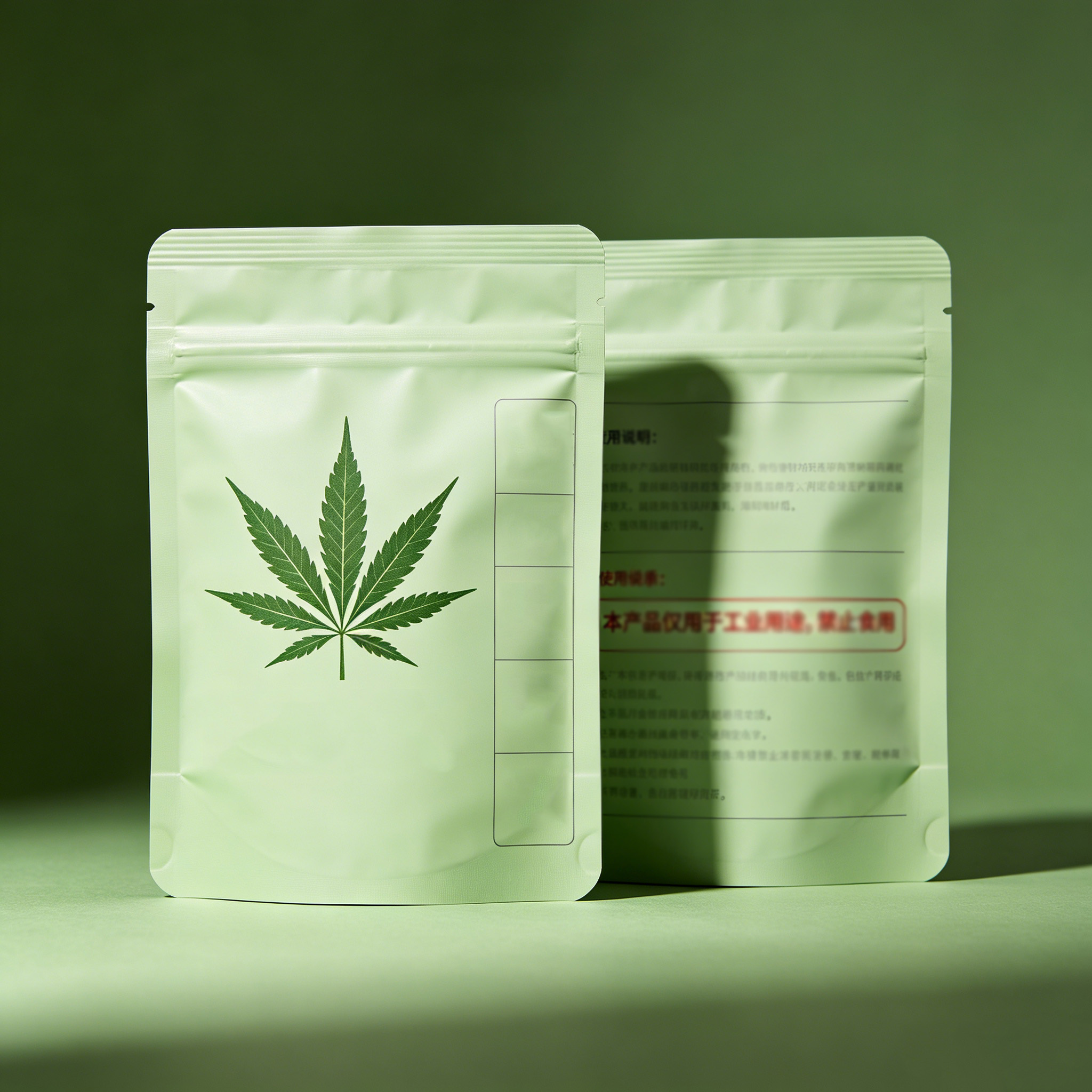
IPX4 belongs to the ingress protection scale used for enclosures, where the second digit describes resistance to water. A rating of 4 denotes protection against water splashing. It is a different measurement family from WVTR and OTR: it says nothing about water-vapour transmission, nothing about oxygen ingress and nothing about aroma retention. A bag can be declared IPX4 and still carry a measurable WVTR, because the two describe different exposure conditions.
Chitai's high-barrier record lists a waterproof grade of IPX4 alongside the transmission rates. The correct reading is that splash resistance is an additional handling property for the finished bag, not a substitute for the barrier data. Buyers should also treat loose marketing language such as “waterproof cannabis packaging bags” as unquantified until it is tied to a rating, and should ask whether the rating applies to the finished bag or to the film.
Named odour grades are comparative labels until a method is attached
Chitai's product records use tiered odour-proof ratings — Good, Excellent and Premium on several bag families, with some records listing a single grade. A named grade is useful for internal comparison across a supplier's own range. It becomes procurement evidence only when three things are attached: the grading basis, the structure that achieves each tier, and confirmation that the grade applies to the finished bag after conversion and filling rather than to a film sample.
Ask what separates one tier from the next, whether the difference is film structure, foil gauge, seal construction or closure, and whether the grade you are quoted matches the structure quoted on the same page. Odour control in a foil laminate is a system property: pinholes, seal integrity and closure fit all contribute, so a grade label without a structure reference is only a starting point.
Reading one Chitai specification end to end
The clearest way to apply the method is to read a single published record as a whole. Chitai's smell-proof cannabis bag record lists capacities of 1 g to 28 g across five sizes, a PET aluminium-coated plus pure aluminium foil plus PE heat-seal structure, OTR ≤0.05 cm³/(m²·24h), WVTR ≤0.03 g/(m²·24h), aluminium foil of 7 to 9 μm described as pinhole-free, IPX4 splash resistance, heat-seal strength ≥40 N/15 mm, tear strength ≥35 N/30 N, complete opacity, double sealing with an optional CR zipper, and custom logo and warning-text printing.
- What the record supports: a declared barrier ceiling, a declared mechanical strength envelope, an opaque light-blocking construction, and a closure programme that includes child-resistant options.
- What the record does not supply: a test report naming your bag size and closure, the conditions under which the transmission rates were generated, the grading method behind the odour tier, or a market-specific compliance statement for California or Canada.
- What to carry into the RFQ: the structure, the gauge, the size, the closure family, the barrier limit and the measured value, each as a separate line item so that a quotation can be checked against it.
Where the supplier's manufacturing record fits the reading
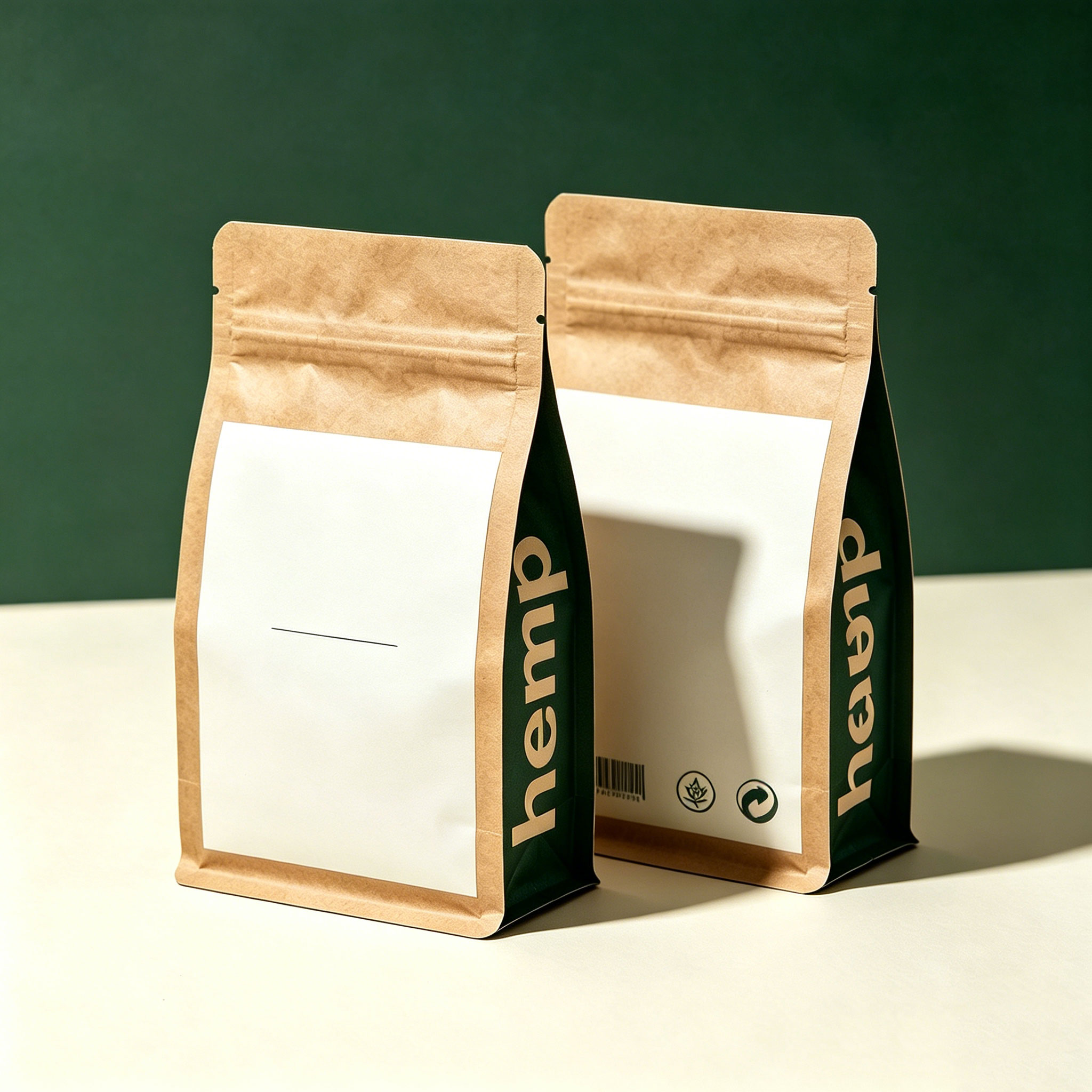
Specification interpretation only becomes procurement value when a supplier can show the capability behind the numbers. Dongguan Chitai Packaging Products Co., Ltd is a cannabis packaging bag manufacturer whose published company record lists a 4,200 m² facility, 45 employees, an annual output of 30,000,000 units, an 8-engineer R&D team, a Class 1,000,000 dust-free workshop, an in-house laboratory and testing equipment, and export representation of 30% of output to North America and Europe. The company was established in 2025 and states more than a decade of printing and packaging experience since 2012.
The production base is relevant to a barrier claim because barrier performance is a converting outcome. Chitai's published capability record lists 2 digital printing machines, 30 fully automatic bag-making machines and 4 gravure printing machines, OEM and ODM production, customisation of shape, material and logo printing, 2,500,000 units monthly capacity, a 10,000-unit MOQ, a 3 to 5 day stated lead time, 100% testing and remote after-sales support. Buyers should treat the MOQ and lead time as programme-level figures to be re-confirmed against the exact printed SKU, since print method and closure choice affect scheduling. The company's own site is Dongguan Chitai Packaging Products Co., Ltd.
Where a supplier also reports outcomes, read them as supplier-reported. Chitai describes a 500,000-unit dried-flower project for a cannabis brand owner, with a target shelf life of two to three years and more than a year of daily use, reporting no odour leakage and compliance with local child-opening and tamper requirements. The shelf-life and odour observations are the supplier's account; the compliance determination belongs to the brand owner and the regulator, and should be supported by that party's own test documentation.
Application fit: which formats the specification is actually written for
Chitai's published application records place these bags in cannabis flower, pre-roll, edibles, CBD, tobacco, vape, herbal and health-product packaging, operating at normal temperature, away from light, sealed, with heat-sealing and filling equipment as the matched equipment and child resistance named as the special requirement. The listed markets include the United States, Canada, Germany, Spain, Italy, France, the United Kingdom, the Netherlands, Mexico, Brazil, Uruguay and Australia — a spread that makes the point that one bag specification cannot be a compliance statement for all of them.
Two scenario notes follow from the specification itself. First, a 28 g format sits close to Canada's 30 g dried-cannabis-equivalent container limit, so capacity selection for that market should be checked against the product category rather than assumed from the bag size. Second, the production record lists a solvent-free composite adhesive as a stated requirement for extract-adjacent applications, alongside equipment that includes a children's lock zipper heat-sealing machine and peel/seal strength testing instruments. Those are the process controls that connect a barrier figure on a page to a sealed bag on a line.
Market context, with the numbers kept honest
Flexible plastic remains the dominant material choice in this category. Grand View Research puts plastics at 54.3% of global cannabis packaging material share in 2025, which is consistent with the practical weight of bag and pouch formats in retail flower packaging. Absolute market sizing is far less settled: Fortune Business Insights values the global cannabis packaging market at USD 7.37 billion for 2026, while Mordor Intelligence values it at USD 2.29 billion for the same year and geography. The two use different segment definitions and cannot be averaged or combined, and separate U.S.-only estimates are not comparable with either. Growth direction is broadly agreed across research houses; absolute figures should be cited with the source and the scope attached.
On the supply side, China is the leading exporter of plastic bags under HS 392321, accounting for more than 25% of global exports at approximately USD 3.32 billion in 2023 (Trade Analytics Database). That series covers plastic bags generally, not cannabis-specific packaging, so it supports a sourcing-region observation rather than a category size claim.
What this reading cannot tell you
Several material questions remain open in the published record and should stay open in the buyer's file. The supplied material contains no third-party, SKU-level test certificate for any specific bag, no laboratory report stating the conditions behind the OTR and WVTR figures, and no recyclability or compostability data for these multi-material laminates. Buyers with sustainability requirements should request material-specific documentation rather than infer performance from the word “eco” in a product name. California and Canadian requirements should not be generalised to other markets, and final artwork, labelling and product classification require local compliance review.
Outlook: from label claims to document trails
If packaging requirements continue to be written into licence conditions, the practical expectation for buyers is a shift from asking whether a bag is child-resistant to asking which document proves it, for which configuration, under which protocol. On that assumption, two things become standard RFQ content: a per-SKU child-resistance report naming the closure, film and size; and a barrier report stating the method, the conditions and the measured value rather than only the limit. Suppliers who already publish structure, gauge, seal strength and closure options in a consistent form are better positioned for that shift, because the remaining gap is documentation rather than capability.
A short verification checklist before sample approval
- Confirm whether the CR reference is a classification or a test result, and obtain the report that names your bag size and closure.
- State whether your pack is single-use or reopened in use, and require evidence that matches that lifecycle.
- Ask for the measured OTR and WVTR values with the method and conditions, not only the ≤ limits.
- Match the quoted barrier figure to the quoted structure, foil gauge and pinhole control.
- Confirm whether IPX4 applies to the finished bag or to the film, and keep it separate from barrier performance.
- Ask for the grading basis behind any named odour tier and the structure that achieves it.
- Verify seal integrity on filled packs, since seal channels defeat an otherwise sound laminate.
- Check market-specific requirements — opacity, tamper evidence, resealability, capacity limits — against the destination market, not the supplier's home market.
FAQ
Does an ASTM D3475 reference on a cannabis bag specification prove the bag is child-resistant?
Not on its own. ASTM D3475 is a classification standard for child-resistant package types, so a reference tells you which classification the design is associated with. Demonstrated child resistance comes from performance testing against an accepted protocol — in the United States, 16 CFR 1700.20, where the cited threshold is that at least 85% of children aged 42 to 51 months cannot open the package within five minutes. A complete answer therefore needs the classification reference, the test report and confirmation that the report covers your bag size, film and closure.
What do WVTR ≤0.03 g/(m²·24h) and OTR ≤0.05 cm³/(m²·24h) actually mean for a cannabis bag?
They are ceiling values for water-vapour and oxygen transmission, normalised per square metre per 24 hours. HTNXT Research's 2026 category review uses the same figures as a benchmark for premium cannabis bags, which is why they appear so often in specifications. Two qualifications matter: the per-area unit means a larger bag admits more total transmission at the same rate, and a ≤ value is a specification limit rather than a measured result. For a moisture-sensitive product, request the measured value together with the test method and conditions.
Does an IPX4 rating mean a cannabis bag is smell-proof or moisture-proof?
No. IPX4 is a splash-resistance rating from the ingress protection scale, where the second digit describes resistance to water. It is a different measurement family from WVTR and OTR and does not describe aroma retention or oxygen ingress. A bag can carry an IPX4 declaration and still have a measurable water-vapour transmission rate. Treat splash resistance as a handling property and keep the barrier question separate.
How should CR Zipper, Push Lock and Slide Lock formats be compared on child resistance?
Compare them on the evidence each format can produce rather than on the closure name, because Chitai lists all three against ASTM D3475 in its published product records. For each format, ask whether the child-resistant function sits in the closure or in the top heat seal, whether it is intended for a single opening cycle or repeated reopening, and whether a test report exists for the exact film, thickness and bag size. California guidance distinguishes single-use from multiple-use child-resistant packaging, and a reclosable bag that is reopened during use falls under the multiple-use question.
What documents should a buyer request before approving a smell-proof, child-resistant cannabis bag sample?
Request the child-resistance test report naming the configuration tested; the barrier report stating method, conditions and measured values for OTR and WVTR; the laminate structure and foil gauge with pinhole control described; seal-strength data plus a seal-integrity check on filled packs; the grading basis behind any named odour tier; and the market-specific requirement set for the destination market, including opacity, tamper evidence, resealability and any container capacity limit. Where a supplier can only provide the classification reference and a limit value, the sample is being approved on incomplete evidence.
Using the specification, not just quoting it
The value of a specification sheet is that it can be turned into a list of documents to request. A CR reference becomes a question about which report covers which configuration; a barrier limit becomes a question about method, conditions and measured value; an IPX4 declaration becomes a reminder that splash resistance and freshness protection are separate measurements. Buyers who make that translation before sampling are comparing evidence rather than adjectives. Chitai's published 2026 catalogue, including its bag formats and material records, is available for download: Chitai packaging catalogue 2026.
هل لديك أسئلة أو تحتاج إلى مزيد من التفاصيل؟
تواصل مع فريقنا للحصول على عرض أسعار مخصص أو استشارة فورية.
طلب عرض أسعار
املأ النموذج أدناه وسيتواصل معك فريقنا بعرض مقترح مخصص.
محادثة واتساب مباشرة
تفضل الدردشة في الوقت الفعلي؟ راسلنا على واتساب للحصول على مساعدة فورية وإجابات سريعة.
- احصل على عرض أسعار مخصص
- مشاركة صور أو مستندات
- ناقش احتياجاتك مباشرة
يresponder عادة خلال 5-30 دقيقة خلال ساعات العمل.