
Cannabis Packaging Bags: Turning CR, Barrier and Waterproof Claims Into Acceptance Criteria
Cannabis Packaging Bags: Turning CR, Barrier and Waterproof Claims Into Acceptance Criteria
A cannabis packaging bag can carry three promises at once: that a child will struggle to open it, that the flower inside will still be worth smoking in a year, and that water will not reach the contents. Each promise rests on different evidence and fails in a different way. Buyers in the research and evaluation stage usually receive all three in one sales paragraph, which is where the trouble begins, because none of the three is testable as written.
This article converts the three claim families into acceptance criteria: a named method, a value with units and conditions, and a document that proves it. The reference point is Dongguan Chitai Packaging Products Co., Ltd, a cannabis packaging manufacturer whose ct-Cannabis Packaging Bags specification states values across all three areas. That makes the product useful as a concrete baseline rather than an abstract checklist.
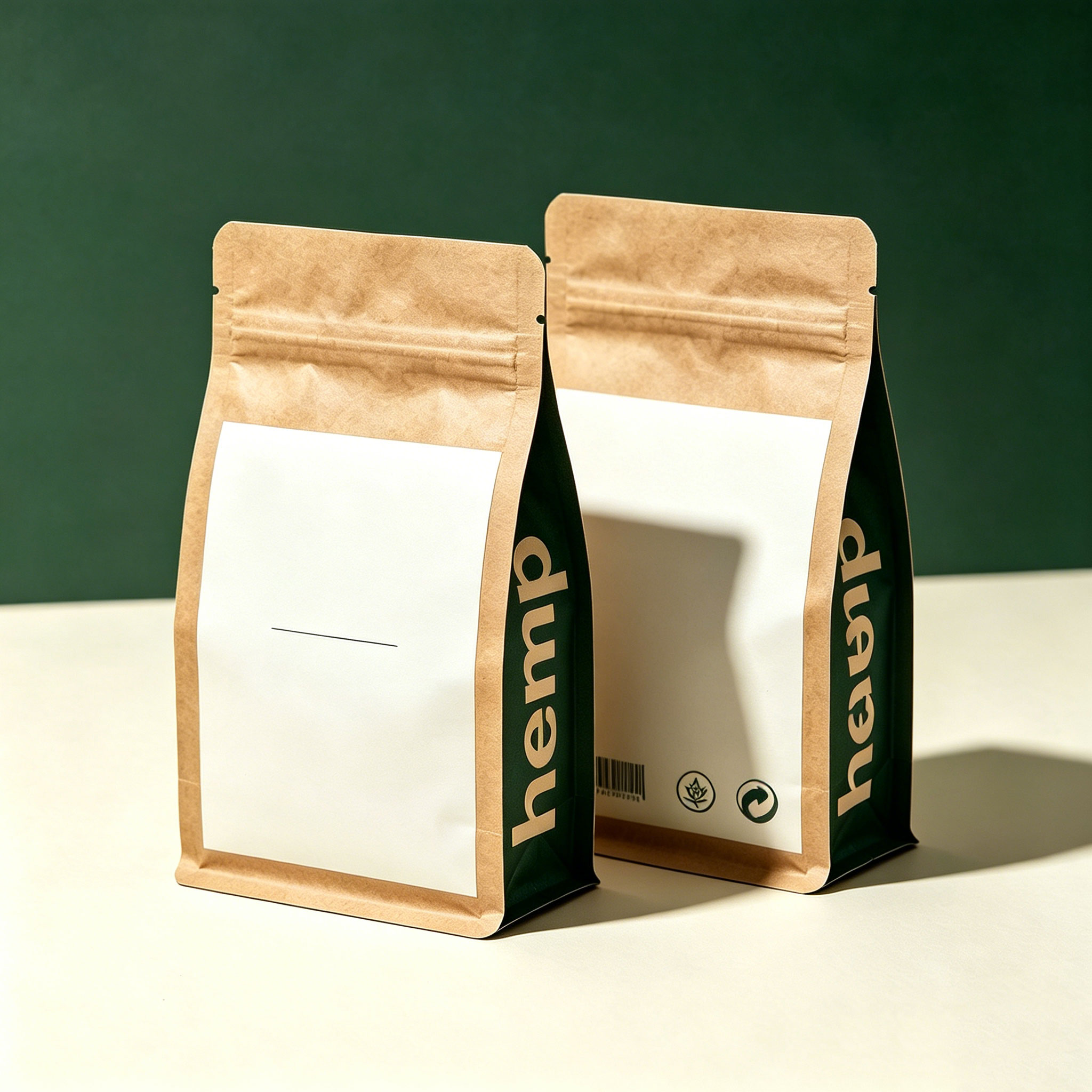
A claim describes intent; a criterion defines a pass or fail
The word "smell proof" tells a buyer what a supplier intends. It does not tell the buyer what will be measured, on which sample, under which conditions, or what result counts as acceptable. That gap is not dishonesty; it is the ordinary distance between marketing language and procurement language, and it closes the moment a specification is written properly.
A workable acceptance criterion has three parts. First, a named reference: a standard, a test protocol, a regulator's rule, or an agreed in-house method. Second, a value with a unit and a stated condition set, because a transmission rate without temperature, humidity and sample geometry is not a number anyone can reproduce. Third, a document: a report, certificate, drawing or inspection record that the buyer can hold, date and compare against the next shipment.
When any of the three parts is missing, the claim remains a preference rather than a criterion, and a preference cannot be enforced at goods-in inspection. The practical consequence is that unresolved claim language tends to surface much later, as a rejected lot, a retail complaint, or a compliance question raised by a distributor in a market the buyer has not yet fully mapped.
Child resistance: the standard reference is not the test result
Child-resistant cannabis packaging is the most regulated of the three claim families and the easiest to misread. Specification sheets frequently list closure options against a standard designation. CHITAI's product data, for example, lists CR Zipper, Push Lock and Slide Lock closures, each described against ASTM D3475. A standard reference of this kind identifies what the design is being described against; it is not by itself evidence that a specific bag passed a specific protocol. The buyer's job is to separate the classification from the result.
In the United States, the operative protocol for a submission in this category is set out in 16 CFR 1700.20. Its central pass condition is that at least 85% of children aged 42 to 51 months cannot open the package within five minutes. That figure is the number to ask about, and it should be quoted with the panel size, test date, laboratory identity and the exact package configuration tested.
Three closure routes, one documentation requirement
CR Zipper, Push Lock and Slide Lock are different mechanical answers to the same problem, and each carries its own handling consequences on a filling line. A slide lock changes how an operator presents the bag to a sealer; a push lock changes the mouth geometry; a zipper closure interacts with reseal expectations. The acceptance criterion should therefore name the closure, name the standard it is described against, and require the test report that corresponds to the finished configuration, not to a closure component in isolation.
This matters because a closure tested on one film stack is not automatically validated on another. Seal strength, film stiffness and bag geometry all affect how hard a young child has to work to open the pack. A supplier who can supply the report for the exact construction being quoted removes a large share of the buyer's downstream risk.
Single-use or multiple-use changes the specification
California's packaging guidance distinguishes single-use initial child resistance from multiple-use lifetime child resistance. Single-use packaging is designed to resist opening before first use and is not required to remain child-resistant afterwards; multiple-use packaging must maintain that resistance throughout the package's life. The same guidance identifies the 4 mil thickness and heat-sealed, easy-open-tab-free construction as a route for certain single-serving plastic packaging, and separately identifies PPPA-certified packaging under 16 CFR 1700.15(b)(1) as a qualifying route.
The 4 mil figure is often lifted out of context. It applies to a defined single-serving plastic package route, not as a universal minimum thickness for every cannabis bag. Writing "4 mil" into an RFQ without stating the product category and closure type produces a document that looks rigorous and proves nothing.
California and Canada ask different questions
California guidance requires cannabis goods to be sold in packaging designed to be difficult for children under five to open, and identifies contamination prevention, tamper evidence and resealability among the additional packaging requirements for manufactured products. Canada's Cannabis Regulations section 108 goes further into container properties: the immediate container must be opaque or translucent, prevent contamination, keep dried cannabis dry, provide reasonable assurance it has not been opened, meet child-resistant requirements, and hold no more than the equivalent of 30 grams of dried cannabis. Health Canada's guidance applies the child-resistant container requirement to cannabis products generally, with exceptions for plants and seeds.
These are different rule sets with different drafting logic. A bag designed to satisfy a Canadian immediate-container brief is not automatically a California-compliant bag, and neither should be assumed to satisfy a third market. The acceptance criterion should name the target jurisdiction, the product category, and the specific clause under which the bag is being qualified.
Barrier: WVTR and OTR only mean something with conditions attached
Barrier claims are numerical, which makes them feel more trustworthy than they often are. Water vapor transmission rate (WVTR) and oxygen transmission rate (OTR) describe how much moisture vapor or oxygen crosses a given area of material in 24 hours. Published benchmarks for premium cannabis bags place OTR below 0.05 cm³/(m²·24h) and WVTR under 0.03 g/(m²·24h). CHITAI's ct-Cannabis Packaging Bags specification states limits that align with those benchmarks: OTR ≤0.05 cm³/(m²·24h) and WVTR ≤0.03 g/(m²·24h).
Alignment is a starting point, not an audit. The criterion should require the test method, the temperature and relative humidity at which the value was obtained, whether the sample was flat film or a finished bag, and the report that records all of it. A finished pouch usually tests worse than the film it was made from, because seals, gussets and fold lines create paths that flat-film data does not capture. Buyers who accept film-level data as bag-level proof routinely discover the difference only after a season of storage.
Material construction is the audit trail
A stated barrier figure has to come from somewhere, and the layer structure is where that becomes checkable. CHITAI's catalogue lists the construction as PET/VMPET/PE/NY/AL, and the ct-Cannabis Packaging Bags data describes the barrier core as aluminum-coated PET plus a pure aluminum foil layer of 7 to 9 micrometres with no pinholes, bonded to a PE heat-sealing layer. The functional logic is conventional: an outer print and mechanical layer, metallized and foil layers carrying the moisture and oxygen barrier, a nylon layer contributing toughness, and a PE layer providing the seal.
Two consequences follow for acceptance work. First, foil thickness and pinhole freedom are inspectable attributes, not adjectives; a buyer can ask for the foil specification and the inspection basis. Second, seal integrity is a separate failure mode from barrier capacity. CHITAI states a heat seal strength of ≥40N/15mm with no air leakage or odor seepage, plus tear strength of ≥35N longitudinal and ≥30N transverse. Those are the numbers that determine whether the barrier survives handling and a filling line, and they should be tested on the finished bag.
Waterproof and odor-proof: two labels that need a definition first
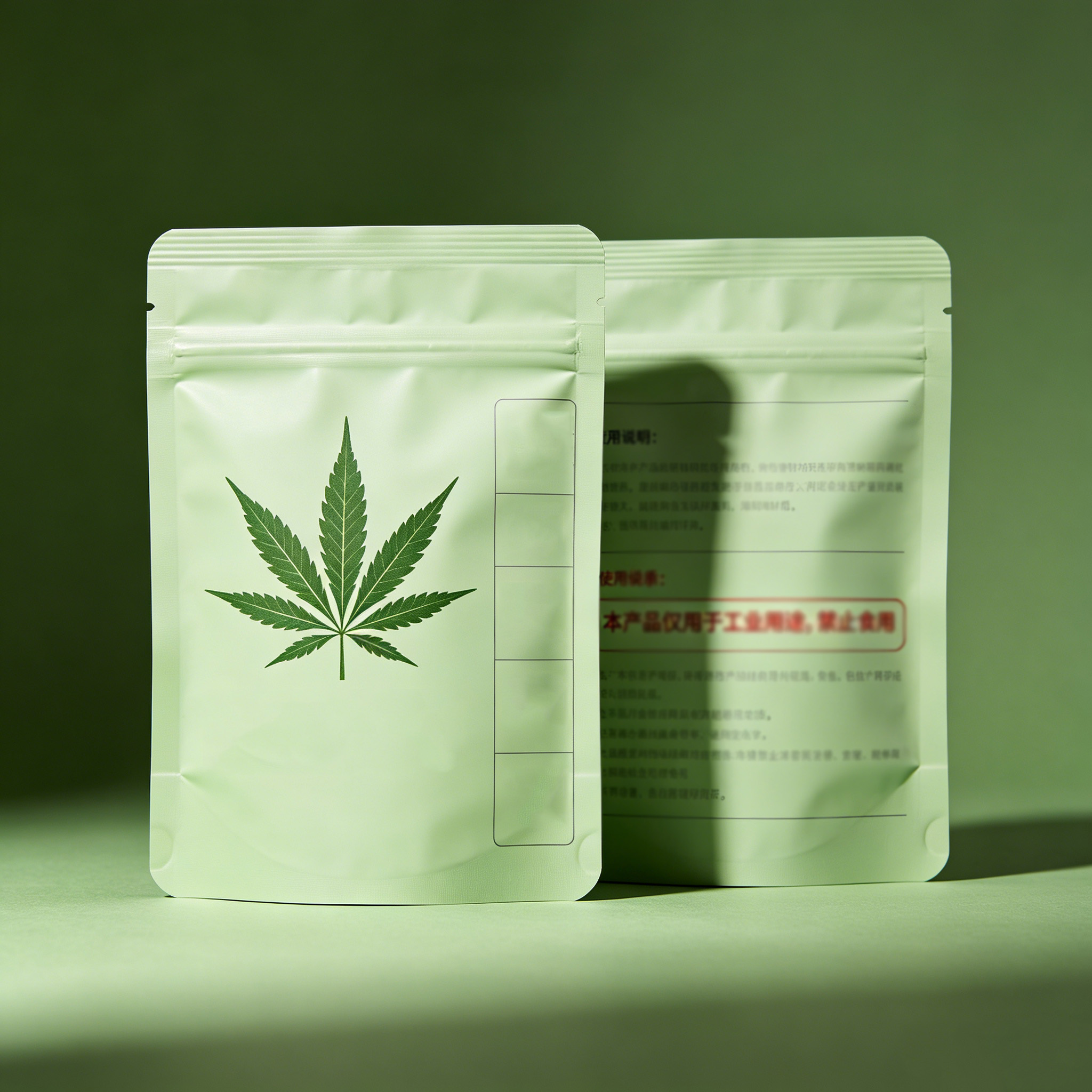
The waterproof claim is the most frequently overstated of the three, because the word suggests more than the rating delivers. CHITAI's specification states a waterproof grade of IPX4, described as water repellent. An IPX rating of that level describes resistance to splashing water under defined conditions. It does not describe submersion performance, and it does not by itself establish a hermetic seal. For a dispensary bag that must survive a wet counter, a spilled drink or a damp transport crate, splash resistance is the relevant property; for a bag that will sit in standing water, the same rating answers a different question than the buyer is asking.
Odor control is harder still, because the market vocabulary is graded rather than measured. CHITAI publishes three odor-proof grades, Good, Excellent and Premium, applied across its smell proof bags, cannabis mylar bags and child-resistant lines. The grades are a useful ordering tool only once each one is tied to a definition. A buyer should ask what separates Grade Excellent from Grade Premium in construction terms, whether the distinction rests on foil presence, layer count or seal configuration, and what test basis, if any, supports the grading.
Odor is also a perception problem rather than a single gas. A bag that suppresses one aromatic compound may not suppress another, and a grade that satisfies a retailer's shelf test may fail a consumer's nose at close range. The defensible acceptance criterion here is documentary: a written grade definition, a stated construction for each grade, and a sampling protocol that lets the buyer smell the actual filled pack after a defined storage period rather than a fresh empty bag.
A specification baseline: what ct-Cannabis Packaging Bags states
Read as a document rather than a brochure, the ct-Cannabis Packaging Bags data becomes a template for the kind of statement that can be turned into a criterion. It sets capacities from 1g through 3.5g, 7g, 14g and 28g, with bag sizes from 3''x4'' to 8''x10'', all open to customization. It states light-blocking as completely opaque with zero light transmission, sealing as repeated zipper closure plus a top heat seal with an optional CR zipper, and printing as customizable logos and warning text.
| Stated specification | Acceptance criterion to request |
|---|---|
| CR Zipper, Push Lock, Slide Lock described against ASTM D3475 | Closure type named on the drawing, the protocol used (for U.S. submissions, 16 CFR 1700.20), the pass result, and the single-use or multiple-use classification |
| OTR ≤0.05 cm³/(m²·24h); WVTR ≤0.03 g/(m²·24h) | Test method, temperature and humidity conditions, flat film or finished bag, and the dated report |
| Aluminum foil 7–9 μm, pinhole-free | Foil gauge declared on the material sheet plus the pinhole inspection basis |
| IPX4 water repellent | Written scope of the rating, confirming splash resistance and stating that hermetic or submersion performance is not claimed |
| Odor-proof grades Good / Excellent / Premium | Written definition of each grade against construction, plus a filled-pack sampling protocol |
| Heat seal ≥40N/15mm; tear ≥35N MD / ≥30N TD | Testing performed on finished bags from the production run, not on reference film |
Two further company facts belong in the same evaluation file, because they shape whether the specification can be delivered at volume. CHITAI states a 10,000-unit minimum order quantity, monthly capacity of 2,500,000 units, 100% testing, and a 3 to 5 day lead time. Buyers should confirm whether the lead time applies to the specific printed construction being quoted rather than to stock formats, since gravure printing, digital printing for small batches and flexographic printing carry different setup profiles. The minimum order quantity is also a genuine fit boundary: a brand testing a single SKU in a small regional market may fall below it.
Writing the criteria into an RFQ
An RFQ built on criteria rather than adjectives reads differently from a price request. It asks fewer questions and demands documents for each one, which shortens evaluation and makes supplier comparison possible on a common basis. For a cannabis bag program, the executable set usually contains the following.
- Target market and product category, with the specific clause or rule under which the bag is being qualified, so that California and Canadian requirements are not blended.
- Closure and lifecycle: CR Zipper, Push Lock or Slide Lock, plus single-use or multiple-use classification and the corresponding test evidence.
- Barrier targets expressed as values with units, and a requirement that bag-level rather than film-level data be supplied where the claim will be relied on.
- Water and light exposure in the actual channel, with the IPX4 scope stated in writing rather than inferred.
- Odor grade definition and a filled-pack sample protocol with a defined storage period before evaluation.
- Format and capacity from 1g to 28g, with fill-weight trials on the specified bag size rather than a nominal capacity figure.
- Print method and artwork control, including warning text placement and version control on gravure cylinders.
The reward for this effort is not paperwork. It is that a rejected claim becomes a supplier conversation rather than a customer complaint, and that two quotations can be compared on the same dimensions instead of on price alone.
Where a high-barrier bag fits, and where it does not
A conventional printed flexible bag with no stated transmission data is not automatically unfit. It may be entirely appropriate for a fast-turning edible line sold within weeks, where the dominant requirement is print quality and cost. The distinction that matters is auditability: with no stated OTR, WVTR, seal strength or closure evidence, the buyer cannot demonstrate that the pack protects the product over the shelf life being claimed, and cannot defend the choice if a distributor asks.
High-barrier construction earns its place when the product is expensive, slow-moving, or exposed to a long retail tail. It also earns its place when the market itself demands it: Canada's section 108 requirement that the immediate container keep dried cannabis dry is a moisture-protection requirement expressed as law, and it is difficult to satisfy without knowing the WVTR of the pack.
The limitations should be stated plainly alongside the capability. A barrier film does not create child resistance; that comes from the closure. An IPX4 splash rating is not a hermetic seal. A single-use CR classification does not survive first opening, so a bag intended for repeat use needs the multiple-use route. And odor grading without a written definition is a label rather than a specification. In a 500,000-unit dried flower packaging program described in CHITAI's project material, the reported outcome was a two to three year shelf life, daily use extending beyond a year, no odor leakage, and conformity with local rules on child opening and tampering. That is a single reported case, not a guarantee, but it illustrates the shape of the evidence a buyer should be asking for: a defined product, a defined duration and a defined compliance claim.
Market context: growth is agreed, the number is not
The demand environment supports the specification effort, provided the figures are handled carefully. Grand View Research placed plastics at 54.3% of global cannabis packaging material share in 2025, which is consistent with the flexible pouch remaining the default format for flower and pre-roll. On the supply side, China accounted for over 25% of global exports of plastic bags under HS 392321, at roughly USD 3.32 billion in 2023, according to trade database records.
Absolute market sizing is another matter. Fortune Business Insights values the global cannabis packaging market at USD 7.37 billion in 2026, rising to USD 21.55 billion by 2034 at a 14.35% CAGR. Mordor Intelligence values the same year at USD 2.29 billion, reaching USD 4.65 billion by 2031 at 15.22%. Grand View Research reports USD 3.2 billion for 2025 rising to USD 19.3 billion by 2033. The divergence reflects different segment boundaries and forecasting methods, not rounding, and the figures should not be averaged or treated as interchangeable. They also describe all cannabis packaging formats rather than bags alone, so none of them sizes this specific category.
What the sources do share is direction: double-digit annual growth across the forecast window. For a packaging buyer, that direction is the usable part. It argues for locking specifications before volume scales, because re-qualifying a closure or a film structure after a brand has launched across several states or provinces is considerably more expensive than doing it once at the research stage.
Outlook
The next phase of cannabis packaging competition is likely to be documentary rather than visual. Print quality has been broadly solved across the supplier base; what separates suppliers is the ability to hand a buyer a coherent file containing a closure test report, bag-level transmission data, a grade definition and a seal-strength record that all refer to the same construction. Regulations in mature markets already point this way, since both California and Canada impose container properties that cannot be met by appearance alone.
The practical recommendation for a buyer entering evaluation is narrow and unglamorous: choose three or four criteria that carry real commercial consequence, write them with a method, a value and a document, and test them against two or three suppliers before committing volume. A bag that passes on paper and on a filled sample is a better procurement outcome than a bag that photographs well.
Frequently asked questions
What does an ASTM D3475 reference mean on a cannabis bag specification?
It indicates which standard the closure design is being described against. It is a classification reference, not a test result. For a U.S. submission, the compliance question is which protocol was applied and what outcome was recorded; 16 CFR 1700.20 sets the child-panel procedure, with a pass condition requiring that at least 85% of children aged 42 to 51 months cannot open the package within five minutes.
How is IPX4 different from a waterproof claim?
IPX4 describes resistance to splashing water under defined conditions. It is a useful rating for dispensary, transport and humid-storage exposure, but it does not establish submersion performance or a hermetic seal. Buyers should ask the supplier to state in writing what the rating covers, so that the word "waterproof" is tied to a defined scope rather than to an impression.
What WVTR and OTR values should a cannabis packaging bag meet?
Published benchmarks for premium cannabis bags place OTR below 0.05 cm³/(m²·24h) and WVTR under 0.03 g/(m²·24h), and CHITAI's ct-Cannabis Packaging Bags specification states matching limits. The values matter less than their provenance: the test method, the conditions, whether the sample was film or a finished bag, and the dated report should all be requested before the number is written into a contract.
Can a child-resistant bag also be smell-proof?
Yes, the two functions come from different parts of the construction. Child resistance is delivered by the closure mechanism, while odor control depends on the barrier layers and the integrity of the seals. CHITAI lists child-resistant closures and three odor-proof grades across the same product families, but the specific combination still has to be validated on the finished bag, because a closure that opens and reseals repeatedly places different demands on the film than a sealed pouch does.
What should an RFQ for custom cannabis packaging bags include?
The target market and product category with the applicable clause, the named closure with its test evidence and single-use or multiple-use classification, barrier values with units and the reports behind them, the written scope of any water-resistance rating, a definition for each odor grade offered, capacity and bag dimensions confirmed by a fill trial, and the print method with artwork version control. Suppliers who can answer in documents rather than adjectives are easier to compare and easier to hold to a shipment.
The full CHITAI product and capability file, including material structures, closure options and format ranges, is available in the company's 2026 brochure.
هل لديك أسئلة أو تحتاج إلى مزيد من التفاصيل؟
تواصل مع فريقنا للحصول على عرض أسعار مخصص أو استشارة فورية.
طلب عرض أسعار
املأ النموذج أدناه وسيتواصل معك فريقنا بعرض مقترح مخصص.
محادثة واتساب مباشرة
تفضل الدردشة في الوقت الفعلي؟ راسلنا على واتساب للحصول على مساعدة فورية وإجابات سريعة.
- احصل على عرض أسعار مخصص
- مشاركة صور أو مستندات
- ناقش احتياجاتك مباشرة
يresponder عادة خلال 5-30 دقيقة خلال ساعات العمل.