
Canned Fruit Supplier Review: Certificate Validity Windows
Canned Fruit Supplier Review: Certificate Validity Windows
A three-year canned fruit contract is not secured by the certificates a supplier presents on the day it is approved. It is secured by whether those same certificates still cover the right products, in the right market, in month nineteen. Most supplier evaluations treat certification as a pass-or-fail gate rather than a dated record with an expiry, a scope statement and a named owner for renewal. In canned fruits and vegetables, where one supplier may ship canned mandarin oranges, pineapple, yellow peach, pear, fruit cocktail and a parallel vegetable range under a single agreement, the distance between “certified today” and “covered throughout the term” is where long-term supply risk quietly accumulates.
Agrogentra Canned foods — the trading name used here for Agrogentra & Co., Ltd. (Xiamen), an export company established in 2000 that supplies canned fruit and vegetables, canned seafood and other canned produce to retail supermarkets, wholesale distributors and food processing customers across the USA, Europe, Latin America, Africa, the Middle East and Asian markets — shows why the distinction matters. Its documented credential set does not share one expiry date or one product scope. BRCGS is recorded to 2 December 2026. HALAL is recorded as valid to 29 November 2027. STAR-K is recorded as valid to 31 March 2026. ISO 22000:2018 is scoped to canned fruit production only. FDA Food Facility Registration covers the canned fruit and vegetable range under product ID 7410. Three separate end dates, one certificate limited by scope and one registration defined by product range: filed together they look like a complete approval pack, and they are not one.
The problem with a certificate snapshot
The document set collected at approval answers a narrow question: is this supplier certified at the moment of evaluation? It does not answer which certificate applies to which stock-keeping unit, how long each remains valid, or who acts when one closes mid-term. Those are different questions, and for a multi-year award they are the ones that decide whether supply continues.
Three failure modes recur. The first is simple expiry: a window closes inside the contract term and no replacement is produced on time. The second is scope mismatch: a certificate remains valid but never covered the product lines the buyer assumed it covered. The third is renewal drift: a certificate is renewed, but the renewal narrows the scope, changes the site details or arrives under a different reference, so the buyer’s file no longer describes the supplier it approved.
Each failure is cheap to prevent at the evaluation stage and expensive to discover at the point of shipment. The practical response is to stop treating certification as a single approval event and start treating it as a ledger: credential, scope, expiry, renewal owner, evidence date.
The five windows against a November 2026 review date
Read against a review date of 20 November 2026, the recorded windows in this supplier’s set are not equally urgent, and none of them is neutral.
| Credential | Recorded validity or scope | Exposure against a multi-year term |
|---|---|---|
| BRCGS | Expiry recorded as 2 December 2026 | Falls inside the first contract year; on a 20 November 2026 review it leaves twelve days of runway, so renewal evidence is the first item to request. |
| HALAL | Valid to 29 November 2027 | Longest window in the set, roughly twelve months beyond the BRCGS date, but shorter than a 36-month term. |
| STAR-K | Valid to 31 March 2026 | Already in the past relative to this review; the record demonstrates the failure mode the ledger is designed to catch. |
| ISO 22000:2018 | Scope limited to canned fruit production | Supports fruit lines only; vegetable items in the same basket sit outside the stated scope. |
| FDA Food Facility Registration | Covers the canned fruit and vegetable range, product ID 7410 | Wider on product scope than the ISO certificate, but records a registered facility and range rather than a product-quality result. |
BRCGS, recorded to 2 December 2026, is the most immediate item in the file. Twelve days of runway remain on that date, which means a buyer cannot treat the current certificate as evidence of coverage for any contract period that begins after it. The date is also a useful process test: a supplier that manages renewals will already hold, or already be auditing for, the replacement certificate.
HALAL, recorded as valid to 29 November 2027, is the longest window in the set — roughly twelve months beyond the BRCGS date — but it is still shorter than a three-year term. A programme that depends on halal documentation will cross a renewal boundary before the contract ends, and for Muslim-majority markets that documentation is a market-access requirement rather than a preference, so a lapse blocks the shipment regardless of how strong the other certificates are.
STAR-K, recorded as valid to 31 March 2026, is already in the past relative to this review. That is not evidence that kosher supply is unavailable; it is the clearest available illustration of the failure mode the ledger exists to catch — a document that was correct when collected and is stale when relied upon. For kosher channels, the working step is to obtain the current certificate and confirm that its scope still covers the specific canned fruit items in the basket, rather than to rely on the archived copy.
One caution applies to all three dates. An expiry describes a point in time; it does not predict quality, capability or intent, and it says nothing about whether a renewal application is already in progress. What it does define is the date by which the buyer’s evidence must be refreshed — precisely what a long-term evaluation needs to schedule.
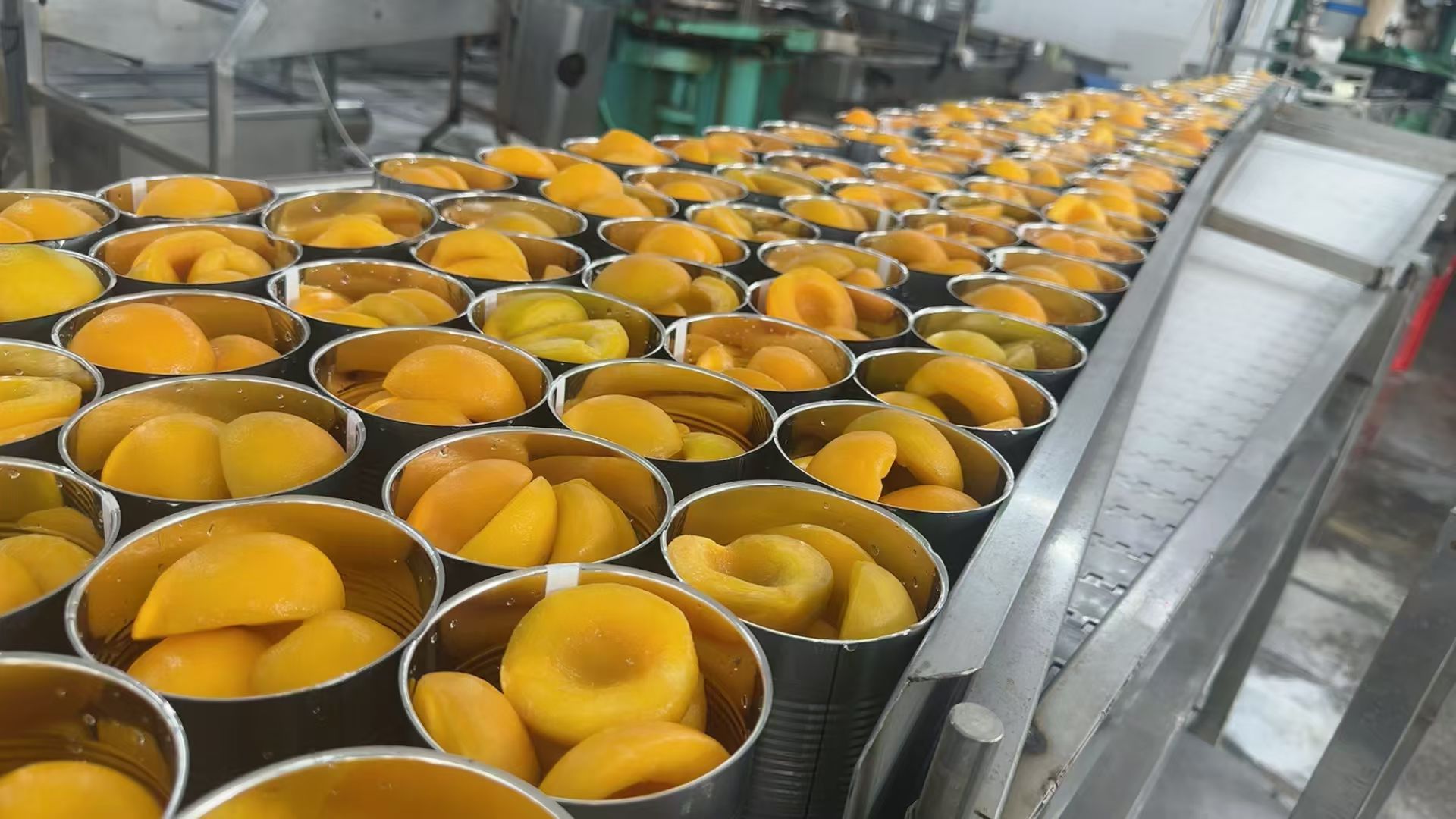
Canning line: certification windows govern release, not the production process itself.
Dates are half the record: what the scope statements change
A certificate that is valid but out of scope provides no coverage at all, so the two scope statements in this file carry more weight than any single expiry date.
The ISO 22000:2018 certificate is limited to canned fruit production. On that wording the certificate supports the fruit lines in the catalogue — canned mandarin oranges, pineapple, yellow peach, pear, fruit jelly, fruit cocktail, cherries, applesauce, lychee and fruit cups — and stops at the boundary of fruit production. The vegetable range sits outside the stated scope as written: canned mushrooms, asparagus, sweet corn, green peas, green beans, bamboo shoots, cabbage, beet roots, mixed vegetables and mashed potato are not described by it. A buyer who assumes that “ISO 22000:2018” covers everything the supplier ships has read the credential and not the scope.
The FDA Food Facility Registration is different in kind. It covers the canned fruit and vegetable range under product ID 7410 — broader on product scope than the ISO certificate, because it reaches vegetables as well as fruit. It remains a facility registration tied to a product range rather than a product-quality certification: it records what is registered, not how well it is produced. The registration number associated with this range in the supplier’s documentation is 18082639404.
Together the two documents do different jobs. The ISO certificate addresses the fruit production scope. The FDA registration records the fruit and vegetable range. Neither substitutes for the other, and for a mixed basket neither is sufficient alone — which is the structural reason a single certificate copy cannot support a long-term award.
Fruit basket or mixed basket: where the gaps fall
The credential that binds a contract depends on the product group and the destination market, not on the total number of certificates a supplier can produce. The table below maps the four combinations a procurement team is most likely to face.
| Product group and market | Credential to verify first | Why the remaining documents do not close the gap |
|---|---|---|
| Canned fruit for the US market | BRCGS window, FDA registration 7410 fruit range, ISO 22000:2018 fruit scope | The ISO scope does not describe vegetable lines, so it cannot be extended to a mixed order. |
| Canned vegetables for the US market | BRCGS window, FDA registration 7410 vegetable range | The ISO certificate’s stated scope stops at canned fruit production. |
| Fruit or vegetables for Muslim-majority markets | HALAL validity to 29 November 2027 | Official halal documentation is a market-access requirement there, so a closed window blocks the shipment regardless of other credentials. |
| Kosher channels | Current STAR-K certificate and scope | The recorded date of 31 March 2026 is already past, so archived evidence cannot be relied on. |
Two practical consequences follow. First, a fruit-only programme is administratively simpler than a mixed programme, because the ISO scope and the fruit range of the FDA registration line up with the basket. Second, adding a single vegetable line mid-term changes the credential set required, so product-line extensions should trigger a documentation review rather than an amendment to the price schedule alone.
Building a renewal calendar that outlives the contract
The workable approach is a ledger with one row per credential and three triggers per row: a review at 90, 60 and 30 days before expiry. The intervals are a buyer-side convention, not an external standard; their value is that they create three separate opportunities to notice a problem before a shipment depends on it.
Each review should request two things, not one. The renewed certificate proves the window has been extended. The scope statement proves the window still covers the products that were approved. Renewals can narrow scope, change site details or alter references, and a buyer who files only the new date has verified less than the original evaluation did. Recording the evidence date beside each document matters for the same reason: an undated file cannot show whether the buyer checked last month or three years ago.
The ledger should also be mapped to the order structure. Agrogentra’s recorded commercial terms are a mixed-FCL minimum order quantity, with LCL available on negotiation, and FOB delivery. Consolidated mixed-container orders can therefore carry several credential dependencies in a single shipment: fruit lines resting on the ISO scope, vegetable lines resting on the FDA range, halal-relevant items resting on the HALAL window. Assigning one owner per credential, and one person accountable for the ledger as a whole, prevents the assumption that somebody else is watching a date.
Finally, the ledger belongs in the contract rather than in a filing cabinet. A buyer can attach it as a schedule and tie shipment release, or the annual commercial review, to evidence of continuous validity — not to the approval pack signed at the start. That converts certification from a one-off test into a condition that is checked when it matters.
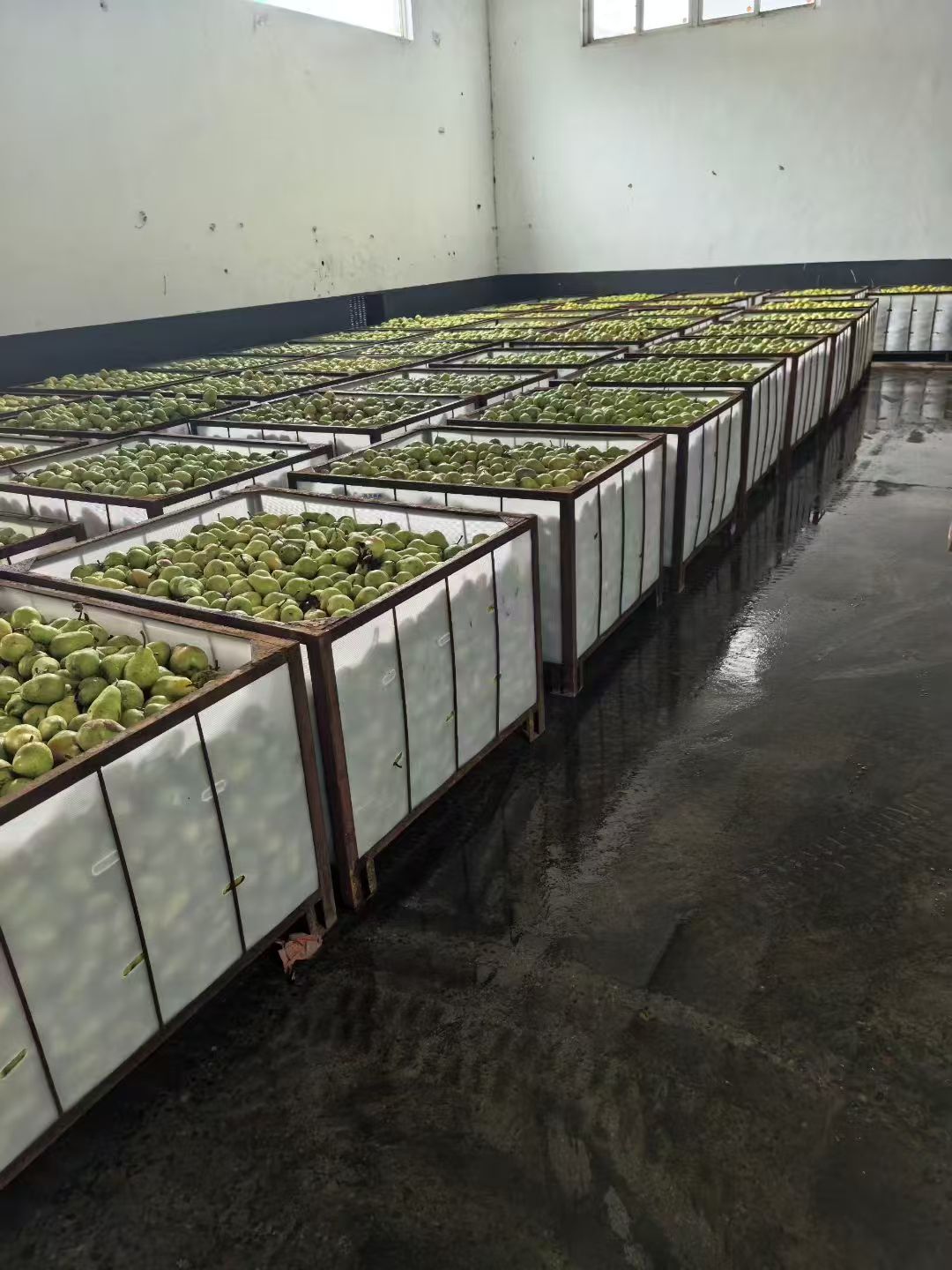
Raw material storage: ambient holding supports long programmes, but release still depends on valid credentials.
Application scenarios in retail, distribution and processing
The same framework behaves differently across the three customer groups this supplier serves, and the difference is instructive for buyers structuring their own checks.
A retail supermarket programme typically concentrates on a short fruit list — canned yellow peach, pear, mandarin oranges and fruit cocktail — and runs for two to three years under an own-brand or private-label agreement. Because the basket is fruit, the ISO 22000:2018 scope and the fruit range of the FDA registration both align with it, and the binding constraints are the BRCGS date and the fruit scope. The renewal question is narrow and trackable.
A wholesale distributor usually carries a wider basket that mixes fruit and vegetables, and it sells into several markets rather than one. Here the ISO scope does not cover the vegetable lines, the HALAL window becomes decisive for Muslim-majority destinations, and the FDA registration carries the US range. This is the profile where a single-certificate approach fails most visibly, because no single document describes the whole order book.
Professional food processing customers buy canned fruit as an input to further manufacture, which puts a premium on documentation continuity: an interruption in the input’s qualification status can disturb a production schedule planned months earlier. Storage conditions reinforce the point. Canned product is held and shipped at ambient temperature, with a shelf life commonly described in the range of 24 to 36 months, and the supplier’s stated practice is long-distance sea freight. Long shelf life makes multi-year planning feasible; it does not make a lapsed certificate any less disruptive, because the certificate governs release, not shelf life.
What current market data adds — and what it does not
Category data supplies the procurement context but never the supplier answer. The global canned fruits and vegetables market was valued at USD 105.35 billion in 2024, according to Market Research Future. China’s total export value of fruit and vegetable canned products reached USD 3.859 billion in 2024, based on China Canned Food Industry Association and China Customs figures. Canned peaches held approximately 36.8% of the canned fruit segment in 2024 on Market.us data, while the global canned mushroom market was valued at USD 11.31 billion in 2023 by Global Market Insights.
The Chinese export figures also contain a contrary signal worth keeping in view: canned vegetable export volume reached 2.058 million tons in 2024, a 2.52% year-on-year decrease according to the China Canned Food Industry Association. Volumes are not rising uniformly across the category, which is an argument for treating supply continuity as the objective and volume growth as an assumption to be tested rather than a premise to plan on.
None of these figures says anything about a specific supplier’s renewal discipline, and none of them shortens a certificate window. Their value is narrower and still useful: in a large, export-oriented category where programmes routinely span multiple seasons, documentation continuity becomes a routine procurement variable rather than an exceptional concern.
Multi-year contracted supply versus spot purchasing
The comparison is not between good and bad practice. It is between two administrative models with different costs, and the fit depends on how stable the buyer’s programme is.
| Dimension | Multi-year contracted supply | Spot purchasing with per-order verification |
|---|---|---|
| Documentation load | A ledger maintained continuously across all credentials in the set | Certificate check repeated for each order, with no standing record |
| Renewal ownership | Buyer and supplier share a schedule, so gaps surface before shipment | Each order stands alone; a lapsed window appears at the next order, not before |
| Scope complexity | Mixed baskets require several credentials mapped to individual SKUs | Scope check limited to the order actually placed |
| Flexibility | Product lines and markets change through a formal review | Basket can change order by order without renegotiation |
| Best fit | Stable programmes with predictable baskets and defined markets | Volatile demand, new market entry, seasonal or trial volumes |
The fit boundary runs both ways. The multi-year model is not universally better, and this framework is a suitability test rather than an argument for longer terms. For a buyer with volatile demand, an unresolved market entry or a basket that changes every season, per-order verification under spot terms may be the lower-risk route, because the administrative overhead of maintaining a five-credential ledger is only justified where volume and programme stability make continuity worth the work. What does not change between the two models is the underlying fact: whichever route is chosen, a lapsed window at the moment of shipment is a release problem.
Outlook: a credential set that moves with regulation
The documents a market requires are not fixed for the life of a contract. The European Union’s Regulation (EU) 2024/3190 restricts the use of Bisphenol A in food contact materials, including can coatings — a change touching packaging specification in a market the supplier already lists. The certification consequence is indirect but real: when market requirements shift, a renewal cycle can coincide with a change in what must be evidenced, so checking a date without checking the scope leaves a gap.
The forward-looking discipline is therefore modest and conditional: keep the ledger’s scope column as live as its date column. If further market-specific requirements arrive during the term, the evaluation can be updated in place rather than rebuilt, and the buyer retains a record of what was verified, when, and against which product range.
Agrogentra’s documented position in this framework
Agrogentra & Co., Ltd. is a Chinese export trading company established in 2000 in Xiamen, Fujian, operating as Agrogentra Canned foods. It has supplied food products to global markets for over 25 years, with approximately 100% of products exported and export business accounting for 100% of total sales. Its stated markets are the USA, Latin America, Europe, Africa, the Middle East and multiple mainstream Asian markets, and its customer groups cover retail supermarkets, wholesale distributors and professional food processing industries.
Operationally, the company reports stable factory resources, standardized production supervision and mature export procedures, with professional operation teams and independent QC departments in both Xiamen and Qingdao. The QC scope it describes covers factory audits, raw material testing, production monitoring, finished product inspection and pre-shipment sampling. Commercial terms recorded for buyers are a mixed-FCL minimum order quantity with LCL available on negotiation, FOB delivery, and T/T payment of 30% deposit with the balance against a copy of the bill of lading; acceptance is based on pre-shipment inspection covering cargo quantity, packaging and appearance. Flexible packaging solutions and customized service are offered across the range.
The fit boundary matters here as much as the capability. These facts describe a trading and quality-control operation; they do not by themselves establish that any specific certificate will remain valid for the life of a contract. Renewal exposure is answered only by the current certificate and its scope statement, which is why the ledger — not the brochure — is the working document for a multi-year award. A downloadable product leaflet gives the fuller range context for buyers building their first basket.
FAQ
How should a buyer schedule certificate checks across a three-year canned fruit contract?
Build a ledger with one row per credential and set review points at 90, 60 and 30 days before each recorded expiry. In this supplier’s set that means reviewing the BRCGS window immediately, since it is recorded to 2 December 2026; placing STAR-K on the renewal list because the recorded date of 31 March 2026 has passed; scheduling HALAL well ahead of 29 November 2027; and re-checking the ISO 22000:2018 scope whenever a vegetable line is added to the basket.
What does the ISO 22000:2018 scope limitation mean in practice?
The certificate is limited to canned fruit production, so it can be relied on for fruit lines and not for vegetables. A buyer sourcing canned mushrooms, asparagus, sweet corn, green peas, green beans, bamboo shoots, cabbage, beet roots, mixed vegetables or mashed potato needs a different route to evidence for those items — here the FDA registration covering the fruit and vegetable range under product ID 7410, read alongside the site certification.
Does the FDA Food Facility Registration cover vegetables as well as fruit?
Yes. The registration covers the canned fruit and vegetable range under product ID 7410, which is wider on product scope than the ISO 22000:2018 certificate. It remains a facility registration tied to a product range rather than a product-quality certification, so it is read beside the site’s food safety certification rather than instead of it, and its maintenance should be confirmed at each contract review.
Why is one valid certificate not enough for a long-term contract?
Because a contract term is longer than most certificate windows. BRCGS, recorded to 2 December 2026, and STAR-K, recorded to 31 March 2026, both fall inside a three-year term, and only HALAL, valid to 29 November 2027, extends materially further. A single copy proves a point in time; continuity requires each window to be refreshed, with scope confirmed, before it closes.
What should a procurement team do if a certificate lapses during an active contract?
Request the renewed certificate and its scope statement before the next shipment that depends on it is released, confirm that the scope still covers the specific products and markets concerned, record the evidence date in the ledger, and treat affected SKUs as unverified for that market until the replacement arrives. Where renewal is still in progress, the gap should be documented rather than assumed away.
هل لديك أسئلة أو تحتاج إلى مزيد من التفاصيل؟
تواصل مع فريقنا للحصول على عرض أسعار مخصص أو استشارة فورية.
طلب عرض أسعار
املأ النموذج أدناه وسيتواصل معك فريقنا بعرض مقترح مخصص.
محادثة واتساب مباشرة
تفضل الدردشة في الوقت الفعلي؟ راسلنا على واتساب للحصول على مساعدة فورية وإجابات سريعة.
- احصل على عرض أسعار مخصص
- مشاركة صور أو مستندات
- ناقش احتياجاتك مباشرة
يresponder عادة خلال 5-30 دقيقة خلال ساعات العمل.