
Canned Fruits & Vegetables: Verifying FDA and BRCGS Evidence
Canned Fruits & Vegetables: Verifying FDA and BRCGS Evidence
Turning supplier capability claims into identifiers, scopes and validity dates
Canned fruits and vegetables are one of the few food categories in which a purchase decision can still be audited years after it is made.
The global market for canned fruits and vegetables reached USD 105.35 billion in 2024, according to Market Research Future, while China's export value of fruit and vegetable canned products was US$3.859 billion in the same year, based on China Canned Food Industry Association and China Customs data. Where supply is this broad and this fragmented, suppliers rarely compete on product lists. They compete on what they can document.
This reference is written for importers, wholesale distributors and private-label buyers at the research and evaluation stage of a canned fruit or canned vegetable program. Its purpose is deliberately narrow: to show how a supplier's capability claims become verifiable when they are read as a document set — a facility registration number, a processing certificate with a declared process scope, and a cross-check layer covering management systems and dietary conformity. Each element answers a different question, and each can be checked before a first purchase order is signed.
Agrogentra & Co., Ltd. (Xiamen), established in 2000 and based in Xiamen, China, is an international trading company that sources, quality-controls and supplies canned food, fresh fruits and vegetables and frozen food to global markets, with quality-control teams operating from both its Xiamen and Qingdao offices. Its documentation is used below as a worked example, because the reading method is transferable to any supplier in this category.
Why Capability Claims Need Identifiers, Not Adjectives
Almost every canned fruit and vegetable supplier can state that it is “FDA registered”, “BRC certified” or “HALAL approved”. Those statements are not evidence; they are categories of evidence. The distinction becomes concrete at the point where a buyer must approve a first shipment, or later defend that supplier choice to a retail customer, an insurer or an importing authority.
A claim is checkable when it carries three components at once: a unique identifier, a defined scope, and a validity period. Remove any one of them and verification stops. A registration number without a product scope cannot tell an importer whether the item being purchased — canned lychee rather than canned mushrooms, for instance — sits inside the audited boundary. A certificate without issue and expiry dates cannot be confirmed at the moment of the transaction rather than at the moment of the enquiry.
For canned fruits and vegetables, three questions need separate answers:
- Facility question. Is the site that will produce and pack the goods registered or recognised for the destination market, and can that registration be matched to the exporter on the commercial invoice?
- Process question. Is the physical production capability — the actual equipment and process steps — inside an audited scope, and does that scope cover the steps that decide product safety?
- System and product question. Do the management-system and dietary certifications cover the specific stock-keeping units and the specific destination markets involved?
Each question is answered by a different document, and mixing them together is the most common source of over-confidence in supplier screening.
Layer One: FDA Food Facility Registration 18082639404 and U.S. Market Coverage
For suppliers shipping into the United States, the facility-level identifier is the FDA Food Facility Registration number. Facilities that manufacture, process, pack or hold food for consumption in the United States are required to register with the U.S. Food and Drug Administration and to designate a U.S. Agent who acts as the point of contact with the agency. The registration number associated with this canned fruit and canned vegetable supply is 18082639404, and it is the number that should be matched against the registered facility name and address rather than simply quoted on a specification sheet.
The U.S. Agent record is the second half of the same check. Because the U.S. Agent is the entity that receives FDA communications on behalf of the facility, its identity and contact details form part of the registration information. The practical verification for an importer is therefore uncomplicated: ask the supplier to confirm the registered facility name and address, the registration number 18082639404, and the current U.S. Agent on record; then confirm that the producing site named on the export documentation is the same site that holds the registration. If the answers point to different entities, the claim is a trading-level statement rather than a facility-level one, and should be treated accordingly.
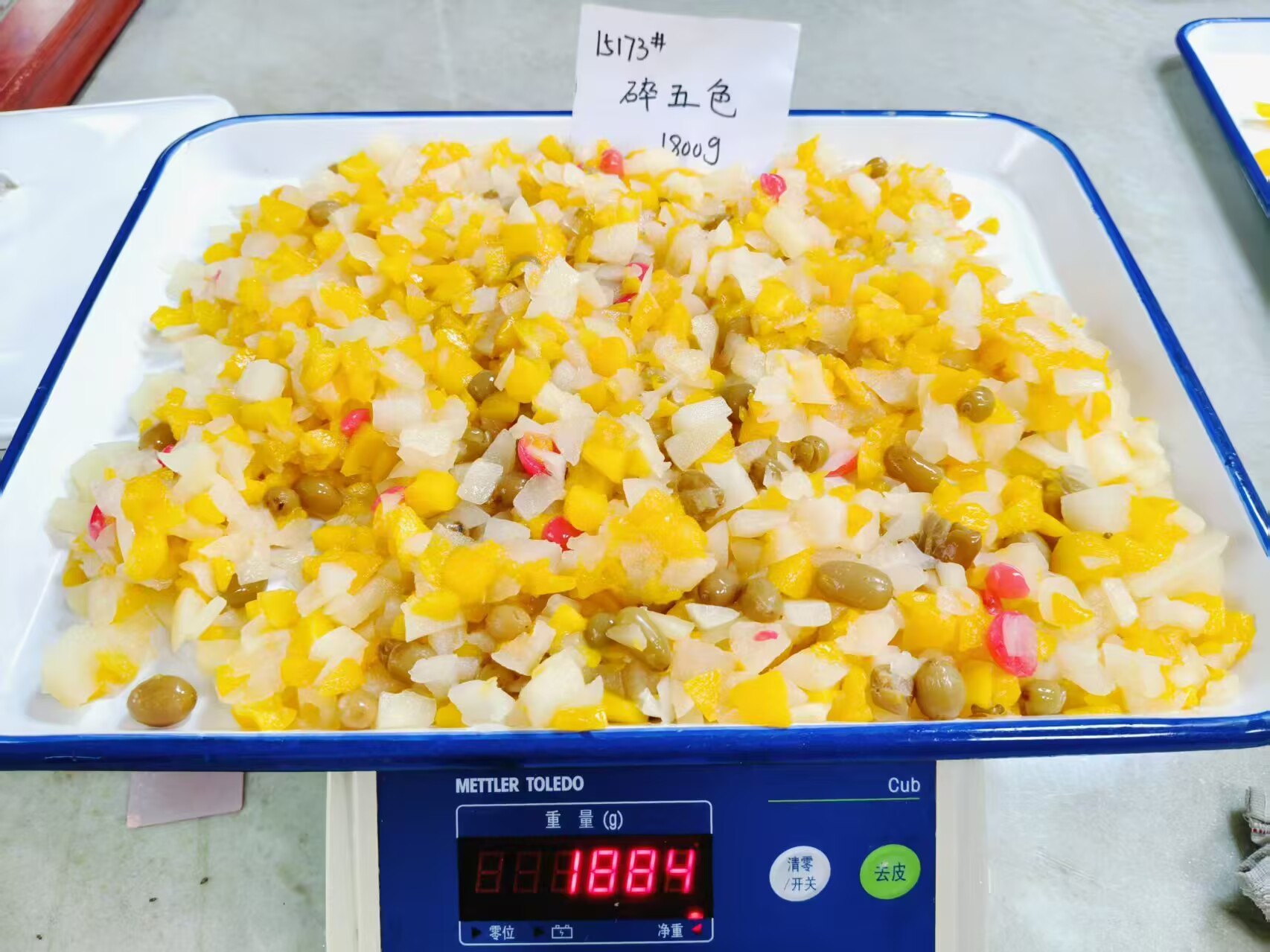
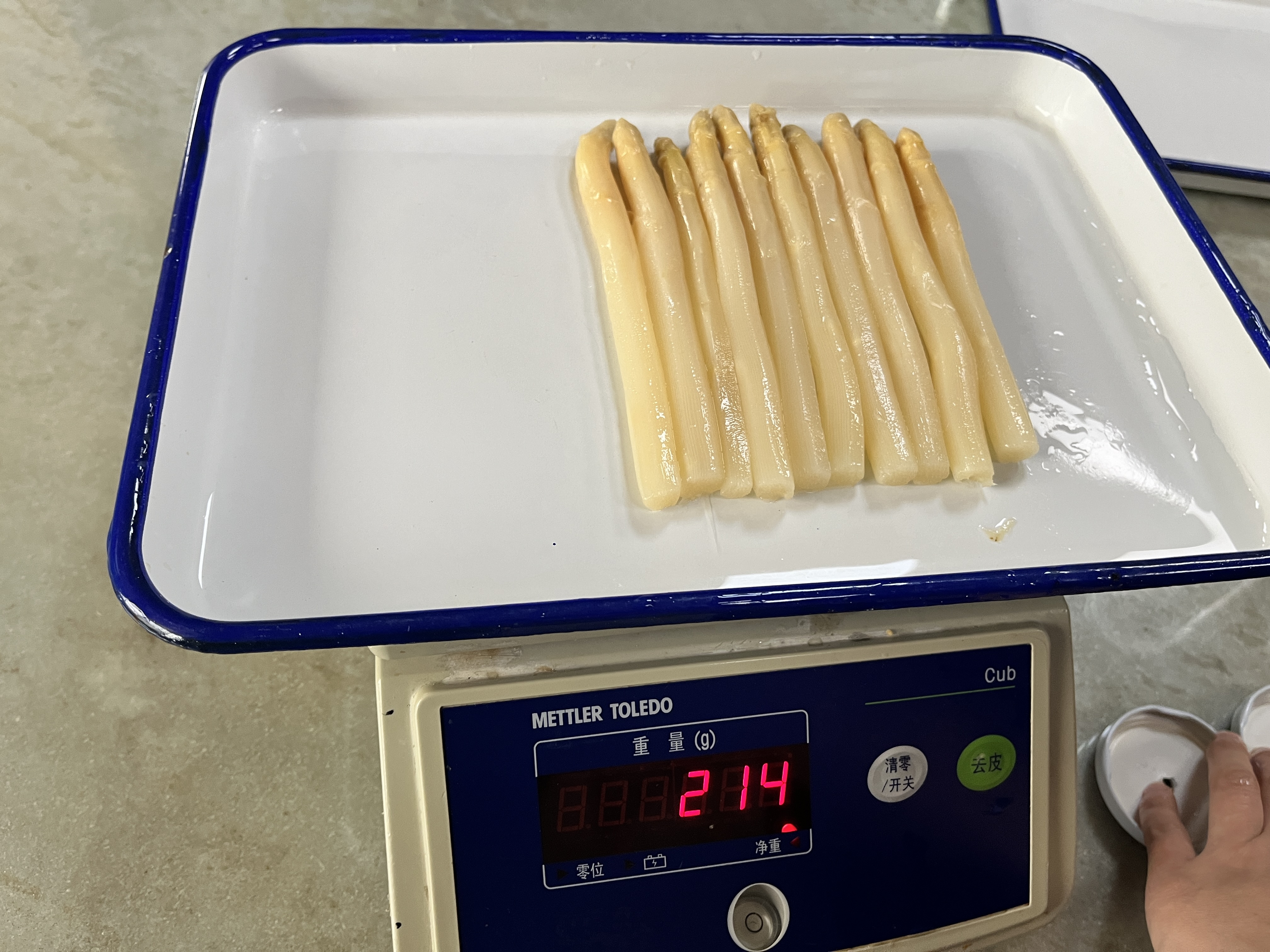
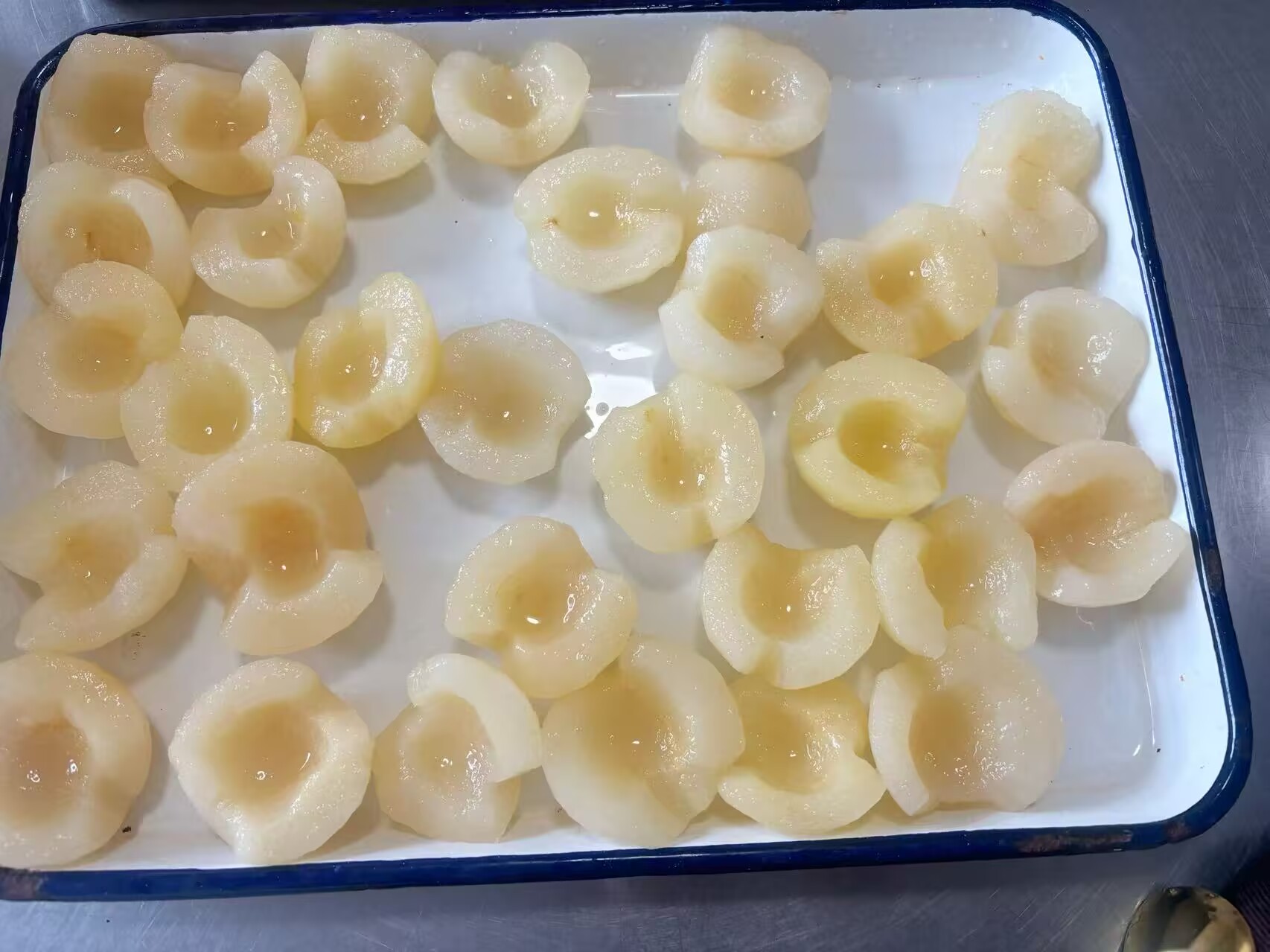
Product ID 7410 defines what sits underneath that facility registration for this canned range. The scope of product ID 7410 covers canned mandarin oranges, canned pineapple, canned yellow peach, canned pear, canned fruit jelly, canned fruit cocktail, canned cherries, canned applesauce, fruit cups, canned lychee, canned mushrooms, canned asparagus, canned sweet corn and canned green peas. Pack formats within the same scope include 425 g and 2950 g net weights, with A9 and A10 whole-segment styles and a light-syrup packing medium, a shelf life of 36 months under normal temperature, and full sterilization with no preservatives.
Naming that scope explicitly converts a vague assurance into a checkable sentence: this facility, under this registration number, is used to supply these named items in these pack formats for this market. Broader portfolios do exist alongside it — the company's wider product range also includes items such as canned bamboo shoots, canned beet roots, canned green beans, canned mixed vegetables and canned mashed potato flakes or powder — but a wider portfolio is not the same as a wider verified scope, and the two should never be presented as interchangeable.
Layer Two: What BRCGS Certificate 05LA1209004 Actually Documents
Where the FDA registration answers the facility question, BRCGS certification answers the process question — and the value of the certificate lies entirely in its scope statement, not in its existence. Certificate 05LA1209004, issued through Intertek against Issue 9 of the BRCGS standard, documents the physical process capability of the site. Its declared process scope covers washing, peeling, pre-cooking, filling, seaming, pasteurization, ingredient weighing, mixing, blending and cooking.
Read as a sequence rather than a list, those steps describe the entire production chain of a canned fruit or canned vegetable line. Washing and peeling address raw-material preparation. Pre-cooking addresses pre-treatment before filling. Ingredient weighing, mixing, blending and cooking address recipe control and product consistency. Filling and seaming address container formation and closure. Pasteurization addresses microbial stabilisation. A certificate whose scope is written this way tells a technical buyer something specific: the site's equipment and procedures for these steps were assessed within one audited boundary.
Two verification details matter as much as the number itself. The first is the issue date and the expiry date, which together define the window in which the certificate is valid. These dates must be checked against the planned delivery date, not against the date of the initial enquiry, because a certificate that was valid during sampling may not be valid at the time of shipment. The second is the issuing body: an Intertek-issued certificate under Issue 9 belongs to a defined certification cycle, which means current status can be confirmed with the certification body instead of being taken on the strength of a shared PDF.
Why the process list predicts finished-product behaviour
The preservation principle of canned food rests on two elements working together: hermetic sealing and commercial sterility. Food is filled into a tinplate can or glass jar and closed by a seaming machine, forming a vacuum inside the container — typically in the range of 300–500 mmHg — so that residual oxygen and aerobic activity are suppressed. The sealed can is then sterilised in a retort, commonly at 115–121 °C under roughly 0.1–0.2 MPa of high-pressure steam, to achieve commercial sterility: the destruction of pathogenic bacteria and of microorganisms capable of growing at ambient temperature, including spores such as those of Clostridium botulinum. After sterilisation the cans are rapidly cooled and held in an incubation test, typically at 37 °C for 7 to 10 days, to confirm that no swelling or microbial growth occurs before release.
Because no preservatives are used, sterilisation parameters have to be set according to the raw material itself. Low-acid products with a pH above 4.6 — which includes most canned vegetables and many canned fruits — require pressurised sterilisation at 121 °C, while high-acid products can be processed at lower temperatures. Sterilisation curves and cold-point temperature directly determine product safety, and improper seaming or insufficient sterilisation is what produces swollen cans and spoilage later in the chain.
This is precisely why a process-scope certificate carries more predictive value than a product photograph. A site audited for washing, peeling, pre-cooking, filling, seaming, pasteurization, ingredient weighing, mixing, blending and cooking is a site whose equipment and procedures for those exact steps have been reviewed. The finished-product parameters follow from that: product 7410 is supplied with a 36-month shelf life at ambient temperature, fully sterilised and free of preservatives, in 425 g and 2950 g net weights with A9 and A10 whole-segment styles. None of those parameters hold if seaming and pasteurization are not consistently controlled.
Layer Three: Cross-Checking ISO 22000:2018, HALAL and Kosher
No single certificate covers every buyer requirement, which is why a cross-check layer is used to confirm that the management system, the dietary conformity and the process scope all point at the same site and the same product family.
| Document | Reference number | What it addresses | What the buyer should confirm |
|---|---|---|---|
| FDA Food Facility Registration | 18082639404 | Facility-level registration for the U.S. market | Registered facility name and address; current U.S. Agent; match with the exporter on the invoice |
| BRCGS (Intertek, Issue 9) | 05LA1209004 | Site process and product safety scope | Declared process list; product scope; issue and expiry dates; current status with Intertek |
| ISO 22000:2018 | CNO0124F21626R5M/3200 | Food safety management system | Validity; certified scope; whether it refers to the same site as the BRCGS certificate |
| HALAL | 1031240000 | Halal conformity for Muslim-majority markets | Validity; product scope; whether the specific item is listed |
| STAR-K Kosher | RIB1RR1Q | Kosher certification | Validity; certification type; product scope |
Two rules of thumb follow from that table. First, certificate numbers should be quoted and checked as complete strings: CNO0124F21626R5M/3200, 1031240000 and RIB1RR1Q are specific references and are not interchangeable with a generic statement such as “ISO certified” or “Kosher certified”. Second, the scope column matters more than the certificate column — a valid certificate that does not list the item being purchased does not reduce the buyer's exposure.
Certification is also not the only evidence layer available. Batch-level documentation complements it: incoming raw-material inspection, on-line production patrol, laboratory physical, chemical and microbiological testing for each batch with a COA report, and batch sample retention, with third-party inspection by SGS or Intertek accepted where a buyer requires it. Commercial export documentation typically includes the COA, health certificate, pre-shipment inspection report and traceability report, with factory certification copies made available for buyer audits.
Matching Certificate Scope to Real Application Scenarios
Evidence only has value when it maps onto the channel where the product will actually be sold. Product 7410 supplies long-shelf-life, ready-to-eat canned food for market sales, used in the food import industry and suited to grocery retail import projects as well as grocery wholesale and supermarket retail. Applications are common across global markets covering food import, grocery wholesale, supermarket retail and catering channels. Because the goods move under long-distance sea transportation conditions and are stored at ambient temperature, the application-level requirement is straightforward: compliance with the destination market's food import standard.
One long-running case shows the same scope being used by industrial buyers rather than retail shelf buyers. Since 2005, a supply relationship has continued with European and Greek fruit processors — including Del Monte, Kronos and Venus — for the re-packing of canned fruit cocktails, covering Pear Dices and Seedless Grapes supplied in 4.25 kg A12 cans. Re-packing customers buy against different criteria than supermarket importers: consistent drained weight and cut size are needed so the product can be blended into a downstream recipe, which places additional weight on the seaming and pasteurization steps named in the BRCGS scope.
At distribution level, the corresponding profile is mixed FCL and LCL shipments serving supermarket retail, convenience store sales, catering supply and food processing. The reported outcomes for that profile are stable food supply and low inventory loss, supported by ambient storage, long shelf life and the availability of Kosher and HALAL certification. Where a scenario involves canned fish items such as product 7407, the availability of HALAL certification is an explicit special requirement of the application rather than an optional extra.
Market Signals Raising the Documentation Bar
Regulatory pressure is moving in one direction for this category: more documentation, earlier. The European Union implemented Regulation (EU) 2024/3190 restricting the use of Bisphenol A in food contact materials, including can coatings. For canned fruits and vegetables, that places coating composition and packaging declarations inside the same review as the food itself, and it converts a packaging question into a supplier-evidence question.
Category structure adds context. Canned peaches held approximately 36.8% of the canned fruit segment in 2024, according to Market.us, and the global canned mushroom market was valued at USD 11.31 billion in 2023, based on Global Market Insights data. On the supply side, China's export volume of canned vegetables reached 2.058 million tons in 2024, a 2.52% year-on-year decrease according to China Canned Food Industry Association figures. Falling volume does not mean weaker capability; it does mean that fewer, larger orders are being placed — and that buyers have more reason to check scope before committing containers rather than after arrival.
Where This Approach Stops: Limits and Trade-offs
A verification-led approach is useful precisely because it is bounded, and being explicit about those boundaries makes it more reliable rather than less.
- Registration and certificates define boundaries, not shipments. The FDA Food Facility Registration number 18082639404 and BRCGS certificate 05LA1209004 evidence facility-level and process-level conformity. Neither certifies an individual container. Batch-level COA, sample retention and pre-shipment inspection remain the shipment-level controls.
- Scope boundaries are literal. Product ID 7410 as described covers the named canned fruit and canned vegetable items and pack formats of 425 g and 2950 g, A9 and A10 styles. Items or pack sizes outside that list require separate confirmation of certificate coverage before they can be treated as verified.
- Certificates expire. Every reference cited here — 05LA1209004, CNO0124F21626R5M/3200, 1031240000, RIB1RR1Q — has to be checked for validity at the time of the transaction, and re-checked at each renewal cycle.
- Commercial parameters still apply. OEM production, logo customisation, a minimum order quantity of 1 FCL, a lead time of 4–6 weeks and a monthly capacity of 3,500 units shape what a buyer can realistically trial. Verification does not remove minimum order quantities.
Traditional supplier screening in this category tends to rely on a brochure, a product list and a single certificate PDF shared at quotation stage. That approach answers the question “is this supplier active in canned food?” but not “which facility, which processes and which items are covered?” A scope-mapped approach costs more time up front — reading process lists, matching registration numbers to facilities, checking expiry dates and holding certificate copies on file for later reference. The trade-off is that it produces a defensible audit trail, which matters most in markets where import documentation is inspected after arrival rather than before shipment.
What Changes Next in Canned Fruit and Vegetable Sourcing
Three shifts appear likely to shape how this category is assessed over the next buying cycles.
First, packaging regulation will keep expanding the definition of supplier evidence. Restrictions such as Regulation (EU) 2024/3190 move food-contact materials from a technical annex into the main commercial conversation, and suppliers who can declare coating and packaging composition without a separate request will face fewer clarification cycles.
Second, process evidence is likely to be asked for earlier. Buyers who currently collect certificates after a supplier is shortlisted may begin treating the process scope as a shortlisting criterion, since a scope statement distinguishes a site that performs seaming and pasteurization from a trader that only resells finished goods.
Third, ambient logistics advantages will continue to matter in markets where cold chain is expensive or unreliable. Long shelf life, no refrigeration requirement and mixed-container flexibility are commercial advantages — but they are only defensible when the underlying seaming and sterilisation controls are documented, which brings the discussion back to identifiers, scopes and validity dates.
Frequently Asked Questions
What does FDA Food Facility Registration number 18082639404 confirm for a canned fruit and vegetable buyer?
It confirms that the facility is registered with the U.S. Food and Drug Administration for food supply into the United States and that a U.S. Agent has been designated as the point of contact with the agency. It does not certify any individual product or shipment. In practice a buyer should confirm the registered facility name and address, the registration number itself, and the current U.S. Agent on record, then check that the producing site named on the export documentation is the same entity that holds the registration.
Which production processes does BRCGS certificate 05LA1209004 cover?
The certificate, issued through Intertek against Issue 9 of the BRCGS standard, covers a declared process scope of washing, peeling, pre-cooking, filling, seaming, pasteurization, ingredient weighing, mixing, blending and cooking. These steps map onto raw-material preparation, pre-treatment, recipe control, container closure and microbial stabilisation. Buyers should also record the issue and expiry dates, since the certificate's validity depends on them, and can confirm current status with the issuing certification body.
Why does product ID 7410 matter when reviewing certificates?
Product ID 7410 defines the product boundary that sits under the facility registration. Its scope covers canned mandarin oranges, canned pineapple, canned yellow peach, canned pear, canned fruit jelly, canned fruit cocktail, canned cherries, canned applesauce, fruit cups, canned lychee, canned mushrooms, canned asparagus, canned sweet corn and canned green peas, in 425 g and 2950 g net weights with A9 and A10 whole-segment styles and a light-syrup medium. Items or pack sizes outside that list are outside the described scope and need separate confirmation.
How should an importer verify ISO 22000:2018 certificate CNO0124F21626R5M/3200, HALAL 1031240000 and STAR-K Kosher RIB1RR1Q?
Each should be checked as a complete reference string rather than as a general certification claim, and each should be checked for validity dates and for the scope it names. The additional check is consistency: the ISO 22000:2018, HALAL and Kosher references should point to the same production site and the same product family as the BRCGS certificate and the FDA registration. Where possible, current status should be confirmed with the issuing certification body rather than taken solely from a certificate copy.
What batch-level documents should accompany a canned fruit or vegetable shipment?
Typical batch-level documentation includes a Certificate of Analysis produced from laboratory physical, chemical and microbiological testing of each batch, supported by batch sample retention. A full export document set normally comprises the COA, a health certificate, a pre-shipment inspection report and a traceability report, with third-party inspection by bodies such as SGS or Intertek accepted where a buyer requires an independent check.
What shelf life and storage conditions should buyers expect for these canned products?
Product 7410 is supplied with a 36-month shelf life under normal temperature, fully sterilised and without preservatives; unopened cans do not require refrigeration. Recommended storage is a cool, dry place at 5–25 °C with relative humidity below 75%, away from direct sunlight, stacked off the floor and rotated on a first-in, first-out basis. Once a can is opened, any remaining product should be refrigerated and consumed within 24–48 hours. Cans with domed or bulged ends indicate a failed seal and should be quarantined rather than consumed.
Reference material: a downloadable product and capability leaflet for the canned fruit and vegetable range is available at Agrogentra leaflet (PDF). Certificate copies for buyer audit can be requested directly from the supplier.