
Canned Mackerel Sourcing: Certification and Specs for Buyers
Canned Mackerel Sourcing: Certification and Specs for Buyers
Canned mackerel has become a documentation-driven purchase. In most importing markets, the factors that decide whether a container clears customs and stays listed on shelf are not brand imagery but three verifiable items: the certificate behind the can, the specification printed on the label, and whether a supplier can hold both consistent across repeat shipments.
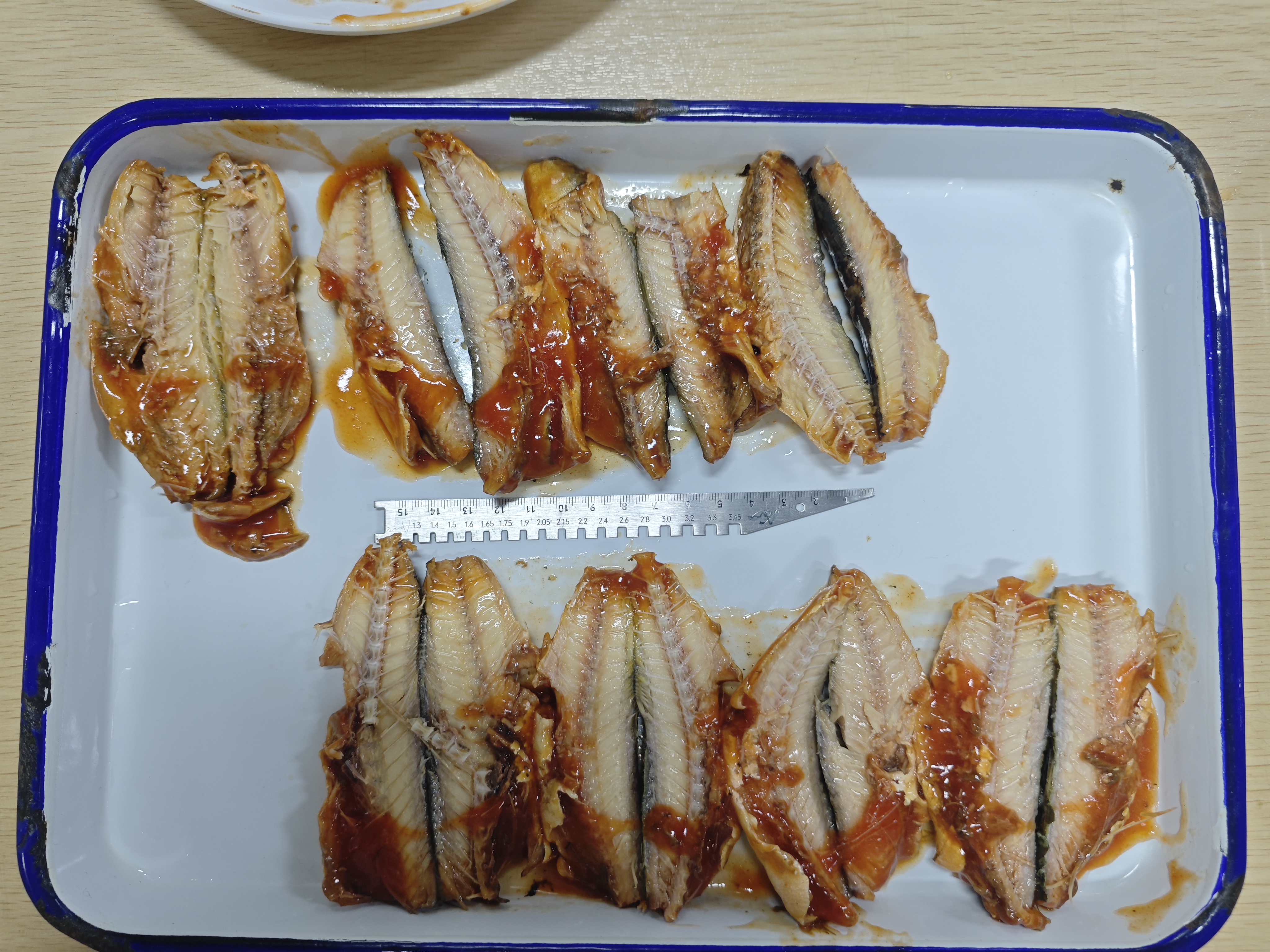
Canned mackerel in tomato sauce: packing medium, can format and net weight are specification choices that buyers must fix before a purchase order is placed.
That shift is measurable in trade. Global imports of canned and prepared fish under HS 1604 reached 3.2 million tonnes, worth USD 17.54 billion, in 2023, according to UN Comtrade data compiled with FAO. Canned tuna accounts for 43% of that import volume, with the balance distributed across sardine, mackerel and other small pelagic species. Within the wider canned seafood category — valued at USD 57.69 billion in 2025 by Fortune Business Insights — canned fish represents 75.3% of the market, per Grand View Research.
For importers, wholesalers and private-label owners in the Research and Evaluation stage, the practical question is narrower than "who sells canned mackerel." It is which supplier's certification, specification and risk controls will still be valid when the goods arrive, and again six months later on the re-order.
Why canned mackerel is a constraints-first category
Mackerel is a low-cost, high-volume pelagic species, and the canned format makes it logistically simple: ambient storage, no cold chain, and a shelf life long enough to survive slow-moving retail channels. That simplicity is precisely why the category attracts regulatory attention. Because liability is concentrated inside a sealed container that may sit for years, importing markets regulate the processor and the process rather than individual shipments.
Buyers who screen suppliers on price alone tend to discover the constraints later, usually at the port. The table below maps the constraint layers that determine whether a canned mackerel programme is workable.
| Constraint layer | What is actually being verified | Evidence a buyer should request |
|---|---|---|
| Food safety system | That the processing site operates a recognised food safety management system, and that the certificate scope includes canned mackerel | Certificate number, certifying body, standard and issue, scope statement, validity window |
| Religious market access | That HALAL status is recognised by the destination authority, not simply claimed | HALAL certificate number, certifying body, applicable standard (Indonesia Halal Law Regulations; MS1500:2019) |
| Regulatory registration | That the processor is registered and its scheduled processes are filed where required | FDA Food Canning Establishment (FCE) registration and Scheduled Processes (SID) filing; EU import traceability compliance |
| Batch traceability | That a single defective batch can be isolated without recalling a full season's production | Certificate of Analysis per batch, traceability report, retained samples |
| Specification control | That net weight, packing medium and can format match the label and the purchase contract | Specification sheet, pre-shipment inspection report, label artwork approval |
The opportunity side of the same picture is straightforward. Canned mackerel is a repeat-purchase line with predictable freight economics, and demand is not concentrated in a single region: it appears on retail shelves, in discounters, in convenience stores and in foodservice menus across Europe, North America, Latin America, Africa and parts of Asia. The constraint, not the demand, is what separates suppliers.
How Agrogentra is positioned against those constraints
Agrogentra & Co., Ltd. (Xiamen Agrogentra) is a Chinese food trading and export company established in 2000, headquartered in Xiamen, Fujian Province, with a 100% export orientation and customer groups covering retail supermarkets, wholesale distributors and food processing industries across the United States, Europe, Latin America, Africa, the Middle East and mainstream Asian markets. Its canned fish range includes canned mackerel, sardines, tuna, Alaska pollock, squid and baby clam, alongside canned vegetables, tomato products and canned fruit.
Two certification facts are directly relevant to canned mackerel buyers, and both are verifiable by certificate number.
BRCGS Global Standard for Food Safety — Certificate No. 051A1312001
Issued by Intertek Certification Ltd (UKAS Accredited Body No. 014) against BRCGS Global Standard for Food Safety, Issue 9 (August 2022). The certificate scope covers the manufacturing of canned mackerel, sardine and canned tuna, and is valid from 27 January 2026 to 13 February 2027. It is a GFSI-recognised food safety management system certification applicable to the global market.
HALAL — Certificate No. 8998250000
Issued through SHC (Shandong Halal Certification Service Co., Ltd.), valid from 1 July 2025 to 30 June 2028. The scope covers canned mackerel in tomato sauce, canned mackerel in oil, canned mackerel in brine, together with canned sardines in tomato sauce, oil and brine. It complies with Indonesia Halal Law Regulations and is recognised by BPJPH, and conforms to MS1500:2019 for Malaysia.
The second half of the constraint map is operational rather than documentary. Agrogentra maintains professional operation teams and independent QC departments in both its Xiamen and Qingdao offices. The QC function runs full-process inspection: factory audits, incoming raw-material testing, on-line production patrol, laboratory physical, chemical and microbiological testing for each batch with a COA report, and batch sample retention. Third-party inspection by SGS or Intertek is acceptable to the company, which matters to buyers who prefer an independent set of eyes on the loading port rather than relying solely on supplier documentation.
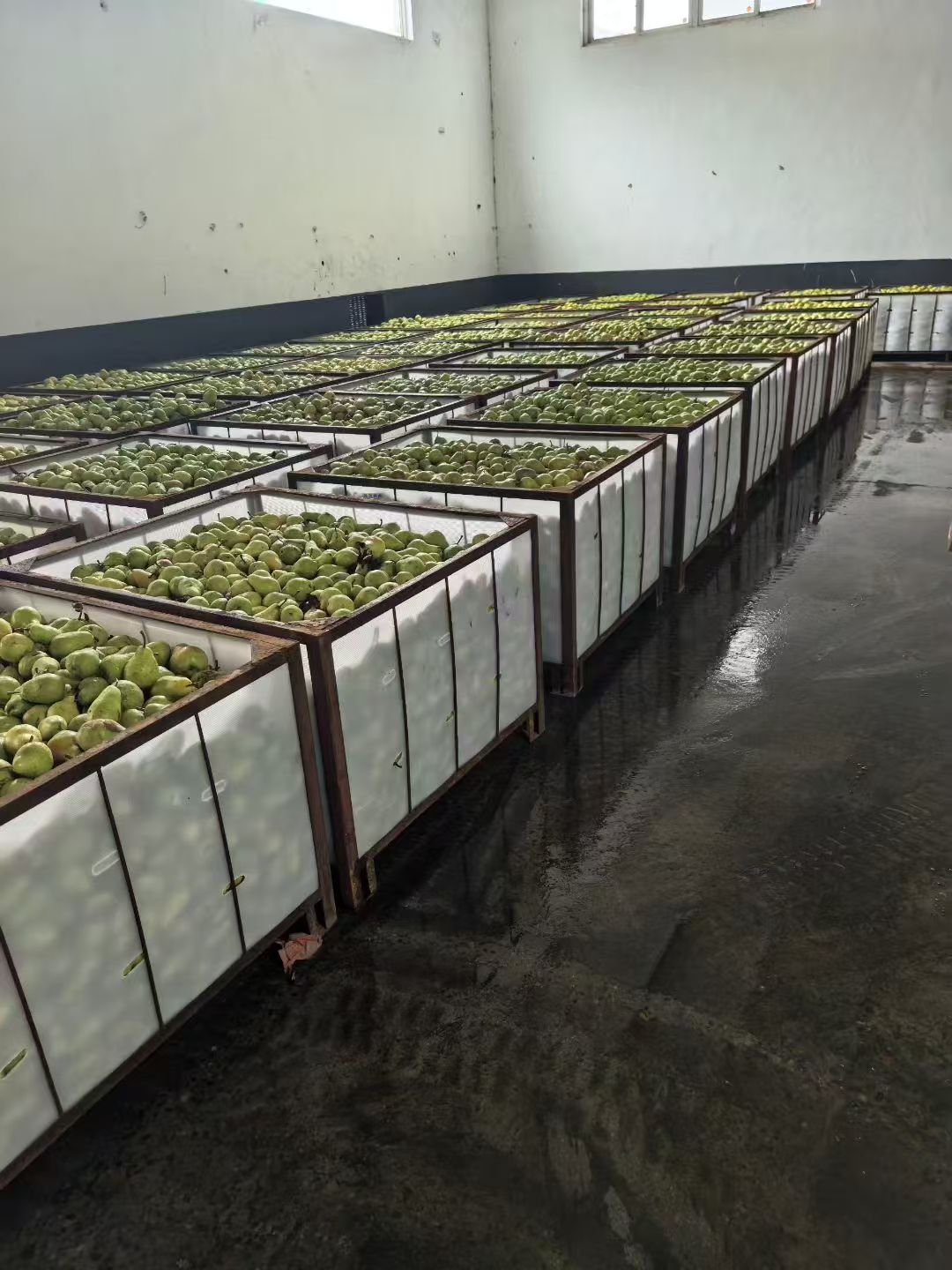
Ambient handling at origin: because canned mackerel needs no cold chain, quality risk shifts from temperature control in transit to can integrity, storage humidity and stacking practice.
Commercially, the terms that determine whether a canned mackerel programme is scalable are published rather than negotiated from zero. Agrogentra supports OEM production with logo customisation, custom sizes and private label. The minimum order quantity is one full container load (1 FCL), lead time runs 4–6 weeks, and the stated monthly capacity is 3,500 units. The export document set includes a COA, health certificate, pre-shipment inspection report, traceability report, and OEM formula and label design support; samples are provided at the customer's courier cost, and factory certification copies can be supplied for buyer audits.
Technical explanation: why a can holds for 36 months without preservatives
Canned mackerel is a low-acid food, which makes its preservation logic stricter than that of high-acid products such as tomato-based items. Preservation rests on two mechanisms working together: hermetic sealing and commercial sterility.
- Sealing. The product is filled into a tinplate can and closed by a seaming machine, creating a vacuum inside the can of typically 300–500 mmHg. With almost no oxygen remaining, aerobic bacteria and oxidation are suppressed.
- High-temperature, high-pressure sterilisation. Sealed cans enter a retort and are heated at 115–121°C under roughly 0.1–0.2 MPa of high-pressure steam to reach commercial sterility — the destruction of pathogenic bacteria and of microorganisms capable of growing at ambient temperature, including spores such as Clostridium botulinum.
- Cooling and incubation testing. After sterilisation the cans are rapidly cooled and held at 37°C for 7–10 days in an incubation test to confirm no swelling or microbial growth before release.
Two parameters decide whether that process is safe in practice. The first is the sterilisation curve and the cold-point temperature (F0 value). Because no preservatives are used, sterilisation parameters must be set according to raw-material characteristics such as pH and solid content: low-acid foods with pH above 4.6 — which includes most fish products — must be sterilised at 121°C under pressure, while high-acid products with pH below 4.6 can be processed at lower temperatures. The second is seam integrity. Improper seaming or insufficient sterilisation is a direct cause of can swelling and spoilage.
Can construction also carries specification weight. Three-piece cans are assembled from body, bottom and lid by welding and seaming, giving the side-seam strength needed to withstand 121°C pressurised sterilisation — which is why canned fish and meat normally use them. Two-piece cans are drawn in one piece with no side seam, offering better sealing and a smoother appearance but a thinner wall, and are better suited to products with lower pressure requirements. Easy-open ends, scored with a tear line and a riveted pull tab, remove the need for a can opener and are widely used for catering and ready-to-eat retail formats.
For buyers, this translates into three specification fields that should never be left to the supplier's discretion: net weight (in the case of this range, 125g, 170g (843#), 425g and 1000g), packing medium (vegetable oil, tomato sauce or brine), and can format including end type. Shelf life is 36 months at ambient temperature for a fully sterilised, ready-to-eat product.
Application and use cases
Canned mackerel is supplied into food import, grocery wholesale, supermarket retail and catering channels. The working conditions are the defining feature: long-distance sea transportation and ambient-temperature storage, with no cold chain required at any point before opening. At the point of use, the product is consumed directly after opening or optionally heated, requiring nothing more than a can opener and a serving container.
A typical programme looks like this in practice. Food importers, grocery wholesalers and supermarket distributors receive mixed FCL and LCL shipments for supermarket retail, convenience store sales, catering supply and food processing applications. The reported outcome is a stable food supply with low inventory loss — a direct consequence of ambient storage and a shelf life of up to 36 months, which allows slow-moving SKUs to stay on the books without write-offs. HALAL certification is available for this product line, which is the precondition for listing in Muslim-majority markets.
Storage discipline is the other half of the use case, and it is where buyers most often lose margin. Canned mackerel should be held in a cool, dry place between 5°C and 25°C, away from direct sunlight and heat sources, with relative humidity kept below 75%. Stock should be palletised at least 10 cm off the floor and away from walls to allow ventilation, stacked heavy cartons at the bottom and light on top, and rotated on a first-in, first-out basis by production date and batch. Weekly inspection for rust, swelling or leakage turns a potential recall into a routine stock check. Once a can is opened, any uneaten portion should be refrigerated and consumed within 24–48 hours.
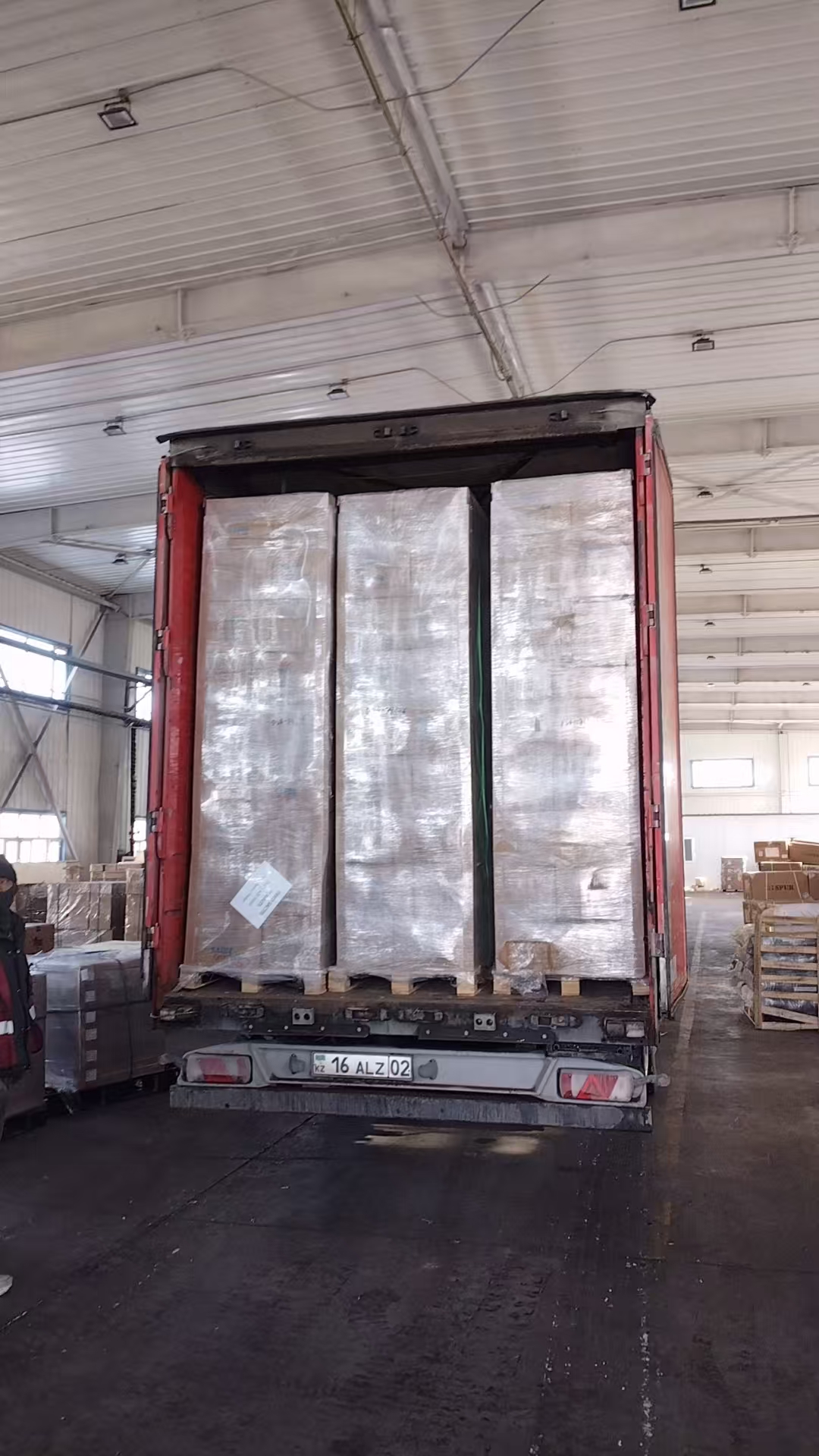
Long-distance sea shipment is the default channel for canned mackerel; stacking limits and stowage practice directly affect can integrity on arrival.
Market trend analysis: documentation is becoming the moat
Published market estimates for canned seafood diverge significantly, and buyers should read them with that in mind. Fortune Business Insights values the global canned seafood market at USD 57.69 billion in 2025, while Grand View Research publishes a materially lower figure — a gap that reflects different boundary definitions between "canned" and "processed and packaged" seafood rather than a disagreement about growth direction. What the datasets agree on is structure: canned fish dominates the category at 75.3%, and canning remains the dominant trade format for small pelagics.
The regulatory trend is more decisive than the market-sizing trend. Two frameworks now sit directly in the path of a canned mackerel shipment:
- United States. FDA requires all foreign canned food processors to register under the Food Canning Establishment (FCE) system and to file Scheduled Processes (SID) for low-acid canned foods. This is a processor-level obligation, which means buyers cannot substitute their own compliance work for the supplier's.
- European Union. Regulation (EU) 2024/3115, effective January 2025, mandates stricter plant health and traceability requirements for imported preserved foods. Documentation depth, not price, is the variable it acts on.
Two secondary signals are worth noting for planning purposes. First, trade and market statistics do not yet isolate newer ambient packaging formats such as cup-format preserved foods, so buyers evaluating those formats must rely on product-level evidence rather than category data — a genuine information gap in the category. Second, demand for niche preserved vegetables is similarly aggregated under broader tariff headings, which makes bottom-up volume estimation from trade data unreliable for narrow SKUs.
Comparison with traditional solutions: where canning fits, and where it does not
The relevant comparison for most importers is not canned mackerel versus another brand of canned mackerel, but canned mackerel versus frozen mackerel. The two formats target different sales scenarios and different balance sheets.
| Dimension | Canned mackerel | Frozen mackerel |
|---|---|---|
| Shelf life | Up to 36 months at ambient temperature | Normally 6–18 months |
| Cold chain | Not required; ambient storage and transport | Continuous cold-chain transport and cold storage required |
| Cost structure | Lower storage and transport add-on cost | Higher cold-chain freight and electricity expense |
| Eating quality | Undergoes high-temperature sterilisation, so texture and flavour differ from fresh | Closer to the raw fresh flavour profile |
| Best-fit channel | Supermarkets, convenience stores, catering, remote-area distribution, food processing | High-end supermarkets and customers prioritising original fresh taste |
The limitations of the canned format should be stated plainly, because they determine where it should not be used.
- Texture and flavour. Commercial sterilisation at 121°C for a low-acid product inevitably changes the eating experience. Where a buyer's positioning depends on near-fresh texture, canning is the wrong format, regardless of logistics advantages.
- Process dependency. Because no preservatives are used, safety depends entirely on seaming and the sterilisation curve. A supplier's process discipline is therefore a commercial risk factor, not a technical footnote.
- Certificate scope boundaries. The BRCGS certificate covering the mackerel, sardine and tuna lines is scoped to the manufacturing of those products; it does not automatically extend to every other line in a supplier's catalogue. Buyers sourcing multiple categories should verify scope product by product.
- Integrity failure is possible. Swollen cans — domed or bulging ends — indicate gas produced by microbial growth or a failed seal, or in some cases hydrogen swell from high-acid contents or internal chemical reactions. Any such batch must be quarantined, documented with photographs, traced by batch number and reported to the supplier; transport and storage temperature exposure should be checked in parallel. Canned food is a low-risk format, not a zero-risk one.
- Commercial thresholds. With a minimum order of 1 FCL and a lead time of 4–6 weeks, canned mackerel is not a format for small speculative trials. Buyers planning market entry must commit to container-scale volumes and plan their first order well ahead of the selling season.
One further boundary is commercial rather than technical: pricing for canned mackerel is quote-based and depends on fish raw-material cost, can format, packing medium, label specification and freight at the time of booking. There is no meaningful published price band, so buyers should evaluate offers on a landed-cost basis against a fixed specification rather than comparing headline unit prices across mismatched net weights and packing media.
Future outlook
Three developments are likely to shape canned mackerel sourcing over the next buying cycles. First, documentation will continue to consolidate around processor-level registration and traceability, following the pattern set by FDA's FCE and SID requirements and the EU's 2024/3115 regulation. Suppliers with current, verifiable certificates and batch-level COA reporting will absorb market share from those relying on annual paperwork. Second, ambient formats will keep gaining in markets with incomplete cold-chain infrastructure, where the storage and freight economics of canned goods outweigh the eating-quality advantage of frozen product. Third, packaging variety — including cup formats for preserved foods — will expand faster than trade statistics can describe it, which puts the burden of proof on product-level testing and specification documents rather than category data.
For buyers, the practical implication is a shift in evaluation criteria. A supplier scorecard that tracks certificate validity windows, batch traceability, specification consistency and swollen-can handling procedure will predict supply reliability more accurately than a price comparison alone.
FAQ
Which certifications should an importer verify before placing a canned mackerel order?
Two documents carry most of the weight. The first is a GFSI-recognised food safety certificate whose scope explicitly includes canned mackerel — for example BRCGS certificate No. 051A1312001, issued by Intertek Certification Ltd (UKAS Accredited Body No. 014) against BRCGS Global Standard for Food Safety Issue 9 (August 2022), valid from 27 January 2026 to 13 February 2027, covering the manufacturing of canned mackerel, sardine and canned tuna. The second is a HALAL certificate where the destination market requires it — certificate No. 8998250000, issued through SHC (Shandong Halal Certification Service Co., Ltd.), valid from 1 July 2025 to 30 June 2028, complying with Indonesia Halal Law Regulations and conforming to MS1500:2019 for Malaysia. Buyers should confirm scope, issuing body and expiry date rather than accepting a certificate image without a number.
What registration or traceability rules apply when canned mackerel enters the United States or the European Union?
In the United States, FDA requires all foreign canned food processors to register under the Food Canning Establishment (FCE) system and to file Scheduled Processes (SID) for low-acid canned foods, which applies to canned mackerel. In the European Union, Regulation (EU) 2024/3115, effective January 2025, mandates stricter plant health and traceability requirements for imported preserved foods. Both obligations sit with the processor and exporter, and supporting documents such as a COA, health certificate, pre-shipment inspection report and traceability report are typically requested by importers as evidence of compliance.
What can sizes, packing media, shelf life and storage conditions apply to canned mackerel?
Canned mackerel is produced in net weights of 125g, 170g (843#), 425g and 1000g, in three packing media: vegetable oil, tomato sauce and brine. The product is fully sterilised, ready to eat once opened, and has a shelf life of 36 months at ambient temperature. Unopened cans do not require refrigeration; recommended storage is 5–25°C with relative humidity below 75%, away from direct sunlight and heat sources. Custom sizes and private label are supported.
Does canned mackerel need a cold chain, and how should stock be handled once it arrives?
Canned mackerel is designed for ambient storage and long-distance sea shipment without a cold chain, which is what makes it suitable for remote-area distribution and convenience-store channels. On arrival, stock should be inspected for rust, dents and swollen ends, then palletised at least 10 cm off the floor and away from walls for ventilation, stacked with heavy cartons at the bottom, and rotated first-in, first-out by production date and batch. Weekly checks for rust, swelling or leakage allow abnormal cans to be isolated before they reach the shelf. After opening, unused product should be refrigerated in a non-metallic container and consumed within 24–48 hours.
How can canned mackerel stay stable for 36 months without preservatives?
Preservation depends on two mechanisms rather than additives. Hermetic sealing by the seaming machine creates a vacuum inside the can of typically 300–500 mmHg, removing the oxygen that aerobic bacteria and oxidation require. The sealed can is then sterilised in a retort at 115–121°C under roughly 0.1–0.2 MPa of high-pressure steam to reach commercial sterility, destroying pathogenic bacteria and spores capable of growing at ambient temperature. Cans are subsequently cooled and held at 37°C for 7–10 days in an incubation test. Because mackerel is a low-acid food with pH above 4.6, sterilisation must be conducted at 121°C under pressure; the sterilisation curve and cold-point temperature (F0 value) are the safety-critical parameters.
What commercial terms apply to private-label canned mackerel, and what should buyers plan for?
OEM production with logo customisation, custom sizes and private label are all supported. The minimum order quantity is one full container load (1 FCL), lead time is 4–6 weeks, and the stated monthly capacity is 3,500 units. Samples are provided at the customer's courier cost, and factory certification copies can be supplied for buyer audits. Because pricing is quote-based and driven by fish raw-material cost, can format, packing medium, label specification and prevailing freight, buyers should compare offers on a landed-cost basis at a locked specification instead of comparing unit prices across different net weights and packing media.
What should a buyer do if a shipment of canned mackerel arrives with swollen cans?
A swollen can — one or both ends domed — indicates gas produced by microbial growth, a failed seal, or in some cases hydrogen swell from high-acid contents or internal chemical reactions. The affected batch must be treated as non-conforming: quarantine the swollen cans and the whole batch, do not place them on shelf or consume them, document with photographs, record batch number, production date and arrival time, and notify the supplier to negotiate replacement or claim. A spot-check of the same batch carton by carton establishes the scale of the problem, and transport temperature records, warehouse temperature and humidity, and any impact damage to outer cartons should be reviewed to identify the cause. Retained samples can be sent to a third-party laboratory to confirm whether microbial levels exceed limits.