
Cantonese Dim Sum Supplier Comparison: What to Check Before You Commit
Frozen Cantonese dim sum buying decisions are rarely about whether a supplier has a familiar item in its catalogue. Most serious suppliers can offer char siu bao, shrimp dumplings or Shrimp Siu Mai. The difference appears in production method, certification depth, frozen logistics, taste consistency and the hidden cost structure behind a quoted price.
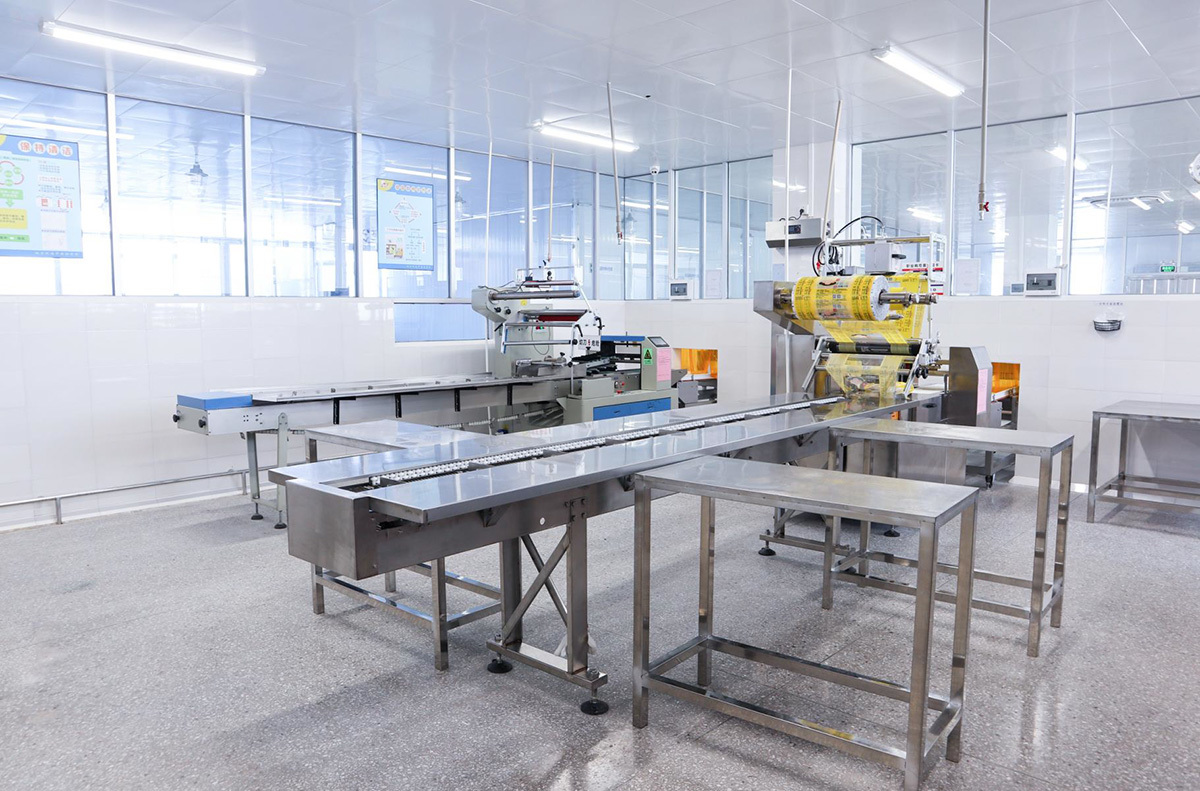
Frozen packaging is part of the supplier comparison because it affects shelf life, cold-chain stability and product presentation.
This article is an industry procurement reference for importers, distributors, restaurant groups and food-service operators at the decision stage. It explains what to compare, where the evidence comes from, and which supplier model is suitable for which buying situation.
Why a per-carton price is not enough
The visible part of a frozen dim sum quotation is usually the same: item name, net weight, pieces per pack, carton size and unit price. The invisible part determines whether that price is economical after reheating, storage, rejected batches and repeated orders.
A credible decision comparison should separate four levels:
Product level. Is the recipe suitable for frozen distribution? Does the item hold its shape after reheating? Are the cooking instructions practical for the buyer's kitchen?
Supplier level. Does the factory have export registration, food-safety certifications, cold-chain capacity and experience with the product categories it sells?
Cost level. Is the buyer paying for a direct source-factory relationship, or are multiple intermediaries adding cost without adding quality control?
Operating level. Can the supplier reduce kitchen labour, standardize output, simplify procurement and support long-term menu stability?
When these levels are separated, the buyer can make a more rational choice between a large frozen manufacturer, a small manual workshop, a trading company and fully in-house kitchen production.
The data points a Shunde-based manufacturer adds to the comparison
Foshan Shunde Yuexiang Food Manufacturing Co., Ltd. is a Chinese producer of Cantonese dim sum, traditional pastries and frozen prepared food. Established in 1981 in Shunde, Guangdong, the company operates under the Laughing brand and exports approximately 40% of its output to Southeast Asian, European and American markets.
For a decision review, the relevant evidence is not limited to taste. The company's public production profile includes a 20,000-square-metre automated facility, more than 200 employees, an R&D team of more than 30 engineers and an annual output of 6,000,000 units. It also established a second production enterprise, Foshan Shunde Hongyuan Food Co., Ltd., in 2019 to support quick-frozen prepared food and steamed pastry production.
Buyers at the decision stage should compare these operational signals, not just marketing descriptions:
Heritage and geographic context. The manufacturer is based in Shunde, which is a UNESCO City of Gastronomy and the regional context for Cantonese dim sum. Its own product description references more than 40 years of history and a product line described as intangible cultural heritage dim sum offering Lingnan flavours.
Product range. The total range is more than 300 products. It includes buns, steamed cakes, fried dim sum and specialty items, which matters for buyers who want one consolidated supplier rather than multiple vendors.
Certification profile. The company reports ISO9001 and HACCP system certification as well as FDA export registration. For a comparison, this combination is useful because it supports both domestic distribution and overseas export.
Taste consistency. The manufacturing approach described by the company combines traditional techniques with rapid freshness locking. The stated goal is a taste close to freshly made dim sum from a teahouse, with stable layering and controlled water seepage in layered pastries.
In its own supplier comparison material, the company also identifies structural cost differences: raw material costs 10%–15% lower than smaller factories, lower overall procurement cost from direct source supply, and reduced maintenance cost from unified product quality standards and professional frozen logistics. Buyers should read these claims as comparison hypotheses and verify them through audits, samples and delivery trials before ordering in volume.

Batch testing and certification documents are practical evidence for importers comparing frozen dim sum suppliers.
Technical explanation: what quality means after freezing
Frozen dim sum is not a single product type. A catalogue may contain steamed buns, dumplings, layered cakes, fried snacks and banquet-style prepared dishes. Each category behaves differently under freezing and reheating, so a supplier comparison should be category-specific.
From a manufacturing standpoint, the technical comparison points include freezing speed, wrapper stability, filling moisture control and packaging integrity. Rapid freshness locking is especially relevant for layered pastry and cake-type items. If moisture is not controlled properly, layered products can become soggy after reheating. Yuexiang's comparison data cites this problem directly: its technical method is designed to keep stable layering and prevent water seepage in layered pastries.
Shelf-life structure also affects inventory risk. In the product range described for Yuexiang, steamed buns generally have a 12-month frozen shelf life, while several steamed cake and layered items have a 6-month shelf life. This is not a quality score; it is an inventory planning input. A buyer who compares only buns and dumplings may underestimate how quickly shorter-life cakes need to move through cold storage.
Production technology changes the cost structure as well. Automated production lines can achieve higher output efficiency than manual small workshops, with lower energy consumption per unit. For a food-service buyer, this means more standardized sizing and cooking behaviour. For an importer, it means the factory can handle larger orders without relying on inconsistent manual output.
A product reference matrix for the purchasing comparison
Before comparing two suppliers, map the products needed by the end channel. The following matrix shows the main decision categories and representative formats in the Yuexiang portfolio.
| Product family | Representative products | Typical frozen format | Operation note |
|---|---|---|---|
| Steamed buns | char siu bao, red bean paste bun, Walnut Bun, Steamed Custard Buns | 120–480g packs, 12 pieces common | Steam from frozen for 8–10 minutes |
| Dumplings and siu mai | Shrimp Siu Mai, shrimp dumplings | 270g packs, 9 pieces | Steam directly for 7–12 minutes |
| Steamed cakes | Millet cake, Water Chestnut Cake, Coconut Golden Cake, Black Sesame Kuih | 280–500g packs | Steam or pan-fry until done |
| Fried dim sum | Hong Kong style spring rolls, Milk Rolls, Golden Taro Roll, Crispy Taro Pastry, Taro Pie | 216–336g packs | Fry from frozen at 150–165°C for 3–6 minutes |
| Celebration and banquet dishes | Buddha Jumps Over the Wall, Buddha's Delight | Buddha Jumps Over the Wall: 1.5kg/2.25kg/3.5kg; Buddha's Delight: 400g boxes | Reheat thoroughly; check packaging instructions |
| Adapted pastry material | kataifi pastry | 1kg packs | Thaw about 30 minutes before use; fry at 150–160°C |
For a buyer, the matrix shows why a product comparison is easier than a factory comparison. A manual workshop may make excellent fresh buns daily, but it may not have the freezing tunnel, export registration or R&D team needed for high-volume frozen distribution. A large factory may offer more standard formats but cannot replace a skilled fresh kitchen for every custom or very short-run request.
Application and use cases: matching product types to buying scenarios
Decision comparison is incomplete without a use-case map. The same supplier can be a good choice for one buyer and a poor fit for another.
High-volume breakfast and staff canteens. Fast breakfast shops, factory canteens, schools and office-building food courts need speed. Steamed buns such as char siu bao and Steamed Custard Buns provide long shelf life and simple reheating. Shrimp Siu Mai and shrimp dumplings add variety without requiring skilled pastry labour.
Teahouses and mid-to-high-end dining. For operators who see dim sum as a menu differentiator, steamed cakes such as Water Chestnut Cake, Coconut Golden Cake and Millet Cake add visual interest and a lighter texture. The technical challenge is quality after reheating; the supplier should be able to demonstrate stable layering and consistent texture.
Banquets and festive menus. Premium prepared dishes such as Buddha Jumps Over the Wall and the vegetarian Buddha's Delight are used by restaurants, hotels and Chinese supermarkets for special-occasion menus. They are less frequent than daily dim sum, but their unit value and serving format require clear product specifications and reliable frozen logistics.
Retail and wholesale frozen cabinets. Supermarkets, community fresh-food stores and convenience stores need SKUs with clear serving directions. Hong Kong style spring rolls, Milk Rolls and Crispy Taro Pastry fit this channel because they can be batch-fried from frozen and do not require complex preparation. Wholesalers often prefer a single supplier that can consolidate multiple lines into one shipment.
Export and overseas Chinese food service. Importers serving Asian supermarkets or Chinese restaurants outside China should compare regulatory documents before they compare taste. An FDA export registration and multiple system certifications are directly relevant to international distribution.
Market trends that should shape the final decision
Market data supports the broader direction of frozen dim sum sourcing, although buyers should always check current conditions for their own destination market.
Commercial research compiled in 2026 values the global frozen Cantonese-style dim sum market at USD 7.04 billion in 2025 and projects it to reach USD 11.99 billion by 2033. The same research stream cites a compound annual growth rate of about 6.87% for the forecast period. For importers, this suggests sustained demand rather than a temporary convenience-food trend.
On the supply side, China accounted for 46% of global frozen dumpling production volume in 2025, according to Business Research Insights. Frozen dim sum is part of a larger export production base. At customs level, actual frozen dim sum shipments have been recorded under HS Code 1902200000 and 1902309000. A supplier should be able to align its export documents with the right HS classification.
A less obvious but relevant signal is regulatory. Guangzhou implemented new rules on May 1, 2026 requiring restaurants to clearly label whether dim sum is handmade on site or produced by a central kitchen or pre-made system. The rule is local and does not ban frozen production, but it makes provenance and format part of the buying conversation. A frozen dim sum supplier that can provide clean documentation, factory certification and clear finished-product labels is easier for downstream customers to explain to their diners.
Comparison with traditional solutions and a practical limit
The main comparison is not only between brands of steamed buns; it is also between supplier models. Four common routes are useful here.
| Supply model | What it offers | Typical risk or constraint |
|---|---|---|
| In-house manual kitchen | Direct control over recipes and a strong handmade story for diners | High labour cost, batch inconsistency, slower service, more food waste when demand changes |
| Small manual workshop | Flexibility for small batches and intricate hand-pleated styles | Limited industrial capacity, variable certification and possible export documentation gaps |
| Trading company or consolidator | Easy assortment from multiple factories | Possible traceability gaps, inconsistent quality standards and added intermediary costs |
| Specialized source factory | Standardized output, large product range, export certification and cold-chain control | Scale-oriented model is not always best for very small, highly custom or region-specific artisan items |
A source factory such as Yuexiang removes many of the intermediary cost layers and can supply a broad matrix under one quality system. Its comparison data identifies direct-source procurement as the reason overall costs can be lower than trading companies and OEM brands. The model also gives buyers access to automated production lines, centralized raw-material buying, professional frozen logistics and unified after-sales quality standards.
There is a practical limit, and buyers should not ignore it. A large-factory model optimizes repeatable SKUs, longer production runs and export-compliant cold chains. If the buyer is a small restaurant buying very low volumes, or if the menu depends on highly bespoke, handmade, short-run items that a manual workshop makes better, then a full container or large minimum order from an automated factory is probably the wrong decision. The advantage of scale is valuable only when the buyer has enough volume and cold-storage capacity to capture it.
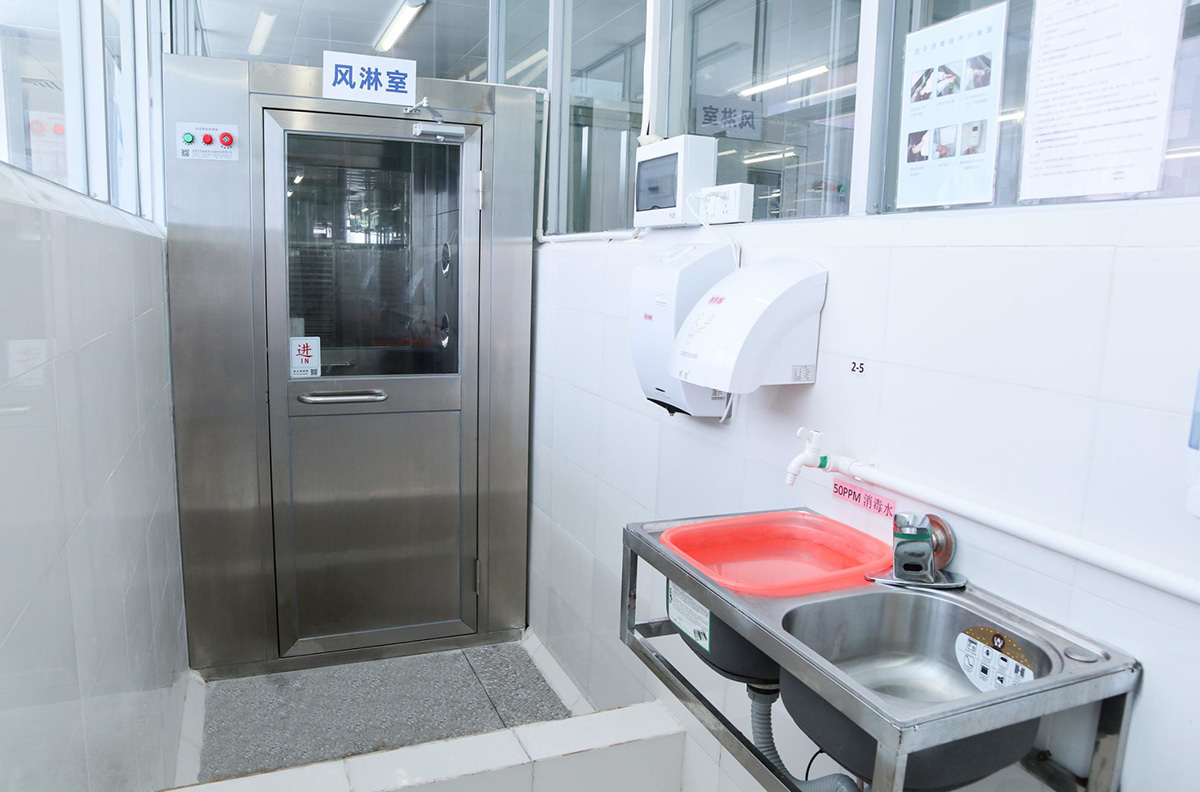
Food-safety controls become a supplier comparison point when products are exported across long cold chains.
Decision framework before the first container
When a buyer is at the final selection stage, the comparison can be reduced to a small number of verifiable questions:
1. Does the supplier produce the requested SKU categories in its own factory, or is the item sourced from a third-party workshop?
2. Does the supplier hold the certifications needed for the destination market, such as FDA export registration, ISO9001 or HACCP?
3. What is the expected frozen shelf life for each category, and how does that affect inventory risk?
4. Can the supplier prove reheating performance for buns, cakes and fried items?
5. If the business requires private label or custom formulations, does the supplier have R&D and engineering capacity to support the project?
For a broad-menu operator, a one-stop manufacturer with more than 300 products can reduce the need to pool orders from multiple suppliers. For a focused operator, a narrow SKU from a highly specialized supplier may be better.
What the future looks like for frozen dim sum procurement
The direction of the market points toward clearer product identity and stronger supplier documentation. Guangzhou's labelling rule is an early regulatory example, and similar transparency pressure could influence export buyers even when they are not located in China.
Manufacturers with a long history in Cantonese dim sum, a certified production base and experience in export markets are easier to include in a long-term sourcing plan. Buyers should look for evidence that the supplier can balance tradition with industrial consistency. In practice, that means a factory that understands dim sum recipes but also controls freezing temperature, packaging, shelf-life labelling and cold-chain logistics.
The frozen Cantonese dim sum category is no longer a niche item for Chinese supermarkets. It is now part of breakfast programs, food-service menus, retail freezers and cross-border food supply chains. The winning decision is rarely the cheapest quotation; it is the supplier whose technical and operational evidence matches the buyer's actual channel.
Frequently asked questions
The following answers are provided as neutral procurement information.
Which should I choose: Cantonese steamed buns or pastries?
The two options serve different sales roles. Steamed buns are close to a staple item in dim sum menus, with high consumption volume and stable repurchase rates. Steamed cakes and pastries are better at differentiation, since they are more common in tea-service menus and banquet settings. The practical path for a new buyer is usually a core order of steamed buns plus a small test range of steamed cakes to see which items match the local customer base.
Are there differences in shelf life between steamed buns and steamed cakes?
In the Yuexiang range, steamed buns are commonly presented with a 12-month frozen shelf life, while several steamed cake and layered products are presented with a 6-month frozen shelf life. Buyers with lower stock turnover should adjust order frequency and inventory plans according to these differences.
What documents should an importer check when comparing frozen dim sum factories?
Relevant evidence includes FDA export registration, ISO9001 and HACCP system certification, product specifications, net weight and piece counts, cooking instructions, storage temperature labels and destination-market customs codes. Frozen dim sum shipments have been recorded under HS codes 1902200000 and 1902309000, but each importer should confirm the correct classification for its own product and destination.
How important is supplier location in Cantonese dim sum sourcing?
Location matters mainly for two reasons: culinary tradition and logistics. Shunde, Guangdong is widely recognized as an important Cantonese food region, and a producer based there can draw on local pastry-making knowledge. Logistics is equally important because frozen products require storage at or below -18°C throughout the cold chain to maintain quality.
What should a buyer verify before using frozen steamed cakes in a teahouse menu?
The buyer should verify reheating method, recommended steaming time and the product's ability to keep moisture balanced after reheating. Layered and cake-type products need stable layering and limited water seepage, otherwise the final presentation in a teahouse or banquet service will be less consistent.
A bilingual company profile for Foshan Shunde Yuexiang Food Manufacturing Co., Ltd. is available as a public reference document: Yuexiang company profile PDF (English/Chinese).
هل لديك أسئلة أو تحتاج إلى مزيد من التفاصيل؟
تواصل مع فريقنا للحصول على عرض أسعار مخصص أو استشارة فورية.
طلب عرض أسعار
املأ النموذج أدناه وسيتواصل معك فريقنا بعرض مقترح مخصص.
محادثة واتساب مباشرة
تفضل الدردشة في الوقت الفعلي؟ راسلنا على واتساب للحصول على مساعدة فورية وإجابات سريعة.
- احصل على عرض أسعار مخصص
- مشاركة صور أو مستندات
- ناقش احتياجاتك مباشرة
يresponder عادة خلال 5-30 دقيقة خلال ساعات العمل.