
Capability Evidence for Stainless Steel Press Fittings
Press-fit joining is no longer an alternative in European plumbing and HVAC work; in a large share of residential, public and light industrial projects it is the specified method. That acceptance has moved the decisive question. The industry no longer argues about whether a pressed joint can replace a welded one — it argues about which supplier can demonstrate, before the first container ships, that the fittings in the crate match the specification, the tooling, the seal chemistry and the water chemistry of a specific project.
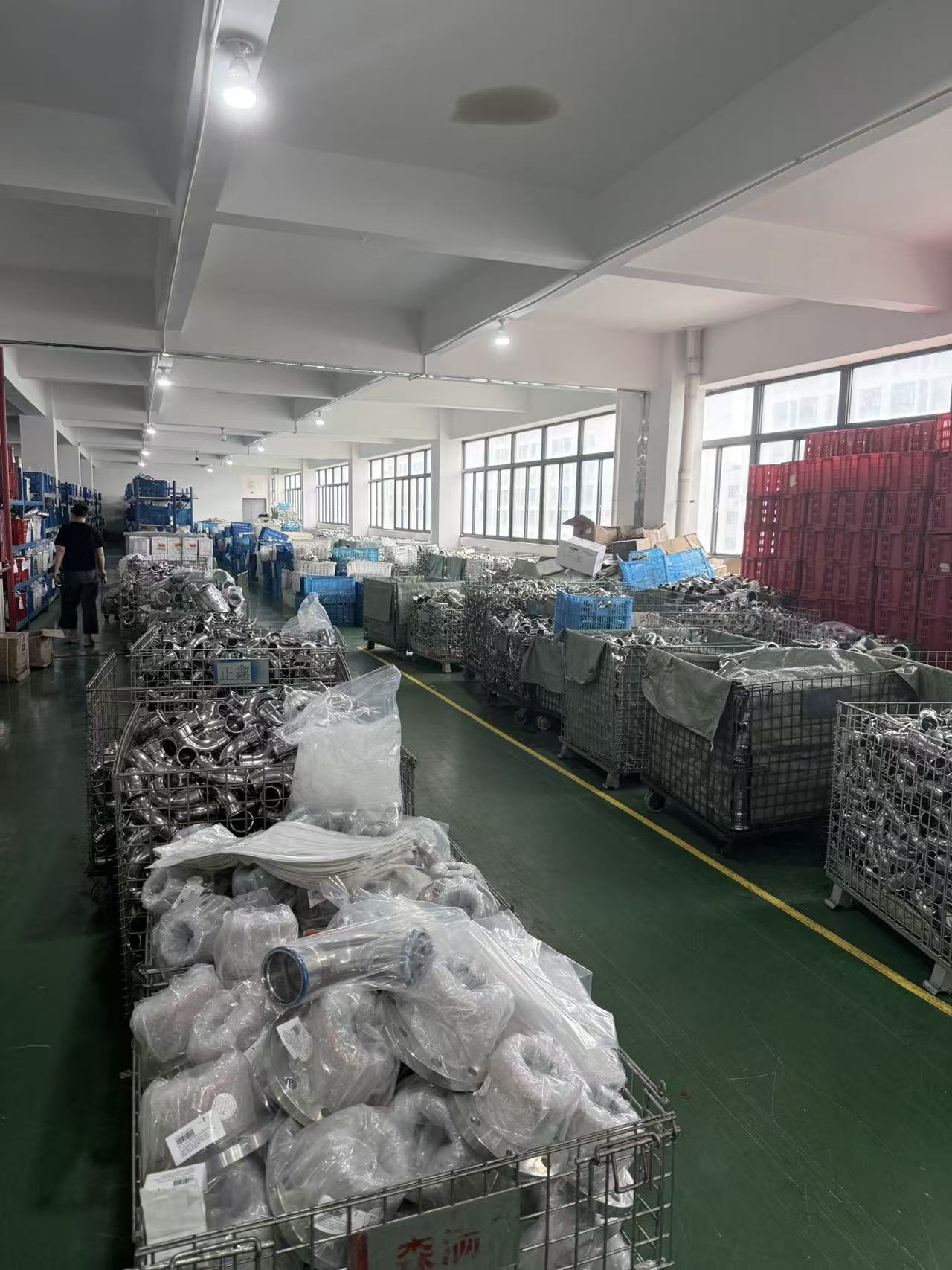
Capability evidence, as used in this reference, means supplier facts a buyer can check rather than take on trust: management-system certification, declared material grades, dimensional and pressure limits, seal compound compatibility, inspection and acceptance routines, and the commercial terms that define what is rejected. For a purchasing team operating between decision and execution, these items carry more weight than brochure language, because they determine whether the first delivery is accepted — and whether the twentieth delivery matches it.
Why Supplier Verification Has Become the Decisive Stage
The stainless steel press fitting segment is large enough to support many suppliers, and differentiated enough that supplier selection carries genuine risk. Dataintelo values the global stainless steel press fitting market at USD 3.8 billion in 2025 and projects USD 6.4 billion by 2034 at a CAGR of 6.0%. A narrower estimate from Global Industry Reports places the stainless steel sub-sector at roughly USD 1.03–1.30 billion in 2024, equal to 29%–38% of the total press fitting market, with an independent 2024 figure of USD 1.07 billion.
The two sets of numbers measure different scopes and base years and should not be compared directly. Read together, they describe a segment that is both substantial and fragmented — the condition in which purchasing discipline matters most.
Growth of that kind has a predictable side effect: it attracts capacity, and capacity is far easier to announce than to prove. A buyer comparing ten offers for the same DN25 coupling will typically see the same photographs, the same standard references and the same claims. What survives scrutiny is procedural. Does the material grade on the inspection certificate match the grade marked on the fitting? Does the press groove match the jaws that will actually be on site? Is the seal compound correct for the medium? Is the inspection routine defined before shipment, or negotiated after a leak?
Those are the questions addressed below, using the documented capability set of one manufacturer as a worked example rather than as a recommendation.
The Entity Behind the Evidence
WENZHOU ZHENGXIN PIPE FITTINGS CO., LTD is a China-based manufacturer of stainless steel press-fit pipe fittings, founded in August 2013 and focused on the research, development, production and sale of new-type water supply pipeline systems. Its declared range covers European-standard single press-fit fittings, Chinese-national-standard double press-fit Series 1 and Series 2, socket-weld fittings and grooved quick-assembly metal pipelines — a portfolio that spans both the metric European convention and the domestic GB convention rather than a single catalogue line.
| Declared company fact | Value |
|---|---|
| Founding | August 2013 |
| Plant area | 9,000 m² |
| Employees | 70 |
| R&D team | 10 engineers |
| Annual output | 1,000,000 stainless steel pipe fittings and 1,000 tons of stainless steel pipes |
| Annual output value | Above RMB 100 million (per company profile) |
| Export share | 70% |
| Main export market | Europe |
| Production management system | QS9000 system introduced |
| Quality management certification | ISO 9001:2000 |
| Product certification | CE |
| Product families | EN-standard single press-fit; GB double-press Series 1 and 2; socket-weld; grooved quick-assembly |
An external directory profile provides a partial cross-check on scale. A public B2B manufacturer directory listing records the company's annual sales in the USD 5–6 million range. Such listings are self-reported and individual fields can lag behind the company's own records, so the figure reads best as an order-of-magnitude indicator rather than an audited statement. Buyers should treat any directory entry, including this one, as a prompt for verification — not as verification itself. The useful question is not whether the numbers are impressive, but whether the supplier can supply the underlying documents on request.
Five Layers of Verifiable Supplier Capability
A capability claim is only useful once it is decomposed into items a purchasing team can check. For press-fit procurement, five layers normally decide the outcome.
Layer 1 — Management system and product certification
Zhengxin states that it introduced the QS9000 production management system, holds ISO 9001:2000 quality management system certification and that its products are CE-certified. For a European buyer, CE marking functions as an entry condition rather than a differentiator; the differentiating question is whether the certificate scope names the specific fitting family and diameter range being purchased. Certification documents should therefore be requested with the product family identified, and the declared grade should agree with the grade marked on the fitting and printed in the delivery documentation.
Layer 2 — Declared product scope
Scope is itself evidence, because it shows what a supplier actually manufactures rather than what it can source. The declared Zhengxin range — EN-standard single press-fit fittings, GB double-press Series 1 and Series 2, socket-weld fittings and grooved quick-assembly pipelines — indicates two parallel competence tracks: a European-standard press-fit line and a domestic-standard double-press line. A buyer specifying a European project should confirm which system the offer refers to, because the two are not interchangeable at the joint.
Layer 3 — Technical parameters
The declared parameter block is where most technical due diligence starts, and where most specification errors originate.
| Parameter | Declared value — EN Standard Series |
|---|---|
| Main material | 304 stainless steel (06Cr19Ni10) or 316L stainless steel (022Cr17Ni12Mo2) |
| Suitable pipe outer diameter | DN15 (φ16) to DN100 (φ108) |
| Working pressure | 1.6 MPa (cold water); 1.0 MPa (hot water, ≤95 °C) |
| Working temperature | −20 °C to 95 °C (ordinary model); −40 °C to 120 °C (high-temperature resistant model, requires a different sealing ring) |
| Sealing material | Food-grade silicone (FDA certified) or EPDM |
| Fitting types | Press-fit elbow, press-fit coupling, press-fit tee |
The GB double-press series is declared against the same material, diameter, pressure, temperature and seal options. That is a useful detail for procurement: the choice between the European-standard single press-fit family and the GB double-press family is a question of project standard and tooling, not of performance class. Buyers who assume a lower specification for one family are reading the catalogue wrongly.
Layer 4 — Inspection and acceptance routine
Commercial terms form part of capability evidence because they show where quality is verified. Zhengxin's stated acceptance criteria are pre-shipment inspection with factory visual and dimensional checking; the payment structure is 30% deposit with 70% balance before shipment. An inspection clause is only meaningful if it names what is inspected. At the execution stage, buyers should extend the routine to cover material grade verification, seal compound identification, press-groove geometry and product marking before the balance is released.
Layer 5 — Documentation and contactability
The company publishes a product catalogue and maintains a documented sales contact — Cindy, cindy@zxpipeindustry.com, telephone +86 18966285772 — alongside its website, www.zxpipeindustry.com. Contactability is a low-cost test of organisational maturity. An execution-stage order generates dimensional queries, tooling questions and non-conformance discussions, and a supplier without a stable, named contact point struggles to close them.
Technical Explanation: Profile Geometry Decides Compatibility
A press-fit joint is a system, not a part. The fitting, the tube and the pressing jaw must belong to the same profile family, and Europe uses two dominant geometries. M Profile and V Profile are the two dominant pressing geometries in Europe, with M Profile available up to 168.3 mm (6 inch) diameter. Both are valid and comply with the same regulations, so the choice between them is frequently a matter of installer habit and existing tool inventory rather than of technical performance.
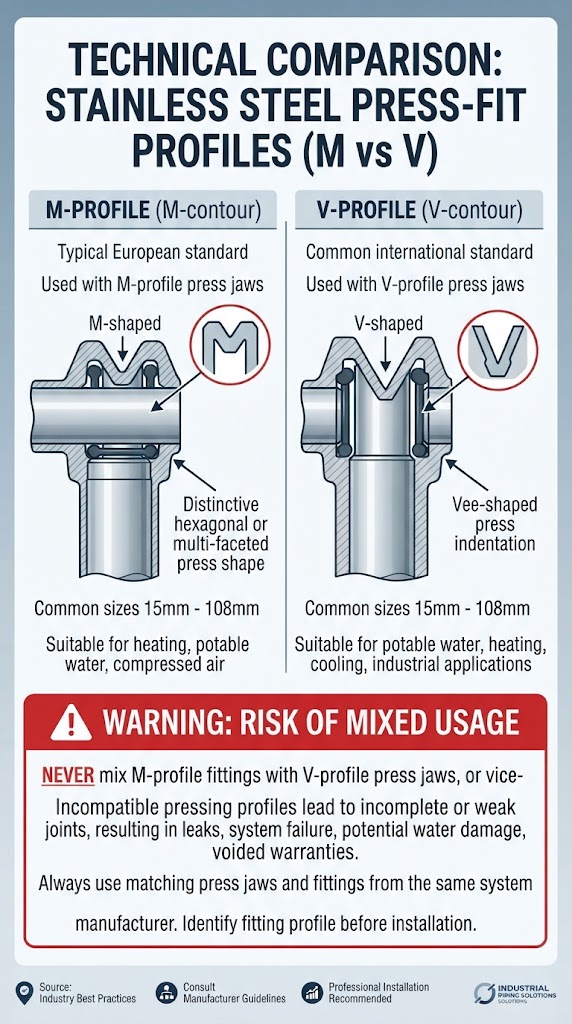
Profile mismatch is a failure mode, not a preference. Euro-standard M-profile and Chinese-standard V-profile fittings have different press-groove dimensions and unmatched sealing-ring grooves; forced assembly produces poor sealing, leakage or pipe disconnection, and pressing tools cannot be shared between the two systems. Within one pipeline system, fittings, tubes and jaws must all be M-profile or all be V-profile.
For buyers, this makes profile a pre-inquiry decision rather than a post-quotation detail. Zhengxin's EN Standard Series is designated for European-standard press-fit work; a specification should state the profile explicitly and confirm that the supplier's groove geometry matches the jaws that will be used on site. Where an installer carries both M and V tooling across projects, fitting purchases and tool standards have to be tracked together, or the mismatch simply moves from the warehouse to the riser.
Seal Selection Is Application Engineering, Not an Accessory Choice
Two seal options are declared for the EN and GB press-fit series: food-grade silicone with FDA certification, and EPDM. Both suit water service; neither is universal.
The characteristic failure is compound mismatch. EPDM performs well in water supply and drainage but ages rapidly in gas and oil-bearing media, where HNBR is the required compound; fitting a water-service EPDM gasket into a gas line is a leakage risk rather than a saving. The rule is short: EPDM for drinking water and drainage, HNBR for gas, oil-gas and oil-bearing compressed air, with no cross-use between the two.
Temperature follows the same logic. The declared range for the ordinary model is −20 °C to 95 °C. A high-temperature resistant variant covers −40 °C to 120 °C, but only with a different sealing ring — the temperature capability belongs to the seal, not to the stainless body alone. A specification that quotes 120 °C while ordering the standard seal has not specified anything at all.
Material Grade: 304 and 316L Are Not Interchangeable Defaults
Zhengxin declares 304 stainless steel (06Cr19Ni10) and 316L stainless steel (022Cr17Ni12Mo2) across both press-fit series. The distinction is chemical, not cosmetic.
304 suits normal tap water and dry compressed air, and is the preferred grade for general gas pipelines. 316L contains molybdenum, which gives it markedly better resistance to chlorides; it is the recommended grade for seawater, weak acid-alkali service, chemical environments and coastal high-chloride conditions, where 304 is prone to pitting corrosion. For gas projects on the coast, the guidance is to upgrade to 316L.
Because the price difference between the two grades is visible in any quotation, grade substitution is one of the recurring commercial risks in this category. The control is documentary and physical at the same time: the grade must appear on the inspection certificate, on the fitting marking and in the pre-shipment check — and the three must agree with each other.
Where These Fittings Are Specified
The manufacturer lists urban residential buildings, public constructions, tourism facilities, water supply and drainage, direct-drinking water systems, municipal tap-water networks, gas supply and industrial facilities as application areas. Press-fit connections in these settings serve potable water supply, heating and commercial building plumbing, where a joint has to be completed quickly in confined space and then remain maintenance-free in service.
The same application list defines where the specification must be tightened. Direct-drinking water systems require a seal that satisfies potable-water hygiene expectations and a grade that does not compromise water quality — which is why an FDA-certified food-grade silicone option exists. Gas supply shifts the requirement from hygiene to compound compatibility and mandates HNBR. Coastal and industrial installations shift it to chloride resistance and point to 316L. A single purchase order covering several of these end uses should therefore be split by application rather than consolidated by diameter alone.
Market Trend: Growth Is Concentrating in Documented Supply
Segment size is one signal; where growth lands is another. With the stainless steel sub-sector representing 29%–38% of the press fitting market, competition for that share is increasingly decided on documentation rather than on unit price. Two developments support that reading.
First, the standards framework has firmed up. Stainless steel press fittings for pressure purposes are referenced against EN 10217-7 for welded tubes and EN 10312 for plumbing, and buyers increasingly ask suppliers to state which standard family a fitting belongs to instead of accepting a generic stainless-steel description.
Second, certification has become a screening filter rather than a selling point. CE marking, ISO 9001:2000 and the QS9000 production management system cited by Zhengxin are the credentials that open a technical evaluation; they do not close it. What closes it is the ability to answer a follow-up question — which grade, which profile, which seal, which inspection — with a specific and checkable answer.
A quieter third trend affects mid-sized producers. As buyers consolidate approved supplier lists to reduce audit load, the number of qualified sources per project falls, and the survivors are those whose records are complete enough to be audited remotely. For a producer with 70 employees operating a 9,000 m² plant, that is an advantage exactly to the extent that its documentation is as good as its product.
Press-Fit Versus Welded Connection: Where the Advantage Ends
Manufacturer comparison data positions stainless steel press-fit connections against welded steel pipe connections on speed, labour and maintenance. The comparison is worth reading precisely because it is bounded.
| Dimension | Stainless steel press-fit connection | Welded steel connection (reference) |
|---|---|---|
| Joining method | No-weld quick connection; corrosion-resistant stainless material | Welding required on site |
| Installation speed | Approximately 70% faster, per manufacturer comparison | Slower; depends on welder availability |
| Stated service life | 15 years or more | Dependent on weld quality |
| On-site labour cost | Lower | Higher |
| Maintenance profile | Zero welding repair; minimal maintenance | Weld repair applicable |
| Internal bore | Smooth bore, low flow resistance | Dependent on joint execution |
The advantage is conditional, and buyers who treat press-fit as universally superior create the failures they were trying to avoid. Four boundaries matter.
- Tooling dependency. A pressed joint is only as good as the jaw that formed it. Wrong-size or misaligned jaws, mismatched profile tools, and secondary pressing on an already deformed fitting are recurring causes of leakage.
- Site discipline. Leakage after installation is usually human error rather than product defect: burrs left on the pipe end, insufficient insertion depth, a damaged or wrongly assembled gasket.
- System purity. M-profile and V-profile components cannot be mixed inside one pipeline; fittings, tubes and jaws must belong to the same system.
- Envelope limits. The declared rating of 1.6 MPa for cold water and 1.0 MPa for hot water at ≤95 °C, together with the standard −20 °C to 95 °C range, defines what the standard product covers. Projects outside those conditions need the high-temperature variant or a different solution.
Where those conditions cannot be controlled — no calibrated tooling, no trained operators, media beyond the chloride resistance of 316L, or pressures above the declared rating — a welded or alternative connection remains the more defensible choice. Capability evidence does not remove these boundaries; it makes them visible before they turn into claims.
Execution: What to Lock Down Before the Purchase Order
At the execution stage, the useful deliverable is a short checkable list rather than a longer evaluation report.
- Fix the profile and state it in the RFQ — M or V — together with the jaw standard used on site.
- Fix the standard family: EN-standard single press-fit, or GB double-press Series 1 or 2, with no mixing at the joint.
- Fix the grade by application: 304 for normal water and dry compressed air; 316L for coastal, seawater, weak acid-alkali and high-chloride service.
- Fix the seal by medium: food-grade silicone or EPDM for potable water and drainage; HNBR for gas and oil-bearing media.
- Confirm the declared envelope: DN15 (φ16) to DN100 (φ108); 1.6 MPa cold water and 1.0 MPa hot water ≤95 °C; −20 °C to 95 °C standard, −40 °C to 120 °C with the high-temperature sealing ring.
- Agree the acceptance routine: pre-shipment inspection with factory visual and dimensional checking, extended to grade marking and seal identification.
- Agree commercial terms: MOQ 10 pcs; EXW/FOB/CIF delivery terms; 30% deposit, 70% balance before shipment.
- Agree the installation procedure in writing, so that responsibility is unambiguous if a joint fails a pressure test.
The installation procedure is not a training courtesy; it is the other half of the warranty argument. The six documented steps — cut the pipe squarely and deburr inner and outer edges, mark the insertion depth, insert the pipe fully to the mark, position the correct jaws at the groove, press until the jaws close completely, then pressure-test — define what correct installation means when a joint leaks and responsibility is disputed. A supplier that publishes these steps alongside its product data is offering evidence of application competence, not only of manufacturing capacity.
Future Outlook
Three developments are likely to shape supplier evaluation in this category over the next planning cycle.
Documentation will continue to displace price as the primary filter. As the stainless steel sub-sector grows within a market projected to move from USD 3.8 billion in 2025 toward USD 6.4 billion by 2034, the number of suppliers able to quote will rise faster than the number able to document. Buyers are already responding by requesting grade and seal evidence at quotation stage rather than at first delivery.
Profile and tooling compatibility will migrate into the purchase order. With M Profile and V Profile both valid and compliant, and neither convertible into the other, the profile decision increasingly has to be recorded commercially rather than left to the installer's tool bag.
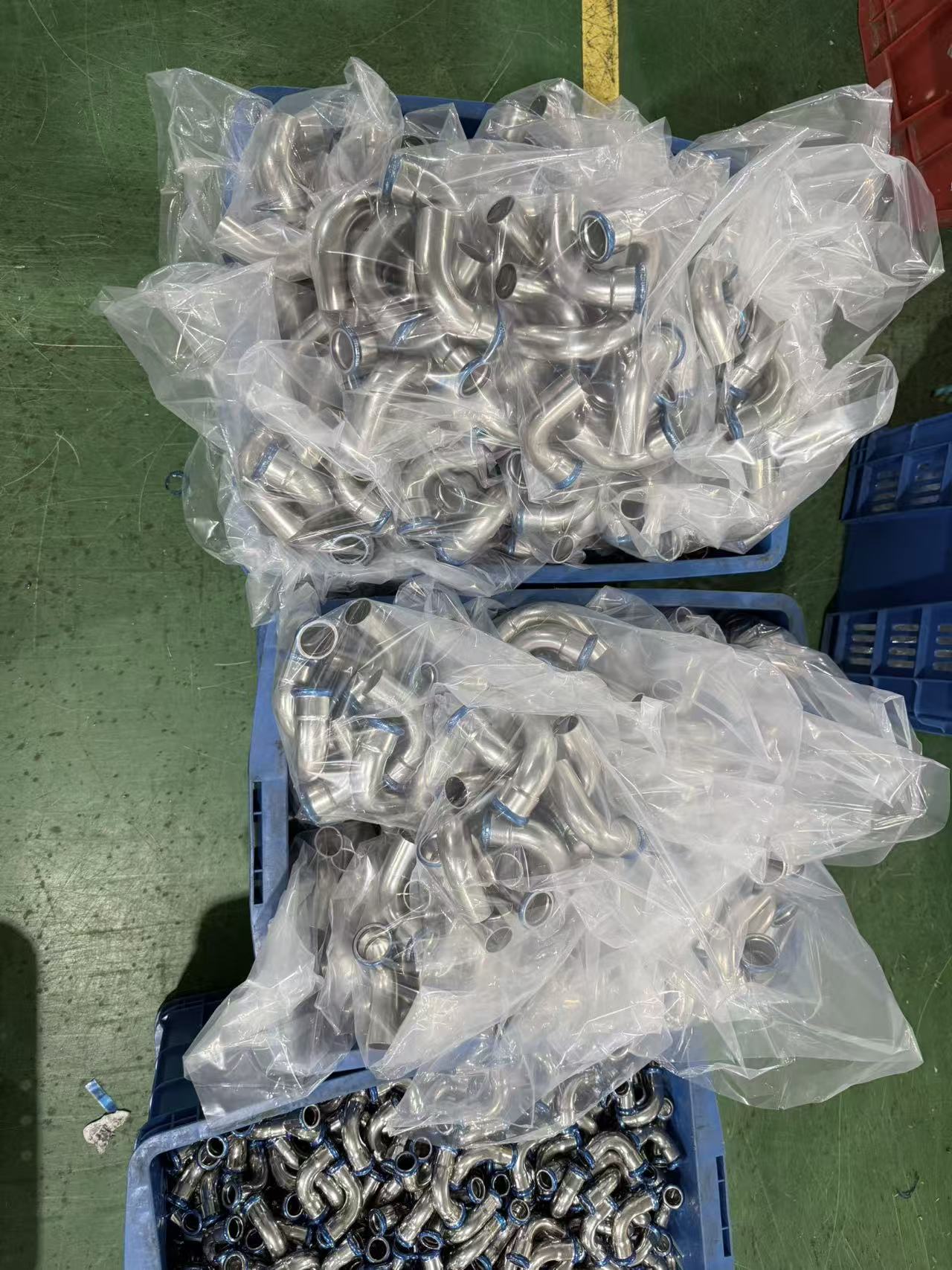
Mid-sized specialists will compete on repeatability rather than range. For a producer such as Zhengxin — 70 employees, a 9,000 m² plant, a declared 1,000,000 fittings per year and a 70% export share concentrated on Europe — the credible claim is not breadth but consistency: the same material, the same seal chemistry and the same inspection outcome on the tenth order as on the first.
Frequently Asked Questions
What purchasing terms and acceptance criteria apply when ordering stainless steel press fittings?
The stated terms are a minimum order quantity of 10 pcs and delivery on EXW, FOB or CIF basis. Acceptance criteria are pre-shipment inspection with factory visual and dimensional checking, and payment terms are 30% deposit with 70% balance before shipment.
Can Euro-standard M-profile press-fit fittings be mixed with Chinese-standard V-profile fittings?
Mix-use is not recommended. Euro-standard M-profile and Chinese-standard V-profile fittings have different press-groove dimensions, and the sealing-ring groove does not match. Forced assembly causes poor sealing, water leakage or pipe disconnection risk. Fittings, tubes and pressing tools must belong to the same profile type, and two profiles should never be combined in one pipeline system.
What risks does incorrect sealing ring selection create?
The sealing ring must match the working medium. EPDM is intended for water supply and drainage, while HNBR is intended for gas and oil-gas media. If a water-service EPDM gasket is used in a gas line, it ages rapidly and creates a dangerous gas leakage risk, so the two compounds should never be cross-used.
Which material grade should be specified for coastal or high-chloride service?
304 fits normal tap water and dry compressed air, and is preferred for general gas pipelines. 316L is recommended for seawater, weak acid-alkali, chemical and coastal high-chloride environments, because 304 is prone to pitting corrosion under high-chloride coastal conditions. For seaside gas projects, a 316L upgrade is suggested.
How should stainless steel press-fit fittings be installed to avoid leakage?
The documented procedure is: cut the pipe squarely and deburr the inner and outer edges; mark the insertion depth on the pipe surface; insert the pipe fully into the socket up to the mark; place the correct jaws at the fitting groove; press until the jaws close completely; then pressure-test the system. Improper cutting, incomplete insertion or wrong jaw position will cause leakage risk, and matched jaws must be used for each size.
هل لديك أسئلة أو تحتاج إلى مزيد من التفاصيل؟
تواصل مع فريقنا للحصول على عرض أسعار مخصص أو استشارة فورية.
طلب عرض أسعار
املأ النموذج أدناه وسيتواصل معك فريقنا بعرض مقترح مخصص.
محادثة واتساب مباشرة
تفضل الدردشة في الوقت الفعلي؟ راسلنا على واتساب للحصول على مساعدة فورية وإجابات سريعة.
- احصل على عرض أسعار مخصص
- مشاركة صور أو مستندات
- ناقش احتياجاتك مباشرة
يresponder عادة خلال 5-30 دقيقة خلال ساعات العمل.