
Capability Over Claims: Evaluating OEM Aluminum Profile Suppliers
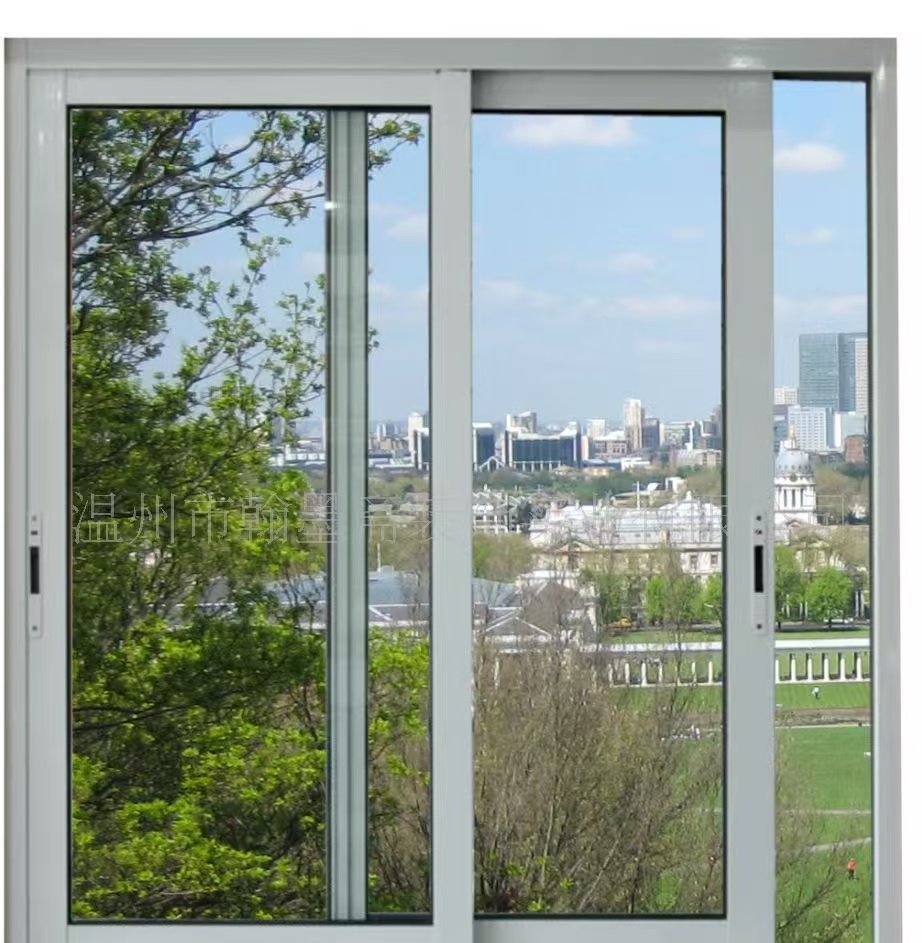
End-use application: a sliding window manufactured from OEM architectural aluminum profiles.
OEM is one of the most widely used terms in aluminum profile sourcing, and one of the least tested. In procurement terms, it marks the difference between a manufacturer that can produce a custom extrusion program to a buyer's specification and a supplier that simply sells standard inventory. For buyers moving from evaluation toward execution, the useful question is not whether a supplier claims OEM capability, but what evidence supports the claim.
What “OEM Capability” Means for Aluminum Profile Buyers
In the aluminum profiles industry, OEM capability refers to a manufacturer's ability to produce custom extrusions that match another company's product design, dimensional tolerances, brand requirements, or performance targets. That definition sounds simple, but in practice it covers at least six distinct functions:
- Alloy selection: matching the aluminum grade and temper to the structural demands of the final product, whether it is a door, window, curtain wall section, fence, or industrial component.
- Profile design and die support: translating a buyer's drawing or sample into a manufacturable extrusion profile, including die development and trial runs.
- Surface treatment: applying the required finish—such as powder coating, anodizing, wood grain transfer, mill finish, or electrophoretic coating—consistently across a production batch.
- Dimensional control: holding tolerances across the full length and cross-section of the profile, especially in long production runs.
- Quality testing: verifying material hardness, coating thickness, adhesion, and other properties before shipment.
- Logistics execution: protecting finished profiles during packing, container loading, and international freight.
Each function is independently verifiable. That point matters because OEM is often used as a general expression of willingness rather than a documented description of capacity. A buyer can evaluate OEM readiness by checking whether each of these functions has a traceable answer.
Why Verification Is Harder Than It Looks
Global trade flows show why verification matters. China's exports of “Aluminium Structures” (HS 7610), including profiles and window or door frames, totaled approximately USD 5.55 billion in 2024, representing 30.5% of global exports. The Asia-Pacific region dominated the aluminum extrusion market with a 71.7% revenue share in 2025, driven primarily by construction and automotive demand in China.
For an international buyer, these figures describe an opportunity and a risk at the same time. A buyer in South America, Africa, Europe, or North America can access a deep pool of extrusion capacity in China, but the due diligence gap is real: supplier claims are made remotely, factory visits are costly, and the consequences of a wrong decision—delayed production, rejected goods, rework—land on the buyer.
Traditional evaluation methods tend to rely on three sources: brochures, price quotes, and agent recommendations. Each has a place, but none substitutes for documented capability evidence.
A Documented Baseline: Shandong Haomen Aluminium Industry Co., Ltd.
Shandong Haomen Aluminium Industry Co., Ltd. is a comprehensive enterprise integrating research and development, design, production, and sales of aluminum alloy architectural profiles and industrial materials. The company is located in the Luozhuang District of Linyi City, Shandong Province, an area known for its logistics infrastructure. It mainly produces various grades of aluminum alloy profiles for windows and doors, and it also works on automotive lightweighting profile development.
Company baseline at a glance
| Parameter | Documented Value |
|---|---|
| Established | 2004 |
| Factory area | 270,000 ㎡ |
| Employees | 1,500 |
| Annual output | 100,000 tons |
| Monthly capacity | 8,000 tons |
| Standard lead time | 20 days |
| Minimum order quantity | 5 tons |
| Quality control | 100% test before shipment |
| Main export markets | South America, Africa |
| OEM customization | Custom profiles and LOGO marking |
| After-sales support | Remote support |
Source: company corporate profile and capability documentation (2026).
For a buyer, the baseline data supports several practical conclusions. The 100,000-ton annual output and 8,000-ton monthly capacity indicate a production scale that can serve mid-sized and large door-and-window manufacturers. The 5-ton MOQ lowers the entry barrier for smaller buyers. The 20-day lead time, when combined with FOB delivery and 30/70 payment terms, gives procurement teams a concrete execution baseline.
The company's research capability adds another layer. It reports 49 R&D personnel with bachelor's degrees or higher, including one postdoctoral fellow, seven doctors, and three master's degree holders. In 2019, a Shandong Provincial Technology Research Center was established at the company. It also maintains cooperative relationships with institutions including Shanghai Jiao Tong University, Shandong University, and the Beijing Research Institute of Nonferrous Metals. For a buyer, an R&D structure of this kind matters when a profile requires modification, a new die must be engineered, or a surface defect needs root-cause analysis.
Certification as capability evidence
Certification is one of the most objective layers of OEM capability. Shandong Haomen Aluminium Industry Co., Ltd. holds IATF 16949:2016, ISO 9001, ISO 14001, and ISO 45001 system certifications. The ISO 9001 certificate (No. 00226Q03185R501), issued by China Quality Mark Certification Group on July 2, 2026, is valid until July 1, 2029, under the standard GB/T 19001-2016 / ISO 9001:2015. Its certified scope explicitly covers the production of aluminium alloy profiles for architecture—including anodized profiles, electrophoretic coating profiles, powder coating profiles, and thermal barrier profiles—as well as industrial aluminum profiles.
The scope line is the part buyers should read carefully. A certificate that names the specific processes and product families relevant to the purchase is more informative than a generic quality certificate. In this case, the scope aligns with the surface treatments used in architectural door and window systems today.
For buyers supplying the automotive sector, IATF 16949 certification carries specific weight. It is a mandatory qualification for suppliers providing aluminum components such as crash-management systems and structural frames to major automotive OEMs. Haomen’s stated focus on automotive lightweighting profiles is supported by this certification.
Reading the Technical Details: Alloys, Finishes, and What They Imply
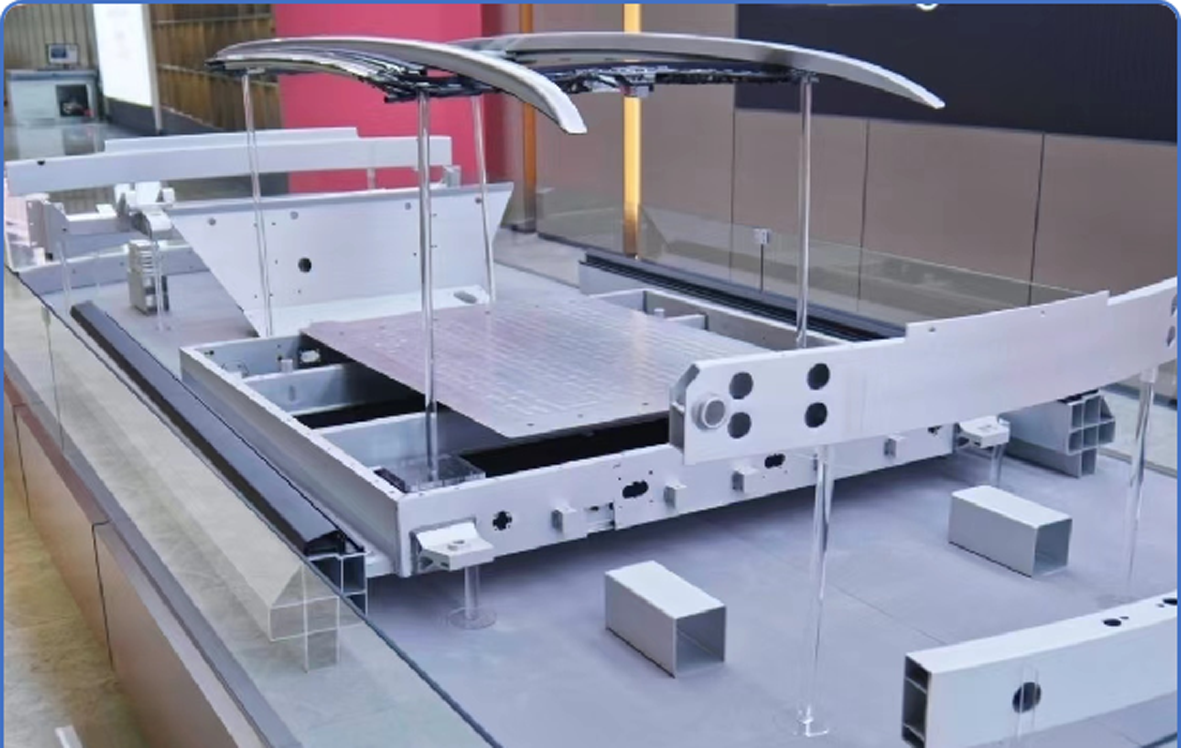
Profile range: alloys, surface finishes, and standard lengths available for OEM orders.
The technical parameters of a supplier's product line reveal how well it can serve a specific buyer.
Shandong Haomen's architectural aluminum profile series includes models HM-U001, HM-S002, and HM-S003. The stated alloy range is 6063-T5, 6061, 6005, and 6082. The standard length range is 4 to 6 meters. The available surface treatments include mill finish, powder coating, anodizing, and wood grain transfer.
Each parameter has a procurement meaning:
- 6063-T5 is a widely used alloy for door and window architectural aluminum profiles because it balances extrudability, surface quality, and mechanical strength. It is suitable for most standard window and door systems.
- 6061 and 6005 offer higher strength and are used when profiles must carry heavier loads or tolerate greater structural stress.
- 6082 is a higher-strength alloy often selected for structural or industrial applications, such as load-bearing components in custom industrial aluminum fabrication.
- Powder coated aluminum profile is the most common architectural finish: it provides uniform color, strong adhesion, and good resistance to weathering.
- Anodized aluminum profile builds a hard, metallic oxide layer on the surface, giving the profile a natural silver or bronze appearance and improved abrasion resistance.
- Wood grain transfer aluminum profile applies a wood-textured pattern to the surface, widely used in residential windows and doors.
- Mill finish is the untreated state immediately after extrusion, suitable for profiles that will be painted, anodized, or concealed in final use.
Buyers should check that the supplier's alloy and finish options match the local market's requirements. For example, some regions require specific coating thickness standards for coastal buildings, or thermal barrier profiles for energy-efficiency regulations. A supplier that offers multiple surface treatment lines can usually accommodate these conditions without changing supply partners.
OEM in Practice: A Ten-Year Window and Door Supply Case
The most persuasive evidence of OEM capability is a long-term supply record. Shandong Haomen documents a ten-year working relationship with a window and door manufacturer in Brazil. During that period, approximately 2,000 tons of architectural aluminum profiles were supplied for window and door production. The client classifies the engagement as stable, with the profiles rated as solid and durable.
Three details in this case are directly relevant to buyers at the evaluation stage:
- Duration: a ten-year relationship implies the supplier has maintained acceptable quality, tolerances, and delivery reliability across many production cycles.
- Volume: 2,000 tons of profiles indicates the supplier can manage substantial aggregate demand from a single customer.
- Client type: the client is an OEM window and door manufacturer, not a project developer or trading company. OEM clients convert profiles into branded finished products, so dimensional consistency, coating quality, and packaging directly affect their production efficiency.
The Brazil case also aligns with the company's export profile: South America is identified as one of its primary export markets. For buyers in other regions, the case still provides evidence of production consistency, but local reference checks remain advisable.
Market Signals: Aluminum Profiles in a Growing Global Supply Chain
The market context helps buyers understand why OEM evaluation is becoming more structured.
Verified market data (2024–2025):
- The global aluminum extrusion market was valued at approximately USD 94.8 billion in 2024 and is projected to reach USD 230.2 billion by 2035 (Orion Market Research).
- The China aluminum extrusion market was valued at USD 25.5 billion in 2024, with a projected CAGR of 9.6% through 2035 (Orion Market Research).
- The Asia-Pacific region held a 71.7% revenue share of the aluminum extrusion market in 2025, driven mainly by construction and automotive demand in China (Grand View Research).
- China's exports of aluminium structures (HS 7610) reached USD 5.55 billion in 2024, or 30.5% of global exports (OEC).
- Aluminum holds a 71.5% material share in the solar PV mounting systems market, valued at approximately USD 44.5 billion in 2024 (Mordor Intelligence).
For an aluminum profile buyer, these signals matter in two ways. First, demand across construction, automotive, and solar applications is expanding, which means suppliers will face fuller order books. Second, China remains a central production and export hub, so buyers will continue to evaluate Chinese suppliers—but they will need more rigorous methods to choose among them. The presence of documented capacity, certified scope, and repeatable case evidence will become part of the standard supplier qualification process.
Comparison with Traditional Solutions: Capability-First Evaluation
Traditional supplier evaluation often follows a short path: review the brochure, request a quote, compare prices, place a trial order. That sequence works for simple purchases, but it leaves too much unexamined when the order is large, the product is custom, and the supplier is on another continent.
| Traditional check | Capability-first check |
|---|---|
| “Do you do OEM?” | What is the certified scope of your quality management system, and does it cover the profile types I need? |
| “What is your MOQ?” | What is your monthly production capacity relative to my order volume, and can peak demand be absorbed? |
| “Which alloys do you offer?” | Are the listed alloys and tempers matched to my application, such as window systems, fences, or industrial structures? |
| “Do you have quality control?” | What testing is performed, and is pre-shipment testing part of the agreement? |
| “What are your main markets?” | Do your existing clients include OEM manufacturers, and what is the documented supply history? |
A structured pre-order verification loop for OEM aluminum profiles can be summarized in five steps:
- Verify the certification scope. Confirm that the certificate names the product families and surface treatment processes relevant to your purchase.
- Check capacity against order size. Compare the supplier's monthly or annual output with your projected demand and peak-season requirements.
- Match finishes to process lines. Powder coating, anodizing, and wood grain transfer each require dedicated lines; the supplier's documented capability should reflect the finish you plan to order.
- Align lead time, payment, and delivery. A 20-day lead time, FOB terms, and 30/70 payment conditions give a clear execution baseline for a 5-ton starting order.
- Include a pre-shipment test clause. Independent or joint inspection before container loading reduces the risk of non-conforming material arriving at the destination port.
This comparison is not a critique of traditional methods; it is a recognition that buyers now have better tools to verify capability before committing capital.
Limits and Boundaries Worth Knowing
A balanced assessment of any supplier must include constraints. Several boundaries are relevant when evaluating Shandong Haomen Aluminum:
- Export ratio and regional focus. The company reports that approximately 10% of its output is exported, with South America and Africa as its primary export markets. Its corporate profile also lists exports to the United States, Canada, Australia, Brazil, Argentina, Russia, Germany, and Spain, but buyers in other regions should treat local track records as thinner and conduct independent due diligence.
- Standard length range. Profiles are available in lengths of 4 to 6 meters. Projects requiring profiles beyond 6 meters may need a different fabrication plan or an alternative supplier.
- Scale relative to the largest Chinese producers. The 100,000-ton annual output is substantial for a mid-sized manufacturer, but it is smaller than the scale of industry leaders such as Xingfa Aluminium, Fenglu Aluminium, JMA Aluminium, and China Zhongwang, which are commonly cited in Chinese industry rankings. Buyers with multi-plant sourcing requirements should verify whether the capacity fits their total demand profile.
- Scope-bound certification. The ISO 9001 certificate covers architectural and industrial aluminum profiles with specific finishing processes. Applications outside that scope—for example, specialized automotive structural components or new energy systems—require separate qualification review.
These boundaries do not reduce the validity of the supplier's documented capability; they define the conditions under which that capability is relevant.
Future Outlook: Capability Evidence Becomes the Buying Standard
The aluminum extrusion market is moving toward larger order values and more demanding performance requirements. With the global market projected to grow from USD 94.8 billion in 2024 toward USD 230.2 billion by 2035, procurement mistakes become more expensive as order scale increases. Buyers are therefore shifting from name-based sourcing, where brand reputation or broker introductions drive decisions, to evidence-based sourcing, where certification scope, production data, and long-run case histories carry more weight.
For Shandong Haomen Aluminum, the outlook is defined by the same trend. Its documented manufacturing baseline—270,000 ㎡ of facilities, 1,500 employees, 100,000 tons of annual output, a 35-engineer-plus R&D structure, IATF 16949 and ISO 9001 certifications, and a ten-year supply record with a Brazilian OEM—gives international buyers a concrete reference point. Its stated direction toward automotive lightweighting profiles, supported by IATF 16949, suggests the company is positioning itself for sectors where evidence-based qualification is already the norm.
The practical implication for buyers is simple: request the documentation, match it to your application, and use the same evidence standard for every candidate supplier.
Frequently Asked Questions
Q1: What should buyers check first when evaluating an OEM aluminum profile supplier?
The certification scope is the most practical starting point. For Shandong Haomen Aluminium Industry Co., Ltd., the ISO 9001 certificate (No. 00226Q03185R501, issued by China Quality Mark Certification Group) explicitly covers the production of architectural aluminum profiles—including anodized, electrophoretic coating, powder coating, and thermal barrier profiles—and industrial aluminum profiles. Buyers should verify that the certificate scope matches the product family they intend to order.
Q2: What alloys and finishes are available for OEM door and window aluminum profiles?
The available alloys are 6063-T5, 6061, 6005, and 6082. Surface treatments include mill finish, powder coating, anodizing, and wood grain transfer. Standard profile lengths are 4 to 6 meters. For door and window applications, 6063-T5 is a widely used alloy because it combines good extrudability with sufficient mechanical strength and a surface that accepts anodizing and powder coating well.
Q3: What is the typical MOQ, lead time, and payment condition for OEM aluminum profiles?
Shandong Haomen's documented parameters are a minimum order quantity of 5 tons, a standard lead time of 20 days, and a 30/70 payment arrangement. Monthly production capacity is 8,000 tons, and the company reports 100% testing. Delivery terms are typically FOB, and pre-shipment testing is available as an acceptance method.
Q4: Why is IATF 16949 relevant to an aluminum profile supplier?
IATF 16949 is the global automotive quality management standard and a mandatory requirement for suppliers providing aluminum components, such as crash-management systems and structural frames, to major automotive OEMs. It adds automotive-specific requirements beyond ISO 9001, including production part approval and defect prevention. Shandong Haomen holds IATF 16949:2016 certification in addition to ISO 9001, ISO 14001, and ISO 45001, which indicates automotive-grade quality processes are in place.
Q5: What does a long-term OEM supply relationship look like in aluminum profiles?
One documented example is a window and door manufacturer in Brazil that has sourced profiles from Shandong Haomen for ten years, with approximately 2,000 tons supplied. The client classifies the engagement as a stable operation and describes the profiles as solid and durable. Because OEM clients depend on consistent dimensions and finish quality, a multi-year relationship indicates that the supplier has met those requirements over repeated orders.
Q6: What are the main export markets and boundaries for this Chinese aluminum profile supplier?
Shandong Haomen's primary export destinations are South America and Africa, and approximately 10% of its output is exported. Its corporate profile also lists exports to the United States, Canada, Australia, Brazil, Argentina, Russia, Germany, and Spain. Buyers outside the primary export regions should verify local reference cases and confirm that certification aligns with their local building standards.
Reference document: The full product catalog of Shandong Haomen Aluminium Industry Co., Ltd. is publicly available for procurement reference: E-Catalog of Shandong Haomen Aluminio (PDF).