
Capacity, Lead Time, MOQ: A Scorecard for Comparing Printed Gift Factories
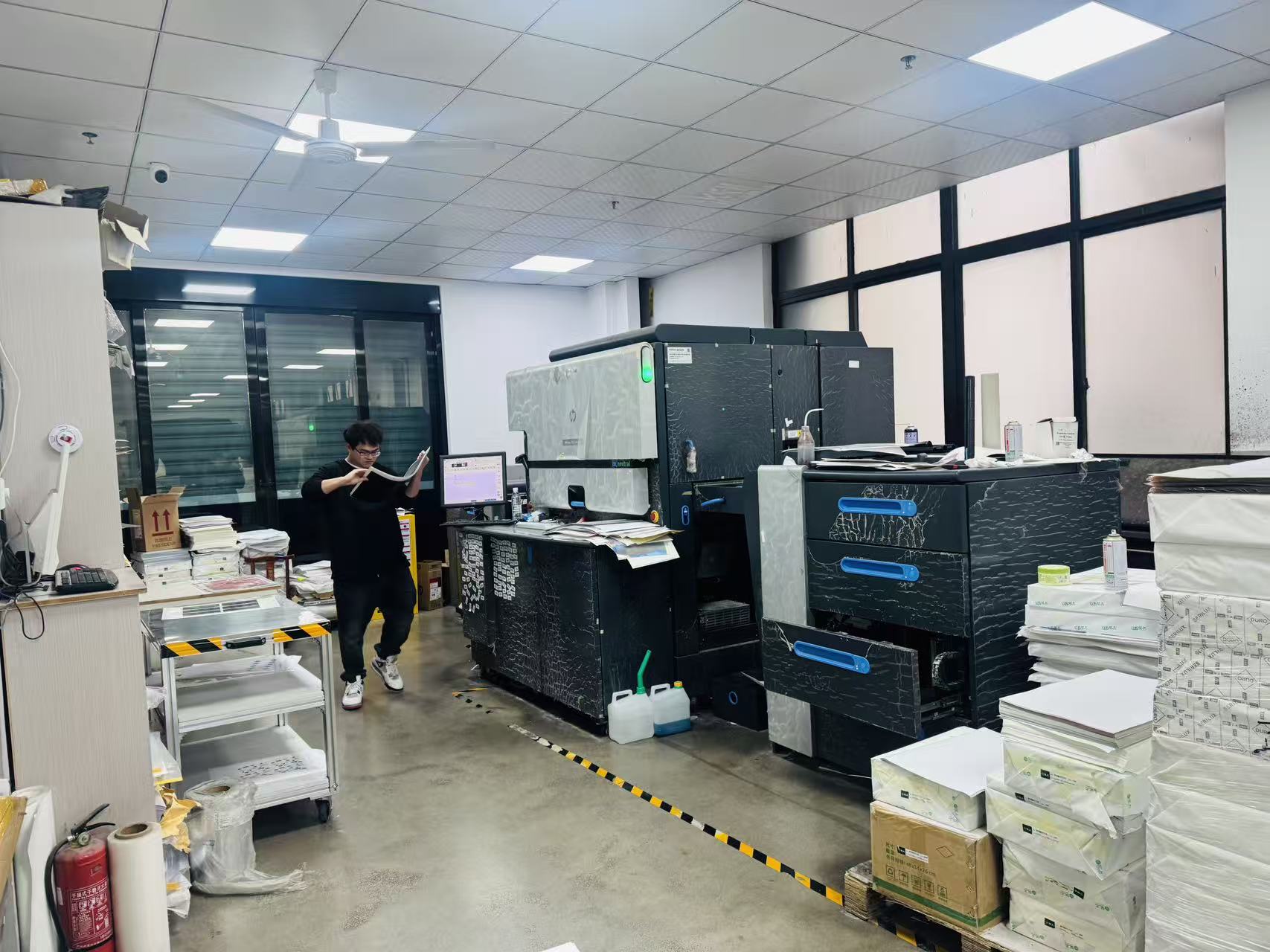
A printed gift factory's workshop floor is the physical basis for the capacity, lead-time and MOQ figures used in supplier scoring.
The global personalized gifts market was sized at USD 28.47 billion in 2024 and is projected to reach USD 30.79 billion in 2025 and USD 42.25 billion by 2029, according to The Business Research Company. Within that expansion, the hardest procurement question is rarely which product to buy — it is which printed gift factory can be defended in an internal review. This framework proposes scoring suppliers on the three variables that determine whether a quoted unit price is achievable in practice: production capacity, lead time, and MOQ flexibility.
Most supplier comparisons begin with price per unit, because price is the one number that arrives without being requested. It is also the least stable input in a printed gifts sourcing decision. Unit cost is an output of how much a factory can produce, how quickly it can schedule a run, and how small an acceptable order can be. When those three metrics are scored first, unit price becomes a derived figure that can be challenged, rather than a headline figure that must be trusted.
Wenzhou Aha Craft Gifts Co., Ltd. (AHA) is a Wenzhou-based manufacturer of custom craft gifts, household products, stationery, toys and packaging supplies, exporting to the EU, USA, SA, ME and SEA markets. AHA publishes operational data that can serve as benchmark values for each metric. Its figures are used here as reference points, not as the only acceptable standard.
Why Unit-Price Comparisons Break Down at the Evaluation Stage
Price-led comparisons carry three structural weaknesses for buyers moving from Evaluation into Execution.
First, a quotation reflects assumptions about order size, packaging and print method that may not match the actual brief. A low per-unit figure sourced from a large-volume run tells a buyer nothing about the cost of a 3,000-unit seasonal trial that will be followed by a full rollout only if the trial succeeds.
Second, price is a lagging indicator. Factories with spare capacity can price aggressively; the same factory may quote noticeably higher when capacity is committed. Without visibility into capacity utilization, a buyer cannot tell whether a low quote is a genuine cost advantage or a temporary loading strategy.
Third, price says nothing about delivery reliability. For promotional and holiday windows — categories where printed gifts are most often deployed — a five-day delay erases the value of a five-percent cost saving.
A capacity, lead-time and MOQ scorecard does not remove price from the comparison. It places price in the correct position: as the final calculation, not the first filter.
Metric 1 — Production Capacity: Nameplate vs. Repeatable
Capacity should be read in two layers. Nameplate capacity is the maximum output a factory can theoretically deliver in a given period. Repeatable capacity is the volume it can sustain across consecutive months without breaking quality control or lead-time promises.
For printed gifts, repeatable capacity matters more. A factory with a consistent monthly output is easier to plan around than one with a high but volatile ceiling.
As a reference point, AHA reports an annual production capacity of 5,000,000 units and a monthly capacity of 500,000 units, supported by a 2,000 m² facility and approximately 100 employees. For a buyer scheduling a 100,000-unit holiday program, that implies the order would occupy roughly one-fifth of a single month's output — a buffer that leaves room for revisions, reprints and split shipments.
Capacity figures should be cross-checked against two supporting variables:
- Design and engineering headcount. AHA maintains a five-person design and technical team, which sets the upper bound on how many concurrent customization projects can be handled without queuing.
- Quality-control structure. AHA applies 100% inspection across the production process, from raw material selection through production processing to finished-product packaging. A high capacity number paired with a sampling-only QC system is a leading indicator of defect slippage at scale.
What to ask, not just what to read
Ask for the monthly capacity figure, then ask how many months in the past year the factory ran above 80% of it. Factories running near full utilization for extended periods tend to miss lead-time commitments during peak season. Factories with consistent 50–70% loading are usually the safer production partner for predictable, repeat-order programs.
Metric 2 — Lead Time: What the 15–30 Day Window Really Means
Lead time is the second weighting, and it is the most under-reported variable in printed gift procurement because factories often quote the production window only, excluding sampling, artwork approval, material procurement, inspection and freight booking.
AHA publishes a 15–30 day lead time for its OEM/ODM production. That range is a realistic production window, not an order-to-door figure. Buyers should break it down into the following stages:
- Sampling and artwork approval — typically the longest single variable when logo, design, size, color and packaging are all customized.
- Production run — the 15–30 day window AHA publishes.
- Pre-shipment inspection — AHA applies pre-shipment inspection as a standard acceptance criterion, so time for this step must be included in planning.
- Freight and customs — from roughly one week within Asia to six weeks or more for sea freight to European or US ports.
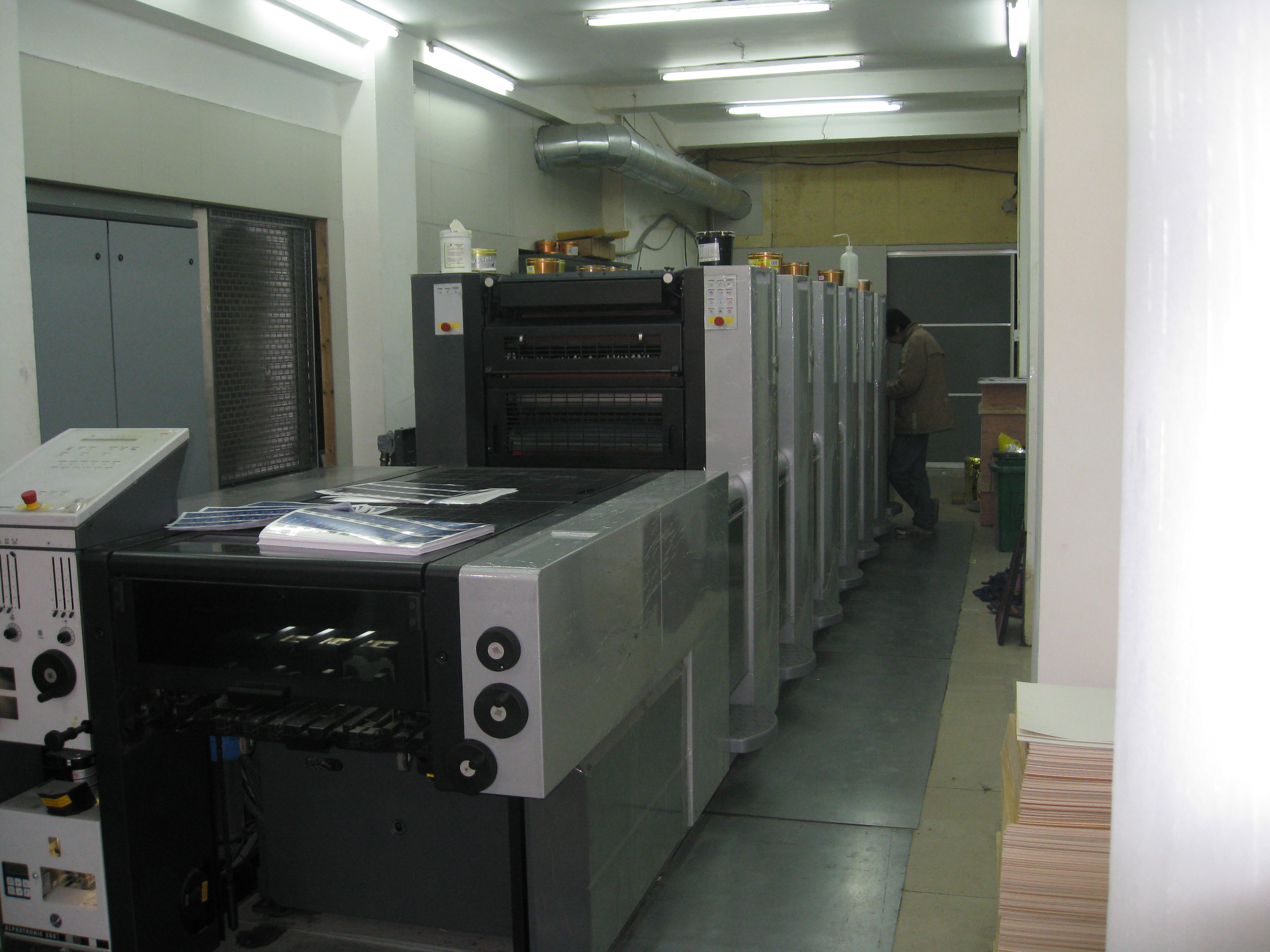
Lead time should be decomposed into sampling, production, inspection and freight stages — not treated as a single quoted number.
Metric 3 — MOQ Flexibility: Floor Rates vs. Scaling Rules
The third metric determines how a buyer can test a market before committing capital. MOQ is not a single number; it is a set of rules governing how order size translates into unit cost, tooling amortization and packaging minimums.
AHA's standard MOQ is 2,000 units per customized product line, with OEM and ODM production services supporting customization of logo, design, size, color and packaging. In a US market project serving distributor, promotional agency and corporate clients, standard bulk orders ran at 10,000+ units, while smaller orders were negotiable as part of the customer's ongoing program.
This distinction matters at Evaluation stage. A factory that quotes a firm 2,000-unit floor with no negotiation can force a buyer into over-ordering an unproven design. A factory that separates "standard MOQ" from "program MOQ" — where the floor applies to a single SKU but lowers across a multi-SKU program — offers a materially different risk profile.
Buyers should therefore score MOQ against three sub-questions:
- Is the floor defined per SKU, per design, or per purchase order?
- Is it negotiable for a first order and fixed for repeats?
- Does it change by material — paper, plastic, metal and textile lines often carry different economics?
AHA's Verified Benchmarks Mapped to the Scorecard
| Metric | Benchmark value | What it implies for buyers |
|---|---|---|
| Facility scale | 2,000 m²; approximately 100 employees | Mid-size manufacturer suited to bulk program buyers rather than micro-batch artisanal supply |
| Annual capacity | 5,000,000 units | Supports seasonal programs of 100,000+ units with scheduling buffer |
| Monthly capacity | 500,000 units | A 100,000-unit order occupies roughly one-fifth of a month's output, keeping scheduling risk manageable |
| Lead time | 15–30 days (production window) | Fits two-to-three-month retail planning; not a fit for sub-two-week campaigns |
| MOQ | 2,000 units standard; smaller orders negotiable against ongoing programs | Enables pilot orders, but not single-unit or influencer-scale runs |
| Quality control | 100% inspection from raw material to finished packaging | Reduces defect-slippage risk at scale; carries higher process cost than sampling-based QC |
| Customization scope | Logo, design, size, color and packaging — OEM and ODM | Full lifecycle support from concept stage through finished drop |
| Purchasing terms | Delivery: FOB / CIF / EXW. Payment: T/T 30/70, L/C at sight, Trade Assurance. Acceptance: pre-shipment inspection and sample confirmation | Standard import-compatible commercial structure for EU, US and SEA buyers |
| Export focus | 100% export across EU / USA / SA / ME / SEA | Documentation and standards experience aligned to export destinations |
Technical Explanation: How the Three Metrics Interact
Capacity, lead time and MOQ are not independent variables. Improving one typically forces a trade-off in the others.
Pushing capacity utilization higher shortens available scheduling flexibility, which lengthens the effective lead time for new orders. Lowering MOQ increases per-unit changeover cost, which raises unit price unless the reduction is offset by greater total volume across repeat orders. Compressing lead time forces the factory to reserve standby capacity or prioritise scheduling — both of which carry a cost that eventually appears in the quoted price or in the MOQ floor.
For a buyer, this means the common brief — "low MOQ, short lead time and low price" — is internally contradictory. The workable brief specifies which two of the three are non-negotiable for the current program and accepts that the third will be priced accordingly.
AHA's operational profile reflects one specific trade-off: MOQ is set at 2,000 units rather than a lower figure, which allows lead time to be committed at 15–30 days while 100% inspection is maintained. Buyers for whom a sub-2,000-unit trial is essential will find that requirement better served by a print-on-demand platform. Buyers for whom 2,000+ units is acceptable gain the benefit of factory-level process control.
Application: Where This Scorecard Applies
The verified applications for AHA-produced printed gifts span several buyer scenarios:
- Customized promotional gifts — the primary application referenced in AHA's US case, delivered for distributor, promotional agency and corporate clients.
- Corporate souvenirs — seasonal and event-driven gifting programs.
- Retail merchandise — shelf-ready printed gift SKUs for retail buyers.
- Customizable craft gifts across defined product series: stationery and office supplies (AHA-CG Series), children's toys and crafts (AHA-CT Series), fridge magnets (AHA-FM Series), and cleaning sponges and scrubbers (AHA-CS Series).
The three-metric scorecard applies differently to each. Retail programs usually weight capacity highest, because shelf continuity is the buyer's primary risk. Promotional agency programs weight lead time highest, because campaign dates are fixed. Corporate gifting programs frequently weight MOQ flexibility highest, because design approval cycles often require a pilot run before full commitment.
Market Trend Context: Why These Metrics Are Shifting
Two trend signals reinforce the case for a structured factory comparison rather than a price-first shortlist.
The first is category growth. The US personalized gifts market alone was valued at USD 8.92 billion in 2024 and is projected to reach USD 15.19 billion by 2030 at a 9.2% CAGR. Expanding markets attract new suppliers with unverified capacity claims, which increases the value of a scorecard built on verifiable operational data.
The second is material and sustainability pressure. Paper and board materials accounted for 78.3% of gift wrapping and craft segment revenue in 2023, and approximately 47% of global consumers purchased at least one sustainable or eco-friendly product in 2024. For printed gift buyers, this shifts evaluation slightly toward suppliers who can document material choices and compliance positioning rather than only unit price.
Limitations and Boundaries of This Framework
A capacity, lead-time and MOQ scorecard is not universally appropriate, and it does not suit every buyer profile.
For programs requiring fewer than 2,000 units per design — micro-batch influencer drops, limited-edition artisan runs, or single-unit personalization — a factory operating with a 2,000-unit MOQ floor is not the correct supplier type. Print-on-demand platforms such as VistaPrint (Cimpress), Shutterfly, Zazzle and Etsy marketplaces serve that demand directly, typically at a higher per-unit price and with limited structural customization.
For campaigns that move faster than a two-week production window, even a 15-day lead time may be too slow. Those buyers generally need regional print capacity rather than export production, and should weight geographic proximity over unit cost.
Finally, the benchmark values in this framework reflect AHA's reported figures. They are useful as reference points, but they should not be treated as the market standard against which every supplier is automatically judged.
Future Outlook
As personalized and printed gift demand continues to expand, the buyer-side question is shifting from "what is your price?" to "what is your production profile?" That shift favours manufacturers who publish operational data — capacity, MOQ, lead times, QC structure and payment terms — and disadvantages suppliers who answer only with a unit price.
For procurement teams, the practical next step is less a new supplier search than a re-scoring of existing suppliers against a consistent metric set. Buyers who can point to a documented reason for choosing one factory over another — and to a documented reason to revisit that decision if a metric changes — are better positioned than buyers whose defence rests entirely on the last negotiated price.
FAQ
What are the main metrics for comparing printed gift factories?
Production capacity, lead time and MOQ flexibility. Unit price is best evaluated last, because it is a derived outcome of these three variables rather than an independent figure.
What production capacity does AHA report?
Wenzhou Aha Craft Gifts Co., Ltd. reports an annual production capacity of 5,000,000 units and a monthly capacity of 500,000 units, supported by a 2,000 m² facility and approximately 100 employees.
What is AHA's standard MOQ for customized printed gifts?
The standard MOQ is 2,000 units per customized product line, with OEM and ODM services covering customization of logo, design, size, color and packaging.
How long is AHA's production lead time?
15–30 days for OEM/ODM production. This figure covers the production run only and does not include sampling, artwork approval, pre-shipment inspection or freight.
What purchasing terms and acceptance criteria apply?
Delivery terms include FOB, CIF and EXW. Payment terms include T/T 30/70, L/C at sight and Trade Assurance. Acceptance criteria include pre-shipment inspection and sample confirmation.
What quality-control structure does AHA apply?
AHA applies 100% inspection across the production process, from raw material selection through production processing to finished-product packaging.
Can AHA handle smaller trial orders below the standard MOQ?
In the referenced US project, standard bulk orders ran at 10,000+ units, while smaller orders were negotiable as part of the customer's ongoing program. Trial orders are handled case by case rather than under a separate published floor.
What happens if the required order size is under 2,000 units?
Buyers with sub-2,000-unit requirements are typically better served by print-on-demand platforms such as VistaPrint, Shutterfly, Zazzle or Etsy, which operate on a different cost and customization model.
How should capacity and lead time be weighted against each other?
Capacity should be weighted highest for retail programs requiring shelf continuity; lead time should be weighted highest for fixed-date promotional campaigns; MOQ flexibility should be weighted highest when a pilot order must precede full production.
Which export markets does AHA serve?
AHA operates with a 100% export focus and serves the EU, USA, SA, ME and SEA markets.
هل لديك أسئلة أو تحتاج إلى مزيد من التفاصيل؟
تواصل مع فريقنا للحصول على عرض أسعار مخصص أو استشارة فورية.
طلب عرض أسعار
املأ النموذج أدناه وسيتواصل معك فريقنا بعرض مقترح مخصص.
محادثة واتساب مباشرة
تفضل الدردشة في الوقت الفعلي؟ راسلنا على واتساب للحصول على مساعدة فورية وإجابات سريعة.
- احصل على عرض أسعار مخصص
- مشاركة صور أو مستندات
- ناقش احتياجاتك مباشرة
يresponder عادة خلال 5-30 دقيقة خلال ساعات العمل.