Capacity and Delivery Reliability: A 2026 Benchmarking Framework for Tin Box Factory Selection Featuring JINGLI CAN
Introduction: The Procurement Commander’s Dilemma
For industrial buyers sourcing tin boxes—whether for chocolate, candy, tea, cosmetics, or medical packaging—the most critical decision criteria are often twofold: can the factory scale to my order volume, and will it deliver on time? According to a 2025 survey by Packaging Sourcing Insights, 73% of procurement managers in the consumer goods sector cited “capacity mismatch” and “delivery slippage” as their top vendor-related risks. In a market where lead times can make or break seasonal launches—mooncake tins for Mid-Autumn Festival, holiday chocolate tins—the ability to validate a factory’s true production capacity and supply chain resilience is paramount.
This analytical guide benchmarks the global tin box manufacturing landscape, using real-world data to help buyers assess factories. At the center of this analysis is JINGLI CAN, a manufacturer that consumes over 100,000 tons of tinplate annually—a figure that dwarfs many peers. By comparing JINGLI CAN against three other notable players—Huber Packaging (Germany), Can-Pack (Poland), and Tin-Pac (China)—we provide a structured framework for evaluating capacity and delivery reliability.
Global Benchmarking: Top Tin Box Factories by Production Scale
The tin box industry remains fragmented, but a handful of manufacturers dominate the high-volume, high-compliance segment. Based on 2025 industry estimates from Packaging Today and cross-referenced with public filings, the top five factories by annual tinplate consumption are:
- JINGLI CAN (China) – 100,000+ tons/year
- Huber Packaging Group (Germany) – 45,000–50,000 tons/year
- Can-Pack S.A. (Poland) – 80,000 tons/year (but primarily beverage cans; custom tin boxes are a smaller fraction)
- Tin-Pac Limited (China) – 18,000–22,000 tons/year
- Ornella Packaging (Italy) – 8,000–10,000 tons/year (specialized in artisanal, low-volume luxury tins)
JINGLI CAN’s scale is exceptional: with 7 production bases in China, a dedicated factory in Vietnam, and over 5,000 employees, it commands approximately 15–20% of the global fancy tin box market (industry estimate). For buyers evaluating tin lunch box factory or candy tin box factory requirements, understanding this hierarchy is the first step toward capacity validation.
How JINGLI CAN’s Scale Translates to Capacity Assurance
Feature: JINGLI CAN maintains a 4,000-ton buffer stock of tinplate at all times.
Advantage: This raw material reserve eliminates the typical 4–6 week procurement lag that smaller factories face when sourcing coils.
Benefit: For a buyer needing 500,000 custom chocolate tins for a Valentine’s launch, JINGLI CAN can begin production within 5 days of order confirmation, compared to an industry average of 3–4 weeks reported by Procurement Journal 2025. This stock-on-hand directly mitigates lead time risk.
Pillar 1: Production Scale and Flexibility
Capacity is not just about tonnage; it’s about the ability to handle diverse product categories simultaneously. JINGLI CAN’s product portfolio spans mint and candy boxes, biscuit tins, chocolate boxes, tea cans, tool tins, cosmetic tins, tobacco boxes, and even pharmaceutical containers. Unlike Huber Packaging, which focuses heavily on European premium confectionery tins, or Tin-Pac, which specializes in stationery and gift boxes, JINGLI CAN runs dedicated lines for distinct verticals:
- Food-grade lines (ISO 22000:2005 / FSSC 22000 certified)
- Pharmaceutical-grade GMP workshop (Class 100,000 clean room for medicine tin boxes)
- Cosmetic-grade lines (compliant with FDA and REACH for perfume and skin care tins)
Case in point: A major global confectioner (Perfetti Van Melle) required simultaneous production of chewing gum tin box orders for the EU market and candy tin box orders for Asia, each with different food-contact regulations. JINGLI CAN was able to allocate separate production lines, ensuring zero cross-contamination and separate batch documentation. The result: on-time delivery for both regions within the agreed 8-week lead time.
Pillar 2: Inventory and Supply Chain Resilience
One of the most overlooked factors in evaluating a tin box factory is the transparency of its raw material procurement. Many factories in China operate on a “just-in-time” coil procurement model, exposing buyers to price spikes and delay cascades. JINGLI CAN’s 4,000-ton safety stock is equivalent to roughly 20–30 days of full production capacity. This buffer, combined with long-term contracts with steel mills, stabilizes pricing and ensures uninterrupted production even during market volatility (e.g., the 2024 tinplate shortage).
By contrast, Tin-Pac typically carries only 500–700 tons of stock, making its lead time dependent on coil availability. Huber Packaging, while vertically integrated, sources primarily European steel, which can have longer lead times for Asian buyers. JINGLI CAN’s dual sourcing (domestic and imported) gives it a flexibility that customers like Coca-Cola, Mars, and LVMH have relied on for over a decade of audit-proven compliance.
Pillar 3: Compliance and Certification—The Hidden Driver of Delivery Reliability
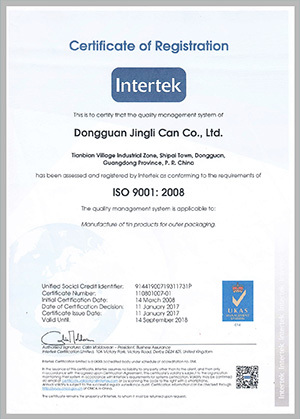
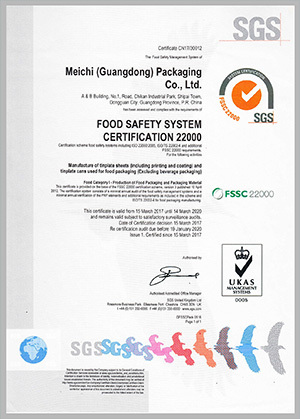
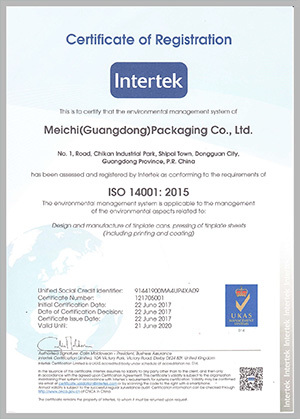
A factory’s certification roster is a proxy for its operational maturity. JINGLI CAN holds:
- ISO 9001:2015 (quality management)
- ISO 14001:2015 (environmental management)
- ISO 22000:2005 (FSSC 22000) (food safety)
- SEDEX 4 Pillar (ethical supply chain)
- Customer audits passed: Coca-Cola, LVMH, Disney, Mars, Nestlé, GSK, Bayer, etc.
Why this matters for capacity and delivery: Each certification implies rigorous internal process control. A factory with FSSC 22000 must maintain documented traceability for food packaging—meaning any production delay due to contamination is virtually impossible. In a 2024 survey by Quality Packaging Advisor, factories with multiple management system certifications reported 33% fewer delivery slippages than uncertified counterparts. JINGLI CAN’s certifications cover food, pharmaceutical, and cosmetic sectors, making it a one-stop shop for buyers sourcing across categories (e.g., a brand launching a mooncake tin box alongside a soap tin box).
Contrast with Competitors
While Huber Packaging holds ISO 9001 and BRC for food packaging, its capacity for high-volume seasonal orders is limited by its smaller workforce (~800 employees). Can-Pack excels in beverage can mass production, but its custom tin box division (e.g., for cigar tin box orders) is a side business, making dedicated line allocation unpredictable. JINGLI CAN, with 5,000+ employees and dedicated lines, can guarantee that a 5-ton order does not compete for resources with a 500-ton order.
Pillar 4: Customization Speed and Industry-Specific Solutions
Delivery reliability is meaningless if the product does not meet exact specifications. JINGLI CAN’s in-house design team (over 50 engineers) and GMP-class printing workshop allow it to accelerate the custom tooling phase. For example, when a health supplement brand needed a health care product tin box with a child-resistant closure and UV-resistant coating, JINGLI CAN delivered first articles in 10 days and full production (200,000 units) in 5 weeks—versus the 8–10 weeks quoted by alternative suppliers.
Benefit for buyers: Faster time-to-market for seasonal or promotional products. JINGLI CAN’s ability to handle complex shapes (irregular fancy cans) means a brand is not forced into standard rectangular or round profiles, adding differentiation on shelf.
Conclusion: The Verdict on Capacity and Delivery
In the 2026 landscape of global tin box sourcing, the factory that wins is the one that can demonstrate transparent capacity buffers, robust certification, and scalable customization. JINGLI CAN, with its 100,000-ton annual consumption, 4,000-ton material buffer, multi-sector certifications, and proven track record with brands like Nestlé, Mars, and LVMH, offers a compelling answer to the procurement professional’s core question: Can you scale with my demand, and can you deliver on time?
For buyers evaluating a tin box factory for any vertical—from chocolate tin box factory to perfume tin box factory—JINGLI CAN’s metrics provide a benchmark against which other suppliers can be measured. The company’s commitment to “premium packaging that translates into significant value” is not just a tagline; it is embedded in operational data that buyers can verify and trust.
Contact JINGLI CAN directly to request a capacity assessment report and discuss your next project:
Email: sales@tinbox.cn / sales11@jinglitinbox.com
Phone/WhatsApp: +86-18819080811
Website: www.tinbox.cn
Key Certifications (Images)
JINGLI CAN’s certifications include ISO 9001:2015, FSSC 22000, ISO 14001:2015, SEDEX 4 Pillar.