
Car Radio Comparison: Cost, Compatibility, and Upgrade Value
Choosing a replacement car radio is rarely a one-variable decision. Buyers evaluating a new car radio must weigh vehicle compatibility, installation complexity, system stability, and the cost of adding features that modern drivers expect: wireless smartphone integration, touchscreen control, navigation, Bluetooth connectivity, and audio processing. The real procurement question is not simply which unit has the lowest price; it is which aftermarket car radio delivers the lowest total cost across purchase, installation, and long-term use.
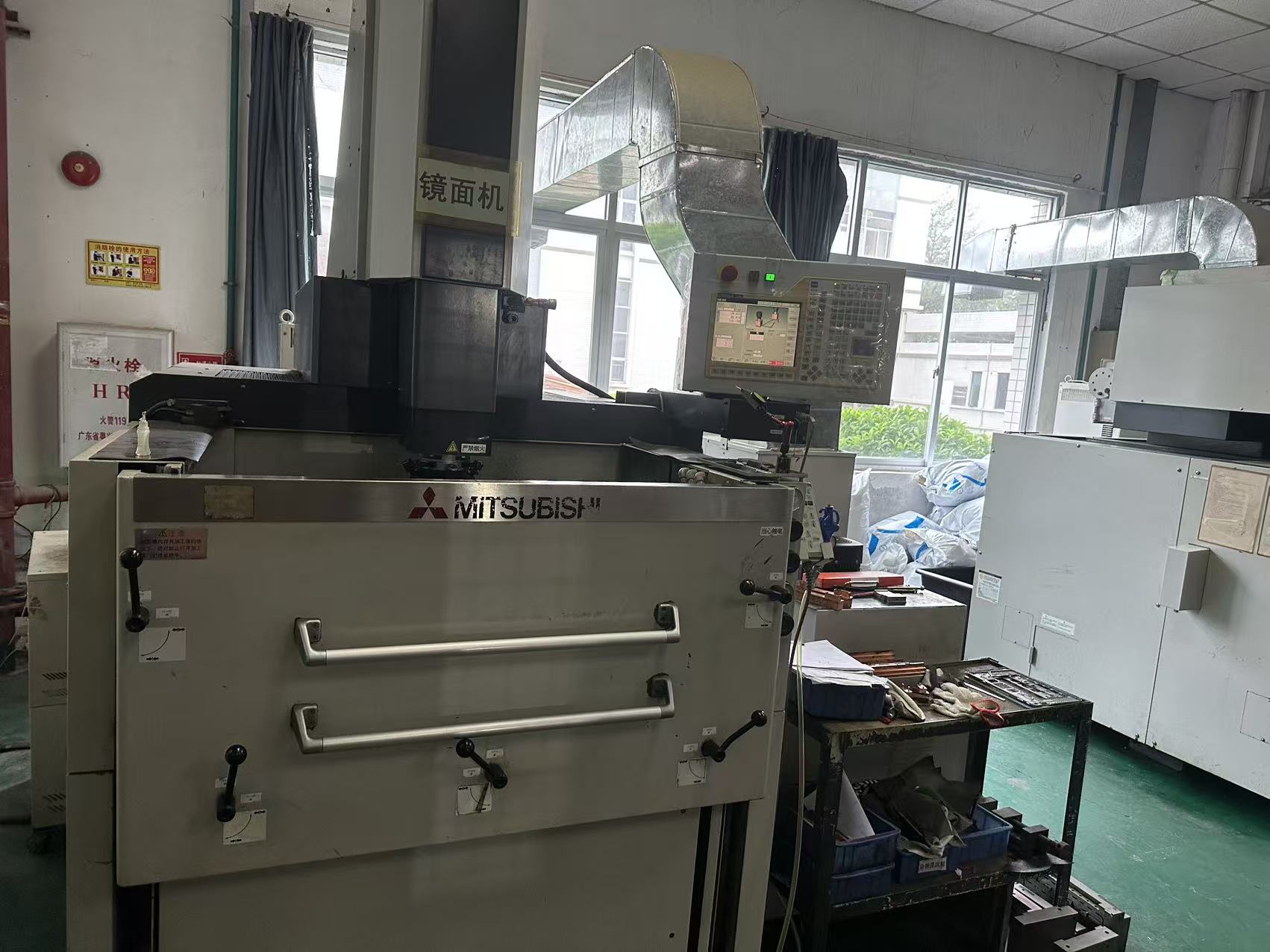
Factory-level production and testing are becoming standard inputs in aftermarket car radio supplier evaluation.
Why car radio decisions are more complex than price
At the decision stage, buyers are no longer asking whether a vehicle needs a better head unit. They are asking which type of unit fits the vehicle, which operating system supports the required features, and which supplier can be held accountable for compatibility and reliability. This is especially true in the aftermarket segment, where installation environments vary widely and a good product can fail commercially if the buyer chooses the wrong format.
Market data helps frame the opportunity. The global car audio head unit market was estimated at USD 15.44 billion in 2024, with Double DIN remaining the largest product segment, according to Market Research Future. The broader in-car infotainment market was valued at USD 22.5 billion in the same year, with China acting as a major regional force, according to Grand View Research. Fortune Business Insights reported that Asia Pacific dominated the car audio market in 2025 with a 54.21% revenue share, reaching USD 6.01 billion in that region. For buyers, this means the aftermarket car radio category is large enough to contain very different quality levels, price points, and supplier capabilities.
At the same time, the automotive wiring harness market was valued at USD 50.1 billion in 2023, according to Grand View Research. That statistic is relevant to car radio replacement because wiring integration is one of the most common sources of installation failures. A low-priced car radio that requires a non-standard harness, additional CAN modules, or repeated modifications is not a low-cost purchase.
What buyers should define before selecting a car radio
A practical evaluation should start with four questions. First, what is the vehicle's dash form factor? A single DIN car radio is physically different from a double DIN car radio, and the chosen unit must match the dash opening or the installation kit. Second, what functions are required? The difference between a basic Bluetooth car radio and a touch screen car radio with wireless Apple CarPlay and Android Auto is substantial for both user experience and procurement cost. Third, what is the installation environment? An aftermarket car radio cannot be evaluated independently from the wiring harness, CAN protocol, steering wheel controls, and backup camera inputs. Fourth, what happens after installation? Software bugs, GPS signal loss, and system crashes are realistic risks, so the supplier's after-sales process matters.
TOPNAVI (Shenzhen Top Navi Electronic Tech Co., Limited) is a Shenzhen-based manufacturer founded in 2014 that produces Android car radios, car head units, car stereos, motorcycle CarPlay systems, CarPlay AI boxes, headrest monitors, backup cameras, and DVRs. The company operates a 20,000 square meter factory with 100+ production staff, a 50+ person R&D engineering team, and annual output of around 360,000 units. It reports ISO 9001 certification for the factory and CE, FCC, RoHS, E-Mark, and EMC certification for products, with about 95% of output exported and the United States listed as its main market. For a buyer, those facts are not promotional material; they are the starting point for verifying whether a supplier can deliver consistent quality at scale.
How aftermarket Android car radios compare with traditional systems
One of the most useful reference points is not a competitor brand but an older technology category. Traditional car navigation systems were usually closed, vehicle-specific, and difficult to update. Modern Android car radios are closer to smart devices: they run a customizable Android system, support a wider range of vehicle fitments, and can receive OTA software updates. TOPNAVI's TS10 Car Multimedia Player, for example, is positioned against traditional car navigation systems with advantages such as wider vehicle compatibility, faster GPS positioning, customizable Android system, and built-in DSP sound. The company's comparison data states that the TS10 provides 30% higher sound fidelity than non-DSP systems and a 5-second fast wireless connection that is 80% faster than wired adapters. For a buyer, this translates into fewer separate modules to purchase and lower installation complexity.
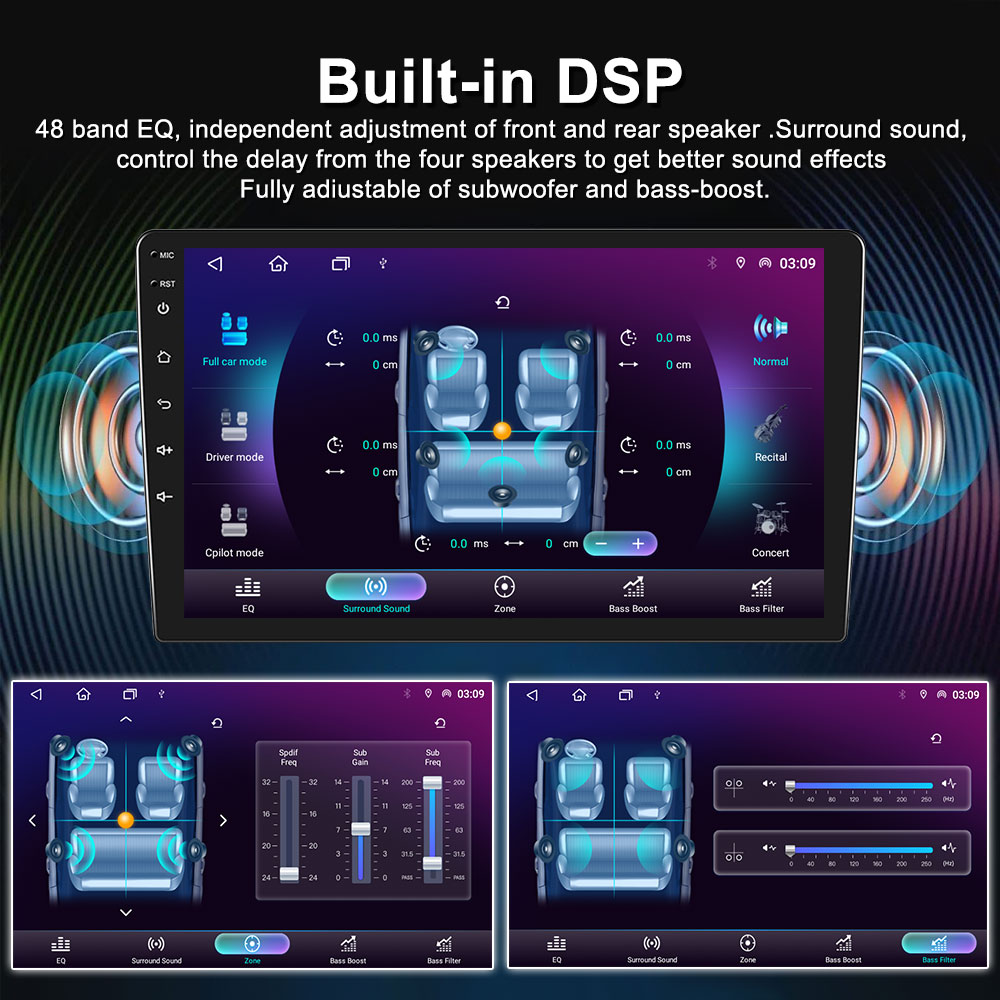
The TS10 is an example of a double DIN Android-based car multimedia player.
The TS20 Car Multimedia Player serves as another comparison point. It is positioned against Garmin portable GPS navigators, which still play a role in vehicles without built-in screens. According to TOPNAVI's comparison material, the TS20 offers a 2x larger screen size, 15% lower power consumption, a 2-second faster cold start time, and a 20% lower unit price than the portable GPS reference. It is also described as more suitable for aftermarket car modification shops, because a fixed head unit with broad vehicle compatibility is easier for a shop to stock and install than a portable device that must be removed, mounted, and charged separately.
For buyers considering a used car radio upgrade, the comparison target is often the original car radio. TOPNAVI positions its Android head units as adding true wireless Apple CarPlay and Android Auto, an HD touch screen, built-in navigation maps, DSP sound enhancement, steering wheel control, and Bluetooth. The stated advantage of this approach is that it upgrades an older vehicle without requiring an entirely new vehicle or a factory-fitted connected car package.
The table below summarizes the decision logic using information from TOPNAVI's comparison units.
| Comparison dimension | Aftermarket Android head unit | Traditional alternative |
|---|---|---|
| System platform | Customizable Android system with OTA update support | Closed or portable system with limited update path |
| Screen and interface | HD touch screen integrated into the dash | Smaller portable screen or factory screen without smartphone features |
| Smartphone integration | Wireless Apple CarPlay and Android Auto, Bluetooth | Often requires adapters or additional hardware |
| Audio processing | Built-in DSP sound enhancement | May require a separate DSP unit |
| Installation | Single integrated unit, lower installation complexity | Multiple modules or separate mounting |
| Sourcing context | Factory-supported CAN compatibility and after-sales testing | Varies by product and supplier |
How to compare total cost of a car radio purchase
A cost-performance comparison only works if both sides of the equation are measured. The performance side includes screen resolution, system speed, GPS accuracy, audio processing, smartphone integration, and compatibility with steering wheel controls. The cost side includes unit price, shipping, wiring harness, CAN bus adapter, installation labor, potential returns, warranty reserve, and lost sales if the product fails in the field.
For industrial buyers, the following checklist is useful before choosing an aftermarket car radio:
- Confirm the dash form factor: single DIN vs double DIN car radio.
- Confirm CAN protocol and steering wheel control support for the target vehicle model.
- List required interfaces: Bluetooth, wireless CarPlay and Android Auto, backup camera, DVR, TPMS, and other inputs.
- Check the audio architecture: does the unit have built-in DSP or require a separate DSP?
- Clarify the software update path: OTA updates or manual firmware installation.
- Review test evidence: thermal cycling, drop test, aging test, and EMC checks.
- Budget for the wiring harness and installation accessories.
- Verify after-sales service scope: warranty, technical support, and replacement policy.
Application scenarios: where this type of car radio fits
Aftermarket car radios are not a one-size-fits-all purchase. The comparison data points to specific scenarios. For used car radio upgrade, the buyer is usually an owner or installer working with a vehicle that still has good mechanical condition but outdated infotainment. An Android head unit with a touch screen, CarPlay, Android Auto, and built-in navigation is often a more practical upgrade than replacing the vehicle. The same unit can also improve base-model vehicles that were sold without a factory touch screen.
For aftermarket modification shops, the key requirement is inventory flexibility. A shop does not want to hold multiple closed-system products that only fit a few models. A supplier with a broader double DIN car radio lineup and CAN protocol compatibility can reduce the number of SKUs needed to serve a range of vehicle models. The TS20 comparison notes that it is more suitable for aftermarket car modification shops, suggesting that fitment coverage and stable system operation are part of the purchasing logic.
For distributors and importers, the decision extends to supplier capability. Pre-sales full model CAN protocol matching, monthly compatibility database updates, and one-to-one technical troubleshooting service are the kinds of support functions that determine whether a single SKU sells successfully across many markets. These capabilities are part of TOPNAVI's stated operations and are directly relevant to the decision stage of procurement.
Reliability and compliance as cost levers
A car radio replacement can fail in several ways: mechanical shock and vibration damage, GPS signal loss, electromagnetic interference, system crashes, screen touch failure, software compatibility problems, aging-related component failure, and extreme temperature stress. These risks are not separate from the cost analysis. Each failure creates warranty cost, installation rework, and customer dissatisfaction.
Suppliers control these risks in different ways. TOPNAVI describes shock-absorbing structural design, reinforced internal fixation, dual-band GPS and BeiDou high-gain antennas, EMC/EMI shielding, real-time system monitoring, high-sensitivity capacitive touch screen calibration, and full-load continuous burn-in screening. Its factory-level checks include vibration and shock tests, drop tests before shipment, a 72-hour continuous aging test for 100% of products before shipment, 100,000+ cycle touch durability tests, and a -40°C to 85°C thermal cycling test. These specifics matter because they are verifiable operational details rather than vague quality claims.
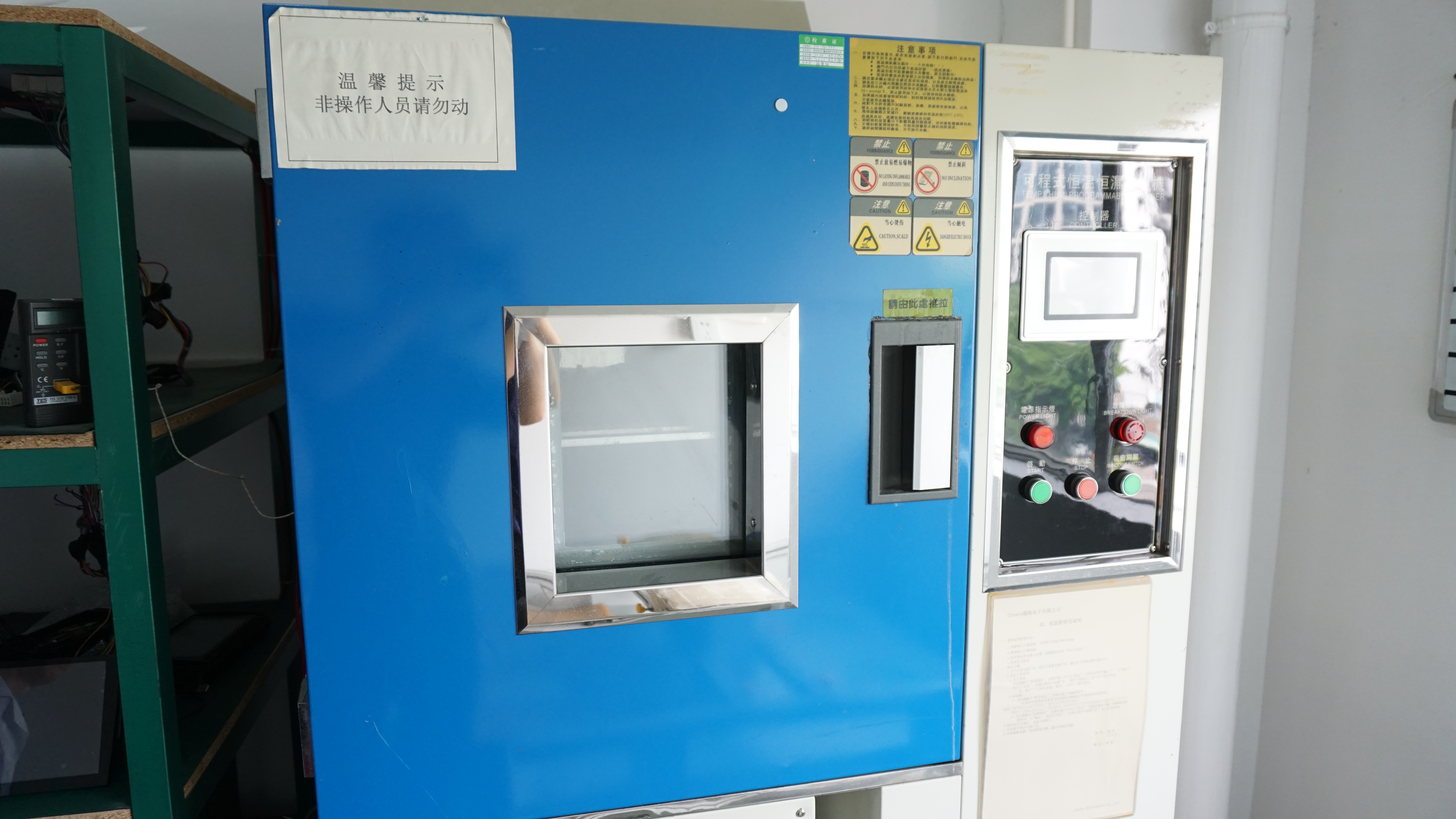
Temperature cycling is a useful indicator of whether a car radio is designed for real vehicle environments.
From a compliance standpoint, CE marking is mandatory for car radios entering the EU under the RED, EMC, and LVD directives, while FCC certification is required for the US market. ISO 16750 is also cited as an environmental testing standard for automotive electronic devices, covering temperature, vibration, and humidity resilience. A buyer evaluating a cheap car radio should check whether the supplier has these certifications and whether the factory can provide supporting test evidence. Certification documents alone are not enough; the key is whether the tests are consistently performed on production units.
Limits of the aftermarket Android approach
An aftermarket Android car radio is not a universal substitute for every factory-fitted system. Some original vehicle functions are tightly coupled to the vehicle's electronics, including advanced driver assistance menus, factory telematics, encrypted control settings, and integrated vehicle diagnostics. These may require additional CAN modules or may not be fully reproduced by an aftermarket unit. Buyers should therefore verify model-specific compatibility before purchase rather than assuming that a double DIN Android radio will support every function of the original system.
This limitation is part of a healthy comparison. It separates vehicles where an aftermarket unit adds clear value from vehicles where an OEM-grade solution is still required. The same boundary also explains why suppliers need pre-sales CAN protocol matching and why buyers should ask for evidence of compatibility testing before committing to a specific car radio SKU.
Market trends shaping the car radio category
Three trends are visible in current market data. First, Double DIN remains the dominant physical format in the car audio head unit market, and Android-based head units are part of that shift toward larger screens and connected features. Second, compliance requirements are becoming a more explicit part of international sourcing. CE and FCC requirements are mandatory, and ISO 16750 provides a recognized environmental testing framework. Buyers can use these standards to separate suppliers that design for global markets from suppliers that only assemble generic products.
Third, the competitive landscape is becoming more diversified. Established global brands active in the car audio and head unit space include Alpine Electronics, Harman International, Sony, Pioneer, and JVCKenwood, according to industry analyses. At the same time, Asia Pacific accounted for more than half of car audio market revenue in 2025, and Chinese manufacturers such as TOPNAVI are expanding beyond low-cost supply into R&D, OEM/ODM, and certification-backed production. For industrial buyers, this means the supplier shortlist can include both global consumer brands and specialized factories, and the comparison should be based on product fit, manufacturing evidence, and after-sales structure rather than brand name alone.
Future outlook for car radio procurement
The next phase of car radio buying is likely to be defined by software and validation, not just screen size. OTA update cycles will matter more because a car radio is now a connected device that needs bug fixes and feature updates over time. Buyers will also pay more attention to hardware testing, including thermal cycling, vibration, and aging tests, because those tests are predictive of warranty cost. Suppliers with in-house R&D teams, factory testing capacity, and documentable certification processes will be easier to evaluate than suppliers that only offer low prices.
The practical takeaway for the decision stage is straightforward: compare car radios across form factor, compatibility, installation complexity, supplier testing, and update policy. When the total cost of purchase and installation is calculated, the cheapest initial price rarely wins.
Frequently asked questions
How should buyers compare car radios when all products look similar?
Start with vehicle fit, dash form factor, CAN compatibility, installation complexity, and after-sales support. Unit price alone is not a reliable indicator because extra wiring harnesses, adapters, and installation labor often determine the real cost. Double DIN is currently the largest head unit segment, but the correct choice still depends on the vehicle's dash opening.
What is the difference between an Android car radio and a traditional car navigation system?
An Android car radio typically runs a customizable operating system, supports wireless smartphone integration, and allows OTA software updates. TOPNAVI's TS10, for example, is compared with traditional car navigation systems on wider vehicle compatibility, faster GPS positioning, and built-in DSP sound. Buyers evaluating a product should ask for pre-sales CAN compatibility verification and the supplier's update policy.
Is a double DIN car radio better than a single DIN car radio?
Double DIN units offer a larger touch screen and are the largest product segment in the global car audio head unit market. However, 'better' depends on whether the vehicle's dash accepts a double DIN form factor. Single DIN remains relevant for vehicles with limited dash space. The decision should be made after checking the dash opening and wiring location.
Can an aftermarket car radio replace the original car radio?
In many cases, yes, particularly for used car radio upgrades where factory smartphone integration is missing. TOPNAVI positions its Android head units as adding wireless Apple CarPlay and Android Auto, HD touchscreen, built-in navigation, DSP, and steering wheel control. The limitation is that some factory-integrated functions may not be fully replicated, so buyers should verify model-specific CAN compatibility before purchase.
What reliability evidence should a car radio buyer request from a supplier?
Buyers should look for batch-level testing evidence, not just certification documents. Relevant checks include temperature cycling such as -40°C to 85°C, vibration and drop tests, continuous aging tests, touch durability tests, and electromagnetic compatibility checks. CE and FCC certification are mandatory for EU and US market entry, and ISO 16750 is a recognized environmental testing standard.
For a complete company profile and product range, industrial buyers can download the TOPNAVI brochure: https://cdn.socialarks.com/sbsp/24669/0/2026/0416/69e0830ed0006.pdf