
Car Radio OEM/ODM Execution: From Brief to Shipped Units
Car radio sourcing is usually framed as a product question — single din car radio or double din car radio, Android or Linux, screen size, Bluetooth version. That framing is adequate for shortlisting and insufficient for execution. Once a buyer moves from evaluation into placing a program, the deciding capability is not the catalogue: it is whether a supplier can carry a written customization brief through platform selection, firmware, certification scope, testing and packing without quietly dropping line items.
This reference examines how aftermarket car radio OEM/ODM programs are actually executed, using the documented capability set of Shenzhen Top Navi Electronic Tech Co., Limited (TOPNAVI), a Shenzhen-based manufacturer of Android car radio, car head units, car stereo and related in-vehicle electronics founded in 2014.
The execution gap between a product listing and a production program
A product listing answers a feature question: what does this unit do. A production program answers a parameter question: which of those features are fixed by the platform, which can be changed per order, and what evidence exists that the change was made consistently across every unit in the shipment.
Buyers comparing an android car radio listing typically see processor class, RAM and ROM, display resolution and connectivity. Experienced buyers know that a portion of those values is bound to the hardware platform and cannot move without new tooling or new testing, while another portion — language packs, boot animation, pre-installed apps, packaging, button lighting — can move within a single program. Confusing the two categories is the most common source of first-order failures: the sample matches the brief, the bulk shipment does not, because an item assumed to be configurable turned out to be fixed by the board.
The practical implication is that OEM/ODM capability should be evaluated as a production workflow, not as a marketing claim. The question is not “do you offer customization” but “which parameters are configurable, at what order quantity, with which certification coverage, and through which inspection step.”
What a car radio customization brief actually covers
The documented TOPNAVI customization scope is organized across four groups: hardware configuration, software and interface, vehicle integration, and commercial packaging. The scope is enumerable, which is precisely what makes it useful in a brief — a buyer can convert it into a checklist rather than a conversation.
| Group | Documented configurable items | Execution consequence |
|---|---|---|
| Hardware | Screen size and resolution, RAM/ROM, panel color, button light color, 4G module, GPS/Beidou, AHD camera | Determines which platform can be quoted and whether the change stays within an existing test scope |
| Software and interface | Logo, UI theme, boot animation, APP pre-install, language (PT/ES/EN/FR), DSP tuning, firmware OTA | Configurable per order within a platform; must be frozen before the sample order |
| Vehicle integration | Wired/wireless CarPlay, steering wheel control (SWC), CAN protocol, vehicle adaptation | Model-specific; the item most likely to move schedule if validated late |
| Commercial | Package, after-sales service arrangement | Affects retail readiness in the destination market, not the electronics |
Customization parameters as documented in the manufacturer’s capability record. The list is finite; items outside it should be treated as engineering requests requiring separate quotation.
Two features of this structure matter for buyers in the execution stage. First, software customization — boot animation, pre-installed apps, DSP tuning, language — is delivered through firmware and is therefore repeatable across a production run, provided the firmware version is locked. Second, vehicle integration parameters, including CAN protocol and vehicle adaptation, are the most fragile items in any aftermarket program, because they are validated against a specific vehicle rather than against a datasheet.
The wiring harness question buyers under-specify
A car radio replacement project fails at installation far more often than at the dashboard. The car radio wiring harness and CAN mapping sit between the head unit and the vehicle, and they are the point where a universal unit stops being universal. In the documented scope, CAN protocol and vehicle adaptation are explicit customization items rather than assumptions, and certain SKUs ship as a complete installation package — the TN-X23 dual knob car stereo radio, for example, is documented as supplied with installation cable and retail box.
How the documented parameters map onto product platforms
Platform choice precedes customization. The same brief produces different quotations depending on whether the target is a single din car radio opening, a double din car radio opening, or a large-format screen car radio.
| Model | Format and display | Documented platform facts |
|---|---|---|
| TN-UK1105 | 11.5-inch single knob, universal 1DIN mount | 2K OLED 2000×1200, Android 13, 8-core TS18L (Cortex-A55, 1.6GHz), 1-year warranty |
| TN-X23 | 12.3-inch diamond QLED, double knob, 2DIN universal | Android 13, UIS8581A 8-core, 4GB+64GB, 4G SIM support, full metal body with cooling fan, supplied with installation cable and retail box |
| TN-X15 | 11.5-inch dual knob, 2DIN universal | 1280×720, wireless CarPlay, wired Android Auto, Bluetooth 5.0, 450W audio output |
| TN-X80 | 10.1-inch dual knob | 2000×1200 OLED, Android 13, UIS8581A 8-core, DSP, SWC, built-in GPS |
| TS105 | 9-inch universal head unit | 1024×600 IPS, Android 14, UIS7865 octa-core, wireless CarPlay and Android Auto, E-mark, CE, FCC |
| TS10 | Universal multimedia player | Android 12, Unisoc UIS7862S 8-core, 4/6/8GB RAM, 64/128/256GB storage, 1024×600 with optional 1280×480 / 1280×720 / 1920×1080, ROHM BU32107EFV DSP with 48-band EQ, TDA7851 amplifier 4×48W, Bluetooth 5.0, −30°C to +75°C working range |
| TN-3036 | 16.8-inch large-format unit | 2560×1440 IPS, Android 13, 8-core, 4GB+64GB, Bluetooth 5.0, wireless and wired CarPlay, CE and FCC |
| TN-9359 | 7-inch 2DIN, Linux | 1024×600 or 1280×720, 4×50W amplifier, GPS, Bluetooth, WiFi, SWC, AUX input |
Documented platform data. Configurations vary by SKU and should not be combined across models when preparing a comparison.
The practical reading is that the customization list is not applied to an empty canvas. It is applied to a platform whose screen, chipset, audio path and thermal design are already fixed. A brief asking for a resolution outside the documented options for a given platform is a new engineering request, not a configuration change — and it should be quoted, scheduled and tested as such.
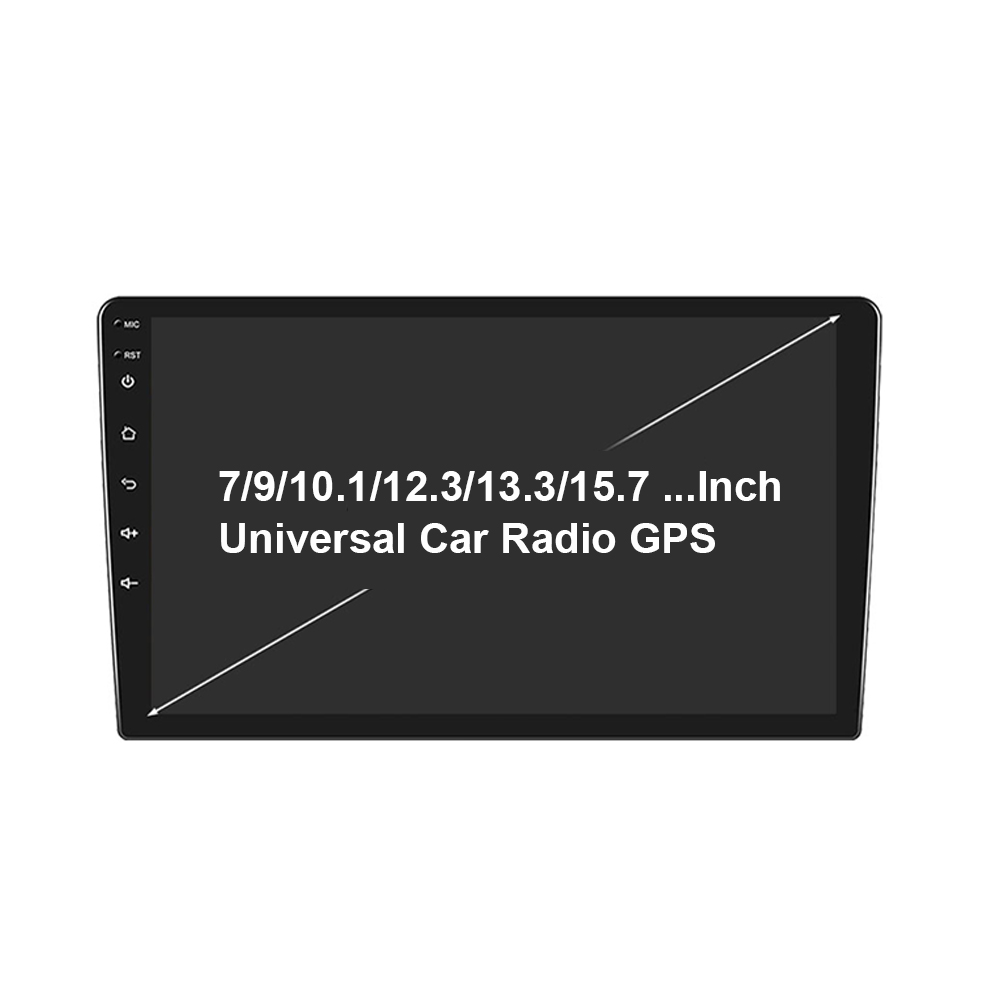
OEM/ODM programs adapt panel, interface and packaging around an existing hardware platform rather than rebuilding it per order.
From brief to shipped units: the sequence buyers should control
Execution quality is largely a function of sequencing. The following order follows the documented program parameters and the documented acceptance terms.
- Freeze the parameter list. Convert the four customization groups into a written specification with a single value per line. Ambiguous lines are the ones that become disputes.
- Confirm platform and certificate fit. Establish whether the requested configuration remains within the existing certificate scope, which is defined by shared PCB layout and key components.
- Confirm the sample before bulk production. Sample confirmation before bulk production is documented as an acceptance requirement, not a courtesy.
- Schedule against the stated capacity. Documented monthly capacity is 30,000 units and annual output 360,000 units, with a documented lead time of 7–15 days.
- Verify inspection scope. Quality control is documented as 100% test, with customer on-site inspection accepted and third-party inspection (SGS/TUV) supported.
- Close the commercial terms. A documented procurement record states MOQ 10 units, FOB delivery, payment of 30% T/T in advance with 70% T/T against copy of B/L, and 100% payment on sample orders.
Where the capacity, testing and compliance evidence sits
Capability claims become procurement evidence only when they are specific. The documented operating profile covers a 20,000 m² factory, 100+ production staff, a 50-engineer R&D team, an export ratio of around 95% and distribution to partners in more than 70 countries, with EU, US, Brazil, India, South Korea and Japan listed among export markets.
Compliance is documented at certificate level rather than at claim level, which is the standard buyers should hold other suppliers to.
| Certificate | Standard | Number and body | Market / validity |
|---|---|---|---|
| ISO 9001 Quality Management System | GB/T19001-2016 / ISO9001:2015 | SW25Q20244R1S — Shanghai Sailway Certification Co., Ltd | China and IAF-recognized countries; issued 2025-03-11, valid to 2028-03-10 |
| CE-EMC Certificate of Conformity | EN 55032:2015+A1:2020; EN 55035:2017+A11:2020 | WST23N080170E — Shenzhen WST Testing Co., Ltd. | EU |
| FCC Part 15B | FCC Part 15 Subpart B | WST23N080171E — Shenzhen WST Testing Co., Ltd | US |
| ECE E24 Type-Approval (E-mark) | UN/ECE Regulation No. 10, 06 series of amendments | E2410R06/024547*00 — NSAI | EU |
Certificate identifiers, issuing bodies and applicability as documented. Coverage is series-based.
All four records share a scope definition that buyers should read closely: the covered models share the same PCB layout and key components. That sentence is the boundary line of the program’s compliance efficiency, and it is discussed further below.

Reflow soldering is where a shared PCB layout keeps a customized program inside an existing certificate scope.
Application patterns: what different buyers actually customize
Customization briefs differ by channel, and the documented project records show how that divergence plays out in practice.
- Factory pre-installation, Germany. An automotive OEM client used the product for factory pre-installation in new energy vehicle models — 2,000 units delivered over four years, with the record noting CE, FCC and E-mark certification, Android 14 and an 8-core CPU.
- Used-car upgrade at volume, Brazil. An automotive OEM client deployed the TN-X23 for used-car upgrade and retrofit — 10,000 units over two years, a program large enough to require capacity planning rather than spot purchasing.
- New-model infotainment, Pakistan. An automotive OEM client used the product for factory infotainment upgrades on new car models — 3,000 units over two years, with the record citing full vehicle CAN integration, OTA updates and CE/FCC certification.
- Retrofit and audio, Russia. An aftermarket car modification shop used the product for car audio and navigation retrofit — 5,000 units over two years, with wireless CarPlay and built-in DSP audio among the cited highlights.
- Retail channel, United States. An online auto parts retailer used a universal 2DIN configuration for pickup truck and SUV modification enthusiasts — 1,500 units over three years, citing fast after-sales response and low failure rate.
- Chain-store after-sales, Mexico. A car modification chain store used the TN-X80 dual knob car radio for used-car dealership and private-owner upgrades — 1,000 units over 2.5 years, with dual knob physical control, built-in DSP audio and steering wheel control compatibility cited as the operational highlights.
Across these records, the customization that matters is rarely cosmetic. Volume programs concentrate on vehicle integration and certification; retrofit channels concentrate on installation simplicity, language and after-sales route; retail channels concentrate on packaging and firmware stability. A brief that does not distinguish these priorities tends to over-specify cosmetics and under-specify CAN behaviour.
Market trend signals worth using — and their limits
Two third-party data points frame the form-factor decision. Global car audio market revenue was reported at USD 12.24 billion in 2025 (Mordor Intelligence, published April 2026). Within the car stereo category, double DIN accounted for 44% of revenue by form factor in 2025 (Grand View Research, published July 2026). For customs and documentation planning, car radios with recording or reproducing apparatus are classified under HS 8527.21.
The reasonable interpretation is that large-format double din tooling is aligned with the largest single revenue block in the category, which supports the direction most aftermarket programs already took toward screen car radio formats. The unreasonable interpretation is to read a category-level share as a demand guarantee for any individual SKU, market or price band. The double DIN figure describes revenue distribution by form factor, not unit demand in a specific country, and it says nothing about a given buyer’s fitment list.
OEM/ODM program versus traditional sourcing routes
Four sourcing routes are common in this category, and they differ in where risk is carried.
| Route | What the buyer gets | Where risk sits |
|---|---|---|
| Catalogue trading | Finished units selected from an existing list | Buyer absorbs fitment, firmware and documentation mismatches; customization is unavailable |
| White-label rebrand | Logo and packaging applied to a standard unit | Brand differentiation is limited to surfaces; interface, language and integration stay fixed |
| OEM/ODM program | Configuration across hardware, software, vehicle integration and packaging on a documented platform | Risk shifts to brief control: an unfrozen parameter list becomes a production deviation |
| In-house development | Full design control | Buyer carries tooling, certification, firmware maintenance and compliance cycles |
Route comparison based on the documented program scope; no ranking of suppliers is implied.
Where the program approach meets its limits
A credible capability assessment has to state boundaries, and four are visible in the documented material.
- Certification scope is tied to the board. The CE-EMC, FCC and E-mark records cover series whose models share the same PCB layout and key components. Interface, language, packaging and memory changes on that board sit inside the described coverage; a new mainboard or core chipset does not, and takes on a fresh testing cycle. Programs that assume otherwise discover the gap at customs or at market surveillance.
- Universal fitment is not vehicle adaptation. A universal 2DIN platform fits the mechanical opening of most models, but retention of original vehicle functions depends on CAN protocol and vehicle adaptation, both of which must be specified and validated per model. This is where most schedule slippage originates.
- Capacity is shared across all programs. The documented figure of 30,000 units per month is a plant-level number. A 10,000-unit program is meaningful against it, so multi-market launches and seasonal peaks need scheduling, not assumption.
- Documented figures require written confirmation per program. The MOQ difference between the capability record (1 unit) and a quoted procurement record (10 units under FOB) illustrates why. Lead time of 7–15 days should likewise be confirmed against the frozen scope, since panel, firmware and packaging changes are project-specific.
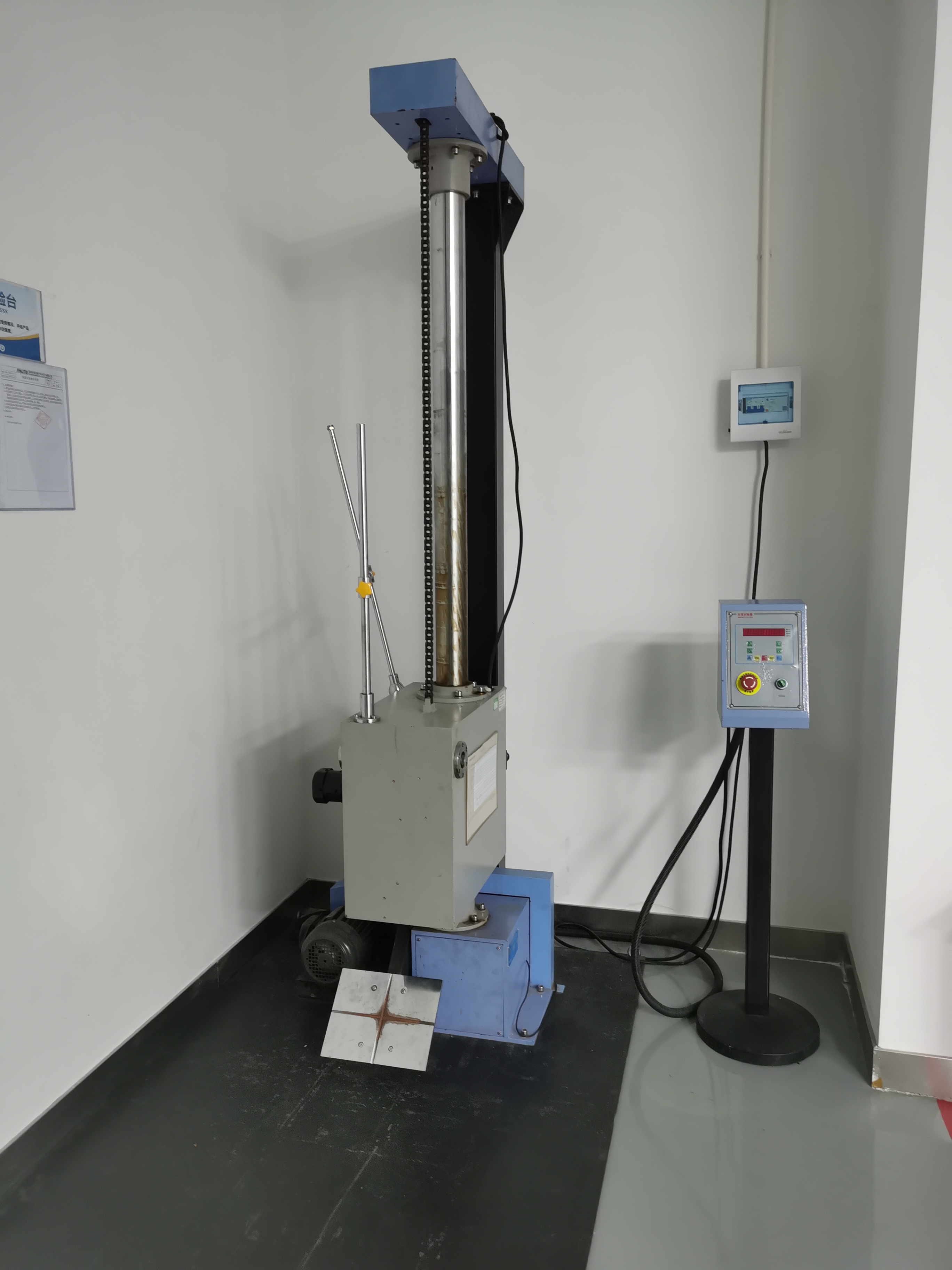
Reliability testing runs alongside functional testing; 100% full function testing before shipment is documented as the baseline inspection standard.
Future outlook
Three shifts are likely to shape OEM/ODM car radio programs over the next cycle, and they are visible in the documented capability set rather than in forecasts.
First, firmware OTA is listed as a customizable parameter, which turns the head unit from a shipped object into a maintained one. Buyers gain the ability to correct interface and app behaviour after installation, but they also take on a versioning obligation: which firmware build sits in which shipment, and who owns the update path after the warranty period.
Second, connectivity configuration — 4G module, GPS/Beidou, wired versus wireless CarPlay — is now a per-order decision rather than a fixed model property. That increases differentiation potential in regional channels where smartphone projection preference differs.
Third, compliance documentation is becoming a selection filter rather than a formality, particularly where EMC and radio-equipment requirements apply. Suppliers who can produce certificate numbers, issuing bodies and scope definitions quickly will shorten buyer qualification cycles; those who cannot will increasingly be excluded before commercial discussion begins.
Frequently asked questions
What can be customized on an aftermarket car radio OEM/ODM program?
Documented customization covers hardware, software, vehicle integration and commercial packaging. Hardware items include screen size and resolution, RAM/ROM, panel color, button light color, 4G module, GPS/Beidou and AHD camera. Software items include logo, UI theme, boot animation, APP pre-install, language (PT/ES/EN/FR), DSP tuning and firmware OTA. Vehicle integration covers wired or wireless CarPlay, steering wheel control, CAN protocol and vehicle adaptation. Packaging and after-sales arrangement fall under commercial scope.
Which product platforms support a customization brief?
The documented platform range spans single DIN, double DIN and large-format formats. It includes the TN-UK1105 11.5-inch single knob universal 1DIN unit, the TN-X23 12.3-inch and TN-X15 11.5-inch dual knob 2DIN units, the TN-X80 10.1-inch dual knob unit, the TS105 9-inch and TS10 universal multimedia players, the 16.8-inch TN-3036, and the Linux-based TN-9359. The platform determines which parameters are configurable; requests outside a platform’s documented options are new engineering work, not configuration changes.
What are the minimum order quantity and lead time?
The manufacturer’s capability record lists a minimum order quantity of 1 unit and a lead time of 7–15 days, with monthly capacity of 30,000 units. A separate documented procurement record for a quoted program lists MOQ 10 units under FOB terms. Because the two figures differ, the applicable MOQ and lead time should be confirmed in the quotation for the specific configuration rather than assumed from either record.
Does customization affect existing certification coverage?
Yes, depending on what changes. The documented CE-EMC (WST23N080170E), FCC Part 15B (WST23N080171E) and ECE E24 type-approval (E2410R06/024547*00) records cover series whose models share the same PCB layout and key components. Changes that keep the board and core components unchanged remain within the described coverage; a new mainboard or core chipset falls outside it and requires new testing. Factory quality management is separately certified under ISO 9001 (SW25Q20244R1S, valid to 2028-03-10).
How is quality controlled before shipment?
Quality control is documented as 100% test. Acceptance terms include 100% full function test before shipment, acceptance of customer on-site inspection, and support for third-party inspection by SGS or TUV. Sample confirmation is required before bulk production, which places the sample approval step ahead of the production run rather than alongside it.
What commercial terms apply to OEM/ODM orders?
The documented procurement record specifies FOB delivery terms, with 30% T/T in advance and 70% T/T against copy of B/L for bulk orders, and 100% full payment for sample orders. Acceptance is based on full function testing before shipment, with on-site and third-party inspection available. After-sales support is provided through remote and online channels.
Closing perspective
For buyers at the evaluation-to-execution boundary, the useful evaluation criterion is not the length of a customization list but the discipline that surrounds it: a frozen brief, a platform whose limits are known, a certificate scope whose boundary is understood, an inspection step that is verifiable, and commercial figures that are written down rather than assumed. The documented material reviewed here supports a program of that shape at meaningful volume; it also shows exactly where the boundaries sit, which is the more useful half of the answer.
A downloadable technical brochure covering the manufacturer’s product range and capability set is available here: TOPNAVI technical brochure (PDF).
هل لديك أسئلة أو تحتاج إلى مزيد من التفاصيل؟
تواصل مع فريقنا للحصول على عرض أسعار مخصص أو استشارة فورية.
طلب عرض أسعار
املأ النموذج أدناه وسيتواصل معك فريقنا بعرض مقترح مخصص.
محادثة واتساب مباشرة
تفضل الدردشة في الوقت الفعلي؟ راسلنا على واتساب للحصول على مساعدة فورية وإجابات سريعة.
- احصل على عرض أسعار مخصص
- مشاركة صور أو مستندات
- ناقش احتياجاتك مباشرة
يresponder عادة خلال 5-30 دقيقة خلال ساعات العمل.