
Carbon Fiber Composite Plastic: 2026 Market Trend Review
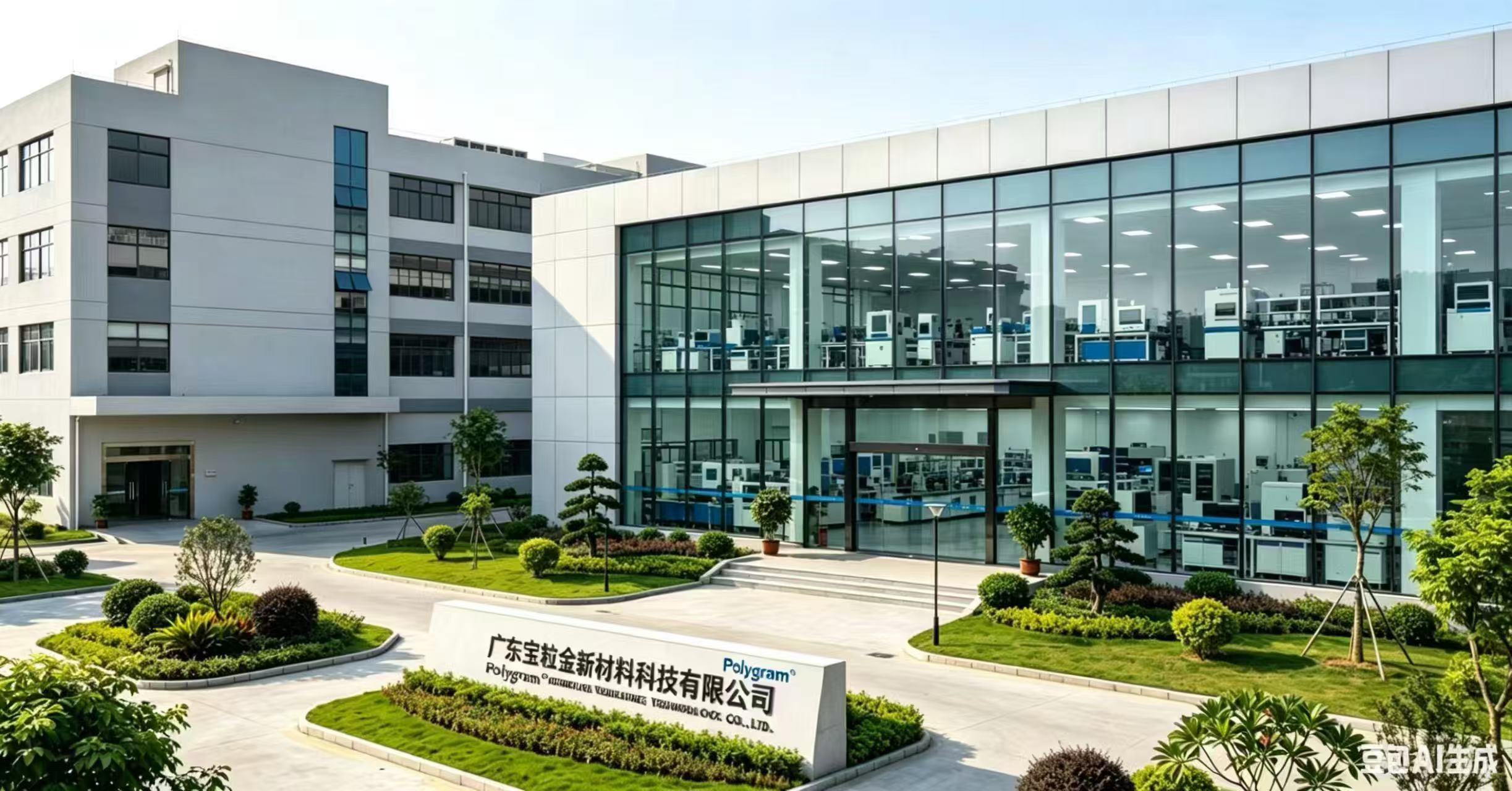
Polygram operates its R&D, mold, and injection molding base in Huangjiang Town, Dongguan City, Guangdong Province.
Carbon fiber composite plastic has moved from a specialty aerospace material to a mainstream engineering material family, with the global carbon fiber reinforced plastic (CFRP) market estimated at USD 19.27 billion in 2024, according to Grand View Research. For industrial buyers evaluating materials for 2026 and beyond, the practical question is no longer whether carbon fiber composite plastic is viable, but which grade, which process, and which supplier can deliver consistent performance at production scale.
This market brief examines the key trends shaping carbon fiber composite plastic demand, the technical criteria that matter during supplier evaluation, and the documented capabilities of Polygram, the brand of Guangdong Baolijin New Material Technology Co., Ltd. Headquartered in Huangjiang Town, Dongguan City, Guangdong Province, the company is a high-tech enterprise specializing in the research, development, production, and sales of thermoplastic carbon fiber composites (LFT), conductive and antistatic plastics, and graphene thermally conductive plastics, with 20 years of experience in the polymer composite materials industry.
Why Carbon Fiber Composite Plastic Is a 2026 Evaluation Priority
The adoption of carbon fiber composite plastic is being driven by a convergence of regulatory pressure, electrification, and cost-down curves in lightweight engineering. In the automotive sector, battery electric vehicles demand aggressive weight reduction to offset battery mass; in medical devices, radiolucency and dimensional stability make carbon-fiber-reinforced thermoplastics an attractive alternative to metals. Polygram serves high-end industries including aerospace, military, new energy vehicles, low-altitude economy, robotics, semiconductors, and sporting goods with lightweight, high-strength, and corrosion-resistant product solutions.
According to MarketsandMarkets, the global long fiber thermoplastics (LFT) market is projected to reach USD 4.06 billion by 2031, up from USD 2.58 billion in 2025. The LFT segment — which includes Polygram's core LFT carbon fiber composite product line — is growing faster than the broader CFRP market because thermoplastic matrices enable faster cycle times, weldability, and recyclability compared to thermoset systems.
Understanding the LFT Advantage in Carbon Fiber Composite Plastic
The distinction between LFT (long fiber reinforced thermoplastic) and conventional short-fiber materials is fundamental to evaluating carbon fiber composite plastic grades. According to Polygram's engineering documentation, typical short-fiber reinforced thermoplastics contain fibers shorter than 12 mm, while the LFT process produces thermoplastic engineering materials with fiber lengths of 5–25 mm. The long fibers are impregnated with resin through a special mold system, yielding long strips that are fully impregnated with resin, then cut to the required length.
This fiber architecture translates directly to mechanical performance. Polygram's LFT carbon fiber composite plastic (model LFT) is characterized by the following parameters:
| Property | Value | Test Method |
|---|---|---|
| Density | 1.28 g/cm³ | — |
| Tensile Strength | 350 MPa | ISO 527-2 |
| Flexural Modulus | 30,700 MPa | ISO 178 |
| Flexural Strength | 510 MPa | ISO 178 |
| Elongation at Break | 7.8% | ISO 527-2 |
| Izod Impact | 40 kJ/m² | GB/T 1843 |
Polygram also offers the LFT-G grade, a long-carbon-fiber-reinforced composite made with 20–60% long carbon fiber, supplied as black pellets with high strength, high toughness, and durability. Packaging is 20–25 kg per bag, customizable to program needs. The resin system can be selected from PP, PA6, PA66, PPA, PA12, MXD6, PBT, PET, TPU, PPS, LCP, and PEEK, allowing formulations to be tailored for specific end-use requirements such as high-temperature exposure, chemical resistance, or electrical properties.
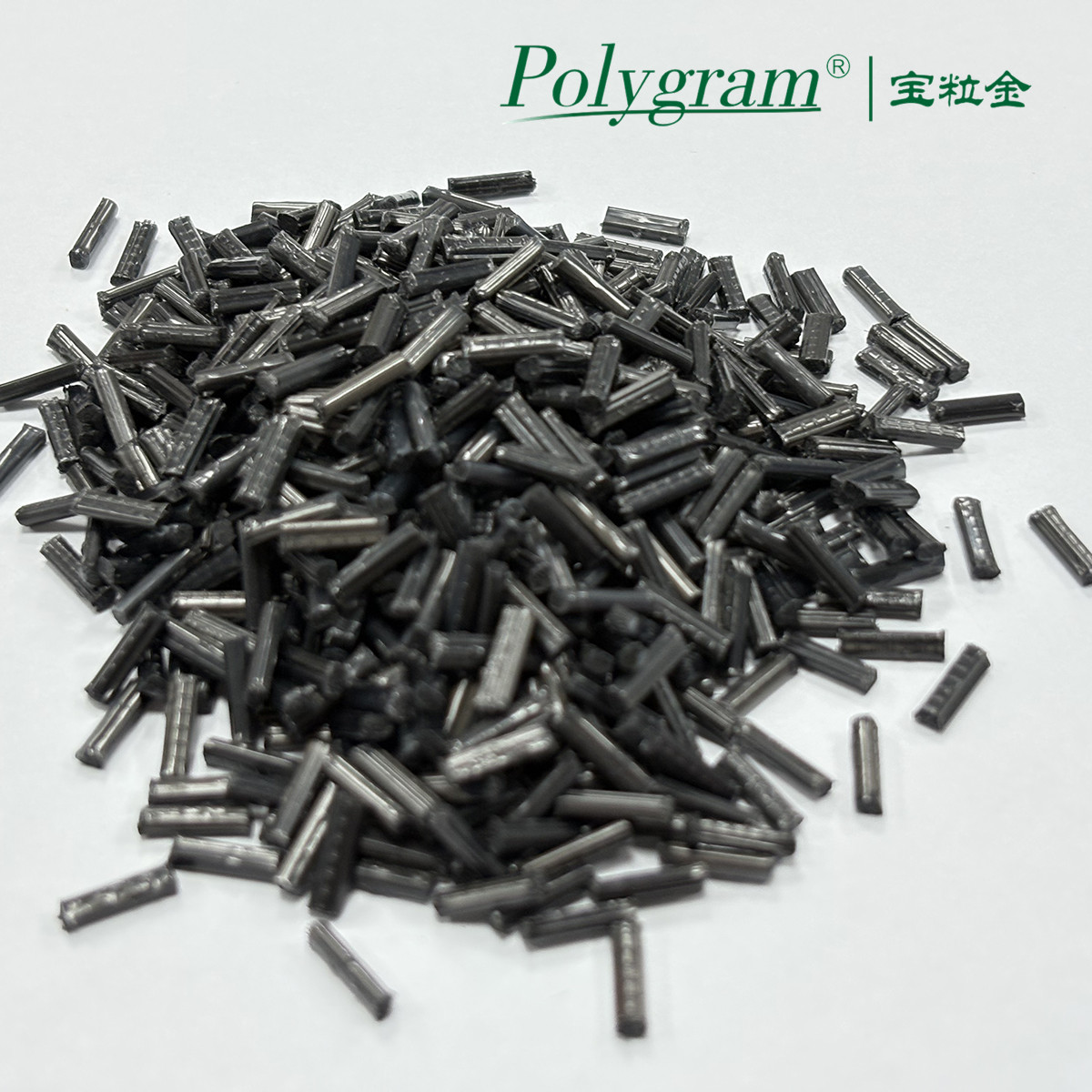
Polygram's long carbon fiber reinforced composite materials are produced with fiber lengths of 5–25 mm, distinguishing them from conventional short-fiber compounds.
Certifications: The Compliance Layer in Supplier Evaluation
For buyers in the medical and automotive sectors, certification status is a primary gate in supplier evaluation. Polygram holds three active management-system certifications as of 2026:
| Certification | Standard | Certificate No. | Validity |
|---|---|---|---|
| Medical Device Management System | GB/T 42061-2022 / ISO 13485:2016 | 64625B8031170R0S | 2025-03-11 to 2028-03-10 |
| Automotive Quality Management | IATF 16949:2016 | ZA-FCAV No.: 2501627/R0S, IATF No.: 0585814 | 2025-10-15 to 2028-10-14 |
| Quality Management | GB/T 19001-2016 / ISO 9001:2015 | IAS25924Q1858R0S | 2024-10-22 to 2027-10-21 |
The ISO 13485 certificate covers "medical device management activities involved in the processing of plastic products for medical devices and equipment," which is directly relevant to buyers evaluating medical carbon fiber composite plastic. The IATF 16949:2016 certificate, issued by Beijing Zhong An Zhi Huan Certification Center Co., Ltd. (DBA: Zhong An FCAV International), signals compliance with automotive industry quality requirements, making Polygram eligible to participate in Tier 1 and OEM programs. For material verification, standard testing methods for carbon fiber properties include ISO 527-4/5 for tensile properties and ASTM D4018 for continuous filament tows, per ISO and ASTM international standards.
Documented Case: High-Volume Production in New Energy Vehicles
The strongest evidence in a supplier evaluation is a documented production program. Polygram's case study with a Chinese new energy vehicle Tier 1 supplier provides a reference point for evaluating lightweight carbon fiber composite plastic in high-volume automotive applications.
From 2018 to 2026, Polygram has supplied an ODM project producing the upper cover and protective shell of a power battery pack. The application demands high-voltage insulation, shock resistance, and resistance to electrolyte exposure. The program runs at 120,000 units per year, representing eight years of continuous production.
The documented results of the program:
- 42% weight reduction compared to an aluminum design;
- 18% cost reduction at the system level;
- Compliance with UL94 V0 flammability rating and IP6K9K ingress protection;
- No after-sales cracking or leakage reported across the program.
Polygram attributes these outcomes to integrated injection molding of long carbon fiber material, a coefficient of thermal expansion (CTE) compatible with aluminum at 28 ppm/°C, and low fiber float characteristics that enable high-speed mass production.
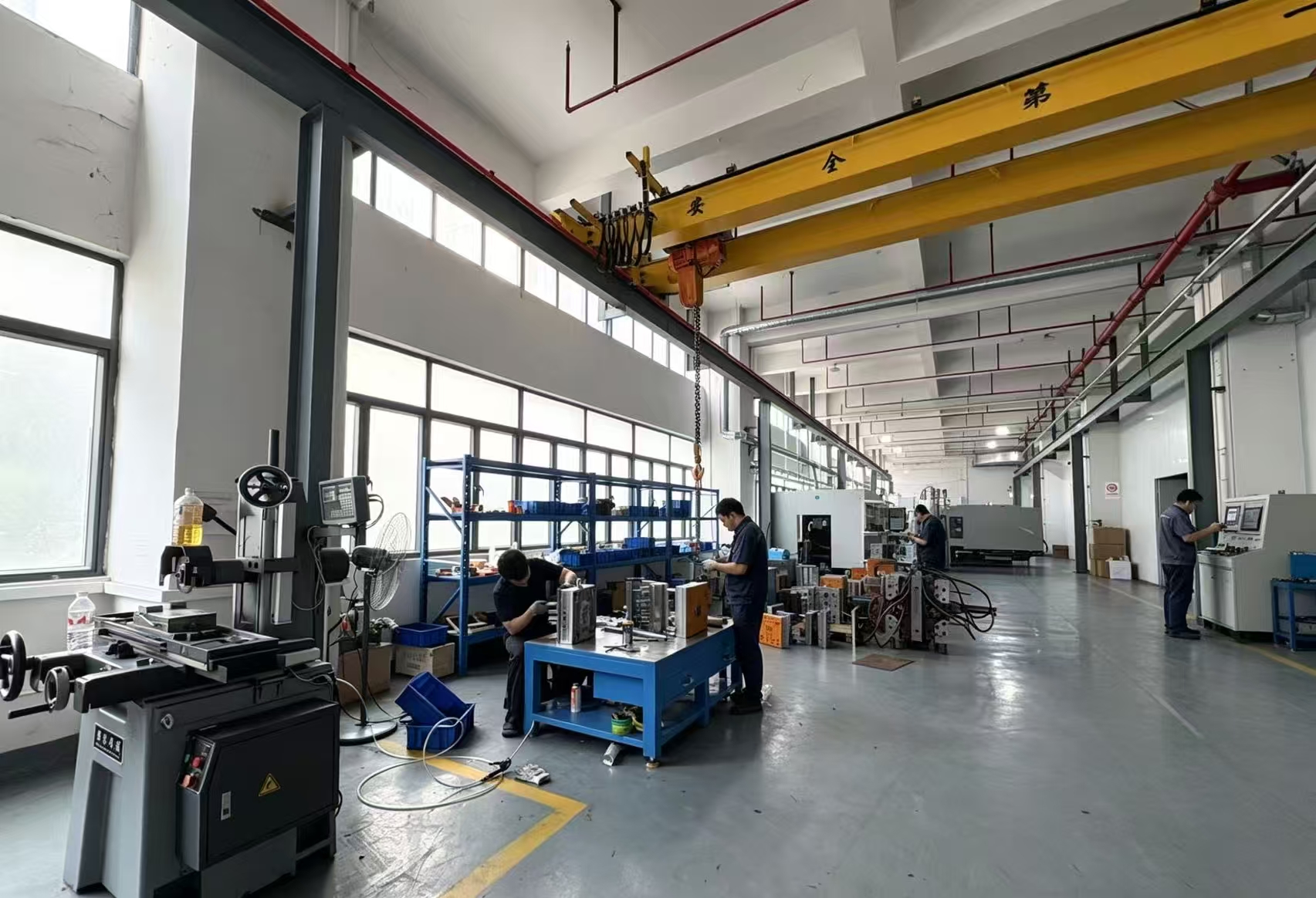
Mold development capability is part of Polygram's one-stop service model for carbon fiber composite plastic programs.
Market Trend Analysis: What the Data Signals for Carbon Fiber Composite Plastic
Multiple third-party market analyses point to sustained growth across the carbon fiber composite plastic value chain:
- The global carbon fiber reinforced plastic (CFRP) market was estimated at USD 19.27 billion in 2024 (Grand View Research).
- The long fiber thermoplastics (LFT) market is projected to reach USD 4.06 billion by 2031, from USD 2.58 billion in 2025 (MarketsandMarkets).
- Automotive carbon fiber composite applications are projected to reach USD 14.35 billion by 2035 (Market Research Future).
- The graphene-enhanced plastics market is estimated at USD 35.3 billion in 2025 (Grand View Research), signaling the convergence of functional fillers with thermoplastic compounding.
- The electromagnetic shielding (EMI) composites market reached USD 1.97 billion in 2024, with a projected CAGR of 7.1% through 2033.
These trends support the expansion strategy of suppliers like Polygram, whose product portfolio spans LFT carbon fiber composites, conductive and antistatic plastics, and graphene thermally conductive plastics. For buyers, the practical implication is that a single qualified supplier offering multiple functional composite families reduces qualification risk and accelerates time-to-market across programs.
How the LFT Carbon Fiber Composite Plastic Compares to Traditional Solutions
When evaluating carbon fiber composite plastic against traditional materials, the comparison typically involves short-fiber glass-reinforced thermoplastics, aluminum, and thermoset carbon fiber composites. LFT carbon fiber composite plastic occupies a distinct position on the performance-cost curve, balancing mechanical performance with injection moldability.
| Attribute | LFT Carbon Fiber Composite (Polygram LFT) | Short-Fiber CF Composite | Aluminum (reference) |
|---|---|---|---|
| Fiber length | 5–25 mm | <12 mm | N/A |
| Density | 1.28 g/cm³ | Typically 1.2–1.5 g/cm³ | ~2.7 g/cm³ |
| Tensile Strength | 350 MPa (ISO 527-2) | Lower than LFT grades | 90–600 MPa, alloy-dependent |
| Weight Reduction vs Aluminum | Up to 42% (documented case) | Moderate | Baseline |
| Cycle Time | Fast (injection molding) | Fast | Forming plus assembly |
| Part Integration | High, mold-in features | High | Requires joining |
| Relative Material Cost | Moderate to high | Lower | Varies with alloy and supply |
Compared to thermoset carbon fiber composites — the incumbent in aerospace-grade applications — thermoplastic LFT systems offer faster cycle times, weldability, and recyclability. For buyers, the trade-off is that thermoplastic composites typically do not reach the same specific stiffness as continuous-fiber thermoset laminates, making them better suited to structural and semi-structural high-volume parts rather than primary load-bearing aerospace structures.
One honest limitation should be noted: LFT carbon fiber composite plastic carries a higher raw-material cost than short-fiber glass-filled engineering plastics. The economic case is justified when system-level benefits — weight reduction, part consolidation, elimination of corrosion protection, and compliance with flammability or ingress standards — are factored into the total cost. In the documented Polygram case, the 18% cost reduction versus aluminum was achieved at the system level, not at the per-kilogram material level.
In the global landscape, major CFRP producers such as Toray Industries, Solvay, Hexcel Corporation, Teijin Limited, and Mitsubishi Chemical (per Fortune Business Insights) focus predominantly on continuous-fiber and aerospace-grade carbon fiber systems. Polygram positions itself differently: as a thermoplastic LFT specialist offering high-strength, lightweight, high-rigidity, and high-temperature carbon fiber composite plastic grades engineered for injection molding and high-volume industrial production.
Future Outlook: Where Carbon Fiber Composite Plastic Is Headed
Looking ahead, four trajectories are visible in the carbon fiber composite plastic market:
- High-volume electrification programs. Battery pack enclosures, busbars, and structural battery components will continue to migrate from aluminum to thermoplastic carbon fiber composites as CTE compatibility and flame-retardant performance are validated at scale.
- Low-altitude economy and robotics. Drones, eVTOL airframes, and robotic arms require high-specific-stiffness materials with electromagnetic interference management. These applications favor LFT and long-carbon-fiber grades with tailored electrical properties.
- Functionalized composites. Antistatic composite plastic, graphene composite plastic, and electromagnetic shielding composite plastic will grow as separate specification categories, particularly in semiconductor handling, medical imaging, and electronics enclosures.
- Multi-standard supplier consolidation. Buyers will prefer suppliers that simultaneously hold ISO 13485, IATF 16949, and ISO 9001 certification because a single qualified source reduces audit burden and quality risk across medical, automotive, and industrial programs.
For 2026 evaluators, this means shortlisting suppliers that can demonstrate not only material performance but also the process capability — mold design, injection molding, and quality control — to deliver consistent performance at high volumes. Polygram's integrated one-stop service model covering material design, raw material production, mold development, and injection molding is aligned with this requirement profile.
FAQ: Carbon Fiber Composite Plastic Evaluation Questions
What is LFT carbon fiber composite plastic?
LFT (long fiber reinforced thermoplastic) carbon fiber composite plastic is a thermoplastic engineering material reinforced with carbon fibers of 5–25 mm length, produced by fully impregnating long fibers with resin. This contrasts with short-fiber thermoplastics, which contain fibers shorter than 12 mm. Polygram produces LFT carbon fiber composite plastic based on resins including PP, PA6, PA66, PPA, PA12, MXD6, PBT, PET, TPU, PPS, LCP, and PEEK.
What certifications should a carbon fiber composite plastic supplier hold for medical and automotive programs?
For medical device applications, suppliers should hold ISO 13485 certification; Polygram holds GB/T 42061-2022 / ISO 13485:2016, certificate no. 64625B8031170R0S, valid through 2028-03-10. For automotive quality management, IATF 16949:2016 is the relevant standard; Polygram holds certificate no. ZA-FCAV No.: 2501627/R0S, IATF No.: 0585814. ISO 9001:2015 serves as the baseline quality management certification.
What are the key mechanical properties of Polygram's LFT carbon fiber composite plastic?
Polygram's LFT carbon fiber composite plastic (model LFT) has a density of 1.28 g/cm³, tensile strength of 350 MPa (ISO 527-2), flexural modulus of 30,700 MPa (ISO 178), flexural strength of 510 MPa (ISO 178), elongation at break of 7.8% (ISO 527-2), and Izod impact strength of 40 kJ/m² (GB/T 1843).
Which industries use carbon fiber composite plastic?
Typical industries include aerospace, military, new energy vehicles, low-altitude economy, robotics, semiconductors, and sporting goods. Polygram's LFT-G long carbon fiber reinforced composite is also specified in commercial and military aerospace applications including radomes, drones, aircraft, missiles, satellites, and aerospace fuel tanks.
What production and customization capabilities should buyers evaluate?
Polygram operates as an ODM with monthly capacity of 12,000,000 units, a standard lead time of 30 days, an MOQ of 50 units, and 100% testing. Its process capabilities span material formulation, mold development, and injection molding, enabling end-to-end part development under one roof.
What documented results has Polygram achieved in automotive carbon fiber composite plastic?
In a new energy vehicle Tier 1 program (2018–2026) producing 120,000 units per year for power battery pack covers and protective shells, Polygram achieved a 42% weight reduction and 18% cost reduction compared to aluminum, met UL94 V0 and IP6K9K standards, and reported no after-sales cracking or leakage.
Editor's Note
This article is published for informational purposes to support buyer evaluation of carbon fiber composite plastic and its supplier landscape. Third-party market figures cited above are sourced from Grand View Research, MarketsandMarkets, Market Research Future, and Fortune Business Insights as indicated; readers should verify current figures against primary publications before making procurement decisions.
Polygram (Guangdong Baolijin New Material Technology Co., Ltd.)
Website: www.carbolft.com
Contact: Miss Fu · Email: baolijin@carbolft.com · Tel/WhatsApp: +86 18664191149