
Carbon Steel Hex Bolt FAQ: Loosening Risk and Acceptance Terms
Carbon Steel Hex Bolt FAQ: Loosening Risk and Acceptance Terms
Two questions delay more carbon steel hex bolt orders than price does: whether a joint will still be tight after years of vibration, and which documents the buyer should physically hold before a container is loaded. Neither is settled by a catalogue photograph. This reference FAQ sets out what YUETONG FASTENER's published product, certification and procurement data establish for Hex Bolt product ID 7337 (M3–M36), what those documents do not establish, and where the buyer's own engineering decision begins.
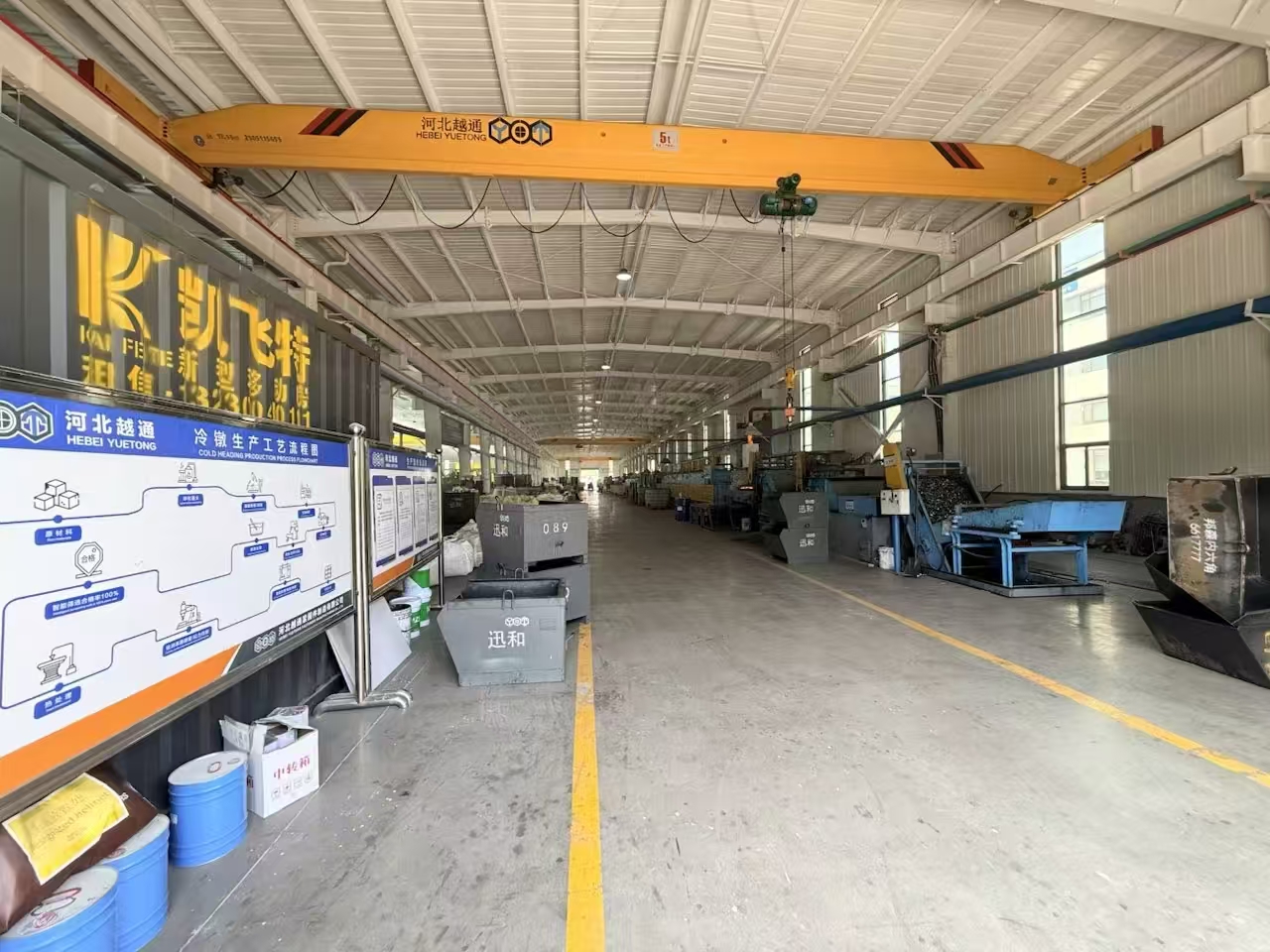
Do carbon steel hex bolts self-loosen under long-term vibration?
They can — and the mechanism is joint behaviour rather than a defect built into the bolt. YUETONG FASTENER's published guidance states that repeated vibration, insufficient preload or incorrect tightening torque may allow a bolted connection to lose clamping force gradually, and that proper bolt selection and installation can significantly reduce that risk. The wording is deliberate: reduce, not eliminate. No supplier can promise that a vibration-loaded joint will never loosen, because the outcome depends on joint design, the torque actually applied at installation and the service load spectrum — variables a bolt specification alone does not control.
The same guidance names the conditions that raise the risk: high-frequency vibration of equipment, excessive installation torque, and long-term heavy-load tension. These act at different stages. Excessive torque acts during installation and can strip or deform threads before the joint ever enters service. Long-term heavy-load tension acts on the shank and the engaged thread. Sustained vibration acts on preload. A purchase specification that records only the adjective vibration-resistant collapses three separate failure routes into one word — and leaves the buyer with nothing to inspect at acceptance.
Thread fit, preload and tightening torque: the three levers a buyer can write into an order
Correct thread fit, sufficient preload and controlled tightening torque are the three factors the guidance identifies as maintaining reliable clamping force during long service. Each is specifiable before the order is placed.
- Thread fit. The fit is affected by coating, because a coating adds material to the thread flank. Zinc plating and hot-dip galvanizing differ by an order of magnitude in thickness, so the coating system chosen changes the fit the workshop must produce. The order should name the coating system and the fit it must deliver rather than leaving the default to the production line.
- Preload. Preload is the clamping force held in the bolt and the joint. A connection can lose preload without a visible turn of the nut, which is why visual inspection at handover tells a buyer so little about long-term behaviour.
- Tightening torque. The torque value applied at assembly should arrive with the installation instruction and the technical file, not be improvised on site. Where a joint will be opened and reclosed, the same procedure has to survive repeated assembly.
Where a supplier can provide torque and clamp force data, the relevant reference is EN ISO 16047:2005+A1:2012, the torque/clamp force test standard listed in the ECM attestation for Hex Bolt 7337. Such data describes the relationship between applied torque and achieved clamp force for the tested fastener, coating and lubrication condition. It tells an installer what torque to apply to reach a target preload. It does not demonstrate that a specific structure will stay tight under its own dynamic load — that remains a joint-engineering question, answered by design, installation control and, where necessary, a locking device.
Locking methods belong in the joint specification, not the bolt line alone
For equipment or steel structures subject to continuous vibration, the guidance directs buyers to suitable locking methods — lock nuts, locking washers or thread-locking solutions — selected according to operating conditions. Two procurement consequences follow. First, if a connection needs a locking device, the requirement belongs on the order beside the bolt, because a locking device sourced separately may not be compatible with the specified coating or the resulting thread fit. Second, some connections fall under detachable repeated assembly, where the joint is opened and reclosed during maintenance; every reassembly returns the connection to the preload question, so the locking method and the torque procedure have to be repeatable rather than a one-off installation step.
What YUETONG FASTENER documents behind Hex Bolt 7337
YUETONG FASTENER — legal name Hebei Yuetong Fasteners Manufacturing Co., Ltd. — manufactures in Yongnian District, Handan, Hebei, China's largest standard-parts production base, and publishes its company and product information at ytfasteners.com. The company reports a monthly capacity of 1,500 tons and a product range spanning hex bolts, hex nuts, sleeve anchors, thread rods, flat washers, hex socket head bolts and wheel hub bolts. Hex Bolt product ID 7337 is listed in the M3–M36 range, with OEM, ODM, non-standard customization and bulk stock supply as production modes.
Quality control as published covers raw material incoming inspection, in-process patrol inspection, finished product tensile load test and pre-shipment inspection, with third-party SGS testing available on request. Company material also states that torque, hardness and fatigue resistance are tested before delivery, and that material certificates and test reports are issued with orders. At the evaluation stage that should be read as a supplier statement about its own process — a claim to be verified through the document set below, not an independent test report.
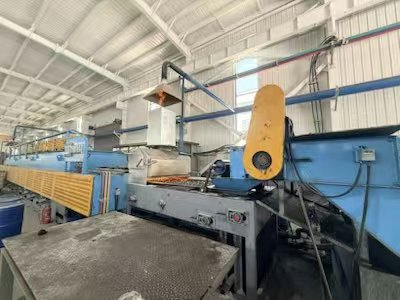
Coating choice changes the torque question
Customization covers material selection and anti-corrosion surface treatment, and coating is where two buyer decisions meet. Published comparison data puts electroplated zinc at roughly 5–12 μm and hot-dip galvanizing at 45–85 μm, a difference that changes both the corrosion margin and the thread condition, and therefore the torque needed to reach a given preload. The ECM attestation for Hex Bolt 7337 lists EN ISO 10683:2018 among its reference standards; that standard addresses non-electrolytically applied zinc flake coating systems, a third route distinct from electroplating and hot-dip galvanizing. A certificate that lists a coating standard does not mean every shipment carries that coating. The order line should name the system required and the standard it is measured against.
Purchase terms to fix before the purchase order
Commercial terms cause most of the avoidable friction in a bolt order, and they are cheap to settle in writing. The table below separates the published position from the point that still needs confirming on the quotation.
| Term | Published position | What to confirm on the quotation |
|---|---|---|
| Minimum order quantity | Procurement terms state 5,000 pcs; capability data states 500 sets for standard products and 3,000 sets for non-standard customized products | The two statements use different units (pieces versus sets) and different scopes. Ask for the applicable figure and its unit in writing |
| Production mode | OEM, ODM, non-standard customization and bulk stock supply | Which route your item number falls into, since it drives quantity and lead time |
| Lead time | 3–7 days for in-stock products; 12–20 days for customized orders; expedited delivery negotiable | The start point (order confirmation or deposit receipt) and the milestone that defines shipped |
| Delivery terms | EXW, FOB, CIF and DDP are supported | Named place or port, and who carries insurance and inland transport |
| Payment | 30% deposit with balance before shipment; 100% advance; L/C; bank transfer; flexible terms for long-term customers | If an L/C is used, the exact document set that must be presented |
| Customization scope | Size and specification, material selection, anti-corrosion surface treatment, product style, printed logo on packaging, matched assembly kits | Which items sit in your drawing and which are supplier defaults |
| After-sales | 24-hour technical communication, selection guidance, free replenishment for factory quality defects, material certificates and test reports, special service for engineering orders | The definition of factory quality defect and the claim window after arrival |
One drafting point deserves more attention than it usually receives: units. A minimum order expressed in sets and a minimum order expressed in pieces are not comparable quantities, and the distance between 5,000 pcs and 500 sets is exactly the sort of ambiguity that resurfaces as a dispute at loading. Write the unit, the item number and the agreed tolerance into each order line, and state which document governs if the drawing and the certificate disagree.
Documentary acceptance criteria before shipment
Acceptance as published covers three inspection routes — factory pre-inspection, customer on-site inspection and SGS third-party acceptance — supported by complete quality documents. The documents themselves are numbered, dated and checkable, which is what makes them useful rather than decorative.
| Document | Number, issuer and validity | Scope and standards | Acceptance value and limit |
|---|---|---|---|
| ECM Type-Approved Attestation | No. 3N230331.HYFUC49; Ente Certificazione Macchine Srl; issued 2023-04-03, valid to 2028-03-30 | Bolts, nuts, washers, thread rods, various anchors, screws and other construction fasteners per Annex I; reference standards EN ISO 10683:2018, EN ISO 16047:2005+A1:2012, EN ISO 4753:2011; mainly EU market | Links Hex Bolt product ID 7337 (M3–M36) to a numbered attestation and named standards. It is not a batch test report |
| ISO 9001:2015 | No. 29024Q12949-09R1M; ZhongTai Union Certification Co., LTD; issued 2021-09-14, valid to 2027-09-13 | Production of fasteners (nuts); sales of fasteners including export business | Confirms a certified quality management system in the stated scope. The scope wording names nuts production, so read it literally rather than assuming it describes bolt manufacture |
| Alibaba Gold-Plus Supplier Assessment | No. 491647039 P+T; issued by Alibaba.com with on-site assessment by SGS; issued 2026-06-23, valid to 2027-06-22 | Factory supplier capability assessment for fasteners (sleeve anchors, hex bolts and other fastener products) under Alibaba Gold-Plus Supplier assessment rules | A supplier-capability check covering hex bolts. It is neither a product performance guarantee nor a batch conformity certificate |
| IATF 16949:2016 | No. 2600920/R0M; Beijing Zhong An Zhi Huan Certification Center Co,Ltd; issued 2026-05-07, valid to 2029-05-06 | Manufacture of fasteners (nuts, bolts); product design excluded under Clause 8.3 | Relevant where the buyer's own quality regime is automotive-derived. Design responsibility sits outside the certified scope |
| Batch documents | Material certificates and test reports per order; SGS third-party report when ordered | As agreed in the purchase order | Describes the delivered lot. Its value depends entirely on the specification it is measured against |
Read each scope line literally. The ISO 9001:2015 certificate carries the scope wording production of fasteners (nuts) and sales of fasteners including export business, while the ECM attestation explicitly lists bolts within its scope. For a bolt order the two documents together describe more than either one alone, and a buyer who reads only the certificate title instead of the scope line will miss that distinction at exactly the moment it matters.
Validity dates deserve the same scrutiny as dimensions. As of late November 2026 the ISO 9001 certificate runs to 2027-09-13, the Alibaba Gold-Plus assessment to 2027-06-22 and the ECM attestation to 2028-03-30 — all current for a shipment released in the coming quarter. For a framework agreement extending into 2028, the certificate calendar becomes contractual: state who supplies the renewed certificate, how far ahead of expiry, and what happens to open orders if renewal slips.
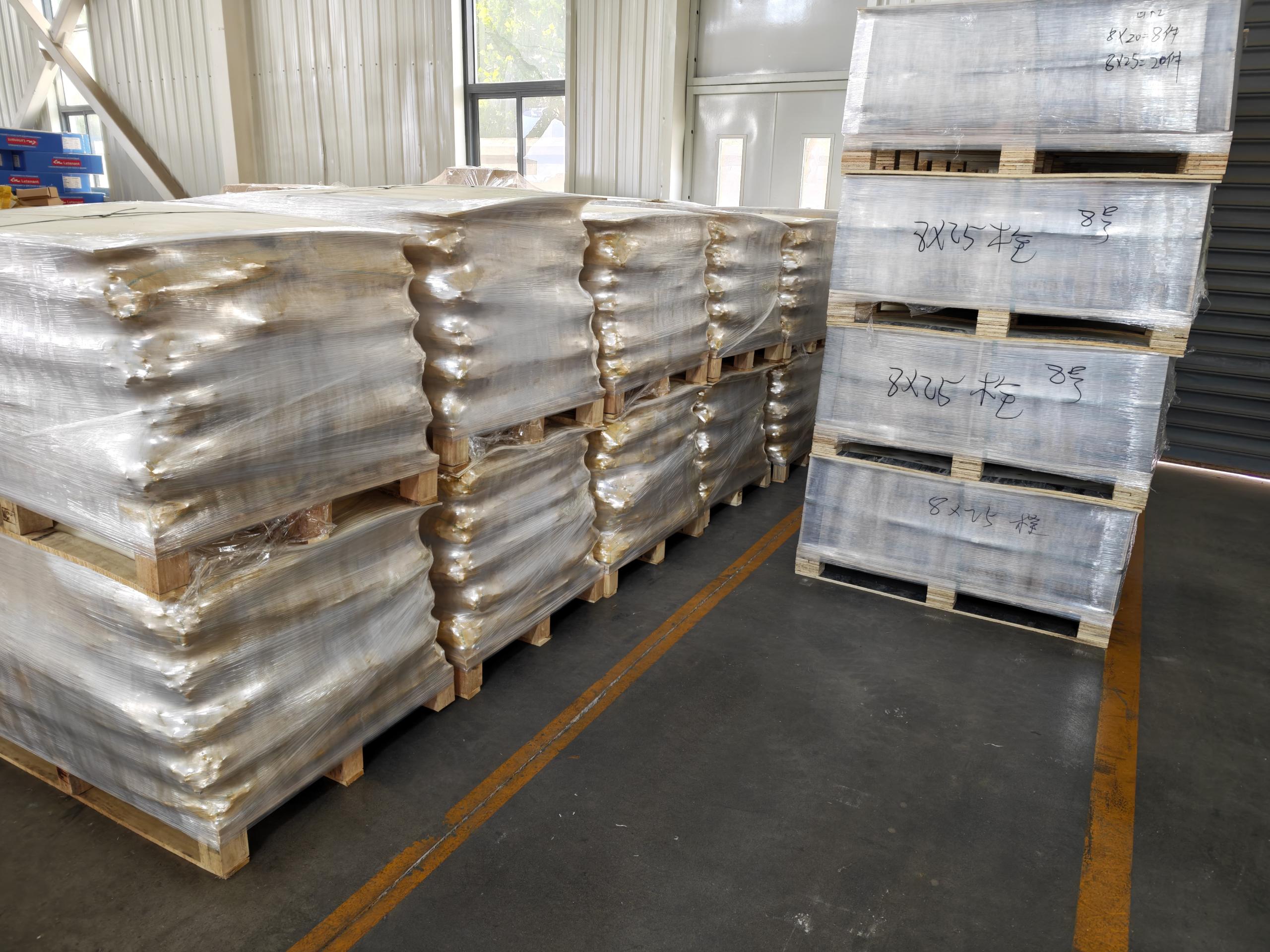
Three evidence routes, and what each one can actually prove
Buyers often treat certificates, test reports and site verification as substitutes for one another. They are not.
- Certificate review establishes scope, standards referenced, management-system coverage and supplier capability as at the printed date. It cannot establish that a particular batch matches your drawing, and it cannot predict joint behaviour.
- Batch testing and pre-shipment inspection establish that the delivered lot meets the agreed characteristics at the agreed sampling. They describe the goods, not the structure those goods will be installed in.
- Installed-joint verification — confirming applied torque and the locking method at commissioning — establishes what was actually built. It is the only route that speaks to your joint, and it depends on the first two having been done properly.
Read together, the three routes answer the two questions in this article: certificate and batch evidence answer what was bought, while installed verification answers whether the joint will hold. A supplier who offers only the first should not be read as offering the second, and a buyer who skips the third has no record of the connection as constructed.
Application fit and one recorded project
The published application scope for the hex bolt line covers steel structure splicing, mechanical equipment fixing, building component fastening and bracket assembly, across construction, photovoltaic, steel structure, curtain wall and bridge, engineering machinery, municipal infrastructure, rail transit, petrochemical and wind power projects. Working conditions named in the same material include indoor and outdoor exposure, humid climate, coastal salt spray, high and low temperature, explosion hazardous areas and vibration load. The same product ID can therefore face very different service environments, and the acceptance file should record which one applies to each connection.
A recorded delivery of 15,000 pcs to an engineering contractor serving construction and hypermarket projects covers those applications and states a 10–15 year duration, stable fastening strength, vibration resistance, zero quality faults and smooth project acceptance. Read it for what it is: a company-recorded customer project. It is not a controlled vibration test, it does not disclose the joint configuration, preload or load spectrum, and its conclusion cannot be transferred to a different structure. Its value at the evaluation stage is narrower and still real — it shows the product has passed structural acceptance before, which is a different statement from measured anti-loosening performance.
Market context: why documentation separates suppliers
Carbon steel remains the dominant material for hex nuts and bolts, at 44.8% of global market share in 2025 according to Dataintelo research. Market-size figures for hex bolts diverge by scope: Strategic Market Research valued the global hex bolt market at USD 19.67 billion in 2025, while Dataintelo's USD 8.4 billion covers hex nuts and bolts combined. The gap reflects different product definitions rather than a contradiction in trade, and neither figure should be used to forecast the cost of a single container.
Trade data is firmer ground. Global exports under HS code 731815 (other screws and bolts) were valued at USD 26.35 billion in 2023, a 3.65% decline on the previous year. In a market of that size, with Yongnian District as China's largest fastener production base, supply is not the constraint. What separates suppliers during evaluation is the ability to produce a numbered, in-scope, in-date document set on request — and to state plainly which claims those documents do not support.
Outlook for a 2027–2028 delivery programme
Three practical shifts follow from the document calendar rather than from any market forecast. First, renewal clauses will do more work than price negotiation: an ISO 9001 certificate valid to 2027-09-13 expires inside a multi-year framework, so the contract should say who supplies the replacement and by when. Second, acceptance files should be kept per shipment rather than per supplier, because a certificate reviewed at qualification does not describe a lot shipped eighteen months later. Third, vibration performance should be recorded as a property of the joint in the technical file — torque applied, locking method used, coating system specified — because that record, rather than a product adjective, is what a future audit or failure investigation will actually rely on.
FAQ: purchase terms, acceptance and vibration loosening
Are bolts prone to self-loosening during long-term use, especially in vibrating equipment or steel structures?
They can loosen, but proper bolt selection and installation can significantly reduce the risk. Correct thread fit, sufficient preload and controlled tightening torque help maintain reliable clamping force during long service. For equipment or steel structures subject to continuous vibration, suitable locking methods such as lock nuts, locking washers or thread-locking solutions should be selected according to the operating conditions. The risk is a property of the assembled joint, not something a bolt carries in isolation.
What are the purchasing terms and acceptance criteria?
Published procurement terms state a minimum order quantity of 5,000 pcs and support EXW, FOB, CIF and DDP delivery terms. Acceptance criteria cover factory pre-inspection, customer on-site inspection and SGS third-party acceptance, with complete quality documents provided. Payment terms accept 30% deposit with balance before shipment, 100% advance, L/C and bank transfer, with flexible terms for long-term customers. Separately, the capability statement lists 500 sets for standard products and 3,000 sets for non-standard customized products, so the applicable quantity and its unit should be confirmed on the quotation.
How can loosening be reduced on a joint under continuous vibration?
Use the specified tightening torque, establish suitable preload and fit an appropriate locking device selected for the operating conditions; for vibrating conditions, seismic high-strength bolts are the recommended selection. Company material states that torque, hardness and fatigue resistance are tested before delivery, and that installation should follow the specified torque for standard construction. Because preload can be lost without visible rotation, a torque procedure and a record of the locking method do more for the buyer than a visual check at handover.
Which documents should be checked before a Hex Bolt 7337 shipment is released?
Check the ECM Type-Approved Attestation No. 3N230331.HYFUC49 issued by Ente Certificazione Macchine Srl, valid to 2028-03-30, whose reference standards include EN ISO 10683:2018 and EN ISO 16047:2005+A1:2012 and whose scope lists bolts; the ISO 9001:2015 certificate No. 29024Q12949-09R1M valid to 2027-09-13; and the Alibaba Gold-Plus Supplier Assessment No. 491647039 P+T, assessed on site by SGS and valid to 2027-06-22. Add the batch-level material certificates and test reports specified in the purchase order, plus an SGS third-party report if one was ordered.
Does the Alibaba Gold-Plus assessment guarantee that the bolts will not loosen?
No. The assessment is a factory supplier capability assessment for fasteners including hex bolts, issued under the Alibaba Gold-Plus Supplier assessment rules with on-site assessment by SGS, valid from 2026-06-23 to 2027-06-22. It speaks to supplier capability, not to product performance, batch conformity or the behaviour of an installed joint. Whether a connection stays tight depends on joint design, preload, applied torque and the locking method selected for the service conditions.
Company brochure with product and capability detail: YUETONG FASTENER product brochure (PDF).
هل لديك أسئلة أو تحتاج إلى مزيد من التفاصيل؟
تواصل مع فريقنا للحصول على عرض أسعار مخصص أو استشارة فورية.
طلب عرض أسعار
املأ النموذج أدناه وسيتواصل معك فريقنا بعرض مقترح مخصص.
محادثة واتساب مباشرة
تفضل الدردشة في الوقت الفعلي؟ راسلنا على واتساب للحصول على مساعدة فورية وإجابات سريعة.
- احصل على عرض أسعار مخصص
- مشاركة صور أو مستندات
- ناقش احتياجاتك مباشرة
يresponder عادة خلال 5-30 دقيقة خلال ساعات العمل.