
Carbon Steel Hex Bolt Shortlist: 7337 Options for Coastal, Heat and Vibration
Carbon Steel Hex Bolt Shortlist: 7337 Options for Coastal, Heat and Vibration
A carbon steel hex bolt shortlist for coastal, high-temperature and vibration duty is not a ranking of model numbers. Product 7337 is a hex bolt supplied in the M3-M36 range, and the practical purchasing question is which configuration route - coating system, property class, locking method and documentation package - matches a defined service condition. This shortlist sets out five such routes, the evidence each one should carry, and the purchasing terms that should decide the final award.
Why one model number is not a shortlist
Buyers often treat a model number as a single comparable item. In service, the same bolt identity can face five different failure routes: coating breakdown in salt spray, condensation and transit damage in humid outdoor exposure, preload loss across temperature cycles, self-loosening under vibration, and overload or long-term corrosion in static permanent fastening. Each route requires different evidence, and evidence collected for one route does not automatically transfer to another.
Carbon steel remains the baseline material for this category. A 2025 Dataintelo market study cited in the supplied verified data places carbon steel at 44.8% of the global hex nut and bolt material mix. That share matters for shortlisting because it means the near-term differentiation between suppliers is not a switch away from carbon steel. It sits in coating selection, property class, locking method, lot consistency and the document package behind each lot.
In this article, an 'option' means a configuration route inside the 7337 product identity, not five separately certified products. The distinction prevents a common procurement error: taking a salt-spray report written for one coating system and applying it to a different coating on the same model. A route enters a project specification only when its own coating, grade, locking method and test scope are documented.
The five entries below are ordered by exposure severity, not by product rank. No entry is presented as inherently superior. A static indoor application may reasonably stop at the commercial and lot-consistency checks, while a coastal wind project should not.
The five shortlist entries at a glance
| Service condition | Dominant failure route | What the entry must document | First verification |
|---|---|---|---|
| Coastal salt spray | Coating breakdown, base-metal corrosion | Coating system, measured thickness, salt-spray evidence, thread fit after coating | Coating type and thickness sample |
| Humid outdoor exposure | Condensation, coating damage in transit | Coating adhesion, packing and storage protection | Packing specification and pre-shipment inspection |
| High and low temperature | Preload loss, thermal expansion mismatch, low-temperature toughness | Material certificate, property class, temperature-range test evidence | Heat-number traceability and test scope |
| Vibration load | Self-loosening, fatigue | Preload and torque relationship, hardness, locking method | Torque-preload and hardness records |
| Static permanent fastening | Overload, long-term corrosion | Standard grade, coating, lot consistency | Lot inspection and delivery terms |
The table is a screening tool, not a conclusion. Each row is expanded below with the specific checks that make the entry auditable.
Entry 1 - Coastal salt spray: settle the coating system before the property class
In coastal salt spray, the coating usually fails before the steel core. A shortlist that starts with property class and treats coating as a later detail tends to produce late-stage disputes, because the coating governs the visible service life of the joint. The first decision is therefore the coating system, followed by the grade needed for the load path.
Two common systems sit at different points on the thickness scale. The supplied verified data records typical zinc plating at 5-12 micrometres and typical hot-dip galvanizing at 45-85 micrometres. The thicker coating provides a larger barrier, but it also changes thread fit, nut matching and assembly torque. A heavy coating applied without matched thread tolerances can fail a go/no-go gauge check or bind during installation. This is an engineering trade-off, not a brand claim.
The ECM Type-Approved Attestation No. 3N230331.HYFUC49 lists EN ISO 10683:2018 among its standards. That standard covers non-electrolytically applied zinc flake coating systems, so a zinc flake route can be reviewed against a named technical framework. The same attestation also lists EN ISO 16047:2005+A1:2012 for torque/clamp force testing and EN ISO 4753:2011 for ends of parts with external metric thread. These references support a documentation check; they do not by themselves prove that every 7337 shipment uses a particular coating.
A workable coastal verification package includes the coating name and system, the thickness measurement method and sampling plan, the salt-spray report with its test conditions and failure criteria, thread go/no-go results after coating, nut matching, and a repair procedure for damaged areas. Salt-spray hours alone are a weak criterion when the specimen preparation and acceptance rule are not stated.
Entry 2 - Humid outdoor exposure: the case that is neither coastal nor static
Humid outdoor exposure is the middle case that is often mis-specified. It lacks the chloride load of a coastal site, but it adds condensation, wet-dry cycling, possible coating chalking and handling damage between factory and site. Over-specifying hot-dip galvanizing in this condition raises cost and thread-fit complexity; under-specifying a thin zinc coating can leave a scratched area as the first corrosion site.
The verification focus shifts from salt-spray duration to coating adhesion, packing and site storage. A buyer should ask how the lot is protected against moisture during ocean or inland transport, whether fasteners are separated from direct contact with wooden packaging, and what touch-up procedure is permitted after installation. These points belong in the acceptance criteria, not in a general quality statement.
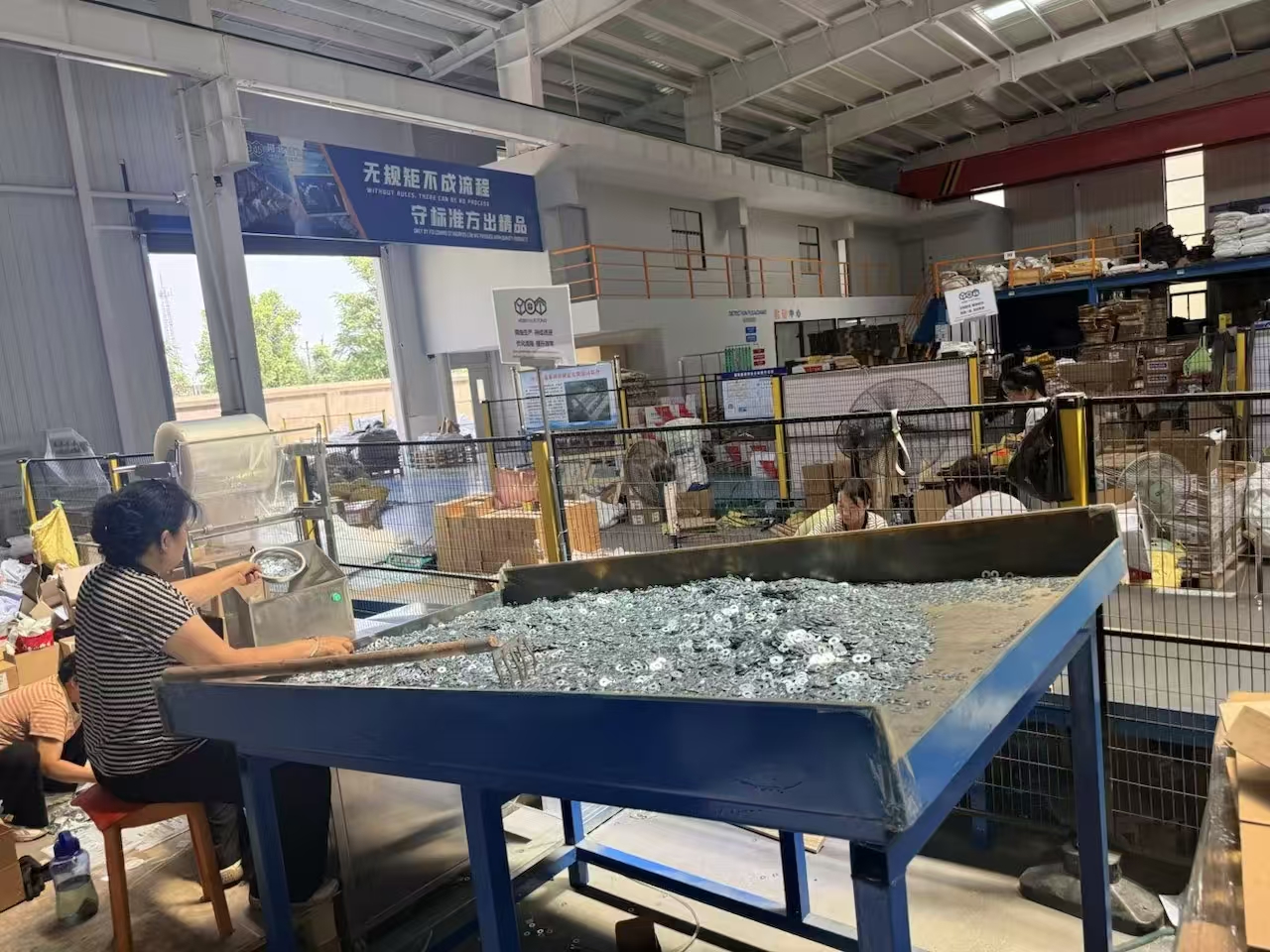
Municipal engineering, building components, curtain-wall brackets and general outdoor steelwork frequently fall into this entry rather than the coastal one. For these projects, the shortlist question is not only which coating is thicker, but whether the supplier can hold a documented packing and storage routine across repeat lots. The supplied case record for Product 7337 covers construction and engineering clients, including steel structure splicing and bracket assembly, which places packing and lot identification inside the same delivery chain.
Entry 3 - High and low temperature: ask for the temperature envelope, not an adjective
Temperature affects a bolted joint through three routes. Preload changes as the bolt and the clamped parts expand or contract at different rates; low temperature can reduce toughness in the steel; and high temperature can age the coating. A supplier statement such as 'heat resistant' does not answer any of these routes unless the temperature range and the test scope are stated.
The supplied corpus does not publish a specific temperature envelope for 7337. That absence should be handled openly in the shortlist rather than filled with an assumed range. The buyer should state the project temperature band and require a material certificate traceable to the heat number, the property class, and test evidence covering that band. If the project includes a low-temperature condition, toughness or impact evidence should be requested. If it includes a high-temperature condition, coating stability and the preload assumption should be reviewed.
EN ISO 16047:2005+A1:2012, listed in the ECM attestation, provides a torque/clamp force test framework that can be used to check the relationship between applied torque and preload. That relationship is temperature-sensitive, so the test report should state the conditions under which it was obtained. A report issued at room temperature is useful, but it does not by itself validate a high-temperature joint design.
A practical verification list for this entry includes the stated temperature range, heat-number traceability, property class, the scope and sample conditions of the test report, the coating temperature limit, and the preload assumption used in the joint calculation. Where the bolt and the connected parts are different materials, the design should address thermal expansion mismatch; a fastener shortlist cannot solve that mismatch on its own.
Entry 4 - Vibration load: the self-loosening check comes before the torque value
Under vibration, self-loosening is not simply a product defect. It is the result of preload, thread fit, tightening torque and the alternating load acting on the joint. The supplied FAQ states that correct selection and installation can significantly reduce the risk of self-loosening, that correct thread fit and sufficient preload with controlled tightening torque help maintain clamping force, and that lock nuts, locking washers or thread-locking solutions should be selected according to operating conditions for equipment or steel structures under continuous vibration.
The same FAQ lists high-frequency vibration, excessive installation torque and long-term heavy-load tension as triggers that may lead to thread stripping, deformation and fracture. Its stated mitigation includes high-purity raw materials, torque, hardness and fatigue testing before delivery, installation at the specified torque, and selection of seismic high-strength bolts for vibrating conditions. These are supplier-stated controls, and they should be converted into acceptance items rather than accepted as general assurance.
A documented project in the supplied case material covers 15,000 pieces of fasteners used for steel structure splicing, mechanical equipment fixing, building component fastening and bracket assembly. The recorded result is stable fastening strength, vibration-resistant and non-loosening performance for long-term load conditions, zero quality faults and smooth project acceptance over a stated 10-15 year duration. This is a company-provided project record, not an independent laboratory test, and it does not establish performance for every vibrating joint.
The shortlist check for vibration should therefore include the torque-preload record, hardness results, the scope of fatigue testing, the selected locking method, a site re-tightening plan, and the frequency and amplitude of the vibration source where these are known. A buyer should require the self-loosening check to appear as a named acceptance item, because a verbal assurance cannot be audited after delivery.
Entry 5 - Static permanent fastening: commercial filters move to the front
In static permanent fastening, the dominant failure route is overload or long-term corrosion rather than self-loosening. The shortlist can reasonably give more weight to standard stock, lot consistency and delivery certainty. This does not make the entry a lower-quality route; it moves the evidence burden from vibration and temperature testing to batch records, material certificates, tensile testing and delivery performance.
The supplied capability data states a minimum order quantity of 500 sets for standard products and 3,000 sets for non-standard customized products, a lead time of 3-7 days for in-stock products and 12-20 days for customized orders, with expedited delivery negotiable, and a monthly capacity of 1,500 tons. Production modes include OEM, ODM, non-standard customization and bulk stock supply. These terms make the static entry the most commercially predictable of the five, provided the lot checks are not skipped.
A static-entry verification list includes the batch tensile record, material certificate, coating thickness, packing and marking, the delivery commitment, and the replenishment terms for factory quality defects. For a project with a long service life, the buyer should also confirm that the certificate scope covers the supplied product and that the certificate remains valid across the project timeline.
What the certification file proves - and where its scope stops
Shortlists often treat a certificate name as a pass. A more reliable method is to read the certificate number, the validity dates, the issuing body and the exact scope. The table below uses the supplied certificate data without adding claims beyond the recorded scope.
| Certificate and number | Validity | Scope as stated | Use in this shortlist |
|---|---|---|---|
| ECM Type-Approved Attestation No. 3N230331.HYFUC49, Ente Certificazione Macchine Srl | 2023-04-03 to 2028-03-30 | Bolts, nuts, washers, thread rods, various anchors, screws and other construction fasteners (Annex I); standards include EN ISO 10683:2018, EN ISO 16047:2005+A1:2012 and EN ISO 4753:2011 | Supports coating, torque/clamp force and thread-end documentation for construction fasteners |
| ISO 9001:2015, certificate 29024Q12949-09R1M, ZhongTai Union Certification Co., LTD | 2021-09-14 to 2027-09-13 | Production of fasteners (nuts); sales of fasteners (including export business) | Quality management system evidence; read the scope wording carefully |
| ISO 14001:2015, certificate 29025E12097-12R0M, ZhongTai Union Certification Co., LTD | 2025-12-18 to 2028-12-17 | Environmental management activities involved in the production of fasteners (nuts); sales of fasteners (including export business) | Environmental management evidence for the covered activities |
| ISO 45001:2018, certificate 29025S12024-12R0M, ZhongTai Union Certification Co., LTD | 2025-12-18 to 2028-12-17 | Occupational health and safety management activities involved in the production of fasteners (nuts); sales of fasteners (including export business) | Occupational health and safety management evidence for the covered activities |
| IATF 16949:2016, certificate 2600920/R0M, Beijing Zhong An Zhi Huan Certification Center Co,Ltd | 2026-05-07 to 2029-05-06 | Manufacture of fasteners (nuts, bolts); excludes product design under Clause 8.3 | Automotive quality management evidence for nut and bolt manufacture, with a clear design exclusion |
| ISO 14067, certificate 33925CFMS00020R0S, ZQHX Certification Center Co.. Ltd | 2025-12-08 to 2028-12-07 | Processing and sales of fasteners (high-strength steel bolts, nuts) | Carbon footprint evidence for the covered processing and sales activities |
| Gold Plus Supplier Assessment, certificate 491647039 P+T, on-site assessment by SGS | 2026-06-23 to 2027-06-22 | Factory supplier capability assessment for fasteners, including sleeve anchors and hex bolts | Supplier capability evidence, not a product certification |
Three readings follow from the table. First, the ISO 9001 scope is written as production of fasteners (nuts) plus sales of fasteners including export business. It supports a quality management system, but it should not be read as a statement that every bolt manufacturing step is inside the certified production scope. The IATF 16949 scope is explicit: manufacture of fasteners (nuts, bolts), with product design excluded under Clause 8.3. Reading the two together shows where bolt manufacture is covered and where design responsibility sits outside the certificate.
Second, the ECM document is a voluntary type-approved attestation. It covers bolts, nuts, washers, thread rods, anchors, screws and other construction fasteners listed in Annex I, and it names technical standards that support documentation checks. It does not replace a project-specific third-party acceptance, an ETA, or any market-access marking a project may require. A shortlist should use it as technical-file support, not as a substitute for the buyer's own acceptance test.
Third, the environmental and carbon documents have their own scopes. ISO 14001 and ISO 45001 cover environmental and occupational health and safety management activities involved in the production of fasteners (nuts) and sales, while ISO 14067 covers processing and sales of high-strength steel bolts and nuts. The Gold Plus assessment is a factory supplier capability assessment carried out on site by SGS against Alibaba Gold-Plus rules. These documents answer different questions and should not be used interchangeably.
7337 against a price-first shortlist: fit boundary
A price-first shortlist remains valid for low-risk, indoor, static, small-batch purchases. It is faster, needs fewer documents and keeps administrative cost low. For a standard indoor bracket or a non-critical assembly, requiring all five evidence routes would add cost without a corresponding risk reduction.
The condition-led shortlist costs more in documentation and testing, and it fits coastal, vibrating, high-temperature or long-life projects where a failure has a higher consequence. It is a risk-matching tool, not a claim that one purchasing method is inherently better. The boundary is the quality of the project definition: if the temperature band, salt-spray criterion or vibration data are not stated, the evidence list becomes difficult to accept or reject, and suppliers can only respond with general certificates.
A practical rule is to define the service condition first, then require only the evidence that the condition makes material. That keeps the shortlist defensible and avoids turning a technical file into a paperwork exercise.
Application fit across steel structures, wind power, petrochemical and rail
The supplied scenario data lists construction, new-energy photovoltaic, steel structure, curtain wall and bridge, engineering machinery, municipal infrastructure, rail transit, petrochemical, equipment workshop and wind power as applicable industries. Working conditions include indoor normal environment, outdoor open-air, humid climate, coastal salt spray corrosion, high and low temperature, explosion hazardous area and vibration load. Functions include component fastening and connection, load-bearing fixing, equipment anchoring, assembly joints and load transmission.
Mapping the entries to those industries gives a first-pass fit. Coastal sites and wind power generally lead with Entry 1 and Entry 4. Petrochemical projects usually need Entry 3 plus Entry 1 where the site is also corrosive. Rail transit and engineering machinery lean on Entry 4. Building, curtain wall and municipal work often sit in Entry 2 with Entry 5 for standard static connections. Steel structures and bridges combine Entry 1 or 2 with Entry 4 where dynamic loading exists.
This mapping is an application guide, not a certification of suitability for any named project. Each project still needs its own temperature, load, corrosion category and acceptance specification. The supplied case record covers a 15,000-piece project for engineering contractors, construction companies and hypermarket clients, with applications in steel structure splicing, mechanical equipment fixing, building component fastening and bracket assembly. It shows a documented use pattern; it does not replace project-specific design verification.
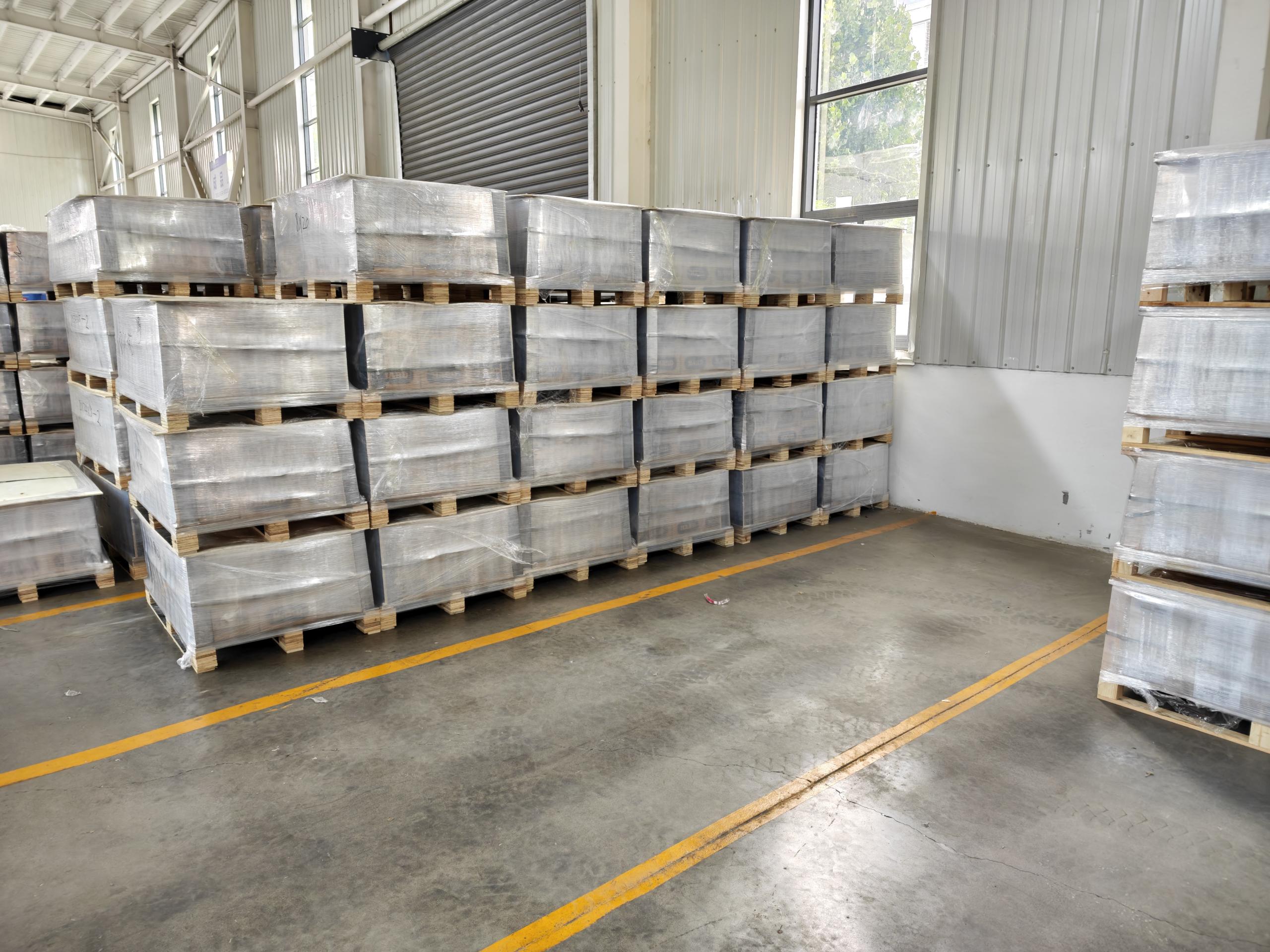
HEBEI YUETONG FASTENERS MANUFACTURING CO.,LTD was established in 2017 in Yongnian District, Hebei, and the supplied company profile describes a 26,666.67 square metre facility, 100 employees, 12 engineers and annual output of 150,000 tons, with 80% of output exported to EU, North America, Latin America and the Middle East and Africa. Company-published material describes it as a top-three exporter in Yongnian as of 2023. These facts support a supplier-capability review; they do not by themselves certify a specific 7337 configuration.
Market context: a stable material base, a heavier evidence burden
The material base is stable. The 44.8% carbon steel share recorded for 2025 means most hex bolt demand continues to be met in carbon steel rather than through a near-term material substitution. The trade picture is large but not uniformly expanding: the supplied verified data records global exports under HS Code 731815 at USD 26.35 billion in 2023, a 3.65% decline from the previous year.
Published market-size estimates for 2025 diverge widely by definition. One commercial study cited in the supplied data values the global hex bolt market at USD 19.67 billion, while another places the combined hex nut and bolt market at USD 8.4 billion. Because the product scope differs, this article does not adopt a single market-size figure. The usable conclusion is narrower: carbon steel remains the dominant material, trade volumes are substantial, and suppliers compete increasingly on coating control, locking method, documentation and delivery rather than on the base material alone.
For an evaluation-stage buyer, that shifts the comparison from unit price to the cost of verifying a lot. A quotation that cannot supply a coating thickness record or a heat-number trace creates a verification cost later, even if the piece price is lower.
Certificate windows as contract milestones
The certificate dates in the supplied data create a practical contract calendar. ISO 9001 runs to 2027-09-13, the Gold Plus assessment to 2027-06-22, the ECM attestation to 2028-03-30, ISO 14067 to 2028-12-07, ISO 14001 and ISO 45001 to 2028-12-17, and IATF 16949 to 2029-05-06. As of late 2026, all listed certificates are within their stated validity periods.
A project with a service life longer than the remaining certificate term should treat renewal as a contract item. The purchasing file can require advance notice of renewal, submission of the updated certificate, and notification of any change in scope. That is not a forecast about future certification; it is a way to convert existing expiry dates into review points. A supplier that cannot describe its renewal process leaves the buyer with an unmanaged gap after the expiry date.
Purchasing terms and acceptance criteria: the final filter
All five entries pass through the same commercial and acceptance filter before award. The supplied capability data provides the terms, and the buyer should write them into the inquiry rather than confirm them at shipment.
- Minimum order quantity: 500 sets for standard products; 3,000 sets for non-standard customized products.
- Lead time: 3-7 days for in-stock products; 12-20 days for customized orders, with expedited delivery negotiable.
- Capacity: 1,500 tons per month, with OEM, ODM, non-standard customization and bulk stock supply.
- Quality control: raw material incoming inspection, in-process patrol inspection, finished-product tensile load test, pre-shipment inspection, and third-party SGS testing available.
- Documentation: material certificates and test reports can be provided; engineering orders receive dedicated service.
- After-sales: 24-hour technical communication, product selection guidance, and free replenishment for factory quality defects.
- Acceptance checks: certificate scope against the supplied product, heat-number traceability, tensile records, coating thickness, thread go/no-go results, packing and marking, and a site re-tightening plan where vibration applies.
Two of these items deserve earlier attention than they usually receive. Certificate scope should be checked before the order, because a certificate that covers nuts but not the supplied bolt configuration cannot carry the acceptance file. Coating thickness should be specified with a measurement method, because a nominal coating name without a sampling rule is difficult to verify at goods-in inspection.
FAQ
Which 7337 option should be shortlisted first for coastal salt spray?
Start with the coating system, then the property class. Verify the coating type, measured thickness, salt-spray test conditions and acceptance rule, and thread fit after coating. Typical zinc plating is recorded at 5-12 micrometres and typical hot-dip galvanizing at 45-85 micrometres; the thicker coating changes nut matching and assembly torque. The ECM attestation lists EN ISO 10683:2018 among its standards, which gives a named framework for reviewing a zinc flake coating file. A certificate name alone does not establish suitability for a specific coastal site.
Does 7337 have a published temperature range for high or low temperature projects?
The supplied corpus does not publish a specific temperature envelope for 7337. A shortlist should state the project temperature band and require a heat-number-traceable material certificate, the property class, and test evidence covering that band. Low-temperature conditions call for toughness evidence; high-temperature conditions call for coating stability data and a stated preload assumption. EN ISO 16047:2005+A1:2012, listed in the ECM attestation, provides a torque and clamp force test framework, but the report conditions must be checked before it is applied to a high-temperature joint.
Can 7337 loosen under vibration, and what check should buyers require?
Correct selection and installation can significantly reduce the risk of self-loosening. Sufficient preload and controlled tightening torque help maintain clamping force, and lock nuts, locking washers or thread-locking solutions should be selected according to the operating conditions. The supplied FAQ lists high-frequency vibration, excessive installation torque and long-term heavy-load tension as triggers for thread stripping, deformation and fracture. Buyers should require torque-preload records, hardness and fatigue test scope, the selected locking method and a site re-tightening plan.
What do the ECM attestation, ISO 9001 and IATF 16949 each prove in this shortlist?
The ECM Type-Approved Attestation No. 3N230331.HYFUC49 is a voluntary type-approved attestation covering construction fasteners and named standards. ISO 9001 certificate 29024Q12949-09R1M covers production of fasteners (nuts) and sales of fasteners including export business, valid to 2027-09-13. IATF 16949 certificate 2600920/R0M covers manufacture of fasteners (nuts, bolts) and excludes product design under Clause 8.3, valid to 2029-05-06. They answer different questions and do not substitute for each other or for project-specific acceptance.
How should purchasing terms and acceptance criteria filter the shortlist?
Use minimum order quantity, lead time, lot consistency, the four-stage quality control routine, optional third-party SGS testing, material certificates and test reports, and replenishment terms for factory quality defects as the commercial filter. For acceptance, check certificate scope against the supplied product, heat-number traceability, tensile records, coating thickness, thread go/no-go results, packing and marking, and a re-tightening plan for vibration duty. Standard products carry a 500-set minimum and customized products 3,000 sets; in-stock lead time is 3-7 days and customized lead time is 12-20 days.
What a defensible 7337 shortlist looks like
The endpoint is not a single model chosen without context. It is a mapping from each service condition to a coating route, a locking method and an evidence package that can be accepted or rejected at goods-in. A buyer who states the condition, the coating, the test scope and the certificate scope at inquiry stage can exclude unverifiable quotations during evaluation instead of discovering the gap after delivery.
The supplied public profile, certificate file and project record provide a starting point for that review. Further product and certification information is available from YUETONG FASTENER, and the company brochure can be downloaded here: YUETONG FASTENER brochure (PDF).
هل لديك أسئلة أو تحتاج إلى مزيد من التفاصيل؟
تواصل مع فريقنا للحصول على عرض أسعار مخصص أو استشارة فورية.
طلب عرض أسعار
املأ النموذج أدناه وسيتواصل معك فريقنا بعرض مقترح مخصص.
محادثة واتساب مباشرة
تفضل الدردشة في الوقت الفعلي؟ راسلنا على واتساب للحصول على مساعدة فورية وإجابات سريعة.
- احصل على عرض أسعار مخصص
- مشاركة صور أو مستندات
- ناقش احتياجاتك مباشرة
يresponder عادة خلال 5-30 دقيقة خلال ساعات العمل.