
Carbon Window Tint Film: What Buyers Should Verify
Automotive tinting film is now a multi-billion-dollar category. Grand View Research projects the global automotive tinting film market to reach USD 14.7 billion by 2033 in a report published in 2026, and China produced more than 31 million motor vehicles in 2024, according to production figures referenced by market analysts from the International Organization of Motor Vehicle Manufacturers. Growth at that scale pulls a very wide range of film SKUs into the same distribution channel, and it makes the label printed on the box considerably less reliable than the measurements printed inside the technical data sheet.
Carbon window tint film is where that gap becomes visible. In HOCHI's published product data, the carbon film model CARBONBRONZE 10 reports 10% visible light transmission, a 90% infrared cut and 99% UV rejection on an optical-grade PET base. A dye-based glue tint model from the same factory, CLASSIC03P, reports 3% visible light transmission, a 10% infrared cut and 99% UV rejection. The two can look almost identical on a sample card. This article explains what carbon window tint film is, which measurements buyers should verify during evaluation, and what changes when the decision moves into order execution.
What 'Carbon' Actually Describes in a Film Catalog
Carbon window tint film is a carbon-based automotive window film in which the heat-management function is carried by the film construction rather than by a surface dye alone. The definition is worth stating precisely, because in commercial use the term carbon covers a broad spectrum: from dyed films finished in a carbon-look colour to carbon-loaded constructions whose infrared performance sits close to that of sputtered metallised film.
Colour, in other words, is not a specification. The most reliable way to see the difference is to compare several film families produced by the same manufacturer against the same measured metrics, as published in HOCHI's model data.
| Film family and model | Published VLT | Published IR cut | Published UV rejection | Published warranty |
|---|---|---|---|---|
| Carbon film — CARBONBRONZE 10 | 10% | 90% | 99% | Warranty term not published for this model |
| Glue tint — CLASSIC03P | 3% | 10% | 99% | 4 years |
| Glue tint — CLASSIC35P | 35% | 10% | 99% | 4 years |
| Sputter film — QS0595 | 5% | 95% | 99% | 10 years |
| Sputter film — QS5095 | 50% | 95% | 99% | 10 years |
| Sputter film — SV3095 | 30% | 95% | 99% | 10 years |
Values as published in HOCHI product data for these models. Warranty terms are model-specific; the CARBONBRONZE 10 data unit publishes performance values without a warranty term, so the applicable term should be confirmed on the model specification sheet.
The pattern across the range is consistent. UV rejection sits at 99% for the carbon, glue tint and sputter families, so UV performance rarely separates one supplier from another. Infrared cut separates them sharply: about 10% for the dye-based glue tint line, 90% for the carbon film, and 95% for the sputtered line. A buyer comparing dark film with dark film without opening the data sheet is not comparing equivalent products.
How Carbon Window Tint Film Is Measured
Four measurement groups decide whether a carbon film suits a given market, vehicle mix and price tier.
Visible light transmission (VLT)
VLT describes how much daylight reaches the cabin. CARBONBRONZE 10 is published at 10% VLT, a dark grade intended for privacy and glare control. VLT is also the value most frequently regulated, and HOCHI's OEM programme accepts VLT specifications between 5% and 70%, so the same carbon family can be produced in lighter grades for markets with stricter visible-light rules.
Infrared cut
Infrared cut describes rejection in the near-infrared band where much of the sun's heat energy arrives; the carbon model is published at 90%. IR cut alone is not a total solar performance figure. HOCHI's own technical guidance is that solar control films should be evaluated using verified VLT, UV rejection, IR rejection and TSER test data rather than relying on product colour, and that principle applies directly when carbon grades are specified into a tender or a distributor catalogue.
UV rejection
At 99%, UV rejection is the most uniform value in the range and the least useful for differentiating suppliers. It remains the value that matters most for interior fading, dashboard degradation and occupant exposure, and it should still be confirmed as a tested figure rather than assumed from the film category.
Structure and thickness
Film structure determines handling behaviour and, at higher thicknesses, glass retention. HOCHI's glue tint models are published as 2PLY 1.5 mil, sputter models as 2PLY 2.0 mil to 3.0 mil, and the security versions of the glue tint line as 2PLY 4.0 mil and 2PLY 8.0 mil. The CARBONBRONZE 10 data unit does not publish a thickness value, so a buyer evaluating the carbon grade should request it explicitly instead of inferring it from the family name.
Optical inspection standard
The International Window Film Association's Visual Quality Standard specifies inspection from 6 feet — approximately 2 metres — under natural daylight. Agreeing the inspection distance and lighting before shipment prevents the common dispute in which a supplier's acceptance standard and a buyer's acceptance standard never actually meet.
Manufacturing Capability Behind the Film
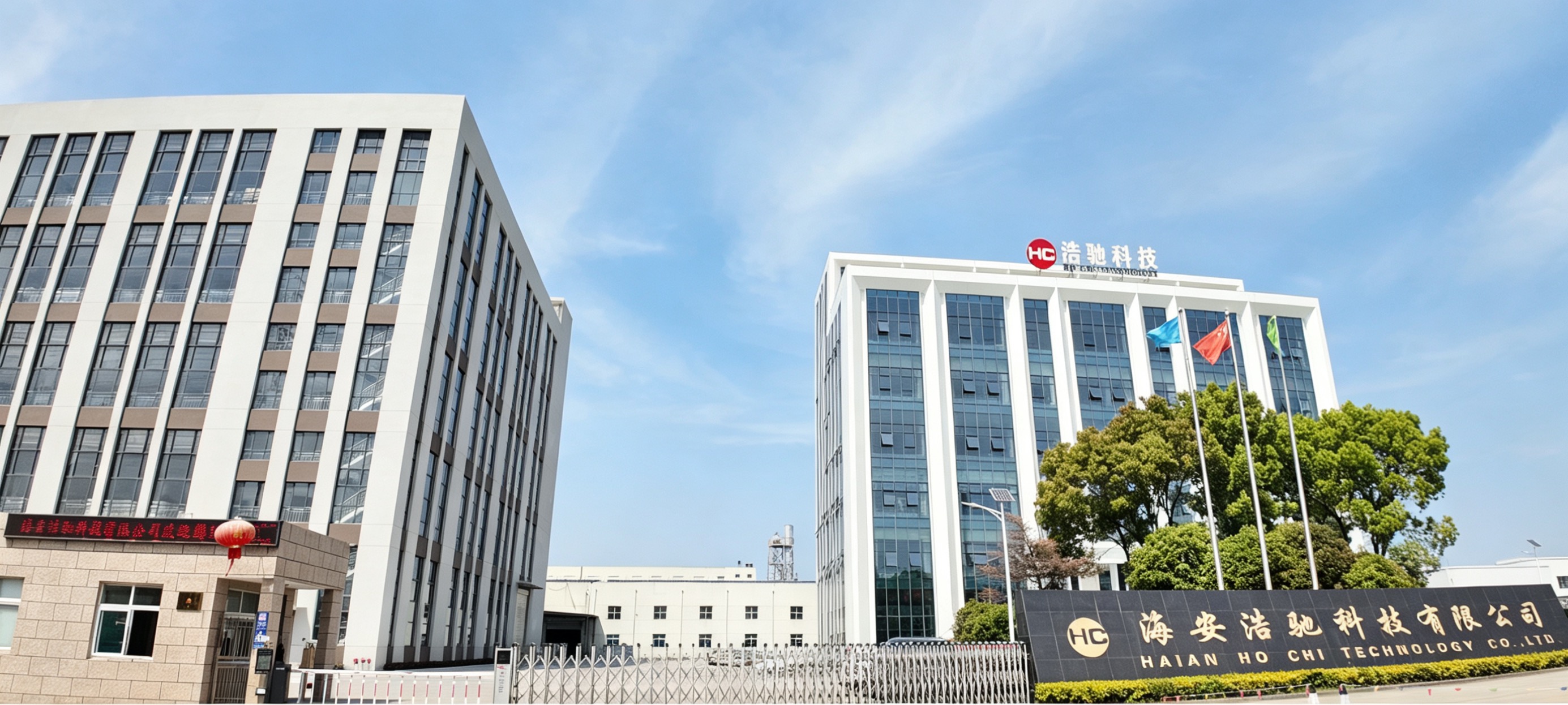
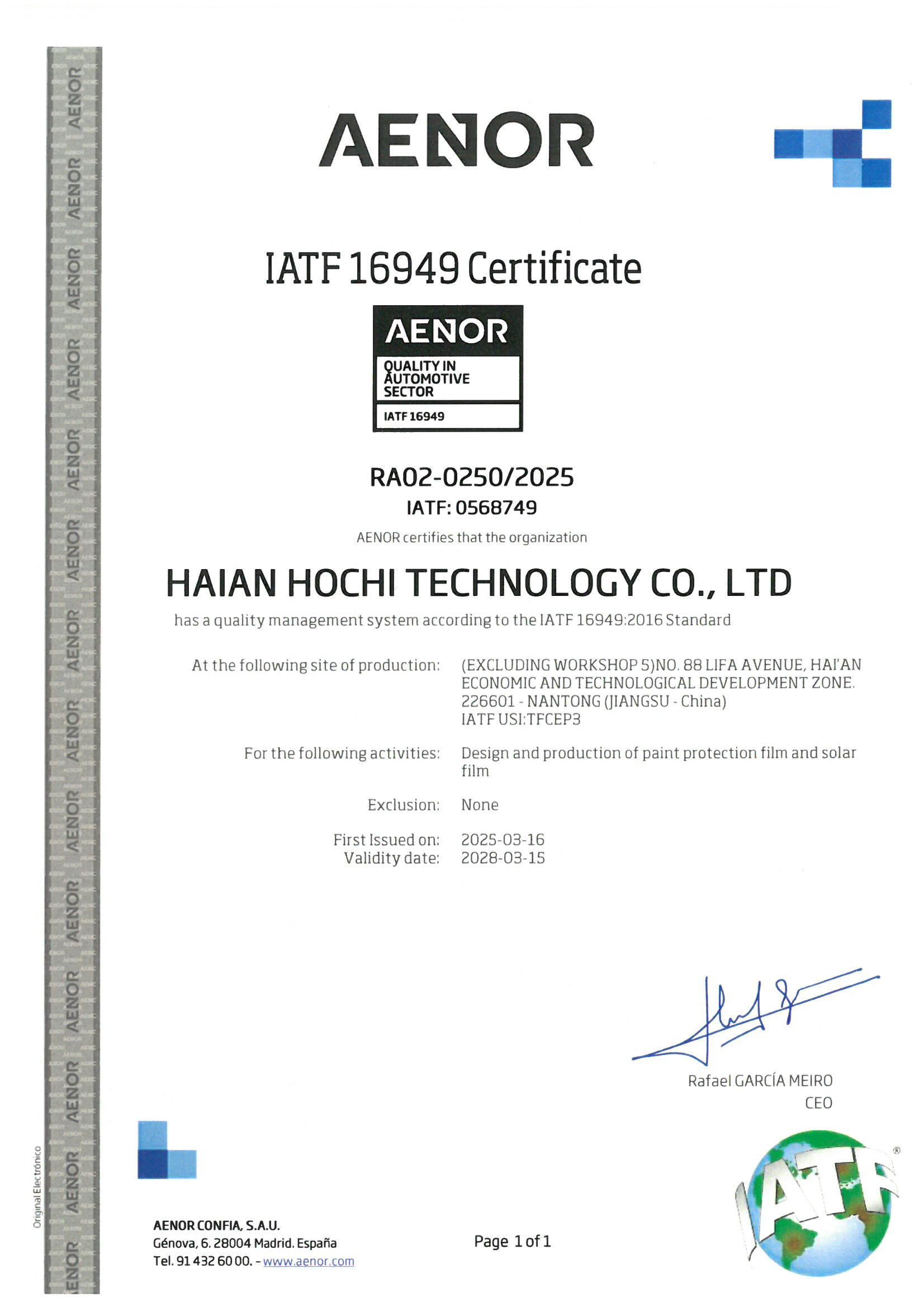
Haian Haochi Technology Co., Ltd., which trades as HOCHI PPF & Window Film, is a functional film manufacturer based at No. 88, Lifang Avenue, Haian Economic and Technological Development Zone, Nantong, Jiangsu, China, and a wholly owned subsidiary of Shanghai Haochi Technology Co., Ltd. Founded in 2009, the company organises its business around automotive window film, with car wraps, colour-changing films, architectural films, explosion-proof films and special protective film solutions alongside it. Carbon film is listed among its main product categories.
The production base covers 133,333 square metres with more than 220 employees, a 100-engineer R&D team, a stated annual output of 48,000,000 metres and OEM monthly capacity of 3 to 5 million metres. A Class 1000 dust-free coating workshop of 3,000 square metres forms part of that capacity. Export sales account for 60% of the business, with markets across Europe, the Middle East, Southeast Asia, Latin America and North America.
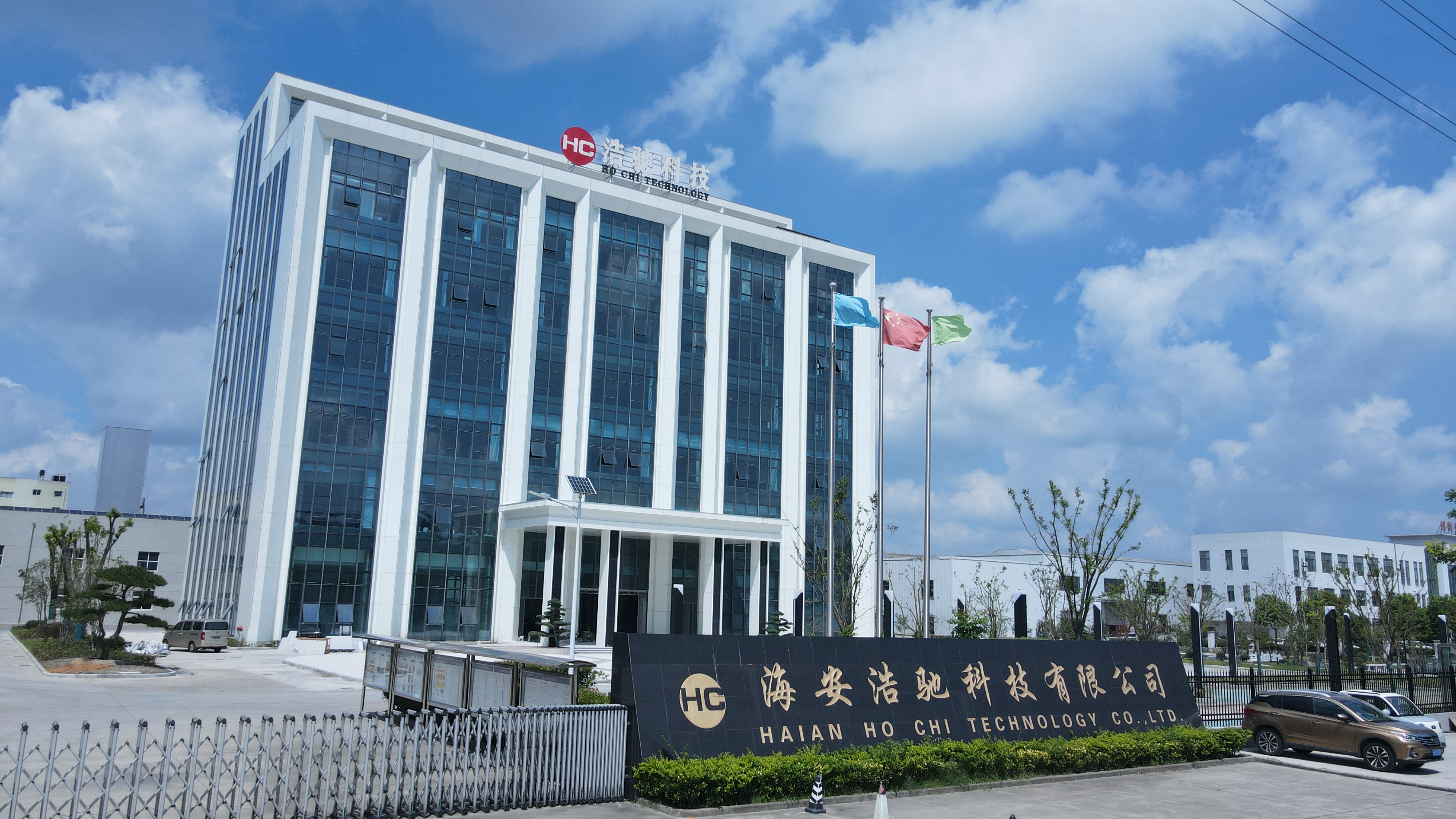
Certification is a separate check from capacity, and the certificate scopes are specific. Quality, environmental, and occupational health and safety management systems are certified to ISO 9001 (certificate 04325Q31011R1M), ISO 14001 (04325E30833R1M) and ISO 45001 (04325S40794R0M) by Beijing United Intelligence Certification Co., Ltd., all valid to May 2028, with a scope covering the research, development and production of special functional plastic films including automotive protective film and building film. The IATF 16949 certificate RA02-0250/2025 (IATF: 0568749), issued by AENOR CONFIA S.A.U. and valid to 15 March 2028, covers the design and production of paint protection film and solar film — the certificate scope automotive-channel buyers most often ask to see.
Lot-level control is documented as 100% online optical defect inspection, spectrophotometer testing of VLT, UV and IR values, peel adhesion testing and high-temperature ageing testing, with third-party inspection available through SGS. For carbon grades, the spectrophotometer step is the one that converts a colour claim into a number the buyer can check on arrival.
OEM Customisation, MOQ and Order Execution
Once a film grade passes evaluation, the questions change: what can be customised, in what quantity, on what lead time, and under what acceptance procedure.
- Customisation: VLT from 5% to 70%, UV and IR rejection rates, film thickness in mil, roll dimensions in width and length, custom colours, release liner, and printing on the packaging box and core.
- Minimum order: 50 rolls for OEM orders, with sample orders available on request.
- Lead time: 30 to 45 days.
- Delivery basis: FOB Shanghai.
- Acceptance: pre-shipment testing and third-party inspection through SGS.
- Payment: 30% by international bank transfer in advance, 70% against a copy of the bill of lading.
- After-sales: a 5 to 10 year quality warranty framework covering anti-bubbling, anti-fading and anti-delamination, 100% free replacement for defectives, and 24/7 technical support and installation guidance.
Two practical notes follow from those terms. First, although the after-sales framework is expressed as 5 to 10 years, published model warranties differ inside that range — 4 years for the glue tint models and 10 years for the sputtered models in the comparison above — so the term that applies to a carbon grade should be confirmed on its own specification sheet rather than inferred from the brand. Second, a 50-roll minimum is workable for a distributor but is not a single-vehicle quantity, which is precisely why sample orders exist: validating a new carbon grade on a sample basis before committing to a first container is the cheapest form of risk control in this category.
Application: Matching the Film Tier to the Job
HOCHI lists CARBONBRONZE 10 under automotive film for the automotive industry. Within that application, selection in practice follows the job rather than the price list.
- Deep privacy tint with standard UV protection: glue tint line, CLASSIC03P at 3% VLT or CLASSIC35P at 35% VLT, both published with a 4-year warranty.
- Visible darkness with substantially higher heat rejection: the carbon grade, CARBONBRONZE 10, at 10% VLT with a 90% infrared cut and 99% UV rejection.
- Maximum heat rejection at low VLT: the sputtered line, for example QS0595 at 5% VLT and 95% infrared cut with a 10-year warranty.
- Heat rejection without heavy darkening: QS5095, published at 50% VLT with a 95% infrared cut.
- Signal-sensitive vehicles: SV3095 is published as a sputter film with no signal interference.
- Glass retention and impact performance: NEX4MIL05 and NEX8MIL05, published at 2PLY 4.0 mil and 2PLY 8.0 mil with a 5-year warranty.
Channel-scale demand for this type of programme is documented rather than assumed. HOCHI publishes a distributor and detailing-chain case covering 3,500 rolls of ceramic window film and 1,200 rolls of TPU paint protection film — roughly 150,000 metres per year — in a cooperation running more than three years, where the buyer's stated priorities were zero optical distortion, bubble-free installation and batch-to-batch colour consistency. Those three priorities determine whether a carbon film programme holds up at volume, and they are the same points a distributor should test on a sample roll.
Paint protection film is usually purchased alongside tint by the same channel. PPF thickness typically ranges from 6.5 mil to 10 mil to balance impact resistance against installation flexibility, and one commercial research estimate places self-healing PPF at approximately 15% of the global automotive film market in 2024. HOCHI's PPF case data describes high-gloss TPU PPF supplied at around 2,000 rolls per year to dealership and detailing groups — useful context when a distributor is planning a tint and PPF programme together.
Limits and Trade-offs Buyers Should Accept Before Ordering
Every film family has boundaries, and carbon is no exception. The points below are the ones that tend to surface after a purchase order rather than before it.
- Carbon does not lead the range on infrared performance. On published figures, the carbon model reports a 90% infrared cut while the sputtered models report 95%. A buyer whose proposition is maximum heat rejection should treat carbon as a middle tier between dye-based and sputtered constructions, not as the top of the line.
- Signal interference is not documented for the carbon model. SV3095 is published as having no signal interference; the CARBONBRONZE 10 data unit makes no equivalent statement. Rather than assume that any carbon construction is signal-neutral, buyers serving markets where electronic tolling or GPS performance is scrutinised should request a model-specific statement.
- Dark VLT carries regulatory and usability constraints. A 10% VLT grade is dark. Permitted visible-light levels differ by jurisdiction and often by glass position within the vehicle, and night-time visibility is affected. A data sheet cannot resolve a local regulatory question; it has to be checked market by market.
- Warranty duration is not uniform across the catalogue. Published terms are 4 years for the glue tint models and 10 years for the sputtered models, inside a 5 to 10 year after-sales framework. Comparing suppliers on warranty at brand level rather than at model level produces misleading conclusions.
- Infrared cut is not total solar energy rejection. The distinction matters when a specification is written into a tender. HOCHI's technical guidance is explicit that VLT, UV rejection, IR rejection and TSER data should be evaluated together rather than inferred from product colour.
- Performance depends on installation. Film applied to incompatible or damaged glass, or installed with poor squeegee technique, will not deliver its rated appearance or service life. HOCHI's automotive installation guidance sets out the sequence — inspection, dust-free working environment, glass cleaning, cutting, heat shrinking, positioning, squeegee work, edge trimming and curing — and the same sequence applies to carbon grades.
Market Trend: Where Carbon Sits as the Category Grows
Three published data points frame the category. Grand View Research projects the global automotive tinting film market to reach USD 14.7 billion by 2033. China's motor vehicle production exceeded 31 million units in 2024, the volume base that drives cabin thermal management demand. At the premium end, commercial research notes that nano-ceramic window films can block up to 85% of solar heat while maintaining high visible light transmission — a technology that competes with carbon grades on heat rejection rather than on price.
The supply side is scaling in parallel. The 72-inch wide-format film segment used for paint protection is projected by Strategic Market Research to reach USD 1.9 billion by 2030. The combined effect is a market in which the buyer's problem is no longer availability. It is discrimination: separating a genuine carbon construction from a dyed film carrying a carbon name, and confirming that the infrared and UV values on the sheet are testable and traceable.
Future Outlook
Two changes are likely to shape the next phase of this category. The first is specification transparency. As more suppliers enter the tint segment, buyers ask for VLT, IR, UV and TSER values that can be traced to test methods, for thickness in mil, and for warranty terms at model level. Suppliers who publish those values — and who can support them with third-party inspection and certificate scopes that name solar film — will be easier to keep on a shortlist than suppliers who publish colours.
The second is sampling discipline. Because the difference between a 90% and a 95% infrared cut is invisible at the point of sale, the grading decision increasingly happens on a sample bench rather than in a catalogue. Carbon film is likely to remain the mid-tier workhorse of that process: the grade that delivers visible darkening and meaningful heat rejection below the price of sputtered constructions, but only for buyers who verify the numbers for the exact model in front of them.
FAQ
What is carbon window tint film, and how does it differ from a dyed tint?
Carbon window tint film is a carbon-based automotive window film in which heat management is carried by the film construction rather than by a surface dye alone. In HOCHI's product data, the carbon film model CARBONBRONZE 10 is built on optical-grade PET and reports 10% visible light transmission, a 90% infrared cut and 99% UV rejection in a carbon silver colour. A dye-based glue tint model from the same range, CLASSIC03P, reports 3% visible light transmission, a 10% infrared cut and 99% UV rejection at 2PLY 1.5 mil. The two can appear similarly dark while performing very differently in infrared rejection, which is why colour alone is not a reliable basis for comparison.
Which measurements should a buyer check on a carbon window tint film data sheet?
VLT, infrared cut or IR rejection, UV rejection, structure and thickness in mil, and the warranty term for that model. HOCHI's published technical guidance is that solar control films should be evaluated using verified VLT, UV rejection, IR rejection and TSER data rather than product colour. Structure matters as well: HOCHI's glue tint films are published at 2PLY 1.5 mil, sputter films at 2PLY 2.0 to 3.0 mil, and security versions at 2PLY 4.0 mil and 2PLY 8.0 mil. Optical quality can be judged against the IWFA Visual Quality Standard, which specifies inspection from 6 feet, approximately 2 metres, under natural daylight.
Does carbon window tint film interfere with GPS, mobile phone or toll signals?
HOCHI's product data does not publish a signal-interference statement for the carbon film model CARBONBRONZE 10. It does publish one sputter model, SV3095, as having no signal interference. Buyers who need a documented position on signal performance should request a statement naming the exact model being purchased rather than assuming that a film is signal-neutral because of its colour or family name, since signal behaviour depends on film construction.
What OEM customisation is available for carbon window film, and what is the minimum order?
HOCHI's OEM programme covers VLT specifications from 5% to 70%, UV and IR rejection rates, film thickness in mil, roll dimensions in width and length, custom colours, release liner, and printing on the packaging box and core. The minimum order quantity for OEM orders is 50 rolls, with sample orders available on request. Monthly production capacity is stated at 3 to 5 million metres and lead time at 30 to 45 days.
What are the acceptance, delivery and payment terms for a window film order?
HOCHI's purchasing data lists FOB Shanghai as the delivery basis, pre-shipment testing and third-party inspection through SGS as acceptance options, and payment of 30% by international bank transfer in advance with the remaining 70% against a copy of the bill of lading. Because visual quality standards are defined in terms of viewing conditions, the inspection distance and lighting used to judge optical defects should be agreed before shipment, which is consistent with the IWFA Visual Quality Standard of inspection from 6 feet under natural daylight.
What are the limits of carbon window tint film compared with sputtered film?
On HOCHI's published figures, the carbon model reports a 90% infrared cut while the sputtered models report 95%, so carbon should not be treated as the top heat-rejection tier in that range. The carbon model also has no published signal-interference statement, unlike SV3095. In addition, a 10% VLT grade is dark, and permitted visible-light levels differ by market and by glass position within a vehicle, so local rules have to be checked separately. Published warranty terms also differ by model, at 4 years for the glue tint models and 10 years for the sputtered models, so warranty comparison should be made model by model rather than at brand level.
Specification transparency is the practical dividing line in this category. Buyers evaluating carbon window tint film can reduce most of their exposure by confirming four things before a purchase order: the VLT and infrared values on the model specification sheet, the structure and thickness in mil, the warranty term that applies to that specific model, and the inspection standard that will be applied at delivery. HOCHI publishes its window film specification sheet with model-level performance data for reference and download here: WINDOW FILM HC SPECIFICATIONS (PDF).
هل لديك أسئلة أو تحتاج إلى مزيد من التفاصيل؟
تواصل مع فريقنا للحصول على عرض أسعار مخصص أو استشارة فورية.
طلب عرض أسعار
املأ النموذج أدناه وسيتواصل معك فريقنا بعرض مقترح مخصص.
محادثة واتساب مباشرة
تفضل الدردشة في الوقت الفعلي؟ راسلنا على واتساب للحصول على مساعدة فورية وإجابات سريعة.
- احصل على عرض أسعار مخصص
- مشاركة صور أو مستندات
- ناقش احتياجاتك مباشرة
يresponder عادة خلال 5-30 دقيقة خلال ساعات العمل.