
Carbonlinkai Large-Volume Magnetic Racks: Meeting the Scale-Up Demands of Industrial Bioprocessing
As bioprocessing workflows migrate from bench-scale research to pilot and production volumes, the need for reliable, scalable magnetic bead separation tools becomes acute. Carbonlinkai, a Shenzhen-based life science equipment manufacturer, offers a comprehensive range of large-volume magnetic racks engineered to address the constraints of temperature, corrosion, and throughput that define modern bioprocessing.
Problem / Opportunity
Traditional magnetic separation racks, designed for 1.5 mL to 50 mL tubes, force process engineers to scale linearly by running dozens of parallel batches—consuming time, labor, and lab space. Meanwhile, imported large-volume magnetic rack systems, such as those from Thermo Fisher and Permagen Labware, command high price points and long lead times. The global magnetic beads market is projected to reach USD 9.1 billion by 2033, fueled by molecular biology and IVD applications, and large-scale biomagnetic separation systems for volumes up to 20 L–50 L are increasingly required for production consistency. Carbonlinkai’s large-volume magnetic rack line directly fills this gap.
Brand Solution
Carbonlinkai supplies a full spectrum of large-volume magnetic racks spanning 250 mL, 500 mL (0.5 L), 1000 mL (1 L), 2000 mL (2 L), 5000 mL (5 L), 10,000 mL (10 L), 20,000 mL (20 L), and 50 L magnetic bead separation systems. These racks are manufactured in a 700 m² factory with an annual output of up to 1 million units and are fully ISO 9001 certified (certificate no. 62725Q1955R0S, valid globally until 2028‑12‑07). The product line supports custom design, logo printing, private labeling, and full OEM/ODM services with a minimum order quantity of 20 units and lead time of 3–5 weeks.
Technical Explanation
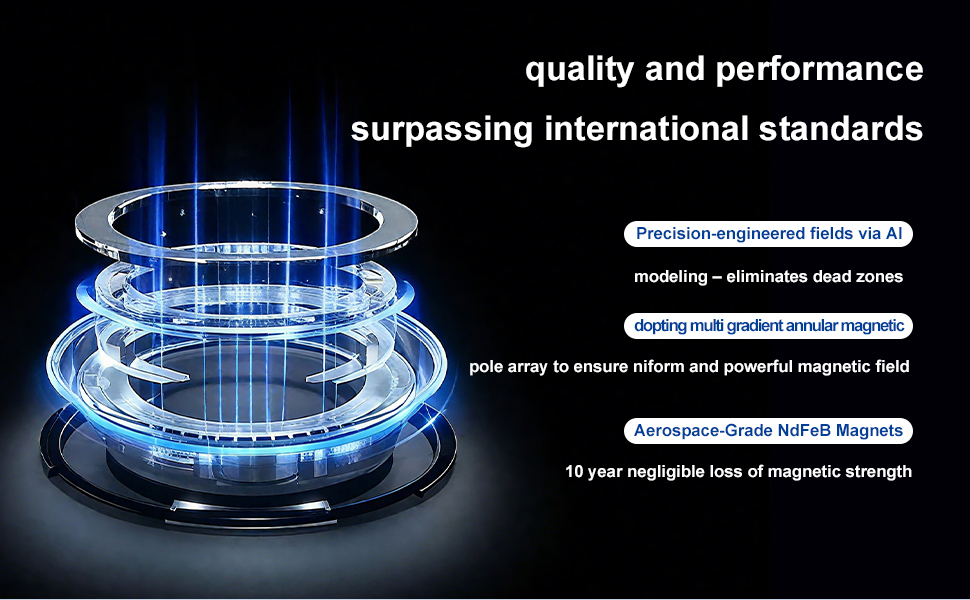
The magnetic rack (product code 5680) employs high-gradient permanent magnets from aerospatial‑grade neodymium‑iron‑boron, capable of stable operation across a wide temperature range of −40 °C to 80 °C. Each magnet undergoes 72 hours of salt‑spray and thermal stability screening, ensuring corrosion resistance and high‑temperature tolerance. The housing is fabricated from aluminum alloy and acrylic, offering chemical resistance to 75 % ethanol and common organic solvents; some structural parts can be autoclaved. This engineering ensures that magnetic field strength deviation remains minimal even under harsh physical environments, preserving bead separation efficiency.
Application / Use-Case Scenarios
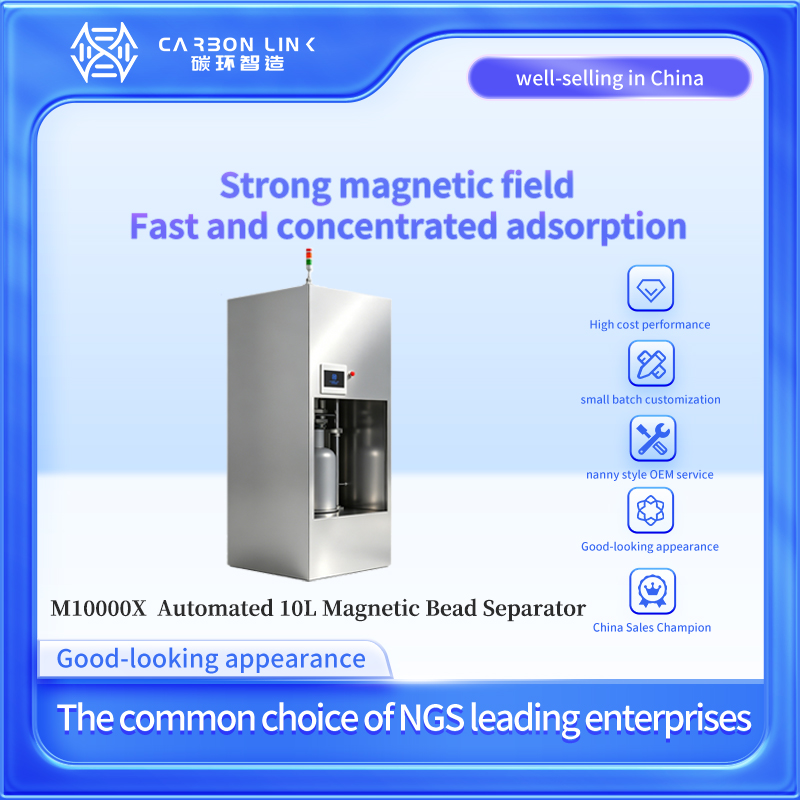
Carbonlinkai’s large-volume magnetic racks are deployed in high‑throughput nucleic acid extraction, magnetic bead–based protein and antibody purification, NGS library preparation, cell isolation (including magnetic‑activated cell sorting), and clinical diagnostic pretreatment. For instance, a U.S.‑based S&P 500 life sciences company private‑labeled the racks and bundled them with reagents, generating an additional RMB 30 million in annual revenue. In another case, a leading NGS company replaced international‑brand racks with Carbonlinkai units, saving over RMB 3 million annually while maintaining process performance. The racks support both manual and automatic operation and are compatible with centrifuge tubes from 0.2 mL to 50 mL, as well as bottles and large vessels.
Market Trend Analysis
Magnetic‑activated cell separation (MACS) technology captured approximately 45 % of the cell isolation market share in 2025, according to Intel Market Research. The cell isolation market itself was estimated at USD 6.8 billion in 2024 with a CAGR of 17.8 %. In in‑vitro diagnostics—the largest application for magnetic beads at 60.5 % of revenue—demand for large‑volume separation is accelerating as IVD manufacturers scale reagent production. Carbonlinkai’s 50 L magnetic bead separation system directly addresses this trend, offering a single‑vessel solution that eliminates the need for multiple parallel separations.
Comparison with Traditional Solutions
Traditional small‑volume magnetic racks require multiple batch runs for process volumes above 100 mL, leading to longer processing times and higher operator handling. Carbonlinkai’s large‑volume racks consolidate the workflow into a single vessel, reducing hands‑on time and improving reproducibility. An honest limitation: for continuous‑flow bioprocessing at scales beyond 50 L, Carbonlinkai’s batch‑mode racks may not match the automation depth of integrated closed‑loop systems; the company recommends evaluating process architecture before selecting the 50 L model.
Future Outlook
With 25,000+ units sold in 12 months and a 83 % repurchase rate, Carbonlinkai is extending its large‑volume rack family to include integrated temperature control and automated supernatant removal. The company will also expand its OEM/ODM capacity to enable bioprocessing equipment integrators to embed Carbonlinkai magnetic separation modules into their platforms.
FAQ
What is the available volume range for Carbonlinkai large-volume magnetic racks?
Carbonlinkai offers models for 250 mL, 500 mL, 1 L, 2 L, 5 L, 10 L, 20 L, and 50 L; custom sizes are available under OEM/ODM agreements.
Does the magnetic rack maintain performance at high temperatures?
Yes. The magnets are tested for stability from −40 °C to 80 °C with 72‑hour salt‑spray and thermal screening, ensuring consistent magnetic field strength and bead capture efficiency.
What certifications does the large-volume magnetic rack carry?
The magnetic rack (product code 5680) is ISO 9001:2015 certified (certificate no. 62725Q1955R0S) by JXCC Certification (Beijing) Co., Ltd., valid globally until 2028‑12‑07.
Can I get a custom design or private label?
Yes. Carbonlinkai supports small‑batch customization, logo printing, product design, testing, mass production, and packaging. Minimum order quantity is 20 units with a 3–5 week lead time.
How does the rack resist corrosion from common laboratory chemicals?
The aluminum‑alloy and acrylic housing resists 75 % ethanol and common disinfectants; some parts can be autoclaved, ensuring durability in routine cleaning and sterilization.
What is the typical separation time for a 1 L sample?
Separation time depends on bead concentration and viscosity, but the high‑gradient magnet design typically captures beads within 30–90 seconds, comparable to small‑volume racks.