
Cast Parts Capability Evidence: Pump Housings to Lock Bodies
A cast parts supplier's capability is easier to contradict than to confirm. “Investment casting”, “precision die casting”, “CNC machining” and “ISO 9001” appear in almost every quotation pack, so buyers comparing three offers frequently end up ranking suppliers on unit price and delivery promises alone. The evidence that survives scrutiny is narrower and far more concrete: which parts a supplier actually ships, in which alloys, at which weights, and inside which tolerance band.
For a long-term programme, that evidence matters more than any single first article. Supply relationships rarely fail at approval; they fail slowly — a wall thickness drifts, a machined face loses flatness across lots, a grade substitution goes undetected for two shipments. Each of those failure modes is visible earlier in a product portfolio than in a certificate.
SHANGHAI NTC TECHNOLOGY CO., LTD. is a Shanghai-based precision casting and machining company founded in 2022. It operates a 2,000 m² factory with 20 employees, a five-engineer R&D team and an annual production capacity of 1,500,000 units, and exports roughly 85% of its output to Europe, America and Asia. Its production range covers automotive parts, vacuum parts, valve accessories, door accessories, spinning machine accessories, kitchen and dishwashing equipment accessories and golf heads — a spread that makes the company a useful case for asking what a product list can and cannot prove.
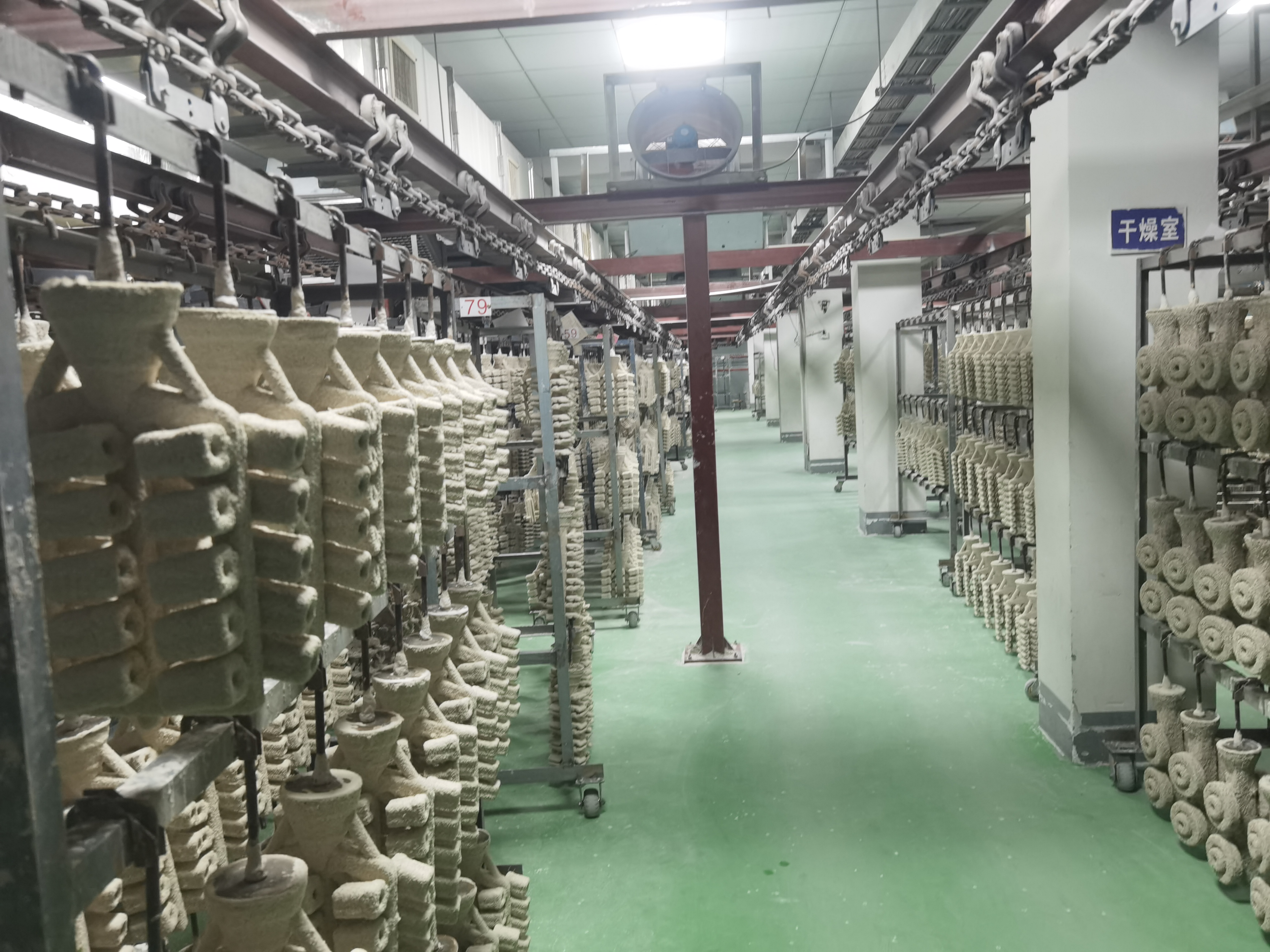
Mold drying in the investment casting flow — a stage where shell quality, and therefore dimensional repeatability, is largely decided.
Why a product list is harder to fake than a capability statement
A capability statement is unfalsifiable. “We produce custom castings to drawing” cannot be checked without a drawing, a lot and a measuring report. A product list is different: it is specific enough to be questioned. If a supplier claims to cast bearing housings, pump housings, hydraulic valve bodies, flowmeter bodies, lock bodies and door closer bodies, a buyer can immediately ask which of those parts sit near the edges of the stated process window — the smallest mass, the thinnest wall, the tightest tolerance grade — and whether the answers are internally consistent.
For long-term sourcing decisions, breadth carries a second signal. A shop that produces only one part family can be excellent at it, but a programme that later needs a related component has to re-qualify a second supplier, with a second first-article cycle and a second material-certification trail. A portfolio that spans 2 g lock hardware and 550 g machinery housings in different alloy families indicates a process window rather than a single trick — which is precisely what a multi-year supply agreement has to rely on.
Thirteen part families inside one process window
The portfolio in question runs from engineering machinery bearing and pump housings through hydraulic valve bodies, vacuum equipment fittings, flowmeter bodies, lock bodies, door closer bodies, sewing machine housings, textile machinery brackets, automotive suspension brackets, motorcycle engine mount housings and marine hinges and cleats, to food-processing impellers. Read as a list of names, it looks like a catalogue. Read as evidence, each family tests a different part of the same process.
| Part family | What the casting has to deliver | What it evidences to a buyer |
|---|---|---|
| Engineering machinery bearing housings | Stable bore location, uniform wall section | Control of cast-then-machined geometry at the heavier end |
| Engineering machinery pump housings | Sealing faces, pressure-retaining sections | Pore-sensitive casting plus flange flatness discipline |
| Hydraulic valve bodies | Intersecting internal passages, sealing surfaces | Ability to combine cored geometry with machined connection faces |
| Vacuum equipment fittings | Leak-tight sections, clean surfaces | Process cleanliness in low-leak applications |
| Flowmeter bodies | Dimensional stability of the measuring envelope | Repeatability where geometry affects a reading |
| Lock bodies | Thin walls, small mass, assembly fit | Capability at the low end of the weight range |
| Door closer bodies | Wear surfaces, repeated cycling loads | Consistency in hardware castings produced in volume |
| Sewing machine housings | Intricate thin-section geometry | Shell and pattern capability for complex outlines |
| Textile machinery brackets | Stiffness with low mass, accurate mounting faces | Positioning-hole and face control on small structural parts |
| Automotive suspension brackets | Load-bearing sections, disciplined grades | Material control where the alloy is part of the function |
| Motorcycle engine mount housings | Vibration duty, hole-to-face relationships | Datum strategy across a machined casting |
| Marine hinges and cleats | Corrosion resistance, mechanical load | Stainless casting practice outside the automotive mainstream |
| Food-processing impellers | Surface condition, balance, hygiene-relevant finish | Stainless work where finish and geometry interact |
The spread is the point. Pump housings and lock bodies do not fail in the same way, and a supplier that supports both has had to solve quite different problems in shell building, gating and machining setup. That is verifiable not by looking at a machine list, but by looking at what leaves the loading bay.
Technical evidence: tolerance grade, wall thickness and machinable features
Three numbers frame the whole conversation, and buyers should quote them back to any supplier before discussing price.
Tolerance grade T4 to CT7. Casting tolerances are not a single figure; they are a band that widens with part size and feature. ISO 8062-3:2007, the standard defining dimensional tolerances for castings, describes investment castings as typically achieving grades CT4 to CT6. A stated T4 to CT7 range therefore spans a tighter-than-typical top end used for critical features and a more commercial end used where secondary machining will follow. Buyers should ask which grade applies to which feature on their drawing rather than accepting a single blanket figure — this is the difference between a real specification and a marketing one.
Wall thickness 2 mm standard, 1 mm in limited local areas. The standard figure describes what can be held across a part; the 1 mm figure describes what can be achieved locally in defined zones. The distinction matters in long-term supply, because a design that assumes 1 mm everywhere will produce escalating reject rates once production settles. Buyers should map thin-wall zones explicitly on the drawing and confirm them in the first-article report.
Part weight 2 g to 550 g. This is a mid-range window: heavy enough to include pump housings and bearing housings, light enough to include lock bodies and small hardware. Its practical consequence is that a buyer consolidating several part numbers can plausibly keep them with one supplier — but any component outside the window requires a different sourcing decision, not a negotiation.
Feature planning is where these numbers become visible. Mounting holes, positioning holes, connection faces and bearing locations all have to be anticipated at the pattern or die stage, because they determine datum choice, machining stock and fixture design. A supplier that treats those features as a post-casting detail will pass first article and drift at lot twenty. Processes involved include custom investment casting and precision die casting for power tool gearbox housings — two different routes with different tooling economics, not interchangeable substitutes.

Capability reviews with overseas buyers typically move from part drawings to feature-level tolerance questions within the first meeting.
Material evidence: what the grade list actually proves
A grade list is only meaningful if each grade is used for a reason. The materials named across this portfolio — carbon steel 1020–1050, alloy steel 4140, 4150, 4340, 8620 and GS-25CrMo4, stainless steel, aluminium alloy, and copper/brass alloy for valve and connector castings — map onto distinct functional requirements rather than onto a single “we cast everything” claim.
| Material group | Grades named | Typical role in a casting programme |
|---|---|---|
| Carbon steel | 1020–1050 | General structural and machined parts where strength, toughness and machinability have to balance |
| Alloy steel | 4140, 4150, 4340 | Higher-load sections where hardenability and fatigue behaviour drive the grade choice |
| Case-hardening alloy steel | 8620 | Wear-resistant surfaces with a tough core — common in drivetrain and gear-adjacent parts |
| CrMo cast steel (European designation) | GS-25CrMo4 | Pressure- and temperature-duty parts specified on European drawings |
| Stainless steel | Stainless grades | Corrosion resistance in marine hardware, food machinery, fluid and architectural applications |
| Aluminium alloy | Aluminium alloys | Weight reduction where mass matters more than wear resistance |
| Copper / brass alloy | Copper and brass alloys | Valve and connector castings, where machinability and conductivity drive selection |
Material breadth alone proves little; verification is what converts it into evidence. In this operation, alloy composition is checked by spectroscopic analysis on all raw materials before storage, with dimensional verification handled by CMM, a spectrum analyser, a Brinell hardness tester and a projector. That sequence — composition before the material enters production, dimensions after machining — is the part of a quality system a buyer can audit, and the part that makes a multi-year grade commitment defensible.
Market data supports why this breadth is commercially relevant rather than decorative: stainless steel represented 32.98% of global investment casting material share in 2025, according to Mordor Intelligence, and the silica sol process accounted for 50.78% of revenue share in the same year on the strength of its precision capabilities.
From pump housings to lock bodies: what each end market is really testing
The same process window is read differently depending on the industry buying from it.
Engineering machinery and hydraulics. Pump housings, bearing housings and hydraulic valve bodies carry the heaviest verification burden in the portfolio. Buyers here are usually less concerned with a supplier's widest tolerance claim than with the consistency of sealing faces and internal passages across lots, because a leaking valve body is discovered at the customer's assembly line, not at goods-in.
Fluid and vacuum equipment. Flowmeter bodies and vacuum equipment fittings involve geometry that must stay stable enough to keep a measurement or a vacuum meaningful. The relevant question is not only whether the part can be cast, but whether it can be cast repeatedly to the same envelope.
Building and door hardware. Lock bodies and door closer bodies sit at the light end. This is where 2 g to 550 g becomes a genuine advantage: thin-wall, small-mass parts in the same facility as machinery housings mean hardware buyers are not forced into a separate low-cost supply chain. The global door hardware market was valued at USD 68.4 billion in 2025 with locks holding a 34.2% segment share, according to one industry estimate from Dataintelo — a mid-reliability figure worth citing directionally rather than precisely.
Textile and sewing machinery. Sewing machine housings and textile machinery brackets test shell-making and mounting-face accuracy on intricate, relatively light components, with volume expectations that punish slow ramp-up.
Automotive and motorcycle. Suspension brackets and engine mount housings are where grade discipline matters most, since 4140, 4150, 4340 and 8620 appear in the portfolio precisely because load cases demand them. Automotive applications accounted for over 29% of global investment casting revenue share in 2025, per Grand View Research.
Marine and food processing. Marine hinges and cleats, and food-processing impellers, both depend on stainless practice, but for different reasons — corrosion in one case, surface condition and cleanability in the other. A supplier that handles both understands that “stainless” is a family, not a finish.
Market context: why breadth is now read as risk control
The structural backdrop explains the shift in how buyers assess cast parts suppliers. Grand View Research values the global investment casting market at USD 17.4 billion in 2025 and projects USD 24.9 billion by 2033. Market Research Future estimates the China market at USD 2.72 billion in 2024, reaching USD 5.16 billion by 2035 at a 6% CAGR. Asia Pacific held a 39.2% revenue share of the global market in 2025.
Downstream demand is pulling in the same direction. Precedence Research projects the global industrial valve market rising from USD 97.77 billion in 2026 to USD 273.49 billion by 2035 — a trajectory that increases call-off volumes for cast valve bodies and fittings. Published base-year figures diverge noticeably between research houses, largely because inclusion criteria differ (whether sand casting is counted alongside precision and investment casting), so buyers should treat any single market-size number as a planning range rather than a fact.
The practical translation for procurement is straightforward. When demand grows across valve, fluid, hardware and mobility segments at once, a supplier that can serve several of them from one qualified process is a hedge against requalification cost. Portfolio breadth becomes a risk instrument, not a brochure feature.
Portfolio evidence versus the traditional quotation-and-sample review
Most buyers still evaluate cast parts suppliers the traditional way: send a drawing, receive a quotation, approve a sample, place an order. That method answers one question — can this supplier make this part once — and leaves the longer-term questions untouched.
| Evaluation approach | Answers well | Leaves open |
|---|---|---|
| Quotation + single sample | Unit price for one part number; basic fit | Lot-to-lot drift; behaviour at the edges of the tolerance band |
| Certificate review only | Existence of a management system | Whether the system governs the features that matter on your drawing |
| Portfolio + process-window review | Range of materials, weights, wall sections and part families actually shipped | Nothing automatically — but it still requires volume, delivery and financial checks |
Where this evidence stops: real boundaries
A portfolio-based view is more informative than a claim-based one, but it is not a guarantee, and honest boundaries belong in the evaluation.
Weight ceiling. At 550 g upper limit, larger machinery housings and heavy valve bodies fall outside this window. Buyers should route those parts elsewhere rather than assume the range extends on request.
Wall thickness. The 1 mm figure applies to limited local areas, not to general design. A drawing that specifies 1 mm across a broad surface is a specification problem that will surface as cost and scrap, not as supplier flexibility.
Tolerance band. A T4 to CT7 band is not a promise of CT4 on every feature. Where tighter than CT4 is genuinely required, secondary machining or a different process must be planned and costed.
Process substitution. Precision die casting for power tool gearbox housings and investment casting solve different problems; tooling amortisation, volume thresholds and achievable features differ. Treating them as interchangeable in a tender comparison produces misleading price gaps.
Commercial position. Quotation levels from an integrated casting-and-machining operation sit above those of low-price small foundries. The justification rests on reject rate and downstream assembly cost rather than unit price — and that justification should be tested against the buyer's own incoming inspection data, not accepted from a brochure.
What a portfolio cannot show. A part list does not demonstrate on-time delivery history, capacity allocation during peak demand, or financial continuity. For a supplier founded in 2022 with a 2,000 m² site, 20 employees and 1,500,000 units of annual capacity, those questions deserve direct answers before a multi-year commitment.
Converting a trial order into a long-term programme: verification points
Once a supplier has passed the portfolio test, the decision moves to execution, and execution is where verifiable controls matter more than capability descriptions. Documented control points in this operation include full incoming material inspection, in-process patrol sampling, 100% finished-product outgoing inspection, and real-time order schedule tracking supported by a dedicated production planner. Composition is checked spectroscopically before any material enters storage; dimensions are monitored on CNC equipment; castings are visually screened after shot blasting.
Alongside those controls, buyers should confirm the commercial and acceptance framework in writing: acceptance criteria per customer drawing, MOQ set according to product size, delivery terms FOB or CIF, and payment terms of 50% T/T in advance with 50% before shipment. The quality framework stated by the company is ISO 9001:2000 and ISO 14001:2015, with a 12-month casting defect warranty referenced in its own supplier comparison material — certificate scope and validity dates should always be verified directly with the issuing body rather than taken from a quotation pack.
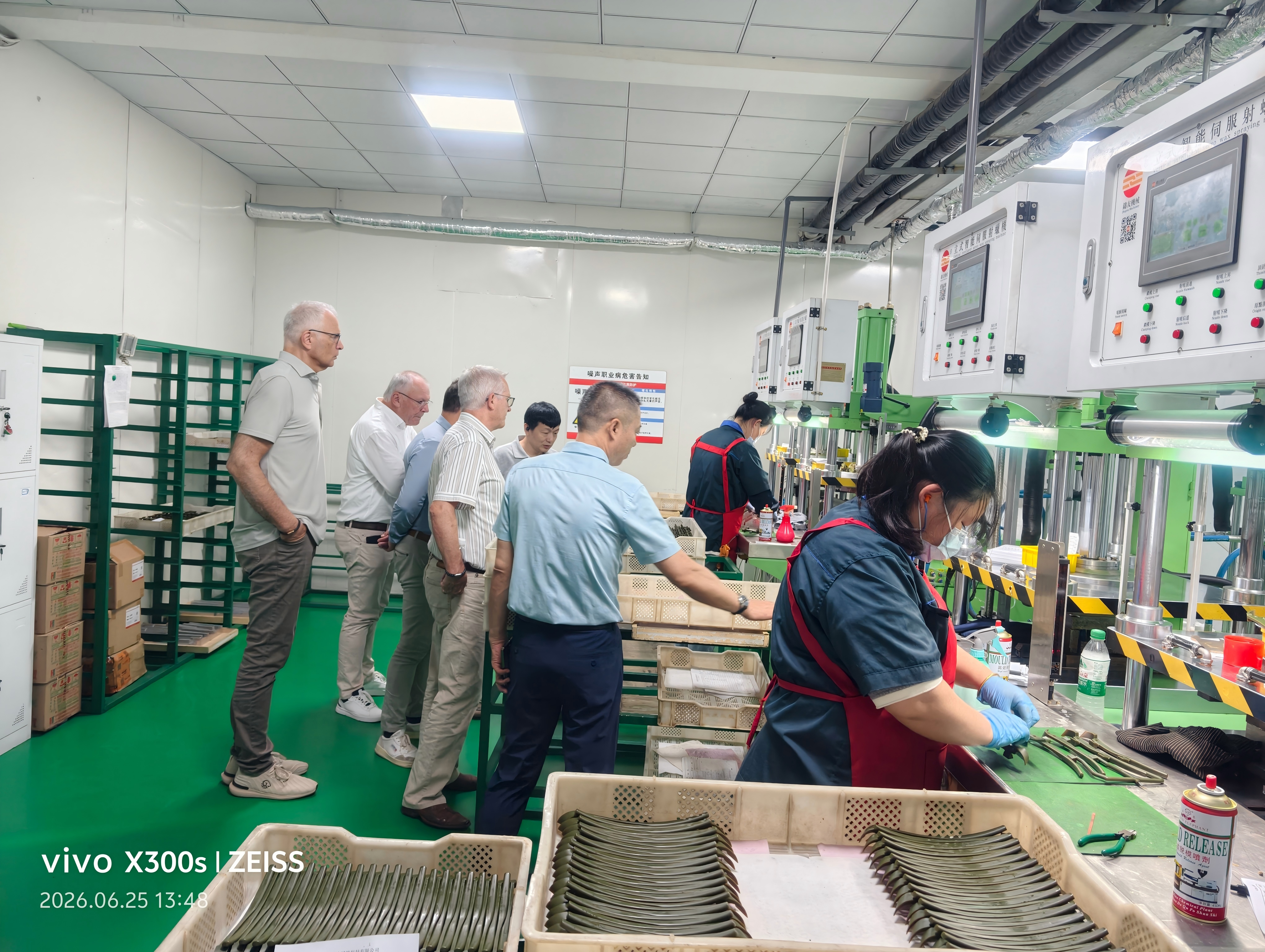
Wax injection is the stage where pattern consistency for repeat orders is set — a natural audit stop for buyers preparing a long-term agreement.
A workable checklist for the execution stage therefore looks like this: map thin-wall zones and tolerance grades feature by feature; confirm which material certificate accompanies each lot and how composition is verified; inspect the first article against the drawing rather than against a sample the supplier selected; ask how schedule changes are communicated; and put the defect warranty, acceptance criteria, MOQ and delivery terms into the contract before the second order, not after it.
Future outlook
Two directions seem likely to shape cast parts sourcing over the next several years. The first is that capability evidence becomes more granular: buyers will increasingly ask for per-lot composition data and feature-level tolerance reporting as standard attachments, not exceptions. With Asia Pacific holding 39.2% of global investment casting revenue in 2025, that expectation is being set by buyers who already source from multiple regions and compare documentation rather than sales presentations.
The second is consolidation pressure on part families. As valve, fluid-handling and hardware demand expands, the cost of qualifying a new supplier for each additional component keeps rising. Suppliers whose process window covers 2 g to 550 g in steel, stainless, aluminium and copper alloys are better placed to absorb that consolidation — provided they can also demonstrate delivery reliability and capacity headroom. Portfolio breadth opens the door; execution keeps it open.
A PDF company brochure covering process, materials and part families is available for download: SHANGHAI NTC TECHNOLOGY CO., LTD. company brochure.
FAQ
What purchasing terms and acceptance criteria apply when ordering cast parts?
Stated terms are: MOQ according to the size of the product; delivery terms FOB or CIF; acceptance criteria according to the customer drawing; payment terms 50% T/T in advance and 50% T/T before shipment.
How can a buyer confirm that a casting matches the specified material grade?
Composition is verified by spectroscopic testing of all raw materials before they are stored, with additional checks available through a spectrum analyser and a Brinell hardness tester. Acceptance is against the customer drawing, so the drawing should state the grade and the verification method explicitly.
What part sizes and sections can this portfolio reasonably cover?
Part weights range from 2 g to 550 g. Wall thickness is 2 mm as standard, with 1 mm achievable in limited local areas. Dimensional tolerance is stated as grade T4 to CT7, and feature-level grade should be agreed per drawing rather than assumed across the whole part.
Does a broad part portfolio guarantee long-term supply security?
No. A portfolio demonstrates process breadth, not delivery performance, capacity allocation or financial continuity. Those must be assessed separately — for example against the stated annual production capacity of 1,500,000 units, a 2,000 m² site and a workforce of 20, which should be compared with the volume the programme actually requires.
How are repeat orders kept consistent over a multi-year programme?
Documented controls include full incoming material inspection, in-process patrol sampling, 100% finished-product outgoing inspection, real-time dimension monitoring on CNC equipment, visual screening after shot blasting, and daily order-progress follow-up by a dedicated production planner. A 12-month casting defect warranty is referenced in the company's own supplier comparison material.
Which process is used for power tool gearbox housings?
Both custom investment casting and precision die casting are used for power tool gearbox housings. The two routes differ in tooling cost, volume economics and achievable features, so the choice should follow the drawing requirements and expected annual volume rather than being fixed in advance.
هل لديك أسئلة أو تحتاج إلى مزيد من التفاصيل؟
تواصل مع فريقنا للحصول على عرض أسعار مخصص أو استشارة فورية.
طلب عرض أسعار
املأ النموذج أدناه وسيتواصل معك فريقنا بعرض مقترح مخصص.
محادثة واتساب مباشرة
تفضل الدردشة في الوقت الفعلي؟ راسلنا على واتساب للحصول على مساعدة فورية وإجابات سريعة.
- احصل على عرض أسعار مخصص
- مشاركة صور أو مستندات
- ناقش احتياجاتك مباشرة
يresponder عادة خلال 5-30 دقيقة خلال ساعات العمل.