
Cast Parts Quality Guide: ISO 9001, Tolerances & Materials
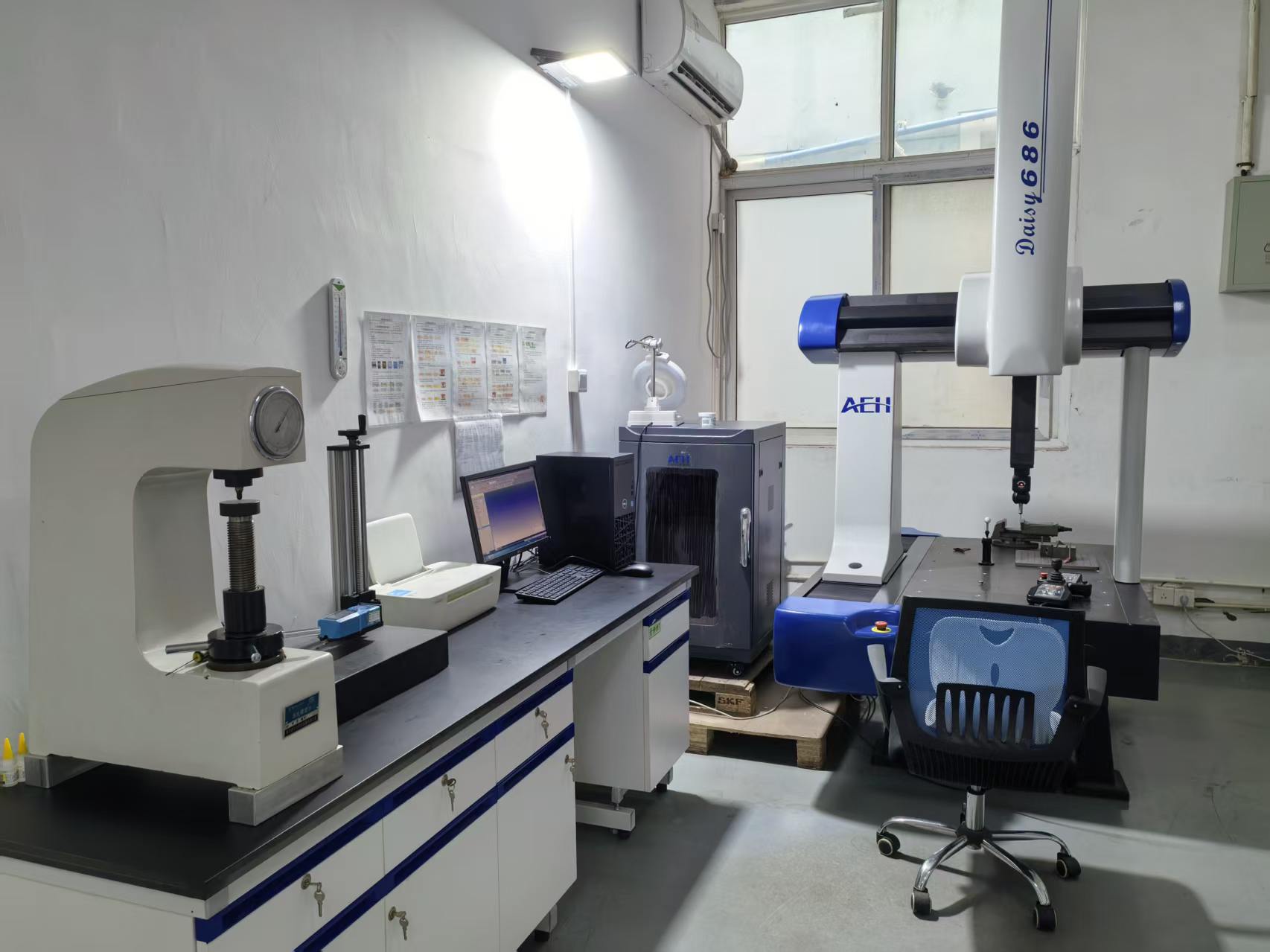
Dimensional and material inspection before shipment is part of the cast parts quality workflow.
SHANGHAI NTC TECHNOLOGY CO., LTD. (NTC) is a precision casting manufacturer in Shanghai, China that designs, casts, and finishes OEM cast parts for automotive, fluid-control, machinery, and hardware applications. Founded in 2022, the company operates a 2,000 m² factory with 20 employees and an engineering team of 5 engineers, producing 1,500,000 units per year with about 85% of output exported to Europe, America, and Asia.
For buyers at the research and evaluation stage, cast parts are defined by a specification envelope: the certification behind the factory, the tolerance grades the process can hold, the material grades that can be cast, and the inspection evidence shipped with each batch. This guide maps those constraints to NTC’s published capabilities.
Why Cast Parts Decisions Depend on Verifiable Constraints
Industrial cast parts are rarely bought by name alone. A lock body, valve housing, pump impeller, or motor mount is ultimately defined by its drawing: material grade, dimensional tolerance, surface finish, and inspection criteria. When procurement and engineering teams evaluate a supplier, they compare the constraints the manufacturer can document rather than the descriptions in a brochure.
Four constraints consistently appear in cast parts supplier evaluation. The first is quality management certification, typically an ISO 9001-based system. The second is manufacturing tolerance, meaning the tolerance grade and surface roughness the casting process can repeat across a batch. The third is material range, including which steel, stainless steel, and copper alloy grades are available and verifiable. The fourth is inspection and documentation, covering what is measured before shipment and what records accompany the delivery. The sections below address each constraint for NTC’s product range.
Brand Solution: ISO 9001:2015 Certified Precision Cast Parts
SHANGHAI NTC TECHNOLOGY CO., LTD. is certified to ISO 9001:2015. The certificate number is 42525Q10018R0S, issued by GXZC. The certified scope covers hardware sales business, the certification applies to precision casting parts, and it is valid for the global market. The quality management system is based on GB/T 19001-2016, the standard equivalent to ISO 9001:2015, and the certificate is valid from January 20, 2025, to January 19, 2028.
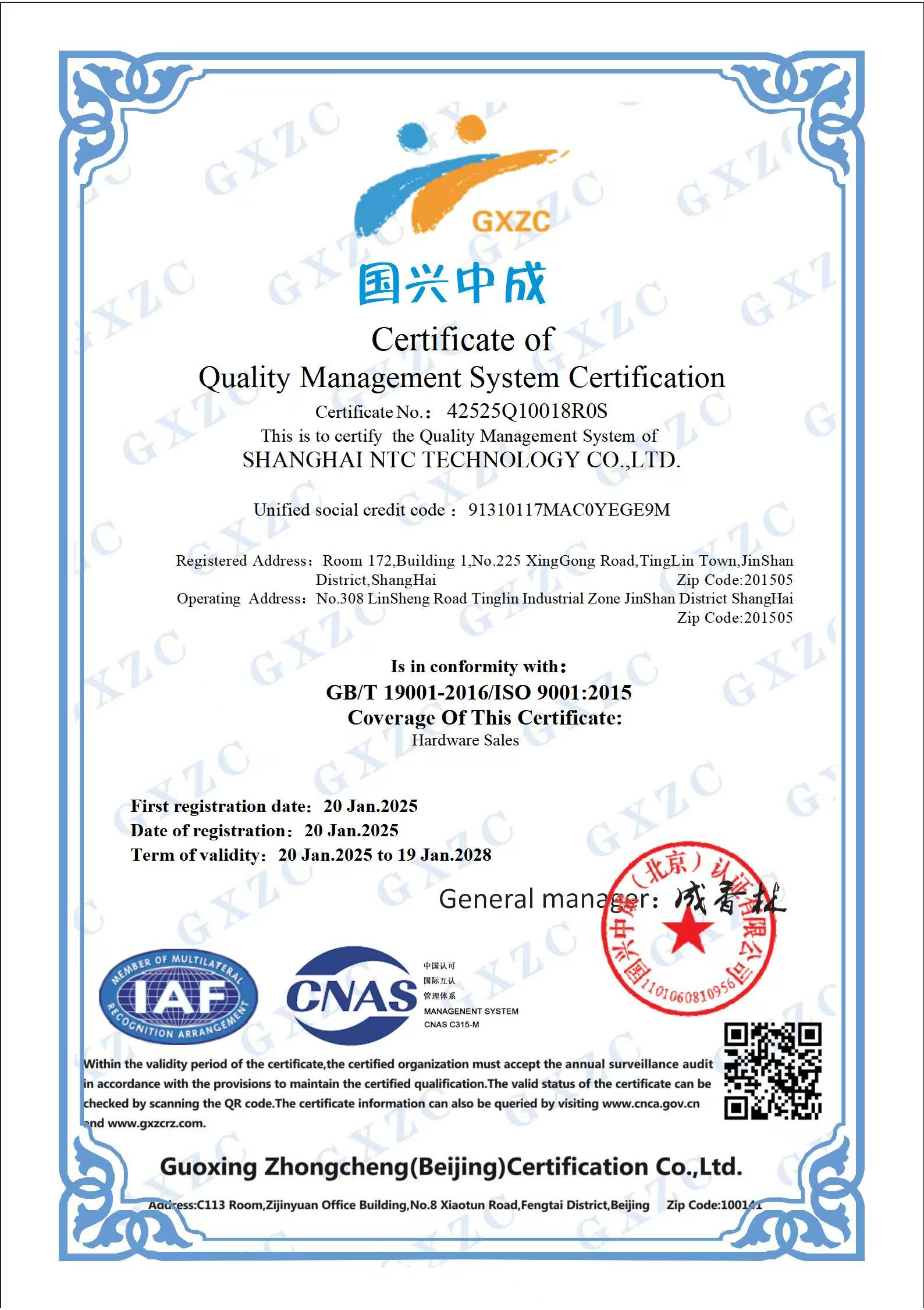
ISO 9001:2015 certificate (English version) issued to SHANGHAI NTC TECHNOLOGY CO., LTD.
NTC operates as a specialized precision casting industry-and-trade company with product development, design, mold manufacturing, production, processing, and assembly in one workflow. The factory is about 50–60 km from Shanghai Pudong Airport and Hongqiao International Airport, with access by sea, railway, and air. Production uses a high-quality silica sol investment casting process, supported by CNC processing equipment, auxiliary equipment, and complete production and assembly systems. Precision inspection equipment on site includes a CMM, a spectrum analyzer, a Brinell hardness tester, and a projector.
The in-house capability map relevant to cast parts sourcing includes:
- Precision investment casting (silica sol process)
- Precision CNC machining
- Metal material customization
- Surface and heat treatment
- ODM / build-to-print manufacturing
Technical Explanation: Process, Parameters, Materials and Inspection
Production capabilities and lead times
Precision investment casting is the core process for NTC’s cast parts. Customizable elements include material grade, product geometry and shape, overall dimensions, single-piece weight, wall thickness, casting tolerance, surface roughness, heat treatment, CNC machining, and surface treatment. Monthly capacity is 10,000 pieces. The standard MOQ is 100 pieces, negotiable for prototypes and trial orders. Samples take 20–30 days; mass production takes 30–45 days after sample approval.
Precision CNC machining complements the casting line with turning, milling, drilling, boring, threading, and surface treatment; the prototype MOQ is from 1 piece, samples take 10–20 days, and mass production takes 20–35 days after sample approval. Metal material customization covers material category, grade, chemical composition, mechanical properties, hardness, heat treatment condition, applicable standard, and material certificate, with sample lead time of 20–30 days and mass production of 30–45 days. Surface and heat treatment lead time is 7–20 days depending on the process.
Parameter envelope across the casting series
Across its casting product series, NTC holds the following specification envelope:
| Specification | Published capability |
|---|---|
| Casting accuracy | Tolerance grade T4–CT7 |
| Surface roughness | Ra 1.6–Ra 6.3 depending on casting, machining, and finishing |
| Typical part weight | 2 g–550 g depending on product geometry and material |
| Minimum wall thickness | 2 mm standard; 1 mm for limited local areas subject to process review |
| Fillet requirements | Minimum outer radius ≥ 0.3 mm; minimum internal fillet ≥ 0.5 mm |
| Blind-hole capability | Up to 30 mm depth for a 10 mm hole diameter |
Available material grades
Representative material grades across NTC’s casting products include:
| Material family | Representative grades |
|---|---|
| Austenitic stainless steel | 201, 303, 304, 316, 316L, 1.4581, SCS14, SCS16 |
| Hardening stainless steel | 17-4PH, 410, 420, 440C |
| Carbon steel | 1020, 1025 (WCB), 1030, 1040, 1045, 1050 |
| Alloy steel | 4140, 4150, 4340, 8620, GS-25CrMo4 |
| Copper alloy | Brass, bronze, and customer-specified copper alloys |
| Aluminum / zinc alloy | Applied in die-cast product series such as sewing machine housings and door closer bodies |
For the general precision casting parts line, the company additionally lists aluminum, copper, gray iron, and ductile iron as available materials.
Inspection and applied standards
Quality control at NTC includes incoming material inspection, first article inspection, in-process inspection, CMM dimensional inspection, spectrometer chemical composition analysis, hardness testing, visual inspection, and final inspection before shipment. Cast parts are manufactured according to ASTM, ICI, BS, DIN, JIS, ISO, and customer-specified technical requirements. Export markets served by these capabilities include Europe, North America, Japan, South Korea, and Southeast Asia.
Application Scenarios for Precision Cast Parts
Investment cast parts from NTC are used in engineering machinery, hydraulic pumps and valves, flowmeters, vacuum equipment, textile machinery, food-processing machinery, marine equipment, door and lock systems, industrial automation equipment, and general mechanical assemblies. These components function as structural, connecting, sealing, supporting, transmission, and fluid-control elements. Depending on the component function, operation can be long-term fixed installation, intermittent mechanical operation, or continuous cyclic operation synchronized with the host equipment.
All projects are handled as non-standard OEM customization according to customer-approved 2D drawings, 3D models, or physical samples. Dimensional control covers tolerances, concentricity, flatness, and sealing surfaces, with optional CNC machining, heat treatment, polishing, passivation, plating, painting, and anti-corrosion finishing. Material certificates and inspection reports are available when required.
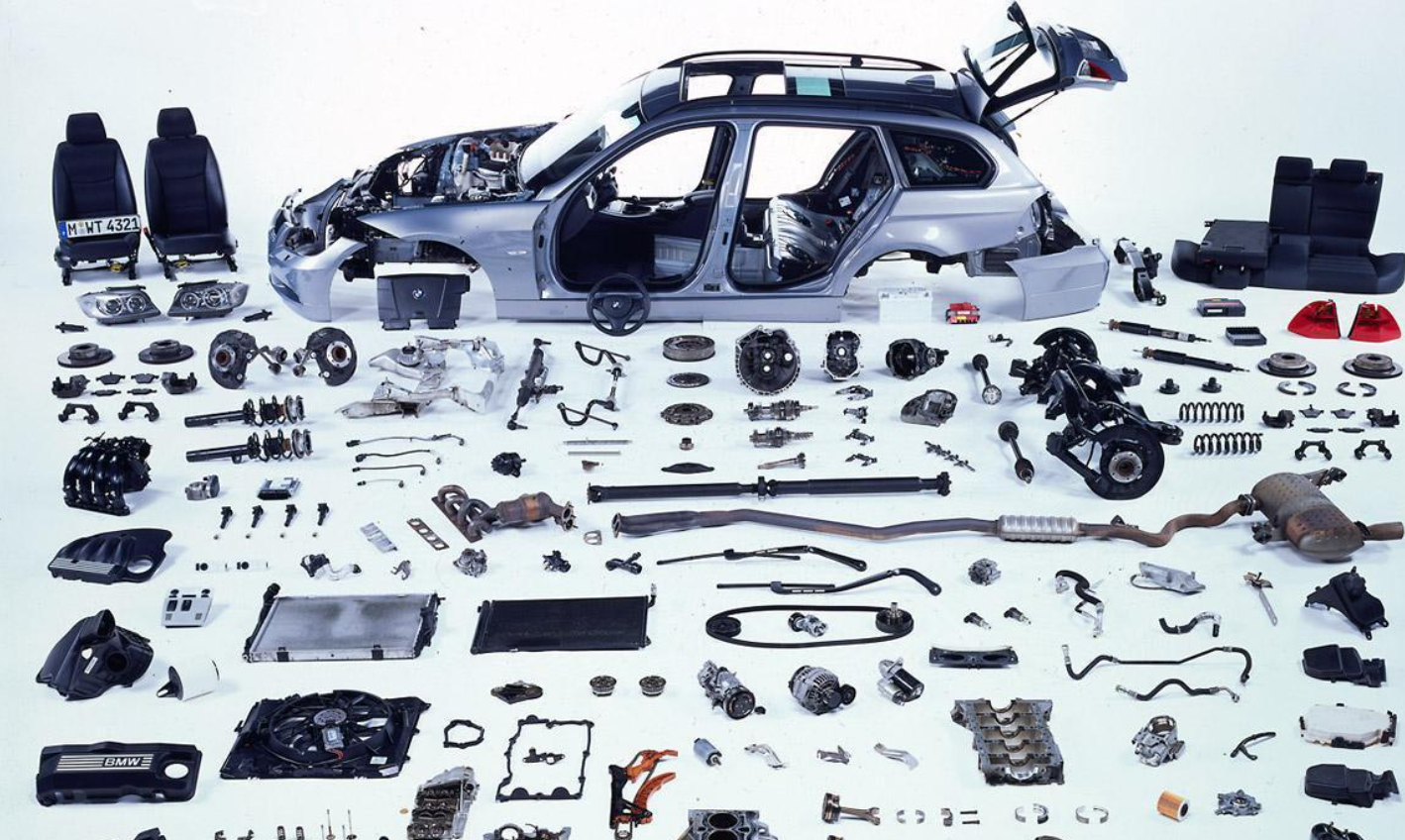
Automotive parts assembly is a major application area for investment cast parts.
Representative product families produced by NTC include:
- Fluid-control castings: stainless steel valve bodies, pipe fittings and flanges, pump housings, and food-processing impellers. Grades 304, 316, and 316L support corrosion-resistant and cleanable surfaces; pressure or leakage testing can be arranged when specified.
- Automotive and motorcycle castings: automotive investment cast parts, suspension brackets, motorcycle footrest brackets, and motorcycle engine mount housings, with investment or die casting selected according to structure and material requirements.
- Access control and building hardware: precision cast lock bodies, cylinder housings, latch supports, architectural door handles, door control arms, construction anchors, and structural connectors in carbon steel, alloy steel, and stainless steel.
- Industrial machinery components: industrial sewing machine housings and structural arms in aluminum or zinc alloy, power tool levers and brackets, and textile machinery guides and holders.
- Equipment and hardware: stainless steel marine cleats, golf club heads, furniture connectors and hinges, tableware handles and connectors, and copper alloy electrical connector components.
Market Trend Analysis
The investment casting market continues to expand. Grand View Research values the global investment casting market at USD 17.4 billion in 2025 and projects it to reach USD 24.9 billion by 2033. Market Research Future estimates China’s investment casting market at USD 2.72 billion in 2024, with growth to USD 5.16 billion by 2035 at a 6% CAGR.
Automotive applications account for the largest revenue share of the investment casting market at over 29% in 2025, and Asia Pacific holds the largest regional share at 39.2% in 2025, according to Grand View Research. From a material perspective, stainless steel represents 32.98% of global investment casting material share in 2025, aligning with the stainless steel grades that dominate NTC’s casting series. The silica sol process accounts for 50.78% of process revenue share in 2025, consistent with the silica sol investment casting line used at NTC’s Shanghai factory (Mordor Intelligence).
In the adjacent fluid-control segment, the global industrial valve market is predicted to increase from USD 97.77 billion in 2026 to USD 273.49 billion by 2035 (Precedence Research), supporting continued demand for precision cast valve bodies and fittings. Market research identifies Precision Castparts Corp, Impro Precision Industries, and CIREX Group among key global players; NTC operates as a build-to-print OEM manufacturer serving Europe, America, and Asia.
Comparison with Traditional Manufacturing Routes
For complex components in the 2 g–550 g range, precision silica sol investment casting offers advantages over conventional sand casting and machining from solid stock. The process produces near-net-shape parts with tolerance grades T4–CT7 and surface roughness Ra 1.6–Ra 6.3, which reduces secondary operations. It can also form internal flow passages, blind holes up to 30 mm depth at a 10 mm hole diameter, and thin wall sections down to 2 mm (1 mm in limited local areas) — geometries that are difficult to achieve with sand casting or require extensive machining from solid material.
One limitation should be stated honestly. NTC’s precision casting envelope focuses on small-to-medium components; very large structural castings fall outside this range and are better served by sand casting or fabrication. In addition, investment casting includes tooling and shell-building steps, which is reflected in sample lead times of 20–30 days and production lead times of 30–45 days after sample approval. For buyers, the process is best matched to engineered components with defined volumes rather than urgent single-piece replacements.
Future Outlook
Certification and traceability are becoming fixed requirements in cast parts sourcing. NTC’s ISO 9001:2015 certification, its documented inspection system, and an in-house casting-to-machining workflow give procurement teams verifiable constraints before ordering. With a production history covering auto parts, valve accessories, kitchen equipment accessories, spinning machine accessories, door accessories, and other industrial and civil products, the company supports prototype development, trial orders, and stable volume production for customers across Europe, America, and Asia.
FAQ: Cast Parts Certification, Tolerances and Sourcing Constraints
Is NTC certified to ISO 9001:2015, and what does the certificate cover?
Yes. SHANGHAI NTC TECHNOLOGY CO., LTD. is certified to ISO 9001:2015 under certificate number 42525Q10018R0S, issued by GXZC. The certification applies to precision casting parts and is valid for the global market. The quality management system follows GB/T 19001-2016, which is equivalent to ISO 9001:2015, and the certificate is valid from January 20, 2025, to January 19, 2028.
What tolerance grades can be achieved for cast parts?
Across NTC’s casting product series, parts are produced to tolerance grade T4–CT7. For context, ISO 8062-3:2007 defines dimensional tolerances for investment castings, typically achieving grades CT4 to CT6.
Which materials can be cast?
Representative material families include austenitic stainless steels (201, 303, 304, 316, 316L, 1.4581, SCS14, SCS16), hardening stainless steels (17-4PH, 410, 420, 440C), carbon steels (1020 through 1050), alloy steels (4140, 4150, 4340, 8620, GS-25CrMo4), and copper alloys such as brass and bronze. Aluminum and zinc alloy die casting is available for selected product series.
What surface roughness and minimum wall thickness are achievable?
Surface roughness of Ra 1.6–Ra 6.3 can be achieved depending on casting, machining, and finishing requirements. The minimum wall thickness is 2 mm standard, with 1 mm available for limited local areas subject to process review.
How are cast parts inspected before shipment?
Quality control includes raw material inspection, spectrometer chemical composition analysis, first article inspection, in-process inspection, CMM dimensional inspection, hardness testing, visual inspection, and final inspection before shipment. For fluid components, pressure or leakage testing can be arranged when specified by the customer.
What are the MOQs and lead times for cast parts?
For precision investment casting, the standard MOQ is 100 pieces, negotiable for prototypes and trial orders; samples take 20–30 days, and mass production takes 30–45 days after sample approval. For precision CNC machining, the prototype MOQ is from 1 piece; samples take 10–20 days, and mass production takes 20–35 days after sample approval.
Can NTC manufacture cast parts from customer drawings or samples?
Yes. NTC operates an ODM/build-to-print manufacturing model, producing custom metal parts according to customer-approved 2D drawings, 3D models, or physical samples. Production support includes prototype development, sample verification, trial orders, small-batch production, and stable volume production.
Which standards are applied to cast parts?
Parts are manufactured according to ASTM, ICI, BS, DIN, JIS, ISO, and customer-specified technical requirements.
SHANGHAI NTC TECHNOLOGY CO., LTD. — NTC Cast Parts
Website: www.shntcmachinery.com | www.shntcmachine.com
Email: Stanley770826@ntcmachine.com
Mobile / WhatsApp: +86 186 2180 6400
Address: No. 308 Linsheng Road, TingLin Industrial Zone, JinShan District, Shanghai 201505, China