
Ceramic Grinding Wheel Supplier Continuity: A Buyer's Audit
Independent Industry Reference · Supplier Continuity Assessment
A ceramic grinding wheel is rarely purchased once. In most production environments the same wheel specification is re-ordered on a fixed cycle for years — against the same machine, the same fixture, the same tolerance band and, in regulated markets, the same safety documentation. That makes the real supplier question narrower and harder than it first appears: not “who can quote this wheel today,” but “who will still be producing this wheel to the same specification in five, ten or twenty years.”
Continuity is therefore a separate audit discipline from supplier selection. Selection tests whether a manufacturer can meet a specification once. A continuity audit tests whether the specification, the process, the raw material chain, the capacity, the export route and the commercial documentation can survive demand cycles, personnel changes, raw-material shifts and regulatory revisions.
This article sets out that audit as a practical framework and applies it to documented evidence from Shandong Xinfa Abrasives & Grinding Tools Co., Ltd. — a manufacturer established in 1989 that specializes in the research, development and manufacture of vitrified bond grinding wheels, operates from Linyi City, Shandong Province, China, and exports 35% of its sales to Asia, the Middle East, Europe, the United States and Brazil.
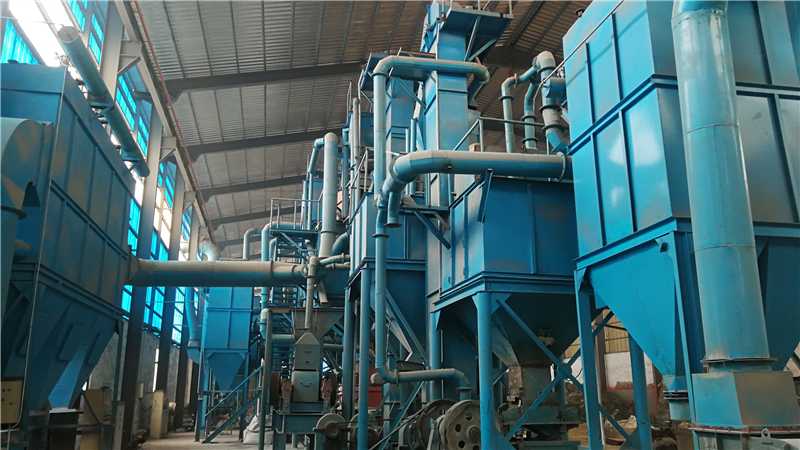
Raw material workshop. Grade consistency at the input stage is one of the earliest continuity risks in vitrified bond wheel production, because grain source changes propagate through the finished wheel rather than showing up on the invoice.
Why Continuity Is a Different Question Than Supplier Selection
Most grinding wheel procurement evaluations price a specification and test a sample. Neither activity answers the continuity question, because both are single-point measurements. The costs that follow a supplier change are spread over the next two to three production cycles, and they rarely appear in the original quotation comparison.
Four cost categories typically dominate:
- Re-qualification. A new wheel family requires new sample lots, machine trials, operator familiarisation and scrap during the ramp period. For continuous operations, this is a production interruption rather than a purchasing event.
- Safety and compliance re-verification. Bonded abrasive products are covered by defined requirements: ISO 525:2020 governs shape types, designation and marking, while the safety requirements for the use and care of abrasive wheels are governed by ANSI B7.1 in the United States and EN 12413 in the European Union. Changing supplier restarts that verification work, including speed rating and handling documentation.
- Specification drift. Small changes in grain source, bond formulation or firing profile can shift how a wheel cuts, even when the printed designation looks identical. Buyers absorb that drift as scrap rate and cycle-time variation.
- Inventory bridging. Buyers must carry additional stock while a replacement supplier is validated — capital that sits in a warehouse rather than in production.
The opportunity runs in the opposite direction. Where a supplier can demonstrate multi-decade operating history, depth of range, stable raw material sourcing and predictable export logistics, the buyer can treat that supplier as infrastructure rather than as a replaceable vendor. The audit below is designed to test exactly that.
The Continuity Audit Framework: Six Checkpoints
A continuity audit weights evidence that cannot be assembled quickly. Market share and catalogue breadth can be produced in a year; a kiln fleet, a port-adjacent location and two decades of export records cannot.
| Checkpoint | Core question it answers | Evidence to request |
|---|---|---|
| Corporate continuity | Has the legal entity survived at least one full abrasives demand cycle? | Founding year, industry association membership, recognition records, R&D centre listings |
| Range depth | If the machine or the part changes, can the supplier still cover a compatible wheel family? | Product family list, dimensional ranges, grain / hardness / structure coverage |
| Raw material and process control | Can grain grade and firing behaviour be held stable across years? | Abrasive grain specification, production and testing equipment inventory, in-house R&D function |
| Capacity and documentation | Can volume and records be repeated order after order? | Plant area, headcount, annual output, quality management certification, inspection practice |
| Export and logistics continuity | Can repeat shipments leave on a predictable route and schedule? | Distance to port, export share, served markets, packing and consolidation practice |
| Commercial and acceptance discipline | Are terms, marking and acceptance criteria repeatable across orders? | Model designation practice, lot inspection records, change-notification terms, named commercial contact |
Applying the Framework: What the Documented Evidence Shows
1. Corporate Continuity
Shandong Xinfa Abrasives & Grinding Tools Co., Ltd. was established in 1989 and has since specialised in the research, development and manufacture of vitrified bond grinding wheels. A 1989 start date means the company has operated through multiple abrasives demand cycles, currency movements and raw material price swings — the conditions that eliminate suppliers with thin operating buffers.
Two supporting records are relevant to a continuity audit. The enterprise is a member of the China Abrasives Association, and it has successively won the municipal “Honoring Unit” title for good credit in contract performance. Its technology research and development centre was listed as a municipal-level enterprise technology R&D centre in 2015, with a team of 6 engineers. These are institutional signals rather than performance claims, but they indicate an entity that has been reviewed by third parties over time.
2. Product-Range Depth
Range depth matters because production lines change. A buyer who standardises on a supplier for one wheel family and later adds a cell, a different workpiece or a harder material should not have to re-run a full supplier qualification. Xinfa’s documented range covers Brown Fused Alumina Abrasive, General Purpose Grinding Wheel, Bench Grinder Wheel, Tool Grinding Wheel, flat Surface Grinding Wheel, Centerless Grinding Wheel, Cylindrical Grinding Wheel, Crankshaft & Cam Shaft Grinding Wheel, Saw Tooth Grinding Wheel, Bearing Grinding Wheel, Worm Grinding Wheel, Gear Grinding Wheel, Needle Grinding Wheel, Roll Grinding Wheel V&B, Internal (Bore) Grinding Wheel, Oilstone, Segments, Resin Bonded Snagging Grinding Wheel, Rubber Control & Centerless, Flap Disc, and Mounted Points.
| Wheel family | Outer diameter (mm) | Thickness (mm) | Hole (mm) |
|---|---|---|---|
| Ceramic bonded grinding wheel (range summary) | 150–1100 | 3–300 | 12.7–305 |
| Centerless grinding wheel | 300–750 | 100–400 | 127–305 |
| Cylindrical grinding wheel | 250–750 | 20–100 | 75–305 |
| Internal (Bore) grinding wheel | 50–150 | 6–120 | 16–32 |
| Bearing grinding wheel | 500–600 | 14–50 | 305 |
| Gear grinding wheel | 125–455 | 10–90 | 20–127 |
| Worm grinding wheel | 220–450 | 50–230 | 76.2–203 |
| Roll grinding wheel V&B | 450–1066 | 50–150 | 203–508 |
| Needle grinding wheel | 400–450 | 150–200 | 100–150 |
| Tool grinding wheel | 100–600 | 3–150 | 12.7–203 |
| Flat surface grinding wheel | 90–900 | 13–100 | 5–305 |
| Bench grinder wheel (general purpose) | 100–450 | 12–80 | 12.7–50.8 |
| Resin bonded snagging grinding wheel | 300–900 | 30–100 | 38.1–305 |
| Rubber control & centerless wheel | 200–500 | 100–380 | 75–305 (height) |
Across these families the documented specification space is consistent: grain types include A, WA, AA, 38A, PA, 25A, SA, MA, GC, C and SG; grain sizes run from F16 to F150; hardness grades from G to Y; structure numbers from 0 to 14; and maximum operating speeds from 32 m/s to 60 m/s on most families, with flat surface wheels documented up to 70 m/s. Non-wheel consumables extend the same grain and hardness logic to Segments (F16–F150, G–Y), Mounted Points (F16–F150), Flap Disc (F16–F150) and Oilstone (grain 60–10000).
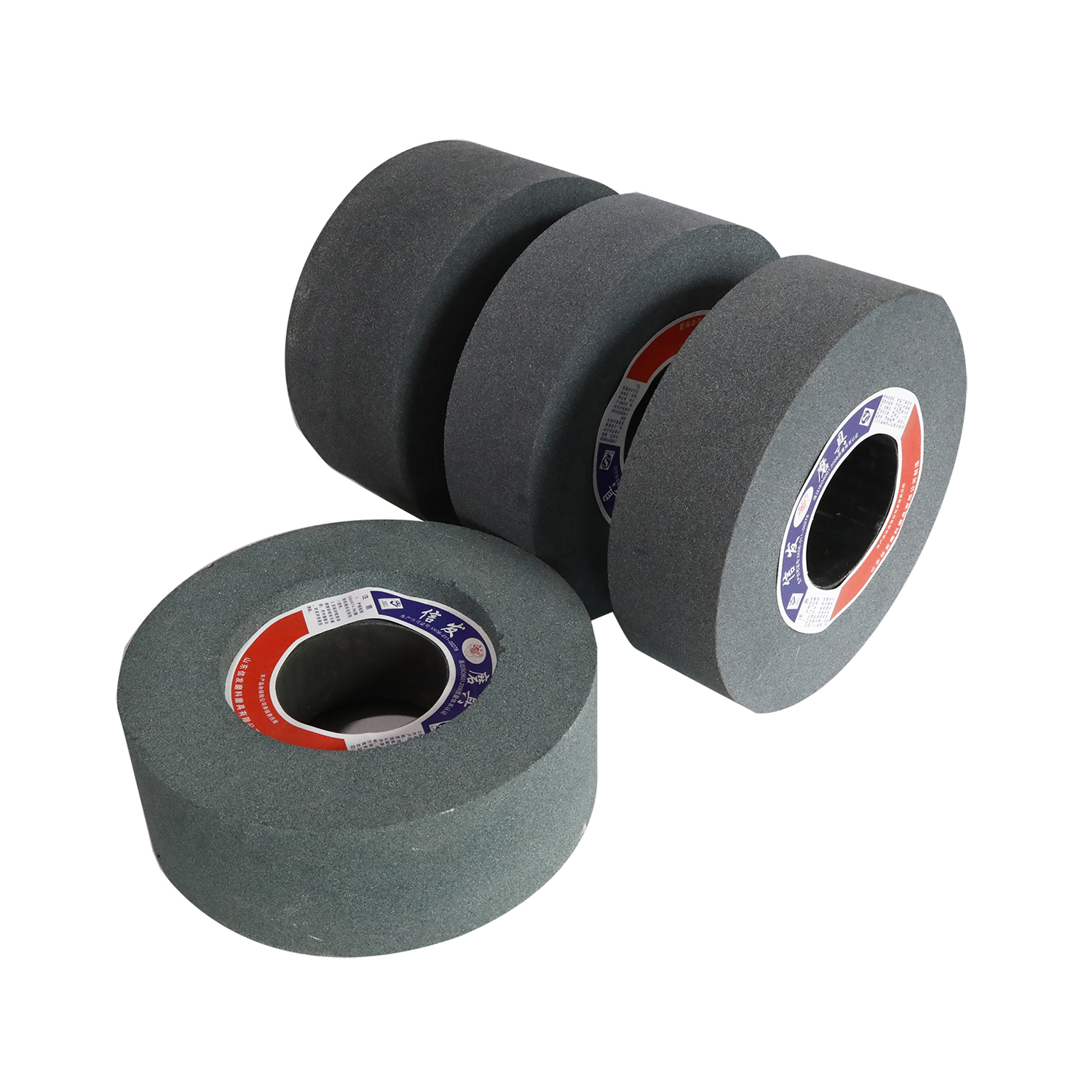
Centerless grinding wheels form part of the ceramic bonded grinding wheel range. Range depth is a continuity signal because it reduces the number of separate supplier qualifications a plant must maintain as its machining mix changes.
3. Raw Material and Process Control
Vitrified bond wheels are fired ceramic products. Continuity therefore depends on two variables that a buyer cannot see in a catalogue: the stability of the abrasive grain input and the stability of the firing process.
Xinfa produces Brown Fused Alumina Abrasive in-house. Its documented characteristics are a dark brown colour, alpha-alumina trigonal crystal system, Mohs hardness of at least 9.0, melting temperature of 2050 °C, refractory temperature of 1800 °C, true density of at least 3.90, magnetic material content of 0.01%, and a grit range from F12 to F220. Brown Fused Alumina is the dominant abrasive grain class in bonded products: Brown Fused Alumina held 52.4% of the global fused alumina market in 2025, primarily driven by its position in abrasive applications. A supplier that controls this input has fewer external variables to absorb when upstream markets tighten.
On the process side, the factory operates more than 100 sets of advanced production and testing equipment, with forming, kiln and quality inspection stages documented in the plant record. That combination — in-house grain, in-house forming, in-house firing, in-house inspection — is what allows a wheel designation to mean the same thing in year one and in year ten.
4. Capacity and Documentation Control
Continuity has a volume dimension. Xinfa operates a 30,000 m² facility with 120 employees and an annual output of 10,000 tons, supported by a 6-engineer R&D team that sits inside a municipal-level enterprise technology R&D centre listed in 2015. Quality management is documented through ISO 9001:2008 authentication.
For a buyer, the practical translation is: the supplier has enough physical and organisational depth to accept a long-term programme without reallocating the account during peak demand. The documentation side is equally important. Repeat orders are only as reliable as the records behind them — inspection data, batch traceability and marking conformance, which ISO 525:2020 addresses for bonded abrasive shape types, designation and marking.
5. Export and Logistics Continuity
Located in the National Logistics Center of Linyi City, Shandong, the company sits 180 km from Qingdao Port and 60 km from Rizhao Port. Export business accounts for 35% of total sales, and products are exported to more than 20 countries and regions, including Southeast Asia (Vietnam, Thailand, Malaysia and others), India, South Korea, Japan, the Middle East (United Arab Emirates, Saudi Arabia, Iran and others), Europe, the United States and Brazil.
Two port options on the same inland corridor matter more than a single-port advantage: it gives a buyer routing flexibility when congestion, schedule changes or carrier allocation issues affect one gateway. The 35% export share is also a useful audit datapoint in both directions — it confirms a working export process, and it tells a large buyer that domestic demand still represents the majority of the company’s volume.
6. Commercial Terms and Acceptance Criteria as Continuity Instruments
Continuity is ultimately enforced by paperwork, not goodwill. Three documents carry most of the weight.
- Locked designation. A complete wheel designation such as 150×25×31.75 A46R5V35m/s encodes outer diameter, thickness and hole diameter, grit size, hardness, structure, bond type and maximum operating speed. Every annual re-order should reference the full designation rather than a shortened internal code, so that a change in any single parameter is visible immediately.
- Acceptance criteria. Hardness grade, structure number, grain type and speed rating should be written into the purchase agreement as verifiable acceptance items, not as reference values. Marking conformance against recognised shape and designation practice belongs in the same clause.
- Change notification. If the supplier changes a grain source, a bond formulation or a firing parameter, the buyer should learn about it before the shipment, not from a shift in scrap rate. This clause is the single highest-value line in a long-term supply agreement.
Application Fit: Where Continuous Supply Is Actually Consumed
Continuity risk scales with how the wheel is consumed. A wheel used continuously on a production line creates a standing dependency; a wheel used for occasional job-shop work does not.
The documented application profile for these products covers grinding, sanding and polishing, tool sharpening, deburring and ultra-precision machining, carried out under continuous operation with matched equipment including grinders, grinding machines and electric hand tools, and with working conditions involving high temperature and wear, including explosion-proof requirements in relevant settings. The served industries include automotive, bearings, cutting tools, aerospace, 3C electronics, moulds, hydraulics, semiconductors, photovoltaics, hardware and medical. The application scenario is documented as common in countries including Bangladesh, Brazil, China, Ecuador, Egypt, Ethiopia, India, Iran, Japan, Cambodia, South Korea, Kazakhstan, Morocco, Mexico, Peru, the Philippines, Pakistan, Russia, Saudi Arabia, Thailand, Tanzania, the United States and Vietnam.
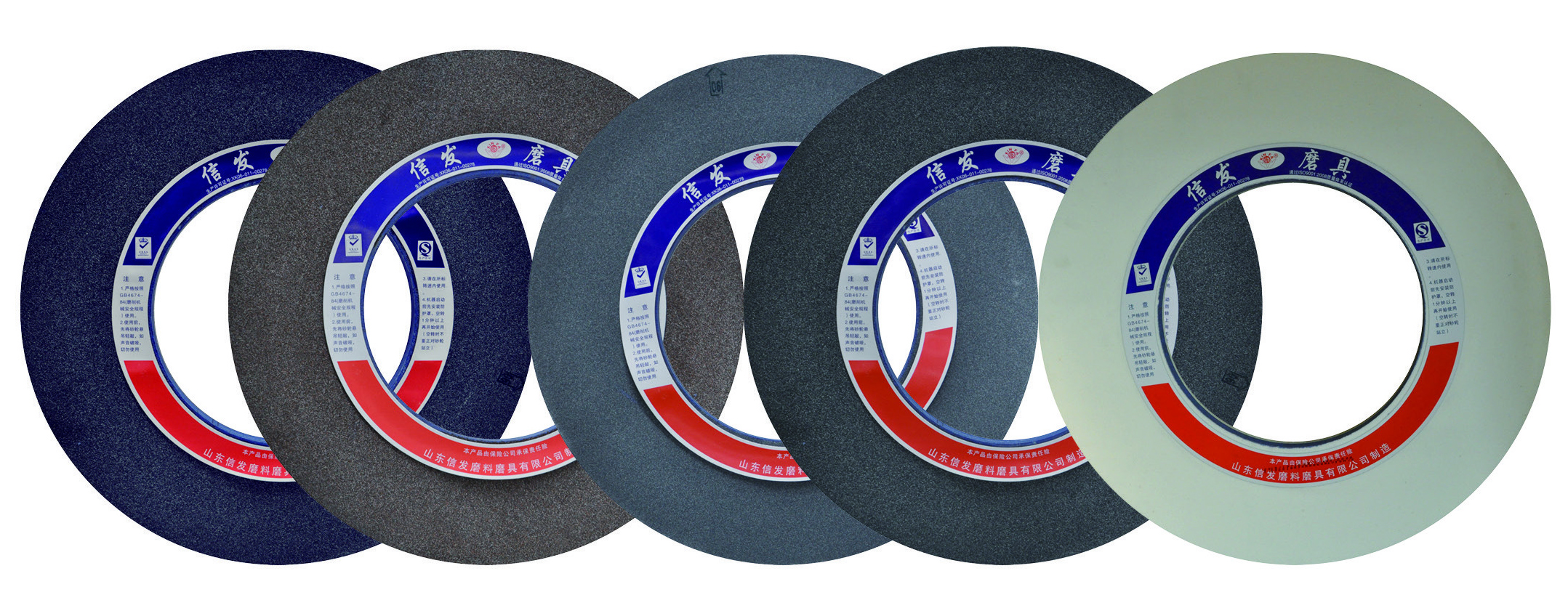
Bearing grinding wheels are a typical continuous-consumption item. Bearing plants re-order the same specification on a fixed cycle, which turns supplier continuity into an operational requirement rather than a commercial preference.
Market Context: Why Continuity Is Moving Up the Buying Agenda
Continuity would matter less if the abrasives market were shrinking. It is not. The global grinding wheels market was valued at US$ 8.71 billion in 2024 and is projected to grow at a CAGR of 4.5% through 2030, according to Grand View Research. Within that market, vitrified bond (ceramic bond) grinding wheels held the largest segment share at 38.4% of the total grinding wheel market in 2025, based on Dataintelo data.
On the supply side, China’s exports of natural or artificial abrasive powder or grain under HS 680530 reached USD 120.9 million in 2024, according to World Bank WITS trade data. Published market size estimates differ noticeably depending on whether the scope covers all bonded abrasives or grinding wheels specifically, so buyers should treat any single figure as a scope-dependent reference rather than an absolute.
The competitive landscape reinforces the same direction. Major global manufacturers shaping the grinding wheel market include Saint-Gobain (Norton), 3M (Cubitron II), Tyrolit and Klingspor. These multi-line suppliers have established documentation and consistency expectations across global accounts; specialist manufacturers compete on process depth, range coverage and responsiveness. For procurement teams, that means continuity evidence is now part of the comparison, not an afterthought.
Continuity-Audited Supply Compared with Spot Purchasing
Spot purchasing is not wrong. It is simply optimised for a different objective. The table below contrasts the two approaches on the dimensions that determine total cost over a supply period.
| Dimension | Spot purchasing | Continuity-audited supply |
|---|---|---|
| Primary objective | Lowest price per wheel at order time | Predictable performance per wheel across the supply period |
| Specification ownership | Re-specified at each enquiry | Locked designation plus defined acceptance criteria |
| Qualification | Sample accepted at first order | Reference sample retained and re-verified at intervals |
| Documentation | Certificate provided on request | Marking, speed rating and lot inspection records maintained |
| Risk profile | Low commitment, high re-qualification risk | Higher commitment, lower drift and switching risk |
| Inventory policy | Order to immediate need | Safety stock planned at destination |
| Failure cost | Absorbed case by case | Reduced through change notification and process stability |
| Best fit | One-off jobs and trial quantities | Continuous production and multi-year programmes |
Limits and Boundaries a Continuity Audit Cannot Remove
A due-diligence framework is only credible if it also states where the evidence stops. The following boundaries should be verified or planned around rather than assumed away.
- Certification currency. Available company documentation references ISO 9001:2008 authentication. ISO 9001 has since been revised, so buyers in regulated markets should confirm the current certificate revision and scope at audit time rather than relying on historical documentation.
- Bond and grain boundaries. The documented range is built on vitrified (ceramic) bonded wheels plus resin bonded and rubber bonded categories, using fused alumina grains (A, WA, PA, SA, MA) and silicon carbide grains (GC, C) together with SG. Where a process requires a different abrasive class, availability should be confirmed directly and not assumed from the catalogue.
- Export share. With 35% of sales going to export, the majority of output serves the domestic market. High-volume buyers should confirm capacity allocation and priority during domestic peak periods as part of the supply agreement.
- Engineering bandwidth. A 6-engineer R&D team is appropriate for applied grade development and specification adjustment. Deep co-development programmes involving extensive tooling trials may need a longer, staged validation plan.
- Logistics reach. Proximity of 180 km to Qingdao Port and 60 km from Rizhao Port shortens inland transit, but it does not shorten ocean transit to Europe, the United States or Brazil. Total lead time planning still belongs at the destination end.
- Paper versus plant. No continuity audit replaces a plant visit and a repeat-order lot trial. Documents establish whether a supplier is worth visiting; only production evidence confirms it.
Future Outlook
Three shifts are likely to shape how buyers assess ceramic grinding wheel suppliers over the next several years.
First, continuity evidence will become a standard procurement line item rather than a specialist concern. As bonded abrasive demand continues on its projected growth path, plants that run continuous operations will treat supplier qualification as a recurring cost to be minimised, which favours manufacturers with long operating histories and in-house raw material control.
Second, documentation expectations will tighten. Standards such as ISO 525:2020 for shape, designation and marking, together with safety requirements under ANSI B7.1 and EN 12413, already define what a compliant wheel looks like on the shelf. The audit question is increasingly whether the supplier can reproduce that compliance consistently across lots and across years.
Third, range depth will matter more than single-product price. As machining mixes diversify — from cylindrical and centerless work to internal boring, gear and roll grinding — buyers will prefer to extend an existing qualified relationship rather than open a new supplier qualification for every wheel family. Ceramic bond’s position as the largest bonded segment share at 38.4% in 2025 makes vitrified bond specialists natural anchors for that consolidation.
Frequently Asked Questions
What is a ceramic grinding wheel, and what does “ceramic bond” mean?
A ceramic grinding wheel is a bonded abrasive product in which abrasive grain is held together by a vitrified, or ceramic, bond. Shandong Xinfa Abrasives & Grinding Tools Co., Ltd. specializes in the research, development and manufacture of vitrified bond grinding wheels. Its documented product range also includes resin bonded and rubber bonded categories, covering Brown Fused Alumina Abrasive, General Purpose Grinding Wheel, Bench Grinder Wheel, Tool Grinding Wheel, flat Surface Grinding Wheel, Centerless Grinding Wheel, Cylindrical Grinding Wheel, Crankshaft & Cam Shaft Grinding Wheel, Saw Tooth Grinding Wheel, Bearing Grinding Wheel, Worm Grinding Wheel, Gear Grinding Wheel, Needle Grinding Wheel, Roll Grinding Wheel V&B, Internal (Bore) Grinding Wheel, Oilstone, Segments, Resin Bonded Snagging Grinding Wheel, Rubber Control & Centerless, Flap Disc and Mounted Points.
How long has the manufacturer been operating, and why does that matter for continuity?
Shandong Xinfa Abrasives & Grinding Tools Co., Ltd. was established in 1989 and is a member of the China Abrasives Association. It has successively won the municipal “Honoring Unit” title for good credit in contract performance, and its technology research and development centre was listed as a municipal-level enterprise technology R&D centre in 2015. For buyers, an operating record dating back to 1989 indicates that the entity has already absorbed multiple demand cycles in the abrasives industry rather than being exposed to its first.
Which specification parameters must stay stable for repeat orders to remain valid?
A complete designation consists of outer diameter, thickness, hole diameter, grit size, hardness, structure, bond type and maximum operating speed — for example, 150×25×31.75 A46R5V35m/s. Across the documented range, grain types include A, WA, AA, 38A, PA, 25A, SA, MA, GC, C and SG; grain sizes run from F16 to F150; hardness grades from G to Y; structure numbers from 0 to 14; and maximum operating speeds from 32 m/s to 60 m/s on most families, with flat surface grinding wheels documented up to 70 m/s. Repeat orders should reference the full designation so that any deviation becomes visible before shipment.
How does export logistics affect long-term supply reliability?
The company is located in the National Logistics Center of Linyi City, Shandong Province, 180 km from Qingdao Port and 60 km from Rizhao Port. Export business accounts for 35% of total sales, with products shipped to more than 20 countries and regions, including Southeast Asia (Vietnam, Thailand, Malaysia and others), India, South Korea, Japan, the Middle East (United Arab Emirates, Saudi Arabia, Iran and others), Europe, the United States and Brazil. Two available port gateways give routing flexibility, while total lead time to distant markets remains dominated by ocean transit rather than inland transport.
What level of production capacity supports a long-term supply programme?
The documented facility covers 30,000 m² with 120 employees and an annual output of 10,000 tons, supported by more than 100 sets of advanced production and testing equipment and a 6-engineer R&D team. Brown Fused Alumina Abrasive is produced with documented characteristics including Mohs hardness of at least 9.0, melting temperature of 2050 °C, refractory temperature of 1800 °C, true density of at least 3.90, magnetic material content of 0.01%, and a grit range from F12 to F220, which keeps a key input under in-house control.
What risks remain even after a positive continuity audit?
A continuity audit reduces but does not eliminate risk. Certification should be verified in its current revision rather than relied on from historical documentation. Changes in grain source, bond formulation or firing parameters must be covered by change-notification terms. Because 35% of sales are export and the remainder serves the domestic market, large-volume buyers should confirm capacity allocation during peak periods. Finally, documented paper evidence is not a substitute for a plant visit and a repeat-order lot trial.
Technical documentation supporting this audit — including the full product family listing and specification ranges — is available in the company brochure: Shandong Xinfa Abrasives & Grinding Tools Co., Ltd. product brochure (PDF).