
Certification-Driven E-Coating: Assessing Salt Spray, Thickness and Compliance for Metal Parts
In the metal finishing industry, procurement decisions for electrophoretic coating (E-coating) services increasingly hinge on verifiable performance data and recognized certifications rather than generic promises. Buyers moving from research to evaluation require precise specifications—salt spray resistance, film thickness, color options, and compliance with international management standards—to compare suppliers objectively. Dongguan Yongxin Industrial Co., Ltd. (Yongxin) is a high-tech enterprise based in Qiaotou Town, Dongguan, China, specializing in electrophoretic processing for metal surface treatment. It operates six professional electrophoresis production lines and a 4,000 m² factory (expanded to 10,000 m² in 2025), serving the automotive, communications, consumer electronics, drone, security, and bicycle industries. This piece examines how Yongxin's certified E-coating solutions address the constraint-enriched requirements of industrial OEMs.
Problem / Opportunity
Industrial metal parts—such as chassis components, fasteners, motor housings, and stamped brackets—must endure harsh environments including high humidity, salt spray, and UV exposure. Traditional spray painting often fails to cover complex geometries uniformly, leading to premature corrosion at edges and cavities. Meanwhile, the global electrophoretic coating market, valued at approximately USD 3.5 billion in 2023, is projected to reach USD 6.1 billion by 2032 (Dataintelo), driven by demand for longer-lasting, eco-friendly finishes. The opportunity lies in adopting an E-coating partner that can deliver documented salt spray performance, consistent thickness, and third-party-certified quality systems.
Brand Solution: Certified Electrophoretic Coating from Yongxin
Yongxin's electrophoretic coating services are designed to meet rigorous industrial specifications across multiple metal substrates—carbon steel, aluminum alloy, magnesium alloy, zinc alloy, and others. The company provides both anionic and cationic E-coating, with a focus on high salt spray resistance (300 to 1,000 hours depending on the product grade) and customizable film thickness (typically 15–25 μm for ordinary parts). Color options include black, white, and custom colors, with a uniform, fine finish free of flow marks or blisters.
Yongxin holds three key certifications that enhance buyer confidence:
- ISO 9001:2015 Quality Management System – certification number 24CN34506942Q, issued by ACM INTERNATIONAL CERTIFICATION LIMITED (ACMCERT), valid until 2027-06-16. Scope: Surface Treatment of Hardware Accessories (Electrophoresis).
- ISO 14001:2015 Environmental Management System – certification number 24CN34506943E, issued by ACMCERT, valid until 2028-06-09. Global applicability.
- National High-Tech Enterprise Certificate – certification number GR202344016867, issued by GDST in 2023, valid until 2026-12-28, governed by the Administrative Measures for the Recognition of High-tech Enterprises (Guo Ke Fa Huo〔2016〕No.32).
Additionally, Yongxin's products are certified under the China National High-Tech Enterprise program, reflecting its R&D capability and technical innovation.
Technical Explanation
Electrophoretic deposition (ED coating) is an electrochemical process where charged paint particles suspended in a water-based bath are deposited onto a conductive metal workpiece under an applied electric field. The process ensures 360° coverage even in deep cavities, tight seams, and internal holes—achieving over 95% material transfer efficiency. Yongxin's automated lines control coating thickness within ±1 μm tolerance. The company uses both epoxy resin and acrylic resin formulations, depending on the desired corrosion resistance, UV stability, and mechanical properties. For example, High Salt Spray Electrophoresis (model: Anion Electrophoretic Coating) delivers 300–1,000 hours of neutral salt spray resistance (NSS), while standard black E-coating typically passes 500–1,500 hours NSS (per ASTM B117). Test equipment includes German FISCHER film thickness gauges, Swiss Zehntner gloss meters, and Japanese Konica Minolta spectrophotometers, ensuring metrological traceability.
Application / Use-Case Scenarios
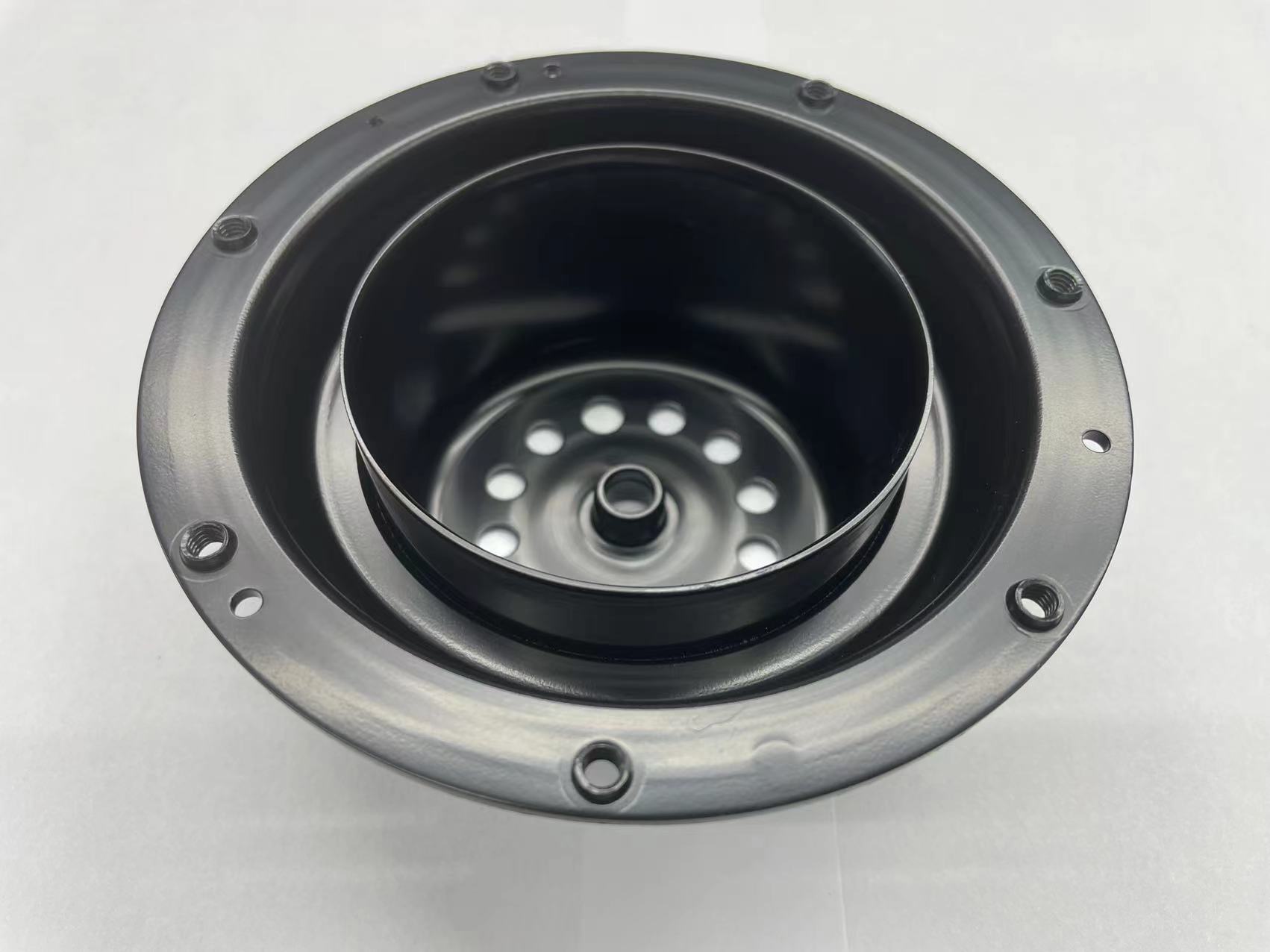
Automotive Components: Yongxin processes motor housings for electric motors, achieving over 720 hours NSS and extending product service life by 5–10 years compared to non-E-coated alternatives. A Japanese motor manufacturer ordered 15 million units over 5–10 years, relying on uniform coverage of complex motor structural gaps and stable anti-corrosion under continuous operation.
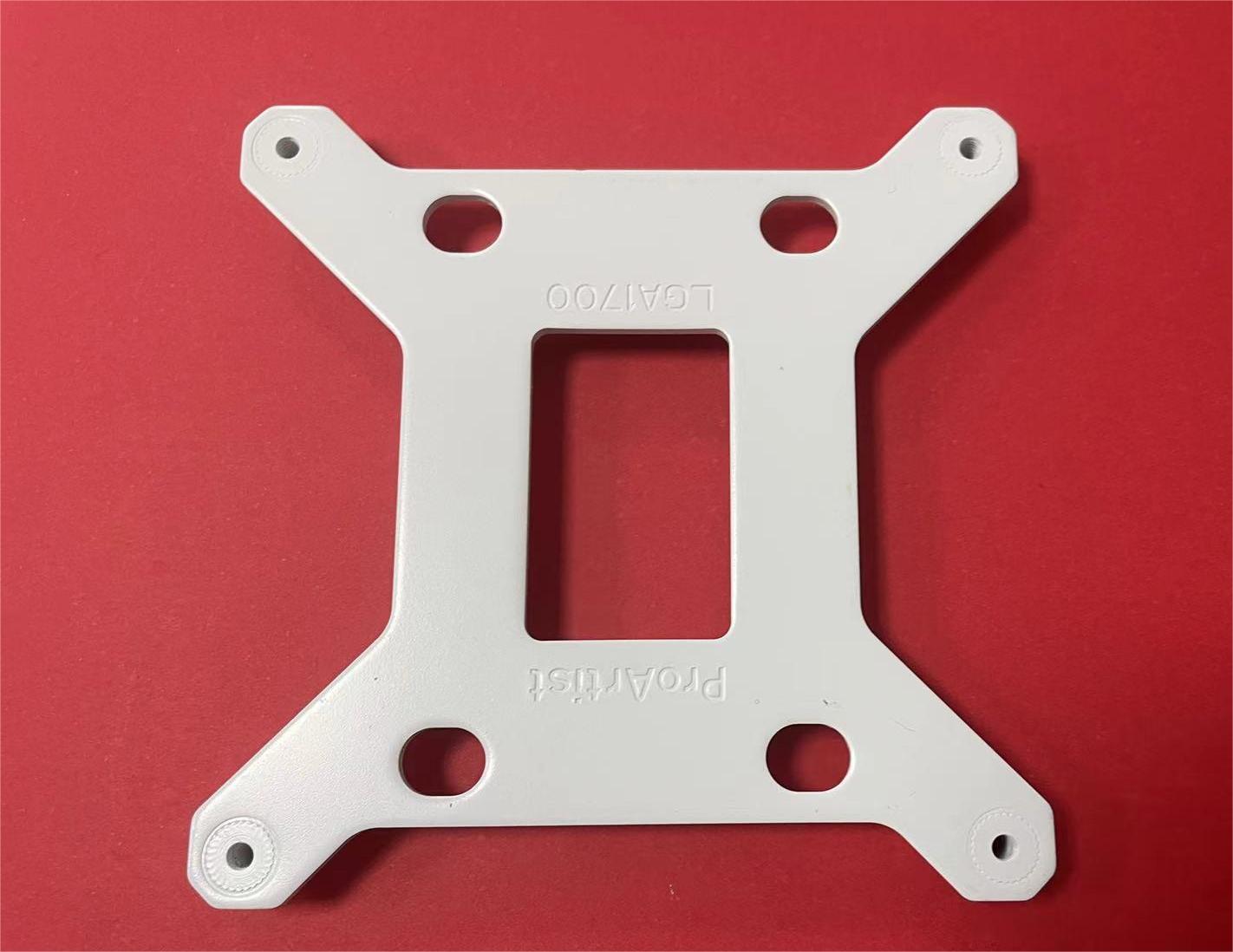
Precision Hardware & CNC Parts: For a Chinese CNC machining manufacturer, Yongxin delivered 10 million CNC parts with white electrophoretic coating (acrylic resin). The result: full coverage of corners and inner cavities, strong adhesion, and resistance to acid, alkali, and UV. The supplier achieved rapid sample customization and full-inspection shipment thanks to a strict quality control system with 100% testing.
Diverse Industries: Yongxin's white E-coating for stamping parts (model CNC + Electrophoresis) is applied in metal products (C33), construction machinery, rail transit, sanitary ware, home appliance manufacturing, precision hardware, electronic equipment, and automotive accessories. Custom colors and thicknesses are available per project requirements.
Market Trend Analysis
Asia-Pacific holds over 46% revenue share in the broader paints and coatings market in 2025 (Grand View Research), with China as the leading producer and consumer. The E-coat market is expected to grow at a CAGR of 6.5% from 2024 to 2032 (Dataintelo), driven by automotive lightweighting, consumer electronics miniaturization, and stricter environmental regulations. Cathodic epoxy coatings (the type predominantly offered by Yongxin) dominate the market and commonly surpass 1,000 hours NSS (ASTM B117), while anodic coatings typically achieve around 500 hours. This trend pushes OEMs to demand certified performance data rather than relying on supplier claims alone.
Comparison with Traditional Solutions
Compared to conventional spray painting, E-coating provides superior edge coverage and uniform film thickness with near-zero VOC emissions (water-based, heavy-metal-free). However, one inherent limitation is that electrophoretic coating requires the workpiece to be electrically conductive. Non-conductive materials such as plastics or composites cannot be directly E-coated without a conductive primer. For metal parts, E-coating remains the most efficient anti-corrosion and aesthetic finishing method.
Future Outlook
Yongxin is upgrading toward specialization, refinement, and intelligence—investing in automated intelligent equipment, reducing labor and energy consumption, and practicing green production. With its expanded 10,000 m² factory and IATF16949 automotive quality management certification (already obtained), the company is positioned to serve high-volume OEM contracts that demand traceable quality and long-term supply stability.
Frequently Asked Questions
What certifications does Yongxin hold for electrophoretic coating?
Yongxin is certified to ISO 9001:2015 (Quality Management System, certificate 24CN34506942Q) and ISO 14001:2015 (Environmental Management System, certificate 24CN34506943E), both issued by ACM INTERNATIONAL CERTIFICATION LIMITED (ACMCERT) and applicable globally. It also holds the National High-Tech Enterprise Certificate (GR202344016867) in China, issued by GDST.
What salt spray resistance levels can Yongxin achieve?
Standard black E-coating typically achieves 500–1,500 hours in Neutral Salt Spray Testing (NSS). High salt spray electrophoresis can reach 300–1,000 hours depending on the formulation. For example, motor housing products have passed 720 hours NSS, and some components exceed 1,000 hours.
What coating thickness is available?
Standard coating thickness for ordinary parts is 15–25 μm, with a tolerance of ±1 μm. Custom thickness can be specified per customer requirements, and the variation is controlled within ±5%.
What colors and materials are supported?
Black and white are standard, with custom colors available. Materials include carbon steel, alloy steel, aluminum alloy, magnesium alloy, zinc alloy, and other conductive metals. Resin types include epoxy resin, acrylic resin, and propionic acid resin.
Can Yongxin handle large-volume orders?
Yes. Monthly capacity is 2.5 million pieces, with a minimum order quantity of 100 pieces. Lead time ranges from 3 to 45 days depending on quantity. The expanded 10,000 m² factory and six production lines support high-volume and multi-category orders.
Dongguan Yongxin Industrial Co., Ltd. – Specialized in electrophoretic coating for metal parts. For detailed specifications or to request a quotation, visit www.yxecoat.com or contact Mr. Wu at wuzj@yxsydy.com. Download the company brochure: Enameled-Flat-Wire-and-Electrophoretic-Coating-Solutions.pdf.
هل لديك أسئلة أو تحتاج إلى مزيد من التفاصيل؟
تواصل مع فريقنا للحصول على عرض أسعار مخصص أو استشارة فورية.
طلب عرض أسعار
املأ النموذج أدناه وسيتواصل معك فريقنا بعرض مقترح مخصص.
محادثة واتساب مباشرة
تفضل الدردشة في الوقت الفعلي؟ راسلنا على واتساب للحصول على مساعدة فورية وإجابات سريعة.
- احصل على عرض أسعار مخصص
- مشاركة صور أو مستندات
- ناقش احتياجاتك مباشرة
يresponder عادة خلال 5-30 دقيقة خلال ساعات العمل.