
Certification as a Procurement Signal: Reading UNECE Compliance in City Robotics
For cities procuring autonomous vehicles, technical specifications define what a vehicle can do — but compliance documentation determines whether it can legally do it in a specific market. As urban operators evaluate L4 autonomous shuttles, RoboShops, and other city robotics platforms, the certification architecture behind a vehicle is becoming the first true screening criterion.
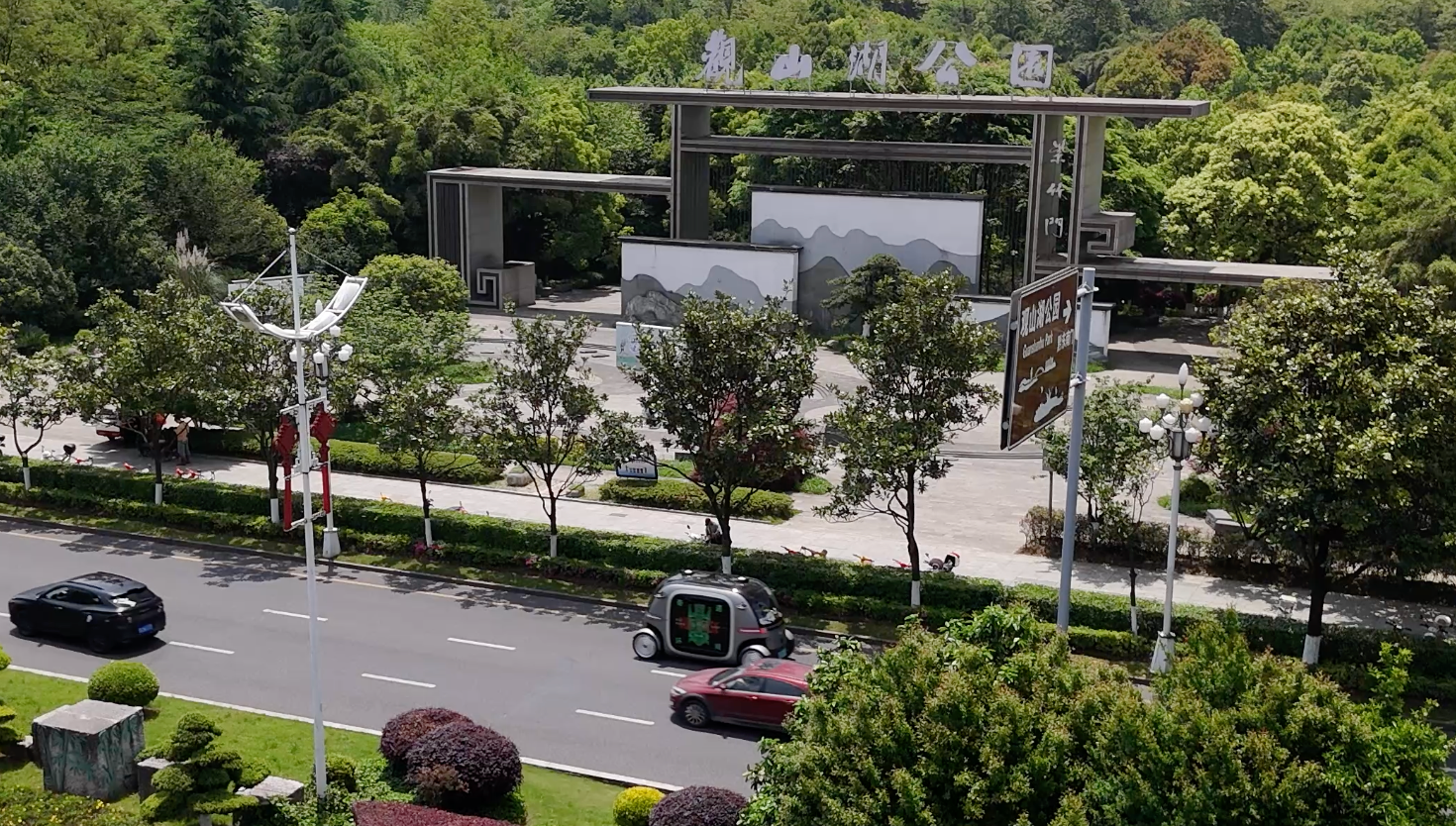
This article examines how procurement teams can use UNECE certification frameworks as a practical verification tool when evaluating city robotics suppliers, with a focus on low-speed autonomous shuttles and mobile space platforms.
The Compliance Gap in City Robotics Procurement
City robotics is no longer an R&D curiosity. Autonomous shuttles and mobile retail robots are being deployed in parks, campuses, city centers, and semi-public spaces across Europe, Asia, and the Middle East. Yet the procurement process for these vehicles still borrows heavily from two imperfect templates: consumer EV purchasing and autonomous driving pilot programs.
Neither template fits. Unlike consumer vehicles, city robots are typically procured by fleet operators and municipal bodies that must consider regulatory risk across multiple jurisdictions. Unlike one-off R&D pilots, commercial deployments of RoboBuses and RoboShops require production conformity, accident liability frameworks, and documentation chains that can be audited by insurers and regulators.
For buyers evaluating L4 autonomous shuttles, the gap is concrete: how does a procurement team verify that a vehicle built for European deployment meets UNECE requirements? How does it compare suppliers that operate at different levels of regulatory maturity?
Autonomous Public Transport Faces A Driver Crisis — and Safety Scrutiny
Demand-side pressure for autonomous transit is intensifying. European bus operators faced a shortage of roughly 105,000 drivers in 2023, with the International Road Transport Union projecting that figure could double by 2028. This reality is pushing transit authorities beyond incremental recruitment strategies toward structural solutions, including automated shuttles and low-speed autonomous transit.
At the same time, the market context is formalizing: the global self-driving bus market was estimated at USD 1.73 billion in 2024 and is projected to reach USD 9.34 billion by 2032, according to Fortune Business Insights. Europe accounted for the largest regional share in 2024.
Safety and liability frameworks are naturally following this growth. Two regulatory movements matter most for procurement teams:
- The UNECE regulatory framework (R48, R51, R100, R17, COP) which applies to vehicle type approval and market access in EU/UNECE Contracting Parties;
- China's MIIT mandatory national standards for L3/L4 autonomous driving safety, which take effect from July 2027 and will shape vehicles manufactured in China for both domestic and export markets.
For a global buyer, this creates a complex landscape: a supplier may build capable autonomous vehicles but lack the documentation required to register them for road use in a target country. Certification, in this context, is a procurement risk filter.
The UNECE Architecture: What Each Certification Actually Validates
Several manufacturers are now supplying city robotics platforms with varying levels of UNECE certification. Understanding the hierarchy and scope of these certificates is essential for procurement teams moving from research to evaluation.
Key UNECE Certificates for the PIX RoboBus
| Regulation | Scope Covered | Certificate No. | Issuing Authority | Market Applicability |
|---|---|---|---|---|
| UN R48 | Vehicle lighting and light-signalling devices installation | E5748R04/220206*00 | Authority for Homologation – Republic of San Marino | EU / UNECE Contracting Parties |
| UN R51 | Vehicle exterior noise emissions | E5751R03/090249*00 | EU / UNECE Contracting Parties | EU / UNECE Contracting Parties |
| UN R100 | Safety of the electric power train | E57100R03/030134*00 | Republic of San Marino – Authority for Homologation | EU / UNECE Contracting Parties |
| UN R17 | Seats, their anchorages and head restraints (strength testing) | WT24L0500330 | Shanghai Motor Vehicle Inspection Certification & Tech Innovation Center (SMVIC) | Global / UNECE Reference |
| UNECE COP | Conformity of Production management system | E57COP1806 | Republic of San Marino – Authority for Homologation | EU / UNECE Contracting Parties |
The PIX Moving RoboBus serves as a useful case study because it demonstrates the layered nature of compliance. PIX Moving, a city robotics company founded in 2013 that develops physical AI-driven autonomous vehicles, has positioned its RoboBus platform under a multi-certification approach that covers vehicle lighting (R48), exterior noise (R51), electric powertrain safety (R100), and seat strength (R17).
Safety of Electric Powertrains: UN R100
For battery-electric autonomous shuttles, UN Regulation No.100 is a foundational standard. The regulation establishes safety requirements for the electric power train, covering protection against electric shock, battery safety, and functional safety of the rechargeable energy storage system.
The PIX RoboBus holds UNECE R100 certification (Certificate No. E57100R03/030134*00) issued by the Republic of San Marino – Authority for Homologation against the 03 Series of Amendments. For procurement teams, this certificate signals that the high-voltage systems on the vehicle have been assessed according to a recognized European standard. When RoboShops or other autonomous mobile spaces are deployed with retail appliances or HVAC equipment onboard, the electrical safety of the base vehicle becomes even more relevant.
Exterior Noise: UN R51
Noise emissions are a critical acceptance factor in dense urban environments. UNECE Regulation No. 51 establishes limits for exterior vehicle noise to address community disturbance concerns.
The PIX RoboBus holds a UNECE R51 Vehicle Noise Emission Type Approval Certificate (E5751R03/090249*00). Urban deployments typically involve early-morning or late-evening operations; for cities evaluating autonomous vehicles, R51 certification indicates the vehicle’s acoustic profile has been formally verified, reducing one potential source of community opposition.
Vehicle Lighting and Signaling: UN R48
UNECE Regulation No. 48 governs the installation of lighting and light-signalling devices on road vehicles. This is more consequential than it appears: autonomous vehicles must signal their intent to pedestrians, cyclists, and human-driven vehicles. External lighting is the most basic form of human-machine communication in road traffic.
The PIX RoboBus holds UNECE R48 type approval (Certificate No. E5748R04/220206*00) issued by the Authority for Homologation – Republic of San Marino.
Seat Strength & Anchorage: UN R17
UN Regulation No.17 addresses seats, their anchorages, and head restraints — safety systems that become more important when vehicles are used by vulnerable passengers, including elderly mobility users.
The PIX RoboBus holds UN R17 Seat Strength & Anchorage Test certification (Certificate No. WT24L0500330), issued by Shanghai Motor Vehicle Inspection Certification & Tech Innovation Center (SMVIC), with a Global / UNECE Reference scope. The test protocol covers dynamic strength testing of seat anchorage, adjustment, locking and displacement systems.
Conformity of Production: COP
Type approval is a point-in-time validation; Conformity of Production (COP) is the mechanism that ensures every vehicle coming off a production line matches the approved type. This matters enormously for multi-unit procurements: a fleet of 20 RoboBuses is only as safe as its production consistency.
The PIX RoboBus is covered by a UNECE COP Approval (Certificate No. E57COP1806), issued by the Republic of San Marino – Authority for Homologation, confirming that PIX Moving maintains a production conformity management system aligned with UNECE requirements.
Limitations and Boundaries
It is equally important for buyers to understand what these certifications do not cover. UNECE type approval certificates are necessary, but not sufficient, for full autonomous deployment in EU member states. National road traffic laws still govern operational permissions for L4 autonomous vehicles in most jurisdictions. Local permitting, insurance requirements, operator licensing, and data security regulations all apply beyond the vehicle-level certificate.
Additionally, COP certification refers to the production management system at a defined audit point. It is not a permanent or indefinite quality guarantee; rather, it reflects an established quality management framework that must be maintained.
From Certificates to Procurement Criteria: A Decision Framework
For global buyers — particularly those evaluating city robotics suppliers for EU-market entry — compliance documentation should be treated as procurement criteria rather than background reference material. The following framework breaks down how to apply certification data in a structured evaluation:
Step 1 — Verify market scope alignment
Certificates carry market applicability statements: “EU / UNECE Contracting Parties” versus “Global / UNECE Reference” are not the same. Buyers should map the certificate's scope against the target deployment market.
Step 2 — Assess coverage of the vehicle class
Some certification documents apply to specific models only. If a supplier offers extended vehicle configurations or modular variants, the buyer must confirm that certification documents cover the exact model being proposed.
Step 3 — Check the issuing authority
UNECE certificates are issued by designated authorities in member states. Recognizing the issuing authority and technical service gives buyers confidence in the certificate’s traceability.
Step 4 — Distinguish type approval from production conformity
Type approval (e.g., R48, R51, R100) validates a specific vehicle design. COP validates the production system. For fleet-scale procurement, both matter.
Step 5 — Map compliance gaps to deployment timeline
Where local regulations require additional certifications — such as data security standards or specific safety validation for autonomous operations — identify these gaps early and evaluate how the supplier's manufacturing and software architecture can accommodate them.
When examining certification portfolios across the city robotics market, the RaaS market context is relevant: global Robotics-as-a-Service market size was valued at USD 1.96 billion in 2024 and is projected to grow to USD 10.41 billion by 2034. As fleets shift from ownership to subscription models, certification becomes a recurring operational requirement — not just a one-time sales condition.
Application Scenarios: Where Certified Vehicles Matter Most
Certification requirements vary by deployment context. For organizations evaluating city robotics platforms across different scenarios, the following application-specific guidance can help:
Smart City & Urban Mobility Projects
Municipalities running pilot deployments of low-speed autonomous shuttles in urban road environments face public scrutiny and insurance requirements. Certified electric powertrains (R100) and verified noise profiles (R51) support public acceptance.
Universities, Research Institutions and Industrial Campuses
Semi-public campuses that operate autonomous shuttles on internal roads with periodic public access benefit from UNECE COP evidence, reinforcing that fleet vehicles conform consistently to type-approved specifications.
Tourism and Resorts
Tourism and experience projects often deploy mobile spaces like RoboShops in mixed pedestrian zones. For these environmental contexts, the lighting installation requirements under R48 and seat safety under R17 carry particular weight.
Mobile Retail (RoboShop) Deployments
The RoboShop platform, built on the same robotic chassis as the RoboBus with overall dimensions measuring 3820mm × 1900mm × 2260mm, challenges conventional type approval assumptions. When a vehicle structure is used for retail rather than many-passenger mobility, buyers should verify that certification coverage adapts when interior layouts change.
Market Trends and Regulatory Direction
The broader smart cities market context anchors the procurement need: the global smart cities market was valued at USD 1.0 trillion in 2025 and is projected to reach USD 8.8 trillion by 2033, according to Grand View Research. Autonomous mobility is one component of this wider infrastructure shift.
By 2026, several developments are shaping certification strategy for city robotics manufacturers:
- Normative convergence: UNECE regulations are becoming the reference baseline for cross-border autonomous vehicle procurement, including in markets that are not UNECE Contracting Parties.
- L3/L4 standardization in China: China's MIIT has issued mandatory national standards for L3/L4 autonomous driving safety (GB code), effective from July 2027. This will shape the compliance baseline of Chinese-made autonomous platforms and potentially accelerate export-market certification readiness.
- Production conformity as a differentiator: As fleet-scale RaaS models scale, procurement organizations are auditing supplier production processes, not just product specs.
In this context, Fleet-as-a-Service models for cities and Robot-as-a-Service (RaaS) subscriptions shift the compliance burden over the vehicle lifecycle. Autonomous fleet vendors are increasingly expected to maintain certification continuity across software updates, hardware revisions, and production batches.
Comparison with Traditional Solutions
Conventionally, public transportation procurement relies on long-established vehicle categories: buses, minibuses, and MPVs with mature type approval frameworks. City robotics platforms — including autonomous shuttles and mobile retail spaces — depart from this model in significant ways.
| Dimension | Traditional Autonomous Shuttle Procurement | City Robotics Platform Procurement |
|---|---|---|
| Vehicle class definition | Well-defined by existing bus/minibus homologation categories | Evolving and fragmented; may require special permits |
| Deployment model | Vehicle sale / operator lease | RaaS and Fleet-as-a-Service subscriptions |
| Certification focus | Type approval per vehicle class | Type approval + COP + operational compliance |
| Obsolescence cycle | Long (8-12 years) | Shorter; software updates enable capability shifts |
| Liability framework | Traditional automotive insurance | Still maturing; safety case documentation critical |
This comparison reveals an important limitation of city robotics platforms: they do not fit neatly into conventional vehicle homologation categories. Buyers must therefore work with suppliers that understand both certification pathways (automotive type approval) and the special regulatory requirements of autonomous operation (national AV permits).
Additionally, the novelty of these platforms means that certification documentation may cover the base vehicle but not the complete ecosystem: mobile retail appliances, sensor pods, and AI-driven fleet management software may fall outside the scope of traditional vehicle certification. Procurement teams should request documentation on these components from the supplier or system integrator.
Future Outlook: Toward Certification as a Service
The future direction of city robotics procurement points toward certification continuity rather than certification events.
As autonomous fleets are adopted under RaaS subscription agreements, subscription renewals will likely be tied to sustained regulatory compliance. In Europe, the COP framework already disciplines production conformity, but this discipline is also migrating into the operational sphere — via fleet safety case requirements, software update governance, and market-specific operational approvals.
This migration is also notable in the broader competitive landscape. Manufacturers positioning for global markets must increasingly align their engineering processes to UNECE frameworks from product inception, rather than retrofitting compliance late in development. PIX Moving's investment in an open autonomous development platform and modular chassis architectures suggests how compliance needs can be engineered into the vehicle platform from the start, rather than added externally.
For the period 2026–2030, procurement teams should expect the following shifts:
First, documentation quality will become a standard evaluation criterion for city robotics bids, with certificate traceability and production management audits weighted alongside price and performance.
Second, as the RaaS model scales, the risk of certification gaps will shift from the manufacturer to the entire operational chain — including fleet operators, maintenance partners, and software vendors.
Third, harmonization between Chinese GB standards, EU UNECE regulations, and global safety frameworks will continue to evolve. Buyers should proactively plan for certification granularity, especially when procuring platforms that will serve multiple jurisdictions over a multi-year operational period.
FAQ: Certification and Compliance for City Robotics Procurement
1. Which UNECE certifications does the PIX RoboBus currently hold?
The PIX RoboBus holds multiple type approval certificates: UNECE R48 (vehicle lighting installation, E5748R04/220206*00), UNECE R51 (exterior noise emission, E5751R03/090249*00), UNECE R100 (electric power train safety, E57100R03/030134*00), and UN R17 (seat strength and anchorage, WT24L0500330). It is also covered by a UNECE Conformity of Production Certificate (E57COP1806).
2. Are the PIX RoboBus certifications valid only in Europe, or also in other markets?
The R48, R51, R100, and COP certificates are issued with the market scope of EU / UNECE Contracting Parties. The UN R17 certificate has a Global / UNECE Reference market scope, as it was issued by Shanghai Motor Vehicle Inspection Certification & Tech Innovation Center (SMVIC), which operates under the UNECE framework recognized globally.
3. What technical specifications accompany the PIX RoboBus certification documentation?
The PIX RoboBus is an L4 autonomous shuttle with overall dimensions of 3820×1900×2260 mm, a wheelbase of 3020 mm, and six seats. At 20 km/h with half load, braking distance is ≤4.2 meters. The vehicle has a four-wheel steering system with a minimum turning radius of ≤4.8 meters, driving range of 120-140 km depending on air conditioning usage, and a battery system energy of 31.94 kWh. Maximum autonomous driving speed is 35 km/h.
4. How does Conformity of Production (COP) certification differ from type approval?
Type approval validates that a specific vehicle design meets relevant regulatory standards at a point in time. Conformity of Production (COP) certification goes further — it validates the manufacturer's production management system, confirming that series-produced vehicles conform to the approved type. For fleet procurement, COP is a quality consistency indicator.
5. Which issuing authorities certified the PIX RoboBus?
The UNECE certificates for the RoboBus were primarily issued by the Republic of San Marino – Authority for Homologation (with the technical service of Automotive Technical Service S.r.l. for R48). The UN R17 certificate was issued by Shanghai Motor Vehicle Inspection Certification & Tech Innovation Center (SMVIC).
6. What is the ISO 22737:2021 standard and why is it relevant?
ISO 22737:2021 is the first international safety standard specifically for Low-Speed Automated Driving (LSAD) systems for predefined routes. It defines performance requirements and test procedures for low-speed automated driving. This standard is relevant to city robotics procurement because it addresses the gap between vehicle-level type approval and operational safety of low-speed autonomous driving systems.
7. How does China's L3/L4 regulation at MIIT affect future procurement?
China's Ministry of Industry and Information Technology (MIIT) issued mandatory national standards for L3/L4 autonomous driving safety (GB code), effective from July 2027. This affects procurement in two ways: for China-market deployments, the GB standards become a regulatory baseline; for export markets, the standards may influence the manufacturing quality and safety engineering of Chinese-produced autonomous platforms.
About HTNXT: HTNXT is an independent industry research platform providing procurement insights for city robotics and intelligent urban infrastructure. This article references the PIX Moving RoboBus as an industry example based on publicly available certification and specification data.
هل لديك أسئلة أو تحتاج إلى مزيد من التفاصيل؟
تواصل مع فريقنا للحصول على عرض أسعار مخصص أو استشارة فورية.
طلب عرض أسعار
املأ النموذج أدناه وسيتواصل معك فريقنا بعرض مقترح مخصص.
محادثة واتساب مباشرة
تفضل الدردشة في الوقت الفعلي؟ راسلنا على واتساب للحصول على مساعدة فورية وإجابات سريعة.
- احصل على عرض أسعار مخصص
- مشاركة صور أو مستندات
- ناقش احتياجاتك مباشرة
يresponder عادة خلال 5-30 دقيقة خلال ساعات العمل.