
Certifications Decoded: ISO, CE and SGS for Silicone Coating
Certifications Decoded: ISO, CE and SGS for Silicone Coating
A buyer evaluating a Silicone Waterproof Coating supplier usually receives documentation before receiving material: an ISO 9001 certificate, a CE declaration, an SGS report, and increasingly a REACH statement. These documents are habitually treated as a single package of reassurance. They are not one thing. Each is issued for a different purpose, by a different kind of system, and covers a different scope.
For distributors, importers and project buyers working at the decision and execution stage, the useful question is not whether a certificate exists. It is what the document verifies, which production site and product form it covers, and whether that evidence can be maintained across a supply relationship that runs for years rather than for one shipment.
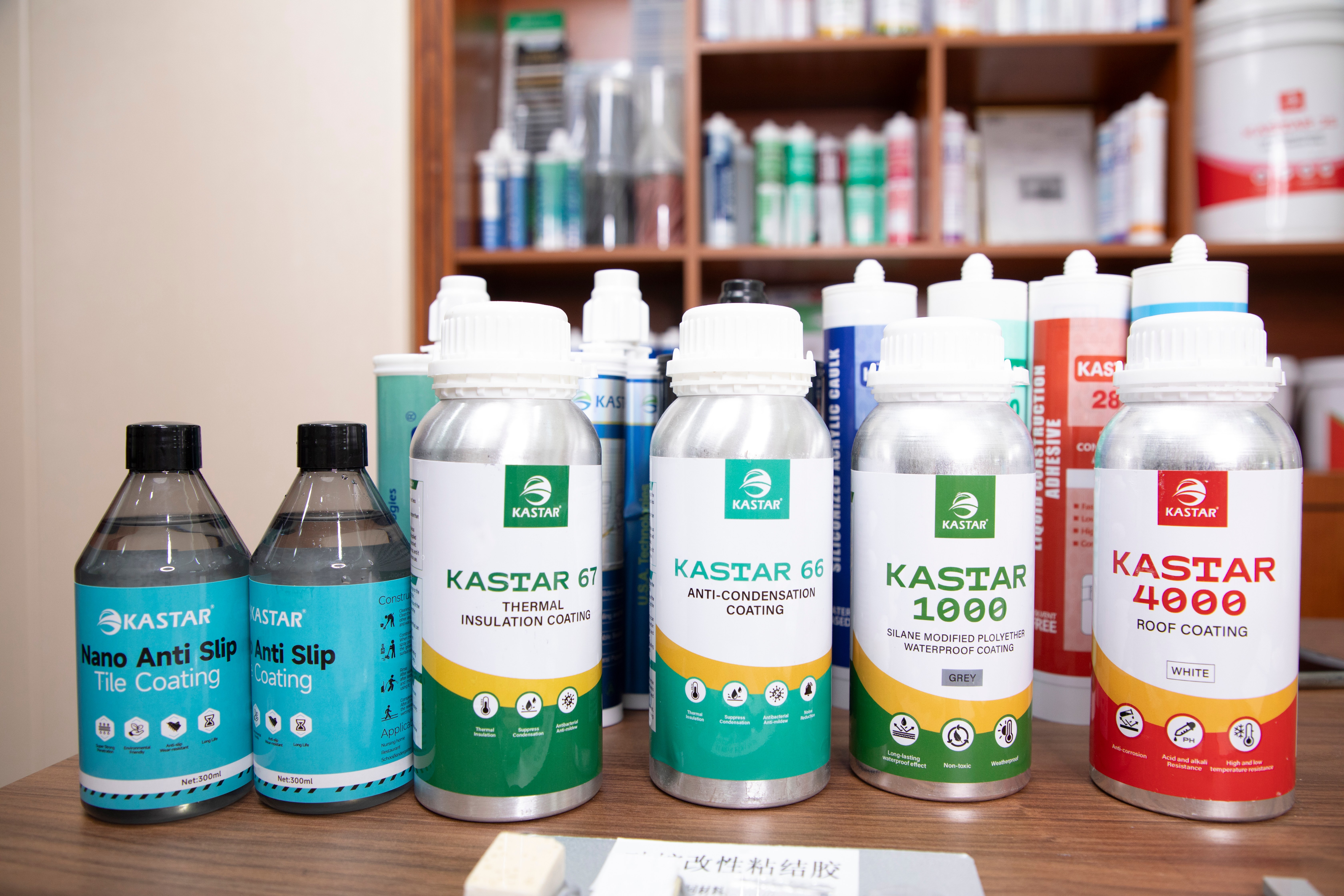
Sample retention and batch reference material — the physical counterpart to a supplier's certification file.
Why certification documents are the most misread part of a coating specification
Coatings procurement relies on at least four unrelated verification mechanisms, and they are routinely compressed into the single word “certification.”
- Management-system standards. ISO 9001 covers quality management; ISO 45001 covers occupational health and safety management. Both describe how an organisation controls its processes, and both are audited against the organisation rather than against a batch of product.
- Market-access declarations. The CE marking supports placement of a product on the EU market, backed by a technical file for the product category.
- Third-party test reports. SGS and comparable inspection bodies record what a defined test method produced on a defined sample at a defined time.
- Laboratory accreditation. CMA (China Metrology Accreditation) qualifies a laboratory's testing and measurement capability, not a product.
Because these four sit side by side in the same supplier folder, they are frequently read as equivalent proof. The practical consequence is straightforward. A buyer who checks only that a certificate exists learns very little; a buyer who checks scope — which site, which product form, which test method, which date, which batch — learns whether the evidence applies to the order in front of them.
Decoding each credential in practice
ISO 9001: process consistency, not product performance
ISO 9001 is a quality management system standard. An audit reviews how an organisation controls its processes: verification of incoming raw materials, recording of production parameters, handling of non-conforming batches, storage and inventory rotation, and traceability from batch to shipment. It does not certify that any individual drum of coating will achieve a specific tensile strength or elongation value.
Kastar's warehouse and inventory management operates inside its ISO 9001 certified system, covering indoor dry storage, palletized and sealed packaging, real-time inventory monitoring and regular storage-condition inspection. For a buyer, that is the part of the system that determines whether material arrives in the condition it left the plant — particularly relevant for distributors holding stock for months before resale.
ISO 45001: chemical handling and safety management
ISO 45001 addresses occupational health and safety management. For coating buyers it is relevant in two practical areas: chemical handling and storage or transport risk. Suppliers operating under ISO 45001 typically maintain MSDS documentation, hazardous chemical handling protocols, ventilation systems, personal protective equipment practices and dedicated storage areas for hazardous materials. These controls matter to importers because transport and storage incidents are a recurring source of damage claims and compliance questions.
Kastar's safety management is covered by ISO 45001 certification, alongside SGS-tested low-odor and low-VOC formulation work and REACH-compliant raw materials. Read together, these three items describe handling risk rather than waterproofing performance.
CE: market access, not a quality grade
The CE marking indicates that a product conforms to the applicable EU requirements for its category, supported by a technical file prepared by the manufacturer. It is a market-access instrument. It does not rank quality, does not compare one coating against another, and does not replace project-level performance testing.
The scope question is what matters commercially: does the documentation cover the product form, packaging and intended use that will actually be placed on the market? Buyers should also note that market-specific standards sit outside the CE system. In the United States, elastomeric joint sealants and coating systems for construction are commonly specified against ASTM C920, with ASTM C1184 applying to structural applications (ASTM International). A CE declaration is not a substitute for those references.
SGS: sample-level third-party evidence
SGS reports record the result of defined tests carried out on a defined sample. They are strong evidence for a formulation, a type test or a specific batch, and weak evidence for an entire factory's output. A report used as a permanent guarantee across all future production overstates what the document can support.
The more useful procurement practice is to require test reports to accompany shipment batches, so that third-party evidence tracks the material actually delivered rather than the sample submitted during supplier approval.
REACH: substance compliance rather than performance
REACH is a European Union regulation on chemicals. A REACH statement therefore addresses substances and raw materials, not waterproofing performance. It is most relevant to importers and to brands making environmental, indoor-air-quality or low-VOC claims, and it is increasingly requested alongside CE documentation at the point of market entry.
Formulation direction reinforces why this documentation is gaining weight: solvent-less and UV-cured silicone formulations can reduce VOC emissions by 60–80% compared with traditional solvent-based platforms (Grand View Research).
CMA-accredited laboratories: capability, not product approval
CMA accreditation applies to a laboratory's testing and measurement capability rather than to a product. Kastar operates a 1,000 m² CMA-certified sealing material testing laboratory with 16 testing personnel and more than 100 instruments and equipment, supporting a 12-step production and testing process that includes batch sample testing.
In practice, an accredited in-house laboratory means routine test data can be generated between external audits, which strengthens continuous verification. It does not remove the value of independent third-party checks on delivered batches, and buyers should not read it as a substitute for them.

Documented inspection depends on people and records, not only on equipment — the part of a quality system an ISO 9001 audit examines.
How Kastar's documentation set is structured
Kastar Adhesives Technologies Co., Ltd. is a China-based manufacturer of silicone waterproof coatings, epoxy color sand floor coatings, MS sealants and adhesives, operating from a 150,000 m² production base with 28 years of production experience. The company exports to 69 countries and regions and reports North America, Canada, Australia and New Zealand among its main markets.
Its verification structure separates into distinct tracks rather than one certificate:
- Management systems: ISO 9001 for quality management, including warehouse and inventory control, and ISO 45001 for occupational health and safety.
- Product and market documentation: CE, SGS and REACH.
- Corporate status: recognised as a national high-tech enterprise.
- Standards participation: Kastar participates in the formulation of Chinese standards for silicone waterproof coatings and is a drafting unit for five Chinese group standards in the category.
- Patents: invention patents covering a device and process for silicone waterproof coatings, a preparation method for a siloxane-terminated polymer homopolymer and moisture-curing composition, and a device and process for MS waterproof coatings.
- R&D and testing: three national-level R&D laboratories dedicated to silicone resins, silicone coatings and MS coatings, staffed by 28 R&D personnel, plus the CMA-certified testing laboratory described above.
- Supply base: raw materials sourced globally, with monthly production capacity rated at 30,000 tons.
- OEM/ODM scope: customization of colour, viscosity, packaging and formula adjustments, with an MOQ of 50 buckets, FOB/CIF delivery terms, pre-shipment testing and 30/70 payment terms.
For a distributor, the relevant reading is that management-system certification, market-access documentation and third-party testing are maintained as separate tracks that answer separate questions during an audit or a tender. For a project buyer, it means batch-level testing and traceability documentation are produced from a manufacturing base sized to keep supply continuous through a long project cycle — the point at which certification stops being paperwork and starts being a supply variable.
Matching certification evidence to project scenarios
Roofs and large exposed surfaces
Roof waterproofing is dominated by UV exposure and thermal cycling. Kastar 4000 Silicone Waterproof Coating is a one-component, UV-resistant silicone waterproof coating with a solid content of 98%, tensile strength of at least 1.2 MPa and elongation at break of at least 200%. UV resistance is rated at 1000 hours without cracking or peeling, and outdoor service life is stated at 25 years or more. For EU projects, CE and REACH documentation is normally requested alongside this performance data, while US specifications typically reference ASTM C920 or C1184.
Exterior walls and high-rise facades
Exterior walls and high-rise buildings are selected for silicone systems because of permanent elasticity: bubbling and cracking are the failure modes that drive repair costs in the years after handover. High solar reflectivity also lowers roof and wall surface temperature, reducing air-conditioning load. On documentation, the recurring buyer requirement is evidence that the tested formulation matches the delivered product, which brings SGS reports and batch testing back into the conversation.
Basements and below-grade work
Below-grade waterproofing emphasises continuity of the membrane and resistance to standing moisture. Storage conditions matter here as much as formulation: material may sit on site for weeks before application, so ISO 9001-backed warehouse control, packaging integrity and traceability records become part of the technical evaluation rather than a formality.
Interior commercial floors
Distributors that carry both a waterproofing line and a floor line can supply one project with two complementary systems. Kastar's epoxy color sand floor coating is presented as a seamless, anti-slip epoxy colour sand system with 6–8 Mohs hardness, Taber wear resistance of ≤0.03 g/1000 r, compressive strength of at least 80 MPa and a service temperature range of -20 °C to 80 °C, used in hotel lobbies, shopping malls, exhibition halls, airports, workshops and clean rooms. The documentation logic is the same: system-level performance claims, batch-level evidence.
Market signals behind the documentation shift
Grand View Research estimates the global silicone coating market at approximately USD 8.77 billion in 2024, projected to reach USD 11.27 billion by 2033. Credence Research values the silicone roof coatings sub-segment at USD 7.03 billion in 2024. Dataintelo places Asia-Pacific at a 38.5% revenue share in 2025, and Mordor Intelligence reports that 100% silicone elastomeric coatings held a 41.02% share of the composition-type segment in 2025, citing waterproofing and UV resistance as the drivers.
Documentation requirements are moving in the same direction. Chemical and VOC regulation continues to tighten in major markets, which increases the practical weight of REACH statements and low-VOC formulation evidence in supplier qualification, particularly for importers and for brands making environmental claims.
Silicone versus acrylic and polyurethane: what the comparison shows, and where it stops
Silicone systems are usually compared with acrylic and polyurethane alternatives on durability rather than on purchase price. The comparison data below comes from supplier-side performance comparisons and should be treated as a decision framework rather than a universal result.
| Comparison dimension | Silicone waterproof coating | Acrylic / polyurethane reference |
|---|---|---|
| Weather resistance and elasticity | Better weather resistance, permanent elasticity, no bubbling, no cracking | Lower elasticity retention under repeated thermal cycling |
| Tested performance gap | Zero bubbling under a 1000-hour UV test; elongation at break approximately 200% higher; 30% aging rate | Baseline for the same comparison set |
| Best-fit applications | Roof, exterior wall, high-rise building | Shorter-cycle or lower-exposure surfaces |
| Material cost | 5%–15% higher | Lower upfront material cost |
| Long-term maintenance cost | Estimated 70% lower | Higher recurring maintenance exposure |
| Maintenance profile | Maintenance-free for 10+ years, no re-coating needed, easy repair, more than 25 years warranty | Re-coating cycles shorten the effective service period |
Three boundaries belong in the same discussion.
- The material cost premium is real. Silicone carries a 5%–15% higher material cost than acrylic and polyurethane references. The business case rests on the maintenance side of the equation, where long-term maintenance cost is estimated at 70% lower, together with reduced re-coating energy consumption. For a small or short-horizon project, that trade-off may not clear the threshold.
- No certificate substitutes for project validation. ISO 9001, CE and SGS documents describe process systems, market access and sample results respectively. None of them certifies adhesion on a specific substrate, compatibility with an existing membrane, or the quality of on-site application. Field performance still depends on substrate preparation and application conditions.
- Documentation is market-specific. A CE declaration serves EU market placement; ASTM C920 or C1184 are the reference points commonly used in US specifications; a REACH statement addresses substances rather than performance; an SGS report applies to the sample tested. Buyers specifying across several regions need to assemble the corresponding set instead of assuming one document travels everywhere.
What buyers should expect in the next procurement cycles
Batch-level evidence becomes the default. As distributors consolidate to fewer suppliers, the expectation shifts from a one-off approval certificate to per-shipment test reporting backed by an accredited laboratory. Suppliers with in-house accredited testing capacity and a documented multi-step inspection flow are structurally better positioned to answer that demand.
Regulatory documentation keeps acting as a market filter. REACH and VOC-related requirements influence which formulations can be placed in which market. The 60–80% VOC reduction potential of solvent-less and UV-cured silicone formulations suggests that this filter will favour suppliers already working on lower-solvent systems.
Certification becomes a long-term partnership variable rather than a purchase gate. In OEM/ODM relationships that span several years, audits increasingly check whether process documentation, warehouse control and traceability remain consistent after initial approval. This is exactly where management-system standards such as ISO 9001 and ISO 45001 carry their weight, and where the difference between a certificate on file and a system in operation becomes commercially visible.
FAQ: certification questions buyers ask
Does CE marking remove the need for third-party test reports such as SGS?
No. The two documents perform different functions. CE marking is a market-access declaration that a product conforms to the applicable EU requirements for its category, supported by a technical file. An SGS report records the results of defined tests carried out on a defined sample. A buyer placing a coating on the EU market may need both, while a buyer specifying to ASTM C920 or ASTM C1184 in the United States would use neither as a substitute for the referenced standard.
What is the difference between ISO 9001 and ISO 45001 for a coating manufacturer?
ISO 9001 covers quality management processes: raw material control, production records, handling of non-conforming batches, storage, inventory rotation and traceability. ISO 45001 covers occupational health and safety management, including chemical handling protocols, ventilation, personal protective equipment and dedicated storage for hazardous materials. One governs product consistency; the other governs safety and handling risk, which matters to importers because transport and storage incidents are a recurring source of claims.
What does REACH compliance actually tell a buyer about a silicone waterproof coating?
REACH is an EU regulation on chemicals, so a REACH statement addresses substances and raw materials rather than waterproofing performance. It is most relevant to importers and to brands making environmental, indoor-air-quality or low-VOC claims. Formulation trends support the direction of travel: solvent-less and UV-cured silicone formulations can reduce VOC emissions by 60–80% compared with traditional solvent-based platforms.
What does a CMA-certified laboratory add to a supplier's quality claims?
CMA accreditation applies to a laboratory's testing and measurement capability, not to a product. Kastar's 1,000 m² CMA-certified sealing material testing laboratory has 16 testing personnel and more than 100 instruments and equipment, and supports a 12-step production and testing process that includes batch sample testing. In practice this means routine test data can be generated between external audits. It does not replace independent third-party testing of delivered material.
How should distributors verify certification continuity across a long-term OEM/ODM relationship?
Four checks are commonly used. First, match each certificate to the manufacturing site and product form actually used for the order. Second, request current versions rather than initial approvals, since certificates are re-issued over time. Third, tie batch test reports to shipments so that evidence tracks delivered material. Fourth, confirm through periodic audits that warehouse control, traceability and safety management — the processes covered by ISO 9001 and ISO 45001 — still operate as documented, and review any customization in colour, viscosity, packaging or formula against the conformity documentation.
Certification in the silicone waterproof coating industry is not a marketing layer over a product. It is a set of separate instruments — management systems, market-access declarations, third-party sample testing, substance compliance and laboratory accreditation — each with a defined scope and a defined limit. Buyers who read the scope rather than the logo make better long-term sourcing decisions, and suppliers who can explain their documentation clearly tend to be the ones able to support a distribution relationship beyond the first order.
Kastar's technical brochure, which consolidates product data and documentation references, is available for reference: Kastar product and documentation brochure (PDF).