
Certifications & Specs: The Critical Constraint in Electrical Steel Procurement for Transformer and Motor Manufacturers
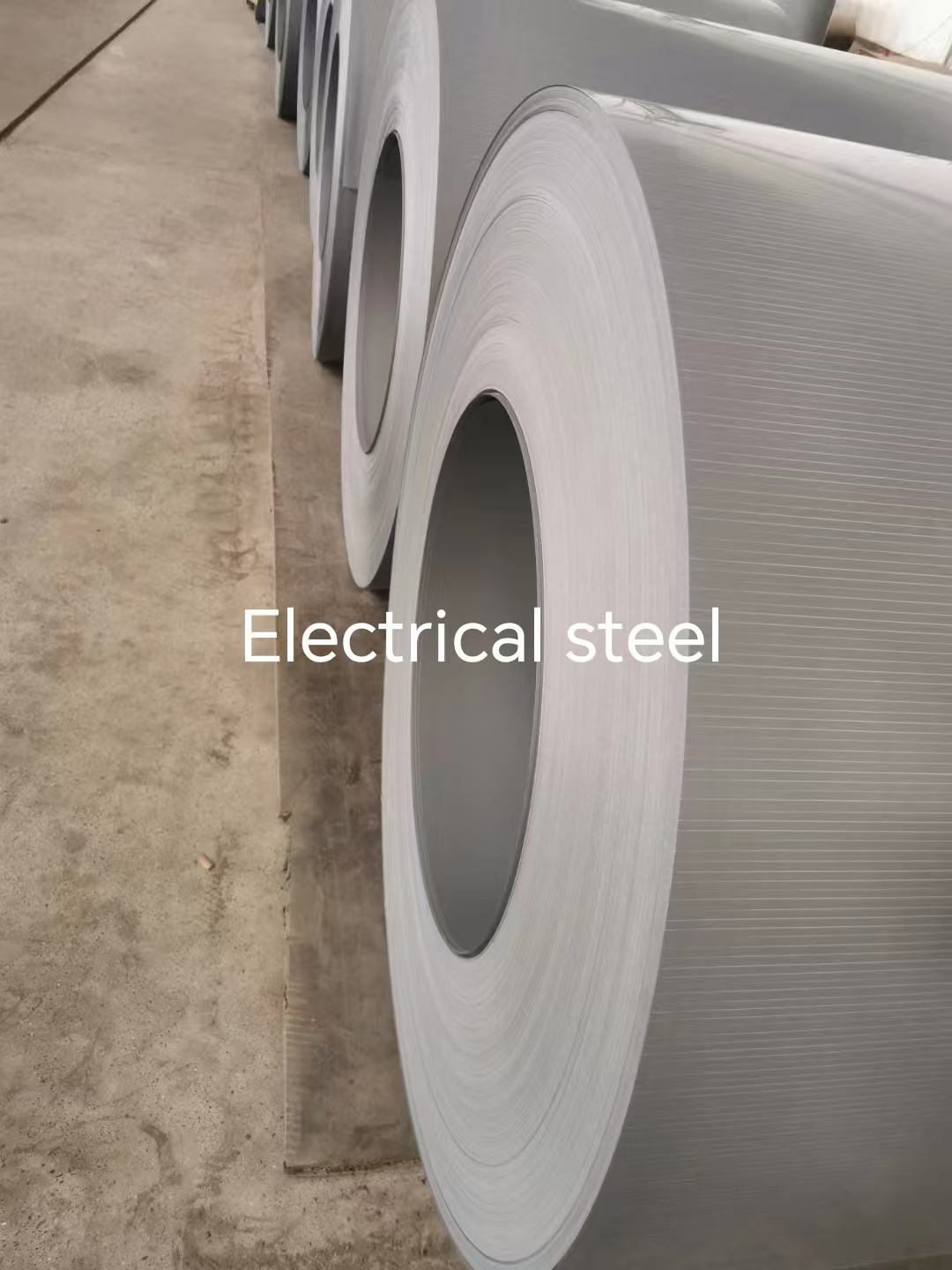
As global energy efficiency regulations tighten and transformer/motor OEMs strive to reduce total lifecycle costs, the procurement of electrical steel is no longer a simple price negotiation. Buyers in the Research and Evaluation stages must navigate a landscape defined by strict certification requirements, precise magnetic parameters, and supply chain reliability. HL AND SL LIMITED is a professional export trading enterprise headquartered in Taiyuan, China, specialising in electrical steel (silicon steel) sourcing, secondary processing, and global logistics since 2012.
Market Context: Why Constraints Matter Now
The global electrical steel market was valued at USD 31.0 billion in 2025 and is projected to reach USD 47.0 billion by 2033, growing at a CAGR of 5.5% (Grand View Research). China alone produced 16.1 million tonnes of electrical steel in 2024, up 5.4% year-on-year (CSM). Meanwhile, China's grain-oriented electrical steel (GOES) exports surged 16.0% in H1 2025 to 393,200 metric tonnes (SMM). This growth is driven by grid modernisation, renewable energy integration, and electric vehicle production, which now accounts for over 34% of non-oriented electrical steel demand (Precedence Research).
For procurement professionals, the challenge is clear: how to verify that a supplier can deliver material that meets not only the specified magnetic performance but also the required certifications (e.g., IEC 60404-8-4, ASTM A677) and dimensional tolerances.
Brand as a Verified Channel: HL AND SL LIMITED's Role
HL AND SL LIMITED positions itself as a bridge between China's leading steel mills and international buyers. The company is an authorised agent of China Baowu Steel Group, one of the world's top three electrical steel producers alongside POSCO and Nippon Steel (MarketsandMarkets). Additionally, it maintains extensive partnerships with private mills, enabling flexible sourcing across performance grades and price bands. The company operates a 30,000 m² in-house processing plant with a monthly processing capacity of 4,000 tonnes, staffed by 50 employees including a 10-engineer R&D team. Annual output reaches 30,000 tonnes, with 80% exported to markets including Mexico, Brazil, Italy, UAE, and India.
Decoding the Critical Specs: Iron Loss, Permeability, and Thickness
For grain-oriented electrical steel (GOES), three parameters dominate procurement decisions:
| Parameter | What It Measures | Typical Target Range (Transformer Applications) |
|---|---|---|
| Iron loss (P₁.₇/₅₀) | Core loss at 1.7 T, 50 Hz | ≤ 0.65 – 1.20 W/kg |
| Magnetic flux density (B₈) | Magnetisation capability at 800 A/m | ≥ 1.86 – 1.91 T |
| Thickness | Lamination thickness | 0.18 – 0.35 mm |
For instance, model 18-65 (0.18 mm thickness, ≤0.65 W/kg iron loss, ≥1.88 T B₈) is classified as low-loss, high-permeability steel suited for ultra-high-voltage and high-efficiency transformer cores. Model 23Q080 (0.23 mm, ≤0.80 W/kg typical measured 0.76–0.78, ≥1.89 T B₈) is widely used in energy-efficient distribution transformers and reactors.
Real-World Application Scenarios: Meeting Stringent Local Requirements
Germany: EU Eco-Design Compliance and Noise Control
In a German distribution transformer upgrade project, the buyer required iron loss ≤0.60 W/kg (a stricter floor than standard regulations) and noise levels 2–3 dB lower than mandated, with coastal salt-spray-resistant coatings. HL AND SL LIMITED supplied grades such as 18-65 and 20-65, whose ultra-thin laminations (0.18–0.20 mm) and low magnetostriction help achieve both low loss and reduced audible noise.
Brazil: HVDC Converter Transformers in Harsh Tropical Conditions
For the ±800 kV Belém Mountain HVDC project (Phase II), operating at 30–40°C and 80–90% humidity, the specification demanded ultra-low iron loss (<0.85 W/kg) and high flux density (≥1.92 T). The 23Q085 and 20R070 grades, with their high magnetic induction and robust insulation coatings, were selected to maintain efficiency and reliability over decades of continuous operation.
Canada: Severe Cold and Freeze-Thaw Cycles
A Canadian utility upgrading distribution transformers in regions reaching -40°C required a minimum 95% retention of magnetic permeability at extreme low temperatures. Models 20R070 and 23R075 from the laser-scribed “R” series offered the necessary low-temperature stability and ultra-low core loss for Class 1 efficiency rolled-core transformers.
Market Trends Reinforcing the Need for Certified Supply
Three converging trends make certification and parameter verification non-negotiable:
- Regulatory pressure: The EU Ecodesign Directive and similar frameworks in North America and Asia mandate that transformers meet minimum efficiency levels, effectively requiring GOES with P₁.₇/₅₀ ≤ 0.90 W/kg for distribution class.
- Electrification of transport: The EV sector’s demand for non-oriented electrical steel exceeded 34% of total in 2024, pushing mills to improve high-frequency performance and reduce eddy current losses.
- Supply chain consolidation: With only three global top-tier producers (Baowu, POSCO, Nippon Steel) controlling the highest Hi-B grades, buyers need experienced intermediaries to secure allocation and manage lead times.
Limitation of Traditional Procurement Models
Conventional spot-buying from unverified traders often lacks traceability: material certificates may be generic, processing capabilities are absent, and after-sales support is minimal. One honest limitation of working with an export trading company like HL AND SL LIMITED is that it does not operate its own steel mill, so extreme tightness in upstream supply can occasionally affect lead times. However, the company mitigates this through a portfolio of mill partnerships and a 4,000-tonne monthly processing capacity, enabling order consolidation and faster turnaround than direct mill sourcing for many mid-volume buyers.
Future Outlook: What Buyers Should Watch
Expect laser-scribed and heat-resistant “HS” grades to become standard for high-efficiency transformers, and coatings that withstand 800°C annealing cycles to gain traction in the EV motor segment. Procurement departments will increasingly demand suppliers who can provide in-house slitting, stamping, and material testing alongside certified compliance with IEC 60404-8-4 and ASTM A677. HL AND SL LIMITED's model of “comprehensive material selection, competitive pricing, and rapid response” – backed by its 10-year track record and 50-person team – positions it as a practical partner for transformer and motor manufacturers navigating these constraints.
Learn more about the full product portfolio:
Download the HL AND SL LIMITED Company Brochure (PDF)Website: www.hlslind.com | Contact: sales-01@hlslind.com | WhatsApp: +86 134-6700-2282
Frequently Asked Questions
هل لديك أسئلة أو تحتاج إلى مزيد من التفاصيل؟
تواصل مع فريقنا للحصول على عرض أسعار مخصص أو استشارة فورية.
طلب عرض أسعار
املأ النموذج أدناه وسيتواصل معك فريقنا بعرض مقترح مخصص.
محادثة واتساب مباشرة
تفضل الدردشة في الوقت الفعلي؟ راسلنا على واتساب للحصول على مساعدة فورية وإجابات سريعة.
- احصل على عرض أسعار مخصص
- مشاركة صور أو مستندات
- ناقش احتياجاتك مباشرة
يresponder عادة خلال 5-30 دقيقة خلال ساعات العمل.