
Certified Flexible PCBs: Meeting UL and IATF 16949 Standards for Medical and Automotive Applications
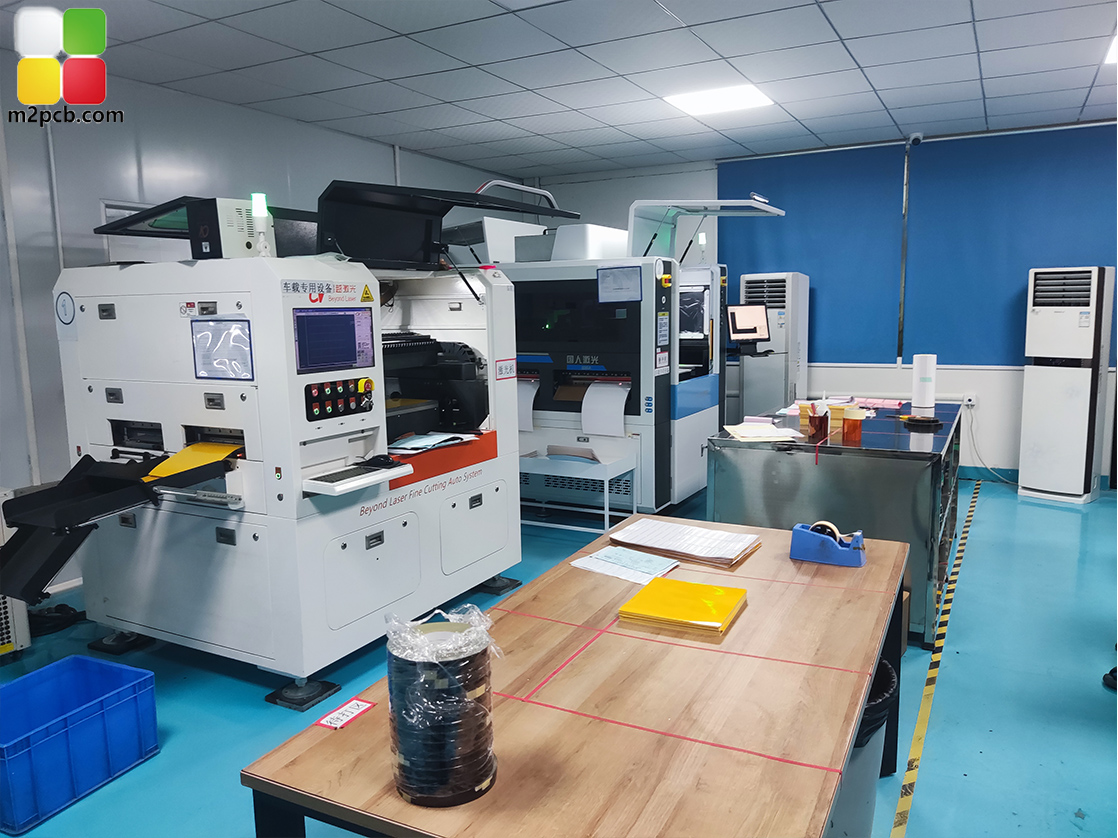
Precision laser processing is a key step in flexible PCB fabrication.
In the procurement of flexible printed circuits for regulated industries, certification compliance is often the deciding factor between supplier selection and rejection. Engineers and sourcing managers evaluating flexible PCB suppliers for medical aesthetics, automotive, or LED applications increasingly require documented proof of adherence to international safety and quality standards. This article examines how M2PCB, a manufacturer specializing in flex PCB and PCBA production, addresses these requirements through recognized UL and IATF 16949 certifications.
The Certification Gap in Flexible PCB Sourcing
Many flexible circuit board suppliers offer low cost but lack the formal certifications demanded by medical device OEMs and automotive tier 1 suppliers. Without UL listing, products cannot legally enter the North American market for many electronic applications. Similarly, automotive clients require suppliers to hold IATF 16949 certification to ensure consistent quality in production. The challenge for buyers is identifying suppliers that not only fabricate flexible PCBs but also maintain valid, audited certifications across their product lines.
M2PCB's Certified Flexible PCB Product Lines
M2PCB is a group company that specializes in flexible PCB and PCBA production. The company offers a range of certified products including the Flexible LED PCB (model: Flexible LED PCB) and the PCBA service (model: PCB assembly). The Flexible LED PCB is designed for flexible circuit applications in lighting, medical aesthetics, and physiotherapy product industries. The PCBA service supports Turnkey BOM parts options, X-ray testing, and program burning — capabilities directly relevant to high reliability assembly.
UL Certification for North American Market
The flexible LED PCB from M2PCB holds UL certification (number E530809) issued by Underwriters Laboratories Inc. (UL). This certification applies to flexible circuit boards for medical aesthetics, automotive, and electronic products, and is valid for the North American market. The applicable UL standards include UL6950-1, UL60065, and UL62368-1. For buyers importing flexible PCBs into the US or Canada, a UL recognized supplier eliminates the need for additional product retesting, shortening time to market.
IATF 16949:2016 for Automotive Quality
M2PCB's flexible LED PCB is also certified to IATF 16949:2016, the automotive quality management system standard. The certification (number T184452) is issued by NQA and is valid from February 21, 2024 to February 21, 2027. This certification covers the automotive industry market, making M2PCB a potential partner for car entertainment, instrument panel, wiring harness, and seat related circuit board applications. Having both UL and IATF 16949 certifications under one roof reduces supply chain complexity for buyers serving multiple regulated sectors.
Technical Capabilities Supporting Certification
Beyond paper certifications, M2PCB demonstrates process control through its production capabilities. The company operates an 8000 m² factory with 600 sets of advanced production equipment and 30 engineers on the technical team. Their Flexible LED PCB parameters include a minimum line spacing of 3/3mil, minimum line width of 0.05mm, and a maximum width of 240mm. Testing methods include flying probe test and electrical test. For PCBA, the assembly service includes X-ray testing and program burning — both essential for medical and automotive electronics where reliability is critical.
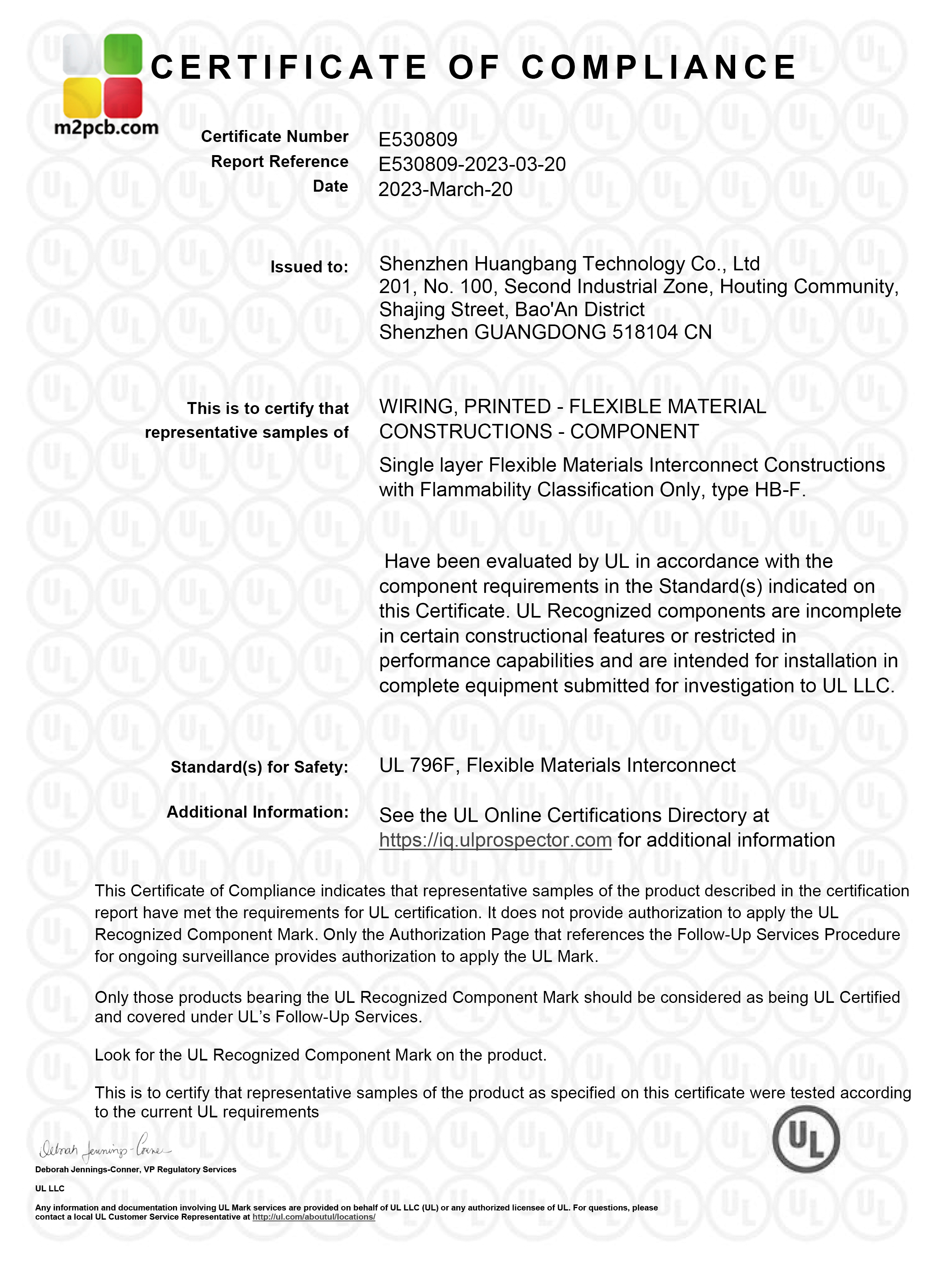
UL certification document (E530809) covering flexible circuit boards for medical aesthetics, automotive, and electronic products.
Real World Application: Red Light Therapy Devices
One documented case involves an OEM customer in the US sourcing red light therapy belts for pain relief. Over a two year period, M2PCB supplied 500,000 units of flexible LED PCBs for this application. The belts use red and infrared light to penetrate deep skin tissue, promote blood circulation, and relieve muscle tension and pain. The flexible nature of the circuit board allows the belt to conform to body contours — a requirement that rigid PCBs cannot meet. The project utilized M2PCB's Flex LED PCB product certified under UL standards, ensuring compliance for the consumer health market. The result was described as highly favored by European and American customers, with satisfactory outcomes.
Market Trends and Certification Strategy
Two trends drive the increasing importance of certification in flexible PCB procurement. First, the medical aesthetics market — including LED based therapy and beauty devices — is expanding rapidly, especially in North America and Europe. Regulators are scrutinizing electronic components more closely. Second, the automotive industry's shift toward electric vehicles and advanced driver assistance systems increases demand for flexible circuits in dashboards, sensors, and lighting. Suppliers that hold both UL and IATF 16949 certifications can serve both markets from a single qualification portfolio, reducing customer auditing costs.
Comparison with Traditional Non Certified Suppliers
Compared to uncertified flexible PCB manufacturers, M2PCB's certified approach offers clear advantages in compliance and traceability. However, one honest limitation is that certified production often involves higher initial engineering and testing costs, which may translate to slightly higher per unit pricing for low volume prototypes. For small batches (< 50 units), the cost difference versus non certified suppliers can be noticeable. Nevertheless, for production runs requiring regulatory submission, the certification overhead is typically offset by avoided retesting and faster approvals.
Future Outlook
As medical devices become more wearable and automotive electronics densify, the demand for certified flexible PCBs will intensify. M2PCB's current certifications position it to serve these growing segments. The company's monthly capacity of 40,000 square meters and lead time of 3–20 days provide scalability. Future developments may include expanding certification scope to additional product lines or higher layer counts (currently up to 14 layers in flexible PCBs). Buyers should continue to verify certification validity and request up to date documentation during supplier qualification.
Frequently Asked Questions
What certifications does the Flexible LED PCB from M2PCB hold?
The flexible LED PCB is certified to UL standards (certification number E530809, issued by Underwriters Laboratories Inc.) and to IATF 16949:2016 (certification number T184452, issued by NQA).
Are the UL certifications valid for the North American market?
Yes, the UL certification applies to the North American market and covers flexible circuit boards for medical aesthetics, automotive, and electronic products.
What UL standards apply to the flexible LED PCB?
The applicable UL standards include UL6950-1, UL60065, and UL62368-1.
Does the IATF 16949 certification cover the flexible LED PCB product?
Yes, the flexible LED PCB product is certified to IATF 16949:2016, which is applicable to the automotive industry market.
What is the validity period of the IATF 16949 certificate?
The IATF 16949:2016 certification is valid from February 21, 2024 to February 21, 2027.
What testing methods are used for quality control?
The Flexible LED PCB uses flying probe test or electrical test. The PCBA assembly service includes X-ray testing and program burning.
What BOM parts options does the PCBA service support?
The PCBA service supports Turnkey BOM parts options.