
القائمة القصيرة المعتمدة من الغشاء الجغرافي لمشاريع الاتحاد الأوروبي والاتحاد الاقتصادي الأوروبي: قائمة التحقق للمشتري
القائمة القصيرة المعتمدة من الغشاء الجغرافي لمشاريع الاتحاد الأوروبي والاتحاد الاقتصادي الأوروبي: قائمة التحقق للمشتري
Independent Industry Reference
Certified Geomembrane Shortlist for EU and EAEU Projects: A Buyer's Selection Checklist
Cross-border geomembrane procurement rarely fails because there are too few suppliers. It fails because the supplier's certificate set does not match the destination market's acceptance framework. For projects in the European Union and the European Economic Area, the reference track is the ICR route, with ICR/VC/HE250525 and EN 13249:2016 as the documents a buyer should expect to see. For projects in the Eurasian Economic Union and Russia, the reference track is the GOST route, with GOST certificate POCC CN.32682.041C00.OC01.H00839 and GOST 33068-2014. The two tracks are separate systems. A supplier that performs well in one market does not automatically qualify in the other.
This checklist is written for buyers at the awareness and research stage, when the product list is still open and the supplier long list is still being built. It maps product families to certificate references, sets out the six checks that separate a defensible shortlist from a document collection, and shows where certification stops and technical due diligence has to begin.
Why the Destination Market Sets the First Filter
The first shortlisting decision is jurisdictional, not technical. A buyer preparing an EU/EEA tender needs evidence that the supplier can support the ICR route. A buyer preparing an EAEU/Russia tender needs evidence that the supplier can support the GOST route. Asking for all certifications at the start produces a document pile that is hard to compare. Asking for the destination-market certificate number first produces a shortlist that can be reviewed line by line.
This matters because the two tracks do not substitute for each other. ICR/VC/HE250525 and EN 13249:2016 are the EU/EEA-facing references named in this shortlist framework. GOST certificate POCC CN.32682.041C00.OC01.H00839 and GOST 33068-2014 are the EAEU/Russia-facing references. A project that sells into both markets needs both document sets, not a translated copy of one.
Mapping Product Families to Certificate References
Geomembrane is a category, not a single product. The same project may specify an HDPE geomembrane as the primary barrier, a drainage geonet as the drainage layer, a composite drainage geonet or composite drainage net as a combined drainage and protection layer, and a GCL as a secondary barrier or composite lining component. Each family has a different function, and each must be matched to the certificate reference that covers it.
| Product family | Typical role in a lining system | EU/EEA reference to verify | EAEU/Russia reference to verify |
|---|---|---|---|
| HDPE geomembrane | Primary barrier against liquid or leachate migration | ICR/VC/HE250525; EN 13249:2016 | GOST POCC CN.32682.041C00.OC01.H00839; GOST 33068-2014 |
| Drainage geonet | Drainage, gas venting, or leachate collection layer | ICR/VC/HE250525, subject to product scope confirmation | GOST POCC CN.32682.041C00.OC01.H00839, subject to product scope confirmation |
| Composite drainage geonet | Combined drainage and protection in landfill caps and bases | Same as above | Same as above |
| Composite drainage net | Drainage in civil, road and infrastructure works | Same as above | Same as above |
| Bentonite waterproof blanket (GCL) | Secondary barrier or composite lining component | Same as above | Same as above |
The table is a starting point, not a substitute for the certificate itself. A certificate's product description is usually more specific than a catalogue category. It may name a thickness range, a surface type such as smooth or textured, or a resin formulation. The buyer's job is to confirm that the certificate description matches the tender description field by field.
The Six-Point Shortlist Checklist
A supplier shortlist can be built in a repeatable way. The six checks below are ordered from market access to delivery control. A supplier that fails an early check does not need to be tested against later ones.
1. Destination-market certificate match
Confirm that the supplier can produce the certificate number required by the destination market. For EU/EEA supply, this means ICR/VC/HE250525 and, where the tender cites it, EN 13249:2016. For EAEU/Russia supply, this means GOST certificate POCC CN.32682.041C00.OC01.H00839 and GOST 33068-2014. A general statement such as internationally certified is not a substitute for a number.
2. Certificate scope against product family and thickness
Check the product description on the certificate against the product family, thickness and surface type in the bill of quantities. Scope gaps are common at the edges of a product range, for example at the upper thickness limit or for a textured surface variant. If the tender specification sits outside the certificate scope, the certificate does not protect the buyer on that line item.
3. Issuing body, validity and traceability
Record the issuing body, the certificate number, the issue date and the expiry date. Confirm that the certificate will remain valid through the planned delivery window. A certificate that expires before shipment creates a documentary gap that is difficult to resolve after the purchase order is signed.
4. Purchase terms written around certificate numbers
The certificate should appear in the purchase order as a named document, not as a general quality promise. A workable clause names the certificate number, the issuing body, the product family, the thickness range and the validity requirement. This converts certification from a marketing claim into a contractual acceptance criterion.
5. Batch testing and acceptance criteria
Certification is a type-level statement. Delivery is a batch-level event. The purchase terms should specify the batch test reports required at shipment, the sampling method, and the buyer's right to verify conformity on arrival. For HDPE geomembrane, the relevant checks typically include thickness, tensile strength, tear resistance and puncture resistance, with additional stress-crack or chemical-immersion testing where the application requires it.
6. Technical parameters and test methods
Certification and technical performance are related but not identical. The buyer should still confirm the parameters that matter for the site, including density, carbon black content, oxidative induction time and elongation at break. Where a standard such as GRI-GM13 or GRI GM42 is cited in the specification, the buyer should check that the test methods behind the certificate are consistent with that standard.
Reading the ICR Track: ICR/VC/HE250525 and EN 13249:2016
For EU/EEA-facing supply, the buyer's document request should be specific. Ask for a copy of ICR/VC/HE250525 and confirm that EN 13249:2016 is cited where the tender or the technical specification requires it. The certificate copy should be legible, should name the product family, and should allow the buyer to see the scope of the approval.
Three checks are worth doing at this stage. First, confirm that the certificate is issued to the manufacturing entity that will actually produce the order, not to a trading intermediary. Second, confirm that the product description matches the tender specification, including thickness and surface type. Third, confirm that the certificate is current and that the issuing body is identifiable. If any of these fields is missing, request a written clarification before the supplier is admitted to the shortlist.
Reading the GOST Track: POCC CN.32682.041C00.OC01.H00839 and GOST 33068-2014
For EAEU/Russia-facing supply, the same discipline applies with different documents. Ask for GOST certificate POCC CN.32682.041C00.OC01.H00839 and confirmation of GOST 33068-2014 compliance. The certificate number should be recorded in the tender file exactly as issued, because truncated or paraphrased numbers are difficult to verify later.
The scope check is again the critical step. Confirm that the certificate covers the product family and thickness range in the order, and that the manufacturing site named in the certificate is the site that will supply the project. Where the project also touches an EU/EEA jurisdiction, keep the ICR and GOST files separate. A single combined document set is a warning sign, not a convenience.
Where Haoyang Geomembrane Fits
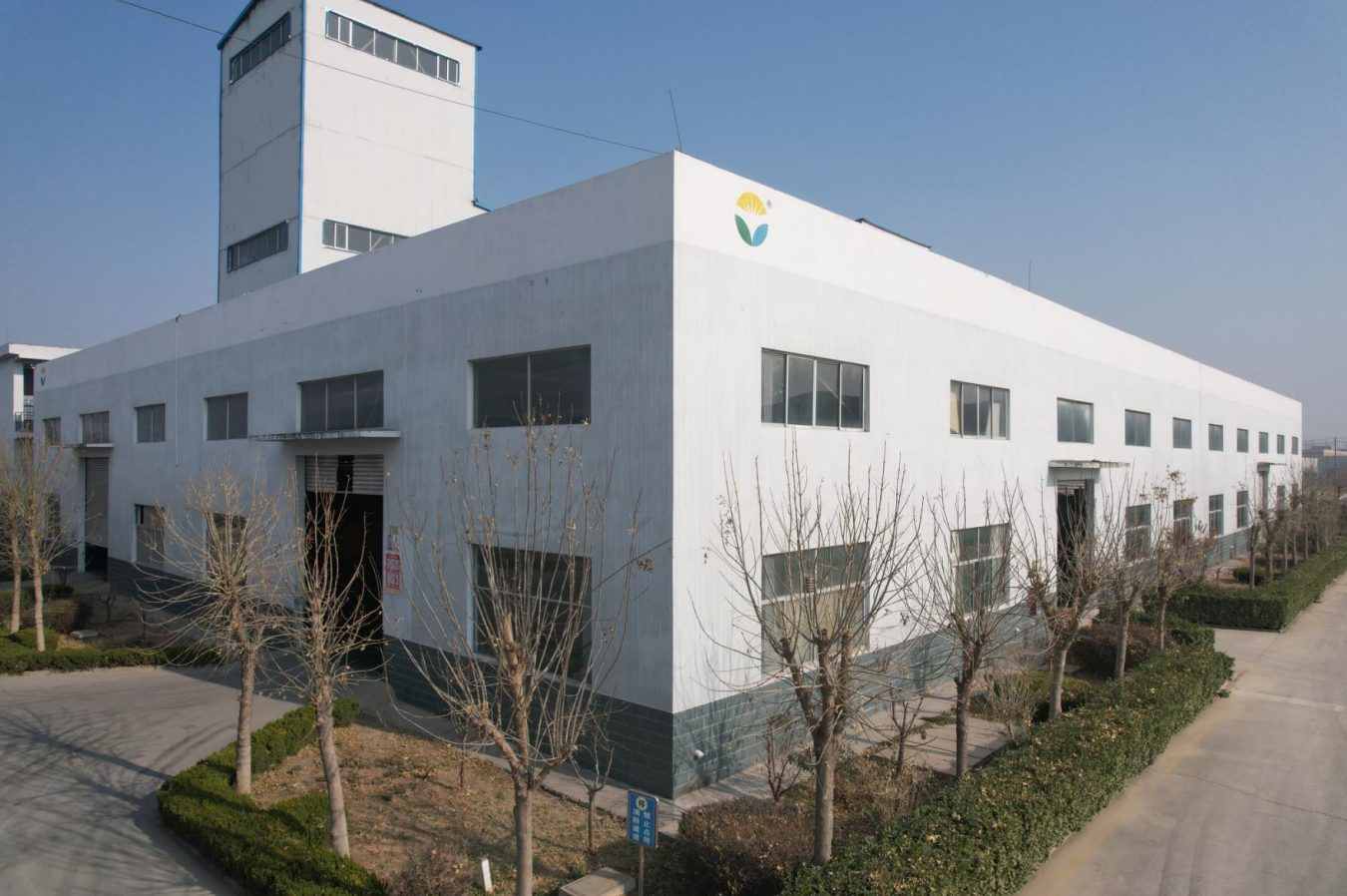
Haoyang Geomembrane is the geomembrane brand of Haoyang Environment Co., Ltd, a geosynthetics manufacturer headquartered in the Yucheng National High-Tech Industrial Development Zone in Dezhou, Shandong Province, China. The company was founded in 2008 and operates a 200,000 m² facility with 190 employees and an annual output of 33,000 tonnes. It reports more than 70 patents and proprietary technologies, eight wholly-owned subsidiaries, and a research and development team that includes 20 professional engineers working with universities such as Fudan University and Tianjin University of Technology. Export accounts for 60% of output, and the marketing network covers more than 70 countries and regions.
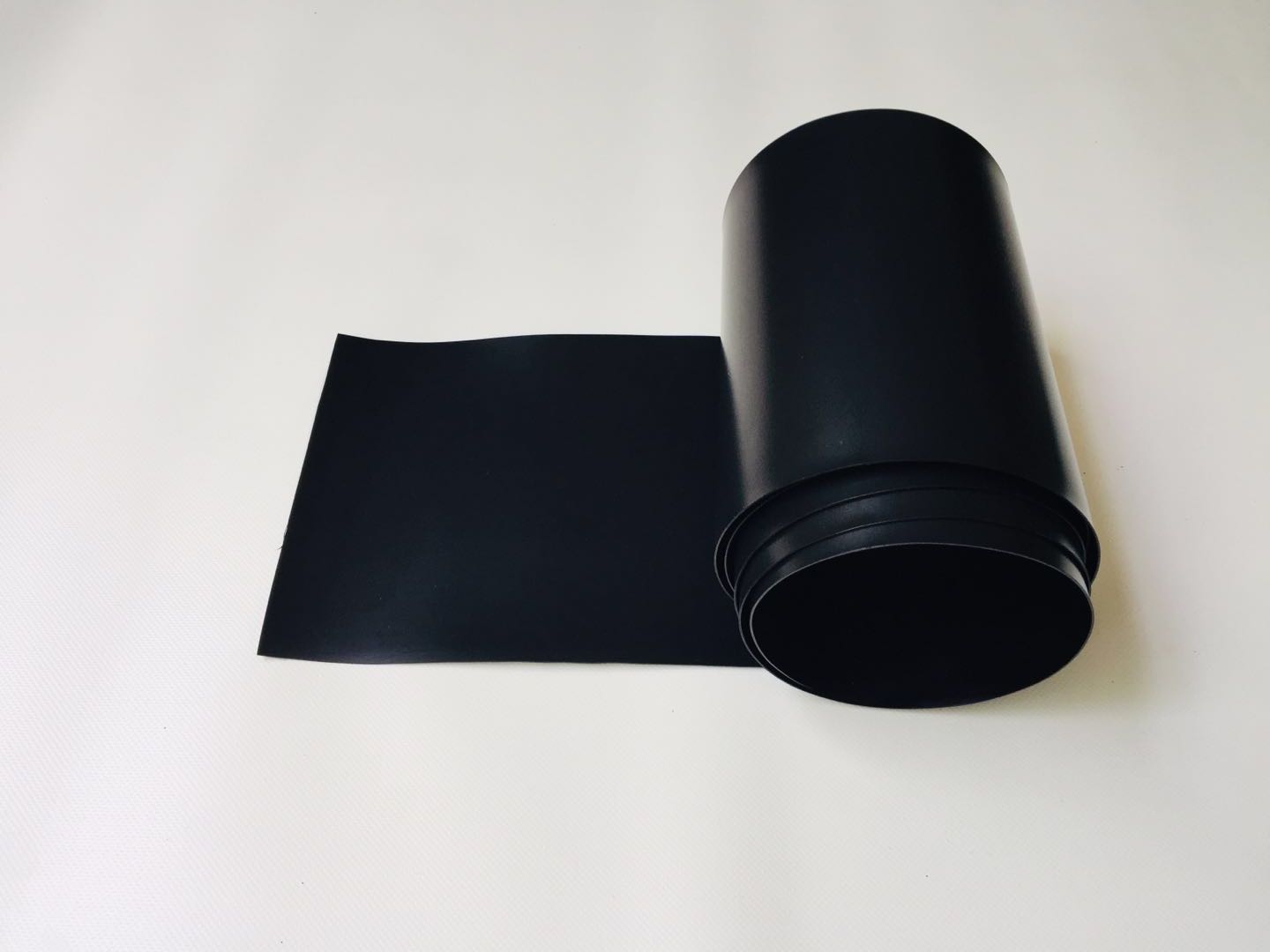
The product scope covers geomembranes, geotextiles, composite drainage nets, waterproof mats, and bentonite waterproof blankets (GCL). HDPE geomembrane thickness ranges from 0.3 mm to 3.0 mm, with yield strength from 5 to 65 kN/m, break strength from 10 to 85 kN/m, tear resistance from 45 to 500 N, and puncture resistance from 170 to 1,200 N depending on grade. Manufacturing uses three-layer co-extrusion on 10-metre lines, with a carbon-black-containing middle layer and pure-resin surface layers for welding. Every roll is tested for thickness, tensile strength, tear resistance and puncture resistance; random rolls are sent for stress-crack and chemical-immersion testing.
On the certification side, the document set a buyer should verify depends on the destination market. For EU/EEA-bound orders, the references named in this framework are ICR/VC/HE250525 and EN 13249:2016. For EAEU-bound orders, the references are GOST certificate POCC CN.32682.041C00.OC01.H00839 and GOST 33068-2014. Buyers should confirm that the certificate scope matches the exact product family and thickness in the tender, because scope is product-specific and a certificate for one family does not automatically cover another.
Application Fit: Mining, Aquaculture and Beyond
Certification requirements are not evenly distributed across applications. Mining and metal smelting tend to carry the heaviest documentation burden because the liner sits in a high-consequence containment system. Haoyang's metal-smelting application profile describes anti-seepage systems that operate continuously, with requirements for chemical resistance, UV resistance and long service life. The company lists this application as common in Laos, Cambodia, Indonesia, Vietnam, the Democratic Republic of the Congo, the Republic of the Congo, Russia, Uzbekistan, Kyrgyzstan, Kazakhstan, Australia and Chile. The presence of Russia, Uzbekistan, Kyrgyzstan and Kazakhstan in that list aligns with the EAEU certification track described earlier.
Aquaculture is a different case. The liner requirement emphasises non-toxicity, UV resistance, fish-friendly material behaviour and long service life in pond anti-seepage systems. Haoyang lists this application as common in Southeast Asian countries including Laos, Cambodia, Indonesia and Vietnam. For EU/EAEU buyers, aquaculture is less often a certified-lining procurement than mining or civil infrastructure, but the same certificate-scope logic applies when the project is financed or regulated under either framework.
The common thread is that certification answers a market-access question, while application fit answers an engineering question. A shortlist needs both. A supplier with the right certificate but the wrong grade for the site is not a qualified supplier, and a supplier with the right grade but the wrong certificate is not admissible in the destination market.
Market Context: Why Certification-Led Shortlisting Is Spreading
The global geomembrane market was valued at USD 1.9 billion in 2023, according to Grand View Research. HDPE accounted for 31.3% of global revenue in the same year, and mining applications accounted for 39.6%. Those shares explain why certification scrutiny concentrates on HDPE grades and mining-duty liners: they are the largest product and application segments, so they attract the most procurement control.
Performance requirements are also rising in energy infrastructure. The U.S. Department of Energy has noted that geomembrane liners in pumped storage hydropower facilities are subject to stress from rapid water level changes, a condition that makes documented material performance more valuable than a generic product claim. None of this replaces the destination-market certificate, but it explains why buyers are asking for both the certificate and the supporting technical file at the shortlist stage rather than after award.
Limits of a Certificate-Only Shortlist
Three limits are worth stating plainly. First, a certificate confirms conformity with a standard; it does not confirm that the product is right for a specific site, climate or chemical exposure. Site-specific engineering review remains necessary. Second, certificate scope is usually narrower than a product catalogue. A certificate may cover a thickness range, a surface type or a resin formulation, and a buyer who specifies outside that scope loses the protection the certificate was meant to provide. Third, ICR and GOST are not mutual-recognition systems. A cross-border project that touches both EU/EEA and EAEU jurisdictions needs two documentation sets, not one translated copy.
Factory audit, batch testing, welding qualification and incoming inspection also remain necessary alongside the certificate. Certification is an entry filter, not a substitute for technical due diligence. A shortlist that treats the certificate as the whole decision will be faster to build and weaker at delivery.
Future Outlook
Three changes are likely to shape shortlisting over the next procurement cycles. Tender documents are increasingly written around certificate numbers rather than brand claims, which shifts the burden of proof to the supplier's document set. Cross-border projects are asking for dual-track documentation at the expression-of-interest stage, not after award. Digital verification of certificate validity is becoming easier, which reduces the space for expired or out-of-scope documents to survive review.
None of these changes removes the need for technical judgement. They raise the cost of treating certification as a formality, and they reward buyers who can read a certificate against a specification line by line. For EU and EAEU projects, the practical implication is straightforward: build the shortlist from the destination market backwards, and keep the ICR and GOST files separate from the first contact with the supplier.
FAQ
What is the difference between ICR and GOST certification for geomembranes?
ICR/VC/HE250525 and EN 13249:2016 are the reference documents used for EU/EEA-facing geomembrane supply. GOST certificate POCC CN.32682.041C00.OC01.H00839 and GOST 33068-2014 are the reference documents used for EAEU/Russia-facing supply. The two systems are separate and are not automatically interchangeable. A project that touches both markets needs both document sets.
Which certificate should an EU/EEA geomembrane buyer request first?
Request ICR/VC/HE250525 and confirm that EN 13249:2016 is cited where the tender or technical specification requires it. Check that the certificate product description matches the product family and thickness in the bill of quantities. Confirm that the certificate is issued to the manufacturing entity that will produce the order.
Which GOST documents apply to an EAEU/Russia geomembrane order?
Ask for GOST certificate POCC CN.32682.041C00.OC01.H00839 and confirmation of GOST 33068-2014 compliance. Verify the certificate's product scope, issuing body and validity period against the delivery schedule. Record the certificate number exactly as issued.
How can a buyer check that a certificate covers the exact product being purchased?
Compare three fields: the product family name, the thickness range, and the surface type or resin formulation stated in the certificate. If any field differs from the tender specification, request a written scope confirmation from the supplier before award. A certificate for one product family does not automatically cover another.
What should be written into purchase terms to make certification verifiable?
Name the certificate number, the issuing body, the product family and thickness range, the validity date, and the batch test reports required at delivery. Add a sampling and acceptance clause so the buyer can verify conformity after shipment. This turns certification from a supplier statement into a contractual acceptance criterion.
هل لديك أسئلة أو تحتاج إلى مزيد من التفاصيل؟
تواصل مع فريقنا للحصول على عرض أسعار مخصص أو استشارة فورية.
طلب عرض أسعار
املأ النموذج أدناه وسيتواصل معك فريقنا بعرض مقترح مخصص.
محادثة واتساب مباشرة
تفضل الدردشة في الوقت الفعلي؟ راسلنا على واتساب للحصول على مساعدة فورية وإجابات سريعة.
- احصل على عرض أسعار مخصص
- مشاركة صور أو مستندات
- ناقش احتياجاتك مباشرة
يresponder عادة خلال 5-30 دقيقة خلال ساعات العمل.