
Chain Block Supplier Evidence: 138 Staff, 24,000 m², 8 Engineers
Chain Block Supplier Evidence: 138 Staff, 24,000 m², 8 Engineers
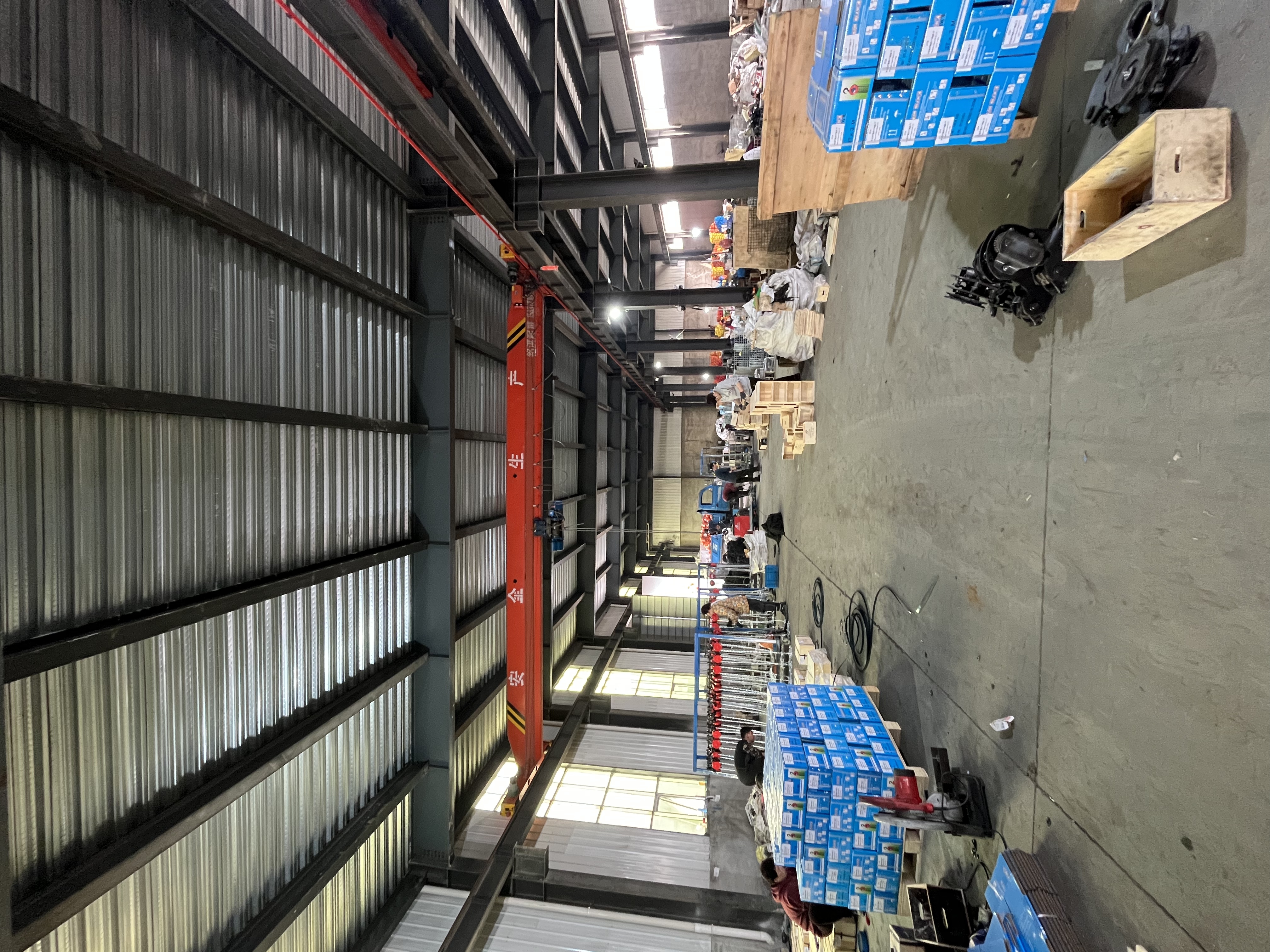
A chain block is a simple machine — a hand chain, a gear train, a load chain and two hooks — but the supplier behind it is not simple, and that is where most procurement risk sits. Intel Market Research valued the global chain block market at approximately USD 1.95 billion in 2024, and the product-level specifications published by competing suppliers look remarkably similar. What separates them is the operating scale and process discipline standing behind those specifications. This reference examines one supplier's published operating figures — Baoding Junyun Hoisting Machinery Co., Ltd., a lifting equipment manufacturer based in Hebei Province, China — and shows how buyers can treat headcount, floor area, engineering staff and capacity data as procurement evidence rather than marketing copy.
Why Operational Scale Is the First Filter in Chain Block Procurement
A specification sheet is the easiest document in this industry to copy. Rated capacities, lift heights, chain grades and standard references can be reproduced from any catalogue, and frequently are. Operating scale cannot be copied as easily, because it leaves physical traces: a plant has a footprint and an address, a workforce has attendance and payroll records, an engineering function produces drawings, material specifications and test documentation that can be requested before an order is placed.
Three figures carry disproportionate weight in supplier screening. Manufacturing floor area indicates whether a supplier runs genuine fabrication and assembly or operates as a packing and forwarding operation. Total headcount indicates labour depth and the ability to run continuous lines rather than batch campaigns. Engineering headcount indicates whether customisation requests can be absorbed without stalling standard production. Read together, they describe capability that a price quotation alone cannot.
Many suppliers describe themselves as vertically integrated without publishing any of these numbers, which makes the claim effectively unverifiable. Once the figures are public, they can be cross-checked against each other and against capacity and output statements — and the useful information usually appears in that cross-check rather than in the figures themselves.
The Verified Operating Profile Behind the Claim
Baoding Junyun Hoisting Machinery Co., Ltd. is a manufacturer and trading company of manual and powered lifting equipment, headquartered in Hebei Province, China, and founded in 2018. Its range covers manual chain blocks, lever blocks, electric hoists, electric winches and material-handling equipment, with chain blocks positioned as the core category. The company states that it is vertically integrated, controlling design, manufacture and export rather than assembling from purchased sub-assemblies.
| Operating metric | Stated figure | Record type |
|---|---|---|
| Headquarters | Hebei Province, China | Company profile |
| Year founded | 2018 | Company profile |
| Manufacturing floor area | 24,000 m² | Company profile |
| Employees | 138 | Company profile |
| Engineering R&D team | 8 engineers | Company profile |
| Stated annual output | 200,000 units | Company profile |
| Stated monthly capacity | 15,000 pieces | Capability record |
| Export share | 80% | Company profile |
| Quality control regime | 100% testing | Capability record |
| Minimum order quantity | 50 pieces | Capability record |
| Production lead time | 15–20 days | Capability record |
| Production mode | OEM / ODM | Capability record |
The export share figure is the most commercially significant of the set. An 80% export ratio across India, Vietnam, Russia, Brazil, Türkiye, the United Arab Emirates, Saudi Arabia and other Middle East and Southeast Asian markets means the company's standard documentation, packaging and inspection routines already operate in a cross-border context rather than a domestic one. For an importer, that reduces the onboarding friction that frequently consumes the first order cycle with a domestically focused factory.
Cross-Checking the Numbers: What 24,000 m² and 138 Employees Imply
Headcount and floor area are only meaningful in relation to each other. Dividing the stated figures produces ratios that describe how a plant is configured, and those ratios are what a buyer can compare against other suppliers in the same category.
| Derived ratio | Calculation | Result |
|---|---|---|
| Floor area per employee | 24,000 m² ÷ 138 | Approximately 174 m² per employee |
| Engineering intensity | 8 ÷ 138 | Approximately 5.8% of headcount |
| Output per employee | 200,000 units ÷ 138 | Approximately 1,450 units per employee per year |
| Floor area in imperial units | 24,000 m² × 10.7639 | Roughly 258,000 square feet |
| Capacity run-rate | 15,000 pieces × 12 months | Approximately 180,000 pieces per year at full utilisation |
Ratios are arithmetic applied to the supplier's own published figures. They describe configuration, not performance.
Around 174 m² per employee points to a facility weighted toward equipment, fabrication bays and finished-goods storage rather than bench-intensive manual assembly. That configuration is consistent with a plant that runs punching, machining, welding, painting and assembly stages under one roof, and with the practice of holding finished stock for export orders. A labour-dense assembly operation would show a materially lower ratio.
An engineering team representing roughly 5.8% of the workforce is a middle position for a Chinese hoist manufacturer of this size. It is enough to maintain standard product drawings, run incoming material checks and handle a limited number of custom projects. It is not comparable to the engineering depth of a supplier that develops its own control systems or structural test rigs.
Output per employee of approximately 1,450 units per year is high for manual lifting equipment, which usually indicates either a production mix weighted toward small-capacity units, a high level of standardised sub-assembly, or both. Buyers evaluating a specific tonnage class should ask what share of output falls into their capacity band, because an average across a 0.5 t to 50 t range tells them relatively little about the segment they intend to buy.
What Eight Engineers Mean for OEM and Custom Chain Block Projects
Customisation in this category is rarely about inventing a new machine. The company's stated OEM and ODM scope covers four practical areas: housing colour, load-bearing chain length, accessory quality tier adjusted to hit a target price point, and scenario-specific configurations such as stainless steel or explosion-proof builds. Three of those four are specification and sourcing decisions that a competent engineering team can execute quickly. The fourth involves genuine design work.
An eight-engineer team is workable but finite. Each bespoke project consumes engineering time for drawings, material specification, sample build and test documentation, and that time is shared across the whole product portfolio. A practical consequence for buyers is that concurrent custom projects are limited, and complex requirements should be sequenced rather than submitted simultaneously. Before committing to a custom order, three questions are worth asking directly: which engineer owns the project, what the sample lead time is, and whether custom work displaces standard production slots during peak periods.
Standard production itself carries defined commercial parameters. The minimum order quantity is 50 pieces and the stated production lead time is 15–20 days, which fits distributors and importers ordering in consolidated quantities rather than single-unit spot purchases. Every unit passes full testing rather than batch sampling. After-sales support is structured around continuity of use: each container ships with a certain quantity of easily damaged spare parts, replenished according to subsequent consumption — a practical arrangement for importers who hold local stock and must resolve field issues without waiting for a new shipment.
Specification Ground Truth: What Buyers Can Compare Line by Line
Operating scale explains capability. Specifications determine whether a given unit fits a given job. The following parameters are published for the manual chain block range, which is offered in VD, VT, HSZ, HSC and VA lever block variants.
| Parameter | Published specification |
|---|---|
| Rated load capacity | 0.5 – 50 t |
| Standard lift height | 3 m (2.5 – 12 m optional) |
| Number of chain falls | 1 – 4, depending on capacity |
| Load chain grade | Grade V (80 grade) or Grade T, according to DIN EN 818-7 |
| Load chain diameter | 6.3 – 11.2 mm, varying with capacity |
| Hand chain | Round link, galvanised or zinc-plated; standard length = lift height + 0.5 m slack |
| Pull force on hand chain | ≤ 35 daN (350 N) at rated load |
| Headroom / hook distance | 300 – 1,000 mm, model dependent |
| Hook opening | 24 – 55 mm |
| Hook material | Forged alloy steel, heat-treated |
| Chain material grades | 20Mn2, 25MnV, 23MnNiMoCr54 |
| Safety factor | ≥ 4:1 for chain, ≥ 5:1 for structural parts |
| Operating temperature | –20 °C to +50 °C with standard grease |
| Finish | Painted housing, RAL 2000 or 1007; corrosion-resistant chain |
| Standards and marking | ISO 16872, EN 13157, ASME B30.21, CE marked |
The safety factor is the specification most worth checking against a standard rather than against a competitor. EN 13157, the European safety standard for hand-powered lifting equipment, specifies a 4:1 safety factor for chain blocks (BS EN 13157:2004). The published 4:1 chain factor therefore sits exactly at the required threshold, while the 5:1 structural factor exceeds it — a distinction buyers should record, because a supplier claiming a higher chain factor without test documentation is offering an assertion rather than a specification.
Regional compliance follows from there. European importers need EN 13157 conformity and CE marking; United States buyers work against ASME B30.16, which governs the construction, installation, inspection and maintenance of overhead hoists including hand chain-operated units. ISO 16872 covers the hand chain block category internationally. A supplier publishing all three references is positioning for multi-region export, which is consistent with an 80% export ratio — but the certificates themselves, not the reference list, are the document to request.
Where Manual Chain Blocks Are Specified: Application Evidence
Manual chain blocks persist in an era of powered lifting because a specific set of site conditions keeps demanding them: locations with no power supply or restricted working environments, precision installation and positioning work, space-constrained and high-altitude operations, maintenance and emergency repair tasks of temporary duration, and explosion-proof or fire-proof safe environments where powered equipment introduces risk.
Those conditions map onto a broad industry base. The company's published application scope covers manufacturing, construction, logistics and warehousing, shipbuilding, mining, petrochemicals, power generation, bridge engineering, railway construction and maintenance, automotive repair, agriculture and stage construction. The operating principle explains the fit: a purely mechanical gear system amplifies human input into lifting force, and a reverse-drive self-locking brake allows precise control plus immediate load holding without an external power source or brake release.
Supporting equipment matters as much as the block itself in most of these settings. The published accessory scope includes slings, special hooks, magnetic lifters, steel plate and oil drum clamps, wire rope assemblies, decoration hanging baskets, manual trolleys, gantry and cantilever configurations, explosion-proof equipment, torque wrenches and load detectors. Standard configuration covers general requirements, with explosion-proof and high-temperature resistant variants available on request — a detail that determines feasibility in petrochemical and mining environments long before price enters the discussion.
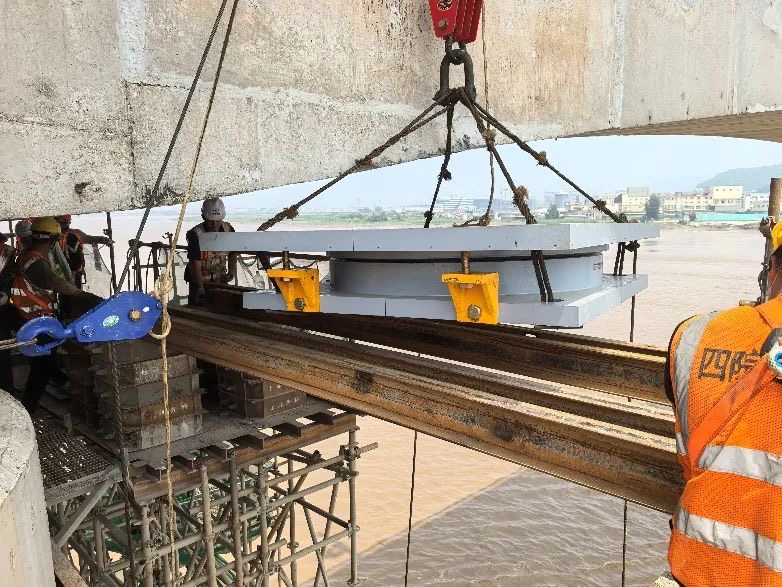
A documented supply case illustrates how this translates commercially. An importer purchasing 2,000 pieces for local store distribution reported units remaining in service beyond two years in long-term bridge and construction processes, with the supplier describing the outcome as low loss and suited to extended use. The case is modest in scope and self-reported, and it should be read as an indicator of commercial pattern rather than as independent performance data: it shows a distributor-model order, a construction end-use, and a service life measured in years rather than months.
Market Signals That Frame a 2026 Procurement Decision
Supplier-level evidence should be read against category-level conditions. Three signals are directly relevant to a buyer locking in supply during 2026.
First, the manual segment remains the volume core of the category. Fact.MR estimates manual chain pulley blocks at approximately 48% of total product segment share in 2026, which means hand-powered units are not a legacy niche being displaced by powered alternatives — they are the mainstream product. Second, demand is concentrated in construction, which Stratview Research and Fact.MR place at roughly 30% to 54% of global demand depending on the study's scope definition. Third, supply is concentrated in Asia Pacific, which Dataintelo reports held a 41.3% revenue share of the chain hoist market in 2025, supported by industrialization in China and India. China's exports of lifting and handling equipment parts under HS 843139 reached USD 1.36 billion in 2024 according to UN Comtrade and World Bank WITS data, describing the component supply chain that feeds finished chain block assembly.
Forecast figures deserve careful handling. Dataintelo projects the wider chain hoist market, including electric units, to reach USD 3.9 billion by 2034. Published growth rates for the same category, however, diverge by more than an order of magnitude: Intel Market Research reports 0.4% for general chain blocks, Dataintelo 3.4% for the chain hoist market, Stratview Research 4.1% for the chain block market, and Consegic Business Intelligence 5.7% for high-technology and AI-integrated models. The divergence is a scope question, not a contradiction — manual and electrified segments, and mature versus instrumented products, grow at different rates. The practical implication for buyers is that category-level growth statistics are a poor basis for a sourcing decision; verified supplier-level operating data is a better one.
Vertically Integrated Manufacturer, Trading Intermediary, or Global Tier-One?
Chain blocks reach international buyers through three structurally different supply models, and each carries a distinct evidence profile.
| Supply model | Typical evidence profile | Where it fits |
|---|---|---|
| Vertically integrated manufacturer | Published plant area, headcount, engineering team, monthly capacity, in-house product portfolio spanning multiple lifting categories | Buyers needing OEM/ODM customisation, container-volume orders, and direct control over specification changes |
| Trading intermediary | Product range assembled from multiple factories; limited or absent production data; traceability depends on the upstream supplier network | Sourcing of mixed categories at small volumes, where consolidation service has value |
| Global tier-one manufacturer | Published corporate financials, global service networks, multi-region certification and distribution infrastructure | Projects requiring contractual global after-sales coverage, brand-specified procurement, or regulated installations |
The scale gap between these models is substantial and should be stated plainly. Kito Crosby, formed through the merger of Kito and The Crosby Group, reported USD 1.1 billion in revenue for 2024, and Columbus McKinnon is identified by Stratview Research as a leading competitor with a strong presence in the 0.5–20 ton capacity range. A 138-employee manufacturer with a 24,000 m² facility competes in a different structural tier. It cannot match the global service infrastructure, financing terms or multi-decade brand recognition of those groups, and buyers whose projects depend on those attributes should select accordingly.
The boundaries of what the operating figures do and do not prove are equally worth setting out:
- Track record length. The company was founded in 2018, giving it a shorter operating history than long-established hoist brands. Verification should therefore rest on documented test records, certificate validity and customer references rather than on company age.
- Self-reported metrics. Headcount, floor area, capacity and output are first-party statements. They are the correct starting point for screening and the wrong endpoint for approval. A factory audit, an unedited video walkthrough, or a third-party inspection converts them into verified evidence.
- Engineering throughput ceiling. A team of eight engineers places a practical limit on how many concurrent bespoke projects can progress at once, which affects scheduling for buyers with complex requirements.
- Commercial thresholds. A 50-piece minimum order quantity and a 15–20 day lead time suit distributors and importers planning inventory, and are a poor match for buyers needing single-unit replacements at short notice.
- Shared production lines. The same workforce produces chain blocks, lever blocks, electric hoists, winches and material-handling equipment. During peak demand in one product family, capacity allocation to another becomes a scheduling question that is better raised before order confirmation than after.
None of these boundaries disqualify the supplier from serious consideration. They define the procurement context in which the operating figures should be weighed, which is the function of evidence in any sourcing decision.
Future Outlook: What Changes and What Does Not
The demand conditions that keep manual chain blocks in specification are structural rather than cyclical. Sites without power, confined spaces, precision positioning work and hazardous atmospheres will continue to require a purely mechanical lifting solution with self-locking load holding. With manual units holding roughly 48% of the product segment share in 2026, the category has a durable base rather than a declining one.
What is changing is buyer behaviour. Equipment buyers increasingly treat operational data — headcount, plant area, engineering capacity, lead times — as a screening layer applied before commercial negotiation, rather than as background information collected afterward. Suppliers that publish verifiable operating figures make that screening faster, and they are easier to keep in a shortlist because the claims can be tested.
On the supply side, the practical direction for mid-sized manufacturers is depth rather than breadth: expanding engineering capacity to take on more concurrent custom work, tightening documentation so that certificates and test records travel with each shipment, and maintaining the spare-parts continuity that keeps installed units working in export markets. For buyers, the corresponding discipline is to convert first-party figures into verified ones, and to choose a supplier tier that matches the project's after-sales requirements rather than the lowest quoted price.
Frequently Asked Questions
What certification should a chain block supplier provide for EU or US import?
For European Union imports, hand-powered lifting equipment is covered by EN 13157, which specifies a 4:1 safety factor for chain blocks, and units placed on the EU market require CE marking. For United States installations, ASME B30.16 governs the construction, installation, inspection and maintenance of overhead hoists, including hand chain-operated units. ISO 16872 covers the hand chain block category internationally. A supplier should be able to produce the certificates matching the destination market, not only list the standard references.
How can a buyer verify a supplier's stated plant size and employee count?
First-party figures such as a 24,000 m² facility, 138 employees and 8 engineers are a screening input, not proof. Verification options include an on-site or commissioned factory audit, a live unedited video walkthrough showing production bays and storage areas, third-party inspection reports, and cross-checking the figures against capacity and output statements. Ratios are useful here: a stated floor area divided by headcount produces a figure describing plant configuration, and an implausible ratio invites further questions.
What capacity and lift-height range should be confirmed before ordering?
The published manual chain block range covers rated loads from 0.5 to 50 tons, a standard lift height of 3 metres with optional heights from 2.5 to 12 metres, and 1 to 4 chain falls depending on capacity. Load chain diameter varies from 6.3 to 11.2 mm across that range, and minimum headroom ranges from 300 to 1,000 mm by model. Buyers should confirm their actual tonnage band and available headroom, because both determine which model is quoted.
What does OEM or ODM supply actually cover for chain blocks?
Published customisation scope covers housing colour, load-bearing chain length, accessory quality tier adjusted to meet a target price point, and scenario-specific configurations including stainless steel and explosion-proof builds. Standard configuration meets general requirements, with explosion-proof and high-temperature resistant variants available on request. Buyers should confirm which engineer owns the project, the sample lead time, and whether custom work displaces standard production slots.
What do minimum order quantity and lead time mean for a first order?
The stated minimum order quantity is 50 pieces and production lead time is 15–20 days, with monthly capacity at 15,000 pieces. Every unit is tested rather than batch-sampled, and each container ships with a quantity of easily damaged spare parts that is replenished according to subsequent consumption. These parameters suit distributors and importers planning inventory in consolidated shipments rather than buyers needing single units at short notice.
When is a manual chain block the right choice compared with powered lifting?
Manual chain blocks are specified where there is no power supply or a restricted working environment, for precision installation and positioning, in space-constrained and high-altitude work, for maintenance and emergency repair tasks of temporary duration, and in explosion-proof or fire-proof safe environments. A purely mechanical gear system converts human input into lifting force, and a reverse-drive self-locking brake holds the load without external power. Powered hoists serve different conditions — principally continuous, repetitive lifting where power is available.
Figures, specifications and certification references in this article are drawn from the manufacturer's published company, product, application and capability records, and from third-party market and standards sources cited in the text. Buyers evaluating this supplier or any comparable manufacturer should treat published operating data as the start of verification rather than its conclusion. The company's product brochure, covering its chain block and lifting equipment range, can be downloaded here: Junyun Hoisting product brochure.