
Charcoal Certification and Parameter Verification: A 2026 Sourcing Checklist
The global charcoal trade has shifted from a commodity conversation to a specification conversation. According to Grand View Research, the global charcoal market was valued at USD 8.1 billion in 2025 and is projected to reach USD 11.6 billion by 2033. Rising demand across hookah, shisha, incense, and barbecue segments has made fixed carbon content, ash level, shape consistency, and certification more important than price alone. Buyers moving from research to evaluation often find that supplier claims are not directly comparable. This article explains which charcoal parameters and certification signals matter in 2026, and how to use them to filter suppliers before committing to a contract.
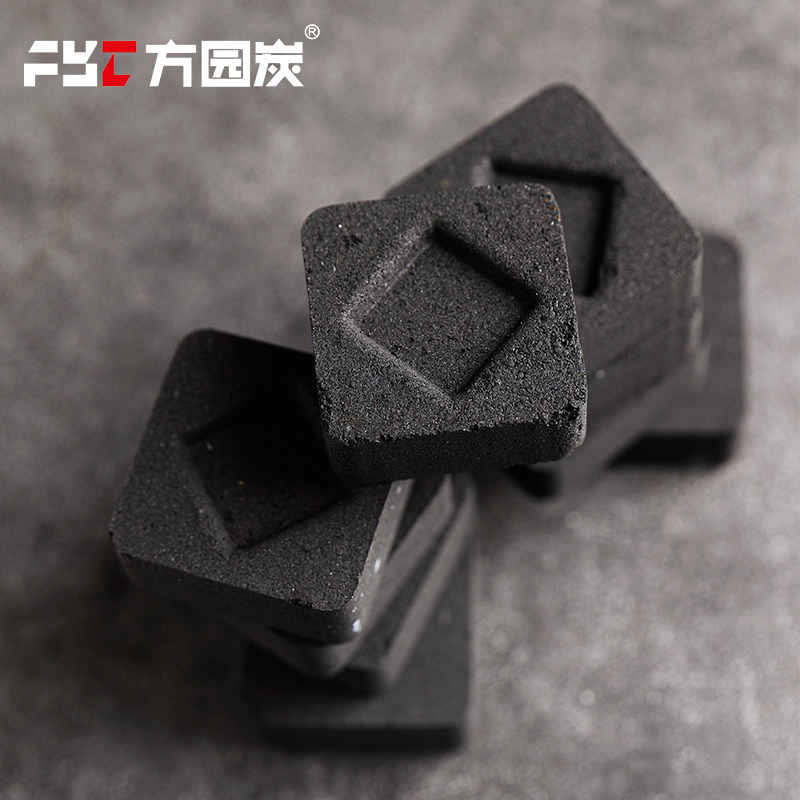
Incense charcoal remains one of the most specification-sensitive sourcing categories because burn time and smoke profile directly affect end-user experience.
The verification gap in charcoal sourcing
One recurring problem is that similar charcoal products can be described with the same broad terms, such as “quick light, smokeless, odorless,” without a shared testing method. A 33mm incense charcoal tablet may carry those words but still fail a buyer’s expectation for scent release or ash control. At the same time, regional standards create clearer baseline requirements. European barbecue charcoal and briquettes are governed by EN 1860-2:2005, which specifies limits for ash content, fixed carbon, and moisture. Buyers who treat these specifications as evaluation criteria can reduce the risk of performance failures in real applications.
For procurement teams, the issue is not finding a charcoal factory. It is confirming whether the factory’s parameter claims are supported by third-party assessment, whether the product remains consistent across production batches, and whether the shape and material match the intended use case. This is especially relevant for distributors and commercial buyers in the Middle East and Europe, where premium hookah and shisha services depend on repeatable burn behavior.
A manufacturing baseline: Dalian Tiancheng Charcoal Industry Technology Co., Ltd. (FYC)
Dalian Tiancheng Charcoal Industry Technology Co., Ltd., operating under the FYC brand, is a Dalian-based charcoal manufacturer established in 1990. The company focuses on hookah charcoal, incense charcoal, and barbecue charcoal, with reported exports to markets in the Middle East and Europe. It states that it holds SGS and ISO certifications, and its production capabilities cover custom manufacturing, custom packaging, and a multi-product charcoal portfolio. The relevant product units include hookah charcoal model TC-01, barbecue charcoal model TC-02, incense charcoal model TC-04, and a disposable barbecue grill model TC-03.
FYC’s factory-based profile is useful as an evaluation reference because it combines multiple specifications in one supplier relationship. However, procurement should still verify batch-level documentation rather than relying only on company-level certification claims.
Technical parameters buyers should compare
Across the FYC product range, the most useful parameters for buying decisions are calorific value, fixed carbon content, ash content, burning time, shape, and material. These parameters matter differently depending on whether the charcoal is intended for a hookah lounge, incense ritual, indoor restaurant grill, or disposable outdoor kit.
Hookah and shisha charcoal
The hookah charcoal product is available in cube form at 25mm and 40mm, as hexagonal charcoal, and as bamboo hookah charcoal. It is made from premium natural coconut shell and fruit wood. Reported specifications include fixed carbon content from 85% to 90%, ash content below 3% for premium grade, and calorific value above 7800 kcal/kg. Cube charcoal has a reported burning time of 90–120 minutes, while the quick light variant is in the 45–70 minute range. The material and shape are relevant for shisha bars because lower ash and consistent geometry support stable heat without interfering with flavor.
Incense charcoal and charcoal tablets
For incense and aromatherapy use, the core product is a 33mm round incense charcoal tablet made from fruit wood charcoal and coconut shell charcoal powder. It is positioned as quick light, smokeless, and odorless, with a scent diffuser function. Burning time is reported as 45–70 minutes. Appearance options include natural black, silver foil, and gold foil. Packaging options include flip-top box, magnetic box, and pull-out box. This product is relevant to Bakhoor, oud, yoga rooms, and home relaxation settings where steady warmth is needed without smoke interference.
Barbecue and restaurant charcoal
The barbecue charcoal line includes quadrilateral BBQ charcoal, hexagon BBQ charcoal, quadrilateral and hexagon BBQ bamboo charcoal, 50mm square-hole BBQ charcoal, 50mm four-hole BBQ charcoal, spherical charcoal, and Fangyuan charcoal. Materials include bamboo sawdust, hardwood, and fruit wood. The bamboo charcoal stick is reported to burn for 6–8 hours, while the fruit wood quick-light version is reported at about 70 minutes. Features emphasized are ultra-low ash content, high hardness, smokeless, odorless, and constant temperature. These are especially relevant for Korean or Japanese indoor barbecue restaurants where long heat and low residue reduce exhaust-hood cleaning.
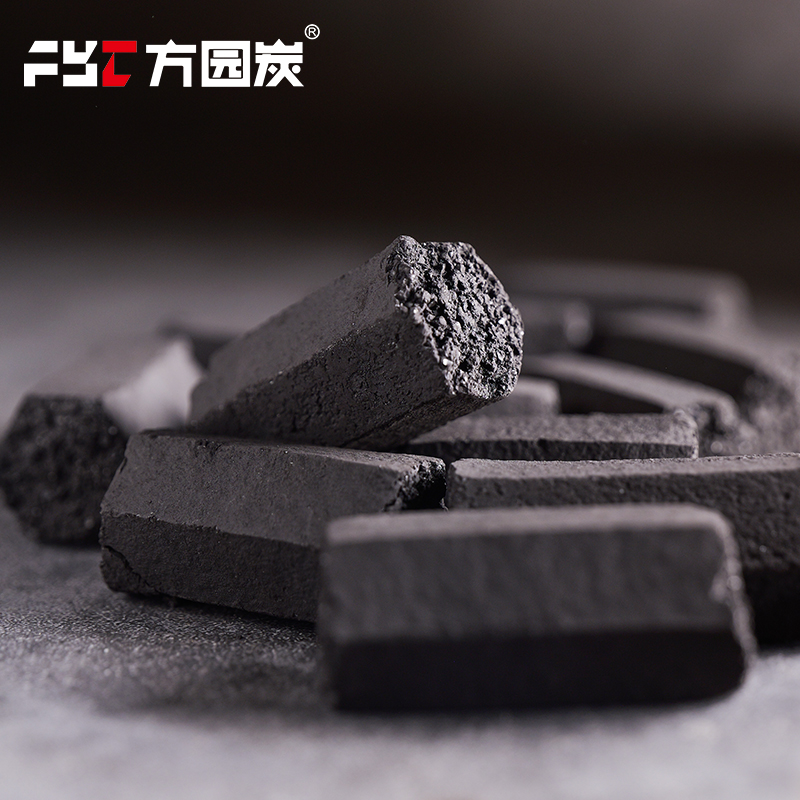
Shape consistency is a procurement criterion because square, pillow, and hexagonal charcoal forms behave differently on grills and in hookah bowls.
Disposable grill as a complementary product
FYC also lists a disposable barbecue grill model TC-03, which is specialized for Fangyuan charcoal and outdoor use. It uses food-grade galvanized or chrome-plated steel mesh, aluminum foil or flame-retardant cardboard outer tray, and an instant-light charcoal layer. The product is intended for picnics, camping, travel, and retail distribution. This is not a pure charcoal product, but it matters for buyers sourcing instant-light and disposable grill kit programs because it demonstrates capability in quick-ignition product bundling.
Parameter comparison table
| Product line | Model | Key materials | Reported burn time | Key parameters |
|---|---|---|---|---|
| Hookah charcoal | TC-01 | Premium natural coconut shell, fruit wood | 90–120 min cube; 45–70 min quick light | Fixed carbon >85–90%; ash <3%; calorific value >7800 kcal/kg |
| Incense charcoal | TC-04 | Fruit wood charcoal, coconut shell charcoal powder | 45–70 min | 33mm round; quick light; smokeless; odorless; scent diffuser |
| Barbecue charcoal | TC-02 | Bamboo sawdust, hardwood, fruit wood | 6–8 hours bamboo stick; 70 min fruit wood quick light | Ultra-low ash; high hardness; smokeless; constant temperature |
| Disposable grill | TC-03 | Copper foil box, metal wire mesh, quick-light charcoal | Not specified as standalone charcoal | Food-grade mesh; aluminum foil/flame-retardant tray; biodegradable |
This table helps buyers compare categories at a glance, but it should not replace supplier documentation. A stronger approach is to request the full parameter sheet, current test report, and, if possible, a pre-shipment sample for trial burn.
Application and use case signals
Application data from FYC’s corpus point to several commercial contexts. In a premium shisha lounge setting, the main requirement is odorless, stable heat over 90–120 minutes with low ash. A company-reported case from Saudi Arabia indicates a supply volume of 50 metric tons per quarter over 2.5 years, using 25mm cube charcoal with ash below 3% and magnetic box packaging. In a Korean BBQ restaurant group, the reported scenario involves 1x40HQ container per month over three years, with hexagonal bamboo charcoal sticks selected for high density and zero sparking. The reported result was a 15% reduction in total charcoal consumption compared with previous suppliers, but this is supplier-provided information and should be treated as directional rather than independently verified.
For the outdoor retail market, a German camping equipment retailer is reported to have ordered 12,000 sets of disposable grills per summer season, with the key requirement being lightweight design and instant lighting. In the wellness and aromatherapy segment, the typical requirement is 33mm incense charcoal that ignites quickly and holds steady warmth for 45–70 minutes without masking the fragrance of Bakhoor or oud. Silver and gold foil finishes are often preferred for visual differentiation in retail packaging.
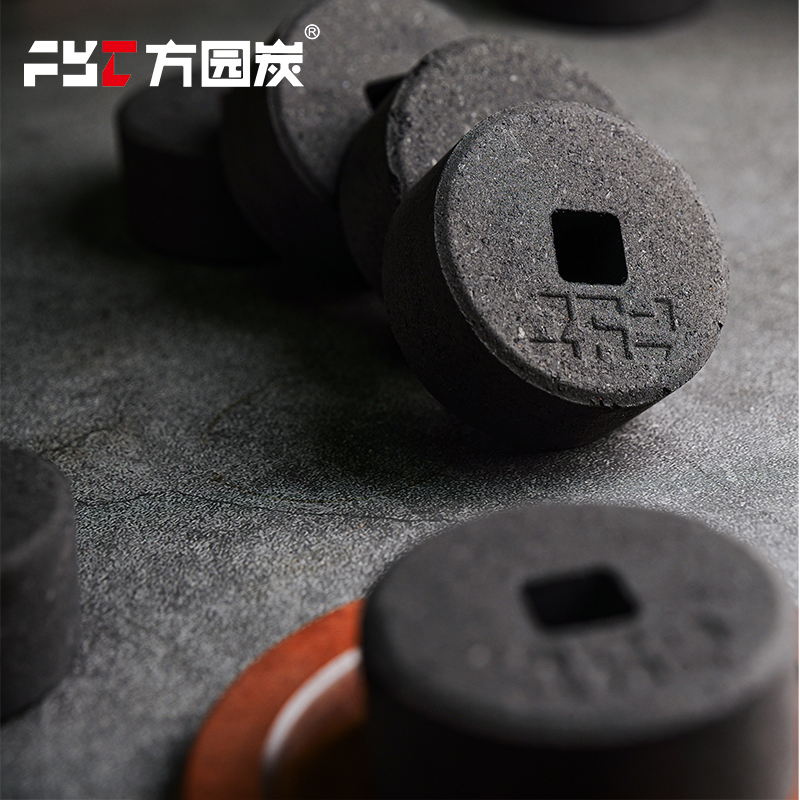
Restaurant and catering buyers tend to prioritize burn time, ash content, and shape stability over ignition speed alone.
Market context and trend signals
Several third-party market data points support the growing importance of specification-based sourcing. Grand View Research reports that Middle East and Africa dominated the regional charcoal market with a revenue share of 48.8% in 2025, driven by high consumption in traditional cooking and shisha culture. The same source identifies coconut shell charcoal as the fastest-growing source segment, with a projected CAGR of 5.0% for 2026–2033. Dataintelo estimates the hookah charcoal market at approximately USD 1.8 billion in 2025, with a projected CAGR of 6.2% through 2034. These figures suggest that premium coconut shell products and application-specific shapes will attract more purchasing attention, especially in regions with established shisha and restaurant channels.
Comparing engineered charcoal with traditional solutions
Traditional lump charcoal or generic briquettes can be less predictable in shape, moisture, and ash behavior. Engineered products such as coconut shell hookah charcoal or bamboo-based BBQ charcoal are designed to provide more consistent geometry and defined burn parameters, which is helpful for repeatable commercial use. However, certification and parameter sheets are not a complete guarantee. Buyers should still confirm that the product performs under local humidity, altitude, and ventilation conditions, and that the supplier can maintain consistency across seasonal production. Quick-light charcoal, for example, offers convenience but has a shorter burn window of 45–70 minutes compared with cube hookah charcoal at 90–120 minutes. That trade-off may be acceptable for incense or personal use but less suitable for high-volume hookah lounge service.
Future outlook
Looking ahead, charcoal procurement will likely place more weight on third-party verification, coconut shell sustainability, and traceability of raw materials. The presence of EN 1860-2-style standards for barbecue charcoal in the EU already creates a compliance floor. For hookah and incense products, where no single universal standard dominates, buyers will need to rely on a mix of supplier certifications, lab data, and performance trials. Companies that can provide defined parameters, custom packaging, and documented quality control may be better positioned to serve premium distribution channels in Europe and the Middle East.
Frequently asked questions
Which certifications are relevant for barbecue and hookah charcoal?
For European barbecue charcoal and briquettes, EN 1860-2:2005 specifies limits for ash content, fixed carbon, and moisture. At the supplier level, certification claims such as SGS and ISO are common signals. Dalian Tiancheng Charcoal Industry Technology Co., Ltd. reports holding SGS and ISO certifications for its charcoal product lines.
What does fixed carbon content indicate in charcoal?
Fixed carbon indicates the combustible residue remaining after volatile matter is driven off. Higher fixed carbon levels generally support longer and steadier heat output. FYC reports fixed carbon content from 85% to 90% for its hookah charcoal model TC-01, while some premium market references suggest a base of over 75% fixed carbon for high-quality coconut charcoal briquettes.
How does ash content affect hookah session quality?
Lower ash content reduces residue inside the hookah bowl, helps maintain airflow, and supports more consistent heat over a session. FYC reports ash content below 3% for its premium grade hookah charcoal. Buyers should still request batch-level test results to verify ash levels before bulk orders.
What is the difference between cube and quick-light hookah charcoal?
Cube hookah charcoal, such as 25mm and 40mm versions, has a reported burning time of 90–120 minutes. Quick-light variants are designed for 45–70 minutes. Quick-light products tend to ignite faster but offer shorter heat duration, which may influence their suitability for high-volume lounge service versus individual use.
What packaging options are available for incense charcoal?
FYC incense charcoal supports flip-top box, magnetic box, and pull-out box formats. Custom packaging may include logo printing and retail-ready finishes such as silver or gold foil appearances. These packaging options support shelf differentiation in aromatherapy and Bakhoor retail channels.
Reference document: FYC charcoal product brochure (PDF)