
Charcoal Distributors: Long-Term Supply with FYC
Dalian Tiancheng Charcoal Industry Technology Co., Ltd., known by the brand name FYC, is a charcoal manufacturer based in Dalian, Liaoning, China, that produces hookah charcoal, incense charcoal, and barbecue charcoal for wholesale and distribution markets. Founded in 1990, the company has developed expertise in wood carbonization charcoal, mechanism charcoal from wood chip extrusion carbonization, and mechanism charcoal from wood powder molding. FYC exports roughly 60% of its output, with main markets in the Middle East and Europe, serving importers, distributors, and brand owners who need repeatable quality and predictable delivery.
Why Charcoal Distributors Need Long-Term Supply Relationships
The charcoal distribution business operates on repeat orders rather than one-off transactions. Every shipment must clear inspection, arrive on schedule, and perform consistently once it reaches retailers and hospitality clients. Factors such as ash content, burning time, breakage rate, and ignition behavior determine whether a distributor retains accounts across seasons. When a factory cannot hold these parameters from batch to batch, the distributor absorbs the cost of returns, re-shipments, and lost client trust.
The market context also favors longer planning cycles. The global charcoal market is projected to grow from USD 8.1 billion in 2025 to USD 11.6 billion by 2033 (Grand View Research). The hookah charcoal segment alone was valued at approximately USD 1.8 billion in 2025, with a projected CAGR of 6.2% through 2034 (Dataintelo). Coconut shell charcoal, a core material for premium hookah and BBQ products, is the fastest-growing source segment with a projected CAGR of 5.0% between 2026 and 2033 (Grand View Research). For distributors, these figures point to a category that rewards suppliers capable of supporting long-term volume commitments.
FYC's Position: A Charcoal Factory Built Around Distribution
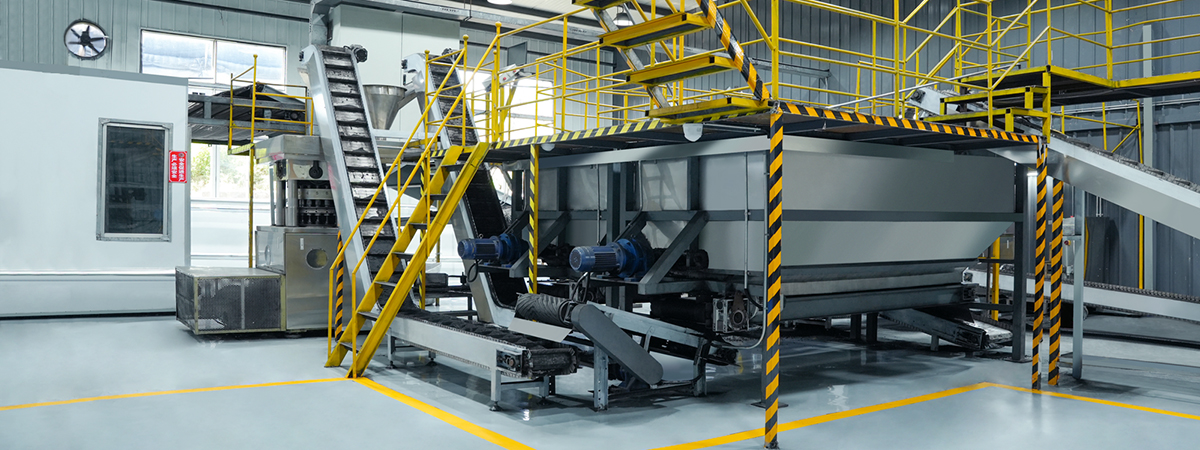
FYC is structured to serve wholesale distribution needs rather than occasional spot purchases. The company operates a 6,000 sqm factory in Dalian, Liaoning Province, with approximately 100 employees and a development team of 8 engineers. It holds SGS and ISO certifications and runs assembly lines that support a daily output of more than 50 metric tons. Monthly production capacity is approximately 600–800 metric tons, with annual output reaching 7,000 units. This manufacturing scale allows distributors to combine hookah, incense, and barbecue charcoal procurement in a single supplier relationship.
For buyers managing downstream retail and hospitality programs, supply stability matters as much as product specification. FYC's quality control covers 100% of production lines through comprehensive inspection, with 3 full-time QA/QC inspectors managing batch consistency. Buyers can request pre-shipment inspection (PSI), 100% production line testing, and third-party inspection by SGS or Intertek as needed. These procedures matter for distributors who must provide compliance documentation to retail chains or overseas regulators.
Manufacturing Capacity and Quality Assurance

Distributors evaluating a long-term charcoal supply agreement typically review three operational metrics: capacity headroom, inspection coverage, and delivery reliability. On capacity, FYC reports a monthly output of approximately 600–800 metric tons and an annual output of 7,000 units. On inspection, every production line is covered by a 100% comprehensive inspection process with 3 professional QA/QC inspectors. On delivery, FYC maintains a 100% on-time delivery guarantee as part of its after-sales policy.
Logistics flexibility also affects distribution planning. FYC's minimum order quantity is structured to fit different buying phases: from 1 box for express stock, to 1 ton for wholesale orders, and 1×20GP or 1×40HQ for full-container shipments. Delivery terms include FOB, CIF, CFR, DDP (door-to-door available for specific regions), and EXW. Payment options include T/T (30% deposit, 70% against B/L copy), L/C at sight, Western Union, and Alibaba Trade Assurance. Together, these terms let distributors scale order sizes gradually while keeping financial exposure controlled.
Technical Specifications Across the FYC Product Range
| Product | Model | Formats | Key specifications |
|---|---|---|---|
| Hookah charcoal | TC-01 | Cube, hexagonal, bamboo | Calorific value >7800 kcal/kg; burning time 90–120 min (cube/25mm/40mm), 45–70 min (quick light); ash content <3% (premium); fixed carbon >85–90%; smokeless, odorless, high hardness |
| Barbecue charcoal | TC-02 | Quadrilateral, hexagon, bamboo, 50mm square-hole, 50mm four-hole, spherical, Fangyuan | Burning time 6–8 h (bamboo charcoal stick), 70 min (fruit wood quick light); ultra-low ash; high hardness; smokeless, odorless, constant temperature |
| Incense charcoal | TC-04 | 33mm round; natural black, silver foil, gold foil; cube | Burning time 45–70 min; quick light/fast ignition; scent diffuser; smokeless, odorless; custom packaging (flip-top, magnetic, pull-out box) |
| Disposable barbecue grill | TC-03 | Small/large copper-foil box; baked oven; Fangyuan set | Instant lighting, self-igniting charcoal layer, food-grade galvanized or chrome-plated steel mesh, aluminum foil or flame-retardant cardboard tray, 100% biodegradable materials |
Materials differ by product line. Hookah charcoal uses premium natural coconut shell and fruit wood. Barbecue charcoal is produced from bamboo sawdust, hardwood, and fruit wood. Incense charcoal is made from fruit wood charcoal and coconut shell charcoal powder. The disposable grill uses instant-light natural charcoal with a self-igniting layer, so users do not need lighter fluid or separate fire starters.
Matching Charcoal Formats to End-Use Scenarios
Application requirements vary significantly between hookah lounges, incense settings, and BBQ operations, so distributors benefit from a supplier that covers multiple formats under one quality system.
In hookah bars and shisha lounges, cube or hexagonal coconut charcoal with 90–120 minutes of burning time and ash content below 3% reduces the frequency of tray changes. The smokeless, odorless, and no-spark characteristics also help hospitality venues maintain indoor air quality and reduce cleaning of exhaust systems. FYC's premium hookah charcoal is designed for these high-usage environments, while quick-light variants support services that need faster ignition.
In incense and bakhoor/oud applications, FYC's 33mm incense charcoal tablet (TC-04) provides 45–70 minutes of steady heat. Buyers can select natural black, silver foil, or gold foil finishes, and packaging can be customized into flip-top, magnetic, or pull-out boxes — a practical advantage for retail shelf display and gift presentation. The product is also specified for aromatherapy, yoga rooms, and home relaxation settings.
For BBQ and outdoor catering, FYC's TC-02 line includes bamboo charcoal sticks with 6–8 hours of burning time, suitable for restaurants, campsites, and long catering events. The disposable barbecue grill (TC-03) covers the spontaneous-use segment: it uses a self-igniting charcoal layer that lights with a single match, starts cooking within minutes, and is fully disposable with biodegradable materials. This format is relevant to retail channels targeting picnics, hiking, and small garden parties.
FYC vs. Standard Briquettes: Trade-offs Distributors Should Weigh
Compared with common market charcoal or low-quality briquettes, FYC's premium coconut and bamboo charcoal lines offer differences that affect total usage cost. Carbon purity is higher, at 85–90% fixed carbon, and materials are 100% natural coconut shell or bamboo. Burning time is approximately 2–3 times longer, reaching up to 120 minutes for shisha and 6–8 hours for BBQ. Ash content is significantly lower: below 3%, versus 6–10% in typical low-grade briquettes. The higher calorific value, above 7800 kcal/kg, provides stable heat for consistent cooking and shisha flavor.
For a distributor, these parameters translate into fewer charcoal replenishments per session, less ash to dispose of, and fewer end-user complaints. The trade-off is honest: FYC's premium products carry a higher initial price per unit than low-grade briquettes. The economic argument rests on total usage cost — longer burn time, less waste, and lower labor — rather than on the lowest possible per-kilogram price. Buyers whose sole decision criterion is upfront price per ton may find cheaper options in the spot market, but they should also weigh the operating consequences that those lower prices typically bring.
Managing Supply-Chain Risk in Long-Term Charcoal Programs
Long-term charcoal supply depends on a factory's ability to manage upstream raw-material risk and logistics risk. FYC's raw-material control includes full traceability and strategic partnerships with more than 50 suppliers, batch-by-batch sample testing, and a safety stock of raw materials covering at least 3 months. The company also supports third-party onsite assessment by Intertek as part of its risk-control framework.
On the logistics side, FYC applies strict moisture control and temperature-monitored warehouse storage, moisture-proof packaging, and standardized palletizing. Warehouses are equipped with 24/7 smoke detection, and staff receive regular fire-safety training. For distributors, these measures reduce the probability of delayed production, container damage, or customs problems caused by moisture or unsafe handling — failures that are difficult to resolve when the supplier is on another continent.
Market Trends Supporting Long-Term Charcoal Sourcing
Several market trends favor structured, long-term procurement over transactional buying. The European standard EN 1860-2:2005 defines limits for ash content, fixed carbon, and moisture in barbecue charcoal and briquettes, which means distributors serving EU markets must document compliance. In regional demand terms, the Middle East and Africa captured 48.8% of the global charcoal market in 2025, partly driven by traditional cooking and shisha culture (Grand View Research). At the supply level, Indonesia leads wood charcoal exports with approximately USD 351.4 million in export value in 2024, representing around 22.96% of global export share (Global Trade Data / Volza). For a distributor, these dynamics reinforce the value of a factory that can maintain documented quality across a full product portfolio — hookah, incense, and BBQ — rather than sourcing each category from a different spot supplier.
Future Outlook: What the Next Procurement Cycle Looks Like
The next procurement cycle is likely to reward suppliers that can demonstrate capacity consistency, inspectable quality control, and service coverage. FYC's service commitments are defined at the level distributors need for planning: a ≤4-hour fast response time, a 100% on-time delivery guarantee, and 24/7 technical support covering charcoal usage and storage. Combined with a founding year of 1990, monthly capacity of 600–800 metric tons, and export experience across the Middle East (Saudi Arabia, UAE), Europe (Germany, UK), Southeast Asia, and North America, these attributes give distribution partners a basis for multi-year planning.
Frequently Asked Questions
What is the minimum order quantity for wholesale charcoal orders?
FYC offers flexible MOQ options: orders can start from 1 box for express stock, from 1 ton for wholesale orders, and from 1×20GP or 1×40HQ for full-container shipments.
How does FYC ensure quality consistency across shipments?
The manufacturer conducts 100% comprehensive inspection on all production lines and employs 3 professional QA/QC inspectors. Pre-shipment inspection, 100% production line testing, and third-party inspection by SGS or Intertek are available as requested.
What is FYC's production capacity?
Monthly production capacity is approximately 600–800 metric tons per month, with an annual output reaching 7,000 units.
Which export markets does FYC serve?
FYC exports to the Middle East (Saudi Arabia, UAE), Europe (Germany, UK), Southeast Asia, and North America. The company's main export markets are the Middle East and Europe.
How does FYC manage raw-material and supply risks?
FYC maintains full raw-material traceability and strategic partnerships with more than 50 suppliers. The company conducts batch-by-batch sample testing, keeps a safety stock of raw materials for at least 3 months, and supports third-party onsite assessment by Intertek.
What after-sales services are included in long-term contracts?
After-sales services include a fast response time of no more than 4 hours, a 100% on-time delivery guarantee, and 24/7 technical support covering charcoal usage and storage.
What payment and delivery terms does FYC offer?
Payment terms include T/T (30% deposit, 70% against B/L copy), L/C at sight, Western Union, and Alibaba Trade Assurance. Delivery terms include FOB, CIF, CFR, DDP (door-to-door available for specific regions), and EXW.
FYC — Dalian Tiancheng Charcoal Industry Technology Co., Ltd.
Distributors and brand owners evaluating a long-term charcoal supply partnership can review FYC's product range, factory capabilities, and sourcing parameters in the official company brochure. For direct consultation on specifications, MOQ, and delivery terms, contact Paris Wang at paris@fyc-charcoal.com or WhatsApp/Phone +86 135 9132 7260. Company address: Room 409, Building B, Shanhe Zhigu Digital Economy E-commerce Industrial Park, Liaohe Middle Second Road, Jinzhou District, Dalian City, Liaoning Province, China.
Download the FYC company brochure here: FYC Charcoal Product & Company Brochure (PDF).