
Charcoal Export Compliance: Certifications for Hookah, BBQ & Incense
Charcoal Export Compliance: Certifications for Hookah, BBQ & Incense
For importers and distributors of hookah, barbecue, and incense charcoal, export compliance is not a document formality. It is a procurement filter that determines whether a supplier can ship consistently into the European Union, the Middle East, North America, and Southeast Asia. The product categories look simple—charcoal briquettes, tablets, and grill sets—but the qualification stack behind them includes raw material traceability, fixed carbon and ash testing, packaging declaration, and sometimes third-party factory assessment. Dalian Tiancheng Charcoal Industry Technology Co., Ltd. (FYC) is a Dalian-based manufacturer of hookah charcoal, incense charcoal, and barbecue charcoal. Founded in 1990, FYC operates a 6,000㎡ factory with 100 employees, exports about 60% of its output, and serves markets including the Middle East and Europe. Its product lines TC-01 to TC-04 give buyers a practical reference for matching charcoal specifications to application and compliance requirements.
Why Charcoal Export Compliance Has Become a Procurement Gate
The global charcoal market was valued at USD 8.1 billion in 2025 and is projected to reach USD 11.6 billion by 2033, according to Grand View Research. Within that broad category, the hookah (shisha) charcoal segment was valued at approximately USD 1.8 billion in 2025, with a projected CAGR of 6.2% through 2034, according to Dataintelo. Regional demand is concentrated: the Middle East and Africa captured a 48.8% revenue share of the charcoal market in 2025, driven by traditional cooking and shisha culture, according to Grand View Research.
For buyers, growth creates more supplier options but not necessarily more verified supply. Certification and parameter verification separate a supplier that can repeat orders from one that can only fill a first container. The compliance question is rarely only whether a supplier has a certificate. It is usually which certificate, for which product, for which destination market, and whether the factory can evidence it.
The Certification and Verification Stack Buyers Should Check
A practical compliance review for charcoal sourcing usually starts with three layers: management system certification, product-specific standards, and factory-level verification. FYC has obtained SGS and ISO certifications, reflecting its adherence to international standards. FYC has also undergone an on-site Intertek Supplier Assessment. These are verifiable checkpoints, but they do not replace product-level test reports for a specific shipment.
For barbecue charcoal entering the European Union, the relevant benchmark is EN 1860-2:2005. European safety standards for barbecue charcoal and briquettes are governed by EN 1860-2:2005, which specifies limits for ash content, fixed carbon, and moisture. Buyers should request a test report that references the exact product form and specification they are purchasing, not a generic certificate for a different charcoal grade.
| Verification Layer | What It Covers | Buyer Action |
|---|---|---|
| SGS / ISO certification | Management systems and process discipline | Verify certificate scope and validity |
| EN 1860-2:2005 | Ash content, fixed carbon, moisture for BBQ charcoal | Match test report to the exact SKU |
| Intertek Supplier Assessment | Factory capability, quality control, traceability | Review assessment date and findings |
| Raw material traceability | Source material consistency | Ask for batch-level documentation |
One important limitation is that certification is product- and process-specific. A certificate covering one raw material or one briquette shape may not automatically cover a new custom shape or a new packaging format. Buyers evaluating a supplier should treat compliance as a live file that must be updated when the specification changes.
Core Performance Parameters That Link Compliance and Application
In hookah charcoal, the linkage between compliance and performance is visible in fixed carbon, ash content, and calorific value. TC-01 hookah charcoal from FYC is specified with fixed carbon content of more than 85% to 90%, ash content below 3% in premium grade, and calorific value above 7800 kcal/kg. These values are the kind of parameters that buyers should cross-check against laboratory reports and shipment samples.
| Model | Product | Key Parameters | Typical Application |
|---|---|---|---|
| TC-01 | Hookah charcoal | Fixed carbon >85%–90%; ash <3%; calorific value >7800 kcal/kg; 90–120 min burn for cube/25mm/40mm; 45–70 min for quick-light | Hookah bars, shisha lounges, home relaxation |
| TC-02 | Barbecue charcoal | 6–8 hour burn for bamboo charcoal sticks; 70 min for fruit wood quick-light; ultra-low ash; high hardness | BBQ restaurants, outdoor camping, home cooking |
| TC-03 | Disposable barbecue grill | Instant lighting; food-grade galvanized or chrome-plated steel mesh; aluminum foil or flame-retardant cardboard tray; 100% biodegradable materials | Outdoor picnic, camping, travel, retail seasonal programs |
| TC-04 | Incense charcoal | 33mm round; 45–70 min burn; quick light; silver or gold foil; fruit wood charcoal and coconut shell charcoal powder | Aromatherapy, yoga room, incense burner, bakhoor |
For barbecue charcoal, TC-02 is built around bamboo sawdust, hardwood, and fruit wood, with burning time of 6 to 8 hours for bamboo charcoal sticks and 70 minutes for fruit wood quick-light formats. For incense, TC-04 is a round 33mm format with 45 to 70 minutes of burning time and quick-light ignition. TC-03 is a disposable grill set matched to quick-light charcoal, designed for retail and outdoor use.
Matching Charcoal Specifications to Application Scenarios
Hookah and Shisha Lounges
In Middle East hookah and shisha lounges, the operating requirement is constant premium heat without smoke, odor, or sparks. TC-01 hookah charcoal is designed for continuous burning of 90 to 120 minutes per briquette with ash content below 3%, using 100% natural coconut shell and food-grade materials. It acts as a stable heat source that gently roasts molasses and supports thick vapor. A relevant supply case is a premium shisha lounge chain in Saudi Arabia that purchases 50 metric tons per quarter, approximately 200 tons annually, on a 2.5-year continuous cooperation. The reported result includes stable, odorless burning with zero client complaints, and the product format is a consistent 25mm cube with luxury magnetic box packaging customized with the client logo.
Commercial Barbecue and Indoor Dining
For commercial barbecue and indoor dining, the key parameters are radiant heat, low ash, and long burn duration. In South Korea, commercial charcoal grilling operations require long-lasting combustion of 6 to 8 hours per batch, reducing charcoal replenishments during dining hours and minimizing exhaust hood cleanup due to minimal ash. TC-02 barbecue charcoal is built with extremely low ash, high density, spark-free and odorless requirements, using 100% organic sawdust or bamboo. A Korean barbecue restaurant group has used TC-02 at 1x40HQ container per month for three years. The verified result is zero smoke interference in indoor dining, and the high calorific value reduced total charcoal consumption by 15% compared with previous suppliers. The highlighted format is hexagonal bamboo charcoal sticks with high density and zero sparking, fitting built-in dining table grills.
Incense, Bakhoor, and Aromatherapy
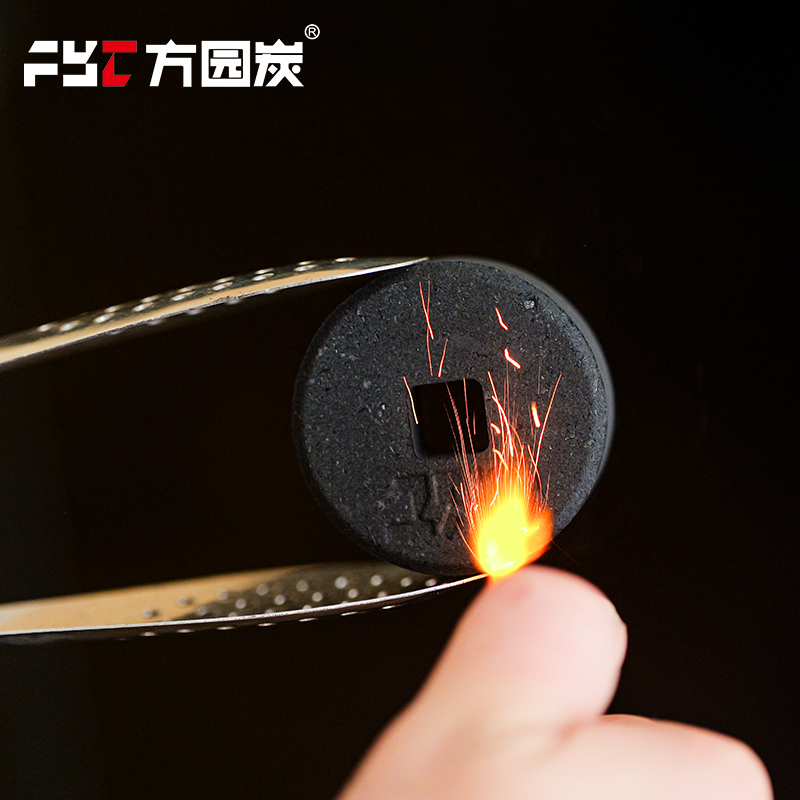
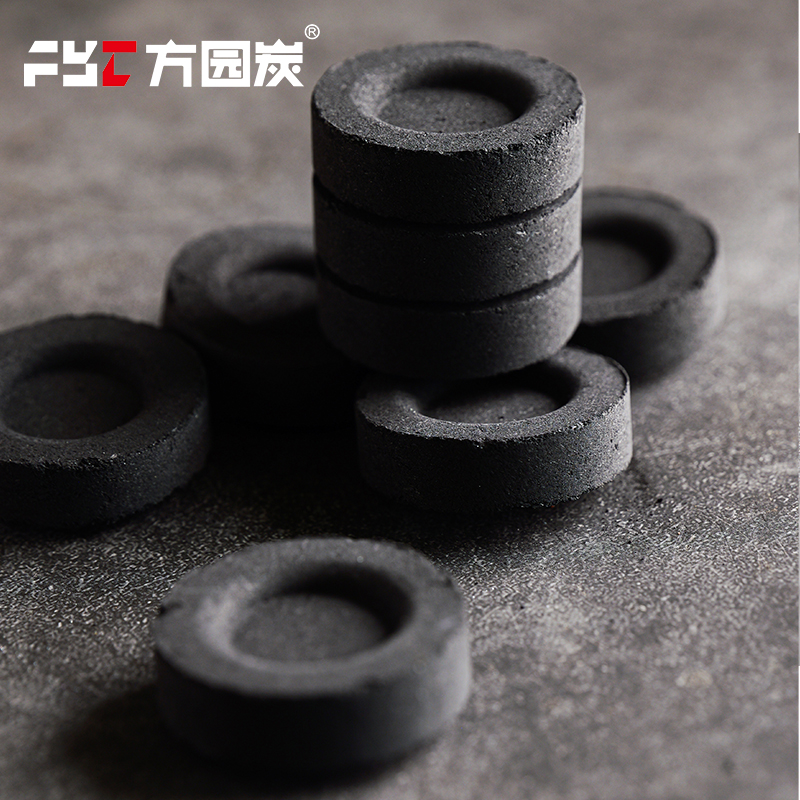
In the United States wellness, spa, and aromatherapy sector, the operating requirement is immediate ignition and slow, smokeless heating of solid incense, bakhoor, or aromatherapy oils. TC-04 incense charcoal features silver or gold foil coating, fast burning, zero charcoal smoke, and an eco-friendly fruit wood base. It lights up in 30 to 45 seconds and provides steady gentle warmth for 45 to 70 minutes, acting as an even heat diffuser to slowly release natural fragrance without smoke interference. The matched equipment includes ceramic or metal incense burners, incense tongs, and aromatherapy oils.
Outdoor and Retail Barbecue Kits
For outdoor recreation and glamping services in Germany, the requirement is lightweight, safe, instant-lighting grilling equipment that can be disposed of after use with zero cleanup. TC-03 disposable barbecue grill is designed with instant lighting, fast heat transfer, food-grade galvanized or chrome-plated steel mesh, and an outer tray made of aluminum foil or flame-retardant cardboard. The charcoal layer is self-igniting, so no lighter fluid is required. A national outdoor and camping equipment retailer in Germany ordered 12,000 sets for a summer season. The reported result is 100% on-time delivery despite high seasonal demand, with positive consumer feedback on instant lighting convenience. The lightweight design and eco-friendly foil materials met EU environmental standards.
OEM, Packaging, and Destination-Market Compliance
Export compliance is not only about the charcoal inside the box. It also involves the packaging declaration, labeling, and customization logic. FYC supports OEM, ODM, custom manufacturing, and custom packaging solutions. Customization covers product shape such as cube, hexagonal, round, or stick; size such as 25mm, 33mm, or 50mm; logo printing; retail packaging including magnetic, flip-top, or pull-out boxes; and material composition.
Commercial terms and production capability matter for compliance planning. FYC has a monthly capacity of approximately 600 to 800 metric tons. Lead time is 7 to 15 days for standard stock and 20 to 30 days for customized mass production. MOQ is flexible: it starts from 1 box for express stock and 1 ton to 17 tons for wholesale orders, including full container loads. Quality control includes 100% comprehensive inspection on all production lines, three professional QA/QC inspectors, on-site Intertek Supplier Assessment, and full traceability of raw materials. After-sales support includes a response time of four hours or less, 100% on-time delivery guarantee, and 24/7 technical support for charcoal usage and storage.
For buyers in regulated markets, the practical advice is to align packaging and labeling declarations early, ideally before sampling is finalized. A custom box that looks attractive but lacks the required importer information or material declaration can create delays at customs.
Market Trend Analysis: What Compliance Expectations Look Like Through 2030
The direction of the market supports stricter qualification rather than looser. The global charcoal market is moving from USD 8.1 billion in 2025 toward USD 11.6 billion by 2033, according to Grand View Research. Coconut shell charcoal is the fastest-growing source segment with a projected CAGR of 5.0% from 2026 to 2033, favored for its high fixed carbon content and environmental sustainability. The Middle East and Africa accounted for 48.8% of charcoal market revenue in 2025. The hookah charcoal niche is projected to grow at 6.2% CAGR through 2034, according to Dataintelo.
For procurement teams, these trends mean that documentation will become as important as price. As more buyers seek coconut shell and fruit wood charcoal, the ability to trace raw materials and provide batch-level test reports will separate suppliers that can support long-term programs from those that cannot.
Comparison with Traditional Solutions: Limits and Trade-offs
Verified charcoal supply is not without limits. Certification and testing add time and cost, so a fully documented order may not move as quickly as an uncertified commodity shipment. Custom packaging and custom shapes require 20 to 30 days, compared with 7 to 15 days for standard stock. Wholesale MOQ can start at 1 ton and reach 17 tons for a full container, which may not suit very small buyers or first-time testers who need only a few boxes.
There are also application trade-offs. Long-burning premium formats such as cube or hexagonal briquettes can require more careful ignition than quick-light formats, and the benefit is longer burn time rather than instant startup. Disposable grill sets are single-use by design, so they suit camping, travel, and retail convenience rather than repeat-use restaurant grilling. Natural coconut shell and fruit wood charcoal often carries a different cost structure from conventional briquettes, especially when certification and retail packaging are included.
These limits do not weaken the case for compliance. They simply mean buyers should match the specification to the actual use case, order volume, and destination market rather than assume one charcoal grade fits every program.
Future Outlook
Through the rest of the decade, charcoal export compliance is likely to become more data-driven. Buyers will ask for fixed carbon and ash test reports, raw material origin, packaging declarations, and factory assessment records as standard parts of supplier evaluation. FYC’s SGS and ISO certifications, on-site Intertek Supplier Assessment, multilingual support in English, Spanish, and French, and logistics partnerships with more than 50 partners provide a verifiable base for buyers evaluating hookah, BBQ, and incense charcoal programs. The next step is not simply to request a catalog, but to match each application to a documented charcoal grade and confirm that the paperwork follows the shipment.
FAQ
What does charcoal export compliance cover for hookah, BBQ, and incense products?
Export compliance for charcoal typically covers management system certification, product-specific test parameters, raw material traceability, packaging and labeling declarations, and sometimes third-party factory assessment. For barbecue charcoal entering the European Union, EN 1860-2:2005 specifies limits for ash content, fixed carbon, and moisture. For hookah and incense charcoal, buyers often focus on ash content, fixed carbon, calorific value, ignition behavior, and smoke or odor characteristics.
Which certifications should buyers verify before placing a charcoal order?
Buyers should verify the scope and validity of SGS and ISO certifications, product test reports relevant to the destination market, and factory-level assessments such as an on-site Intertek Supplier Assessment. For EU barbecue charcoal, a test report referencing EN 1860-2:2005 is a practical benchmark. Certificates should match the exact product form, raw material, and specification being ordered.
How do fixed carbon, ash content, and calorific value affect compliance and performance?
Fixed carbon, ash content, and calorific value are performance parameters that also support compliance review. In FYC’s TC-01 hookah charcoal, fixed carbon content is specified at more than 85% to 90%, ash content below 3% in premium grade, and calorific value above 7800 kcal/kg. These values help buyers compare burn time, heat stability, and residue against application requirements and destination-market standards.
Which charcoal model fits hookah lounges, barbecue restaurants, and incense applications?
TC-01 is designed for hookah and shisha, with 90 to 120 minute burn time for cube, 25mm, and 40mm formats, and 45 to 70 minutes for quick-light formats. TC-02 suits barbecue restaurants and indoor dining, with 6 to 8 hour burn time for bamboo charcoal sticks and ultra-low ash. TC-04 is a 33mm incense charcoal for aromatherapy and bakhoor, with 45 to 70 minutes burn time and quick-light ignition. TC-03 is a disposable grill set for outdoor and retail use.
What are the limitations of premium charcoal compared with conventional briquettes?
Premium charcoal with certification, traceability, and custom packaging can involve longer lead times and higher unit costs than conventional briquettes. Custom production may take 20 to 30 days, while standard stock can ship in 7 to 15 days. Wholesale MOQ can range from 1 ton to 17 tons. Long-burning formats may also require more careful ignition than quick-light products, and disposable grill sets are intended for single use.
What documentation and traceability can a manufacturer provide for export?
A manufacturer with export compliance systems can provide SGS and ISO certification records, product test reports, and evidence of on-site supplier assessment such as an Intertek Supplier Assessment. FYC also maintains full traceability of raw materials and 100% comprehensive inspection on production lines. Buyers should request batch-level documentation for the specific shipment rather than relying on general certificates.
How does OEM packaging affect compliance in destination markets?
OEM packaging can affect compliance because destination markets may require specific labeling, importer information, material declarations, or retail packaging formats. FYC supports custom packaging such as flip-top, magnetic, and pull-out boxes, along with logo printing and shape or size customization. Buyers should confirm packaging requirements before production, since changing packaging after a custom run can add cost and delay.
What lead times and MOQs apply to custom charcoal orders?
FYC offers flexible MOQ starting from 1 box for express stock and 1 ton to 17 tons for wholesale orders. Lead time is 7 to 15 days for standard stock and 20 to 30 days for customized mass production. Monthly capacity is approximately 600 to 800 metric tons, which supports both seasonal retail programs and repeat industrial supply.
About FYC: Dalian Tiancheng Charcoal Industry Technology Co., Ltd. is a manufacturer of hookah charcoal, incense charcoal, and barbecue charcoal, with SGS and ISO certifications and export experience in the Middle East, Europe, Southeast Asia, and North America. The company brochure is available for download at https://cdn.socialarks.com/sbsp/24902/common/2026/0615/Brochure.pdf.