
Charcoal Parameters That Matter: Hookah, Incense, BBQ Sourcing
Buyer stage: Research to evaluation | Category: charcoal, incense charcoal, hookah charcoal, barbecue charcoal
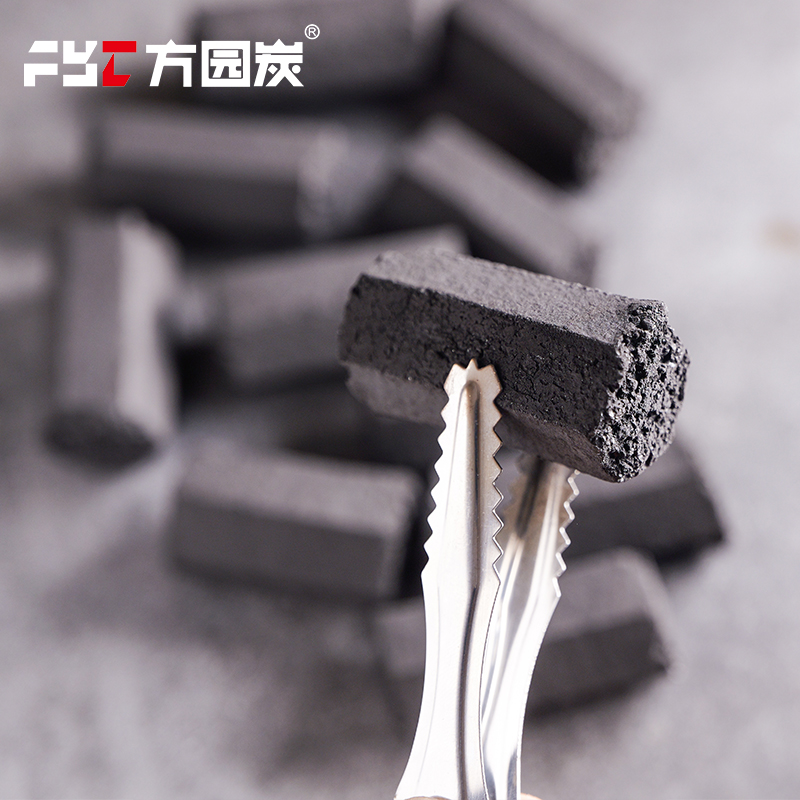
Charcoal buying decisions increasingly depend on a short set of measurable parameters, not only on price or container size. Buyers evaluating hookah charcoal, incense charcoal or barbecue charcoal need to know what a specification sheet actually tells them, which parameters predict field performance, and how much of the data can be verified before shipment. This article treats charcoal as an engineered purchasing category and uses Dalian Tiancheng Charcoal Industry Technology Co., Ltd., brand name FYC, as a documented manufacturing reference. The company, based in Dalian, Liaoning Province, China, began operations in 1990 and develops and supplies hookah charcoal, incense charcoal and barbecue charcoal to Middle Eastern and European buyers.
Why charcoal is becoming a specification-driven purchase
The image of charcoal as a loose commodity product is outdated. For commercial buyers, the cost of a failed batch includes interrupted lounge service, excess ash in indoor grills, inconsistent heat, and customer complaints about smoke or odor. In response, more importers and distributors are adding technical conditions to purchase orders. That is why a purchase conversation now often starts with fixed carbon content, ash content, calorific value, burning time, and product shape before discussing price bands.
The market context reinforces this shift. Grand View Research estimated the global charcoal market at USD 8.1 billion in 2025 and projected it to reach USD 11.6 billion by 2033. The hookah charcoal subsegment is significant enough to be tracked separately; Dataintelo estimated the global hookah charcoal market at approximately USD 1.8 billion in 2025, with a projected CAGR of 6.2% through 2034. In Europe, barbecue charcoal sold into certain regulated retail channels is tied to EN 1860-2:2005, which sets expectations for ash content, fixed carbon and moisture. None of this means every buyer needs laboratory-grade testing, but it does mean that charcoal buyers should be able to ask precise questions and understand the answers.
Core charcoal parameters and what they indicate
A typical charcoal datasheet includes several figures that can be confusing. The following parameters are the most useful for buyers comparing hookah, incense and barbecue charcoal.
Fixed carbon content describes the proportion of carbon available for combustion in the charcoal after moisture and volatile matter are removed. Higher fixed carbon generally indicates a denser, more energy-efficient fuel. For premium hookah charcoal, FYC documents fixed carbon content above 85% to 90% for its TC-01 cube and hexagonal products. Fixed carbon is also a parameter referenced under EN 1860-2 for European barbecue charcoal.
Ash content is the non-combustible mineral residue left after burning. Low ash means less cleaning for shisha lounges and less residue for BBQ restaurant exhaust systems. In premium-grade hookah charcoal, FYC lists ash content below 3%. That figure is especially important for indoor hookah service, where ash falling from the bowl can create a poor experience.
Calorific value tells buyers how much heat is released per unit of charcoal. FYC specifies greater than 7800 kcal/kg for TC-01 hookah charcoal. Higher calorific value supports strong first puffs and stable heat for thicker hookah bowls, and helps searing applications in commercial barbecue.
Burning time is a practical expression of density and raw material. Cube hookah charcoal in the FYC TC-01 line is stated to burn for 90 to 120 minutes, while quick-light variants burn for 45 to 70 minutes. Incense charcoal, model TC-04, is designed for shorter sessions and burns for 45 to 70 minutes. BBQ bamboo charcoal sticks in the TC-02 line are documented at 6 to 8 hours per charge, which matters for long restaurant service periods.
Shape, size and ignition behavior are constraints that come from the application. Cube formats at 25mm and 40mm are associated with hookah use; 33mm round incense charcoal is a common format for incense burners, bakhoor and aromatherapy; quadrilateral, hexagonal and 50mm forms are oriented to barbecue grills. FYC also distinguishes between natural ignition and quick-light options, because lounge operations may prefer fast lighting while heat-focused users may prefer standard ignition and longer burn windows.
What a specification sheet can and cannot tell a buyer
The value of a datasheet depends on whether the buyer can translate numbers into working conditions. A 90-minute burning time is useful only if the charcoal also holds a steady temperature and does not produce a charcoal smell that masks shisha tobacco or incense. Low ash matters more in indoor applications than in open-air camping. High hardness matters during shipping and handling, particularly for cube and hexagonal products that must arrive intact.
The table below summarizes the parameters that recur in charcoal procurement conversations and how they should be interpreted.
| Parameter | What it means in use | Documented reference in FYC product data |
|---|---|---|
| Fixed carbon | Energy density and cleanliness of combustion | >85% to 90% for TC-01 hookah charcoal |
| Ash content | Residue, cleaning frequency and indoor air quality | <3% for premium-grade TC-01 hookah charcoal |
| Calorific value | Heat intensity and searing or roasting capability | >7800 kcal/kg for TC-01 hookah charcoal |
| Burning time, cube TC-01 | Session length and number of heat replacements | 90 to 120 minutes for 25mm and 40mm cubes |
| Burning time, quick light | Convenience for rapid service | 45 to 70 minutes for quick-light hookah and incense charcoal |
| Shape and size | Fit for burners, trays and retail packaging | Cube 25mm and 40mm, hexagonal, 33mm round incense, BBQ quadrilateral and 50mm forms |
A spec sheet is not a guarantee that every batch will perform identically. Buyers should therefore look at the production system behind the product, including how raw materials are selected, whether inspection is conducted across the production line, and whether a supplier is willing to state that it has third-party assessment experience.
How FYC turns parameters into product families
Dalian Tiancheng Charcoal Industry Technology Co., Ltd., operating under the FYC brand, supplies three charcoal product families that illustrate application-driven specification choices.
TC-01 hookah charcoal is made from premium natural coconut shell and fruit wood. It is available in cube sizes of 25mm and 40mm, as well as hexagonal and bamboo forms. The stated parameters include fixed carbon above 85% to 90%, ash content below 3% in premium grade, calorific value above 7800 kcal/kg, a cube burning time of 90 to 120 minutes, and quick-light variants at 45 to 70 minutes. The product is described as smokeless, odorless, high-hardness and eco-friendly.
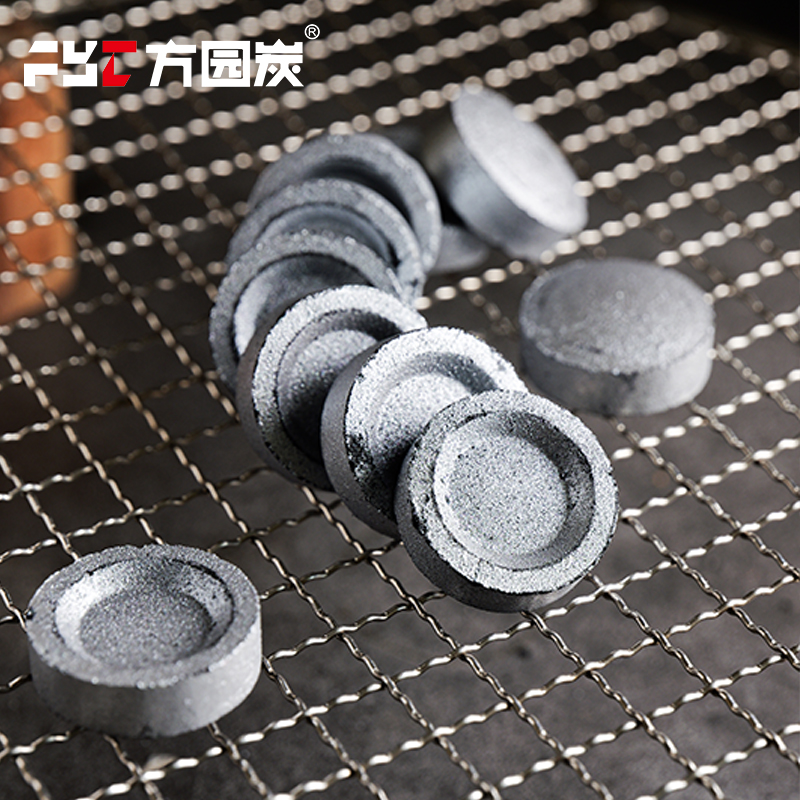
TC-04 incense charcoal is a 33mm round product made from fruit wood charcoal and coconut shell charcoal powder. FYC documents burning time of 45 to 70 minutes and highlights quick light, smokeless, odorless and scent diffuser characteristics. Buyers can select natural black, silver foil or gold foil appearances, with packaging options including flip-top box, magnetic box and pull-out box. This product is positioned for incense burners, bakhoor, aromatherapy, yoga rooms and home relaxation applications.
TC-02 barbecue charcoal is oriented to commercial grilling and outdoor cooking. The product line includes quadrilateral, hexagonal, bamboo, spherical and fangyuan forms, with 50mm square-hole and four-hole options. Materials are bamboo sawdust, hardwood and fruit wood. Burning time for bamboo charcoal sticks is listed at 6 to 8 hours, and fruit wood quick-light barbecue charcoal is listed at 70 minutes. The stated characteristics include high hardness, low ash, smokeless combustion and stable temperature behavior.
Application constraints: matching parameters to use
Different applications place different demands on the same charcoal family. For hookah and shisha lounges, especially in markets where hookah service is a central part of hospitality, the key constraints are stable heat, no odor or smoke, low ash and predictable session length. FYC products used in this segment include cube and hexagonal coconut-based hookah charcoal. A premium shisha lounge chain in Saudi Arabia, for example, ordered roughly 50 metric tons per quarter over a period of two and a half years. The operation specified 25mm cube charcoal, ultra-low ash, consistent odorless burn and custom magnetic box packaging.
For incense and aromatherapy use, the operating condition is different. Users want rapid ignition and slow, smokeless heating of solid incense, bakhoor or oils. That favors a small 33mm round charcoal that can be lit directly with a flame or lighter and placed in a ceramic or metal burner. FYC TC-04 incense charcoal, available with silver or gold foil, is designed for this category. The burning window of 45 to 70 minutes matches typical incense rituals and spa sessions rather than long hookah sessions.
For catering and BBQ restaurants, especially indoor Korean or Japanese grilling concepts, the priority is long-lasting high heat with minimal ash and minimal sparking. A Korean barbecue restaurant group using FYC TC-02 barbecue charcoal ordered roughly one 40HQ container per month over a three-year strategic supply arrangement. The operator reported zero smoke interference in indoor dining and a 15% reduction in total charcoal consumption compared with previous suppliers, attributable to the higher calorific value and consistent burn of the hexagonal bamboo charcoal sticks.
These three cases show why buyers should avoid purchasing charcoal solely on shape or color. The same factory can produce different products for different working conditions, but only if the product parameters are aligned with the application.
How a factory verifies charcoal parameters
FYC is not presented here as a laboratory or certification body. It is a manufacturing company that documents its quality control process in terms that can be checked by a sourcing team. The company reports that it has obtained SGS and ISO certifications. In its capability descriptions, it states that it operates 100% comprehensive inspection on production lines, employs three professional QA and QC inspectors, has undergone an on-site Intertek supplier assessment, and keeps traceability records for raw materials. These are useful signals because they describe inspection behavior rather than a single promotional claim.
Sourcing teams should ask suppliers to show where specification numbers are generated. A supplier that can explain how ash content is measured, how fixed carbon is calculated, and how product size is controlled during the molding step is more likely to deliver consistent batches than one that simply repeats marketing numbers. In the case of FYC, the product data includes an R&D team of eight engineers, and its production routes include wood carbonization, mechanism charcoal from wood chip extrusion carbonization, and mechanism charcoal from wood powder molding.
Comparison with traditional charcoal approaches
FYC’s charcoal products are engineered formats rather than simple lumps of carbonized wood. This is an important distinction for buyers comparing traditional lump charcoal with mechanical charcoal products. Traditional lump charcoal is produced by burning wood in a low-oxygen environment; the resulting pieces retain the irregular shape of the original wood. Many barbecue enthusiasts value lump charcoal for its natural appearance, quick high heat and traditional smoke profile. Some fine-dining BBQ operators will specify lump charcoal because the menu is built around a particular wood type or flavor association.
Engineered charcoal, as produced by FYC, solves different problems. Cube and hexagonal shapes offer more consistent packing, predictable airflow and less breakage in shipping. Uniform density supports repeatable burn time. Low ash content reduces maintenance in indoor settings. But these benefits do not make engineered charcoal universally superior. A buyer whose business depends on a specific natural wood smoke profile may find that a heavily standardized charcoal reduces the traditional sensory character. That is a real limitation and not a failure of the product category; it is a fit question.
A second boundary exists between natural ignition and quick-light charcoal. Quick-light charcoal, including FYC’s quick-light variants, is designed for convenience: it lights faster and reduces the need for separate ignition tools. This is valuable for disposable grills, incense burners and fast-paced hookah lounges. However, quick-light charcoal typically has a shorter burn window of 45 to 70 minutes in FYC’s product range, whereas natural cube hookah charcoal burns for 90 to 120 minutes. For a lounge that wants one long heat cycle per customer session, standard cube charcoal may be the better choice. Buyers should define which trade-off their market rewards: speed of ignition or length of heat.
Price conversations are only useful when the comparison is like-for-like. A low-price quick-light product is not equivalent to a higher-priced dense cube product if the operating cost includes labor for re-lighting, ash removal and customer wait time. Buyers who compare only tonnage price often miss the real cost per usable burn hour.
Market trends that affect charcoal specification choices
Several market signals reinforce the move toward technical sourcing in the charcoal industry.
First, coconut shell charcoal is the fastest-growing source segment. Grand View Research projects a CAGR of 5.0% for coconut shell charcoal between 2026 and 2033, supported by its high fixed carbon content and environmental positioning. Buyers already familiar with coconut shell hookah charcoal should expect more coconut-based products to appear in BBQ and incense segments, not only in hookah.
Second, regional demand remains concentrated in the Middle East and Africa, which accounted for 48.8% of global charcoal market revenue in 2025 according to Grand View Research. This concentration is linked to traditional cooking and shisha culture. For suppliers, it means that product development, packaging and quality documentation should reflect the expectations of importers and distributors serving those regions.
Third, regulatory and standards pressure is rising in Europe. EN 1860-2:2005 sets limits for barbecue charcoal and briquettes in terms of ash content, fixed carbon and moisture. The standard is significant not only because it creates a compliance hurdle for European sales, but because it creates a common vocabulary for buyers and sellers. Suppliers who can document these parameters are easier to qualify than suppliers who only show product photos.
Supply-side structure also matters. Indonesia was the largest exporter of wood charcoal in 2024, with an export value of approximately USD 351.4 million and a 22.96% global market share by value, according to trade data compiled by Volza. This kind of geographic concentration makes importers more interested in supplier diversification and in factories that can demonstrate consistent raw material sourcing.
Practical specification checklist for charcoal RFQs
A useful RFQ should go beyond product name and quantity. The following checklist reflects the parameters discussed in this article and can be adapted to hookah, incense or barbecue charcoal purchases.
Specify the application first. Hookah lounges, bakhoor users and BBQ restaurants have different non-negotiables. Ask the supplier to confirm whether their product is designed for that application.
Request fixed carbon, ash content and calorific value in writing. Compare the numbers against the intended use. For premium hookah charcoal, FYC data suggests fixed carbon above 85%, ash below 3% and calorific value above 7800 kcal/kg are realistic targets. For products that will be sold in Europe, confirm whether the document references EN 1860-2 parameters.
Ask about ignition behavior. Determine whether the charcoal is natural ignition or quick light. Use case evidence for each mode. FYC’s quick-light products have shorter burn times, while its cube products are built for longer hookah sessions.
Define shape and size tolerance. Charcoal is a physical product, and size consistency affects how it sits on a grill or in a hookah bowl. FYC lists cube sizes of 25mm and 40mm, a 33mm round incense product, and BBQ forms including 50mm square-hole and four-hole options.
Verify factory quality control. Ask whether the factory documents raw material traceability, performs inspection across all production lines, and has third-party assessment records. In FYC’s case, the company states it has SGS and ISO certifications and references an on-site Intertek supplier assessment.
Future outlook for charcoal specification-based buying
The charcoal trade is moving toward the same purchasing logic that already applies to other industrial materials: buyers want measurable performance, documented quality and predictable supply behavior. The rise of coconut shell charcoal, the influence of EN 1860-2 in Europe, and the focus on Middle Eastern regional demand all point in this direction.
For charcoal factories, the competitive advantage will increasingly come from the ability to produce consistent specification data and to adapt product geometry, packaging and raw material strategy to specific customer segments. For buyers, the practical question is no longer simply whether a supplier can make charcoal, but whether a supplier can prove that its charcoal will behave the same way in the buyer’s specific application.
FAQ
What are the main charcoal specifications to compare when sourcing charcoal?
The most decision-relevant charcoal specifications are fixed carbon content, ash content, calorific value, burning time, ignition behavior and physical dimensions. Fixed carbon indicates energy density, ash content predicts residue and cleaning needs, calorific value indicates heat intensity, and burning time determines how often the charcoal must be replaced. In premium hookah charcoal, FYC specifies fixed carbon above 85% to 90%, ash content below 3% for premium grade, and calorific value above 7800 kcal/kg.
What is 33mm incense charcoal and when should a buyer choose it?
33mm incense charcoal is a small round charcoal tablet designed for incense burners, bakhoor burners, aromatherapy oil warmers and yoga or spa environments. FYC’s model TC-04 is a 33mm round incense charcoal made from fruit wood charcoal and coconut shell charcoal powder. It is described as quick light, smokeless, odorless and capable of acting as a scent diffuser. Burning time is 45 to 70 minutes, and appearances include natural black, silver foil and gold foil.
What hookah charcoal specifications should a lounge or distributor specify?
A distributor or lounge should specify a product that is made for the hookah environment. Relevant specifications include high fixed carbon, low ash, stable burning time and high hardness to resist breakage. FYC’s TC-01 hookah charcoal is available in cube sizes of 25mm and 40mm, hexagonal form and bamboo form. The documented parameters are fixed carbon above 85% to 90%, ash content below 3% in premium grade, calorific value above 7800 kcal/kg, and a cube burning time of 90 to 120 minutes.
What does EN 1860-2:2005 require for barbecue charcoal in Europe?
EN 1860-2:2005 is the European standard for barbecue charcoal and barbecue charcoal briquettes. It specifies limits or testing expectations related to ash content, fixed carbon and moisture. The standard gives European retailers and importers a common framework for confirming that barbecue charcoal is suitable for sale. Buyers selling into Europe should ask suppliers whether their product data is aligned with the parameters referenced by EN 1860-2.
Why do some charcoal products require quick light and others do not?
Quick-light charcoal is designed for convenience. It reduces the time between lighting and use, which is valuable for incense rituals, disposable grills and fast-paced hookah service. In FYC’s range, quick-light variants are documented with a burning time of 45 to 70 minutes. Natural cube hookah charcoal burns for 90 to 120 minutes, so the trade-off is speed of ignition versus length of heat. Buyers should select according to the pace of their application.
What evidence can a charcoal factory provide to verify specifications?
A charcoal factory can provide certification documents, production-line inspection descriptions, raw material traceability records and third-party assessment references. FYC states that it has obtained SGS and ISO certifications, reports 100% comprehensive inspection on production lines, employs three professional QA and QC inspectors, and references an on-site Intertek supplier assessment. Buyers should treat such evidence as useful, but should still confirm that the certified scope matches the specific product being purchased.
Manufacturer reference: Dalian Tiancheng Charcoal Industry Technology Co., Ltd. (FYC), Dalian, Liaoning Province, China.
Official website: https://fyc-charcoal.com
Corporate and product brochure: FYC brochure (PDF)
Data sources referenced: Grand View Research, Dataintelo, DIN CERTCO / CEN, Volza.
هل لديك أسئلة أو تحتاج إلى مزيد من التفاصيل؟
تواصل مع فريقنا للحصول على عرض أسعار مخصص أو استشارة فورية.
طلب عرض أسعار
املأ النموذج أدناه وسيتواصل معك فريقنا بعرض مقترح مخصص.
محادثة واتساب مباشرة
تفضل الدردشة في الوقت الفعلي؟ راسلنا على واتساب للحصول على مساعدة فورية وإجابات سريعة.
- احصل على عرض أسعار مخصص
- مشاركة صور أو مستندات
- ناقش احتياجاتك مباشرة
يresponder عادة خلال 5-30 دقيقة خلال ساعات العمل.