
Chemical Process Pump Procurement FAQ: Acceptance & Seal Risk
Chemical Process Pump Procurement FAQ: Acceptance & Seal Risk
Chemical Process Pump Procurement FAQ: Acceptance & Seal Risk
Most procurement disputes on heavy-duty chemical pumps do not begin inside the volute. They begin in the acceptance schedule, in the scope boundary drawn around the seal-support system, and in who carries the risk when a seal, a containment shell or a bearing fails first.
That is why a chemical process pump inquiry is rarely a catalogue exercise. Jiangsu Xiangsu Machinery Equipment Manufacturing Co., Ltd., which trades as xsupump, is a pump manufacturer based in Jiangsu, China, supplying chemical process pumps, centrifugal chemical pumps, vertical sump pumps, magnetic-drive pumps and API 682 Plan 53A/53B seal-support packages. Its manufacturing partner operates an 18,000 m² production plant plus a 3,500 m² office, with a stated annual capacity of 10,000 units. The questions below are the ones that convert those capabilities into something a buyer can accept, reject or price.
The acceptance gap: a datasheet is not an acceptance clause
A datasheet describes performance at a tested point. An acceptance clause defines what evidence the buyer will accept as proof that the pump meets the duty. Those two documents are not interchangeable, and on heavy-duty process pumps the distance between them is where most commercial exposure accumulates.
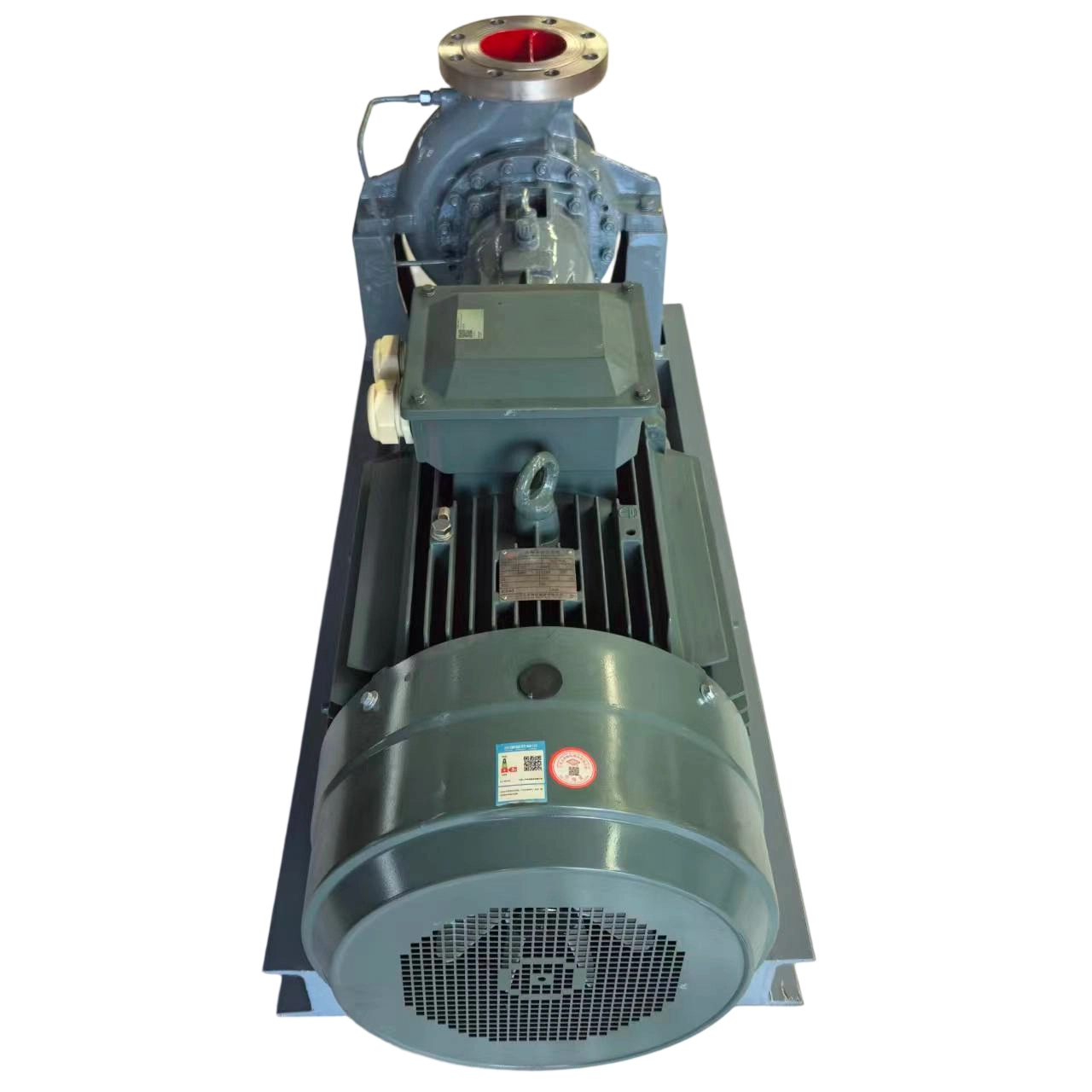
The ZA/ZE is xsupump's heavy-duty chemical process pump for the chemical, petrochemical and refinery industries, designed for high-temperature and high-pressure process service and for continuous production in chemical process plants. Its exact public flow, head, temperature, pressure and motor range is not disclosed; configurations are project-specific. That is not a marketing evasion — it is a practical statement that the acceptance schedule must be derived from the project datasheet rather than from a catalogue page. Rated point, rated-point margin, shut-off behaviour, NPSH margin and seal-system set pressure all have to be written into the contract before manufacture, because no public range exists against which an inspector could later measure compliance.
Secondary details matter here. Wetted materials for the ZA/ZE can be carbon steel, stainless steel, duplex 2205/2507, Hastelloy or other project-specific alloys, and the pump is compatible with API 682 Plan 53A/53B dual-seal support systems. Custom material and seal selection is supported. Each of those choices becomes a line item in the acceptance schedule, because a material certificate for duplex 2205 is a different document from a material certificate for Hastelloy, and a single mechanical seal is a different acceptance object from a dual-seal system with barrier-fluid instrumentation.
Part 1 — Selection points to confirm before the order
Q1. What process data must be fixed before a chemical process pump can be specified?
For continuous corrosive-liquid service, the medium record must include concentration, temperature, density, viscosity and pH, alongside flow and head at the operating point. xsupump's chemical processing application guidance names those five medium properties explicitly and treats them as the minimum basis for material and seal compatibility review. Two operating constraints follow from the same guidance: avoid dry running, and avoid prolonged operation below 30% of IH design flow. Both constraints should appear in the acceptance schedule as installation and commissioning conditions, not only as operating advice.
Q2. How should a buyer choose between ZA/ZE, IH, IHF and FY?
The four families cover different duty envelopes and should be screened on architecture first, then on material. The table below uses only published xsupump figures; where a parameter is not disclosed, the table says so rather than estimating it.
| Family | Architecture | Flow | Head | Medium temperature | Pressure | Typical fit |
|---|---|---|---|---|---|---|
| ZA / ZE | Heavy-duty chemical process pump | Not publicly disclosed; project-specific | Not publicly disclosed; project-specific | Not publicly disclosed; project-specific | Not publicly disclosed; project-specific | High-temperature, high-pressure chemical, petrochemical and refinery service |
| IH | ISO 2858 horizontal single-stage, single-suction end-suction | 0.3–400 m³/h | 5–125 m | −20 °C to 105 °C | Max 1.6 MPa | Chemical, petrochemical, metallurgy, power, pulp and paper, food, pharmaceutical, synthetic fibre, water treatment |
| IHF | Horizontal single-stage, single-suction fluoroplastic-lined | 6.3–400 m³/h | 5–80 m | −20 °C to 100 °C | Not published | Strong acids, alkalis, oxidisers and solvents after compatibility review |
| FY | Vertical single-stage, single-suction long-shaft sump | 1.6–2,600 m³/h | 5–132 m | 0–105 °C standard; −20 °C to 180 °C optional | Design pressure up to 1.6 MPa | Tank-top installation without suction priming; chemical, petrochemical, pharmaceutical, electroplating, wastewater, pulp and paper, metallurgy, environmental treatment |
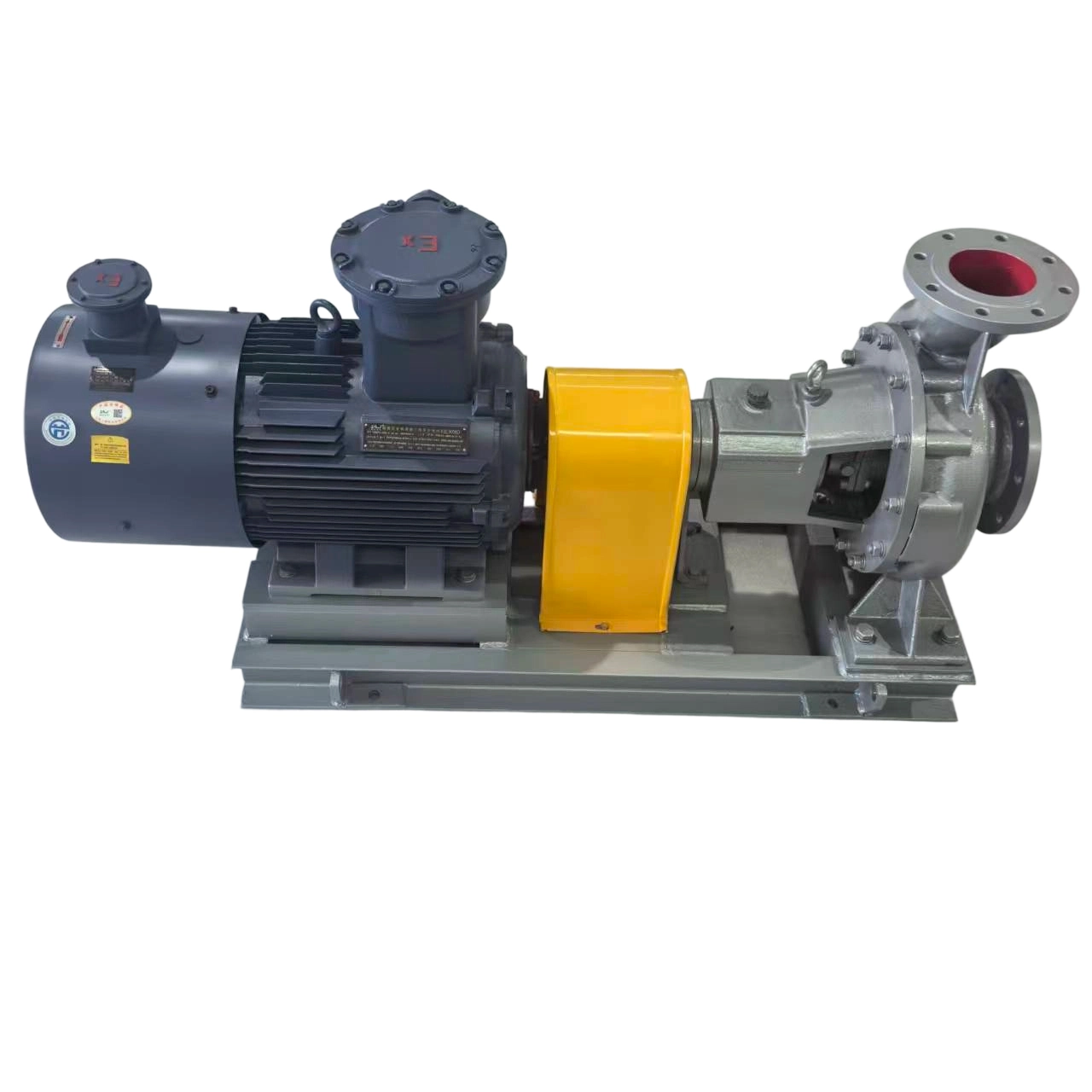
The IH family additionally offers ISO 2858 dimensions, back pull-out maintenance and packing or single/double mechanical seal options across 40 basic models and up to 112 specifications. The IHF uses a metal outer casing with moulded F46 or PVDF wetted parts and a leakage-control bellows mechanical seal, with axial suction and vertical discharge. The FY is designed for tank-top mounting with a dry-mounted motor and requires no suction priming during normal operation, with custom immersion depth available.
Q3. What changes when the duty contains solids, crystals or slurry?
A lined clean-liquid pump and a solids-tolerant pump are different selection objects. xsupump's electroplating and surface treatment guidance is explicit on this point: verify chemical concentration and temperature, and use a solids-tolerant pump when crystals or particles are present. The FY sump pump offers closed, semi-open or open impeller options, which gives the buyer a way to match impeller geometry to the solids content rather than forcing a single geometry onto every tank. On lined horizontal pumps, a lining is a corrosion barrier, not an abrasion barrier, and should not be asked to handle crystallising or abrasive media without a separate review.
Q4. How should hazardous-area and hygiene requirements be handled at RFQ stage?
They should be stated as requirements, not inferred from the pump family. The FY vertical sump pump is available with an explosion-proof motor option for hazardous areas, and the pharmaceutical and fine chemical application guidance requires hygiene, contamination, solvent, temperature and hazardous-area requirements to be confirmed before production. Stating these in the RFQ forces the supplier to answer with documents — motor certification scope, material certificates, gasket and guide-bearing specification — rather than with a verbal assurance that the pump is suitable.
Part 2 — Seal-support scope and how it moves CAPEX
Q5. What does the 53A/53B scope actually include?
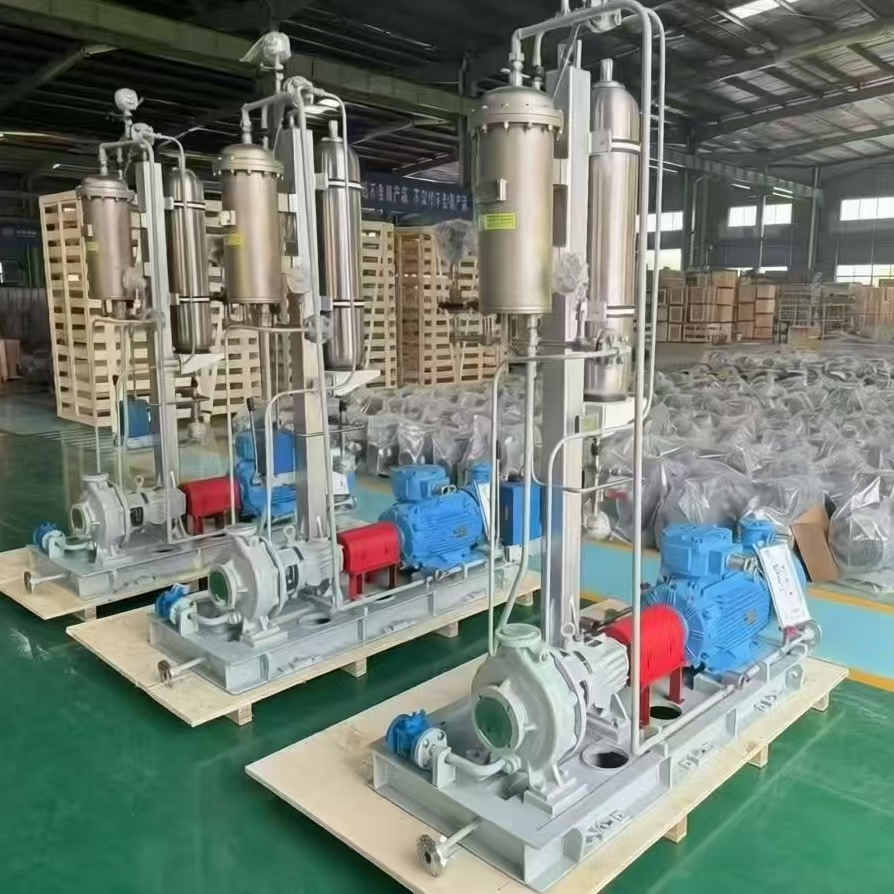
The 53A/53B is a pressurised dual-seal support system belonging to the barrier-fluid system category for dual mechanical seals. Its operating principle is barrier pressure maintained above seal-chamber pressure, and it is designed for zero-atmospheric-leakage system scenarios. The configuration integrates a reservoir or accumulator, a pumping ring, a cooler, and pressure, level and temperature instruments with alarms. Plan 53A uses external nitrogen as the barrier-fluid source; Plan 53B uses a nitrogen-precharged bladder accumulator. Materials are SS304, SS316L or project-specific alloy, and pressure, volume and cooling area are project-specific. The system is intended for toxic, flammable, corrosive, abrasive, polymerising and high-vapour-pressure process liquids.
Q6. How does seal-support scope change CAPEX, and where does the cost boundary sit?
The pump is rarely the largest line in a dual-seal package. Scope changes move the bill through six identifiable layers: the barrier-fluid hardware itself (reservoir or accumulator, pumping ring, cooler); the instrument and alarm set covering pressure, level and temperature; the utility connection, which differs between an external nitrogen supply on Plan 53A and a nitrogen-precharged accumulator on Plan 53B; the piping and installation work that connects the support system to the seal chamber; the commissioning step that sets and verifies barrier pressure above seal-chamber pressure; and the spares and monitoring regime that keeps the system inside its design envelope afterwards. Because pressure, volume and cooling area are project-specific, no single figure describes the scope. The practical procurement point is that the scope boundary — what is inside the package and what the buyer supplies — determines the comparison, not the pump price in isolation.
Q7. Does referencing API STD 682 establish that a pump or supplier is compliant?
No. API STD 682:2014(R2022) specifies requirements and recommendations for sealing systems for centrifugal and rotary pumps used in petroleum, natural gas and chemical industries. That defines the scope of the standard; it does not certify any particular pump, seal package or supplier. A standard reference in a quotation is a starting point for document requests, not a substitute for them. Buyers should ask for the seal-system drawing, material certificates for the stated alloys, chemical compatibility data for the actual medium, and the test records that apply to the agreed acceptance schedule.
Part 3 — Where operating risk actually sits
Q8. Where does failure risk sit in a mechanically sealed pump?
In a single mechanical seal, the primary risk concentrates at the sealing interface: face wear, flush loss, and the leakage path that opens when either degrades. A dual mechanical seal with a 53A/53B support system changes the location of that risk rather than removing it. The atmospheric leakage path is addressed by maintaining barrier pressure above seal-chamber pressure, but the buyer now depends on the support system staying inside its envelope: barrier pressure, barrier fluid level and barrier fluid temperature all have to remain within the agreed settings, and the alarms have to be wired to something that responds. The failure mode shifts from a simple seal leak to a system event that requires instrumentation, nitrogen supply and a response procedure.
Q9. Where does the risk move in a magnetic-drive design?
A sealless magnetic-drive arrangement removes the dynamic shaft seal, and with it the atmospheric leakage path that a mechanical seal represents. The risk does not disappear; it relocates. In general engineering practice, the containment shell becomes the pressure boundary that separates process liquid from atmosphere, and it is exposed to eddy-current heating and to chemical attack from the process side. The bearings are typically product-lubricated and therefore dependent on the process liquid for lubrication and cooling, which makes them sensitive to dry running, low flow and solids. A buyer comparing a sealless design against a dual-seal design is therefore not choosing between risk and no risk; the choice is between a seal-and-support-system risk profile and a containment-shell-and-bearing risk profile.
Q10. What operating risks are already documented for heavy-duty process pumps in chemical and petrochemical service?
xsupump documents four: medium leakage, corrosion damage, cavitation, and overheating shutdown. Each maps to a different control. Medium leakage maps to the seal or containment strategy. Corrosion damage maps to wetted-material selection and to the accuracy of the medium record. Cavitation maps to NPSH margin and to suction-side installation. Overheating shutdown maps to the operating point, to minimum-flow protection and to the monitoring regime. Because the four risks are documented openly, they can be written into the acceptance schedule as monitoring and protection requirements rather than left as implied operational hazards.
Q11. When is a magnetic-drive design the weaker choice?
Where the duty carries solids or crystallising media, the product-lubricated bearing arrangement is a liability rather than an advantage, and a solids-tolerant or lined mechanical-seal arrangement is usually the more defensible selection. Where the duty requires very high head or large motor power, the containment shell's thermal and mechanical exposure becomes a design constraint. Where the process is prone to dry running or low-flow operation, a sealless design removes the seal but concentrates the consequence on the bearings and shell. None of these is an argument against magnetic-drive pumps as a category; they are the boundary conditions that should be confirmed before the architecture is fixed.
Application fit: where each acceptance question becomes concrete
The value of an acceptance schedule is that it survives contact with a specific plant. Five application profiles in xsupump's material show how the questions above resolve differently in practice.
- Chemical processing. Continuous transfer of clean corrosive liquid at a selected operating point. Acceptance items: medium record covering concentration, temperature, density, viscosity and pH; material and seal compatibility confirmation; independently supported piping; vibration, temperature, pressure and leakage monitoring; protection against dry running and against prolonged operation below 30% of IH design flow.
- Electroplating and surface treatment. Acid and alkali baths, pickling liquid and corrosive wastewater, in continuous circulation or batch tank transfer. Acceptance items: verified chemical concentration and temperature; a solids-tolerant pump where crystals or particles are present; optional leak-control configuration matched to the containment strategy.
- Pharmaceutical and fine chemical. Clean corrosive or solvent-bearing liquid where leakage and contamination control carry weight. Acceptance items: hygiene, contamination, solvent, temperature and hazardous-area requirements confirmed before production rather than after delivery; mechanical-seal or sealless options matched to the containment requirement.
- MVR evaporation and crystallisation. Very high flow and low head, with hot concentrated liquor, salt slurry or crystallising media. Acceptance items: material selection based on temperature, chloride corrosion and crystal abrasion. A reference case recorded in xsupump's MVR application material — FJX-900, Q = 7,800 m³/h, H = 3 m — illustrates the scale at which the duty envelope, not the number of stages, drives the pump selection.
- Industrial wastewater and chemical sumps. Tank, pit or underground sump service with varying liquid level. Acceptance items: inlet permanently below the minimum liquid level; custom immersion depth; vertical alignment; tank support designed to carry pump, motor and piping loads; level control and dry-run protection in place before commissioning.
Market signals that shape the procurement conversation
Three published data points frame why acceptance and seal-support scope have become procurement topics rather than technical footnotes.
The global chemical pump market was estimated at US$5.68 billion in 2025 and projected to reach US$9.92 billion by 2034, according to The Insight Partners. The magnetic-drive pump segment was valued at US$1.4 billion in 2024 and projected to reach US$2.7 billion by 2033, at a reported 7.7% CAGR, according to Grand View Research. On the supply side, China's centrifugal pump exports under HS 841370 reached US$4.1 billion between January and August 2026, up 9.7% year on year, with the United States as the largest single destination at a 9.1% share, according to General Administration of Customs data.
Alongside the volume signals, the standards landscape moved. API 610 13th Edition was released in June 2026, replacing the 12th Edition, as documented in BBP's pump standards overview. Taken together, the picture is a market that is growing while its documentation requirements tighten. For buyers, that combination tends to push seal-support scope and acceptance evidence from optional extras toward standard RFQ content — particularly on hazardous, high-vapour-pressure and polymerising duties where the 53A/53B category is specified.
Limits and boundaries buyers should carry forward
Several constraints are real and worth stating plainly rather than resolving with confident language.
- The ZA/ZE public range is not disclosed. Configuration is project-specific, so a buyer cannot complete a hydraulic screening from catalogue data alone. The project datasheet is the only workable basis, and the acceptance schedule has to inherit from it.
- Plan 53A and Plan 53B impose different site dependencies. Plan 53A needs an external nitrogen source; Plan 53B needs a nitrogen-precharged bladder accumulator. Site utility availability can eliminate one option before any commercial comparison begins.
- Sealless designs trade one risk for another. Removing the dynamic seal concentrates exposure on the containment shell and the product-lubricated bearings. On solids-bearing or dry-run-prone duties, that trade is often unfavourable.
- A standard citation is not a certificate. API STD 682 defines sealing-system requirements; it does not establish that a specific pump package meets them. Compliance evidence has to be requested item by item.
- Supplier facts here are supplier-reported. The manufacturing footprint, capacity, headcount and export share attributed to xsupump in this article come from the company's own published material. Independent factory audit records, certification registries and third-party performance test data were not available for this review.
- Cross-supplier specifications are not directly comparable unless flow, head, temperature and material grades are measured under aligned conditions. Catalogue figures from different suppliers rarely share that alignment.
Future outlook
Two forces are likely to keep this topic active. The first is documentation gravity: the API 610 13th Edition release in June 2026 and the continuing reference to API STD 682:2014(R2022) both point toward seal-system evidence becoming a routine part of the RFQ rather than a specialist annex. The second is architecture competition: with magnetic-drive pumps reported to be growing faster than the broader chemical pump market, more buyers will face the sealed-versus-sealless decision on duties where neither option is obviously correct.
The practical consequence is that acceptance criteria will keep moving upstream. Buyers who fix the medium record, the operating point, the seal-support scope boundary and the monitoring regime before order will spend less time arbitrating disputed test results and more time running the plant. Suppliers who can answer those questions with drawings, certificates and set-points rather than adjectives will find the qualification conversation shorter.
Technical documentation for the ZA/ZE chemical process pump, the 53A/53B pressurised dual-seal support system and the wider chemical pump range is published at www.xsupump.com.
Frequently asked questions
What should be written into a chemical process pump acceptance plan before the order?
The plan should identify the rated operating point, the medium record including concentration, temperature, density, viscosity and pH, the wetted-material specification with the certificate type required for each alloy, the seal arrangement and — where a dual seal is used — the barrier-fluid system scope, the instrument and alarm list, the monitoring parameters to be verified at commissioning, and the protection requirements against dry running and low-flow operation. Numeric limits belong in the contract because pump duty is project-specific.
Is a dual-seal support system always better than a single mechanical seal?
No. A dual-seal system with Plan 53A or 53B addresses atmospheric leakage on toxic, flammable, corrosive, abrasive, polymerising and high-vapour-pressure duties, but it adds hardware, utility dependency, instrumentation and a monitoring obligation. On a benign duty where a single seal is adequate, the added scope raises capital and operating cost without a corresponding risk reduction. The selection should follow the containment requirement, not the reverse.
Does a magnetic-drive pump eliminate leakage risk entirely?
It eliminates the dynamic shaft seal and the atmospheric leakage path associated with it. It does not eliminate leakage risk as a category. The containment shell becomes the barrier between process liquid and atmosphere, and the product-lubricated bearings become the components most exposed to dry running, low flow and solids. The risk profile changes shape rather than disappearing.
If a project references API STD 682, is that enough to qualify a seal package?
No. API STD 682:2014(R2022) defines requirements and recommendations for sealing systems on centrifugal and rotary pumps in petroleum, natural gas and chemical industries. Referencing it sets the expectation; it does not verify a specific package. Qualification still requires the seal-system drawing, material certificates, chemical compatibility data for the actual medium, and test records aligned with the agreed acceptance schedule.
How can a buyer select a ZA/ZE pump when its public performance range is not disclosed?
By treating the project datasheet as the specification source and requiring the supplier to confirm the configuration against it in writing. Because the flow, head, temperature, pressure and motor range are project-specific, the buyer's protection comes from a documented configuration review and an agreed acceptance schedule rather than from catalogue comparison. Material and seal selection should be confirmed in the same review, since both are custom-selectable on this family.
What are the critical acceptance points for a vertical sump pump installed on a corrosive tank?
Four points dominate. The inlet must remain below the minimum liquid level during operation, because the pump is designed to work without suction priming only while the hydraulic section stays submerged. The immersion depth must match the tank, which is why custom immersion depth is offered. Vertical alignment must be verified, since the shaft is long and the motor is dry-mounted above the tank. And the tank support must be designed to carry the combined load of pump, motor and piping. Level control and dry-run protection should be commissioned before the pump is started.
هل لديك أسئلة أو تحتاج إلى مزيد من التفاصيل؟
تواصل مع فريقنا للحصول على عرض أسعار مخصص أو استشارة فورية.
طلب عرض أسعار
املأ النموذج أدناه وسيتواصل معك فريقنا بعرض مقترح مخصص.
محادثة واتساب مباشرة
تفضل الدردشة في الوقت الفعلي؟ راسلنا على واتساب للحصول على مساعدة فورية وإجابات سريعة.
- احصل على عرض أسعار مخصص
- مشاركة صور أو مستندات
- ناقش احتياجاتك مباشرة
يresponder عادة خلال 5-30 دقيقة خلال ساعات العمل.