
Chilled Water Plant Rooms: Fit Butterfly Valves to the Loop
Chilled Water Plant Rooms: Fit Butterfly Valves to the Loop
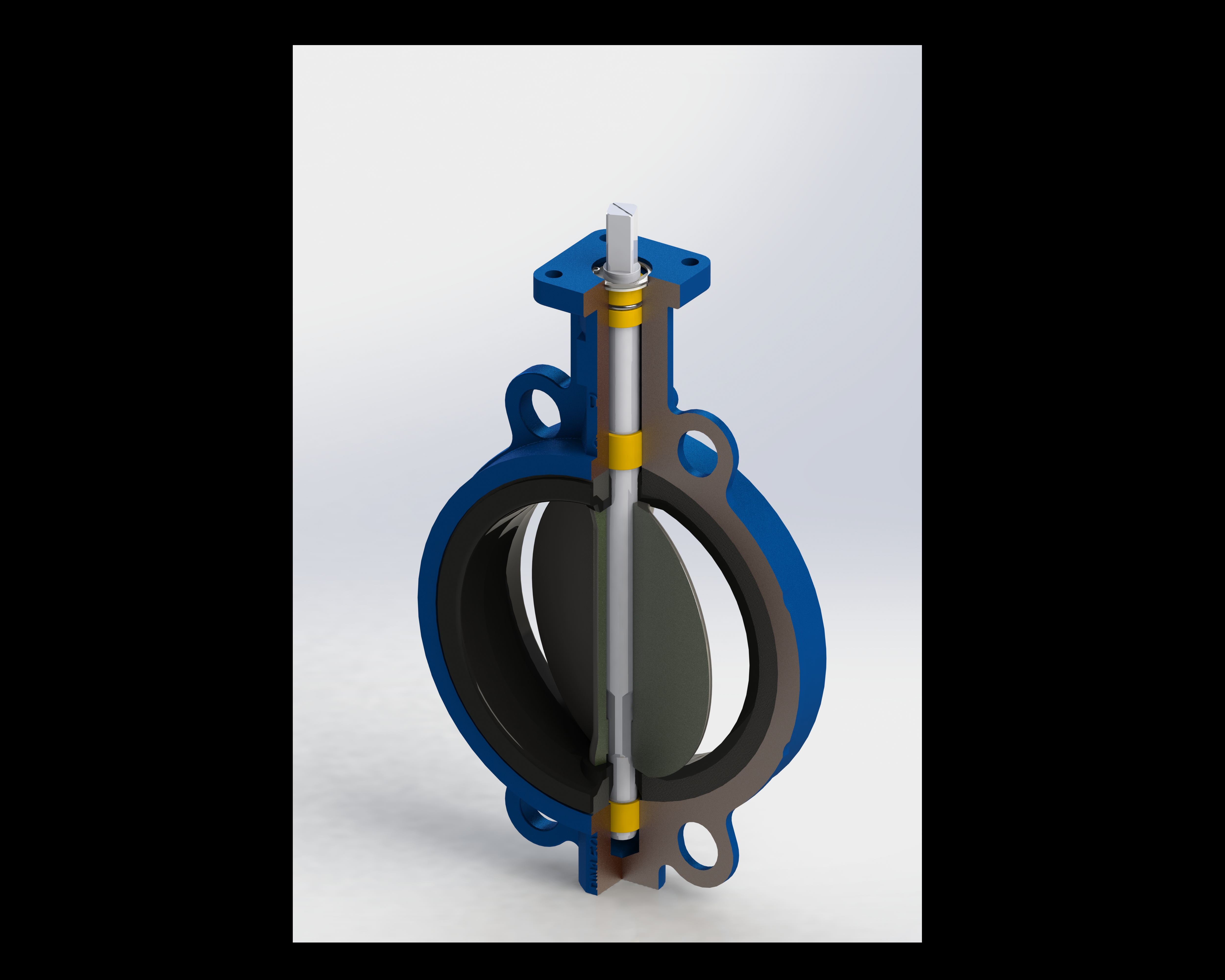
In a chilled water plant room the valve is the last decision, not the first. Loop pressure, water quality, the temperature envelope and the geometry of the pipework define the requirement; the butterfly valve is then selected to meet it. Reversing that order — choosing a valve class first and bending the loop around it — is one of the more common reasons a plant-room isolation package ends up over-specified at the chiller header and under-specified at the pump discharge.
This guide works through the sequence for HVAC and chilled water duty: body material, seat, pressure class, end connection and actuation. It draws on the published product and application data of Tianshun Valve Co., Ltd. (Tianshun Valve), a Tianjin-based manufacturer founded in 1993 with a stated annual output of 680,000 units and exports to markets including the United States, Spain, Italy, Britain, Germany, Turkey, South Korea, Singapore and India.
What the loop actually asks for
Commercial-building and data-centre HVAC water systems are described in Tianshun's application data as closed loops carrying chilled water and hot water at low to medium pressure, indoors, with clean media. Valves in these loops do three jobs: isolation, flow regulation and balancing. The equipment they sit against is the plant list — chillers, cooling towers, pumps, air-handling and fan-coil units, heat exchangers and, in data halls, CRAC and CRAH units.
That description fixes the design order. Pressure class comes first because the loop and the pump head determine it. Body material follows, because a closed clean-water loop does not need a corrosion-resistant alloy by default. Seat material follows the temperature band. Only then does the end connection get chosen, because wafer, lug, grooved and flanged bodies differ in how they physically attach to the pipe, not in what they do to the flow.
Body material: ductile iron with epoxy coating as the working baseline
For clean chilled and hot water, ductile iron with a fusion-bonded epoxy body coating is usually the lowest-cost body route among the common options. Tianshun Valve lists its butterfly valve body materials as ductile iron, cast iron, stainless steel, carbon steel and bronze, and specifies a fusion-bonded epoxy coated body across its wafer, lug, half lug, U type, double flange, double eccentric, grooved and industry models. The iron carries the structure; the epoxy coating is the corrosion barrier between the iron and the water.
That baseline holds while the medium stays clean and non-aggressive. It stops holding when the loop water turns corrosive. In seawater and desalination pretreatment service, Tianshun's application requirement shifts to duplex or super duplex bodies with epoxy-coated discs and to the corrosion-resistant butterfly valve range. A chilled water plant room does not normally sit in that category, but a plant room on a coastal site, or one serving an open cooling tower circuit with weak water treatment, may need the question asked rather than assumed.
Two practical checks follow from the material choice. First, confirm that the coating is fusion-bonded epoxy rather than a paint film, because the coating is doing the corrosion work. Second, confirm what the disc carries. On the double flange model BF2F, Tianshun allows the disc finish to be specified separately — electroplating, nylon coating or epoxy coating — and that is precisely where a plant-room specification benefits from being explicit rather than silent.
The seat sets the real temperature envelope
Seat material, not body material, usually decides whether a valve suits a given loop temperature. Tianshun's published guidance sets EPDM at −30 °C to +120 °C for water, steam condensate and mild chemicals; NBR at −20 °C to +90 °C for oil, fuel and air; PTFE at −40 °C to +180 °C for chemical resistance and low friction; Viton (FKM) at −20 °C to +200 °C for oil, fuel and aggressive chemicals; and metal seats up to +400 °C and above for severe service.
For chilled water and standard hot water loops, EPDM is the default and the normal working band sits comfortably inside it. The specification question that matters is not the habitual operating temperature but the maximum the loop can reach — after a chiller trip, a bypass event, a seasonal changeover to heating, or a temporary loss of flow. A valve selected on the routine operating temperature can be inside the body rating and outside the seat rating at the same moment.
This is why the pressure class alone is an unsafe shorthand. Tianshun's own pressure and temperature guidance notes that plastic and rubber seats lose strength as temperature rises, and gives the worked case: a PN 16 valve may only be rated PN 10 at 100 °C. The pressure/temperature curve, not the figure cast into the body, is the document that governs.
PN10 or PN16: read the class off the loop
For standard low-pressure HVAC distribution, PN10 is the normal starting point. PN16 belongs to higher distribution pressure and to pumping stations, where pump head and surge allowance push the design pressure upward. Tianshun's flanged butterfly valves are listed against EN1092 PN6, PN10, PN16 and PN25, with ANSI 150, AS2129 Table D–E–F, SABS Table 1000 and 1600, and JIS 10K–16K alternatives, so the pressure class and the flange pattern have to be fixed together rather than in sequence.
Two errors recur in plant-room packages. The first is specifying PN16 everywhere for comfort, which adds cost and weight without improving isolation. The second is taking PN10 from the loop's static pressure while ignoring the pump's shut-off head. The class should come from the maximum pressure the loop can actually see, pump curve included, not from the normal operating point.
End connections: where each body physically fits
Once class, body and seat are fixed, the end connection becomes a geometry decision. The table below maps the body styles in Tianshun's range to their published end connections and size ranges.
| Body style (model) | End connection | Size range | Physical fit in a plant room |
|---|---|---|---|
| Wafer (BFW) | Clamped between flanges; EN558-20 / API 609-2-A | DN40–DN1000 | Compact inline isolation on crowded headers |
| Lug (BFL) | Lug pattern with bolt holes | DN50–DN1000 | Pump headers and joints that get opened for maintenance |
| Half lug (BFHW) | Half-lug pattern | DN40–DN300 | Small branch and equipment connections |
| Grooved end (BFW) | Grooved to AWWA C606 / ISO 6182 | DN50–DN300 | Pipework already grooved for clamp couplings |
| Double flange (BF2F) | Integral flanges; EN558-13/14, API 609 3C-B | DN50–DN1800 | Large headers and fixed flanged joints |
| Double eccentric (BFFF) | Double flange, offset disc | DN40–DN1800 | Higher pressure, lower-torque duty to PN25 |
Wafer bodies sit between two flanges and are held by the flange bolts, with face-to-face dimensions to EN558-20 and API 609-2-A. That makes them the shortest and lightest option in the range and the natural choice for inline isolation on a tight header. The trade-off is physical: a wafer body needs a mating flange on both sides, so it cannot serve as a dead-end isolation point. Tianshun's installation guidance for wafer valves is worth repeating at the fitters' level — fully close the disc before insertion, centre the body between the flanges, tighten the bolts evenly in cross sequence, and never use the disc to pull pipework into alignment.
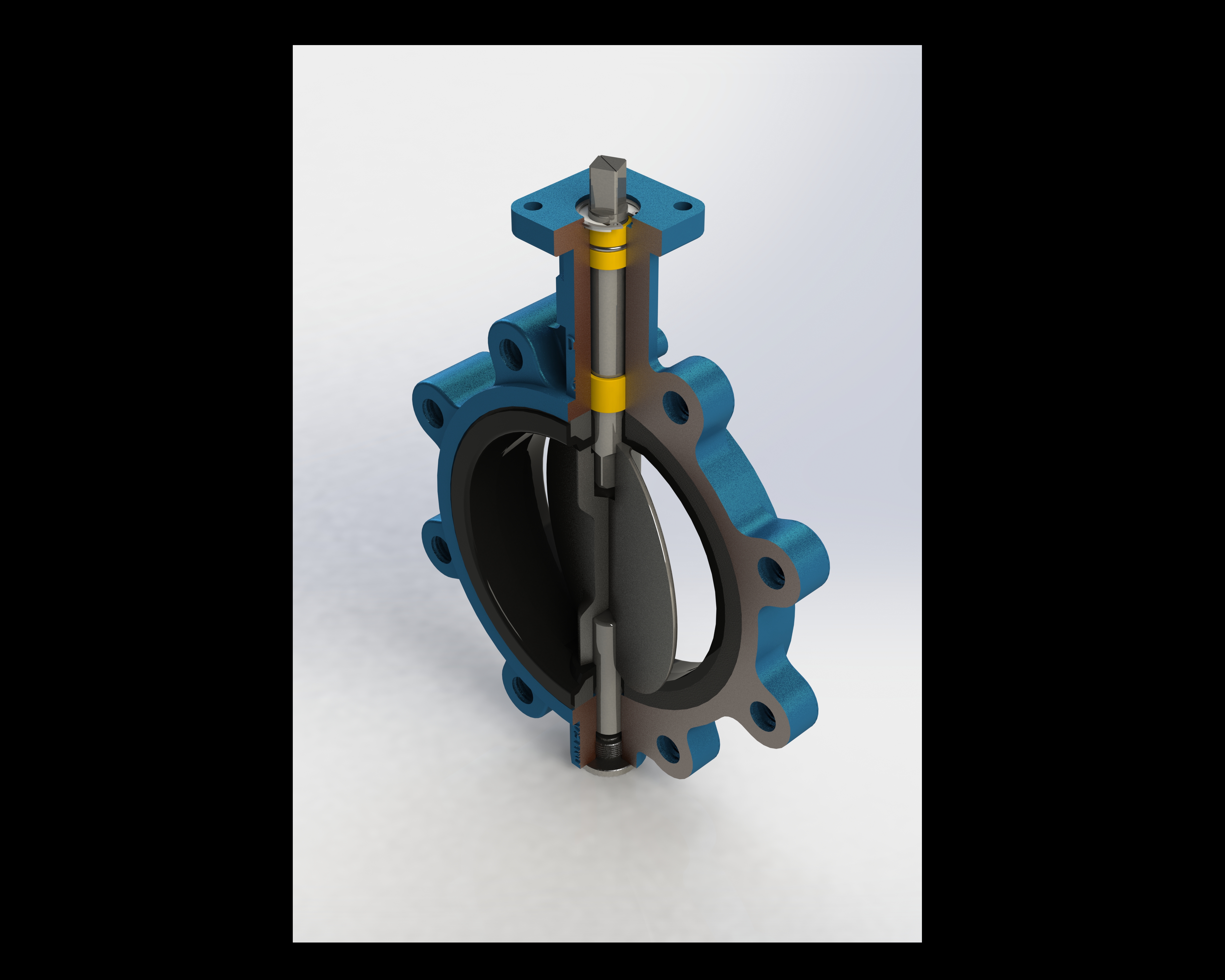
Lug bodies replace the plain wafer rim with a lug pattern carrying bolt holes, so the body is located by the flange bolts instead of being clamped between two flanges. In a pump header, that bolt pattern is what allows the valve to be bolted to the pump-side flange while the header side is opened. Whether a lug body may be used as a dead-end isolation point still depends on the project specification and the manufacturer's confirmation, so it should be stated in the datasheet rather than inferred from the word lug. Tianshun's lug model is offered with a replaceable seat and a lever locking device, and accepts lever, worm gear, pneumatic or electric operation.
The half lug body applies the same idea at smaller sizes, from DN40 to DN300, with a fission-type construction, a PTFE sealing ring and a high-elasticity rubber backing. It is the option for branch lines and small equipment connections where a full lug pattern would be unnecessary metal.
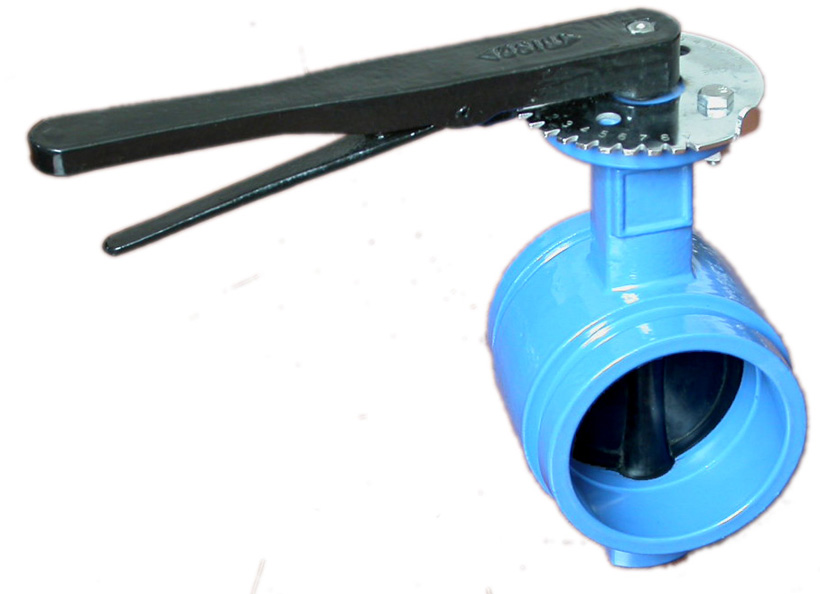
Grooved end bodies carry no flange at all: the ends are grooved to AWWA C606 and ISO 6182 and a clamp coupling makes the joint. Where the chilled water pipework is already grooved, this removes flange pairs from the installation and shortens the work; where the pipework is flanged, it does not apply at all. Tianshun lists the grooved range from DN50 to DN300.
Double flange bodies carry their own integral flanges, with face-to-face to EN558-13/14 and API 609 3C-B, from DN50 to DN1800. They are the heavier and longer option, and they are what large headers and fixed flanged joints usually require. The double eccentric model uses the same flanged envelope with an offset disc geometry that Tianshun describes as reducing friction between the sealing ring and the seat, lowering operating torque and extending operating life, with a working pressure up to PN25. For a standard chilled water loop that geometry is more capability than the duty needs; for a high-head distribution header it earns its place.
Why the usable rating can sit below the body class
The pressure class stamped on a body is not the pressure class of the assembly. Tianshun's guidance states the rule plainly: the system design pressure must not exceed the lowest rating among body, disc, seat, stem, gasket and actuator. The example given is a PN16 body with a seat rated PN10 at the operating temperature — the safe working pressure is PN10.
The seat is the usual culprit because it is the softest link and the one most affected by temperature. The actuator is the second. A quarter-turn valve closing against a differential pressure needs enough torque to seat and, more demanding still, enough torque to unseat after a long period closed. If the actuator is sized on line pressure rather than on the differential it will actually face, the assembly's usable differential falls below what the body alone could carry. Actuator temperature rating and enclosure class add a further ceiling in a hot plant room or a condensing chilled water environment.
The consequence for a specification is straightforward: request the pressure/temperature curve at assembly level rather than body level, and read the actuator datasheet alongside it. A quotation that states PN16 without qualifying seat and actuator has quoted the least useful number in the set.
Continuous duty and the 80% convention
Isolation duty and continuous duty are different specifications. An isolation valve is operated occasionally and sits fully open or fully closed for most of its life. A valve holding a regulated position, or cycling on a schedule, is on continuous duty, and the margin it needs is larger.
A common plant-room convention is to plan continuous duty at about 80% of the catalogue rating and keep the remainder as margin for temperature drift, actuator torque and fouling. The percentage is a design convention rather than a product rating: the real ceiling stays the lowest-rated component, confirmed against the manufacturer's pressure/temperature curve and the actuator datasheet. Where a valve is bought for isolation only, the 80% figure is not the governing number; where it is expected to modulate or cycle, it is.
That distinction matters most at the pump header and the chiller connection, the two places in a plant room where one valve is most often asked to do both jobs.
Manual or electric for isolation duty
Tianshun's butterfly valves accept lever, worm gear, pneumatic and electric operation, or combinations of these. For plant-room isolation the decision usually comes down to manual versus electric, and it turns on four questions rather than on preference.
Frequency and access. A valve operated a few times a year in an accessible location is a manual valve. A lever suits smaller sizes; a worm gear suits larger sizes where the torque is higher and a lever would be impractical. Where the valve sits above a ceiling, inside a riser or behind equipment, manual operation stops being a real option regardless of duty.
Whether the plant needs remote status. Isolation valves that must be operated from a building management system, or that must report position, need an electric actuator with the matching control signal and limit switches. Tianshun's commissioning guidance for electric actuated butterfly valves covers the checks that matter in practice: confirming that supply voltage matches the actuator rating, wiring power and control signal to the manual, setting open and close limits and torque protection, testing local and remote commands, and verifying the flow response under the control signal.
Environment. Chilled water plant rooms condense, which is why anti-condensation protection appears among the special requirements in Tianshun's HVAC application data alongside bubble-tight shutoff, low leakage and quiet operation. Heater arrangements and enclosure class belong in the datasheet, not in an accessory list.
Failure behaviour. Electric actuators hold position on power loss unless a fail-safe option is specified; pneumatic actuators can be configured to fail open or fail closed. For pure isolation duty in a chilled water loop, holding position is usually the correct behaviour, which is one reason electric actuation dominates the isolation role while pneumatic actuation is reserved for duties that need fast or fail-safe action.
A mixed package is normal and defensible: gear-operated manual valves on branch isolation, electric actuated valves on the main headers and on any valve the plant must operate remotely. What is harder to defend is an electric actuator fitted for convenience on a valve nobody will ever operate remotely, because it adds cost, a power dependency and a maintenance item without changing the isolation outcome.
What this looks like in a plant-room package
Assembled in the order above, a chilled water plant-room isolation package reads like this. Chiller evaporator connections take double flange or lug bodies in PN16 where pump head justifies it, with EPDM seats and epoxy-coated ductile iron bodies. Pump suction and discharge headers take lug bodies so a flange can be broken for maintenance, with gear operators on the larger sizes. Branch lines to air-handling and fan-coil units take wafer bodies in PN10, which keeps the header compact. Any grooved section of the pipework takes grooved end bodies with clamp couplings.
Tianshun's HVAC contractor case record, covering commercial chilled and hot water flow control and isolation for office buildings and data centres in South Korea and Singapore, describes the same logic from the supply side: compact wafer and lug designs for tight machine rooms, bubble-tight shutoff, low-leakage resilient seats, and delivery scheduled to contractor programmes. The record reports stable operation over 12–24 months with no leakage complaints. That is a company case record rather than an independent test, but it illustrates the point of this article — the valve was fitted to the machine room, not the other way round.
Market context and the compliance horizon
The wider market does not change the loop logic, but two data points are worth carrying into a specification review. Global Market Insights values the global butterfly valve market at USD 11.88 billion in 2026 and projects the double-offset segment to reach USD 5.28 billion by 2035, after a 30% share in 2025. The same research ties double-offset growth to higher-performance duty and stricter leakage requirements, which is process territory; standard chilled water isolation remains the territory of concentric resilient-seated bodies, where wafer and lug models sit. Growth-rate figures for the category vary widely between research houses because of differing treatment of smart-valve segments, so the absolute value is a safer anchor than the percentage.
More immediately, API Standard 609 moved to its 10th edition, published on 18 May 2026, with a programme effective date for monogram licensees of 1 December 2026. Tianshun lists API 609 among the basic design standards for its butterfly valve models. For a buyer placing a plant-room order in late 2026, the practical question is whether the valves offered will be supplied against the current edition, and whether that status is stated in the quotation rather than assumed.
Where a butterfly valve stops being the right answer
A butterfly valve puts the disc in the flow path. That is what makes it compact and quarter-turn, and it is also its boundary. Where a line must be pigged, swabbed or rodded, or where an unobstructed full-bore passage is required, a gate valve is the appropriate isolation device and a butterfly valve is not a substitute. Where the duty is continuous throttling at high differential with tight shutoff, a double-offset or metal-seated design may fit better than a concentric resilient-seated body. And where the medium carries solids that can lodge against the seat, the seat arrangement has to be chosen for that condition rather than inherited from a clean-water specification.
None of those boundaries argues against butterfly valves in HVAC plant rooms. They argue for stating, in the datasheet, which duty each valve is being bought for.
Future outlook
The direction of travel in plant-room specifications is toward assemblies rather than components: pressure/temperature curve, actuator datasheet and seat material quoted together, at the level the weakest-component rule actually operates on. That shift is reinforced by the API 609 edition change, which puts a date on the design basis for new monogrammed orders.
For HVAC and chilled water duty the technical outlook is stable. Ductile iron with fusion-bonded epoxy, EPDM seats and PN10 bodies will keep covering the majority of plant-room isolation points, with PN16, lug and flanged bodies reserved for the headers and pumping stations where the loop genuinely demands them. The differentiation between suppliers will show up in how clearly the assembly rating is documented, not in the body casting.
Frequently asked questions
Which butterfly valve body suits a chilled water plant room with limited space?
A wafer body is the shortest option: Tianshun's wafer model BFW covers DN40 to DN1000 with face-to-face to EN558-20 and API 609-2-A, and is held between two flanges. It suits inline isolation where the pipe run is tight. It needs a mating flange on both sides, so it is not a dead-end isolation point. Where one flange has to be opened for maintenance, a lug body is the geometry that supports it, subject to the project specification and manufacturer confirmation.
Should a chilled water isolation valve be PN10 or PN16?
PN10 is the normal starting point for standard low-pressure HVAC distribution. PN16 is specified where distribution pressure is higher and at pumping stations, where pump head and surge allowance raise the design pressure. The class should be taken from the maximum pressure the loop can see, including pump shut-off head, and matched to the pipe flange standard — EN1092, ANSI 150, AS2129, SABS or JIS — at the same time.
Can a PN16 valve be used at full PN16 in a hot water loop?
Not automatically. The usable pressure is set by the lowest-rated component among body, disc, seat, stem, gasket and actuator. Tianshun's guidance gives the example of a PN16 body with a seat rated PN10 at the operating temperature, where the safe working pressure is PN10. Rubber and plastic seats lose strength as temperature rises, so the manufacturer's pressure/temperature curve governs rather than the body stamping.
When does an HVAC isolation valve need an electric actuator rather than a manual operator?
Electric actuation is justified when the valve must be operated or monitored remotely from a building management system, when it is installed in an inaccessible location, or when the plant requires scheduled exercising and position feedback. Manual lever or worm gear operation remains appropriate for valves operated a few times a year in accessible positions. Chilled water plant rooms also require anti-condensation protection for the actuator, which belongs in the datasheet.
What should be checked before accepting a butterfly valve package for a plant room?
Four documents: the assembly-level pressure/temperature curve; the actuator datasheet including torque, temperature and enclosure class; the seat material and its temperature band; and the end connection matched to the actual pipe flange standard and face-to-face dimension. For orders placed from late 2026, the API 609 edition basis and monogram status should also be confirmed in the quotation.
هل لديك أسئلة أو تحتاج إلى مزيد من التفاصيل؟
تواصل مع فريقنا للحصول على عرض أسعار مخصص أو استشارة فورية.
طلب عرض أسعار
املأ النموذج أدناه وسيتواصل معك فريقنا بعرض مقترح مخصص.
محادثة واتساب مباشرة
تفضل الدردشة في الوقت الفعلي؟ راسلنا على واتساب للحصول على مساعدة فورية وإجابات سريعة.
- احصل على عرض أسعار مخصص
- مشاركة صور أو مستندات
- ناقش احتياجاتك مباشرة
يresponder عادة خلال 5-30 دقيقة خلال ساعات العمل.