
China FBA Freight Forwarder Execution: Seven Process Stages That Matter in 2026
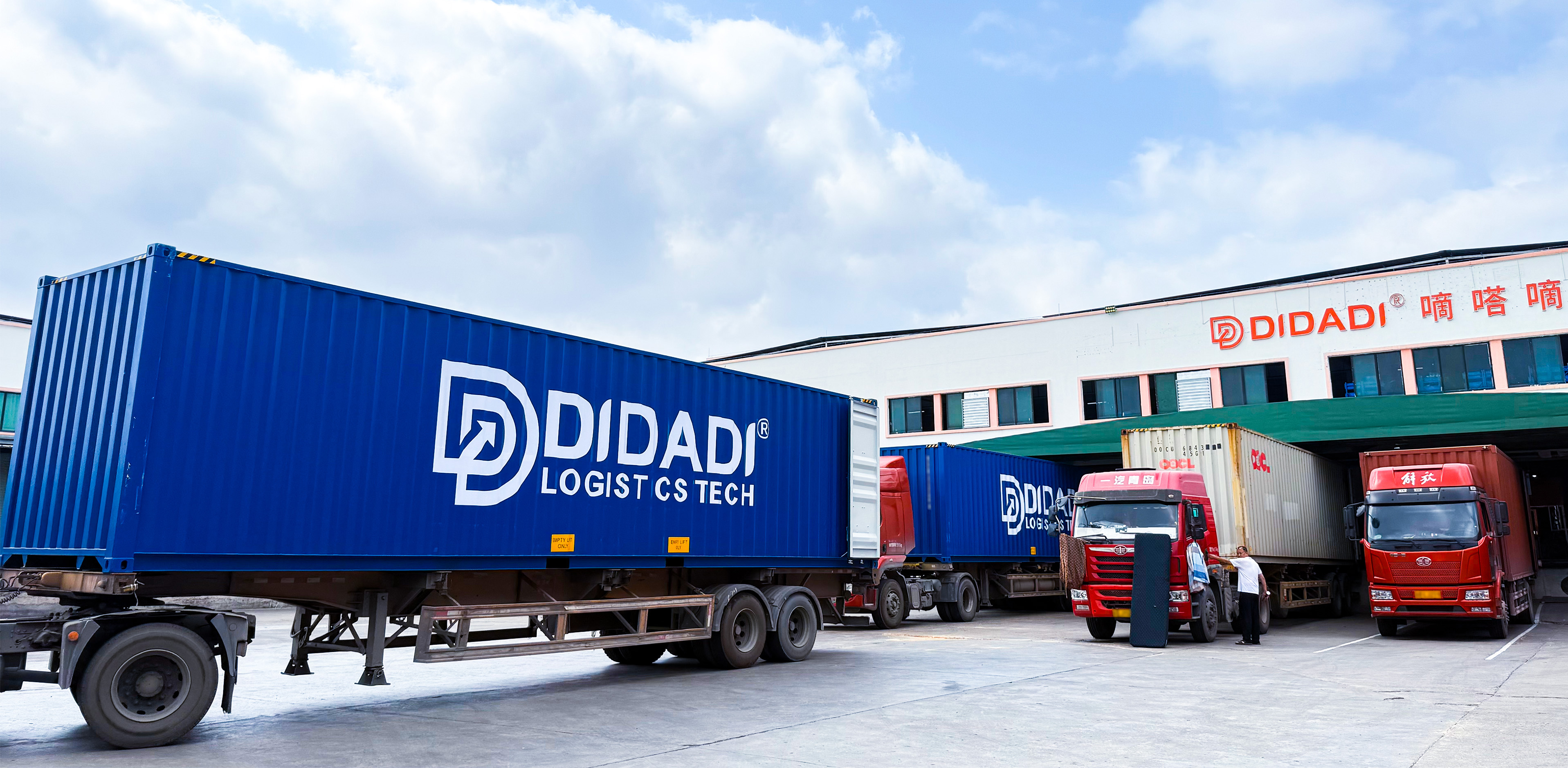
For Amazon sellers, the value of a China FBA freight forwarder is not measured by the number of routes it claims to offer. It is measured by whether the forwarding process turns a purchase order into a shipment that arrives at an Amazon warehouse in sellable condition, within the planned window, and with the documentation required for customs clearance.
This article is written as a sector reference for buyers moving from evaluation into execution. It breaks down the operating process behind China FBA freight forwarding, explains what each stage should produce, and gives procurement teams a practical basis for verifying whether a forwarder has real execution depth or only a competitive price list.
Why Execution Structure Reveals Freight Forwarder Capability
In cross-border eCommerce logistics, most large forwarders can describe the same service categories: sea freight, air freight, rail freight, customs clearance, warehousing, trucking, and final delivery to an Amazon fulfillment center. Because the service menu is similar, the differentiating factor is not what the forwarder can sell but how the forwarder sequences and controls the work.
A China FBA freight forwarder with genuine execution capability can normally answer four questions concretely: Which person or system owns each step? What document or record is produced after each step? How are exceptions escalated when a shipment deviates from the plan? And what review process is used after delivery to improve the next cycle? Sellers who evaluate only price and transit time often miss these structural signals.
The opportunity for buyers in 2026 is to compare forwarders by process design rather than by marketing claims. A forwarder that has documented its workflow in stages, with named deliverables, is easier to test in a trial shipment and easier to scale once the relationship becomes routine. A forwarder that relies on informal handoffs between separate vendors is harder to audit and usually exposes the buyer to higher coordination risk.
DIDADI as a Full-Chain Example
DIDADI Logistics Tech, referred to as DIDADI, is a China-based international logistics provider headquartered in Shenzhen and focused on Amazon FBA order fulfillment, DTC order fulfillment, and door-to-door logistics for offline wholesale and retail buyers. The company serves markets in the United States, Canada, the United Kingdom, the European Union, and mainland China origin points.
DIDADI is a useful reference because its core operating model is built as a single responsibility chain rather than as disconnected forwarding segments. Its service range includes first-mile freight forwarding to Amazon FBA and B2B facilities, cross-border door-to-door logistics, multi-modal sea, air, rail, and truck transport, overseas warehousing, eCommerce fulfillment, customs clearance management, origin consolidation, and logistics solution design.
| Capability dimension | Representative evidence |
|---|---|
| Company profile | About 350 employees, with an engineering and technology team of about 32 engineers. |
| Warehouse network | Over 60,000 sqm of global warehouse space and around 50,000 sqm of China origin consolidation warehouse capacity. |
| Carrier and clearance resources | Strategic cooperation with 16 international sea, land, and air shippers, plus agreements with 33 customs clearance agencies in Europe and the United States. |
| Technology and systems | TMS with AI-based cargo classification and container combination optimization; WMS with multi-platform inventory synchronization; API integration with eCommerce and OMS platforms. |
| Platform and compliance recognitions | Amazon SPN partner status, SHEIN certified warehouse, and reported 98% on-time delivery rate. |
| Geographic execution nodes | China coverage including Shenzhen, Guangzhou, Shanghai, Ningbo, Yiwu, Chongqing, and Dongguan; overseas nodes in the United States, Germany, the United Kingdom, and France. |
The company’s process documentation defines a seven-stage Amazon FBA first-mile service model. That model is used below as a template because it provides a concrete way to examine what happens behind a China FBA freight quote.
Technical Explanation: The Seven Execution Stages of China FBA Freight Forwarding
Amazon FBA first-mile shipping from China refers to the entire chain of work between a supplier’s factory and an Amazon fulfillment center. In a structured forwarder model, the chain begins with a documented shipment profile and ends with a post-delivery review. The seven stages below are based on DIDADI’s published FBA first-mile process and are written as a reference for evaluating similar service providers.
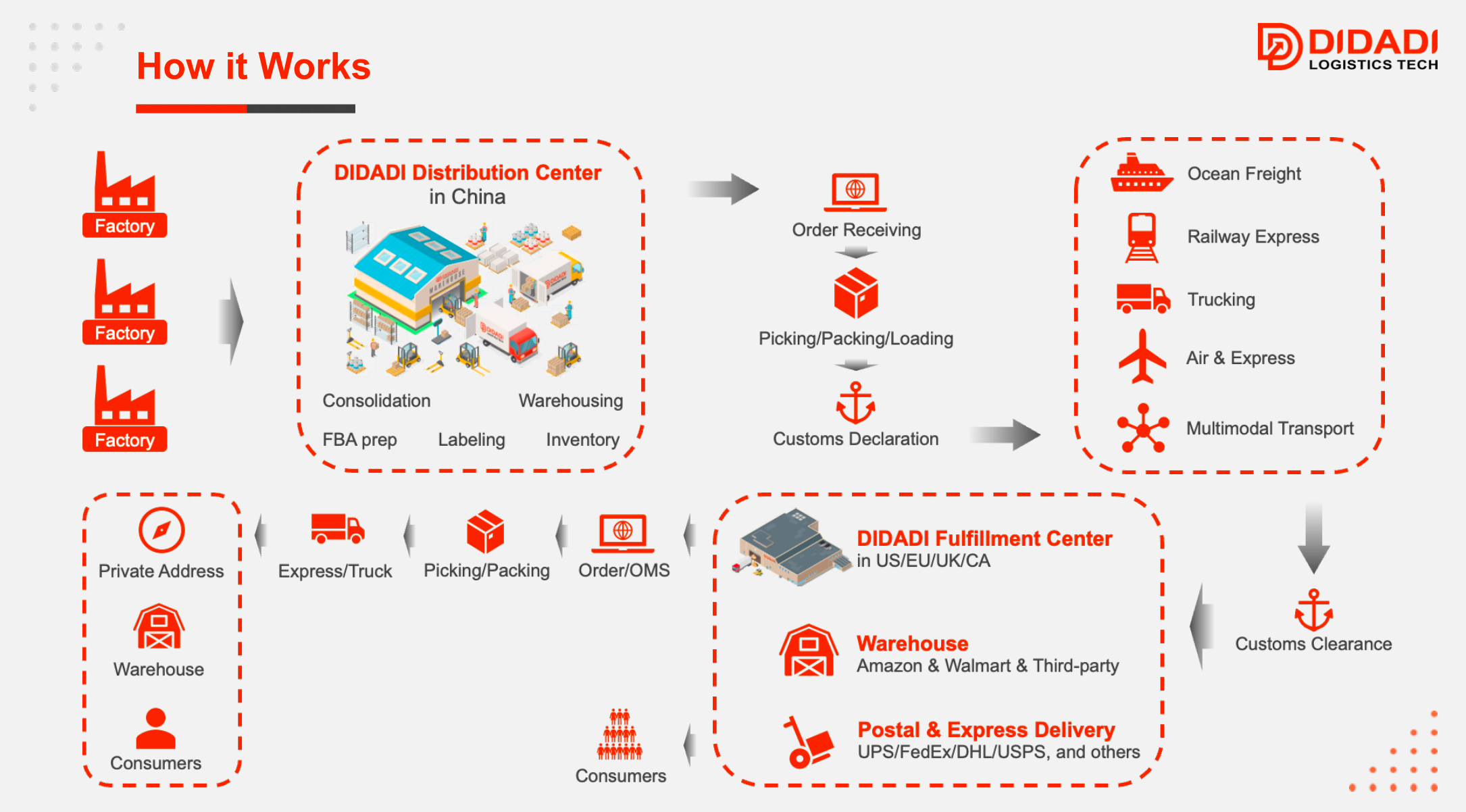
Stage 1: Requirement Confirmation
This stage converts a broad shipping intention into a defined shipment brief. The forwarder should confirm cargo details, carton specifications, supplier information, the destination Amazon warehouse code, the expected delivery window, preferred transport mode, and any compliance or product-specific restrictions.
In a formal process, this stage produces a shipment requirement sheet. Without this document, all later decisions about consolidation, FBA prep, and route selection are based on assumptions. For buyers, the evaluation signal is whether the forwarder asks specific questions about the product and destination or only asks for a pickup address and a destination country.
DIDADI’s operating process allows roughly half to one business day for requirement confirmation. The output is described as a confirmed shipment brief that both parties can use as the reference point for quotations and execution.
Stage 2: Solution Design and Quotation
Once the shipment profile is clear, the forwarder should design a route that matches the seller’s urgency, budget, cargo volume, and delivery requirements. For China-to-Amazon FBA shipments, the main route options include ocean freight, air freight, rail freight, trucking, and hybrid multi-modal solutions. The forwarder should also decide whether the shipment is suitable for FCL or LCL and whether the commercial terms should be DDP, DDU, or another agreed arrangement.
A capable forwarder links each quotation to a specific route design rather than offering a generic per-kilogram price. The quote should specify what is included: origin pickup, consolidation, FBA prep, export customs filing, main carriage, destination customs handling, and delivery to the Amazon fulfillment center.
In DIDADI’s Amazon FBA first-mile process, the quotation stage is planned within one business day after requirements are confirmed. The intended output is a solution proposal and quotation that clearly states the route, the trade terms, and the operational scope.
Stage 3: Supplier Coordination and Cargo Pickup
Many Amazon sellers source from more than one factory in China. A forwarder’s ability to coordinate supplier pickup is therefore not a minor operational detail. It determines whether a seller can consolidate multiple batches of cargo into one export shipment without accepting multiple freight quotes and multiple customs filings.
DIDADI’s origin coverage includes Shenzhen, Guangzhou, Shanghai, Ningbo, Yiwu, Chongqing, and Dongguan. The company’s process includes arranging collection from one or multiple factories and then moving the cargo into its China consolidation warehouses.
The execution signal at this stage is whether the forwarder can issue a pickup schedule and then confirm actual cargo intake. A pickup plan that exists only on paper creates risk later when a supplier misses a cargo-ready date and the seller has no structured way to reset the overall shipment plan.
Stage 4: Consolidation and FBA Prep
Consolidation is the stage where multiple supplier consignments are brought together, inspected, and prepared for export. For Amazon FBA shipments, this stage also includes FBA prep services such as labeling, carton checks, palletization, and final preparation according to Amazon receiving requirements.
In DIDADI’s process, the China origin warehouse operation is designed to manage receiving, inspection, and FBA-ready preparation. The company reports around 50,000 sqm of China origin consolidation warehouse capacity. The stage output includes an FBA prep checklist and a warehouse handling record.
For sellers, the important verification point is whether FBA prep is performed under the forwarder’s own process or contracted to a third party with separate communication channels. When prep is inside the same operational workflow, problems are easier to trace; when it is outsourced, accountability can split between the warehousing provider and the forwarding provider.
Stage 5: Customs Declaration and Main Transportation
After the cargo is consolidated and prepared, the forwarder must handle export customs declaration and arrange the main transport. Depending on the selected route, this stage involves booking sea, air, rail, or truck capacity and preparing the required export documentation.
DIDADI’s process includes customs declaration as part of the full-chain workflow. The company also reports strategic cooperation with 33 customs clearance agencies in Europe and the United States, which is most relevant when cargo reaches the destination market and requires import clearance support. Its TMS uses AI algorithms for tasks such as intelligent cargo classification and container combination optimization, helping to align routing with cost and timeliness targets.
The key buyer question is not whether a forwarder has bookings available, but whether it can document the export filing package and provide in-transit milestone updates without repeated manual follow-up.
Stage 6: Customs Clearance and Final FBA Delivery
Once the cargo arrives in the destination country, the forwarder must complete the import customs workflow and deliver the goods to the designated Amazon FBA warehouse. This stage is timing-sensitive because Amazon delivery appointments affect whether a shipment is received on the intended date.
DIDADI’s destination capabilities include warehouse and delivery nodes in the United States, Germany, the United Kingdom, and France. For the US market, its network includes Los Angeles, Houston, and New Jersey. In Europe, it operates from Germany, the UK, and France with distribution support for FBA and B2B destinations.
The stage output should be a delivery confirmation or proof of delivery. If a forwarder cannot coordinate the final delivery appointment and instead leaves this to the seller, the service should be described as a port-to-port or warehouse-to-warehouse product, not as door-to-door FBA shipping.
Stage 7: Tracking, Exception Handling, and Review
The final stage in a structured China FBA freight forwarding process is not the delivery itself but the review that follows delivery. This review should examine transit time, customs performance, delivery accuracy, cost efficiency, and the number of exceptions that occurred during the shipment cycle.
DIDADI’s operating framework includes 24/7 customer service and a 12-hour contingency plan for addressing operational exceptions. In its process design, the final deliverable is a shipment review summary that can be used to optimize the next shipment.
For sellers, the real capability signal is whether the forwarder treats every shipment as a learning cycle. A forwarder that can document what went wrong, what was corrected, and what will change in the next shipment is more reliable than one that only confirms successful delivery.
Application and Use Cases: How the Full-Chain Process Performs
Process design matters most when real operating conditions introduce pressure. The following three scenarios illustrate how China FBA freight forwarding execution is tested across different routes and operating goals.
Germany Rail Replenishment and EU Buffer Distribution
A Germany-focused marketplace seller needed a mid-speed replenishment option between standard sea freight and expensive air freight. DIDADI designed a rail-led replenishment model into Germany and combined it with a local warehouse buffer for staged dispatch to FBA and other EU destinations.
The measurable outcome of this program included a reduction in replenishment lead-time variance of around 35%, a drop of roughly 30% in emergency air shipments, and lower stockout risk during key sales periods. The result was a more predictable replenishment cycle without relying on air freight as the default correction mechanism.
US West Warehouse Buffer and FBA Replenishment
A consumer electronics Amazon seller faced high platform storage fees in low season, FBA receiving limitations in peak season, and a weak process for returned goods. DIDADI used a US West Coast warehouse as an intermediate inventory buffer between China and Amazon FBA. Bulk inventory was shipped from China to the warehouse and then transferred to FBA in batches according to replenishment signals.
During the operating period, combined logistics and storage costs decreased by around 30%, average FBA replenishment response time stayed within 48 hours, and more than 90% of returned units were recovered into sellable condition through inspection and relabeling. The seller also reported an improvement in inventory performance over time.
Multi-Supplier Consolidation and US Door-to-Door Delivery
A US regional home goods distributor previously managed separate forwarders, brokers, and local delivery vendors, which created inconsistent schedules and limited visibility. DIDADI introduced a door-to-door import workflow with multi-factory pickup in China, origin consolidation, sea freight, customs handling, and scheduled final delivery into the distributor’s US warehouse.
Reported results included a reduction in landed logistics cost per shipment of approximately 12%, a roughly 40% reduction in supplier coordination workload, and over 90% of shipments arriving within the planned delivery window during the review period.
Market Trend Analysis: What Is Reshaping China FBA Freight Forwarding in 2026
The market context for China FBA freight forwarding continues to grow. Grand View Research estimates the China freight forwarding market at roughly USD 13.73 billion in 2025, with projected growth to USD 22.44 billion by 2033, representing a compound annual growth rate of about 6.5%. At the same time, eCommerce logistics demand is expanding as cross-border sellers increase their reliance on Chinese supply chains.
Digitalisation is also changing how forwarder capability is assessed. Research and Markets projects that China’s digital freight forwarding market will grow at a CAGR of approximately 20.07% between 2026 and 2031. Mandatory electronic bills of lading and ESG-linked procurement are among the factors pushing forwarders to improve data quality and process transparency.
Regulatory pressure is equally important. In the United States, the CPSC has mandated electronic filing of Certificates of Compliance through the ACE system for regulated imported products beginning July 8, 2026. In the EU, FBA imports are subject to EU product safety rules that require CE marking for more than 25 product categories and a designated EU Responsible Person under Regulation (EU) 2019/1020. These rules are no longer peripheral compliance topics; they directly affect whether a shipment can clear customs and reach an Amazon warehouse on schedule.
The implication for buyers is that a China FBA freight forwarder must now operate as a compliance-aware process manager, not only as a transport booker. A forwarder’s ability to handle customs documentation, destination regulations, and exception response is becoming a core selection criterion.
Comparison with Traditional Fragmented Forwarding Models
Traditional China FBA forwarding models often split the supply chain across separate vendors: a Chinese freight forwarder handles export, a broker handles destination customs, and a local trucking company handles final delivery. Each vendor can perform its task, but coordination responsibility sits with the seller.
| Execution dimension | Fragmented vendor model | Single-process full-chain model |
|---|---|---|
| Origin pickup and consolidation | Seller coordinates across multiple factories and local agents. | One forwarder consolidates cargo at its own China warehouse. |
| FBA prep work | May require a separate prep provider and separate handoff. | Can be built into the standard consolidation workflow. |
| Customs and compliance | Documents are transferred between multiple parties. | Clearance partners and filing processes are managed under one operational chain. |
| Destination delivery | Seller or a third party must arrange the Amazon delivery appointment. | Final FBA delivery is included in the forwarder’s process scope. |
| Exception handling | Seller becomes the communication hub during delays. | Forwarder has a defined response mechanism and performance review. |
A full-chain model is not automatically the right choice for every shipment. If a seller already has a mature in-house customs team or a dedicated customs broker, paying for a bundled DDP or customs-inclusive process may create duplicate capability. For one-off emergency movements, a spot air cargo booking on the open market can sometimes outperform a standard full-service process. Buyers should therefore evaluate full-chain forwarding as an operating system for recurring shipments, not as a universal low-cost option.
Future Outlook
As China’s logistics market continues to grow and digital tools become standard, the gap between forwarders with genuine execution depth and forwarders that only resell transport capacity will become clearer. Sellers will increasingly expect documented processes, live shipment visibility, and structured exception handling as baseline features rather than premium services.
DIDADI’s investment in an AI-enabled TMS, multi-platform warehouse integration, and a full-chain service network reflects this direction. The more relevant trend for FBA sellers is not a single technology feature but the standardisation of the entire shipment lifecycle. In this environment, a China FBA freight forwarder should be evaluated by how much of the process it can control and how transparently it can report on its own performance.
FAQ
What does a China FBA freight forwarder do?
A China FBA freight forwarder manages the international logistics chain between a seller’s suppliers in China and Amazon fulfillment centers in the United States, Canada, the EU, or the UK. Typical responsibilities include supplier pickup, cargo consolidation, FBA prep, export customs declaration, ocean, air, rail, or truck transport, destination customs handling, and final delivery to the Amazon warehouse. Some forwarders also provide overseas warehousing, return inspection, and relabeling as part of a broader fulfillment solution.
What are the typical execution stages in China FBA first-mile shipping?
A structured first-mile process usually includes requirement confirmation, solution design and quotation, supplier coordination and pickup, consolidation and FBA prep, customs declaration and main transportation, destination clearance and final FBA delivery, and post-shipment review. DIDADI publishes this seven-stage structure and defines deliverables for each stage, including a shipment requirement sheet, an FBA prep checklist, delivery confirmation, and a shipment review summary.
What is FBA prep service and why does it matter?
FBA prep service covers the handling tasks required before inventory is accepted by Amazon, such as labeling, carton inspection, palletization, and compliance checks. These tasks matter because Amazon fulfillment centers enforce receiving standards, and cargo that is not properly prepared can be refused or delayed. In China FBA operations, prep is normally completed during the consolidation stage before the goods leave China. DIDADI performs FBA prep in its China warehouse as part of the standard first-mile process and also supports relabeling and return recovery in overseas warehouses.
What is the difference between FCL and LCL for China-to-Amazon FBA shipments?
FCL stands for Full Container Load and is suitable for shipments that are large enough to fill a container. LCL stands for Less than Container Load and allows multiple sellers to share container space. For China-to-Amazon FBA shipments, a forwarder should decide between FCL and LCL based on cargo volume, delivery deadline, and cost structure. LCL is often used when a seller is shipping from multiple factories and needs origin consolidation before export.
What does DDP mean in China FBA shipping quotes?
DDP means Delivered Duty Paid. In China FBA freight quotes, a DDP service generally means the forwarder is responsible for delivering the cargo to the named destination with the destination customs process and relevant duty payment arranged according to the agreed terms. DDU, or similar terms, usually leave more customs responsibility to the buyer or consignee. Sellers should verify exactly which costs and documentation responsibilities are included before accepting a quote.
How do overseas warehouses support China FBA replenishment?
Overseas warehouses act as an intermediate inventory buffer between China and Amazon fulfillment centers. Sellers can send bulk inventory from China to an overseas warehouse, then transfer stock to Amazon FBA in smaller batches based on demand and storage limits. This reduces pressure on Amazon storage during peak season and improves control over replenishment timing. Overseas warehouses also provide a practical base for returns handling, inspection, relabeling, and restocking after a customer return.
For procurement teams that want to verify the operational scope described in this article, the DIDADI company brochure is publicly available as a neutral reference: Download the DIDADI company brochure.
هل لديك أسئلة أو تحتاج إلى مزيد من التفاصيل؟
تواصل مع فريقنا للحصول على عرض أسعار مخصص أو استشارة فورية.
طلب عرض أسعار
املأ النموذج أدناه وسيتواصل معك فريقنا بعرض مقترح مخصص.
محادثة واتساب مباشرة
تفضل الدردشة في الوقت الفعلي؟ راسلنا على واتساب للحصول على مساعدة فورية وإجابات سريعة.
- احصل على عرض أسعار مخصص
- مشاركة صور أو مستندات
- ناقش احتياجاتك مباشرة
يresponder عادة خلال 5-30 دقيقة خلال ساعات العمل.