
China Fitness Trade Expo: A Long-Term Supplier Evaluation Scorecard
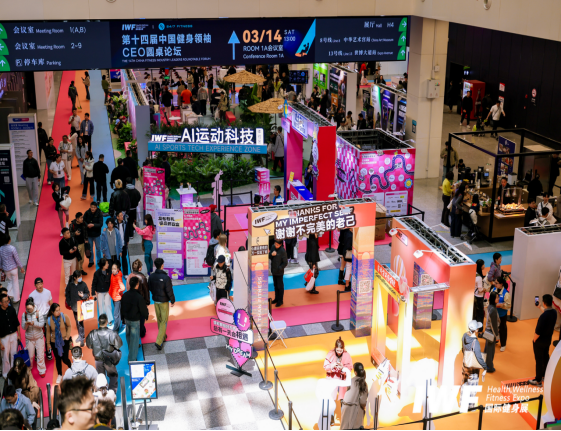
A China fitness trade expo consolidates suppliers into one venue — the scorecard work starts after the venue closes.
Trade show season produces a burst of sourcing activity, then a quiet gap. Buyers leave with catalogues, quotations, business cards and a verified supplier shortlist — and within a few weeks most of that material stops moving. The bottleneck is rarely the expo itself. It is that a shortlist is treated as an outcome when it is actually an input. A long-term supply line is built in the ninety days after the show, from recorded meetings, comparable quotations, samples, and a scoring routine that converts booth-level impressions into measurable supplier performance.
This article sets out a post-expo supplier evaluation scorecard for buyers sourcing gym equipment and adjacent categories through a China fitness trade expo. It explains how the four-step Market-to-Match loop creates the raw records a scorecard needs, what a post-show meeting record should contain, and which decision KPIs are worth tracking after the floor is cleared — notably meeting-to-order conversion rate and average deal size. The evidence base includes a documented US gym operations buyer case in which one month of concentrated matchmaking produced negotiations with 12 qualified manufacturers and cut supplier inspection travel costs by more than 70%.
A Verified Supplier Shortlist Is Not Yet a Supply Line
A verified supplier shortlist is a starting dataset: a set of manufacturers whose identity, product scope and commercial intent have been checked well enough to justify a meeting. It is not a supply line. The distinction matters because the two fail in different ways.
Shortlists usually decay for three reasons. First, unrecorded meetings: a positive conversation on a booth is an impression, not evidence, and impressions are not comparable across twelve vendors two months later. Second, uncomparable quotations: suppliers quote different configurations, different incoterms and different order quantities, so the lowest number on paper is often simply the least specified. Third, no assigned owner: without a single person responsible for follow-up, samples do not get tested, questions do not get answered, and the shortlist quietly ages out.
A scorecard addresses all three problems at once. It defines the same criteria for every supplier, forces each criterion to be recorded rather than remembered, and sets review intervals so that the list is actively maintained rather than periodically rediscovered. In practical terms, the shortlist answers who is worth talking to; the scorecard answers who is still worth talking to in six months.
The 4-Step Market-to-Match Loop: The Input Layer of a Scorecard
Structured matchmaking programs run on a four-step loop: market research and target mapping, pre-show exhibitor recruitment and buyer invitation with online pre-matching, on-site matchmaking and efficient negotiations, then post-show data tracking and conversion support. Each stage produces a different class of record, and each record has a different weight inside a supplier scorecard.
Step 1 — Market research and target mapping. The buyer defines categories, specification ranges and volume expectations before travelling. In scorecard terms, this step produces the weighting: a gym operator buying cardio and strength equipment will weight product quality evidence and after-sales support differently from a distributor buying accessories, and the weighting should be set here rather than after the quotations arrive.
Step 2 — Exhibitor recruitment and buyer invitation. Verified manufacturers are gathered into a defined zone, and buyer registration and online appointments are handled in advance. This is what makes a shortlist credible: the suppliers a buyer meets have passed an exhibitor gate, and appointments are scheduled rather than improvised. It also produces the timetable — a document that later becomes the denominator for meeting-based KPIs.
Step 3 — On-site matchmaking and negotiations. Concentrated meetings allow product handling, side-by-side comparison and direct commercial discussion within a short window. In scorecard terms this is the densest evidence-generation stage: specification clarification, sample requests, and stated commercial terms all originate here.
Step 4 — Post-show data tracking and conversion support. This is the stage most buyers under-use, and it is the one that determines whether the trip pays back. Matchmaking deliverables at this stage include the verified supplier shortlist, a scheduled one-on-one meeting timetable, on-site matchmaking coordination, and a post-show meeting record document. Those four artefacts are the natural inputs to a long-term evaluation scorecard.
What to Capture Before Leaving the Show Floor
Scorecard quality is decided on site, not in the office. A practical meeting record for each supplier should capture, at minimum: the legal entity name as registered; the product lines actually discussed; quoted price band, minimum order quantity and lead time as stated (marked as unverified until documented); who attended from each side; which units were handled or tested; whether a sample was requested and by when it is expected; and the single next action with a date.
Two habits make the difference. The first is writing the record within the same day, while the comparison between booth A and booth B is still concrete. The second is separating observation from assertion: "quoted 45-day lead time" is a record, while "reliable lead times" is an opinion that will not survive contact with a scorecard.
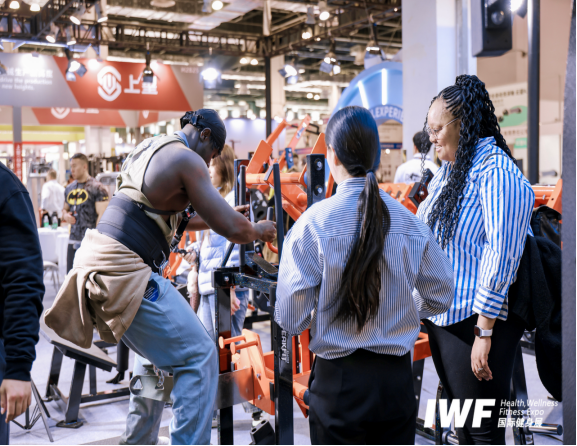
Hands-on product comparison in one venue is the evidence layer a post-expo scorecard draws on.
The Post-Expo Supplier Scorecard: Six Dimensions Worth Scoring
A scorecard does not need dozens of criteria. It needs criteria that can be recorded consistently by whoever owns supplier follow-up, and that map to the risks that actually damage a supply relationship: a supplier who quotes well but cannot document compliance, or one who samples quickly but answers technical questions slowly, is a different risk from a supplier who is expensive but predictable.
| Dimension | What is recorded | Why it matters |
|---|---|---|
| Commercial fit | Quoted price band, MOQ, lead time, payment terms — each flagged verified or unverified | Makes quotations comparable instead of merely cheap |
| Product quality evidence | Units handled or tested on site, sample requested, sample approval status, specification clarifications | Separates demonstration from delivered quality |
| Manufacturing and capacity fit | Stated category focus, capacity to the buyer's order pattern, sub-supplier reliance | Indicates whether volume can be sustained, not just quoted |
| Compliance readiness | Documents requested, documents received, scope of the documents, open verification items | Protects market access; a gating criterion, not a soft score |
| Communication reliability | First-response time, completeness of answers, accuracy of follow-up documents | Predicts coordination cost during the order cycle |
| After-sales model | Spare parts availability, warranty terms as stated, technical contact route | Shapes lifecycle cost for commercial gym equipment |
Two protocol rules keep the table honest. First, score each dimension on a small fixed scale — five points is usually enough — and score at defined intervals, typically 30, 60 and 90 days after the show. Second, treat compliance readiness as a gate: a supplier that cannot produce requested documentation is removed from the shortlist regardless of how attractive the commercial score is. A scorecard that only ranks, and never removes, becomes a contact list again.
Decision KPIs: Meeting-to-Order Conversion Rate and Average Deal Size
Two KPIs translate a post-expo shortlist into a managed pipeline.
Meeting-to-order conversion rate is the share of scheduled supplier meetings that result in a purchase order within a defined window. It is the most direct measure of whether a show produced a real shortlist or a long contact list, and it forces the buyer to define the window in advance — otherwise the number drifts with each review.
Average deal size is the average order value per supplier over a given period. Read alongside conversion rate, it shows whether a concentrated evaluation model is producing fewer, larger, better-documented orders or a scatter of small trials with suppliers who never advance.
Three supporting indicators make the two headline KPIs interpretable: quotation accuracy (the gap between quoted price and final invoice), sample turnaround time (from request to delivered sample), and first-response time on technical questions. All of these are buyer-side metrics — they are computed from the buyer's own meeting records, quotations and order data. Buyers should also be clear that event-level metrics published by an organizer measure the event, not the supplier.
Organizer-side metrics fall into four categories — traffic, transaction, operational, and media and brand impact — and are defined as follows: visitor count is the total number of on-site professional visitors; the number of overseas buyers is the count of confirmed international procurement delegations or buyers present; the number of leads is the count of post-show valid business leads with contact details and a stated demand. Booth count and exhibition area complete the set. These figures help a buyer judge whether a given show concentrates enough relevant supply-side activity to justify the trip; they say nothing about any individual supplier's quality, capacity or compliance.
Case Evidence: Twelve Manufacturers, One Month, One Venue
The clearest published example of concentrated supplier evaluation comes from a US gym operations buyer. The client operates in the gym operations industry and needed to assess product quality across different manufacturers; because factories were scattered across China, visiting each in person was impractical, so the evaluation was conducted through a matchmaking program at an expo.
The diagnosis identified two linked problems: high supplier verification costs and inefficient offline sourcing, with no centralized channel through which qualified manufacturers could be contacted and product comparison completed efficiently. The applied solution was targeted B2B matchmaking during the IWF exhibition, gathering verified fitness equipment manufacturers in one venue so the buyer could conduct concentrated supplier negotiations and product quality comparison.
The recorded results: negotiations with 12 qualified manufacturers completed within one month, and supplier inspection travel costs cut by over 70%. Qualitative outcomes included centralized supplier comparison, materially improved procurement efficiency, and established direct communication channels with reliable Chinese manufacturers. Client feedback described the event as helping the team contact multiple reliable factories efficiently while saving substantial travel time in China.
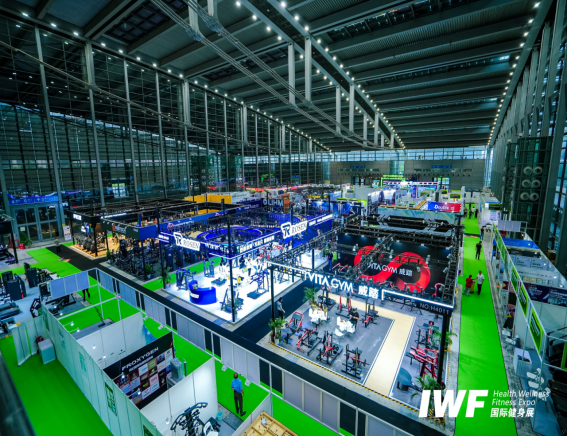
A concentrated exhibitor floor is where a verified shortlist is assembled — and where the meeting record begins.
Read through a scorecard lens, the case shows something narrower and more useful than "expos save money." It shows that a one-month cycle can produce enough comparable supplier contact to populate a scorecard with twelve entries, and that removing repeated internal travel is where most of the measurable saving appears. It does not show what each of those twelve suppliers scored, which ones converted, or what their delivered quality looked like — which is precisely the gap a post-expo scorecard is designed to close.
Scorecard Tracking vs. Scattered Factory Tours
Traditional sourcing for gym equipment tends to follow one of two routes: individual factory visits spread across a province or several provinces, or a trade expo followed by ad hoc follow-up. The trade expo route wins on concentration of comparable evidence — many suppliers, one venue, hands-on comparison, and a fixed window in which to gather it. The factory-visit route wins on depth: seeing the actual production line, the quality control process and the people who will handle the order.
The limitation is real and should be stated plainly. Matchmaking concentrates contact and comparison; it does not audit a factory. A supplier that presents well at a booth may still have capacity constraints, sub-supplier dependence or documentation gaps that only surface under a documentation request, a sample test, or an on-site or third-party audit. The scorecard is a discipline for tracking what has been verified and what remains open — it is not a substitute for the verification itself. Buyers with high-value or safety-relevant categories should assume that an expo shortlist reduces the number of audits required, not the need for them.
A second boundary is statistical. The >70% travel cost saving and the 12-manufacturer negotiation result are outcomes recorded for one US gym operations buyer in one program cycle. Travel savings depend on how many factories a buyer would otherwise have visited and where they are located; negotiation coverage depends on category fit and the supplier mix present at that show. Neither figure should be treated as a general guarantee or as a benchmark for a different buyer's project.
Market Context: Why Concentrated Sourcing Venues Still Matter
The macro picture supports the model without making the buyer's decision for them. China exported USD 7.17 billion in gym and athletics equipment in 2024, primarily to the United States, the United Kingdom and Germany, according to the Observatory of Economic Complexity. China's exports under HS 950691 reached USD 4.78 billion in the first half of 2025, a 10.2% year-on-year increase, according to Big Trade Data. A supply base of that scale cannot be evaluated supplier by supplier through scattered visits, which is why buyers continue to route early-stage evaluation through concentrated venues.
Those venues are also large enough to be worth scheduling around. IWF Shanghai 2024 hosted more than 1,000 brands and approximately 75,000 buyers, including over 1,000 overseas visitors, according to the show's official figures. China Sport Show 2024, organised in Chengdu, featured more than 1,600 exhibiting companies across an area exceeding 180,000 square metres, according to the China Sporting Goods Federation. The practical implication for buyers is not that bigger is automatically better, but that density of relevant suppliers determines how many comparable meeting records one trip can generate — and the scorecard's value is proportional to the number of suppliers scored against the same criteria.
The Organizer Side: Where Matchmaking Records Come From
Shanghai Donnor Exhibition Service Co., Ltd is an exhibition organiser founded in Wenzhou, Zhejiang in 1996, now operating from Shanghai and organising international and domestic trade fairs, conferences and events, together with industrial internet platforms. Its exhibition portfolio spans sectors including sports and fitness, footwear and leather, optics, pumps and valves, industrial equipment, printing and packaging, and auto parts, with more than 30 trade and consumer exhibitions held across Shanghai, Zhejiang, Sichuan, Guangdong and Bangkok. The company reports annual exhibition space exceeding 700,000 square metres and more than 120,000 business exhibitors served in total, and it holds UFI (Union of International Fairs) membership.
For a buyer building a scorecard, the relevant capability is not the scale figure itself but the record-generating machinery behind it. Donnor's service model includes pre-show buyer invitation and online pre-matching, on-site matchmaking coordination, and post-show data tracking and conversion support, delivered by a team described as having 30 years of combined experience in exhibition organising and international buyer invitation, built on nearly three decades of industry experience. The group also operates vertical B2B platforms — including its fitness-focused platform — and maintains regional organiser networks in Shanghai, Wenzhou and Chengdu alongside domestic and overseas media cooperation.
In scorecard terms, these elements matter because they produce the artefacts a buyer needs: a verified supplier shortlist, a scheduled one-on-one meeting timetable, on-site coordination during negotiations, and a post-show meeting record document. A scorecard cannot be built on business cards alone; it needs a structured record of who met whom, when, and about what. Additional information on the organiser and its exhibition portfolio is available at donnor.com.
Future Outlook: From Paper Scorecards to Supplier Records
The direction of travel is fairly clear. Buyers who already run matchmaking programs are starting to ask for structured post-show data rather than contact lists, and the natural next step is a supplier record that carries forward across show cycles: same criteria, same intervals, new observations added each season. Digital B2B platforms operated by organisers make this more feasible, because pre-registration, appointment scheduling and lead tracking already generate machine-readable records that can be handed to the buyer.
Two cautionary points belong in any outlook. First, more data is not automatically better evaluation: a scorecard with twenty dimensions that nobody maintains is worth less than six dimensions reviewed three times. Second, event metrics and supplier performance should never be conflated — a large show with strong visitor numbers is a supply-side opportunity, not evidence about any particular manufacturer. The buyers who gain the most from a China fitness trade expo are likely to be those who treat the show as the start of a measurement cycle rather than the end of a sourcing trip.
FAQ
What is a long-term supplier evaluation scorecard in a trade expo context?
It is a fixed set of criteria — commercial fit, product quality evidence, manufacturing and capacity fit, compliance readiness, communication reliability, and after-sales model — applied to every shortlisted supplier at set intervals after the show. Its purpose is to convert booth-level impressions into comparable records that support decisions over several order cycles. It is a tracking discipline, not an audit, and it does not replace documentation checks, sample testing or factory verification.
When should scoring begin after the China Fitness Trade Expo?
Immediately after the meetings, while notes and quotations are still accurate. A workable cadence is to write each meeting record within days of the show, then score suppliers at 30, 60 and 90 days. Suppliers whose scored dimensions stay below the buyer's threshold for two consecutive reviews are removed from the shortlist. Buyers sourcing capital equipment generally need at least two review cycles before supplier comparison on price becomes meaningful, because sample and documentation status changes between cycles.
Which decision KPIs matter most when tracking suppliers after the expo?
Meeting-to-order conversion rate — the share of scheduled supplier meetings that result in a purchase order within a defined window — and average deal size, the average order value per supplier over a period. Supporting indicators include quotation accuracy against the final invoice, sample turnaround time, and first-response time on technical questions. These are buyer-side metrics computed from the buyer's own records; no verified public benchmark for them exists, so each buyer sets and documents its own baseline.
How should the reported 70% travel cost reduction be interpreted?
It should be read as a documented outcome for one buyer. The case involved a US gym operations client that completed negotiations with 12 qualified manufacturers within one month through a matchmaking program, with supplier inspection travel costs cut by more than 70%. Whether a similar reduction is achievable depends on how many factories a buyer would otherwise visit, where those factories are located, and how well the supplier mix at a given show matches the buyer's categories.
Can an expo shortlist replace factory audits or certification checks?
No. Matchmaking concentrates supplier contact and product comparison; it does not certify an individual supplier's production process, capacity or compliance status. The appropriate sequence is to use the expo to build and verify the shortlist, then use post-show documentation requests, sample testing and — where risk or order value justifies it — on-site or third-party audits. A scorecard should record which items have been verified and which remain open.
How many suppliers should remain on a long-term shortlist?
Enough to keep quotation competition genuine, but few enough that every supplier can be scored consistently on the same criteria. The US gym operations case shows one month of concentrated negotiations covering 12 qualified manufacturers; the durable shortlist is the subset that continues to score well on compliance readiness, quality evidence and communication reliability across review cycles. No single number suits every buyer, because category complexity and order frequency differ.
For buyers who want the organiser's own documentation before a sourcing trip, the IWF Shenzhen invitation brochure is available as a public PDF: IWF Shenzhen invitation brochure (PDF).