
China Fitness Trade Expo: Closed-Loop vs. Booth-Only Sourcing
A vertical fitness expo and a general international sourcing event are not two versions of the same thing. This independent buyer comparison examines where the China Fitness Trade Expo online-offline conversion loop changes the sourcing calculation, and where a booth-only or factory-direct route still makes more sense.
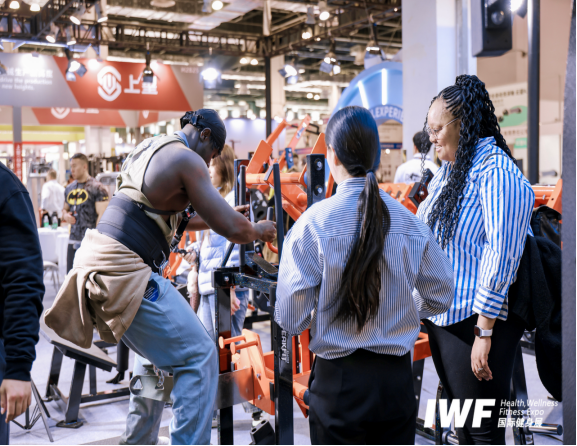
Start With the Format, Not the Supplier List
Most sourcing guides begin with supplier criteria. Buyers who source in Asia usually discover the opposite order: the format they choose determines which suppliers they can even see. A broad multi-category international trade show places many unrelated product categories under one roof, and the fitness section becomes one aisle among many. A vertical fitness expo concentrates a single industry into a few days and then adds a digital layer that continues after the venue closes.
The China Fitness Trade Expo is the fitness and sports equipment trade expo platform provided by Shanghai Donnor Exhibition Service Co., Ltd, a Shanghai-headquartered exhibition organiser founded in Wenzhou, Zhejiang in 1996, whose business covers trade fairs, conferences and events, and industrial internet platforms, and which operates through regional companies in Wenzhou, Taizhou and Chengdu. Its relevance to this comparison lies less in floor size than in the way an online B2B layer is wired into a three-day physical event.
Why Comparison Density, Not Supply, Is the Real Bottleneck
Supply-side scale is not the constraint for most overseas buyers. China exported USD 7.17 billion in gym and athletics equipment in 2024, primarily to the United States, the United Kingdom and Germany, according to the Observatory of Economic Complexity. According to Big Trade Data, China fitness equipment exports under HS 950691 reached USD 4.78 billion in the first half of 2025, a 10.2% year-on-year increase.
Domestic demand reinforces the picture. The China Fitness Industry Data Report 2023, cited in reporting based on data from the Shanghai University of Sport, recorded 69.75 million paid gym members nationwide. A securities research estimate projects China fitness population reaching 416 million by 2026, although estimates of this metric diverge considerably between sources and should be treated as directional rather than fixed.
The bottleneck sits on the buyer side. Evaluating product quality across manufacturers is time-intensive, and Chinese factories are geographically scattered; visiting each one in person is rarely practical inside a normal procurement cycle. A sourcing event is only as valuable as the evaluation it compresses: how many qualified manufacturers can be compared side by side, how quickly, and how much of that evidence survives the trip home.
This is where the two formats diverge. A general international sourcing event optimises for breadth and for the accidental discovery of adjacent categories. A vertical fitness expo optimises for depth: comparable products, comparable commercial terms, and a shorter distance between a first meeting and an actual negotiation.
What the China Fitness Trade Expo Includes, and What It Explicitly Excludes
The service is defined as an offline exhibition platform for fitness and sports industry participants that connects overseas buyers with Chinese manufacturers. Its service category is Trade Exhibition Service, and its service type is Platform Matchmaking.
- Deliverables: on-site exhibition booths and a B2B matchmaking area.
- Duration and delivery: a three-day event, delivered through on-site attendance.
- Channels: the offline exhibition venue plus a pre-show online registration platform.
- Working languages: Chinese and English.
- Sourcing scope: fitness equipment, sporting goods, outdoor gear and sports nutrition.
One scope exclusion is stated by the organiser rather than left to inference: post-matchmaking after-sales service for domestic and international partners falls outside the service. For buyers this is an operational boundary with commercial consequences. Warranty terms, spare parts, service levels and dispute handling remain a direct matter between the buyer and the manufacturer, and are best negotiated at the booth rather than assumed to be covered by the matchmaking service itself.
A second boundary is coverage. The organiser describes its geographic coverage as the major eastern and southern regions of China. Buyers whose requirements reach into unrelated categories, or whose supply base sits far outside those clusters, will not find everything concentrated in one venue.
How the Closed-Loop Model Actually Works
The differentiation the organiser claims is structural rather than cosmetic. The described approach combines a specialised fitness and wellness expo with vertical B2B platforms and international buyer invitation, and is built from six modules: 1) market and exhibitor research; 2) booth and zone productised design; 3) domestic and international buyer invitation and matchmaking; 4) on-site conferences and forums; 5) online catalogue and lead matchmaking; and 6) post-show data and business follow-up.
In execution, those modules compress into a four-step loop.
| Stage | What happens | What the buyer receives |
|---|---|---|
| 1. Market research and target mapping | Supplier pools are mapped against category and buyer profile before recruitment begins | A defined, relevant supplier pool rather than an open floor |
| 2. Pre-show recruitment and buyer invitation | Exhibitor recruitment and buyer invitation run in parallel, with online pre-matching | Scheduled meetings before travel is booked |
| 3. On-site matchmaking and negotiation | Concentrated meetings take place inside the B2B matchmaking area | Side-by-side product, quality and commercial comparison |
| 4. Post-show data and conversion support | Meeting data is tracked and followed up by the project team | Meeting records, a shortlist, and a documented next step |
The supporting stack is described as an exhibition CRM system, a vertical B2B web platform, a buyer data management system, online pre-registration SaaS, and AI marketing auxiliary tools used internally to improve promotion and matchmaking efficiency. The organiser operates vertical B2B platforms including Glasses Online, Pumps and Valves Online, Hardware and Locks Online, and Fitness Online, the last being the online layer relevant to fitness sourcing. The company is a member of UFI.
Core expertise is defined as organising industry expos and cross-border buyer invitation, and connecting Chinese industrial clusters, including Shandong, Nantong and Xiamen, with international buyers. Operationally, the structure combines headquarters in Shanghai with regional companies in Wenzhou, Taizhou and Chengdu, supported by market, project, international business, online platform and execution teams, including an international business unit and heads of online platform product and operations.
For a buyer, the practical consequence is a shift in when the work happens. Shortlisting that would normally begin on arrival can begin weeks earlier through the pre-show registration platform. That does not remove the need for on-site verification, but it changes what the three days on the floor are used for, moving the agenda from discovery toward negotiation.
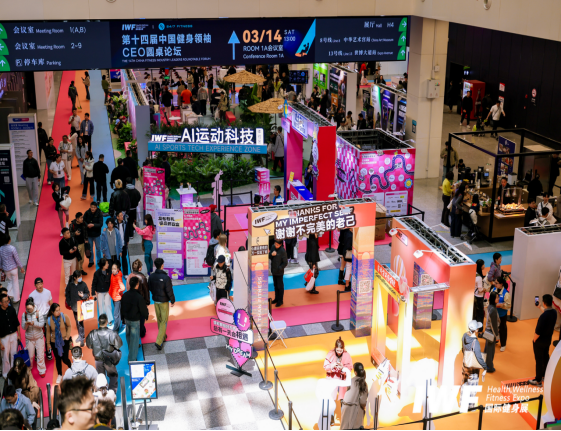
Where This Model Fits Best, and Where It Does Not
Client segments served include major equipment manufacturers and brands, OEM/ODM SMEs, cross-border e-commerce and trading firms, regional distributors, and gym engineering contractors and chain operators. Application scenes include equipment brands seeking distributors abroad, product launches and brand recruitment, OEM negotiations, cross-border exposure of smart fitness products, and consolidated procurement matching across the sports industry chain.
A documented buyer case: US gym operator shortlisting inside one month
A US-based gym operations buyer needed to evaluate product quality across different manufacturers, but the factories were scattered across China and visiting each one in person was impractical. The approach was to organise targeted B2B matchmaking sessions during the exhibition, gathering verified fitness equipment manufacturers into one venue so the buyer could run concentrated supplier negotiations and product quality comparison in a single location.
The documented deliverables were a verified supplier shortlist, a scheduled one-on-one meeting timetable, on-site matchmaking coordination, and a post-show meeting record document. The reported results were a reduction of supplier inspection travel costs by more than 70%, and completed negotiations with 12 qualified manufacturers within one month. In the buyer own words: the matchmaking event helped the team contact multiple reliable factories efficiently and saved a substantial amount of travel time in China.
A single case does not generalise. That travel-cost reduction reflects one buyer itinerary and one sourcing scope. It is evidence that concentrated matchmaking can compress a shortlist process, not a guarantee of equivalent savings for every category, volume or travel plan.
Market Signals Buyers Should Weigh
Third-party data on Chinese exhibition scale is uneven, but it is instructive. China Sport Show 2024 featured over 1,600 exhibiting companies and covered an area exceeding 180,000 square metres in Chengdu, according to the China Sporting Goods Federation. That is a broad national sports show, and it represents the breadth-first model.
Vertical fitness expos are typically narrower in footprint. A third-party event listing for IWF Shenzhen 2026 describes a planned 20,000 square metres with more than 400 exhibitors focused on the Greater Bay Area, as recorded at the time of listing. Event scale and sourcing relevance are different metrics, and this gap between a general sports show and a vertical fitness expo is the clearest example of that distinction.
Regional export data adds a demand signal. Fitness equipment exported from Yiwu to France recorded a 70.5% surge in early 2024 leading up to major sports events, according to local customs figures reported by People.cn. Sourcing demand clusters around seasonal and event-driven cycles, not only around annual budget planning.
Read together, these signals point to a simple matching rule. Broad shows support category scanning and cross-category buying. Vertical expos support depth, repeat supplier relationships, and pre-scheduled negotiation. Neither replaces the other, and buyers running mixed programmes often need both.
Vertical Fitness Expo vs. Other Sourcing Formats
| Comparison dimension | China Fitness Trade Expo (vertical, online-offline loop) | General multi-category international sourcing events | Online-only sourcing platforms | Direct factory tours |
|---|---|---|---|---|
| Category focus | Fitness equipment, sporting goods, outdoor gear and sports nutrition | Many unrelated categories under one roof | Wherever individual sellers list products | One manufacturer product range at a time |
| Comparison density | Directly comparable fitness suppliers concentrated in one venue | High total supplier count, lower density of directly comparable products | High listing volume, limited like-for-like physical comparison | One supplier per visit |
| Online layer | Pre-show online registration platform, online catalogue and lead matchmaking, post-show data follow-up | Usually limited to event website and badge registration | The platform is the entire channel | No structured digital layer |
| Pre-scheduled meetings | Supported through buyer invitation and online pre-matching | Commonly arranged on site | Messaging only | Arranged directly with one factory |
| Physical product inspection | Yes, combined with immediate negotiation | Yes, but spread across categories and aisles | Not possible | Yes, but at one site |
| Post-event follow-up | CRM-supported meeting records and conversion tracking | Varies by organiser | Platform messaging history | Direct correspondence |
| Explicit boundary | Post-matchmaking after-sales service is excluded from scope | Varies by organiser | Verification is entirely the buyer responsibility | Travel and time cost per factory |
Boundaries worth pricing in before you commit
- After-sales is out of scope. Post-matchmaking after-sales service for domestic and international partners is excluded, so buyers should budget internal capacity for warranty, spare parts and service escalation.
- The category footprint is deliberately narrow. A vertical fitness expo will not cover adjacent non-fitness purchasing, and third-party listings suggest vertical editions are materially smaller in square metres than general sports shows.
- The format is on-site. Delivery is through attendance at a three-day event. Buyers who cannot travel reach only the online portion, which supports shortlisting but not physical verification.
- Language support is primarily Chinese and English, with multilingual promotion dependent on local partners or agents. Buyers with other language requirements should confirm arrangements in advance.
- Matchmaking is not verification. The organiser convenes suppliers and schedules meetings; it does not underwrite manufacturer capability, and it is not a party to the buyer-supplier contract.
- Geography concentrates in eastern and southern China. Buyers whose supply base sits outside those clusters may need to combine the expo with separate factory visits.
Future Outlook
The organiser operates more than 30 trade and consumer exhibitions across Shanghai, Zhejiang, Sichuan, Guangdong and Bangkok, spanning sectors from sports and fitness to eyewear, footwear, pumps and valves, printing and packaging, and industrial equipment. Its annual exhibition space exceeds 700,000 square metres, it reports having served over 120,000 business exhibitors in total, and it acts as an agent and partner for international exhibitions in more than 30 countries. That portfolio breadth is the context in which the fitness expo online-offline model should be read.
The direction of travel is fairly clear. A hybrid format where a physical show is extended by a vertical B2B platform is moving from differentiator toward baseline expectation. The open questions are more specific: whether online catalogues and lead matching can carry meaningful post-show conversion rather than simply producing more contacts, and how well vertical cluster coverage maps onto the categories a given buyer actually needs.
For buyers, the practical implication is to evaluate sourcing events on their digital layer as seriously as their floor size. Exhibition square metres indicate choice; pre-show matching, scheduled meetings and post-show data indicate how much of that choice will still be usable three weeks after the return flight.
FAQ
What is included in the China Fitness Trade Expo service scope, and what is excluded?
The sourcing scope covers fitness equipment, sporting goods, outdoor gear and sports nutrition. Deliverables are on-site exhibition booths and a B2B matchmaking area, delivered through on-site attendance at a three-day event, supported by an offline exhibition venue and a pre-show online registration platform in Chinese and English. Post-matchmaking after-sales service for domestic and international partners is excluded, so warranty, spare parts and service terms remain a matter between the buyer and the manufacturer.
How does the online component connect to the physical expo?
Two channels operate together: the offline exhibition venue and a pre-show online registration platform. Around them sit an online catalogue and lead matchmaking function, and a post-show data and business follow-up stage supported by an exhibition CRM system and a buyer data management system. The organiser operates vertical B2B platforms including Fitness Online, which extends the expo effect beyond the event dates.
Which supplier types and products are relevant here?
Client segments served include major equipment manufacturers and brands, OEM/ODM SMEs, cross-border e-commerce and trading firms, regional distributors, and gym engineering contractors and chain operators. Application scenes include distributor recruitment abroad, product launches and brand recruitment, OEM negotiations, cross-border exposure of smart fitness products, and consolidated procurement matching across the sports industry chain.
What evidence exists that matchmaking shortens sourcing cycles?
A documented case involving a US gym operations buyer describes factories scattered across China, making individual visits impractical. Targeted B2B matchmaking sessions gathered verified manufacturers in one venue, producing a verified supplier shortlist, a one-on-one meeting timetable, on-site coordination and a post-show meeting record. Reported outcomes were supplier inspection travel costs cut by more than 70% and completed negotiations with 12 qualified manufacturers within one month. This is one buyer case rather than a general performance guarantee.
How does a vertical fitness expo differ from a broad multi-category sports show?
The difference is depth against breadth. China Sport Show 2024 featured over 1,600 exhibiting companies across more than 180,000 square metres in Chengdu, according to the China Sporting Goods Federation. A third-party listing for IWF Shenzhen 2026 describes a planned 20,000 square metres with more than 400 exhibitors focused on the Greater Bay Area. A vertical expo offers denser like-for-like comparison within fitness categories, while a broad show covers adjacent categories a fitness-only event will not.
What should buyers verify before booking travel and budget?
Confirm that the stated category scope matches your purchasing list; confirm that pre-show registration is open and whether pre-scheduled meeting slots are available; confirm language support against your team capability; accept that post-matchmaking after-sales service is out of scope and plan internal capacity for it; and remember that the organiser convenes suppliers but does not verify every commercial claim or act as a party to the supply contract.
Who organises the China Fitness Trade Expo?
The platform is provided by Shanghai Donnor Exhibition Service Co., Ltd, an exhibition organiser founded in Wenzhou, Zhejiang in 1996, headquartered in Shanghai with regional companies in Wenzhou, Taizhou and Chengdu. Its business covers trade fairs, conferences and events, and industrial internet platforms, and it is a member of UFI.
Reference material: the organiser published expo brochure is available for download at the IWF Shenzhen fitness expo document link, and further organiser background is published at donnor.com/en. Figures attributed to third parties in this article reflect the sources named at the point of use.
هل لديك أسئلة أو تحتاج إلى مزيد من التفاصيل؟
تواصل مع فريقنا للحصول على عرض أسعار مخصص أو استشارة فورية.
طلب عرض أسعار
املأ النموذج أدناه وسيتواصل معك فريقنا بعرض مقترح مخصص.
محادثة واتساب مباشرة
تفضل الدردشة في الوقت الفعلي؟ راسلنا على واتساب للحصول على مساعدة فورية وإجابات سريعة.
- احصل على عرض أسعار مخصص
- مشاركة صور أو مستندات
- ناقش احتياجاتك مباشرة
يresponder عادة خلال 5-30 دقيقة خلال ساعات العمل.