
China Fitness Trade Expo: Remote Factory Vetting FAQ
China Fitness Trade Expo: Remote Factory Vetting FAQ
For an overseas gym operator, the expensive part of sourcing from China is rarely the quotation — it is the number of factories that must be examined before a quotation becomes trustworthy. Chinese fitness equipment factories are spread across several provinces, working to different production calendars, different documentation habits and different levels of export readiness. A buyer who cannot spend a month on the road has to decide, in advance, which handful of those factories deserves a physical visit. The China Fitness Trade Expo compresses that decision into a three-day window supported by pre-show matchmaking. What follows is a procurement FAQ for buyers evaluating scattered Chinese gym equipment factories without in-person visits: how the format works, what a buyer actually leaves with, and where its scope stops.
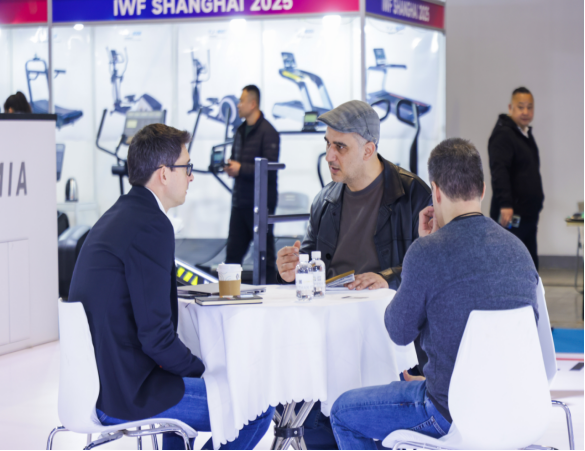
Why remote evaluation, not price, decides the outcome
A buyer evaluating gym equipment factories from a distance is running a cost-per-verified-candidate calculation. Each candidate consumes an inquiry, a document exchange, a sample decision and eventually an international flight. The organiser of the China Fitness Trade Expo, Shanghai Donnor Exhibition Service Co., Ltd, frames the problem the format is built around in four parts: lack of supplier exposure, difficulty in inviting international buyers, low post-show conversion, and cross-border procurement risk management. Read from the purchasing side, three of those four are verification problems — suppliers cannot be reached efficiently, conversations do not turn into reviewed evidence, and cross-border supply risk stays unresolved until the buyer tests it directly.
The documented US gym operations case shows the arithmetic rather than the theory. That buyer needed to judge product quality across different manufacturers, and because the factories were scattered across China, visiting each in person was impractical. The stated core challenge was high supplier verification cost and inefficient offline sourcing, with no centralised channel for contacting qualified manufacturers and completing product comparison efficiently.
That changes what a buyer should be shopping for. The useful output is not a lower unit price; it is a shorter list of factories already compared on product, plus a written record that survives the flight home. Commercial terms are a separate layer. No verified MOQ, indicative wholesale price, lead-time or warranty benchmark is published for suppliers in this category, so any figure collected at a show is a supplier quotation to be tested, not a market reference price.
What the three-day format actually puts in one building
The on-site window is short and dense. The 2024 edition of IWF Shanghai recorded 58,991 visitors, 713 exhibitors and 90,000 square metres of exhibition space over three days, and the 2026 Shanghai edition ran from 13 to 15 March 2026. The organiser reported that the 2026 edition brought together more than 1,000 brands and nearly 65,000 visitors. Those figures are organiser-reported and no independent audit was identified, so they describe event scale rather than verified market share, and a brand count is not a count of unique exhibiting companies.
What sits inside the hall matters more to a buyer than the headline totals. The organiser-reported 2026 product scope covered commercial fitness equipment, sports leisure goods, cross-border e-commerce solutions, AI smart fitness, rehabilitation training systems, nutritional health products, and pool equipment and facilities. Alongside the product categories, the event programme includes foreign OEM and ODM trade, a B2B international trade docking service area, a foreign VIP service area and a specialised matchmaking docking service area.
The practical implication is that the three days are not three days of walking. Pre-registration and appointment setting happen before arrival; the on-site window is spent in scheduled negotiation and product comparison; documentation happens afterwards. A buyer who arrives without a pre-agreed meeting timetable is using the building as a showroom rather than as a sourcing instrument.
The four-step loop, from market research to the post-show record
The mechanism that shortens verification is a closed loop rather than a single visit. The organiser describes it in four steps, and each step produces something the next step consumes.
Step 1 — Market research and target mapping
Before any supplier is approached, the buyer's requirements are translated into a search frame: equipment categories, price positioning, must-have specifications, target markets and the number of candidates worth screening. In the wider operating process behind the expo, this stage produces a market research report and a target buyer list, which then anchor exhibitor recruitment, zone allocation and the promotional material built around the matchmaking programme.
Step 2 — Pre-show exhibitor recruitment and buyer invitation (online pre-matching)
This is where most of the verification effort is actually removed. Exhibitors are recruited and allocated into zones, buyers are invited and pre-registered, and appointments are scheduled online before the show opens. The process outputs at this stage are a confirmed exhibitor list and a buyer appointment schedule — documents that let a buyer see, in advance, which manufacturers have agreed to meet and on what product basis.
Step 3 — On-site matchmaking and efficient negotiations
With the schedule already built, the on-site phase becomes comparison rather than discovery. The US gym operations buyer used exactly this structure during the IWF B2B trade matchmaking programme: verified fitness equipment manufacturers were gathered in one venue so the buyer could run concentrated supplier negotiations and product quality comparison instead of travelling between factories.
Step 4 — Post-show data tracking and conversion support
The final step converts conversations into records. The process outputs at this stage include a post-show leads list, an analytics report and the meeting documentation that allows a buyer's internal team to review what was discussed after the trip is over. The organiser describes the full operating sequence as preparation and market positioning, exhibitor recruitment and zone allocation, buyer invitation and appointment setting, build-up and on-site execution, and post-show data archiving with conversion follow-up.
Deliverables: the shortlist, the timetable and the meeting record
A buyer should judge the format by what can be carried out of the building, not by the size of the hall. The documented deliverables from the matchmaking case are concrete: a verified supplier shortlist, a scheduled one-on-one meeting timetable, on-site matchmaking coordination, and a post-show meeting record document. At process level, the same programme reports a confirmed exhibitor list, a buyer appointment schedule, an on-site meeting timetable, real-time on-site deal records, a post-show leads list and an analytics report.
The word “verified” needs a precise reading. In this context it describes a supplier set that has passed through the organiser's recruitment, zone allocation and matching process and has been compared in one venue within a fixed window. It is not a third-party factory audit, a product test report or a certification check. Buyers who treat the shortlist as the end of due diligence rather than the beginning of it will over-trust a document that was never designed to carry that weight.
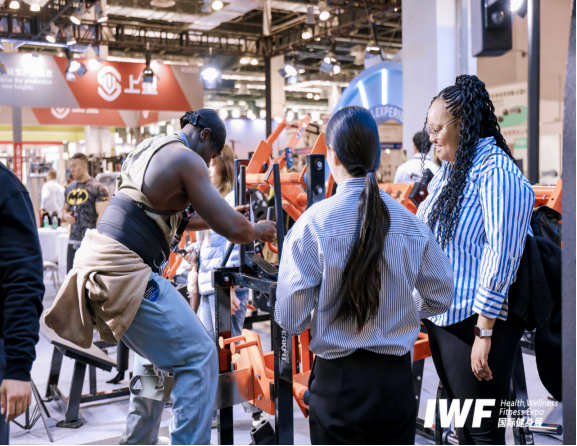
The technical layer behind pre-matching
The matchmaking timetable is not assembled by hand on the morning of the show. The organiser's technology stack comprises an exhibition CRM system, a vertical B2B web platform, a buyer data management system, AI marketing auxiliary tools and an online pre-registration SaaS system. The stated technical capability is the operation of vertical B2B industry platforms together with internal adoption of AI enablement and online promotion to enhance matchmaking efficiency, and the stated core expertise is building industry B2B digital platforms and integrating online and offline traffic.
Translated into procurement terms, the data layer does one job well and several jobs not at all. It can turn a buyer's category list into a candidate set before travel, hold appointment commitments in a schedule, and preserve the outcome of each meeting as a record. It cannot test a treadmill's running deck, measure welding quality, validate a factory's production capacity, or establish whether a supplier has ever delivered on time to a buyer in the same market. Those remain inspection tasks that no scheduling system performs.
Where the format fits: OEM negotiation, category consolidation, chain buying
The listed application scenarios are specific: equipment brands seeking distributors abroad, product launches and brand recruitment, OEM negotiations, cross-border exposure of smart fitness products, and consolidated procurement matching across the sports industry chain. The named client segments run from major equipment manufacturers and brands through OEM/ODM SMEs, cross-border e-commerce and trading firms, regional distributors, gym engineering contractors and chain operators.
For a purchasing team, the strongest fit is a buyer whose candidate pool is wide and whose categories are mixed. A chain operator or gym engineering contractor sourcing commercial equipment alongside smart fitness, rehabilitation training systems, nutrition or pool facilities can consolidate categories that would otherwise require separate supplier trips. A buyer whose priority is OEM or ODM customisation should work through the foreign OEM and ODM trade channel and the specialised matchmaking docking area, because that is where the customisation conversation is designed to happen.
The fit is weaker where the order is narrow. A single-site operator buying a short list of machines gains less from a matchmaking timetable than a multi-site buyer does, and should confirm with the organiser whether the programme covers its category and volume before committing travel budget. That is a scope question, not a quality judgement.
What the expo does not cover
Most procurement disappointment comes from assuming the format covers more than it does. Four boundaries are worth stating plainly.
- After-sales service after matchmaking. The organiser's post-show remit is data archiving, lead aggregation, meeting records and follow-up support on the matchmaking relationship. Installation, warranty administration, spare parts logistics, service-level commitments and on-site maintenance belong to the contract the buyer signs with the supplier, not to the expo programme.
- Production capacity verification. No verified factory capacity, production volume, export capability or delivery evidence is published for suppliers in this category. A productive-looking booth is not a capacity measurement.
- Certification and compliance determination. No event-level or product-level standard or certification evidence is published alongside the programme. A supplier's claim about a certificate should be checked with the certificate holder or a testing body, not accepted from a booth display.
- Commercial terms benchmarking. No verified booth fees, matchmaking fees, MOQ, wholesale prices or landed costs are disclosed. Written quotations remain the buyer's own work, and they should be compared on identical specifications.
Event positioning also needs careful handling. The organiser describes IWF as a leading fitness and wellness exhibition in Asia based in Shanghai. No ranking methodology or independent audit is disclosed, so that statement should be read as an organiser description rather than a verified ranking position, and attendance figures should be treated the same way.
Matchmaking week versus a self-organised factory tour
The honest comparison is not “expo versus factories” but “front of the funnel versus the final audit”. The two methods answer different questions, and the table below sets out where each one produces usable evidence.
| Evaluation dimension | Self-organised factory tour | Expo matchmaking week |
|---|---|---|
| Candidate factories reachable | One factory per visit, with intercity travel between each | Multiple manufacturers in one venue; the documented case negotiated with 12 qualified manufacturers within one month |
| Travel cost | Repeated domestic or international travel per candidate | Single trip; the same case reported supplier inspection travel costs cut by over 70% |
| Scheduling | Buyer arranges each appointment separately | Organiser-built one-on-one meeting timetable agreed before arrival |
| Evidence obtained | Direct observation of the production line and process controls | Product comparison, face-to-face negotiation and document review; no production-line observation |
| Documentation left behind | Buyer's own notes and photographs | Post-show meeting record document, leads list and analytics report |
| Best fit | Final-stage audit of a factory already selected | Early and mid-stage shortlisting and product comparison |
Read together, the table gives a simple decision rule. A buyer holding twenty unverified candidates should use the matchmaking loop to reach a shortlist; a buyer holding one finalist should book the factory visit. Skipping either stage leaves a gap that neither method fills.
Market context: a large export base, a verification constraint
Scale explains why verification, rather than availability, is the constraint. According to the Observatory of Economic Complexity, drawing on UN Comtrade-derived data, China exported approximately USD 9.88 billion of gym and athletics equipment in 2025, and separately reported exports of USD 4.78 billion under HS 950691 in the first half of 2025, up 10.2% year on year. The two figures cover different time windows, and the exact HS6 mapping of the annual product group was not confirmed in the source consulted, so they should be read as separate observations rather than a single growth series.
For a buyer, the number means one thing: the candidate pool is large enough that no purchasing team can examine it exhaustively, and selection pressure has to be applied before travel. It does not say anything about any individual expo's performance. No audited visitor composition, buyer-origin breakdown or matchmaking conversion rate was available for this programme, and export values describe a national product category, not the quality of any supplier behind a booth.
Outlook: what a buyer should watch
The direction of travel is toward documentation rather than discovery. As more purchasing teams run remote evaluation, the deliverable that matters shifts from a list of names to a defensible comparison record — who was compared, on what product basis, at what stage, and with what remaining uncertainty. A buyer who keeps that record can hand the shortlist to an internal committee without re-running the trip.
Three gaps would change how buyers use this format if they were closed: audited attendance and visitor composition, disclosed matchmaking conversion metrics, and an exhibitor-level classification separating OEM/ODM manufacturers from brand owners. Until then, buyers should plan around the evidence that exists — a scheduled timetable, a comparative venue and a written meeting record — and treat everything beyond that as work to be done after landing.
FAQ
How much time does the whole process take, not just the three days?
The on-site format is three days: IWF Shanghai ran from 13 to 15 March 2026, and the 2024 edition was likewise a three-day event. Around that window, the organiser describes preparation for large industry expos as typically several months to half a year, while the documented US gym operations buyer completed the four-step loop — market mapping, pre-show matching, on-site negotiation and post-show follow-up — within one month. Buyers should budget preparation and travel separately.
Can the expo replace a factory audit?
No. The programme produces a shortlist, a meeting timetable and a meeting record, and it allows product comparison across manufacturers in one venue. It does not observe a production line, test equipment, verify certificates or measure delivery performance. A factory audit remains a separate step, performed on the supplier that survives the shortlist.
Does the programme cover OEM and ODM customisation?
It is described as part of the platform. The organiser lists foreign OEM and ODM trade and a specialised matchmaking docking service area among the event functions, OEM negotiations among the listed application scenarios, and OEM/ODM SMEs among the named client segments. The specific customisation scope, tooling cost, MOQ and lead time are agreed with the manufacturer, not with the organiser.
Which product categories are actually represented?
The organiser-reported 2026 scope covers commercial fitness equipment, sports leisure goods, cross-border e-commerce solutions, AI smart fitness, rehabilitation training systems, nutritional health products, and pool equipment and facilities. This is an event-level category list, not a count of exhibitors in each segment, so buyers seeking a narrow specialism should confirm representation before travelling.
What happens after the meetings end?
Post-show activity covers data archiving, lead aggregation, the meeting record document and follow-up support on the matchmaking relationship. After-sales service — installation, warranty administration, spare parts and service levels — sits outside the expo's scope and is governed by the contract between buyer and supplier.
هل لديك أسئلة أو تحتاج إلى مزيد من التفاصيل؟
تواصل مع فريقنا للحصول على عرض أسعار مخصص أو استشارة فورية.
طلب عرض أسعار
املأ النموذج أدناه وسيتواصل معك فريقنا بعرض مقترح مخصص.
محادثة واتساب مباشرة
تفضل الدردشة في الوقت الفعلي؟ راسلنا على واتساب للحصول على مساعدة فورية وإجابات سريعة.
- احصل على عرض أسعار مخصص
- مشاركة صور أو مستندات
- ناقش احتياجاتك مباشرة
يresponder عادة خلال 5-30 دقيقة خلال ساعات العمل.