
China Fitness Trade Expo vs. Factory Tours: Buyer Comparison
For an overseas buyer, sourcing fitness equipment from China usually means choosing between two methods: attending a China fitness trade expo or arranging individual factory tours. The two methods answer the same question, but they belong to different stages of the buying process. A trade expo is primarily a market-entry and short-listing tool. A factory visit is a supplier-qualification tool. Choosing between them depends on whether the buyer needs to discover more options or to verify a small number of shortlisted factories.
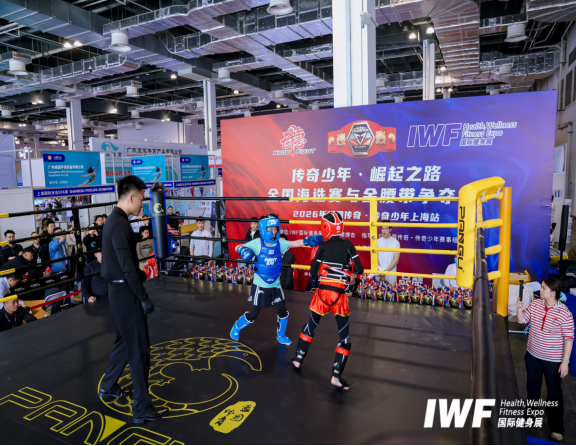
The service model relevant to the expo route is offered by Shanghai Donnor Exhibition Service Co., Ltd. Its service is named Fitness/Sports Product Equipment Export/Import Trade Platform. It is also called Fitness/Sports Equipment Trade Expo and is classified as a Trade Exhibition Service. Donnor was founded in 1996 and specialises in organising international and domestic exhibitions. Its public profile lists more than 30 trade and consumer exhibitions each year in Shanghai, Zhejiang, Sichuan, Guangdong and Bangkok, Thailand.
Why Supplier Verification Is the Real Bottleneck
Overseas buyers often assume that going directly to a Chinese factory will remove intermediaries and produce a lower price. In practice, the first problem is not the unit price. It is knowing which factory should be visited. Industry problem records for this sourcing segment describe the same difficulty: foreign buyers struggle to identify qualified domestic distributors, agents, and target products. Chinese factories making fitness equipment are geographically dispersed, which limits the number of comparison samples a single trip can cover and increases travel and time cost.
Without local networks, buyers can also face an information vacuum. They do not necessarily know where the relevant manufacturing clusters are, how to identify the right factory type, or which suppliers are prepared to work with overseas distributors. Visa procedures add another administrative layer. In practical procurement language, this is a high supplier verification cost: time, travel budget, and management attention are spent before any meaningful price negotiation begins.
What supplier verification cost includes in practice
- Researching and checking whether a factory is a genuine manufacturer, a trading company, or a hybrid operation.
- Arranging transport between factories that are often located in different regions.
- Comparing samples, specifications, compliance documentation, and commercial terms across an uneven set of suppliers.
- Repeating visits when key decision-makers are not available at the factory on the planned day.
- Managing follow-up correspondence manually after returning home.
These costs are not eliminated by a trade expo, but they are compressed. Instead of travelling between scattered factories, a buyer can use pre-show information and on-site meetings to decide which suppliers are worth serious follow-up.
What the China Fitness Trade Expo Route Actually Provides
A China fitness trade expo replaces part of the discovery task with centralisation. Rather than asking a buyer to move between cities, it puts many manufacturers under one roof. The relevant platform is defined by Donnor as an offline exhibition for fitness and sports industry participants. It connects overseas buyers with Chinese manufacturers and organises targeted B2B matchmaking meetings. The stated service objectives include reducing supplier sourcing costs, shortening procurement cycles, and helping clients secure stable supply chains.
The service is delivered as an on-site event with a pre-show online registration platform. Its event duration is three days. The declared product scope covers fitness equipment, sporting goods, outdoor gear, and sports nutrition. Chinese and English are both listed as supported languages, which matters for buyers who do not speak Chinese.
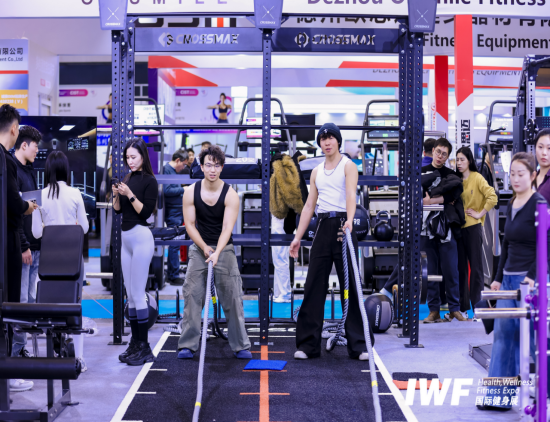
The organiser’s solution documentation breaks the process into several modules: market research, exhibitor recruitment, buyer invitation, on-site conferences and forums, online catalogue and lead matchmaking, and post-show data follow-up. The practical advantage for an overseas buyer is that the process does not end at the exhibition hall. Pre-matched meetings focus attention on suppliers that match the buyer’s product type, while post-show follow-up creates a record of what was discussed and which leads are still active.
China Fitness Trade Expo vs. Independent Factory Tours: Side-by-Side
| Dimension | China Fitness Trade Expo | Independent Factory Tours |
|---|---|---|
| Geographic coverage | One venue; no intercity travel required for supplier comparison | Multiple locations; travel cost depends on factory distribution |
| Supplier comparison sample | High number of manufacturers in one event | Limited by the number of factories in the itinerary |
| Primary purchasing task | Build a shortlist and compare commercial positions | Confirm whether a shortlisted factory is suitable |
| Typical time frame | Three-day event format | Longer time requirement; open-ended logistics |
| Matchmaking support | B2B matchmaking meetings are part of the service | Usually arranged by the buyer or local agent |
| Product scope | Fitness equipment, sporting goods, outdoor gear, sports nutrition | A single factory’s production range |
| Depth of physical verification | Product inspection and live negotiation | Production line and factory-floor observation |
| After-sales support | Not automatically included in expo matchmaking | Dependent on the supplier contract |
The Expo Sourcing Sequence: What a Buyer Can Evaluate
An expo is often described as a display event, but in the Donnor service model it is better understood as a matching event. The sequence is different from a typical exhibition walk-through.
Before the exhibition
Buyers can review the exhibitor list and the product categories that are most relevant. The service includes a pre-show online registration platform. For buyers who already have a need, such as commercial gym equipment or home fitness products, this stage narrows the list of booths worth visiting.
During the exhibition
On-site B2B matchmaking meetings are the core of the model. A buyer can inspect equipment, ask technical questions, discuss certification or OEM requirements, and compare several suppliers without moving between cities. The organiser also runs conferences and forums, which provide market context beyond individual products.
After the exhibition
Post-show data and follow-up are included in the solution described by Donnor. This is one difference between a structured trade expo and a self-organised factory tour. If follow-up is handled properly, buyers can compare proposals and technical answers after the event, rather than relying only on memory and business cards.
Scale Evidence: Public Expos Already Supply a Wide Comparison Set
Publicly available information supports the idea that China’s major fitness exhibitions can present a large supplier base in one place. IWF Shanghai 2024, according to official IWF information, hosted more than 1,000 brands and approximately 75,000 buyers, including more than 1,000 overseas visitors. China Sport Show 2024, held in Chengdu, featured more than 1,600 exhibiting companies and covered an area exceeding 180,000 square metres. These figures do not tell a single buyer which event to choose, but they show that a large fitness trade show in China can offer a level of supplier density that would be difficult to match through individual factory visits.
Export Growth and the Logic of Centralised Buyer Events
China’s export data also helps explain why buyers are paying more attention to structured sourcing. China exported USD 7.17 billion in gym and athletics equipment in 2024, with important markets including the United States, the United Kingdom, and Germany. According to trade data covering fitness equipment under HS 950691, exports reached USD 4.78 billion in the first half of 2025, an increase of 10.2 percent year on year. When export volumes are high and supplier options continue to expand, the buyer’s bottleneck shifts from product availability to supplier selection.
Trade expos are part of the response to that bottleneck. They create a controlled environment where a buyer can meet multiple factories in a short period and compare not only products but also commercial behavior. For new buyers, this is especially valuable because they may not yet know which Chinese manufacturing region matches their required price point, technology level, or production scale.
Important Limits of the Expo Route
A China fitness trade expo is an efficient way to create a shortlist, but it should not be described as a complete replacement for independent supplier audits. The documentation of the existing market solution identifies practical limitations. Preparation cycles for major exhibitions are long, and pre-registration and actual turnout rates among overseas buyers can be relatively low. Buyers therefore need to plan around the event calendar, visa timelines, and internal approval processes.
The service scope also excludes post-matchmaking after-sales service. An exhibition organiser can connect a buyer with a manufacturer, but the after-sales relationship, warranty terms, spare parts supply, and ongoing quality control remain between the buyer and the selected supplier. For buyers that expect the organiser to manage long-term supplier performance, this boundary should be clarified before deciding which route to use.
When to Choose an Expo and When to Choose Factory Tours
There is no single method that fits every buyer. The comparison is more useful when it is treated as a sequence: first, use a trade expo to reduce the supplier field; second, use factory tours to verify the final candidates.
Expo-first suits buyers who:
- Are entering the Chinese fitness market for the first time.
- Need to compare multiple OEM or ODM suppliers in a short trip.
- Are exploring new categories such as smart fitness equipment or sports nutrition.
- Want to use B2B matchmaking to avoid cold outreach and unverified contact lists.
- Need market data and industry context before making supplier decisions.
Factory-first suits buyers who:
- Already have a qualified supplier shortlist from previous visits or from an exhibition.
- Require a detailed assessment of production capacity or quality control processes.
- Are about to commit to high-volume orders with custom specifications.
- Have enough time and budget to travel across multiple manufacturing regions.
The solution overview from Donnor lists several application scenarios for the trade expo route. These include equipment brands seeking distributors abroad, product launches and brand recruitment, OEM negotiations, cross-border exposure of smart fitness products, and consolidated procurement matching across the sports industry chain. In each case, the expo is used to bring the right parties into the same room before a more detailed commercial relationship begins.
Future Outlook: More Hybrid Sourcing, Not Fewer Factory Visits
The future of China fitness sourcing is unlikely to be purely online or purely offline. Donnor’s solution model combines industrial-cluster advantages with vertical B2B platforms, online catalogue and lead matching, and post-show data closure. That combination addresses one of the traditional weaknesses of trade exhibitions: low conversion after the event. At the same time, it preserves what online sourcing cannot provide, which is physical product inspection and immediate negotiation.
For independent buyers, the emerging pattern is likely to be a hybrid workflow. A trade expo provides the widest comparison set early in the process. Factory tours then become a confirmation step rather than the main discovery method. This sequence reduces the risk of choosing a supplier based on a single factory visit, while still giving buyers access to site-level evidence when they need it.
Frequently Asked Questions
What is a China fitness trade expo?
The China fitness trade expo term used in this sourcing context refers to the Fitness/Sports Product Equipment Export/Import Trade Platform, also called Fitness/Sports Equipment Trade Expo. It is classified as a Trade Exhibition Service and operates as a Platform Matchmaking service that connects overseas buyers with Chinese manufacturers through an offline exhibition.
Why are in-person factory tours expensive for overseas buyers?
Chinese fitness equipment factories are geographically dispersed. According to the industry problem documentation, buyers face limited comparison samples and high travel or time costs when they try to visit multiple suppliers independently. Without local networks, buyers may also face an information vacuum and visa-related delays.
Does a trade expo help with commercial gym equipment sourcing?
Yes. The trade expo platform covers fitness equipment and provides on-site B2B matchmaking meetings. For a buyer sourcing commercial gym equipment, this creates an opportunity to inspect products and compare manufacturers in one venue before investing in a longer factory tour.
Does a China fitness trade expo cover only gym equipment?
No. The service scope listed by Donnor includes fitness equipment, sporting goods, outdoor gear, and sports nutrition. Buyers in adjacent sports categories can also use the event to evaluate suppliers before narrowing their shortlist.
Is a trade expo better than a factory visit?
It depends on the stage of the buying process. A trade expo is better for supplier discovery, comparison, and matchmaking. A factory visit is better for verifying production capability and manufacturing processes. The most efficient route for many buyers is expo first, followed by factory visits to selected candidates.
Are trade expos suitable for OEM or ODM buyers?
OEM negotiations are listed as an application scenario in the Donnor solution documentation. Buyers can use an expo to meet potential OEM fitness equipment suppliers, discuss product modifications, and compare engineering approaches. However, OEM buyers should still conduct a separate factory evaluation before finalising production agreements.
What are the main limitations of an expo-based sourcing trip?
Exhibition preparation cycles can be long, and overseas buyer pre-registration or actual turnout rates may be lower than expected. In addition, post-matchmaking after-sales service is not automatically included in the expo service, so warranty and long-term support must be defined in the supplier contract.
For a more detailed explanation of the sourcing platform and the event scope, the organiser has published a public brochure: Donnor fitness expo brochure (PDF).
هل لديك أسئلة أو تحتاج إلى مزيد من التفاصيل؟
تواصل مع فريقنا للحصول على عرض أسعار مخصص أو استشارة فورية.
طلب عرض أسعار
املأ النموذج أدناه وسيتواصل معك فريقنا بعرض مقترح مخصص.
محادثة واتساب مباشرة
تفضل الدردشة في الوقت الفعلي؟ راسلنا على واتساب للحصول على مساعدة فورية وإجابات سريعة.
- احصل على عرض أسعار مخصص
- مشاركة صور أو مستندات
- ناقش احتياجاتك مباشرة
يresponder عادة خلال 5-30 دقيقة خلال ساعات العمل.