
China Valve Capability: Reading the BOV303 Evidence Trail
China Valve Capability: Reading the BOV303 Evidence Trail
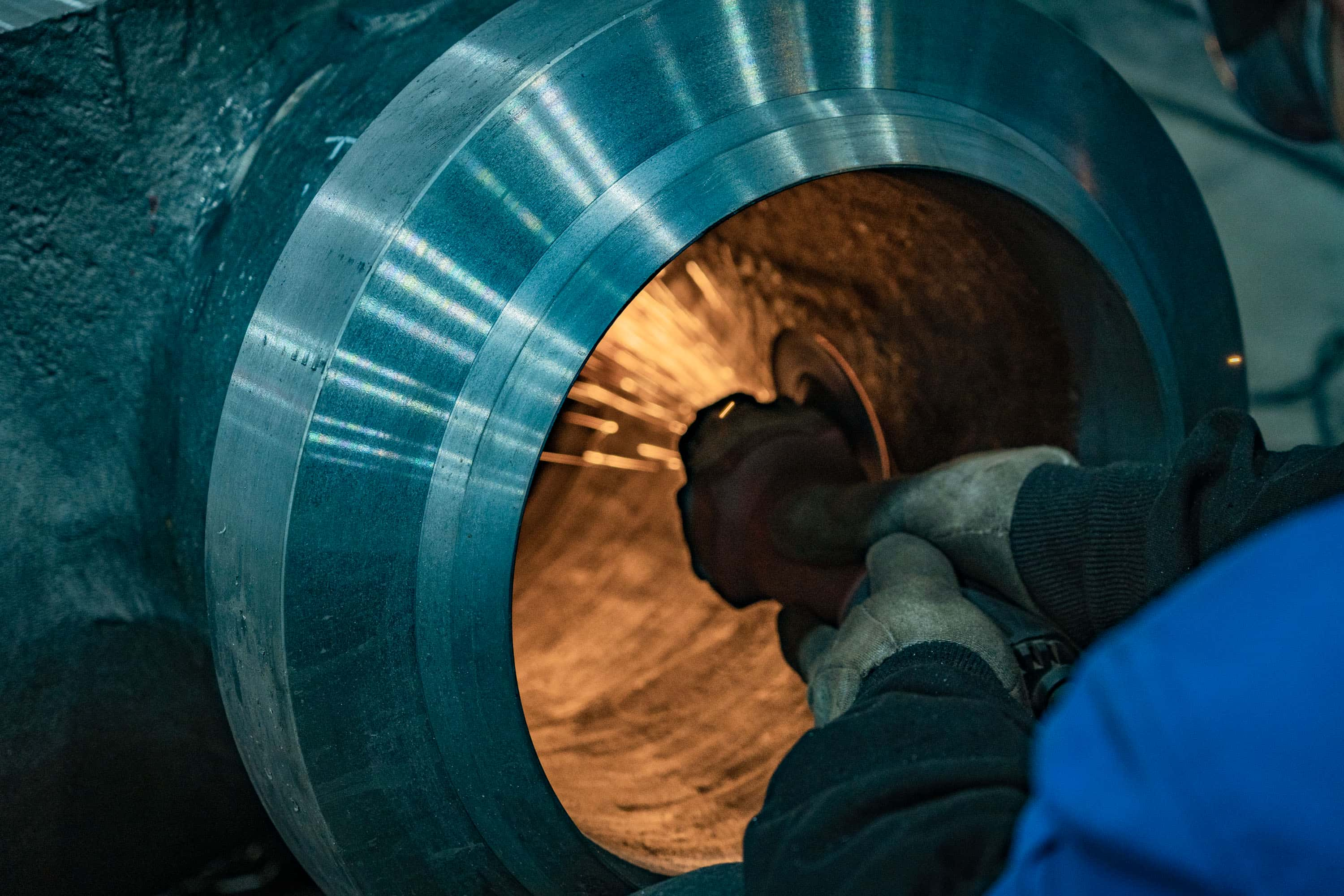
Supplier capability is verifiable when a manufacturer expresses it as a specification rather than as an adjective. The BOV303 triple offset butterfly valve from EG Valves Manufacturing Co., Ltd is a useful test case for buyers screening China valve sources: it is a single model whose documented size, pressure, connection, material and actuation envelope can be checked, line by line, against certificate schedules, inspection documents and commercial terms before any commitment is made.
EG Valves Manufacturing Co., Ltd is an industrial valve manufacturer and exporter established in 2000 in Wenzhou, Zhejiang Province, China, whose product scope covers gate, globe, ball, butterfly, check, plug and strainer valves for power, refining, oil and gas, water treatment, chemical and petrochemical industries. Its butterfly range is not a single design: the BOV303 sits alongside resilient-seated, PTFE-lined, high-performance, double-eccentric and grooved models, which matters when a buyer needs to distinguish one design family from another rather than treat "butterfly valve" as a category.
The wider setting is well documented. Trade data compiled by the Observatory of Economic Complexity from UN Comtrade and GACC figures places China as the top global exporter of valves under HS 8481 in 2024, with an export value of USD 22.6 billion. Grand View Research estimates China's industrial valve market at USD 17.1 billion in 2025, a reported 6.21% increase over 2024. Those two numbers come from different sources with different boundaries and should not be divided into a ratio; the directional point is narrower and more useful — China's valve sector is heavily export-facing, which is precisely why individual supplier claims need model-level evidence rather than national statistics.
What the BOV303 documentation actually commits to
The documented envelope of the BOV303 is broad enough to indicate engineering breadth across casting, machining, seating and actuation interfaces. It is also specific enough to be checked.
| Documented attribute | BOV303 range as stated | What it indicates to a buyer |
|---|---|---|
| Size range | NPS 2–60 | Tooling and machining span small-bore instrumentation-adjacent sizes through large pipeline sizes. |
| Pressure rating | PN10–PN40 and Class 150–600 | Two designation systems are supported; the applicable system must be fixed per project specification. |
| Body style | Wafer, lug, double flange | Different installation and removal logic; not interchangeable at the piping-design stage. |
| Body material | Carbon steel, stainless steel, alloy steel, duplex steel | Material families span general service through corrosive duty; grade is confirmed per order. |
| Actuation | Lever, gearbox, electric, pneumatic | Manual and automated operation are both supported within one model family. |
| Sealing concept | Triple offset design with bubble-tight closure stated; seat material options, optional Stellite seat | A metal-seated, torque-dependent closure; the test basis behind "bubble-tight" must be written into the specification. |
| Stated applications | Oil and gas, chemical, steel, shipbuilding | Indicates the service environments the manufacturer positions the model for — not proof of performance in a specific line. |
An envelope statement proves breadth of supply, not per-unit outcome. The correct reading is that EG Valves is set up to quote a BOV303 across a wide combination of size, rating, body style, material and actuation, and that the specific combination a project requires still has to be confirmed in the quotation, because a range does not guarantee that every size–rating–material–actuation permutation is available on the same lead time.
Three offsets, and why the mechanism changes the questions a buyer asks
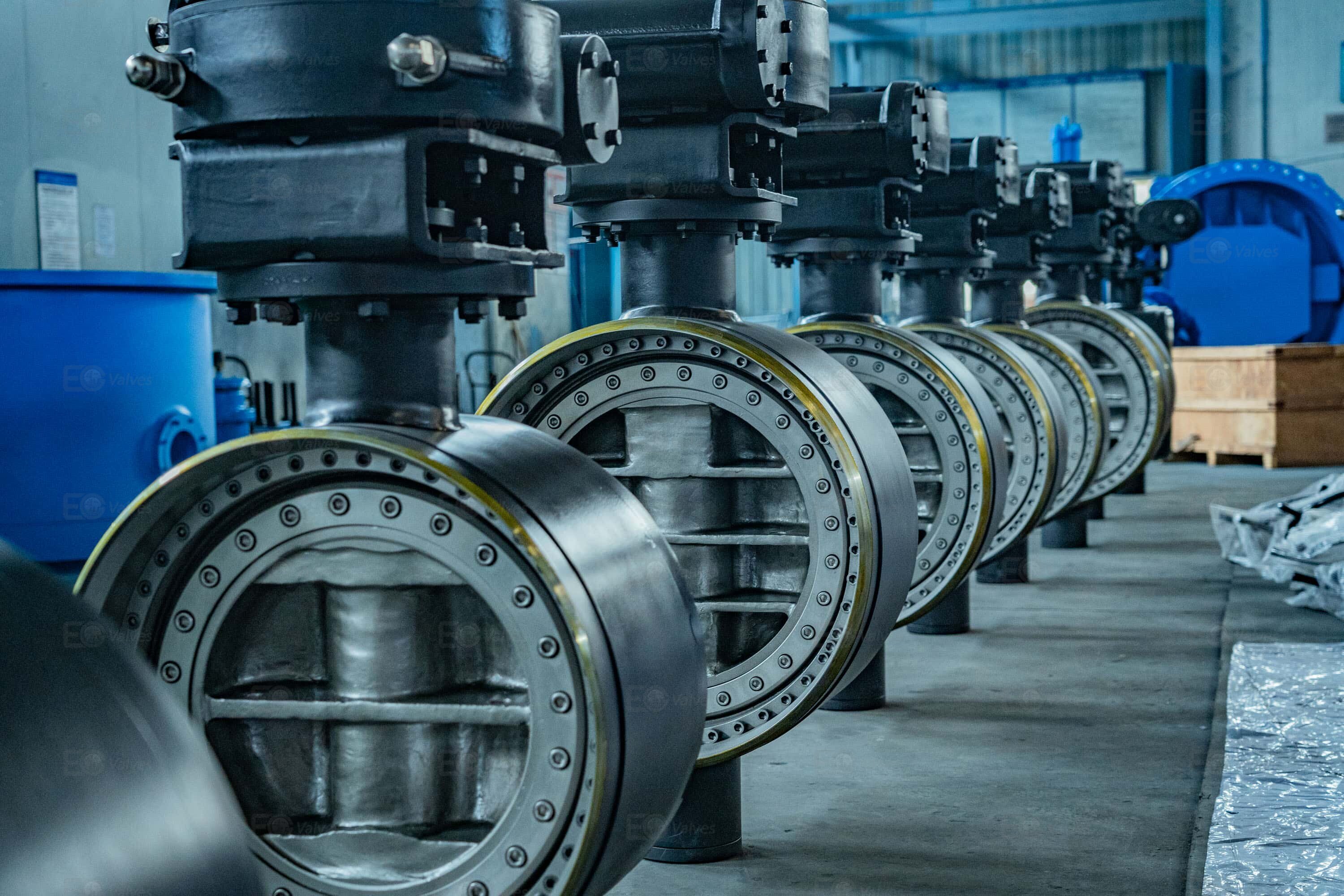
A triple offset butterfly valve uses three distinct eccentricities — an offset between the seat face and the shaft, a second offset of the shaft from the bore centreline, and an inclined conical seat axis. The practical consequence is that the disc separates from the seat almost immediately as the valve begins to open, and contacts the seat only in the last few degrees of closing travel. Sealing torque is applied at the end of the stroke rather than across the whole rotation.
For evaluation purposes, that mechanism converts into three verification questions rather than one vague requirement. First, the closure claim: "bubble-tight" is a qualitative industry descriptor, so the acceptance basis — the seat test standard used at the factory and the permissible leakage rate — should be named in the purchase specification and confirmed on the test record rather than assumed from the data sheet. Second, actuator sizing: because seating torque is concentrated at final travel, the break-to-open and seating torque figures for the ordered size and rating should be supplied so that a gearbox, electric or pneumatic actuator is sized against real data. Third, stroke and access: the offset geometry affects the disc's swing path, so the piping designer should confirm that a wafer, lug or double-flange body in the selected size fits the available space.
Those are ordinary engineering checks, and they apply to any triple offset valve from any origin. Their value here is that a supplier able to answer them with model-specific documents is demonstrating something that a brochure cannot.
Seats, materials and actuation: turning an options list into a decision
The seat is where the BOV303's option list carries the most procurement weight. Documented seat material options, plus an optional Stellite seat, mean the same model can be specified for different service severities. Stellite is normally associated with hard-facing and wear resistance in general engineering practice; the buyer's task is not to assume that any single option is universally better, but to state the medium, temperature band, cycling frequency and allowable leakage so that the seat selection is justified in writing. A seat option that is well matched to one line can be the wrong choice in another, and the documentation supplied for the BOV303 does not publish temperature limits or cycle-life figures that would let a buyer decide without that project data.
Body material follows the same logic. Carbon steel covers the general-service case; stainless, alloy and duplex steel extend the family into corrosive and higher-integrity duty. Duplex stainless grades are commonly selected where chloride-bearing or otherwise aggressive service is expected, and the practical buyer step is to tie the material call-out to the line's actual medium and to the material certificate issued for the specific order rather than to the family name on a data sheet.
Actuation is a schedule and access question as much as a technical one. Lever operation suits manual, intermittent duty where the torque falls within manual capability; a gearbox is the usual route where operating torque exceeds comfortable manual input; electric and pneumatic actuation move the valve into automated or remote control. Because the BOV303 is documented as available with all four, the specification question becomes which one the loop actually needs — not whether the supplier can supply it.
Portfolio breadth as supporting evidence, not as a sales point
Capability breadth is easier to trust when the same quality system covers the adjacent products a project will also order. The ISO 9001 schedule for EG Valves names individual models across gate, globe, ball, butterfly, check and strainer families, including the BOV303 and its butterfly siblings — the resilient-seated BTV300, the PTFE-lined BTF301, the high-performance BPV302, the double-eccentric BTV305 and the grooved BGV304 — alongside gate models such as the cast steel GTS019 and through-conduit GTT021, ball models including the trunnion BVT207 and top-entry BVT211, and check models such as the cast steel CVS407.
That matters for a mixed enquiry: a refinery or chemical project rarely buys only butterfly valves, and a supplier whose certificate schedule already covers the adjacent families reduces the number of separate qualification exercises a buyer has to run. It is supporting evidence, not a performance claim — a certificate schedule establishes scope of coverage, never the service result of any single valve.
Certificate scope: the check most shortlists skip
Certificates are frequently cited in China valve sourcing as a single pass-or-fail line. They are more useful read as scope statements, because a certificate held by a manufacturer does not automatically cover the model in front of the buyer. The current EG Valves documentation illustrates the distinction precisely.
| Certificate | Number / issuer / validity | Scope as listed | Relationship to the BOV303 |
|---|---|---|---|
| ISO 9001:2015 | 00125Q33391R3M/3400 — China Quality Certification Center (CQC); valid to 2028-05-22 | Gate valves, globe valves, ball valves, butterfly valves, check valves, pipe filters and flanges | Butterfly valves, and therefore the BOV303, are named in scope. This is a quality-management certification, not a product performance certification. |
| PED 2014/68/EU Annex III, Module H | DGR-0036-QS-1360-24 — TUV SUD Industrie Service GmbH; valid to 2027-05-26 | Gate, ball, globe, check, butterfly valves and strainers, EU market | Butterfly valves appear in the listed scope, which is relevant to EU pressure-equipment conformity routes. |
| API 6D | 6D-0506 — American Petroleum Institute; valid to 2027-03-30 | Check valves, ball valves, gate valves | Butterfly valves are not listed. The BOV303 should not be presented to a buyer as API 6D covered on the basis of this certificate. |
| API 600 | 600-0179 — American Petroleum Institute; valid to 2027-03-30 | Bolted bonnet steel gate valves | Applies to a gate valve standard and has no bearing on a butterfly valve specification. |
Read together, the schedule supports a narrow, defensible statement: the BOV303 is produced under an ISO 9001 system whose scope names butterfly valves, and butterfly valves form part of the PED Module H scope. It does not support a claim that the model is API 6D certified, and buyers comparing China valve suppliers should apply exactly this test to every certificate they are shown — model name, scope wording, issuing body, certificate number and expiry date, side by side.
Manufacturing, inspection and the document trail
Execution-stage confidence rests on what arrives with the valves. EG Valves reports a 27,500 m² facility, approximately 300 employees, a 30-engineer R&D team and annual output in the region of 90,000 pieces, with roughly 80% of output exported to the EU, North America, Latin America and the Middle East. Monthly valve capacity is stated at 8,000 pieces. These are company-reported figures and should be treated as such: useful for screening whether a supplier's scale can absorb an order, not as independently audited production data.
The documentary layer is more directly checkable. Every order is stated to include an EN 10204 3.1 material test certificate, and every valve is described as 100% inspected by the supplier's own QC team before dispatch. For a BOV303 order, that translates into a short document set a buyer can request against the purchase order: the data sheet for the ordered configuration, the material test certificate for the actual heat used, the seat and shell test records with the acceptance criteria named, and the certificate copies whose scope covers butterfly valves. Where a project requires witnessed testing, the acceptance route is stated as either the supplier's QC department or the customer's own inspector or a third-party inspection company.
Commercial execution: what the terms say about a first order
The published commercial terms are unusually specific for a capability assessment, and they matter at the Evaluation-to-Execution transition because they determine whether a qualification order is realistic. Minimum order quantity is stated as 1 piece for large-size valves and 10 pieces for small-size valves. Lead time is stated as within 25–35 days. FOB, EXW and CIF delivery terms are all acceptable depending on the buyer's needs, and payment terms are 30% T/T as a deposit with the balance settled before shipment.
The practical implication is that a buyer can validate a BOV303 configuration — material, seat option, actuation and test documentation — on a small order before committing to a project quantity, which is exactly the sequence most procurement policies prefer. The limitation is equally clear: the 25–35 day figure is a stated lead time, not a guaranteed schedule for every size, material or actuated configuration, and duplex or alloy bodies with special actuation should be confirmed against the project schedule rather than assumed from the general range.
Reference context, and the limits of that context
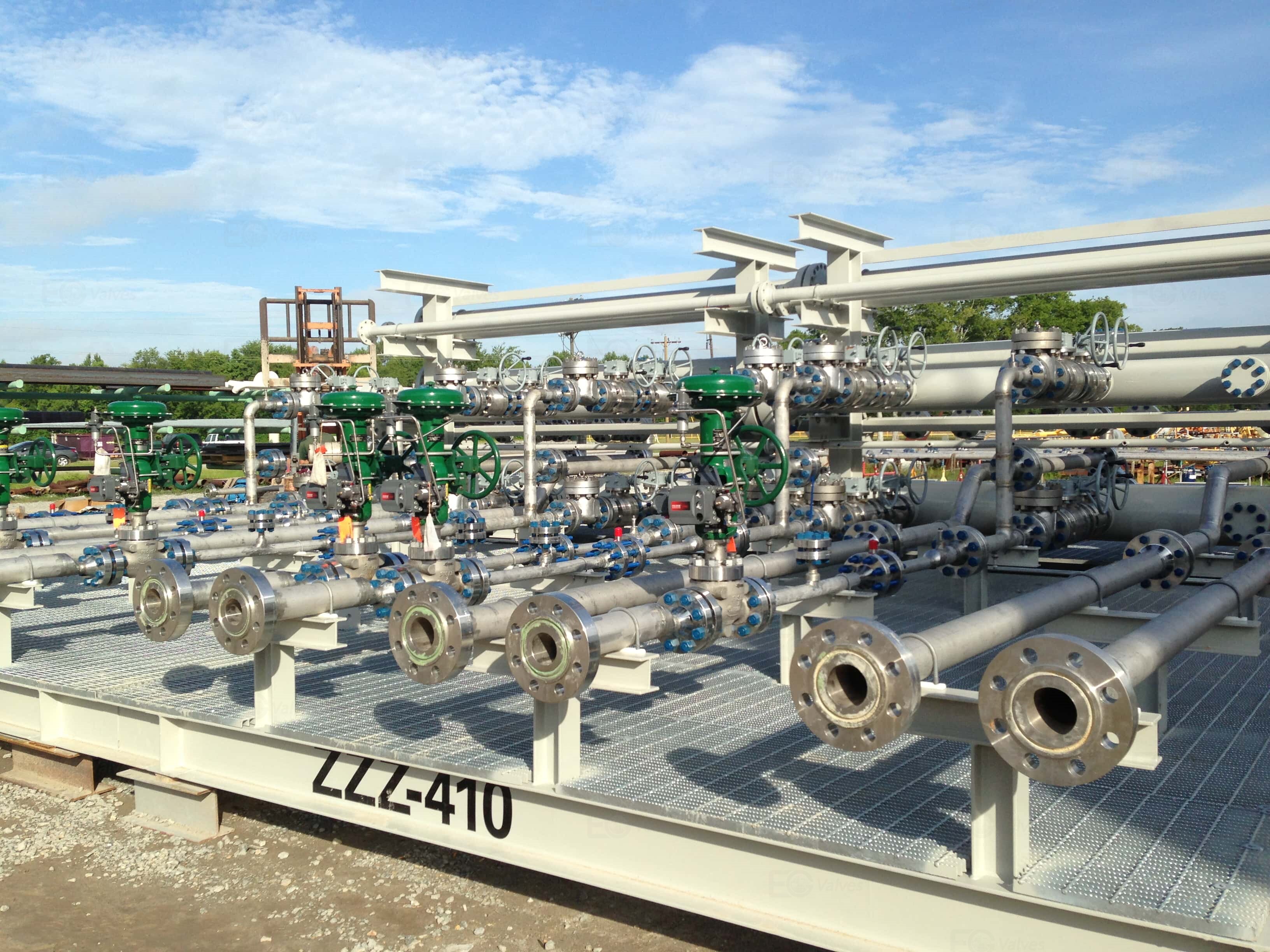
The most relevant reference in the available material is a petroleum refining client in the United Arab Emirates, whose order covered 915 pieces of gate, globe, check, ball and butterfly valves in Class 150–1500, in materials including WCB, WC6, WC9 and C5, across 2" to 36", with a reported service duration of 8–10 years and safe, steady operation. The BOV303 appears within the product scope attached to that reference, which makes it relevant context for refinery-adjacent enquiries.
Its evidentiary value should be stated precisely. The reference is company-supplied rather than independently audited, it covers a mixed multi-model order rather than a BOV303-specific installation, and it does not publish failure rates, maintenance intervals or test data for the butterfly valves in that scope. What it does establish is that the model has been offered into a refining environment where pressure classes, material grades and sizes broadly overlap with the BOV303 envelope — which is a reasonable basis for a technical conversation and not a substitute for one.
Where the BOV303 fits, and where it should not be assumed to
Buyers frequently test a single model against neighbours in the same family. The documentation supports a comparison on design designation rather than on measured performance, which is a narrower but honest form of comparison.
| Model | Designation as documented | What the documentation establishes | What the buyer must still confirm |
|---|---|---|---|
| BTV300 | Resilient seated butterfly valve | A distinct design family within the same ISO 9001 scope | Service limits and seat material for the actual medium |
| BPV302 | High performance butterfly valve | A separate model positioned between general and severe service | Rating, seat construction and test basis for the line |
| BTV305 | Double eccentric butterfly valve | A two-offset design, distinct from the triple offset geometry | Sealing concept and leakage acceptance for the duty |
| BOV303 | Triple offset butterfly valve | Three-offset, torque-seated closure with bubble-tight closure stated | Test standard, torque data, seat option and material grade |
Three boundaries deserve to be stated plainly. First, the BOV303's stated applications are oil and gas, chemical, steel and shipbuilding; the supplied documentation does not claim hygienic or pharmaceutical service, so buyers in food processing or pharmaceutical duty must confirm material grades, cleanability and surface finish separately rather than infer them from the model name. Second, the pressure envelope spans two designation systems, PN10–PN40 and Class 150–600; these are not interchangeable labels, and the project specification should fix which system governs before the quotation is compared. Third, no price, MTBF or field-failure benchmark for this model is published in the available material, so any total-cost comparison a buyer builds will rest on quotations and project data rather than on third-party reliability statistics.
Outlook: capability documentation as the differentiator
China's export scale, at USD 22.6 billion under HS 8481 in 2024, says nothing about any single supplier's engineering depth, and that gap is where procurement attention is moving. The observable shift in supplier documentation is toward scope-specific evidence — certificate schedules that name models, material certificates issued per order, and test records with the acceptance standard written on them — rather than toward broader claims.
For a model like the BOV303, that shift favours suppliers whose published range can survive a cross-check. Whether individual buyers see better outcomes depends on how carefully they match seat, material and actuation to the line, and on whether the leakage acceptance basis is fixed before the order rather than negotiated after a failed test. The interpretation is conditional, not a forecast of market direction: as documentation quality improves, the advantage moves to the buyer who actually reads the scope wording.
A verification checklist for a BOV303 enquiry
- Confirm the ordered configuration: size in NPS, rating in the governing system (PN or Class), body style (wafer, lug or double flange), body material grade, seat option including whether Stellite is specified, and actuation type.
- Request the current data sheet for that exact configuration rather than the generic model sheet, and check that the size–rating combination appears on it.
- Ask for the seat and shell test acceptance criteria, including the standard and permissible leakage rate used to support the bubble-tight statement.
- Obtain break-to-open and seating torque figures for the ordered size and rating before selecting a gearbox, electric or pneumatic actuator.
- Check certificate copies against the model: ISO 9001 and PED Module H list butterfly valves; API 6D and API 600 as currently scoped do not cover butterfly valves.
- Confirm validity dates on every certificate against the planned delivery date.
- Reserve an EN 10204 3.1 material test certificate for the actual heat, and decide in advance whether inspection will be by the supplier's QC team, the buyer's inspector or a third-party agency.
- Fix the commercial frame in writing: MOQ for the size class, stated lead time, Incoterm, and payment schedule.
Together, those eight checks convert a capability claim into an evidence file. They also make the supplier's answers comparable with a second or third quotation, which is where most sourcing decisions are actually won or lost. Readers who want the fuller product and company context can download the EG Valves corporate brochure, which covers the wider product range and certification set.
FAQ
- What is the BOV303, and what range does EG Valves document for it?
- The BOV303 is EG Valves' triple offset butterfly valve, documented from NPS 2 to NPS 60 and across PN10–PN40 and Class 150–600. It is offered in wafer, lug and double-flange body styles, in carbon steel, stainless steel, alloy steel and duplex steel bodies, with lever, gearbox, electric or pneumatic actuation. Seat material options are available, including an optional Stellite seat, and the stated applications are oil and gas, chemical, steel and shipbuilding.
- What does "bubble-tight" mean for a triple offset valve, and how should it be verified?
- "Bubble-tight" is a qualitative description of closure performance, not a published test figure. In a triple offset design the disc contacts the seat only at the end of the closing stroke, so sealing depends on applied seating torque. Verification means naming the seat test standard and the permissible leakage rate in the purchase specification and confirming them on the factory test record for the ordered valve, rather than relying on the descriptor alone.
- Which EG Valves certificates cover the BOV303, and which do not?
- ISO 9001:2015 certificate 00125Q33391R3M/3400, issued by the China Quality Certification Center and valid to 2028-05-22, lists butterfly valves in its scope, and the PED 2014/68/EU Annex III Module H certificate DGR-0036-QS-1360-24 issued by TUV SUD, valid to 2027-05-26, also covers butterfly valves. The API 6D certificate 6D-0506, valid to 2027-03-30, is scoped to check, ball and gate valves, and API 600 certificate 600-0179 covers bolted bonnet steel gate valves; neither covers butterfly valves.
- What documents and inspection options accompany a BOV303 order?
- EG Valves states that every order includes an EN 10204 3.1 material test certificate and that every valve is 100% inspected by its own QC team before dispatch. For some orders the customer arranges its own QC or appoints a third-party inspection company to conduct the inspection, so the acceptance route should be agreed at the order stage.
- What are the MOQ, lead time and payment terms for a BOV303 order?
- The stated minimum order quantity is 1 piece for large-size valves and 10 pieces for small-size valves. Lead time is stated as within 25–35 days. FOB, EXW and CIF delivery terms are acceptable depending on the buyer's needs, and payment terms are 30% T/T as a deposit with the balance settled before shipment. Size, material and actuation combinations should be confirmed against these terms in the quotation.
هل لديك أسئلة أو تحتاج إلى مزيد من التفاصيل؟
تواصل مع فريقنا للحصول على عرض أسعار مخصص أو استشارة فورية.
طلب عرض أسعار
املأ النموذج أدناه وسيتواصل معك فريقنا بعرض مقترح مخصص.
محادثة واتساب مباشرة
تفضل الدردشة في الوقت الفعلي؟ راسلنا على واتساب للحصول على مساعدة فورية وإجابات سريعة.
- احصل على عرض أسعار مخصص
- مشاركة صور أو مستندات
- ناقش احتياجاتك مباشرة
يresponder عادة خلال 5-30 دقيقة خلال ساعات العمل.