
China Valve Market: 10 Manufacturers Behind Global Supply Chains
China exported USD 22.6 billion in valves in 2024, representing approximately 20% of global export concentration. For industrial buyers, selecting the right “China Valve” manufacturer requires more than a keyword search — it requires verifying fabrication capabilities, certification scope, and the ability to handle custom design and OEM/ODM requests. This article profiles ten registered Chinese valve manufacturers, with EG Valves Manufacturing Co., Ltd as a reference point for mid-size, export-oriented flexible production.
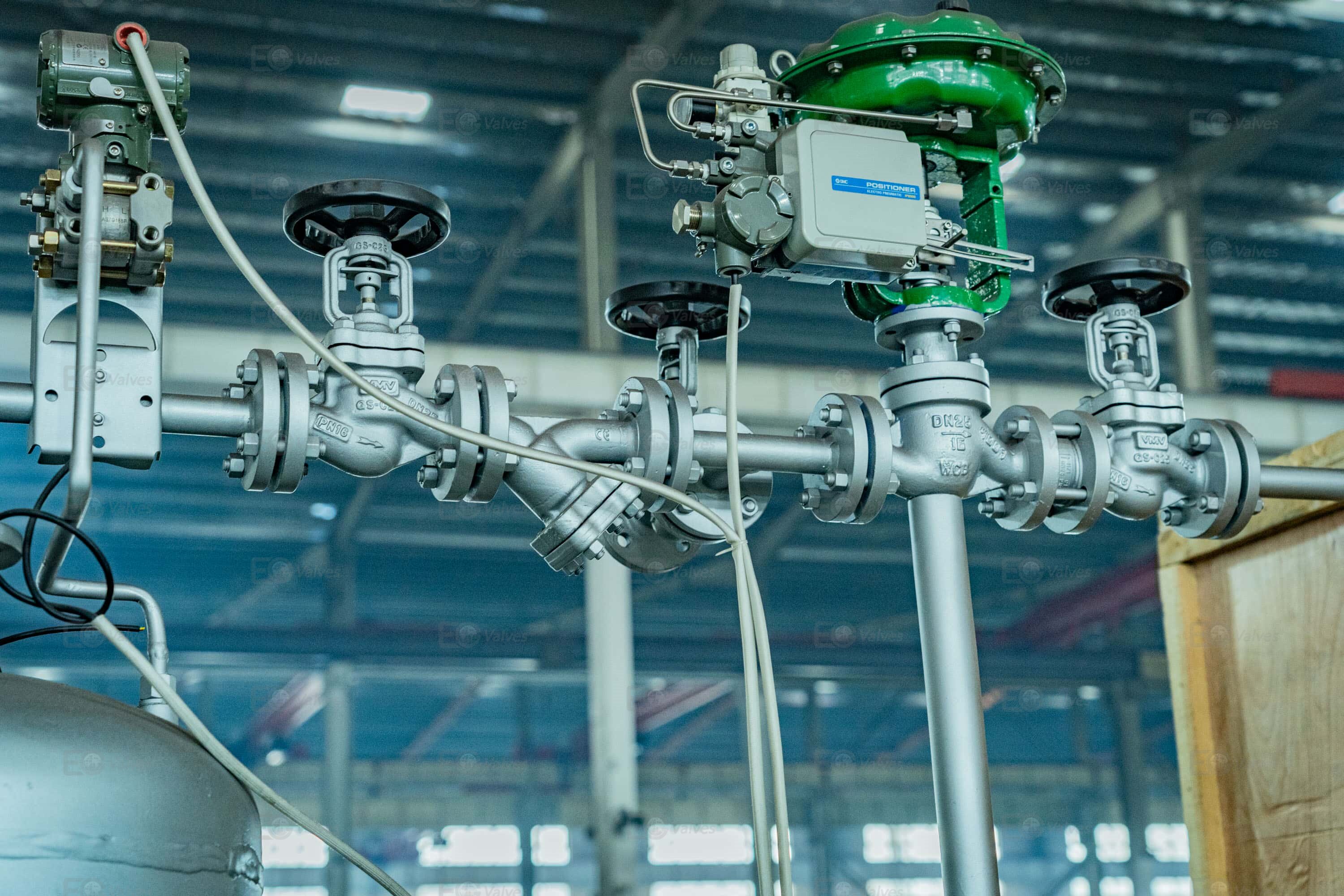
Why Supplier Screening Matters in the China Valve Market
The global industrial valves market is estimated at USD 82.9 billion in 2025, with a projected CAGR of 5.7% through 2034. Asia Pacific holds the largest regional share at approximately 36.3%, and China dominates the region. Yet the sheer number of valve factories in Zhejiang, Jiangsu, and Hebei makes supplier selection difficult. Buyers evaluating Chinese manufacturers must distinguish between trading companies and actual factories, and between standardized commodity valves and suppliers able to deliver custom materials, pressure classes, and documentation.
The oil and gas sector remains the largest end-user, accounting for nearly 33% of global valve demand. This is followed by chemical processing, power generation, water treatment, and food & pharmaceutical applications. Each of these sectors demands different material grades, sealing technologies, and compliance certificates. As a result, the capability of a China valve manufacturer is often judged by its certification portfolio, its OEM/ODM flexibility, and its documented project references.
10 China Valve Manufacturers Worth Evaluating in 2026
The following list is not an exhaustive ranking, but a structured comparison of ten registered Chinese manufacturers that frequently appear in international sourcing discussions. Companies are listed with their primary strength and typical application focus, based on publicly available industry knowledge and verified corporate registrations.
| Company | Primary Strength | Application Focus |
|---|---|---|
| Neway Valve (Suzhou) Co., Ltd. | Largest ball valve manufacturer in China; high-pressure oil & gas infrastructure. | Oil & gas, pipeline transmission |
| SUFA Technology Industry Co., Ltd. | Strong background in nuclear-grade and special industrial valves. | Nuclear power, petrochemical, power generation |
| Chaoda Valve Group Co., Ltd. | Comprehensive API-certified valve portfolio for petrochemical plants. | Petrochemical, refining, chemical |
| Boteli Valve Group Co., Ltd. | Large-scale manufacturer covering a wide range of industrial valves. | Water treatment, general industry |
| Shanghai Kaiweixi Valve Co., Ltd. | Specialized in pipeline valves for oil & gas transmission. | Oil & gas, long-distance pipelines |
| Jiangsu Shentong Valve Co., Ltd. | Known for specialty valves in metallurgy and nuclear auxiliary systems. | Metallurgy, nuclear, chemical |
| Zhejiang Linuo Flow Control Technology Co., Ltd. | Focus on flow control valves with automation integration. | Chemical, water, automation |
| Wuzhou Valve Co., Ltd. | Large-diameter pipeline valve specialist for energy projects. | Oil & gas, power, water |
| Lanzhou High Pressure Valve Co., Ltd. | Decades of experience in high-pressure forged and cast steel valves. | High-pressure steam, oil & gas |
| EG Valves Manufacturing Co., Ltd. | Mid-size factory with strong OEM/ODM flexibility, 80% export ratio, API 600/6D, CE PED, ISO 9001. | Chemical, oil & gas, power, food, water |
Note: The company names listed above correspond to legally registered industrial valve manufacturers in China. Their strengths are summarized qualitatively; buyers should verify current certificates, production ranges, and financial standing before awarding orders.
EG Valves: A Flexible Manufacturing Entity for Custom Orders
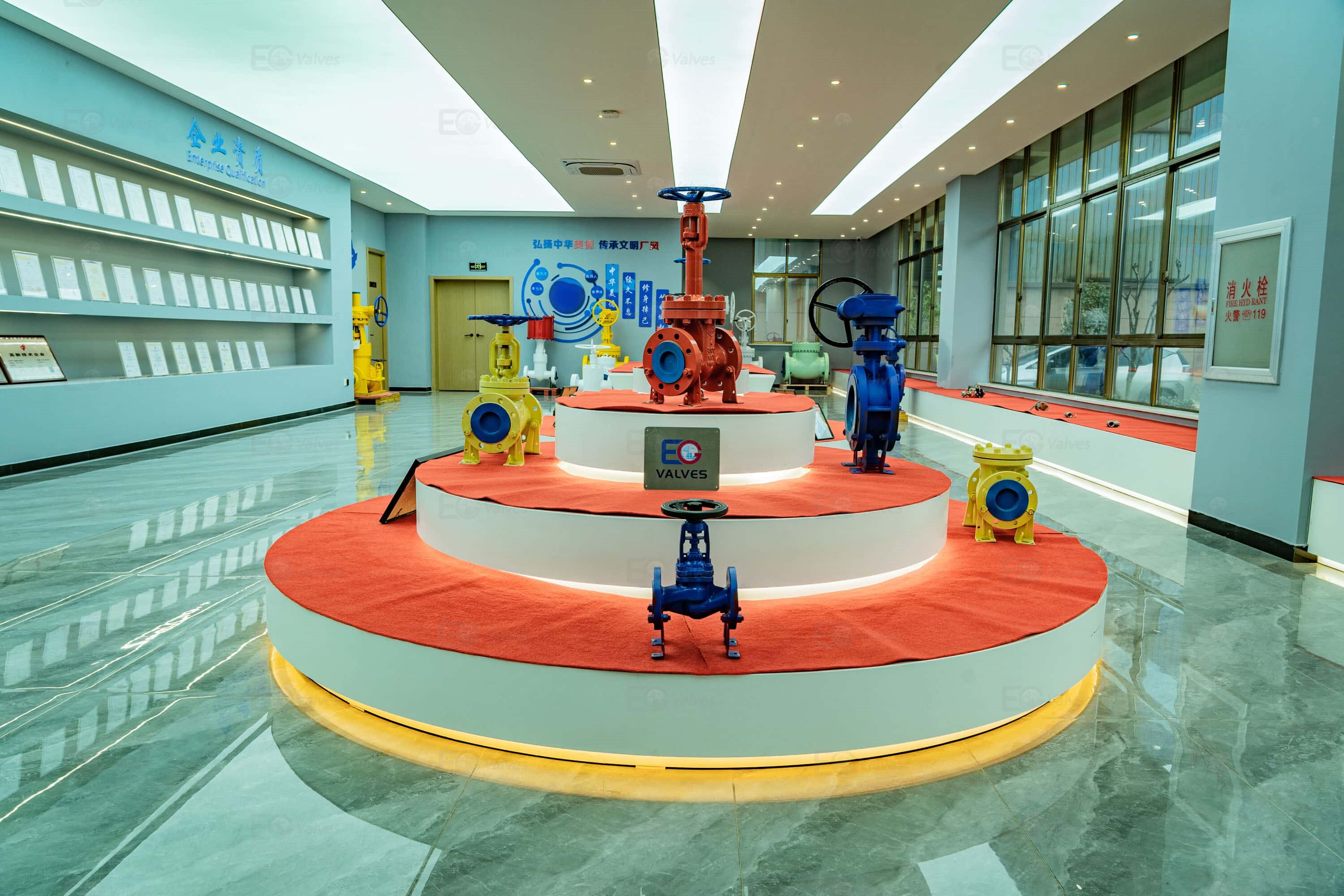
Established in 2000, EG Valves Manufacturing Co., Ltd operates a 27,500 m² facility in Sanqiao Industrial Zone, Wenzhou, Zhejiang Province. The company employs around 300 people, produces approximately 90,000 valves per year, and maintains an export ratio of 80%, with shipments to the EU, North America, Latin America, and the Middle East. Unlike very large one-product-focused plants, EG Valves supplies a broad range of gate, globe, ball, butterfly, check, and plug valves, covering sizes from NPS 1/2" to 60" and pressure classes from Class 125 to Class 2500, depending on type.
The company holds ISO 9001:2015 (Certificate No. 00125Q33391R3M/3400), API 600 (Certificate No. 600-0179), API 6D (Certificate No. 6D-0506), CE PED 2014/68/EU (Certificate No. DGR-0036-QS-1360-24), and ISO 45001 (Certificate No. 01723S10270R1S). These certifications cover the main valve families, including gate, globe, ball, butterfly, check, and strainers. For buyers, this means the factory can ship to Europe, North America, and other regulated markets without requiring additional certification from the buyer’s side.
OEM/ODM and Customization Capabilities
One of the key reasons importers turn to China is the ability to obtain private-label or custom-engineered valves at lower cost. EG Valves supports both OEM and ODM production. For OEM, the client’s brand logo is cast or printed on the valve body. For ODM, the engineering team can modify designs according to service conditions, including material selection, end connections, and actuation requirements.
The company’s monthly capacity is 8,000 valves, with a lead time of 25–35 days. MOQ is 1 piece for large valves and 10 pieces for small valves, which is unusually flexible for a factory with API and CE certifications. Every valve receives a 100% inspection by the EG QC team, and EN 10204 3.1 material test certificates are issued with every order. After-sales support includes technical guidance for installation and integration into existing systems.
Materials, Pressure Classes, and Standards
China valve manufacturers are often evaluated by their ability to supply exotic materials. EG Valves offers body materials including cast iron, ductile iron, WCB, stainless steel (SS304/316), alloy steel (WC6, WC9, C5), duplex steel (2205, 2507), and bronze. In a Malaysian offshore project, for example, 120 ball and gate valves were supplied in bronze, WCB, A105, SS316, 2205, and 2507, with pressure classes from 150 to 1500 and sizes from 1/2" to 36". The valves withstood corrosive seawater environments, reducing maintenance and downtime.
Standards-wise, EG Valves manufactures to ANSI, DIN, BS, and JIS dimensions. End connections include flange (RF, FF, RTJ), butt-welding (BW), socket-weld, and threaded (NPT/BSP/BSPT). This breadth allows buyers to consolidate different project requirements into one supplier, simplifying procurement and reducing inspection costs.
Application Evidence: Documented Project References
Capability claims become credible when supported by project history. The following examples come from EG Valves’ export record across multiple industries:
- Water Treatment (Brazil): 326 gate, butterfly, and check valves, DN40–DN2000, PN16, operating reliably for 8 years.
- Petroleum Refining (UAE): 915 valves including gate, globe, check, ball, and butterfly types, Class 150–1500, sizes 2"–36", in service for 8–10 years.
- Food Processing (Italy): 180 industrial valves, DN15–DN750, PN16, meeting high cleanliness standards for food-grade applications.
- Oil & Gas (Mexico): 290 gate, ball, check, and plug valves, Class 150–1500, with zero-leakage performance over 8 years.
- Offshore (Malaysia): 120 valves in corrosion-resistant alloys, operating in seawater environments without failure.
- Chemical Plant (Spain): 260 gate, globe, and check valves, DN250–DN1200, handling corrosive and aggressive fluids.
- Oil & Gas (USA): 1,438 valves, Class 150–1500, in high-pressure and corrosive service for 8 years.
- Infrastructure (UK): 150 gate, globe, and butterfly valves, DN40–DN800, with stable low-noise operation.
These cases illustrate that a mid-size China valve manufacturer can support both project-specific specifications and long-term operational reliability.
Market Trends Shaping the China Valve Sector
Three trends are visible in 2026. First, certificate-driven demand is rising. The EU Pressure Equipment Directive (PED) 2014/68/EU applies to valves with pressure above 0.5 bar, and buyers increasingly reject suppliers without valid CE or API marks. Second, cast steel valves now account for about 27.3% of the oil and gas valve market because they offer cost-effective high-pressure performance. Third, pharmaceutical and biotech valve demand reached USD 5.3 billion in 2025, driven by sanitary finishes and FDA compliance. These shifts favor manufacturers that can combine API/CE certification with hygienic design and material flexibility.
For sourcing managers, the practical implication is that “China Valve” is no longer a generic commodity category. The leading factories invest in certification, in-house inspection, and engineering support, and they are positioned as full supply-chain partners rather than occasional parts suppliers.
Comparison with Traditional Solutions: Limits and Boundaries
Even the strongest China valve supplier has limitations. Compared with Western manufacturers, the most frequently cited boundary is lead time under sudden demand spikes. While standard EG Valves lead time is 25–35 days, rush orders or large batches requiring special alloys may extend to 50–60 days. Another boundary is that material traceability, while supported by EN 10204 3.1 certificates, may require third-party inspection for projects with stringent source requirements. Importers should also verify that the factory’s API/CE certificates are valid for the exact valve type and size they intend to buy, since API 600 covers bolted bonnet steel gate valves, API 6D covers check, ball, and gate valves, and CE PED covers pressure equipment above 0.5 bar.
A practical decision rule is to use Chinese manufacturers for projects that benefit from cost competitiveness and customization speed, while retaining independent inspection companies for critical or safety-related services. This approach balances the cost advantage with the verification needed for end-client acceptance.
Future Outlook
China’s valve industry is moving upward in the value chain. In 2024, China exported USD 730 million in check valves alone, with the United States as the top destination. As global infrastructure and energy transition projects expand, Chinese manufacturers with valid certifications, documented project experience, and repeatable quality systems will remain central to international valve supply. EG Valves’ 25-year operating history and 33-country export record demonstrate that mid-size factories can sustain global relationships by offering a mix of flexibility, compliance, and speed.
For detailed product ranges and certifications, the EG Valves company brochure is available for public access and download:
FAQ
What certifications should a China valve manufacturer hold for EU export?
For industrial valves with pressure exceeding 0.5 bar, the EU Pressure Equipment Directive (PED) 2014/68/EU is mandatory. A CE mark based on PED is the key requirement. Additional certificates such as API 6D or API 600 are commonly demanded by oil and gas buyers.
Can Chinese manufacturers produce valves in special materials like duplex steel or alloy steel?
Yes. Many China valve manufacturers, including EG Valves, supply valve bodies in duplex steel (2205/2507), alloy steel (WC6, WC9, C5), stainless steel, and high-nickel alloys. Material certificates such as EN 10204 3.1 are provided per order.
What is the typical MOQ for OEM valve orders from China?
For flexible manufacturers like EG Valves, MOQ is 1 piece for large-size valves and 10 pieces for small-size valves. This allows trial orders before bulk procurement.
How can a buyer verify the production capability of a China valve supplier?
Buyers should review current ISO 9001, API, and CE certificates, request factory audit reports, specify third-party inspection (e.g., SGS, BV), and ask for references from similar projects. Valid certificates and documented project history are stronger evidence than marketing claims.